Strength training and bone density: what women need to know
TL;DR: Strength training increases bone mineral density by roughly 1 to 3% per year in women who do it consistently, according to multiple randomized controlled trials. It works by creating mechanical stress that signals bone-forming cells (osteoblasts) to build new tissue. Weight-bearing and resistance exercises are the two most effective categories. Hormone levels matter too, especially after menopause.
Why does strength training improve bone density?
Bone is living tissue. It constantly breaks down and rebuilds, and the balance between those two processes determines whether you gain density, hold steady, or lose it. Mechanical load is the primary signal that tips the balance toward building.
When a muscle pulls hard against its tendon attachment, and when your skeleton bears weight under load, the stress deforms bone slightly at the microscopic level. Bone cells called osteocytes detect that deformation and signal osteoblasts, the cells that form new bone matrix, to get to work [1]. The result over months and years of consistent loading is measurably denser, stronger bone.
This is fundamentally different from how cardiovascular exercise works. A brisk walk does help because it is weight-bearing, but it does not generate nearly as much strain on the skeleton as a loaded squat or a deadlift. The stimulus needs to be high enough in magnitude to matter. Research on bone adaptation consistently shows that the strain threshold for a meaningful osteogenic response is well above what low-intensity activity produces [1].
The other piece is that this process is site-specific. Exercises that load the hip, spine, and wrist, the three fracture sites women are most at risk for, are the ones that most directly protect those areas. A leg press protects the hip. A Romanian deadlift loads the lumbar spine. Overhead pressing adds stress to the thoracic spine and shoulder girdle. You cannot do bicep curls and expect your femoral neck to respond.
How much can bone density resistance training actually increase your BMD?
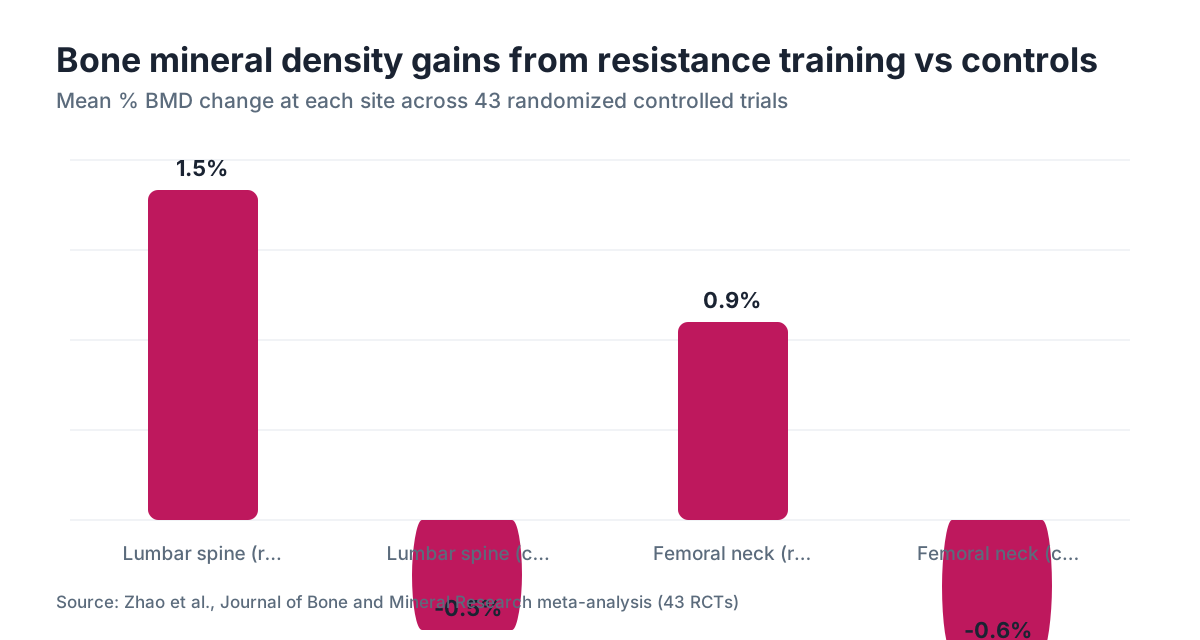
Numbers vary by study design, population, and program, but the pattern is consistent enough to be useful. A widely cited meta-analysis of 43 randomized controlled trials published in the Journal of Bone and Mineral Research found that resistance training produced mean increases in lumbar spine BMD of about 1.5% and hip BMD of about 0.9% compared to controls [2]. Those numbers sound small. They are not.
To put them in context, postmenopausal women who do nothing typically lose 1 to 2% of spinal bone density per year [3]. Stopping that loss and reversing even a fraction of it is clinically meaningful. A 1.5% gain versus a 1.5% loss is a 3-percentage-point spread. Over a decade that compounds into a material difference in fracture risk.
Studies looking at higher-intensity programs, specifically those using progressive overload with loads above 70% of one-rep max, tend to show larger gains. The LIFTMOR trial, a randomized controlled trial of 101 postmenopausal women with low bone mass published in the Journal of Bone and Mineral Research in 2018, found that a high-intensity resistance and impact training program produced significant gains in femoral neck BMD (0.16 cm greater than controls, p = 0.004) [4]. The program used deadlifts, overhead presses, and back squats at loads progressively increased to 80 to 85% of one-rep max, supervised by exercise physiologists.
For premenopausal women, gains can be larger, partly because estrogen is still present to amplify the bone-forming response. Building bone mass in your 30s and 40s is arguably the highest-return thing you can do for your skeleton, since peak bone mass is the single biggest predictor of where you land in your 60s and 70s.
Which exercises are best for bone density in women?
Not all resistance exercises are equal for bone. The ones that generate the most ground reaction force and axial compression through the spine and hips are the most potent. Here is a practical breakdown:
| Exercise | Primary bone sites loaded | Notes | |---|---|---| | Deadlift (conventional or Romanian) | Lumbar spine, femoral neck, hip | Requires good form; high reward | | Barbell squat / goblet squat | Lumbar spine, hip, femoral neck | Depth and load both matter | | Overhead press (barbell or dumbbell) | Thoracic spine, shoulder girdle | Often underused by women | | Hip thrust / glute bridge (loaded) | Femoral neck, hip | Lower spinal load; good entry point | | Weighted step-up / lunge | Hip, femoral shaft | Unilateral loading adds impact | | Jumping / drop landings | Hip, tibia, femoral neck | High-impact; add carefully | | Bent-over row | Thoracic spine | Posterior chain loading |
The LIFTMOR trial used deadlift, squat, and overhead press as its three primary lifts and produced the clearest bone outcomes in postmenopausal women with low bone mass [4]. That is as close to a validated prescription as bone research currently offers.
A few things to know. Progressive overload matters more than any specific exercise. If the load never increases, the bone stimulus plateaus. You need to push load, volume, or both upward over time. Twice a week is the minimum frequency with evidence behind it. Three sessions per week produces modestly better results but not dramatically so [2].
Machines versus free weights: the evidence here is thin. Free weights generally create more stabilizer recruitment and may generate slightly more varied strain on bone, which is thought to be advantageous. But for women who are new to lifting, machines can be a safer entry point. Start where you will actually do it and progress from there.
When in life does strength training matter most for bone health?
There are two windows where the payoff is highest, and they sit at opposite ends of the reproductive hormone timeline.
The first window is your 20s and early 30s, when you are still building toward peak bone mass. Peak bone mass is largely established by around age 30 [3]. Women who lift during this period can reach a higher peak, and a higher peak means a larger reservoir to draw down from later. The National Institutes of Health Osteoporosis and Related Bone Diseases Resource Center describes peak bone mass as the single most important determinant of lifetime fracture risk [3].
The second window is perimenopause and early postmenopause, roughly ages 45 to 60. Estrogen suppresses the activity of osteoclasts, the cells that break down bone. When estrogen drops during perimenopause, osteoclast activity surges and bone loss accelerates. Women can lose 10 to 20% of their bone mass in the first five to seven years after the final menstrual period [3]. Resistance training during this window does not fully compensate for the loss that estrogen withdrawal causes, but it meaningfully blunts it and may prevent the transition from low bone mass (osteopenia) to osteoporosis.
For women in their 60s and 70s who are starting from scratch, the news is still good. Multiple trials including the LIFTMOR trial enrolled postmenopausal women and showed meaningful gains. You are never too late to start, and the fall-prevention benefit from improved muscle strength and balance may be as important as the direct bone density benefit.
Does menopause change how your bones respond to training?
Yes, significantly. Estrogen is more than a reproductive hormone. It is a major regulator of bone metabolism. Estrogen receptors exist on osteoblasts, osteoclasts, and osteocytes. When estrogen is present, it both stimulates bone formation and suppresses bone resorption. When estrogen drops, both effects are lost simultaneously [5].
This means postmenopausal women start at a mechanical disadvantage. The same resistance training stimulus that would produce a 2% gain in a premenopausal woman may produce a smaller response, or just slow the rate of loss, in a postmenopausal woman. That is not a reason to skip training. It is a reason to take the intensity and consistency requirements more seriously.
Postmenopausal women also have lower baseline testosterone levels, which contributes to the reduced anabolic response. Progesterone, which also has some bone-protective signaling, declines during perimenopause even before estrogen does [5]. Read more about how progesterone interacts with bone and musculoskeletal health.
Practically, this means: if you are postmenopausal and serious about bone health, resistance training alone may not be sufficient. The most current guidance from NAMS (the North American Menopause Society) states that "physical activity, particularly resistance and impact exercise, is recommended for all menopausal women to help preserve bone density" but also notes that hormone therapy has the strongest evidence for preventing bone loss in women who are within 10 years of menopause [6]. These two interventions are additive, not competing.
How does hormone replacement therapy compare to strength training for bone?
They work through different mechanisms, and combining them produces better results than either alone.
Hormone replacement therapy, specifically estrogen-containing regimens, reduces bone resorption by suppressing osteoclast activity [6]. NAMS describes estrogen therapy as FDA-approved for prevention of osteoporosis and notes that "the Women's Health Initiative demonstrated that HRT reduced hip fracture risk by 34%" in postmenopausal women [6]. That is a substantial fracture risk reduction from a systemic intervention.
Strength training increases bone formation through mechanical loading. It also improves muscle mass, coordination, and balance, which reduces fall risk independently of bone density. Falls, more than bone fragility, drive fracture incidence in older women.
A study published in Menopause in 2014 found that postmenopausal women on HRT who also did resistance training had significantly greater lumbar spine BMD gains than women on HRT alone or exercise alone [7]. The combination group gained approximately 4.3% at the lumbar spine over 12 months compared to about 2.1% for HRT alone.
If you are considering HRT and want to understand all your options, the hormone replacement therapy overview covers the evidence, formulations, and who is and is not a good candidate. The estrogen patch is one common delivery method with a favorable evidence base for bone endpoints.
For women who cannot or choose not to use HRT, strength training is the most evidence-backed non-pharmacological intervention for bone density. It is not a perfect substitute for estrogen, but it is the best single tool available.
What does a bone-focused strength training program actually look like?
Here is a concrete program structure based on the LIFTMOR protocol and the broader resistance training bone literature [4].
Frequency: 2 to 3 sessions per week with at least one rest day between sessions.
Core lifts: deadlift, back squat or goblet squat, and overhead press. These three exercises load the spine, hip, and shoulder girdle, covering the three highest-priority bone sites for women.
Intensity: start at 60% of your estimated one-rep max. Progress to 80 to 85% of one-rep max over 8 to 12 weeks. Below 70% produces modest bone results; above 80% is where the clearest gains appear in trials [4].
Sets and reps: 3 to 5 sets of 5 reps at high intensity. Bone responds to peak strain, not volume. Ten minutes of heavy compound lifts outperforms thirty minutes of light machines for bone stimulus.
Progressive overload: add weight every 1 to 2 weeks when the current load feels controlled. This is the most commonly skipped step. Staying at the same weight for months produces minimal ongoing bone adaptation.
Impact loading: adding jump training (box jumps, jump squats, or even loaded drop steps) a few times per session amplifies the ground reaction force stimulus. The LIFTMOR trial incorporated jumping chin-ups and drop landings specifically for this reason [4]. Start conservatively if you have known bone loss.
Warm-up: 5 to 10 minutes of dynamic movement and lighter sets. Cold muscles under maximal load is a real injury risk, especially in women over 50.
For beginners, working with a certified strength coach for the first 4 to 6 weeks is genuinely worth the cost. Form on a deadlift is learnable, but it is not intuitive. The LIFTMOR trial used supervised training, and that supervision was part of what made the high-intensity protocol safe.
Can GLP-1 medications like semaglutide affect bone density?
This is a real concern that women on GLP-1 medications deserve a straight answer on.
GLP-1 receptor agonists, including semaglutide and tirzepatide, produce rapid weight loss. Rapid weight loss through any mechanism, including GLP-1s, reduces the mechanical load your skeleton bears every day. Less body weight means less gravitational stress on bone, which reduces the bone-formation stimulus. Multiple studies have documented decreases in lean mass and bone mineral density during GLP-1-induced weight loss [8].
The STEP 1 trial, the 68-week semaglutide 2.4 mg trial that anchored FDA approval, showed total body weight loss of 14.9% versus 2.4% for placebo [9]. At those magnitudes of weight loss, bone loss is a documented accompaniment. A 2023 analysis of the SURMOUNT-1 tirzepatide trial reported lean mass losses of roughly 10 kg alongside fat mass losses, with bone density effects still being characterized in ongoing substudies [10].
Practically, this means if you are on a semaglutide program or semaglutide for weight loss, resistance training is not optional. It is the primary countermeasure to GLP-1-associated lean mass and bone loss. Getting a baseline bone density test before or early in GLP-1 therapy is a reasonable precaution that many clinicians are now recommending.
WomenRx, which provides GLP-1 and hormone therapy care for women, builds bone-health monitoring and resistance training guidance into its GLP-1 protocols. The combination of weight loss and low estrogen in postmenopausal women creates a compounded bone risk that neither medication alone addresses.
For a side-by-side look at GLP-1 options and their metabolic profiles, the semaglutide vs tirzepatide comparison covers what the head-to-head data actually shows.
How do you know if your training is actually working for bone?
You cannot feel bone density changing. That is part of why osteoporosis is called a silent disease. The only way to measure it directly is a dual-energy X-ray absorptiometry scan, commonly called a DXA or DEXA scan [11].
DXA measures bone mineral density at the lumbar spine and hip and reports a T-score, which compares your BMD to a reference population of healthy young women. A T-score above -1.0 is normal. Between -1.0 and -2.5 is low bone mass (osteopenia). Below -2.5 is osteoporosis [11].
The U.S. Preventive Services Task Force recommends screening all women 65 and older and postmenopausal women under 65 who have a risk factor for fracture [11]. But for a woman in her late 40s who is perimenopausal, has a family history of osteoporosis, or is on a GLP-1 medication, getting a baseline DXA before age 65 is clinically sensible and most major insurance plans cover it with a documented risk factor.
Repeat DXA scans are typically done every 1 to 2 years if you have low bone mass or are on treatment, and every 2 to 5 years for monitoring purposes [11]. A meaningful training-induced BMD change typically takes at least 6 to 12 months to show up on a scan, so do not expect your first retest to show dramatic results.
Beyond DXA, the FRAX tool (Fracture Risk Assessment Tool) from the World Health Organization estimates 10-year fracture probability using BMD plus clinical risk factors. Clinicians use it to decide whether to prescribe medications like bisphosphonates. Knowing your FRAX score gives you a more complete picture than T-score alone [12].
Read the full breakdown on what to expect from a bone density test, including how to interpret your results and when to retest.
What other factors affect bone density in women besides training?
Training is the most modifiable behavioral factor, but it does not operate in isolation. Several other variables determine whether your bone program actually works.
Calcium and vitamin D are the two most discussed. The National Osteoporosis Foundation recommends 1,000 mg calcium daily for women under 50 and 1,200 mg for women 50 and older, along with 800 to 1,000 IU of vitamin D daily [13]. Vitamin D is required for calcium absorption, and large fractions of American women are insufficient. If your vitamin D level is low, training stimulus is less effective at producing bone gain.
Protein intake matters more than most bone health discussions acknowledge. Bone matrix is largely collagen, a protein. Adequate dietary protein (roughly 1.2 to 1.6 g per kg of body weight for active women) supports both muscle maintenance and bone matrix synthesis. Very low-calorie diets, including some GLP-1-facilitated eating patterns, can compromise both.
Smoking accelerates bone loss by impairing estrogen metabolism and reducing blood flow to bone. Heavy alcohol use (more than two drinks per day consistently) independently increases fracture risk [13].
Medications that cause bone loss include corticosteroids (even inhaled forms at high doses used long-term), aromatase inhibitors used in breast cancer treatment, proton pump inhibitors taken long-term, and some antiepileptic drugs. If you are on any of these, proactive bone monitoring and resistance training take on additional importance.
For women on menopause therapy or trying to time their hormone interventions strategically, the timing relative to menopause onset matters for bone outcomes. The closer to perimenopause that hormone therapy begins, the greater the bone-protective effect. Read more about when menopause starts to understand that timing window.
Is strength training safe if you already have low bone mass or osteoporosis?
Yes, with appropriate modifications. Fear of fracture causes many women with osteoporosis to avoid loading exercise entirely, which is exactly the wrong instinct. Bed rest accelerates bone loss. Sedentary behavior accelerates bone loss. Resistance training is one of the few interventions that can actually reverse the trajectory.
The LIFTMOR trial specifically enrolled postmenopausal women with low bone mass (T-score between -1.0 and -2.5 at spine or hip) and found that high-intensity resistance training was safe and produced significant bone gains with no fragility fractures during the trial period [4]. Supervision and progressive loading were part of what made it safe.
For women with established osteoporosis (T-score below -2.5) or known vertebral fractures, the modifications are more significant. Flexion-loaded exercises like sit-ups, toe touches, and some rowing machine positions create anterior compressive forces on the vertebral bodies that can cause compression fractures. Extension-based loading (like deadlifts with a neutral spine) is generally safer. A physical therapist with osteoporosis experience is worth the investment for setting up a program.
Fall prevention becomes as important as bone building at this stage. Balance training, hip strengthening, and walking on varied terrain all reduce fall risk independently of BMD changes. The fracture you prevent by not falling is as valuable as the one you prevent by denser bone.
The American College of Sports Medicine recommends resistance training 2 to 3 days per week for adults with osteoporosis, emphasizing exercises targeting the hip and spine, with loads progressed carefully over time [13]. That recommendation is based on the weight of evidence that the benefit clearly exceeds the risk when training is done properly.
Frequently asked questions
How long does it take strength training to improve bone density?
Most randomized trials run 12 to 24 months and that is roughly the minimum window to see measurable BMD changes on a DXA scan. Studies like LIFTMOR showed significant femoral neck gains after 8 months of high-intensity training. Expect 6 to 12 months before a retest is meaningful. Bone remodeling cycles take about 3 to 4 months each, so you need multiple cycles of adaptation before a gain registers.
How many times a week do you need to lift weights for bone health?
Two sessions per week is the minimum supported by evidence. Three per week produces modestly better results. The LIFTMOR trial used two supervised sessions per week and achieved significant bone gains in postmenopausal women. More important than session frequency is intensity and progressive overload. Two heavy sessions per week outperform five light ones for bone stimulus.
Does walking count as bone-building exercise?
Walking is weight-bearing and better than nothing, but the mechanical strain it generates is too low to drive meaningful bone formation in most women, especially postmenopausal women. Studies comparing walking to resistance training consistently show larger BMD gains from resistance training. Brisk walking does reduce fracture risk through fall-prevention mechanisms, so it has value. It just is not a substitute for loading exercise if bone building is the goal.
What T-score is considered osteoporosis, and when should I start strength training to prevent it?
A T-score below -2.5 at the hip or spine meets the WHO definition of osteoporosis. Between -1.0 and -2.5 is low bone mass (osteopenia). The ideal time to start strength training is before either number appears, ideally in your 30s and 40s when peak bone mass can still be built up. But even a diagnosis of osteopenia or osteoporosis does not preclude resistance training. It increases the urgency of starting.
Can strength training reverse osteoporosis or just slow it down?
Both, depending on severity and program quality. In women with osteopenia, high-intensity resistance training can produce BMD gains that move T-scores back toward normal range over 1 to 2 years. In women with established osteoporosis, reversal is harder but slowing further loss is consistently achievable, and fall risk reduction from improved strength and balance may prevent fractures even when BMD gains are modest.
Do I need protein supplements to build bone while lifting?
You do not need supplements if you are eating enough whole-food protein, roughly 1.2 to 1.6 grams per kilogram of body weight daily. Bone matrix is largely collagen, a protein, and adequate intake supports both muscle and bone synthesis. If your diet is low in protein, which is common among women on calorie-restricted diets or GLP-1 medications, a protein supplement can help you hit targets more easily.
What is the best exercise for femoral neck bone density specifically?
The femoral neck, the most common hip fracture site, responds best to exercises that generate high compressive and shear forces at the proximal femur. Deadlifts, hip thrusts under load, weighted step-ups, and jump training all target this area. The LIFTMOR trial found significant femoral neck gains (0.16 cm greater than controls) using deadlifts, squats, and overhead presses combined with impact loading.
Is yoga or Pilates enough to maintain bone density?
No, not for most women past 40. Yoga and Pilates improve flexibility, balance, and posture, all of which matter for fall prevention. But the compressive loads they generate through the hip and spine are generally below the threshold needed to stimulate meaningful bone formation. Some advanced yoga styles with weight-bearing arm balances add more stimulus, but the evidence base for yoga as a bone-building intervention is thin compared to resistance training.
Does resistance training help bone density in women over 60?
Yes. Multiple trials including the LIFTMOR trial and a large 2012 meta-analysis showed BMD gains from resistance training in women well into their 60s and 70s. The absolute gains may be smaller than in younger women, but stopping loss and improving muscle strength, balance, and fall prevention are all meaningful at any age. Starting at 60 is vastly better than not starting.
How does semaglutide or weight loss affect bone density?
Rapid weight loss from GLP-1 medications reduces the mechanical load your skeleton carries, which can decrease bone formation stimulus and lead to modest BMD reductions. The STEP 1 trial showed 14.9% weight loss over 68 weeks, and at that magnitude bone loss is a documented risk. Resistance training is the primary countermeasure. A baseline DXA before starting a GLP-1 program is worth considering, especially for postmenopausal women.
Can postmenopausal women on HRT skip resistance training for bone?
No. HRT and resistance training work through different mechanisms and are additive. A study published in Menopause found women doing both gained about 4.3% lumbar spine BMD over 12 months versus about 2.1% for HRT alone. HRT reduces bone resorption. Resistance training drives bone formation and also builds muscle, improves balance, and reduces fall risk in ways that HRT does not.
What calcium and vitamin D levels do I need for resistance training to build bone?
The National Osteoporosis Foundation recommends 1,000 mg of calcium daily for women under 50 and 1,200 mg for women 50 and older, with 800 to 1,000 IU of vitamin D daily. Vitamin D is required for calcium absorption, and deficiency significantly blunts the bone-forming response to exercise. Get your 25-hydroxyvitamin D level checked if you have not recently. Many women, particularly in northern latitudes, are insufficient.
At what age does bone density start declining in women?
Peak bone mass is typically reached by around age 30. A slow, modest decline follows through the 30s and early 40s. The rate accelerates sharply in the 2 to 3 years before and the 5 to 7 years after the final menstrual period, when estrogen withdrawal removes its brake on osteoclast activity. Women can lose 10 to 20% of total bone mass in that perimenopausal window. This is why resistance training and, for eligible women, HRT matter most during perimenopause and early postmenopause.
Does the type of resistance training equipment (barbells vs machines vs bands) matter for bone?
Barbells and heavy free weights generate the highest loads and the most variable strain patterns, which are both advantageous for bone. Machines can still produce meaningful bone stimulus if loads are heavy enough, roughly above 70% of one-rep max. Resistance bands generate much lower peak forces and are unlikely to produce significant bone gains in most women, though they have value for rehabilitation and beginners working toward heavier training.
Sources
- NIH National Institute of Arthritis and Musculoskeletal and Skin Diseases, Bone Health Overview
- Zhao R et al., Journal of Bone and Mineral Research 2015, meta-analysis of resistance training and BMD
- NIH Osteoporosis and Related Bone Diseases National Resource Center, Bone Mass and Menopause
- Watson SL et al., Journal of Bone and Mineral Research 2018, LIFTMOR Trial
- Endocrine Society, Postmenopausal Osteoporosis Clinical Practice Guideline
- North American Menopause Society (NAMS), 2022 Hormone Therapy Position Statement
- Chilibeck PD et al., Menopause 2014, HRT plus resistance training RCT
- NIH Osteoporosis and Related Bone Diseases National Resource Center, Weight Loss and Bone Loss
- Wilding JPH et al., New England Journal of Medicine 2021, STEP 1 Trial (semaglutide 2.4 mg)
- Jastreboff AM et al., New England Journal of Medicine 2022, SURMOUNT-1 Trial (tirzepatide)
- U.S. Preventive Services Task Force, Osteoporosis Screening Recommendation 2018
- WHO FRAX Fracture Risk Assessment Tool, University of Sheffield
- American College of Sports Medicine, Position Stand on Physical Activity and Bone Health