Stages of perimenopause: what actually happens and when
TL;DR: Perimenopause has four stages under the STRAW+10 framework: early menopausal transition, late menopausal transition, early postmenopause, and late postmenopause. The whole process runs 7 to 14 years for most women. Irregular periods, hot flashes, broken sleep, and mood shifts usually peak in the late transition, roughly 1 to 2 years before your final period.
What are the stages of perimenopause?
Perimenopause is not one event. It's a biological process that runs across years, sometimes more than a decade, and most women are surprised at how formally scientists have mapped it.
The standard framework is called STRAW+10, short for Stages of Reproductive Aging Workshop. It was published in 2011 and divides a woman's reproductive life into ten stages, using menstrual cycle changes and hormone levels as the markers. [1] The stages people mean when they say "perimenopause" are officially the menopausal transition, which has an early and a late phase, plus the first years after your final period.
Here is how the four stages map out in plain language:
| STRAW+10 Stage | Common name | Key marker | Typical duration | |---|---|---|---| | -2 (Early menopausal transition) | Early perimenopause | Cycle length varies by 7+ days | 1 to 3 years | | -1 (Late menopausal transition) | Late perimenopause | 60+ day gaps between periods | 1 to 3 years | | +1a / +1b (Early postmenopause) | Early menopause | First 5 years after final period | ~5 years | | +1c / +2 (Late postmenopause) | Late menopause | Stabilized low hormones | Rest of life |
The word "perimenopause" technically covers stages -2 and -1 only. But the symptoms from those stages, especially hot flashes and broken sleep, often run well into the early postmenopause years, so many clinicians use the term loosely to cover that window too. [1]
How long does perimenopause last?
The average woman spends about 7 years in the menopausal transition, from her first irregular cycles to her final period. The range is genuinely wide. Some women move through it in 2 years, others take 13 or 14. [2]
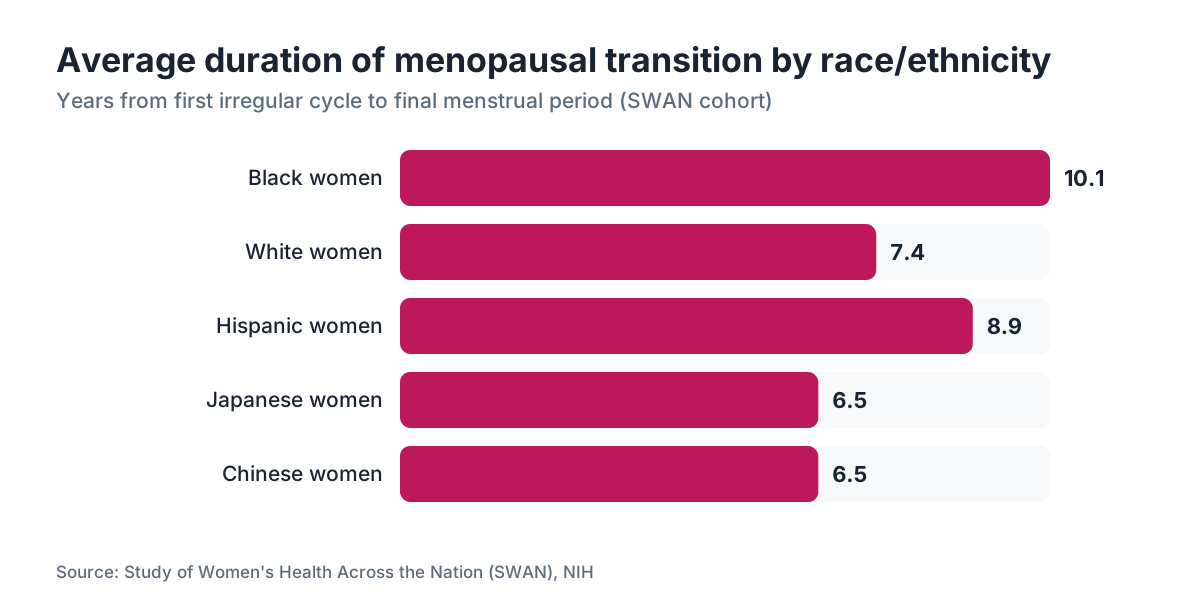
The Study of Women's Health Across the Nation (SWAN) followed more than 3,000 women from multiple ethnic groups for over two decades and found the median length of the total menopausal transition was 7.4 years. [2] Black women in that study had the longest transitions on average (10.1 years), while Japanese and Chinese women tended to have shorter ones (6.5 years or less). Those numbers matter because "how long will this last" is one of the first questions women ask, and the honest answer is that ancestry, BMI, smoking history, and stress all bend the timeline.
The late transition stage, when skipped periods start, is the one most women remember as the worst. It averages 1 to 3 years, but the harshest vasomotor symptoms (hot flashes, night sweats) usually peak in that final year before the last period and in the year right after it. [3]
What happens in early perimenopause (Stage -2)?
Stage -2 sneaks up on women because their periods are still coming, just not on the old schedule. The defining marker under STRAW+10 is a persistent change in cycle length of seven or more days compared to your usual pattern. [1] If you were reliably a 28-day cycle woman and now you're bouncing between 21 and 35 days, you are likely in Stage -2.
Why does this happen? The pool of ovarian follicles shrinks as women age, and as it shrinks, the signals between brain and ovary get less consistent. FSH (follicle-stimulating hormone) starts rising in fits and starts, and estrogen swings more than it used to instead of declining in a straight line. This is the part of perimenopause that confuses most people. Estrogen does not simply fall. It surges and crashes unpredictably before it finally trends down for good. [4]
Symptoms in Stage -2 can include:
- Premenstrual symptoms that feel worse than before
- Breast tenderness
- Heavier or lighter periods than usual
- Occasional night sweats or hot flashes (though these are more common in Stage -1)
- Mood shifts, irritability, or low-grade anxiety
- Worse sleep even before hot flashes start
Many women in Stage -2 are still fertile. Pregnancy is less likely than in the reproductive years, but it happens, and unplanned pregnancies in this age group are underreported. Contraception still matters until 12 straight months without a period have passed.
What changes in late perimenopause (Stage -1)?
Stage -1 is the one most women picture when they say perimenopause is rough. The STRAW+10 marker is a gap of 60 or more days between periods. [1] You haven't hit menopause yet (that takes 12 full months without a period), but you're close.
Estrogen now falls more consistently, and FSH is measurably up. A serum FSH above 25 IU/L, measured during the early follicular phase of a cycle, is often used to confirm the late transition, though no single blood test stages perimenopause on its own without also looking at symptoms and cycle history. [4]
Hot flashes and night sweats peak here. SWAN found that about 79% of women get vasomotor symptoms (VMS) at some point during the transition, and severity peaks in Stage -1 through the first year after the final period. [3] For a meaningful share of women, VMS are bad enough to disrupt work and relationships.
Sleep changes in Stage -1 in ways that aren't only about night sweats. Studies show shifts in REM sleep and slow-wave sleep independent of VMS, driven by falling progesterone and estrogen's changing effect on GABA receptors. [4] Brain fog, word-finding trouble, and memory complaints are common in this stage and tend to ease after the transition settles.
Vaginal dryness, bladder changes, and lower libido often become noticeable in Stage -1 as local tissues respond to less estrogen. Hot flashes resolve on their own for most women within a few years. Genitourinary symptoms of menopause (GSM) do the opposite. They get worse with time unless you treat them. [5]
When does perimenopause officially become menopause?
Menopause is defined as exactly 12 consecutive months without a menstrual period, with no other medical explanation for the gap. [11] That's the whole definition. It's a single point in time you only recognize looking backward, the 12th month of no periods.
The average age of natural menopause in the United States is 51 to 52. [11] Premature menopause (before 40) and early menopause (40 to 45) affect a smaller but real share of women and carry different clinical stakes, especially for bone and heart health.
For more on what drives the timing, see when does menopause start and perimenopause age and menopause age.
If you've gone 11 months without a period and then spot lightly, the clock resets to zero. That's a real and maddening thing that happens to women in Stage -1, and it's worth knowing so it doesn't blindside you.
What are the symptoms of each perimenopause stage?
Symptoms don't march tidily through the stages, but a pattern shows up when you zoom out.
In early perimenopause, cycle irregularity is the main signal. Hot flashes may appear but are usually mild and infrequent. Mood changes, heavier-than-normal periods, and worse PMS are the complaints that most often send women to a doctor at this stage.
In late perimenopause, vasomotor symptoms move to center stage. The North American Menopause Society (NAMS) reports that moderate-to-severe hot flashes affect roughly 25% of women, while mild ones affect a much larger share. [5] Sleep gets worse. Vaginal and urinary symptoms begin. Some women notice dry skin, achy joints, and a shift in body shape, especially more belly fat even without much weight gain.
In early postmenopause (the first five years after the final period), vasomotor symptoms start to ease for most women, though 10 to 15% keep having hot flashes for a decade or longer. [3] Bone loss speeds up sharply in the first two years after the final period, which makes this the window for a bone density test and a real conversation about protecting your bones. GSM keeps worsening without treatment.
In late postmenopause, hormone levels settle at consistently low values. The focus turns to the long game: heart risk, bone density, cognitive health, and holding onto muscle. Women in this stage who weren't treated earlier can still benefit from local vaginal estrogen for GSM, and some may still benefit from systemic hormones depending on their risk profile.
How do doctors diagnose which perimenopause stage you're in?
The honest answer is that staging is mostly clinical. A doctor asks about your last period, how your cycles have changed over the past year, and what symptoms you're living with. That conversation, plus your age, gives more reliable staging than any single lab value. [1]
Blood tests support the clinical picture but rarely confirm a stage on their own. Estradiol (E2) swings so much day to day in the early and late transition that a single reading is hard to read. FSH is more useful. A consistently high FSH (above 25 to 30 IU/L) points to the late transition or early postmenopause, especially paired with symptoms. [4]
AMH (anti-Mullerian hormone), which reflects the follicle pool you have left, can help gauge ovarian reserve and may predict how far along a woman is, but it isn't standard for staging perimenopause in primary care yet.
Thyroid disease, high prolactin, and other conditions can mimic perimenopause symptoms, so a TSH and basic labs are reasonable when the picture isn't clear.
One thing worth knowing: perimenopause is a clinical diagnosis in women over 45 with typical symptoms and cycle changes. Guidelines from NAMS and the Endocrine Society specifically say hormone testing is not required to make the diagnosis in that age group. [5]
What treatments work best at each stage of perimenopause?
Treatment needs shift as you move through the stages, which is why a one-size approach frustrates so many women.
In early perimenopause, cycle chaos and worse PMS are the main problems. Low-dose hormonal contraceptives (combined pills or a hormonal IUD) can steady cycles, block breakthrough ovulation, give you contraception, and calm symptoms. Some women do well on cyclic progesterone alone to stabilize cycles without adding estrogen. [6] For how progesterone works here, see progesterone.
In late perimenopause, when hot flashes dominate, the evidence points to menopausal hormone therapy (MHT, also called HRT) as the most effective treatment. The 2022 NAMS position statement says that for women under 60 or within 10 years of menopause onset, the benefits of MHT for bothersome VMS outweigh the risks for most healthy women. [5] Non-hormonal options like fezolinetant (FDA-approved in 2023) and paroxetine 7.5 mg also have solid evidence for cutting hot flash frequency and severity. [7]
Sleep, mood, and cognitive symptoms often improve once VMS are treated well, but some women need separate support. Cognitive behavioral therapy for insomnia (CBT-I) is first-line for sleep problems at any menopausal stage.
For body composition changes (that sudden, stubborn midsection weight), the conversation increasingly includes metabolic support. GLP-1 receptor agonists like semaglutide have strong evidence for weight loss in women, and some women in perimenopause and early postmenopause find them useful for regaining metabolic control when diet changes alone stall. Platforms like WomenRx can connect you with clinicians who understand both the hormonal and the metabolic side. For how these drugs work, see semaglutide for weight loss.
Options for hormone replacement therapy including the estrogen patch are worth raising with a clinician early in the transition, more than once symptoms turn unbearable. The timing hypothesis, supported by multiple analyses of Women's Health Initiative data, suggests starting MHT closer to menopause onset (rather than years later) gives the best cardiovascular and cognitive risk profile. [8]
Does perimenopause affect bone density and cardiovascular health?
Yes, significantly. And most women hear about it too late.
Bone loss speeds up during the late transition and peaks in the two years right after the final period. The Endocrine Society and NAMS both recommend a baseline bone density scan (DEXA) at menopause for most women, and earlier for anyone with risk factors like early menopause, low body weight, or a family history of fracture. [9] A bone density test gives you a concrete T-score and fracture risk estimate that shapes decisions about calcium, vitamin D, exercise, and whether a bone-protective medication makes sense.
Heart risk rises after menopause, and the size of that jump is often underappreciated. Before menopause, estrogen's effects on blood vessels, lipid metabolism, and insulin sensitivity give real protection. After the final period, that protection fades. LDL cholesterol often climbs, HDL may drop, and blood pressure tends to rise, all in the early postmenopause years. [8]
The SWAN Heart study showed that women with more frequent vasomotor symptoms had measurably worse subclinical cardiovascular disease markers, which suggests hot flashes may signal underlying vascular vulnerability rather than being only a nuisance. [3] This is one reason thinking on MHT timing has shifted: treating symptomatic women early in the transition may carry cardiovascular benefit rather than risk, if treatment starts before significant atherosclerosis sets in. [8]
Is weight gain inevitable during the stages of perimenopause?
Weight gain during the transition is common but not fully unavoidable. That distinction matters.
Total body weight creeps up with age no matter your menopause status, roughly 0.5 to 1 kg per year through midlife for the average Western woman. What the menopausal transition specifically drives is a shift in where fat goes: less under the skin at hips and thighs, more visceral fat deep in the belly. Falling estrogen changes how fat is stored and burned. Aging and less activity are not the whole story. [4]
SWAN found the fastest acceleration in visceral fat happened during the late transition and early postmenopause, independent of total calorie intake. [2] That's why women who haven't touched their diet or exercise can gain belly fat and lose muscle at the same time, a pattern called sarcopenic obesity that carries real metabolic and cardiovascular consequences.
Resistance training is the highest-yield move for holding muscle and improving insulin sensitivity in this stage. Enough protein (1.2 to 1.6 g per kg of body weight per day) supports muscle through the transition. MHT also blunts the visceral fat gain tied to estrogen loss across several randomized trials. [4]
For women with significant weight to lose, or who developed metabolic syndrome during the transition, GLP-1 receptor agonists have become a real option. The STEP 1 trial found semaglutide 2.4 mg weekly produced an average 14.9% body weight reduction over 68 weeks in adults with obesity, and most participants sat in the age range that overlaps with perimenopause and early postmenopause. [10] See semaglutide vs tirzepatide if you're weighing the two main GLP-1 options.
When should you talk to a doctor about perimenopause symptoms?
The short answer: sooner than most women do. The average woman waits years after symptoms start before she seeks care, partly because perimenopause is still under-discussed in primary care.
See a clinician if:
- Your cycles turned irregular in your 40s and you want to confirm the cause
- Hot flashes or night sweats are wrecking your sleep or your day
- You have mood symptoms, anxiety, or depression that feel new or different from your baseline
- Vaginal dryness or urinary urgency is causing discomfort or affecting intimacy
- You're worried about bone health, especially with a family history of osteoporosis
- You had early or surgical menopause (which carries specific health stakes)
Bring a cycle history if you can: the date of your last normal period, any changes in flow or timing, and a symptom list with rough onset dates. That turns a vague "I think I'm in perimenopause" into a productive clinical assessment.
NAMS and the Endocrine Society both publish clinical practice guidelines available to patients, not only clinicians. The NAMS 2022 hormone therapy position statement states plainly: "Hormone therapy remains the most effective treatment for vasomotor symptoms and the genitourinary syndrome of menopause." [5] Knowing that line exists helps you push back in appointments where the default answer is wait and see.
Platforms like WomenRx are built to connect women with clinicians trained in menopause medicine who can prescribe hormone therapy, GLP-1s, or other treatments based on where you actually are in the transition.
Can perimenopause start earlier than expected?
Yes. And earlier than expected happens more often than most people think.
Primary ovarian insufficiency (POI), once called premature ovarian failure, affects roughly 1% of women under 40. [9] Early menopause (ages 40 to 45) affects another 5 to 10%. Both raise the risk of osteoporosis, cardiovascular disease, and, for women under 45, possibly worse cognitive outcomes, because the body spends more years without adequate estrogen than it was built for.
Women who smoke reach menopause on average 1 to 2 years earlier than nonsmokers. Certain cancer treatments (chemotherapy, pelvic radiation) and removal of both ovaries cause immediate surgical menopause, with an especially abrupt symptom onset because the hormonal drop isn't gradual. Women with a first-degree relative who had early menopause carry a higher chance of the same.
Race and ethnicity also shape timing. Black women in the SWAN cohort reached menopause at a mean age of 49.7, compared to 51.4 for white women. [2] That's nearly a two-year difference with real implications for how long a woman spends in the late transition and early postmenopause.
If you're in your late 30s or early 40s with irregular cycles and symptoms, it's worth having an FSH measured and talking to a clinician who takes early perimenopause seriously instead of waving it off because of your age.
Frequently asked questions
What is the first sign of perimenopause?
The earliest and most consistent sign is a change in menstrual cycle length, specifically cycles at least seven days shorter or longer than your usual pattern. That corresponds to STRAW+10 Stage -2. Some women also notice worse PMS, heavier periods, or occasional night sweats before they spot any cycle change. A tracking app makes the pattern much easier to see in hindsight.
At what age does perimenopause usually start?
Most women enter the early menopausal transition between ages 44 and 50, with the average around 47. Starting as early as 40 is still within the normal range. Women who smoke or have a family history of early menopause often start sooner. SWAN found significant variation by race and ethnicity, with Black women beginning the transition earlier on average than white, Japanese, or Chinese women.
How do I know if I'm in late perimenopause?
The clearest marker is going 60 or more days between periods. By STRAW+10 criteria, one gap of 60-plus days places you in Stage -1, the late menopausal transition. Hot flashes and night sweats often intensify here, and FSH measured by blood test is typically elevated. You're likely within 1 to 3 years of your final period.
Can perimenopause cause anxiety and depression?
Yes. Women are roughly twice as likely to have a depressive episode during the menopausal transition than in premenopause, according to research including the Harvard Study of Moods and Cycles. Estrogen acts directly on serotonin and dopamine pathways, and fluctuating levels destabilize mood regulation. Broken sleep from night sweats makes it worse. Both hormonal and non-hormonal treatments can help, and both deserve consideration.
Is it possible to be in perimenopause with regular periods?
Yes, especially in Stage -2. Many women enter the early transition while periods still look fairly regular. Hormones are already shifting inside, FSH is starting to rise and estrogen is swinging, before cycle irregularity becomes obvious. Worse PMS, new breast tenderness, or occasional hot flashes alongside regular periods can all be early perimenopause, particularly in women over 40.
Does perimenopause cause weight gain, especially in the belly?
Yes, and the mechanism is specific. Falling estrogen shifts fat storage from hips and thighs toward the abdomen. SWAN documented this visceral fat accumulation during the late transition and early postmenopause, independent of total calorie intake. Resistance training and enough protein help preserve muscle. MHT also blunts visceral fat gain in clinical trials, and GLP-1 medications are an evidence-based option for women with significant metabolic concerns.
How long do hot flashes last in perimenopause?
On average, hot flashes last about 7 years, peaking in the late transition and the first year after the final period. But SWAN found that roughly 10 to 15% of women have them for a decade or longer. Women who start flashing earlier in the transition tend to have them longer. Hormone therapy is the most effective treatment; non-hormonal options like fezolinetant are FDA-approved alternatives.
Can a blood test confirm perimenopause?
No single blood test confirms it. FSH and estradiol swing significantly day to day during the transition, which makes one-time readings unreliable for staging. NAMS and the Endocrine Society both state that perimenopause is a clinical diagnosis in women over 45 with typical symptoms and cycle changes, and that hormone testing is not required. Blood tests can rule out thyroid disease or other causes and support the picture when it's ambiguous.
What's the difference between perimenopause and menopause?
Perimenopause is the transition leading up to your final period, when hormones fluctuate and symptoms appear. It can last 2 to 14 years. Menopause is a single point in time: 12 consecutive months without a period. Everything after that is postmenopause. Confusingly, many symptoms people call menopause (hot flashes, broken sleep) actually begin during perimenopause and may run into postmenopause.
Should I start hormone therapy early in perimenopause or wait?
Current evidence supports starting hormone therapy closer to menopause onset rather than waiting years. The timing hypothesis, supported by Women's Health Initiative reanalyses and the KEEPS and ELITE trials, suggests women who start MHT within 10 years of menopause or before age 60 have a more favorable cardiovascular and cognitive risk profile. NAMS confirms benefits outweigh risks for most healthy symptomatic women in this window. Discuss your own risk factors with a menopause-trained clinician.
Does perimenopause affect sleep?
Significantly. Night sweats are the obvious culprit, but research shows sleep architecture changes in perimenopause even without vasomotor symptoms. Falling progesterone reduces its natural sedating effect on GABA receptors, cutting deep slow-wave sleep. REM sleep gets disrupted too. Cognitive behavioral therapy for insomnia (CBT-I) has the strongest evidence for perimenopausal insomnia. Treating vasomotor symptoms with hormone therapy often improves sleep a lot.
What happens to fertility during perimenopause?
Fertility declines but does not disappear in early perimenopause. Women in Stage -2 can still ovulate, sometimes unpredictably, and unintended pregnancies remain possible. Contraception is recommended until 12 consecutive months after the final period. Egg quality and quantity both drop substantially in the transition, making conception harder and miscarriage more common, but not impossible without assisted reproduction.
Can perimenopause be mistaken for something else?
Frequently. Thyroid disorders (both hypo- and hyperthyroidism) can mimic nearly every perimenopause symptom: irregular cycles, fatigue, mood changes, weight fluctuation, and heat intolerance. Depression, anxiety disorders, and sleep apnea (more common after menopause) also get misattributed. A TSH, complete blood count, and basic metabolic panel alongside a symptom history help separate perimenopause from these other conditions.
What is genitourinary syndrome of menopause and when does it start?
Genitourinary syndrome of menopause (GSM) covers changes in the vagina, vulva, and urinary tract from falling estrogen: dryness, irritation, pain with sex, urinary urgency, and recurrent UTIs. Unlike hot flashes, GSM does not resolve on its own and worsens over time if untreated. Symptoms often begin in late perimenopause and grow more pronounced in postmenopause. Local vaginal estrogen is safe and effective for most women, including many who can't take systemic hormones.
Sources
- Harlow et al., Menopause journal, STRAW+10 framework 2012
- Study of Women's Health Across the Nation (SWAN), University of Michigan / NIH
- Avis et al., JAMA Internal Medicine, 2015 (SWAN VMS duration study)
- Santoro et al., Endocrine Reviews, Physiology of the Menopausal Transition
- North American Menopause Society (NAMS), 2022 Hormone Therapy Position Statement
- Endocrine Society, Clinical Practice Guideline: Menopause, 2015
- FDA, fezolinetant (Veozah) drug approval, 2023
- Manson et al., Menopause, WHI Timing Hypothesis analysis
- Endocrine Society / European Society of Human Reproduction, POI Guideline
- Wilding et al., NEJM, STEP 1 Trial, 2021
- National Institute on Aging (NIA), Menopause overview