Stages of menopause: perimenopause, menopause, and postmenopause explained
TL;DR: Menopause has three stages: perimenopause (the transition, often starting in the mid-to-late 40s), menopause itself (confirmed after 12 consecutive months without a period, average age 51 in the U.S.), and postmenopause (everything after). Each stage carries its own hormonal shifts, symptoms, and health risks, and the right treatment differs at each one.
What are the stages of menopause and how do they differ?
Menopause is not a single event. It is a transition that plays out over years, sometimes a decade or more, across three phases: perimenopause, menopause, and postmenopause.
Perimenopause is the lead-up, when ovarian function starts to fluctuate. Estrogen and progesterone rise and fall erratically instead of following the predictable rhythm of a normal cycle. This is when the loudest symptoms, hot flashes, irregular periods, broken sleep, mood swings, hit hardest for many women [1].
Menopause itself is a single point in time, not a prolonged state. By the definition the North American Menopause Society (NAMS) uses, menopause is confirmed after 12 consecutive months without a menstrual period and no other medical cause [1]. The average age in the United States is 51, with 45 to 55 counted as the typical range [2].
Postmenopause covers the rest of a woman's life after that 12-month mark. Ovarian hormone production does not stop entirely, but it drops to consistently low levels. The symptoms that shouted in perimenopause often quiet down over time. New health risks move to the front, mainly heart disease and osteoporosis [3].
Knowing which stage you are in matters, because the right interventions differ across all three.
What is perimenopause and when does it start?
Perimenopause literally means "around menopause." It is the stretch when the ovaries produce less estrogen and ovulation turns irregular. Most women enter perimenopause in their mid-to-late 40s, but it can begin as early as the late 30s [2]. The average length is four years, though it runs anywhere from a few months to more than ten [1].
The hormonal picture here is genuinely chaotic. This is not a smooth downward slope. Estrogen can spike higher than normal before it drops, which is part of why symptoms feel so unpredictable. Progesterone falls more steadily as ovulation becomes less reliable. Follicle-stimulating hormone (FSH) climbs as the pituitary works harder to coax ovulation out of increasingly unresponsive ovaries [3].
The most common symptoms in early perimenopause include:
- Changes in menstrual cycle length (shorter or longer cycles)
- Heavier or lighter bleeding
- Premenstrual syndrome that feels worse than before
- Sleep disturbances
- Mood changes, including anxiety and irritability
Late perimenopause, defined as the 12 months just before the final period, tends to bring the classic vasomotor symptoms: hot flashes and night sweats. About 75% of women have hot flashes at some point during the transition [1].
You can read more about when this transition typically starts in our article on perimenopause age and what age menopause usually arrives in our menopause age guide.
One practical note that surprises people: you can still get pregnant during perimenopause. Ovulation is irregular, not absent. Contraception stays relevant until you have gone 12 months without a period [2].
How do you know when you have reached menopause?
The definition is plain: menopause is confirmed after 12 consecutive months without a menstrual period and no other cause, like pregnancy, thyroid disease, or medications that stop periods [1]. You do not actually know you have reached menopause until a full year has passed. The date of your last period gets named the "final menstrual period" in hindsight.
Blood tests can add supporting information but are not required for diagnosis in women over 45. FSH above 30 mIU/mL and low estradiol are consistent with menopause, but because hormone levels swing so hard in perimenopause, a single blood draw can mislead you [3]. The Endocrine Society notes that hormone testing is more useful for women under 45, where the real question is premature ovarian insufficiency rather than typical menopause [3].
For women who have had a hysterectomy (uterus removed, ovaries intact), there is no period to track, which makes the transition harder to pin down by symptoms alone. Here, hormone levels and symptom patterns guide the picture.
Premature menopause means menopause before age 40, and it affects roughly 1% of women. Early menopause covers ages 40 to 44 [2]. Both carry higher long-term cardiovascular and bone risks than typical-age menopause and usually call for more assertive hormonal support [3].
For a broader look at the timeline, our when does menopause start article covers what shapes the timing, including genetics, smoking, and surgical history.
What happens in postmenopause, and how long does it last?
Postmenopause begins the day after the 12-month no-period mark and continues for the rest of a woman's life. With the average U.S. woman living into her early 80s, postmenopause can span 30 or more years [4].
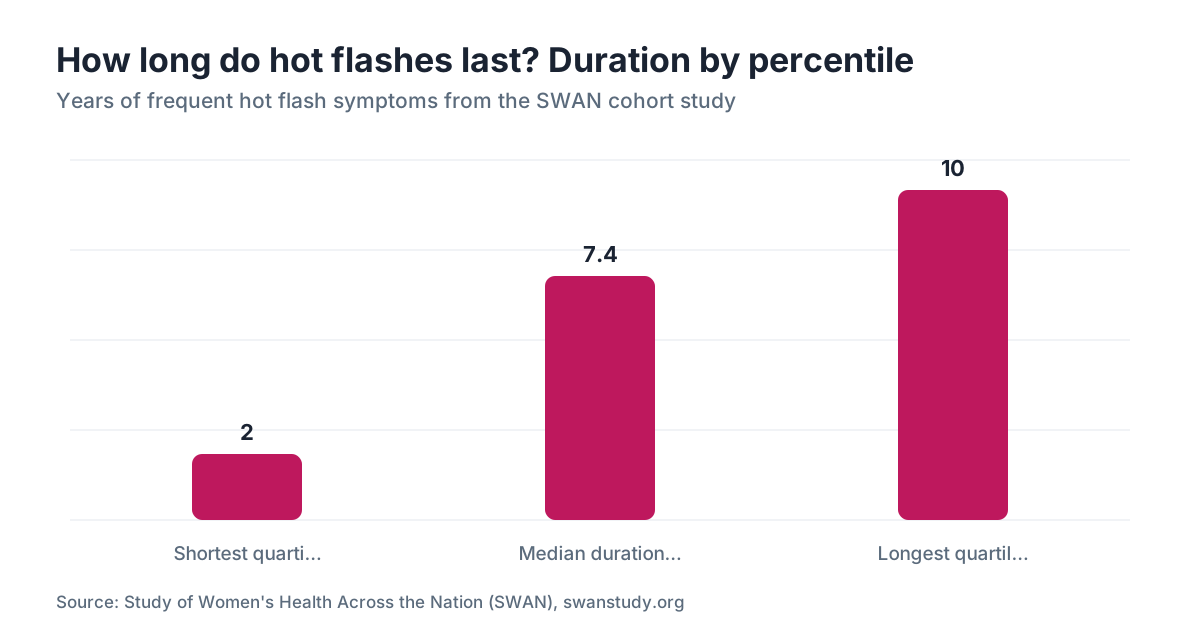
The acute symptoms of perimenopause, hot flashes, night sweats, heavy bleeding, do tend to ease for most women in the first few years of postmenopause. For some, though, vasomotor symptoms drag on for a decade or more. The Study of Women's Health Across the Nation (SWAN) found the median duration of frequent hot flashes was 7.4 years, and for some women it ran well past 10 [5].
Low estrogen has long-term effects that reach far past symptoms:
Bone health. The first five years after menopause bring the fastest bone loss, up to 2% per year, against about 0.5% per year in the decade before [6]. That is why osteoporosis screening becomes a priority. A bone density test (DEXA scan) is recommended at age 65 for all women, and earlier for those with risk factors or premature menopause [6].
Cardiovascular risk. Before menopause, estrogen gives real cardiovascular protection. After menopause, a woman's heart disease risk rises and, by her mid-60s, approaches a man's risk at the same age [4].
Genitourinary changes. Vaginal dryness, painful sex, and urinary urgency, grouped under "genitourinary syndrome of menopause" (GSM), affect roughly 50 to 60% of postmenopausal women. Unlike hot flashes, these tend to get worse over time without treatment [1].
Cognitive changes. Researchers are still working out the link between menopause and cognition, but many women report brain fog and memory trouble. Whether that traces directly to estrogen or partly to wrecked sleep is still an open question in the literature.
What are the most common symptoms across all three stages?
Symptoms vary by stage, with a lot of overlap. The table below maps the most reported symptoms to the stage where they usually stand out.
| Symptom | Perimenopause | Menopause transition | Postmenopause | |---|---|---|---| | Irregular periods | Very common | Resolving | Absent | | Hot flashes / night sweats | Common, worsening | Peak severity | Easing (but may persist years) | | Sleep disturbance | Common | Common | Can persist | | Mood changes / anxiety | Common | Common | Often improves | | Vaginal dryness / GSM | Mild to moderate | Worsening | Ongoing, progressive | | Weight gain (especially abdominal) | Beginning | Ongoing | Ongoing | | Brain fog | Reported | Reported | Variable | | Low libido | Common | Common | Common | | Bone loss | Beginning | Accelerating | Ongoing (slower after year 5) | | Joint pain | Common | Common | Common |
Vasomotor symptoms (hot flashes and night sweats) are the most studied. They affect about 75% of women going through menopause in North America, and for roughly 25% of those women the symptoms are severe enough to disrupt daily functioning [1].
Weight redistribution, the shift toward belly fat specifically, ties closely to falling estrogen and to changes in insulin sensitivity during the transition. This is not simply aging. Studies show the transition itself independently drives abdominal fat gain [5]. For women looking at GLP-1 receptor agonists to address this, our semaglutide for weight loss article covers what the evidence says for midlife women in particular.
What causes the hormonal changes in each stage?
The transition is driven by ovarian aging. Women are born with all the eggs they will ever have, roughly one to two million at birth, dropping to a few hundred thousand at puberty, and finally fewer than 1,000 by the final menstrual period [3]. As the supply of viable follicles thins out, the ovarian response to FSH weakens.
In perimenopause, the pituitary notices the faltering response and cranks up FSH to compensate. That sometimes pushes estradiol above normal in the early transition, which explains why early perimenopause does not always feel like "low estrogen," and why some women get worse PMS before they get hot flashes.
As the transition moves on, estradiol falls more consistently. Progesterone drops even earlier and steeper, because it is only produced after ovulation, and cycles without ovulation become common in late perimenopause [3].
After menopause, the ovaries do not go fully dark. They keep making small amounts of testosterone and androstenedione, which peripheral tissues convert into a weaker estrogen called estrone. That is a different molecule from estradiol (the main premenopausal estrogen), and it explains why fat tissue becomes a meaningful source of leftover estrogen after menopause, a fact that matters for both symptoms and breast cancer risk.
The hypothalamic-pituitary-ovarian (HPO) axis is essentially recalibrating across the whole transition. FSH and LH (luteinizing hormone) stay elevated in postmenopause, while estradiol and progesterone stay low. This architecture is the foundation for understanding why hormone therapy works the way it does. Our guide on hormone replacement therapy covers the evidence in detail.
What treatment options exist for each stage of menopause?
Treatment is not one-size-fits-all. It should match the stage, the severity of symptoms, and your individual risk profile.
Perimenopause. Hormonal options include low-dose hormonal contraceptives (combined pill or hormonal IUD), which can smooth erratic cycles and give some symptom relief while also covering contraception. Menopausal hormone therapy (MHT) is not always first line here, because the fluctuating endogenous hormones make dosing trickier. Non-hormonal options for hot flashes include SSRIs/SNRIs (paroxetine is the only FDA-approved non-hormonal option for vasomotor symptoms, brand name Brisdelle), gabapentin, and oxybutynin [7].
Menopause and early postmenopause. This is where menopausal hormone therapy, estrogen alone for women without a uterus, or estrogen plus progesterone for those with a uterus, has the strongest evidence for symptom control. For women who start within 10 years of menopause or before age 60, it also carries the most favorable benefit-to-risk ratio, per NAMS [1]. Delivery options include pills, patches (estrogen patch), gels, sprays, and vaginal forms. For genitourinary symptoms specifically, low-dose vaginal estrogen works well and carries minimal systemic absorption, which makes it appropriate even for many women who cannot use systemic hormones [1].
The NAMS 2022 position statement concluded: "Hormone therapy remains the most effective treatment for vasomotor symptoms and the genitourinary syndrome of menopause and has been shown to prevent bone loss and fracture" [1].
Later postmenopause. Bone protection (bisphosphonates, denosumab, or hormone therapy in the right candidates) and cardiovascular risk reduction become the main medical priorities. Lifestyle work does real work here: resistance training, adequate calcium and vitamin D, quitting smoking.
For women dealing with menopause-related weight gain, GLP-1 receptor agonists come up more and more. If you are weighing them, our comparison of semaglutide vs tirzepatide is a good starting point. WomenRx offers telehealth hormone evaluation and GLP-1 prescribing for women in this transition, which can be a practical way to get individual guidance without a long wait for a specialist.
Fear of hormone therapy usually traces back to the 2002 Women's Health Initiative (WHI) findings, which were widely misread. WHI studied older postmenopausal women (average age 63) on oral conjugated equine estrogen plus a synthetic progestin. The risk profile for that population and that formulation does not carry over cleanly to a woman in her late 40s or early 50s starting transdermal therapy at menopause onset [1].
How does the timing of menopause affect long-term health risks?
Earlier menopause means more years spent with low estrogen, and that adds up.
Premature ovarian insufficiency (POI, before 40) and early menopause (40 to 44) come with higher rates of cardiovascular disease, osteoporosis, cognitive decline, and all-cause mortality than menopause at the typical age [3]. The Endocrine Society clinical practice guidelines recommend hormonal therapy for women with POI at least until the average age of natural menopause (around 51) unless there is a specific contraindication [3].
Late menopause (after 55) cuts both ways. It links to lower fracture risk and possibly lower cardiovascular risk, but also to slightly higher risk of endometrial and breast cancer, likely from the extended estrogen exposure [2].
What shapes the age at menopause: genetics (the single strongest predictor), smoking (moves menopause up by 1 to 2 years on average), chemotherapy or pelvic radiation, and oophorectomy. Body weight has a modest effect. Very lean women tend toward earlier menopause; obesity is associated with slightly later menopause, possibly because fat tissue produces leftover estrogen [2].
Surgical menopause (both ovaries removed) creates an abrupt estrogen drop that is physiologically different from natural, gradual menopause. Women who have surgical menopause before age 45 face especially high cardiovascular and cognitive risks, and hormone therapy is strongly recommended unless they have hormone-sensitive cancers [3].
Can lifestyle changes actually make a difference across the stages of menopause?
Yes, and the evidence is stronger than the phrase "lifestyle changes" usually gets credit for.
Regular aerobic exercise cuts the frequency and severity of hot flashes in some studies, though the effect is modest next to hormone therapy [4]. More convincing is what exercise does for bone density, muscle mass, cardiovascular risk, and sleep quality, all of which bear directly on menopause health.
Resistance training matters most in postmenopause. Estrogen is anabolic, meaning it helps build and hold onto muscle. When it falls, women lose muscle faster. Resistance training pushes back on that, and it also stimulates bone formation. Two to three sessions a week is the evidence-supported minimum for real benefit [4].
Diet. The SWAN study found that high fiber intake and a Mediterranean-style eating pattern were associated with slightly later natural menopause and less severe vasomotor symptoms, though the data are observational and causality is hard to prove [5]. What is clearer: adequate calcium (1,200 mg/day for postmenopausal women) and vitamin D (800 to 1,000 IU/day) genuinely protect bone, and most women do not get enough from diet alone [6].
Sleep hygiene matters more than it sounds. Night sweats are a major driver of insomnia in perimenopause and early postmenopause, but poor sleep also independently worsens mood, insulin resistance, and cardiovascular risk. Cooling the bedroom, moisture-wicking bedding, and a consistent sleep schedule are low-cost, evidence-consistent moves.
Alcohol speeds up bone loss and can worsen hot flashes. Smoking speeds up the transition and worsens vasomotor symptoms. Neither of those is a lecture. It is just the data.
What do blood tests and hormone levels tell you about your stage?
Hormone testing can help, but it gets overread. Here is what the numbers actually mean.
FSH (follicle-stimulating hormone): an FSH above 30 mIU/mL on two readings, taken 4 to 6 weeks apart and not in the luteal phase, is generally consistent with menopause or late perimenopause. But FSH swings wildly in perimenopause, so a single result is not diagnostic [3].
Estradiol: postmenopausal estradiol usually sits below 30 pg/mL, often below 10. In perimenopause it can be low on some days and much higher on others [3].
AMH (anti-Müllerian hormone): a marker of ovarian reserve that drops as follicle count falls. Some clinicians use it to estimate how close menopause is, but its predictive value for any individual woman is limited [3].
Thyroid function (TSH): always worth checking if you have fatigue, weight gain, mood changes, or irregular cycles, because hypothyroidism mimics many menopause symptoms and is more common in women over 40.
The practical message from the Endocrine Society is that in women over 45 with typical symptoms, clinical picture plus menstrual history is usually enough to guide management. Blood tests matter most when menopause is suspected before 45, when symptoms are atypical, or to monitor response to hormone therapy [3].
For a full look at the menopause clinical picture, including diagnostic criteria and differential diagnoses, our menopause overview covers what most primary care visits miss.
How does menopause affect mental health and mood?
The mood impact of menopause is real and underrecognized. Perimenopause in particular is a window of heightened vulnerability to depression and anxiety, independent of your prior mental health history.
The Harvard Study of Moods and Cycles found that women with no prior history of depression had a two-fold higher risk of significant depressive symptoms during perimenopause than during the premenopausal period [8]. This is not simply a reaction to hard symptoms or life stress, though those contribute. Estrogen fluctuation directly affects serotonin, norepinephrine, and dopamine signaling in the brain.
Anxiety often shows up more than depression in early perimenopause, while low mood and fatigue tend to peak in late perimenopause and the first years of postmenopause.
Hormone therapy has shown antidepressant effects in perimenopausal women in randomized trials, though it is not formally approved as a depression treatment. The evidence is strong enough that NAMS recommends considering hormonal therapy as a first-line option for perimenopausal depression in women who also have other menopause symptoms [1].
Brain fog (trouble with word retrieval, concentration, and short-term memory) is one of the most distressing and least-validated symptoms. Women report it consistently, and there is neuroimaging evidence of shifts in brain metabolism during the transition, but the causal chain is not fully mapped [5]. It does appear to improve for most women in the years after the final period, which is genuinely reassuring.
Is hormone therapy safe, and who should actually consider it?
This question generates more confusion than almost anything else in women's health, mostly because of how the 2002 WHI results were communicated to the public and to prescribing physicians.
The current consensus from NAMS, the Endocrine Society, and the British Menopause Society: for healthy women under 60, or within 10 years of menopause onset, the benefits of hormone therapy generally outweigh the risks for treating bothersome vasomotor symptoms and preventing bone loss [1][3]. NAMS states: "For women who are aged younger than 60 years or who are within 10 years of menopause onset and have no contraindications, the benefit-risk ratio is favorable for treatment of bothersome [vasomotor symptoms] and for those at elevated risk for bone loss or fracture" [1].
The absolute risk numbers matter here. WHI found that for women aged 50 to 59 on combined estrogen-progestin, the excess risk of breast cancer was about 8 additional cases per 10,000 women per year. The excess clot risk was higher with oral estrogen than with transdermal delivery, and transdermal estrogen is now the preferred route for most women because it skips first-pass liver metabolism [1].
Contraindications to systemic hormone therapy include current or recent hormone-receptor-positive breast cancer, active liver disease, unexplained vaginal bleeding, and high personal risk of blood clots.
For women who cannot use systemic hormones but have significant GSM symptoms, low-dose vaginal estrogen is a different conversation, with minimal systemic absorption and a strong safety profile even in breast cancer survivors, per NAMS guidance [1].
Bioidentical compounded hormones are popular but deserve honest scrutiny. FDA-approved bioidentical options (like 17-beta estradiol and micronized progesterone) exist and are the better choice, because they are tested for purity and potency. Custom-compounded preparations lack that oversight. That is a meaningful distinction, not a technicality.
Frequently asked questions
What are the three stages of menopause in order?
In order: perimenopause (the transition phase, often lasting 4 to 7 years), menopause (the single point confirmed after 12 consecutive months without a period), and postmenopause (everything after that point, lasting the rest of a woman's life). Most women reach the menopause milestone around age 51, though the normal range is 45 to 55.
How long does perimenopause last?
The average is about four years, but the range is wide: anywhere from a few months to more than ten years. Late perimenopause, the 12 months directly before the final period, tends to bring the most intense vasomotor symptoms. The NAMS position statement notes the full transition spans variable years before and up to the final menstrual period.
What is the average age for menopause in the United States?
The average age at final menstrual period in the U.S. is 51, according to NAMS. The typical natural range is 45 to 55. Menopause before 40 is called premature ovarian insufficiency and affects about 1% of women. Menopause before 45 is called early menopause and carries higher long-term health risks if not managed with hormonal support.
Can you get pregnant during perimenopause?
Yes. Ovulation is irregular but not absent during perimenopause, which means pregnancy is possible. Contraception stays relevant until you have completed 12 consecutive months without a period. This surprises women who assume irregular cycles mean infertility, but the two are not the same thing.
What is the difference between perimenopause and menopause?
Perimenopause is a transition lasting years, during which hormones fluctuate and periods turn irregular but do not stop completely. Menopause is a specific milestone: the date of your last period, confirmed in hindsight after 12 period-free months. Many symptoms people pin on menopause actually happen during perimenopause, which is why the distinction matters for timing treatment decisions.
Do hot flashes stop after menopause?
For some women, yes. For others, no. The SWAN study found the median duration of frequent hot flashes was 7.4 years, and some women have them for more than a decade after their final period. About 25% of women have hot flashes severe enough to affect daily life. Effective treatments include hormone therapy, SSRIs/SNRIs, gabapentin, and the FDA-approved non-hormonal option fezolinetant (Veozah).
What hormones are tested to confirm menopause?
FSH above 30 mIU/mL on repeat testing and low estradiol are consistent with menopause, but hormone levels swing so much during perimenopause that a single blood draw can mislead you. In women over 45 with typical symptoms and 12 months without a period, clinical diagnosis is usually enough. Blood tests are most useful for women under 45, where premature ovarian insufficiency is a concern.
Does menopause cause weight gain?
The transition itself drives a shift toward abdominal fat, independent of overall weight change, largely from falling estrogen and changes in insulin sensitivity. Some women do gain weight, though aging and reduced activity also contribute. Hormone therapy may modestly reduce this fat redistribution. GLP-1 receptor agonists are used more and more to address menopause-related weight changes in women who meet prescribing criteria.
What is postmenopause and what are the health risks?
Postmenopause begins after 12 consecutive months without a period and lasts the rest of a woman's life, often 30 or more years. The main long-term risks are osteoporosis (bone loss accelerates up to 2% per year in the first five postmenopausal years), cardiovascular disease (risk rises sharply after menopause), and genitourinary syndrome of menopause, which affects an estimated 50 to 60% of postmenopausal women and worsens without treatment.
Is it normal to have symptoms years into postmenopause?
Yes. Vasomotor symptoms (hot flashes, night sweats) persist for more than 10 years in a meaningful minority of women. Genitourinary symptoms tend to worsen over time without treatment rather than improve. Joint pain, sleep disruption, and low libido are also commonly reported years into postmenopause. None of these should be waved off as simply aging. Effective treatments exist for all of them.
What is premature ovarian insufficiency (POI) and how is it different from early menopause?
Premature ovarian insufficiency (POI) means loss of normal ovarian function before age 40, affecting about 1% of women. It is not the same as early menopause (ages 40 to 44) and is not always permanent: some women with POI have intermittent ovarian function and can still conceive. Both carry elevated risks of cardiovascular disease, osteoporosis, and cognitive decline, and hormonal support is strongly recommended.
What is the STRAW+10 staging system for menopause?
STRAW+10 (Stages of Reproductive Aging Workshop) is the standard scientific framework for classifying reproductive aging in women. It divides the life cycle into seven stages from peak reproductive years through late postmenopause, using menstrual cycle changes and hormone levels (especially FSH and AMH) as markers. Clinicians and researchers use it to keep terminology consistent.
Does hormone therapy prevent osteoporosis after menopause?
Yes, hormone therapy is one of the most effective ways to prevent postmenopausal bone loss. NAMS states it has been shown to prevent bone loss and fracture. Bone density tests (DEXA scans) are recommended at age 65 for all women, or earlier for those with risk factors. Women with premature or early menopause face compounded bone loss risk and often benefit most from earlier hormonal intervention.
How do I talk to my doctor about menopause symptoms?
Be specific: note how often and how severe the hot flashes are, how much sleep you are losing, whether your periods have changed, and any mood or cognitive changes. Bring a three-month menstrual calendar if you can. Ask directly about hormone therapy options, because many primary care physicians will not raise it unprompted. If the answers fall short, a menopause specialist or a telehealth platform focused on women's hormones is worth considering.
Sources
- North American Menopause Society (NAMS), Menopause Position Statement 2022
- Office on Women's Health, U.S. Department of Health and Human Services, Menopause page
- The Endocrine Society, Clinical Practice Guideline: Menopause and Perimenopause
- National Institute on Aging (NIA), NIH, Menopause page
- Study of Women's Health Across the Nation (SWAN), funded by NIH
- National Osteoporosis Foundation / Bone Health & Osteoporosis Foundation, Clinical Guidelines
- FDA, Drug Approval: Brisdelle (paroxetine 7.5 mg) for vasomotor symptoms
- Cohen LS et al., Harvard Study of Moods and Cycles, Archives of General Psychiatry, 2006
- Harlow SD et al., STRAW+10 Collaborative Group, Climacteric, 2012
- NIH National Heart, Lung, and Blood Institute, Women's Health Initiative study overview
- FDA, Drug Approval: Veozah (fezolinetant) for vasomotor symptoms