Spotting after menopause: what causes it and when to worry
TL;DR: Any vaginal bleeding or spotting after 12 straight months without a period is postmenopausal bleeding, and it needs evaluation every single time. About 90% of cases have a benign cause, most often vaginal atrophy or endometrial polyps. But 5 to 10% of women who bleed after menopause have endometrial cancer. One episode, same-week call. Do not wait.
What is spotting after menopause, exactly?
Menopause is 12 consecutive months without a menstrual period, and the average age in the United States is 51 [1]. Once that mark passes, the uterus should stay quiet. Any blood, pink discharge, brown discharge, or the faintest spot after menopause is called postmenopausal bleeding (PMB), and clinicians treat it as a red flag until proven otherwise [2].
That does not mean you have cancer. It means the cause has to be found. Roughly 90% of postmenopausal bleeding comes from benign sources. But the 5 to 10% that turn out to be endometrial cancer make bleeding the most common way that cancer announces itself [3]. Caught at stage I, endometrial cancer carries a five-year survival rate above 95% according to the American Cancer Society [9]. That number is exactly why gynecologists say: one episode, same-week call.
Light spotting has a long list of possible causes, from dry, fragile vaginal tissue to endometrial polyps, fibroids, hormonal shifts, or a medication effect. The amount of blood tells you nothing about the severity. A heavy flow can be a harmless polyp. A single spot on toilet paper can be an early cancer. Volume is not the triage tool. The workup is.
What are the most common causes of postmenopausal spotting?
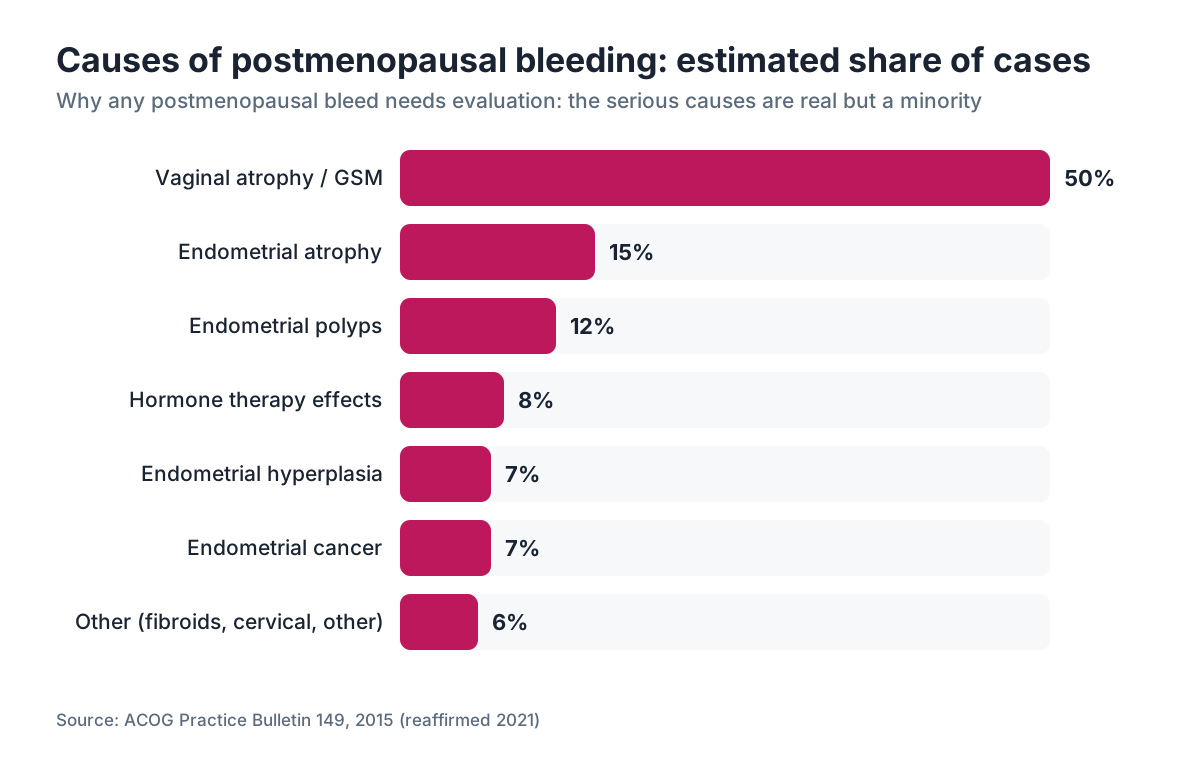
Vaginal atrophy, now called genitourinary syndrome of menopause (GSM), is the single most common source of postmenopausal bleeding, behind roughly 40 to 60% of cases in most published series [4]. Without estrogen, the vaginal walls thin and lose elasticity, and the small surface blood vessels sit right at the surface. Friction from a tampon, intercourse, or even a pelvic exam can cause a small bleed. On exam the tissue looks pale and smooth instead of the normal ridged pink.
Endometrial atrophy is the second most common benign cause. The uterine lining thins so far that tiny areas break down and bleed, the same process as vaginal atrophy but inside the cavity. An ultrasound showing an endometrial stripe under 4 mm in a woman not on hormones is reassuring, though it does not fully rule out pathology [2].
Endometrial polyps are fleshy growths on the uterine lining. Almost always benign, they cause irregular spotting because each one has its own fragile blood supply. Polyps show up better on saline-infusion sonography or hysteroscopy than on a standard scan.
Uterine fibroids (leiomyomas) cause postmenopausal bleeding less often, because fibroids usually shrink after estrogen drops. Submucous fibroids that bulge into the cavity can still bleed.
Hormone therapy is a common culprit. Estrogen-only regimens in a woman who still has her uterus, or badly timed progesterone in a combined regimen, can trigger withdrawal or breakthrough bleeding [5]. This is the whole reason a woman with a uterus must take a progestogen alongside estrogen. Unopposed estrogen stimulates endometrial growth.
Cervical causes, including cervical polyps, cervicitis, or rarely cervical cancer, make up a smaller slice. Trauma, foreign bodies, and bleeding from the bladder or rectum mistaken for vaginal blood round out the list.
| Cause | Estimated share of PMB cases | |---|---| | Vaginal atrophy / GSM | 40-60% | | Endometrial atrophy | 10-20% | | Endometrial polyps | 10-15% | | Hormone therapy effects | 5-10% | | Endometrial hyperplasia | 5-10% | | Endometrial cancer | 5-10% | | Other (fibroids, cervical, other) | 5-10% |
Source: ACOG Practice Bulletin 149, 2015 (reaffirmed 2021) [3]
How often does postmenopausal bleeding turn out to be cancer?
The figure clinicians cite most is 5 to 10%, meaning roughly one in ten women with postmenopausal bleeding gets an endometrial cancer diagnosis [3]. That number moves with age. Under 60, the cancer rate sits closer to 5%. Over 70, bleeding carries a cancer rate climbing toward 15 to 20% in some studies.
Endometrial cancer is the most common gynecologic cancer in the United States, with about 67,000 new cases a year according to the National Cancer Institute [6]. Obesity is the largest modifiable risk factor, because fat tissue converts androgens into estrogen and keeps stimulating the endometrium long after the ovaries stop. Diabetes, late menopause (after 55), never having been pregnant, and Lynch syndrome all push risk higher [11].
Here is the reassuring part. Most endometrial cancer grows slowly and shows itself early through bleeding, which is why so much of it is caught at stage I with a high cure rate. The bad outcome is the one where a woman waits months before getting checked.
What tests will my doctor order?
The first-line workup for any postmenopausal bleeding pairs a pelvic ultrasound with endometrial sampling in most cases [2]. Your exact path depends on your risk and what the first test shows.
Pelvic ultrasound measures the endometrial stripe. In a woman not using hormones, a stripe of 4 mm or thinner has a negative predictive value near 99% for cancer, according to the Society of Radiologists in Ultrasound [10]. A stripe above 4 mm, or one that cannot be measured cleanly, sends you to tissue sampling.
Endometrial biopsy is the most common sampling method. Done in the office in about five minutes, it uses a thin flexible catheter to suction a small piece of lining. It is a blind sample, so it misses roughly 10 to 15% of cancers. Not perfect, but a reasonable first step.
Saline-infusion sonography (also called sonohysterography) puts saline into the cavity during the ultrasound, which makes polyps and submucous fibroids far easier to see. Many gynecologists go straight to this when a standard scan is inconclusive.
Hysteroscopy, a small camera inside the uterine cavity, is the gold standard. The doctor can see abnormal areas and biopsy them in the same sitting. It happens in the office or as a short outpatient procedure.
Do not be surprised if your workup takes more than one step. On hormone therapy, hard-to-reach cervix, high pretest risk: each of those changes the sequence.
Does hormone therapy cause spotting after menopause?
Yes. It is one of the most common reasons women on hormone therapy (HT) call in their first year of use [5]. Knowing which pattern is expected saves you a lot of worry.
Continuous combined HT (estrogen plus progestogen every day) often causes irregular spotting for the first three to six months while the lining adjusts to the progestogen. That is normal. Spotting that runs past six months, or any bleed that feels heavy, needs evaluation.
Cyclic HT (estrogen daily, progestogen for 10 to 14 days a month) is built to produce a predictable withdrawal bleed on the progestogen-free days. Bleeding at the wrong times, or heavier than usual, still earns a call.
Estrogen-only HT is appropriate only after a hysterectomy. Give estrogen without progestogen to a woman with an intact uterus and the endometrium grows unopposed, raising the risk of hyperplasia and cancer over time [5]. FDA labeling on every systemic estrogen product carries this warning.
Local estrogen (vaginal cream, ring, or tablet) works mostly on vaginal tissue and delivers very low systemic levels. Current evidence says it does not meaningfully stimulate the endometrium at standard doses [4]. The Menopause Society states that low-dose vaginal estrogen does not generally require a progestogen in women with a uterus. Bleeding on any form of local estrogen still needs to be checked. More on systemic options in our pieces on hormone replacement therapy and the estrogen patch.
Working with a telehealth prescriber, including WomenRx? Any new or unexplained bleeding should trigger an in-person gynecologic evaluation before anyone adjusts your hormones. A video visit cannot do a pelvic exam or a biopsy.
Can vaginal atrophy alone explain my spotting?
Often, yes. Genitourinary syndrome of menopause is the current name for what used to be called atrophic vaginitis, and it covers the whole range of changes low estrogen brings to the vulva, vagina, and lower urinary tract [4]. The International Society for the Study of Women's Sexual Health and the Menopause Society jointly adopted the term in 2014 because it describes how far the changes reach.
In GSM, the vaginal lining loses its protective layers of glycogen-rich cells. Blood vessels that once sat deep now sit near the surface. A gynecologist sees pale, smooth, sometimes inflamed tissue that bleeds with the lightest contact. A pap smear, intercourse, or a long stretch of sitting can produce a small spot.
Treatment works well. Local estrogen (cream, tablet, ring, or the oral drug ospemifene) rebuilds the lining within weeks to months, stops the bleeding, and clears the dryness and pain. Prasterone (intravaginal DHEA, brand name Intrarosa) is an option for women who want to skip estrogen entirely.
Here is the catch. You cannot assume GSM is the answer until you have had the workup. Tissue that looks atrophic on exam can still hide a polyp or, rarely, a cancer. Treat after the diagnosis, never in place of it.
What symptoms mean I need to be seen urgently?
Any postmenopausal bleeding earns a call within days, not weeks. Some patterns push the timeline tighter.
Be seen within 48 hours for heavy bleeding (soaking a pad), bleeding with pelvic or abdominal pain, bleeding with fever, or any bleed that does not slow within a day or two. Those can point to infection, a degenerating fibroid, or, less often, more advanced cancer.
Do not wait at all if you pass clots, feel dizzy or faint, or the bleeding looks like a heavy period. Go to urgent care or the emergency department.
For light spotting, the right timeline is still the same week, not three months from now. Plenty of OB-GYN offices flag postmenopausal bleeding as a priority appointment for exactly this reason.
Some women should move fastest of all: BMI over 30, diabetes, high blood pressure, a first-degree relative with endometrial or colorectal cancer, or a history of endometrial hyperplasia. Each of those shifts the odds of a serious cause upward.
Can spotting happen years after menopause, even without treatment?
Yes. Bleeding can show up two, five, even ten years past the last period. No amount of elapsed time makes new bleeding automatically safe. The workup is the same at 52 as it is at 72.
What does shift over the years is the mix of risk. Atrophic causes stay common, but cancer risk does not fade. Studies find cancer at higher rates in women over 65 with postmenopausal bleeding than in women in their early fifties, partly from more cumulative estrogen exposure through years of extra weight, and partly because surveillance may have slipped.
Some women get confused because perimenopause dragged on, with cycles spreading months apart before menopause was official. That transitional bleeding is expected. The rule only starts after the full 12-month gap. Not sure you have crossed that line yet? Our article on perimenopause age walks through the timeline, and when does menopause start lays out the clinical definition.
How does a doctor treat postmenopausal spotting once the cause is found?
Treatment follows the diagnosis, so nothing happens until the workup names a cause.
For GSM and vaginal atrophy, local vaginal estrogen is the most effective option with the lowest systemic exposure. Vaginal moisturizers used two to three times a week help with dryness but do not rebuild the tissue the way estrogen does. Ospemifene, an oral selective estrogen receptor modulator, improves vaginal tissue without a topical, and it is FDA-approved for postmenopausal painful intercourse and vulvovaginal atrophy.
For endometrial polyps, hysteroscopic polypectomy (removal during hysteroscopy) is standard. Most women go home the same day. Polyps can return, so follow-up matters.
For endometrial hyperplasia without atypia, high-dose progestogen, either an oral pill or the levonorgestrel IUD, turns the overgrown lining back to normal in most women. The levonorgestrel IUD (Mirena) has strong evidence here and skips systemic exposure [5]. More on how progesterone protects the endometrium in our full guide.
For atypical hyperplasia or endometrial cancer, hysterectomy is the standard recommendation for women who can have surgery. The uterus, tubes, and often the ovaries come out. For early-stage disease in women who are not surgical candidates, radiation or hormonal therapy is an option, with outcomes that are somewhat less predictable.
For hormone-therapy breakthrough bleeding, the fix is adjusting the regimen. Switching from cyclic to continuous combined therapy, or changing the progestogen dose or type, usually settles it. The workup rules out structural problems before any regimen change.
Does body weight or GLP-1 use affect postmenopausal bleeding risk?
Body weight matters a lot here. Fat tissue is an estrogen factory. The enzyme aromatase converts androgens to estrogen inside fat cells, and that peripheral supply keeps running long after the ovaries shut down. Women with a BMI over 30 have much higher rates of both endometrial hyperplasia and endometrial cancer, with some studies showing a two- to fourfold jump in risk [6].
GLP-1 receptor agonists like semaglutide and tirzepatide produce real weight loss, and early observational data hint that the metabolic improvements could lower endometrial cancer risk over time by shrinking the fat-driven estrogen load. Nobody has good data on this yet. No completed randomized trial has tested GLP-1 use against endometrial cancer incidence as a primary endpoint, so it stays a plausible idea rather than a proven one. The SURMOUNT trials for tirzepatide and the STEP trials for semaglutide were not built to answer it [7][8].
What that means in practice: losing weight by any method, GLP-1s included, is good for metabolic health, but it does not clear existing pathology out of the endometrium. A woman on semaglutide who spots after menopause still needs the same workup as anyone else. Considering a GLP-1 as part of a midlife plan? Our pieces on semaglutide for weight loss and semaglutide vs tirzepatide go through the evidence.
One more link worth flagging. Tamoxifen, used in breast cancer treatment, acts as an estrogen agonist in the endometrium even while it blocks estrogen in breast tissue. Postmenopausal women on tamoxifen carry a two- to fourfold higher endometrial cancer risk and should have any bleeding checked fast. Aromatase inhibitors, more common now in postmenopausal breast cancer, do not carry the same endometrial risk.
What should I tell my provider when I call?
Your provider needs a clear picture to triage you. Before you call, write down the date the spotting started, how much blood (spots on tissue, light staining, pad-soaking), the color (bright red, pink, brown), whether you had intercourse or a pelvic exam recently, any pain or cramping, any new medications, and the date of your last period.
Have your current medications ready too, including over-the-counter supplements. Blood thinners (warfarin, apixaban, rivaroxaban, high-dose aspirin) raise bleeding risk. Some herbal products, including red clover and dong quai, have weak estrogen-like activity. Tamoxifen, as noted, specifically raises endometrial risk.
On any hormone therapy, bring the exact names, doses, and formulations. The provider will want to know whether you take estrogen alone or combined, the dose, and whether you have taken it consistently. A missed progestogen dose can trigger a withdrawal bleed that looks exactly like a worrying one.
Do not let embarrassment stall the call. Women sometimes feel that seeking care for one small spot is an overreaction. It is not. It is the correct move, and it is what early cancer detection runs on.
Is it possible to prevent postmenopausal spotting?
You cannot prevent every cause, but you can lower the odds on the common ones.
For GSM-related bleeding, starting low-dose vaginal estrogen before atrophy gets severe keeps the tissue healthier and cuts spontaneous bleeding. Regular sexual activity, including solo activity, keeps blood flowing to the tissue and slows the thinning. This is not a guess. The recommendation sits in Menopause Society clinical guidance [4].
For hormone-therapy bleeding, using the lowest effective estrogen dose and taking the progestogen on schedule without skipped days cuts irregular shedding. The levonorgestrel IUD is especially good at keeping the lining thin, which means less breakthrough bleeding and lower hyperplasia risk over time.
For cancer risk, weight management is the factor you can actually move. Keeping a healthy body weight, controlling blood sugar, and treating high blood pressure all soften the hormonal environment that drives endometrial overgrowth. No supplement or food has convincing evidence for endometrial cancer prevention.
For women with Lynch syndrome, a hereditary mismatch repair gene mutation that sharply raises endometrial cancer risk, major guidelines recommend surveillance with annual endometrial biopsy starting at age 35 to 40 [11]. Some genetic counselors and gynecologic oncologists also discuss prophylactic hysterectomy once childbearing is complete. If endometrial or colorectal cancers cluster in your family, genetic counseling is a reasonable step. You can also read about tracking your baseline bone health with a bone density test as part of a broader menopause plan.
Frequently asked questions
Is any amount of spotting after menopause normal?
No amount of postmenopausal bleeding counts as normal. Once 12 consecutive months have passed without a period, any vaginal bleeding, down to a single light spot, is postmenopausal bleeding and needs evaluation. About 90% of cases have a benign explanation, but the workup is necessary because 5 to 10% turn out to be endometrial cancer.
How long after menopause can you have spotting?
There is no cutoff date. Postmenopausal spotting can happen two, five, or fifteen years after the last period. The evaluation is identical no matter how many years have passed. Risk of a serious cause, cancer included, does not drop with time away from menopause, so age alone is not reassurance.
What does brown spotting after menopause mean?
Brown usually means old blood that oxidized before it left the body. It can come from endometrial atrophy, a small polyp, or old blood clearing after a procedure. It is no more or less concerning than red spotting. Brown discharge after menopause carries the same instruction as any postmenopausal bleeding: get evaluated. Color does not sort benign from serious.
Can stress cause spotting after menopause?
Stress does not directly cause postmenopausal bleeding. After menopause, the hypothalamic-pituitary-ovarian axis no longer cycles hormones, so stress-related shifts do not trigger uterine shedding the way they can before menopause. If you are chalking spotting up to stress, still call your provider. The real cause needs to be found.
Can a UTI or bladder infection cause spotting that looks like vaginal bleeding?
Yes. Urinary tract infections can cause blood in the urine, and women may mistake red-tinged urine for vaginal bleeding, especially with thin atrophic tissue nearby. A simple urinalysis tells the two apart. Urethral caruncles, small benign growths at the urethral opening, can also bleed and be mistaken for vaginal spotting. Your provider will find the source on exam.
What is an endometrial stripe and what thickness is concerning?
The endometrial stripe is the measurement of the uterine lining on transvaginal ultrasound. In postmenopausal women not on hormones, a stripe of 4 mm or less carries about a 99% negative predictive value for endometrial cancer, according to the Society of Radiologists in Ultrasound. A measurement above 4 mm, or a heterogeneous or irregular look, leads to endometrial sampling for a tissue diagnosis.
Do I need a biopsy even if my ultrasound looks normal?
Sometimes, yes. A normal ultrasound (stripe under 4 mm, even appearance) is very reassuring but not 100% sensitive for endometrial cancer. Some cancers arise in a thin, atrophic cavity. With significant risk factors, recurrent bleeding, or a technically limited scan, your provider may still recommend endometrial biopsy despite a reassuring ultrasound.
Can vaginal dryness products or lubricants cause spotting?
Lubricants themselves do not cause spotting, but the friction of intercourse or inserting an applicator can cause small bleeds in atrophic vaginal tissue. The lubricant is not the problem. The fragile tissue underneath is. Regular vaginal moisturizers help maintain tissue integrity over time, though they do not rebuild the lining as well as low-dose local estrogen.
I had a hysterectomy. Can I still have postmenopausal bleeding?
If you had a total hysterectomy (uterus and cervix removed), uterine and cervical bleeding sources are gone. Any vaginal bleeding afterward comes from vaginal tissue itself, most often vaginal atrophy, granulation tissue at the cuff suture line, or rarely vaginal cancer. It still needs evaluation. If you had a subtotal hysterectomy with the cervix left in place, cervical bleeding stays possible.
How soon should I expect results from an endometrial biopsy?
Most pathology labs return endometrial biopsy results within five to seven business days, and some practices deliver them in three to four. Your provider will contact you. If you have not heard back within 10 business days, call the office. Do not assume no news is good news here.
Can tamoxifen cause postmenopausal bleeding?
Yes. Tamoxifen acts as an estrogen agonist in the endometrium while blocking estrogen in breast tissue. Postmenopausal women on tamoxifen have a two- to fourfold higher risk of endometrial polyps, hyperplasia, and cancer. Any bleeding on tamoxifen needs prompt evaluation. Aromatase inhibitors, now more common in postmenopausal breast cancer treatment, do not carry the same endometrial risk.
Will my doctor want to do a pap smear as part of this workup?
A pap smear tests for cervical cancer precursors, not endometrial disease. Your doctor may include one if you are overdue for cervical screening, but it does not replace endometrial evaluation. For a postmenopausal bleeding workup, the tests that matter are transvaginal ultrasound and endometrial biopsy or hysteroscopy. A normal pap smear does not mean the endometrium is normal.
Can I use over-the-counter hormonal supplements to manage my symptoms instead of seeing a doctor?
No. Over-the-counter menopause supplements, including phytoestrogens, black cohosh, and red clover, are not a substitute for evaluating postmenopausal bleeding. Some carry weak estrogen-like activity that could, in theory, stimulate the endometrium further. Get evaluated first. Treatment decisions come after a diagnosis, not before it.
What happens if I ignore postmenopausal spotting?
If the cause is benign, ignoring it means ongoing symptoms but no serious harm from the delay. If the cause is endometrial cancer, ignoring it lets the disease reach a later stage where cure rates fall. Stage I endometrial cancer has a five-year survival rate above 95%. Stage III drops below 60%, and stage IV below 20%. The window for an early catch stays open only if you act.
Sources
- Office on Women's Health, U.S. Department of Health and Human Services: Menopause
- American College of Obstetricians and Gynecologists (ACOG): Frequently Asked Questions, Postmenopausal Bleeding
- ACOG Practice Bulletin Number 149: Endometrial Cancer (reaffirmed 2021)
- The Menopause Society (NAMS): Position Statement on Genitourinary Syndrome of Menopause
- The Menopause Society (NAMS): 2022 Hormone Therapy Position Statement
- National Cancer Institute: Uterine (Endometrial) Cancer
- Wilding JPH et al., STEP 1 trial: Once-Weekly Semaglutide in Adults with Overweight or Obesity. New England Journal of Medicine 2021;384:989-1002
- Jastreboff AM et al., SURMOUNT-1 trial: Tirzepatide Once Weekly for the Treatment of Obesity. New England Journal of Medicine 2022;387:205-216
- American Cancer Society: Endometrial (Uterine) Cancer
- Society of Radiologists in Ultrasound: Consensus Conference on Endometrial Cancer Evaluation, Radiology 2010;256:3
- National Cancer Institute: Lynch Syndrome