Spironolactone for high testosterone in women: what actually works
TL;DR: Spironolactone is an androgen-blocking pill used off-label to treat high testosterone in women. It blocks testosterone receptors and lowers androgen production, which clears hormonal acne, slows unwanted hair growth, and can help scalp thinning. Most women see results at 50 to 200 mg daily within 3 to 6 months. It needs a prescription and cannot be used in pregnancy.
What is spironolactone and why do doctors prescribe it for high testosterone?
Spironolactone started life as a blood pressure drug. The FDA approved it in 1960 as a potassium-sparing diuretic and aldosterone antagonist, and it stays on the approved list for heart failure, edema, and primary hyperaldosteronism [1]. Prescribing it for androgen excess in women is off-label, meaning the FDA never reviewed that specific use. Decades of trial data back it anyway, and the Endocrine Society treats it as standard care [2].
Why it works for testosterone symptoms comes down to two mechanisms. First, it competes with testosterone and dihydrotestosterone (DHT) at the androgen receptor, physically blocking those hormones from binding and acting on skin, hair follicles, and oil glands. Second, it dials down the enzyme activity (5-alpha reductase and certain cytochrome P450 enzymes in the adrenal gland) that turns precursor hormones into active androgens, so there is less testosterone in circulation to begin with [2].
Picture a woman with acne that keeps returning after every antibiotic course, or hair thinning at the crown, or dark coarse hair on her chin and jaw. That double mechanism makes spironolactone one of the most useful options she has. It is not estrogen. It does not reliably stop ovulation, so it is not birth control. And it does not need cycling the way oral contraceptives do.
What causes high testosterone in women?
Normal testosterone in women runs roughly 15 to 70 ng/dL, though every lab draws its reference range a little differently [3]. Push above that range, or convert normal-range testosterone too aggressively to DHT inside the tissues, and the symptoms of androgen excess show up even when the blood number looks fine.
Here are the usual drivers:
| Cause | Estimated prevalence among women with androgen excess | Key feature | |---|---|---| | Polycystic ovary syndrome (PCOS) | 70-80% of cases [4] | Irregular periods, ovarian cysts, insulin resistance | | Congenital adrenal hyperplasia (CAH, non-classic) | ~2-9% of cases [4] | Elevated 17-hydroxyprogesterone, can mimic PCOS | | Idiopathic hyperandrogenism | ~5-15% | Normal ovaries, elevated androgens, no identifiable cause | | Obesity and insulin resistance | Common co-factor | Insulin suppresses SHBG, raising free testosterone | | Perimenopause / menopause | Underrecognized | Estrogen drops faster than testosterone, shifting the ratio | | Ovarian or adrenal tumor | Rare (<1%) | Rapidly rising testosterone, often >200 ng/dL | | Exogenous androgen exposure | Depends on history | Testosterone cream, DHEA supplements |
PCOS is the driver in most cases [4]. The Endocrine Society defines androgen excess as a total testosterone above 50 ng/dL, or a free testosterone above the upper limit of normal on a reliable assay, paired with symptoms [2].
The perimenopause age angle is the one clinicians miss most. Estradiol falls sharply during the transition, but testosterone and DHEA-S drift down slowly, so the ratio tips androgenic. A woman who never had acne in her 30s can suddenly break out with cystic acne at 44 for exactly this reason. That is not late-onset PCOS. It is a ratio problem the transition creates. Our overview of perimenopause age walks through how that shift unfolds.
How does spironolactone improve acne, hair loss, and hirsutism?
Each symptom connects to androgens differently, and each one clears on its own timeline.
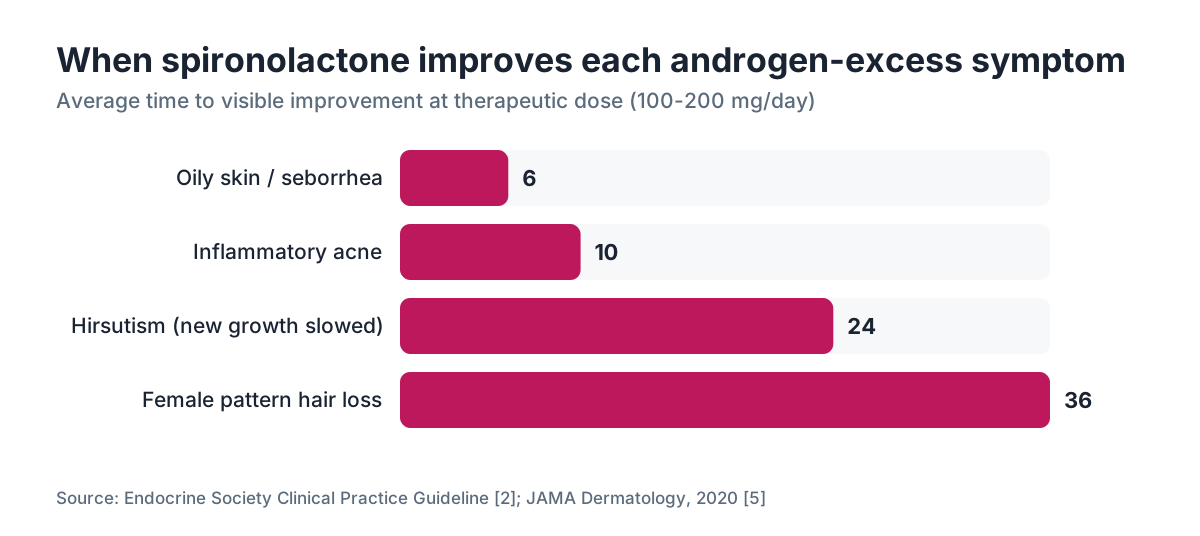
Acne. Oil glands run on androgens. Testosterone and DHT crank up sebum, and excess sebum feeds the Cutibacterium acnes bacteria behind inflammatory breakouts. Spironolactone cuts sebum by blocking the androgen receptors in those glands. Multiple randomized trials confirm real acne reduction at 100 to 200 mg per day, including trial data showing spironolactone lowered lesion counts against placebo [5]. Most women watch their skin start clearing at 6 to 8 weeks, with the best result at 3 to 4 months.
Female pattern hair loss (androgenic alopecia). Follicles at the crown and top of the scalp react to DHT, which shortens the growth phase and shrinks the follicle over time. Spironolactone slows that and, in some women, partly reverses the shrinking. The honest caveat: hair loss answers back slower than acne. Give it 6 to 12 months before you judge it, and regrowth is rarely complete.
Hirsutism (unwanted facial and body hair). Spironolactone does not destroy existing follicles. It mostly stops new terminal hairs from forming and softens what is already there. Dark existing hairs usually need laser or electrolysis alongside it. Trials score improvement on the modified Ferriman-Gallwey scale, and 100 mg per day cut hirsutism scores against placebo across randomized trials pooled in the Journal of Clinical Endocrinology & Metabolism [6].
Menstrual irregularity. In PCOS, spironolactone alone may nudge cycles toward regularity, but it is not dependable for that on its own. Many clinicians pair it with an oral contraceptive to steady cycles and cover contraception (more on that below).
What dose of spironolactone is used for testosterone-related symptoms in women?
The usual starting dose is 50 mg once daily. Dermatologists and endocrinologists titrate up from there based on response and tolerance, and most women land between 100 mg and 200 mg per day [2]. Some providers open with 25 mg for women sensitive to blood pressure dips.
At the 100 to 200 mg range, dosing usually splits in two (50 mg morning, 50 mg evening, say) because a single large dose can bring on stronger diuretic effects by midday.
For acne, the dose-response curve flattens around 150 to 200 mg in most studies. Going higher does not reliably buy more benefit and it does add side effects [5]. For hirsutism, older trials pushed up to 200 mg, which is the practical ceiling. For hair loss, 100 to 200 mg is the most studied range.
There is no standard taper. Most clinicians just stop it. Symptoms tend to come back within a few months of stopping, because the drug treats the receptor-level effect rather than fixing the overproduction underneath.
What are the real side effects of spironolactone in women?
The diuretic effect is the first thing you notice. Expect to pee more often for the first week or two. It usually settles. Drink enough water, because the drug can cause mild dehydration and lightheadedness, especially in the days right after a dose bump.
Menstrual changes. Spotting, breakthrough bleeding, or a shifted cycle length hits roughly 20 to 50% of women depending on dose. That range is wide because it tracks with baseline hormonal status. A combined oral contraceptive clears this up for most women.
Potassium. Spironolactone holds onto potassium, which is what makes it potassium-sparing. In healthy young women with normal kidneys, dangerously high potassium is rare. A 2020 review in JAMA Dermatology found that among otherwise healthy women under 45 taking spironolactone for acne, clinically significant hyperkalemia was uncommon, and routine potassium monitoring may not be necessary in low-risk patients [5]. Even so, most providers check a baseline potassium and recheck it once the dose settles. Women with kidney disease or diabetes, or those on ACE inhibitors or ARBs, need closer monitoring, because those combinations raise the risk sharply [12].
Breast tenderness. Some women get this, more often at higher doses, because the drug's mild anti-androgen effect shifts the estrogen-to-androgen ratio at breast tissue.
Fatigue and dizziness. Both are usually dose-related and ease when you split the dose.
What it does not do: it does not cause weight gain, it does not meaningfully affect bone density, and it does not raise breast cancer risk on current evidence.
One absolute rule you cannot skip: no pregnancy. Spironolactone feminizes male fetuses in animal studies, and the FDA label warns against use in pregnancy [1]. Any woman of reproductive age on this drug needs reliable contraception. That part is not optional.
Does spironolactone require blood tests or monitoring?
Yes, but the monitoring is light. A standard workup before starting spironolactone for androgen excess usually includes:
- Total and free testosterone (to confirm and document the elevation)
- DHEA-S (to gauge the adrenal contribution)
- LH and FSH (helps separate PCOS from other causes)
- 17-hydroxyprogesterone in the early follicular phase (to rule out non-classic CAH)
- Basic metabolic panel including potassium and creatinine
- A pelvic ultrasound if PCOS is on the table
For women clearly in the low-risk group (under 45, no kidney disease, no interacting drugs), the Endocrine Society and recent dermatology literature back a leaner plan: baseline potassium, recheck at 1 to 3 months, then yearly if stable [2][5].
Testosterone levels alone are a poor guide to dose changes, because the drug works at the receptor. If your testosterone comes back in range on spironolactone, that is not a signal to stop. It may just mean the drug is doing its job. Watch the symptoms, not the number.
Can spironolactone be combined with other hormonal treatments?
Yes, and combining often beats spironolactone alone.
Oral contraceptives are the usual partner. Combined pills (estrogen plus progestin) suppress LH-driven ovarian testosterone at the top of the pathway, while spironolactone blocks the receptor end. Together they also raise sex hormone-binding globulin (SHBG), which mops up free testosterone and drops its activity. Several societies name this the first-line regimen for PCOS-related androgen excess [2]. It also fixes the menstrual irregularity and covers contraception, which you need anyway.
Metformin. For women with PCOS plus real insulin resistance, metformin tackles the insulin-driven SHBG suppression and lowers ovarian androgen output. Some guidelines suggest it alongside or in place of spironolactone when the main problem is metabolic rather than cosmetic [4].
GLP-1 receptor agonists. This is a newer area. Real weight loss on semaglutide or tirzepatide can cut free testosterone in women with PCOS, because fat tissue drives androgen production and insulin resistance. A 2022 study in Obstetrics & Gynecology found that losing 5 to 10% of body weight lowered testosterone and improved cycle regularity in women with PCOS [10]. Some women end up needing a lower spironolactone dose, or none, after big weight loss. If you are weighing options for weight management, semaglutide vs tirzepatide covers what the head-to-head data shows.
Progesterone. For perimenopausal women whose androgen excess comes from ratio shifts rather than PCOS, progesterone and low-dose estrogen can address the bigger hormonal picture. Spironolactone then gets added for androgen symptoms if they hang on.
What about testosterone therapy for women? Separate topic, but flag it: some women take low-dose testosterone as part of hormone replacement therapy for libido and mood. If you are already on spironolactone for androgen excess, adding testosterone takes careful titration, because the spironolactone blocks some of what you add. The two are not automatically incompatible. The combination just needs a clinician who understands both.
How long does it take for spironolactone to work?
Acne: visible improvement usually starts at 4 to 8 weeks, with the best result at 3 to 4 months. Many women see a small initial purge in weeks 2 to 4. That is normal.
Facial hair (hirsutism): 6 months is a fair minimum before you judge it. A full year is better. Since existing terminal hairs are already past the point spironolactone can touch, pairing with laser hair removal from the start makes sense.
Scalp hair loss: the slowest of all. Give it 9 to 12 months before you decide the drug is not helping. Density photography at baseline and at 6 months is the most objective way to track it.
Seborrhea (oily skin): often the quickest to respond, within 4 to 6 weeks at an adequate dose.
No meaningful improvement after 6 months at 150 to 200 mg per day? Rethink the diagnosis. True resistance is uncommon. A flat response more often means the testosterone source is not being addressed, or the working diagnosis is wrong.
Who should not take spironolactone for high testosterone?
The absolute contraindications are short:
- Pregnancy or trying to conceive. Full stop.
- Significant kidney disease (eGFR below 30 or so), because the potassium retention turns genuinely dangerous.
- Addison's disease or other low-aldosterone states, where the aldosterone-blocking effect worsens things.
- Concurrent eplerenone (another aldosterone antagonist), which doubles up the potassium risk.
Relative contraindications that need extra monitoring:
- Taking ACE inhibitors, ARBs, or potassium supplements [12].
- Type 1 or Type 2 diabetes with kidney involvement.
- Baseline potassium above 5.0 mEq/L.
Women over 45 who are approaching or in menopause can take spironolactone, and it often fits well. The mild blood pressure drop can even help women whose pressure creeps up during the transition. The contraception requirement drops away after confirmed menopause (12 straight months without a period).
If you want to understand what happens to hormones during this stretch, when does menopause start lays out the timing without hype.
How does spironolactone compare to other treatments for high testosterone in women?
Several options exist, and none wins across the board. The right pick depends on what is driving the testosterone and which symptoms bother you most.
| Treatment | Best for | Key limitation | |---|---|---| | Spironolactone | Acne, hair loss, hirsutism (all three) | Contraindicated in pregnancy; diuretic effects | | Combined oral contraceptive (COC) | Menstrual regulation + androgen excess | Weaker for hair loss alone; not for smokers over 35 | | Metformin | PCOS + insulin resistance, cycle regulation | Minimal direct effect on acne/hair symptoms | | Finasteride | Hair loss (blocks 5-alpha reductase, reduces DHT) | Teratogenic, pregnancy contraindicated; less studied in women | | Flutamide | Hirsutism, acne | Liver toxicity risk limits use; rarely first-line | | Bicalutamide | Emerging use for acne, PCOS | Less evidence than spironolactone; off-label | | GLP-1 agonists | PCOS with obesity and insulin resistance | Indirect effect via weight loss; not a direct androgen blocker | | Eflornithine cream | Facial hair (reduces growth rate) | Treats hair only, not systemic androgen excess |
Spironolactone sits at the top for symptom control across acne, hair loss, and hirsutism, which is why it stays the first-line androgen blocker in dermatology and endocrinology. The Endocrine Society guideline calls "spironolactone the preferred antiandrogen for hirsutism in women" [2].
Where it falls short: the woman who wants to conceive within a year, or the woman whose main problem is irregular cycles with little cosmetic androgen excess. Those women often do better on a COC alone, or metformin plus a COC.
Can you get spironolactone through telehealth for high testosterone?
Yes, and it is now a common route. Spironolactone is not a controlled substance and, in most states, does not require an in-person exam, so telehealth clinicians can evaluate, prescribe, and manage it remotely with the right lab work.
The process runs like this: you fill out a history and symptom questionnaire, order labs at a local draw site or mail-in kit, do a video or asynchronous visit with a licensed clinician, and get a prescription sent to your pharmacy. The follow-up potassium check at 1 to 3 months goes through the same remote setup.
The drug itself is cheap. Generic spironolactone runs about $10 to $30 for a 30-day supply at most pharmacies, and discount pricing on GoodRx at major chains has landed near $10 to $15 for the 100 mg strength [11]. It is one of the least expensive prescription options in this space.
WomenRx runs hormone evaluations that fold androgen excess into the wider hormonal picture, which matters because women rarely have isolated high testosterone with no other context. If your testosterone is up, it helps to see estrogen, progesterone, and your metabolic markers from the same window. Testing one thing at a time misses the ratio shifts that produce the symptoms.
What should you ask your doctor if you think you have high testosterone?
The visit goes better when you walk in with specific asks. Here is what actually matters.
Ask for the right tests. A total testosterone alone will not cut it. You want total testosterone, free testosterone (or calculated free testosterone using albumin and SHBG), DHEA-S, and SHBG in the same draw, ideally on days 2 to 5 of your cycle if you still have regular periods. If a provider orders only total testosterone and it comes back "normal," that does not rule out androgen excess when SHBG is low and free testosterone is high.
Ask whether the cause is identified. PCOS, non-classic CAH, and idiopathic hyperandrogenism get managed a bit differently. A 17-hydroxyprogesterone level drawn in the early morning of the follicular phase takes CAH off the table.
Ask about contraception. If you are of reproductive age, your provider should raise this before writing the script, not as an afterthought.
Ask about the monitoring plan. You should leave knowing when to recheck potassium, when to reassess symptoms, and at what point a dose change is on the table.
If your current provider brushes off androgenic symptoms, or tells you acne at 40 is "just hormones, deal with it," that is a fair moment to get a second opinion. Androgen excess has treatments that work. You do not have to live with it. Telehealth has made it far easier to reach clinicians who focus on this.
Frequently asked questions
Can spironolactone lower testosterone levels on a blood test?
Yes and no. Spironolactone mainly blocks androgen receptors rather than slashing production, so your blood testosterone may not fall much. Some drop happens through enzyme inhibition, but symptom improvement is a better efficacy signal than chasing a lower lab number. Your total testosterone can stay flat while your skin clears completely. Track how you look and feel, more than the report.
Is spironolactone FDA-approved for PCOS or androgen excess in women?
No. Spironolactone is FDA-approved for hypertension, heart failure, edema, and primary hyperaldosteronism. Using it for androgen excess, PCOS, acne, and hirsutism in women is off-label. Off-label prescribing is legal and routine; the Endocrine Society explicitly names it the preferred antiandrogen for hirsutism in women in its clinical practice guidelines.
Will spironolactone help with weight loss or PCOS belly fat?
No. Spironolactone is not a weight loss drug and does not reduce fat directly. Its diuretic effect can drop 1 to 3 lbs of water weight early on, but that is not fat loss. Reaching the insulin resistance behind most PCOS-related weight gain takes a different approach: lifestyle changes, metformin, or GLP-1 receptor agonists like semaglutide.
Can I take spironolactone while breastfeeding?
This one is genuinely uncertain. Spironolactone passes into breast milk in small amounts, and its active metabolite canrenone has been detected in nursing infants. Most major references list it as generally compatible with breastfeeding on limited data, but the infant should be watched for signs of high potassium. Talk through the specific risk and benefit with your prescriber and your baby's pediatrician before continuing.
How do I know if my testosterone is too high if my blood test is in the normal range?
A normal total testosterone does not rule out androgen excess. Free testosterone, the unbound and biologically active part, can be high even when total testosterone reads normal, especially when SHBG is low. Women with obesity, insulin resistance, or hypothyroidism often have suppressed SHBG, which pushes free testosterone into the excess range. Ask for free testosterone and SHBG alongside total testosterone for a clearer read.
Does spironolactone affect fertility?
Spironolactone does not permanently affect fertility. It does not damage eggs or ovaries. But because it is teratogenic (harmful to a male fetus) it must stop before trying to conceive, ideally 2 to 3 months ahead. Some women with PCOS find that treating androgen excess improves how often they ovulate, but spironolactone alone is not a fertility treatment and should not stand in for dedicated fertility care.
Can spironolactone cause depression or mood changes?
This comes up a lot in online forums, and the clinical evidence is mixed. Some women report mood lifts when androgens drop; others report low mood or lower libido. The drug has a mild anti-androgen effect on the central nervous system that could, in theory, reduce drive in sensitive people. No large randomized trial has looked at mood specifically. If you notice a real mood shift after starting it, tell your prescriber.
What happens if I stop taking spironolactone?
Symptoms come back. Because spironolactone treats the receptor-level effect rather than fixing the overproduction, stopping it removes the block and androgens go back to work on their targets. Acne usually returns within 1 to 3 months; hirsutism and hair loss return within 3 to 6 months. Some women take it long-term; others use it for a set stretch alongside lifestyle changes that lower androgens on their own.
Is it safe to drink alcohol while taking spironolactone?
Moderate drinking is not strictly off-limits, but be careful. Alcohol stacked on top of spironolactone's blood-pressure and diuretic effects can raise dizziness and lightheadedness, especially at higher doses. Heavy drinking also strains the kidneys, which matters given the drug's effect on electrolytes. Most clinicians advise limiting alcohol rather than banning it.
Can high testosterone in women increase cardiovascular risk?
The data suggests it can. Women with PCOS, who carry chronically high androgens, have more insulin resistance, abnormal cholesterol, and hypertension, all heart-disease risk factors. Whether androgens directly drive heart disease or the metabolic co-factors do most of the damage is still being studied. Treating the androgen excess and the metabolic drivers together is the current Endocrine Society standard-of-care recommendation.
Does spironolactone interact with potassium supplements or foods high in potassium?
Yes, and this is practical to know. Spironolactone holds onto potassium. If you also take potassium supplements, eat very large amounts of high-potassium foods (bananas, avocados, tomato products, white beans), or use potassium-based salt substitutes often, you can push potassium to unsafe levels. You do not need to avoid these foods; just do not load up on them or add potassium supplements while on the drug.
Can spironolactone help with acne in women over 40?
Yes, and this is one of its clearest use cases. Adult-onset acne in women in their 40s is almost always androgen-driven, and spironolactone hits that mechanism directly. Women in this age group often have fewer contraindications (clot risk matters more for combined pills than for spironolactone), and the drug is well-tolerated at this age. Dermatologists frequently reach for it first in this group.
What is the difference between spironolactone and bicalutamide for high testosterone in women?
Both block androgen receptors. Bicalutamide is more potent and more selective, with no diuretic or blood-pressure effect, which some women tolerate better. It has thinner long-term safety data in women and less regulatory guidance for off-label use. Spironolactone has decades of real-world use and a well-mapped safety profile, which keeps it the first choice. Bicalutamide is a fair alternative when spironolactone is not tolerated or not working.
Can I take spironolactone with an estrogen patch or hormone replacement therapy?
Yes. Spironolactone and estrogen-based hormone replacement therapy are not contraindicated together. For perimenopausal or postmenopausal women with androgen-excess symptoms, pairing an estrogen patch with spironolactone covers both the estrogen-deficiency side and the androgen-excess side of the picture. A clinician who knows both should manage the combination to balance the hormonal effects.
Sources
- FDA, Aldactone (spironolactone) prescribing information
- Endocrine Society, Clinical Practice Guideline on Polycystic Ovary Syndrome
- National Institutes of Health, MedlinePlus: Testosterone Levels Test
- Endocrine Society, Clinical Practice Guideline on Hyperandrogenism in Women
- JAMA Dermatology, Hyperkalemia risk with spironolactone for acne (2020)
- Journal of Clinical Endocrinology & Metabolism, Meta-analysis of spironolactone for hirsutism
- CDC, PCOS fact sheet
- National Institute of Child Health and Human Development, PCOS overview
- American Academy of Dermatology, Hormonal therapy for acne in women
- Obstetrics & Gynecology, Weight loss and androgen levels in PCOS (2022)
- GoodRx, Spironolactone price reference
- FDA, Drug Interactions: Spironolactone label