Small amount of bleeding after menopause: what it means and what to do
TL;DR: Any vaginal bleeding 12 or more months after your last period is postmenopausal bleeding (PMB). It is never normal, even a single spot. About 90% of cases turn out benign, but roughly 1 in 10 women with PMB has endometrial cancer. See a doctor within two weeks. Do not wait to see if it stops on its own.
What does it mean when you bleed a little after menopause?
Menopause means 12 consecutive months without a period and no other medical or surgical cause. After that line, any vaginal bleeding, even one pink smear on your underwear, is postmenopausal bleeding (PMB) and needs a medical look [1].
The blood usually comes from the uterine lining, the cervix, the vagina, or less often the vulva or urethra. The source is rarely obvious from the outside, so a clinician works through a short checklist to rule out anything serious before settling on a harmless answer.
Here is the reassuring part. Population data show around 90% of women who report PMB have a benign cause [2]. Endometrial atrophy (a thinned, fragile lining) and endometrial polyps make up most of those. Here is the sobering part. The remaining roughly 10% have endometrial cancer, the most common gynecologic cancer in the United States [3]. That 10% is why every guideline says to check PMB now, not later.
So a little bleeding is not automatically safer than a lot. Endometrial cancer can announce itself with a single spot. The volume tells you almost nothing about the cause.
What are the most common causes of postmenopausal bleeding?
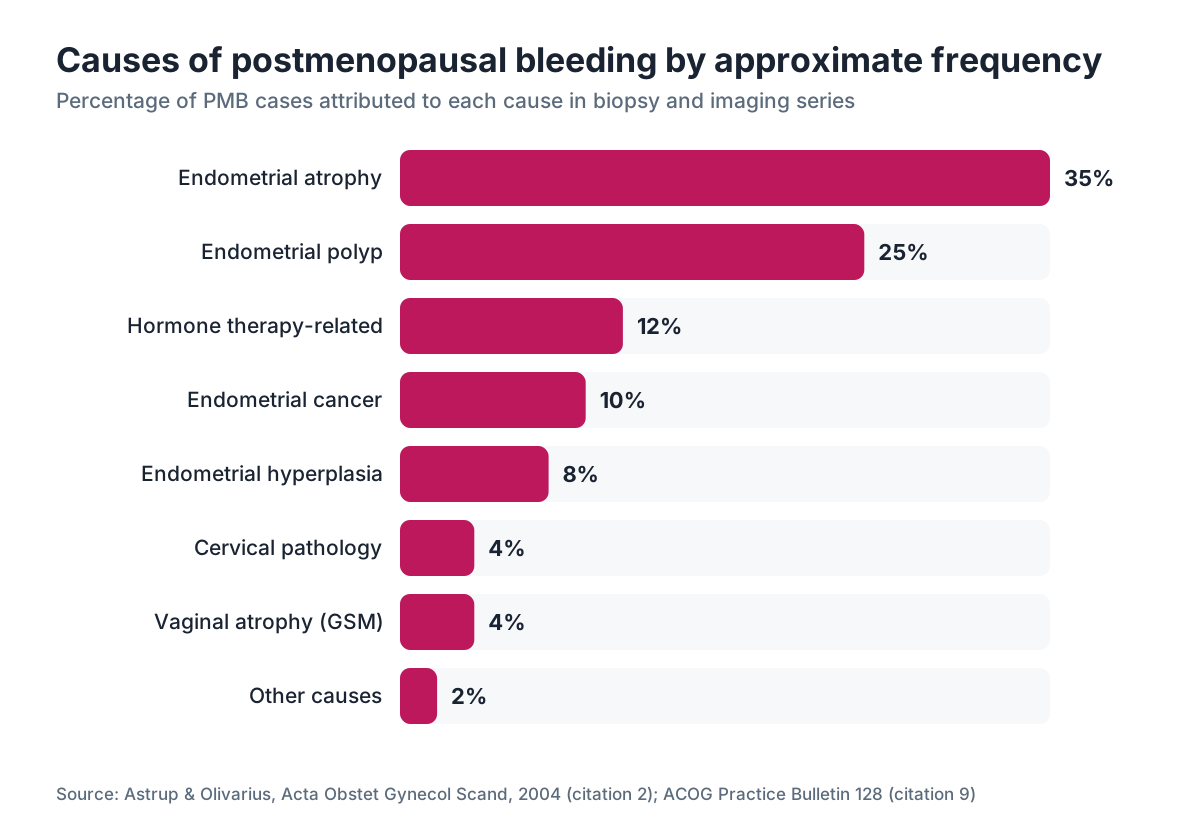
Most PMB comes from atrophy or polyps, both usually benign. The table below lists the causes your doctor considers, roughly in order of how often each shows up in biopsy and imaging series published in peer-reviewed literature [2].
| Cause | Approximate share of PMB cases | |---|---| | Endometrial atrophy | 30 to 40% | | Endometrial polyp | 20 to 30% | | Hormone therapy (progestin breakthrough or missed doses) | 10 to 15% | | Endometrial hyperplasia | 5 to 10% | | Endometrial cancer | 5 to 10% | | Cervical pathology (polyp, cervicitis, cancer) | 3 to 5% | | Vaginal atrophy (genitourinary syndrome of menopause) | 3 to 5% | | Other (fibroids, trauma, medications, coagulopathy) | < 5% |
Endometrial atrophy happens because low estrogen thins the uterine lining down to a few cell layers. That thin lining is fragile and bleeds on its own or with minor friction. It is both the most common cause of PMB and one of the easiest to confirm and treat.
Endometrial polyps are small, usually benign outgrowths of uterine tissue. They range from a few millimeters to several centimeters and turn up on saline-infusion sonography or hysteroscopy. Almost all are harmless, but a small percentage can turn malignant, so doctors usually remove them for pathology.
Hormone therapy is a frequent culprit. Women on continuous combined estrogen plus progestin often bleed irregularly during the first six to twelve months, and that counts as an expected side effect, not a red flag [4]. New bleeding that starts after a long dry spell on HRT, or any bleeding in a woman who is not on HRT, does not get this pass.
Genitourinary syndrome of menopause (GSM) covers vaginal dryness, thinning, and easy bleeding. The walls can bleed from something as small as intercourse or a speculum. GSM affects roughly 50 to 60% of postmenopausal women [5]. GSM bleeding usually comes from the vagina rather than the uterus, but you cannot separate the two by feel alone; imaging settles it.
Endometrial cancer is the diagnosis everyone fears. Lifetime risk for U.S. women is about 3%. Things that raise your personal number: obesity (especially BMI over 30), never having been pregnant, late menopause after age 55, diabetes, and tamoxifen. Stack several of those and your doctor may go to biopsy faster than the usual sequence.
How much bleeding is too much to ignore?
All of it. Any amount.
This is not a case where "just a little" gets you off the hook. The North American Menopause Society says postmenopausal bleeding should prompt evaluation regardless of quantity or frequency [1]. A single spot counts. Pinkish discharge counts. Brown staining counts. Bleeding after sex counts. Bleeding after a pelvic exam counts.
There is no minimum volume that makes PMB safe to watch. Doctors push hard on this because waiting for the bleeding to get heavier delays catching endometrial cancer when it is most curable. Stage I endometrial cancer, caught early, has a five-year survival above 90%. Stage IV drops to around 15 to 17% [3]. Early evaluation is genuinely worth the trip.
What tests will my doctor order for postmenopausal bleeding?
Expect a transvaginal ultrasound first, then possibly an office biopsy. Your doctor starts with a history: current medications (especially tamoxifen, anticoagulants, and hormone therapy), how long since your last period, whether the blood is vaginal or could be urinary or rectal, and your personal and family cancer history.
The standard workup usually includes:
Transvaginal ultrasound (TVUS). Almost always the first test. The main number is endometrial thickness. In a postmenopausal woman not on hormone therapy, a stripe of 4 mm or less carries a very low cancer probability (roughly 1 in 917, per a pooled analysis of 35 studies) [6]. A stripe over 4 mm, or one that cannot be measured clearly, means tissue sampling. ACOG recommends TVUS as the first-line step for PMB [9].
Endometrial biopsy. A thin catheter passes through the cervix into the uterine cavity, right in the office. It takes about two to three minutes and feels like strong menstrual cramps. The tissue goes to pathology. Sensitivity for endometrial cancer runs around 81 to 99%, depending on technique and pathologist [7].
Saline-infusion sonohysterography (SIS) or hysteroscopy. If the ultrasound looks thick or irregular, or the first biopsy is inconclusive, your doctor may want to look inside the uterus. SIS uses saline to push the walls apart so polyps and submucosal fibroids stand out. Hysteroscopy uses a thin camera and lets the doctor take a targeted biopsy at the same time.
Pap smear and pelvic exam. Your doctor checks the cervix and vaginal walls for cervical polyps, cervical cancer, or atrophy.
What those tests show sets the next move: watchful waiting, treatment for atrophy, polyp removal, or referral to gynecologic oncology.
Can hormone therapy cause bleeding after menopause?
Yes. It is one of the most common reasons women on HRT bleed. The pattern matters a lot.
On continuous combined HRT (daily estrogen plus progestin, no break), up to 40% of women spot or bleed irregularly in the first three to six months [4]. This is breakthrough bleeding, and it comes from the lining settling into a stable, atrophic state. It usually quiets down by month six to twelve. If it does not, or if it starts after a long stretch of no bleeding on the same regimen, it needs a workup like any other PMB.
On sequential or cyclical HRT (progestin added for only 10 to 14 days a month), scheduled withdrawal bleeds are expected and are not PMB. Any bleeding outside that window is, and gets the same evaluation.
Missed progestin doses matter. Estrogen without enough progestin to oppose it stimulates the lining and raises the risk of hyperplasia and cancer. That is why unopposed estrogen is only appropriate after a hysterectomy [4]. If you still have a uterus and take estrogen, you need progestin. No exceptions.
For what hormone therapy actually contains and how to use it right, see hormone replacement therapy and progesterone.
The estrogen patch delivers estrogen through the skin and skips first-pass liver metabolism. Patch, pill, or gel, the progestin rule for an intact uterus is identical. See estrogen patch for more on that route.
Can vaginal dryness and atrophy cause spotting after menopause?
Yes, but never assume it without ruling out the uterus first. Genitourinary syndrome of menopause (GSM) is a real and underrated cause of postmenopausal spotting.
After menopause the vaginal lining thins steadily. The tissue turns pale, smooth, and fragile. The rub of underwear, a speculum, or intercourse can open small tears that bleed. That bleeding tends to be light pink or brown, shows up on toilet paper or underwear rather than as flow, and often travels with burning, dryness, or pain during sex.
An estimated 50 to 60% of postmenopausal women have GSM symptoms bad enough to affect daily life, yet fewer than 25% seek treatment [5]. Local vaginal estrogen, vaginal DHEA (prasterone), or oral ospemifene treat it well. Systemic hormone therapy helps too, though local vaginal estrogen delivers higher concentrations to the tissue with minimal systemic absorption [5].
The trap is blaming the bleeding on GSM without checking the uterus. Your doctor should confirm the lining is thin and normal before landing on GSM as the answer.
Does bleeding after menopause always mean cancer?
No. Most cases are benign. But 1 in 10 is not, and nothing about the bleeding tells you which group you are in.
The 90% benign figure gets misused in reassuring chats. What it really means is that if you have PMB and see a doctor promptly, the odds favor you. It does not mean you can skip the visit and assume you are in the 90%. The only way into the clear is to finish the workup.
Risk factors that tilt your personal odds toward endometrial cancer:
- BMI over 30 (fat tissue converts androgens to estrogen, creating estrogen excess with no progestin to oppose it)
- Personal or family history of Lynch syndrome (hereditary nonpolyposis colorectal cancer, which pushes lifetime endometrial cancer risk to 40 to 60%)
- Polycystic ovary syndrome
- Tamoxifen (a selective estrogen receptor modulator used for breast cancer that acts partly like estrogen on the uterus)
- Type 2 diabetes
- Late menopause, after age 55
- Never having been pregnant
Stack several of these and your doctor may skip watchful waiting even after a reassuring ultrasound and go straight to tissue sampling. That is good medicine, not overreaction.
How quickly should I see a doctor for postmenopausal bleeding?
Within two weeks. That is the standard from most gynecologic societies, and sooner if you are passing clots, have pelvic pain, or the bleeding is heavy [1].
The UK's National Health Service runs a Two-Week Wait pathway for suspected cancer referrals precisely because early endometrial cancer, caught before it spreads, is highly curable. The principle holds wherever you live. Do not save PMB for your next annual visit.
If you are on hormone therapy with a predictable withdrawal bleed and you get one extra spot right around withdrawal time, call your prescriber and describe exactly what happened. They may have you watch one cycle or come in right away, depending on the details. But do not talk yourself into "it's just the HRT."
Telehealth can be a fast first contact. A provider can review your history, medications, and last imaging, then help you decide whether to head to an emergency visit, book urgent gynecologic care, or line up the right tests. WomenRx offers hormone-focused care and can help sort out whether your situation needs a same-week in-person exam.
What happens if postmenopausal bleeding is left untreated?
It depends entirely on the cause, and that is the point: you cannot know the cost of waiting until you know the cause.
If the cause is benign (atrophy, a small polyp), leaving it alone may mean the bleeding keeps coming and going. That is annoying and disrupts daily life, but it is not dangerous by itself.
If the cause is endometrial hyperplasia with atypia, waiting puts you at real risk of progression to cancer. Atypical hyperplasia carries roughly a 25 to 30% risk of concurrent or later endometrial cancer if left alone [10].
If the cause is endometrial cancer and it goes untreated, it advances. Cancer still confined to the uterus (Stage I) can often be cured with hysterectomy alone. The same cancer found at Stage III or IV needs far more aggressive treatment and carries much lower survival [3].
The case for prompt evaluation is not that you certainly have cancer. It is that the cost of checking is low (a pelvic ultrasound and maybe a 10-minute office biopsy) and the cost of a missed cancer is very high. That math is easy.
Can weight, obesity, or GLP-1 medications affect postmenopausal bleeding?
Weight ties directly to postmenopausal bleeding risk. Fat is an active endocrine organ. After menopause the ovaries stop making most estrogen, but fat cells keep converting adrenal androgens into a form of estrogen called estrone. More body fat means more estrone. Estrone stimulates the uterine lining with no progestin to balance it, which drives thickening, hyperplasia, and cancer risk. The higher the BMI, the higher the endometrial cancer risk, and the relationship is dose-dependent [3][11].
That is why endometrial cancer runs more common in women with obesity, and why real weight loss after menopause can lower that risk.
GLP-1 receptor agonists (semaglutide, tirzepatide) are the most effective medical weight-loss tools we have. Semaglutide produced about 14.9% mean body weight reduction in the STEP 1 trial, and across trials the class lands in a 10 to 22% range [8]. As more perimenopausal and postmenopausal women use them, the downstream effect on hormone-sensitive tissue like the endometrium is a real, underexplored question. We do not yet have long-term endometrial biopsy data from the STEP or SURMOUNT programs.
Some women starting a GLP-1 report spotting or irregular bleeding early on. The likeliest explanation is the metabolic shift and changing fat mass rather than a direct drug effect on the uterus, but this needs more study. If you are postmenopausal, on a GLP-1, and you spot, treat it like any other PMB: get evaluated. See semaglutide for weight loss for what the trials actually measured.
What treatment options exist once the cause is identified?
Treatment follows the cause the workup finds, and most causes have simple fixes.
Endometrial atrophy responds to local vaginal estrogen, or systemic HRT if you have other menopausal symptoms. Local estrogen rebuilds the vaginal lining and can stabilize the atrophic uterine lining. Most women with atrophy-related PMB stop bleeding once low-dose vaginal estrogen starts.
Endometrial polyps come out with hysteroscopic polypectomy, an outpatient procedure. The tissue goes to pathology. Most are benign. Recurrence happens but is uncommon.
Endometrial hyperplasia without atypia usually gets progestin therapy (oral progestin or a levonorgestrel-releasing IUD, which delivers progestin locally). Response rates are high, and follow-up biopsies confirm the lining has regressed.
Endometrial hyperplasia with atypia or endometrial cancer typically calls for hysterectomy with removal of the tubes and ovaries. Depending on stage and grade, radiation, chemotherapy, or hormone therapy may follow.
GSM-related bleeding responds to local vaginal estrogen, vaginal DHEA (prasterone), or ospemifene. These rebuild the tissue so it stops tearing.
HRT-related breakthrough bleeding often settles with a regimen tweak. Your prescriber can change the dose, delivery method, or progestin type, or switch from continuous to sequential dosing, to find a bleed-free pattern.
If this lands right after a new menopause diagnosis, it helps to understand your full hormone picture first. See menopause and when does menopause start for where you sit in the transition.
Is bleeding after menopause different from late perimenopause spotting?
Yes, and the difference changes what you do about it.
Perimenopause is the years-long run-up to menopause. Irregular periods are normal here because ovulation gets erratic. You might skip three months, get a period, spot for a week, then go six months with nothing. All of that is ordinary perimenopausal variation, not PMB.
But once you have gone 12 full consecutive months with no period and then bleed, you have crossed into postmenopause, and the bleeding is now PMB by definition. The 12-month mark is the line that flips you into the more urgent protocol.
Here is where it gets messy. Some women are not sure when they last bled, especially if periods went very light and irregular before stopping. If you are in your mid-to-late 50s, think it has been more than a year, and then notice spotting, treat it as PMB and get checked. The cost of an unneeded reassuring exam is low. The cost of a missed endometrial cancer is not.
For the transition timeline, see perimenopause age and menopause age.
Frequently asked questions
Is it normal to have light spotting years after menopause?
No. Any spotting 12 or more months after your final period is postmenopausal bleeding and should be evaluated, no matter how light or how many years have passed. About 90% of cases have benign causes, but roughly 1 in 10 women with postmenopausal bleeding has endometrial cancer, which is highly treatable when caught early. See a doctor within two weeks.
Can stress cause bleeding after menopause?
No, stress alone does not cause postmenopausal bleeding. Before menopause, stress can disrupt the hypothalamic-pituitary-ovarian axis and cause irregular periods. After menopause that cycle is no longer running, so stress cannot trigger uterine bleeding. If you are bleeding, there is an anatomical cause that needs investigation. Do not write it off as stress without a workup.
What does brown discharge after menopause mean?
Brown discharge after menopause is old blood and gets evaluated the same way as red bleeding. The brown color just means the blood took longer to leave the uterus or vagina and oxidized on the way out. It does not mean the cause is milder. The same list applies: atrophy, polyp, hyperplasia, or cancer. See your doctor.
Can a urine or bowel issue be confused with vaginal bleeding after menopause?
Yes. Blood in urine (from a urinary tract infection, kidney stone, or bladder cancer) and blood from hemorrhoids or rectal fissures can look like vaginal bleeding, especially on toilet paper. Your doctor will confirm the source. A careful pelvic exam and sometimes a urinalysis or colonoscopy referral help sort it out.
How long after stopping hormone therapy is bleeding still considered normal?
Some light withdrawal bleeding in the first few weeks after stopping HRT is common as the lining sheds. Bleeding that runs past four to six weeks after stopping, or that restarts once it has settled, should be evaluated. There is no universal cutoff, so if you are unsure whether the timing explains your bleeding, call your doctor.
Can a cervical polyp cause postmenopausal bleeding?
Yes. Cervical polyps are small, benign growths on the cervix that bleed with minimal stimulation, including after a pelvic exam or intercourse. They are often visible during a speculum exam and can be removed in the office. Pathology is sent to rule out the rare malignant lesion. Cervical cancer can also cause postmenopausal bleeding and is checked with a Pap smear.
What is a normal endometrial thickness on ultrasound after menopause?
In postmenopausal women not on hormone therapy, an endometrial stripe of 4 mm or less is reassuring. That 4 mm threshold ties to a cancer risk of roughly 1 in 917 in women with PMB, per pooled data from 35 studies. Women on hormone therapy often have a slightly thicker lining, and the biopsy cutoff shifts to around 5 mm depending on the protocol.
Does tamoxifen cause postmenopausal bleeding?
Yes. Tamoxifen, used for estrogen-receptor-positive breast cancer, acts partly like estrogen on the uterine lining. It raises the risk of endometrial polyps, hyperplasia, and cancer. Any vaginal bleeding in a woman taking tamoxifen should be evaluated promptly, and guidelines recommend annual gynecologic surveillance for women on long-term tamoxifen.
Can exercise or sex cause bleeding after menopause?
Intercourse and vigorous activity can trigger bleeding in women with vaginal atrophy because the tissue is thin and fragile. That does not make the bleeding harmless. Blood triggered by sex could come from the vagina, a cervical polyp, or the uterus. Any postcoital or activity-related bleeding after menopause warrants a pelvic exam and likely a transvaginal ultrasound.
Do I need a hysterectomy if I have postmenopausal bleeding?
Not necessarily. Most causes of postmenopausal bleeding do not need a hysterectomy. Atrophy is treated with local estrogen. Polyps come out hysteroscopically. Hyperplasia without atypia responds to progestin. Hysterectomy is usually reserved for atypical hyperplasia and endometrial cancer, and even then the decision depends on stage, grade, and your overall health. The workup defines the treatment.
Can a bone density test or other routine screening detect endometrial cancer?
No. A bone density test measures bone mineral density and has nothing to do with the uterus. There is no approved routine screening test for endometrial cancer in the general population. It is diagnosed by tissue biopsy after bleeding prompts evaluation. That is why reporting any postmenopausal bleeding matters: the symptom is the screening mechanism.
How do I know if my bleeding is coming from my vagina or my uterus?
You usually cannot tell from the outside, and neither can your doctor without an exam. A pelvic exam, transvaginal ultrasound, and sometimes saline sonohysterography pin down the source. Vaginal atrophy bleeds tend to be very light and paired with dryness or pain, but that pattern overlaps too much with uterine causes to trust at home.
What questions should I ask my doctor about postmenopausal bleeding?
Ask: Do I need an endometrial biopsy or just an ultrasound? What are my personal risk factors for endometrial cancer? If my ultrasound is reassuring, how long do I wait before reporting new bleeding? What are my options if this is atrophy? What does the result mean for starting or continuing hormone therapy? Write them down before the appointment so you cover them all.
Sources
- North American Menopause Society (NAMS), Menopause Practice Guidelines
- Astrup K, Olivarius Nde F. Frequency of spontaneously occurring postmenopausal bleeding in the general population. Acta Obstet Gynecol Scand. 2004
- National Cancer Institute, SEER Cancer Statistics, Uterine Cancer
- FDA, Approved Drug Label: Climara (estradiol transdermal system) and Provera (medroxyprogesterone acetate)
- Portman DJ, Gass MLS; Vulvovaginal Atrophy Terminology Consensus Conference Panel. Genitourinary syndrome of menopause. Menopause. 2014
- Smith-Bindman R et al. How thick is too thick? When endometrial thickness should prompt biopsy in postmenopausal women without vaginal bleeding. Ultrasound Obstet Gynecol. 2004
- Dijkhuizen FPHLJ et al. The accuracy of endometrial sampling in the diagnosis of patients with endometrial carcinoma and hyperplasia. Cancer. 1999
- Wilding JPH et al. Once-weekly semaglutide in adults with overweight or obesity (STEP 1). N Engl J Med. 2021
- American College of Obstetricians and Gynecologists (ACOG), Practice Bulletin 128: Diagnosis of Abnormal Uterine Bleeding in Reproductive-Aged Women
- Clarke MA et al. Endometrial cancer risk among women with endometrial hyperplasia: the effect of phenotype. Cancer Epidemiol Biomarkers Prev. 2018
- Centers for Disease Control and Prevention (CDC), Uterine Cancer Statistics