Signs perimenopause is ending: what your body is telling you
TL;DR: Perimenopause ends when you've gone 12 consecutive months without a period. That 12-month mark is the clinical definition of menopause. The clearest signs you're near it: periods stretching out to every 2-3 months or longer, hot flashes peaking then fading, FSH consistently above 25-40 IU/L, and a thinning uterine lining that shows up as lighter, shorter bleeds.
What does it actually mean for perimenopause to end?
Perimenopause ends the moment you hit 12 consecutive months without a period. That 12-month anniversary is the clinical definition of menopause, set by the North American Menopause Society (NAMS) and consistent across every major guideline. [1] The day after that anniversary, you're postmenopausal.
Simple on paper. Confusing in real life. The symptoms that defined perimenopause (hot flashes, poor sleep, brain fog, mood swings) don't vanish on that anniversary. Some get worse in the first year of postmenopause before they ease. Others linger for a decade. The end of perimenopause is a hormonal threshold, not a finish line where you wake up feeling better.
What actually changes is your ovarian activity. During perimenopause your ovaries still fire erratically, throwing off unpredictable estrogen spikes and crashes. Once you're postmenopausal, estrogen from your ovaries drops to a steady low, roughly 10-20 pg/mL compared to the 40-400 pg/mL that cycled during your reproductive years. [2] Your body stops trying and settles. That's genuinely different biology, even if it doesn't feel like relief right away.
One thing worth knowing: a single missed period, or even six months without one, does not mean you're done. Until you hit that 12-month mark, you can still ovulate and still get pregnant. Contraception stays relevant until menopause is confirmed.
What are the signs that perimenopause is ending?
There's no single dramatic signal. It's a pattern that builds over months. Here are the most reliable signs, roughly in the order they show up.
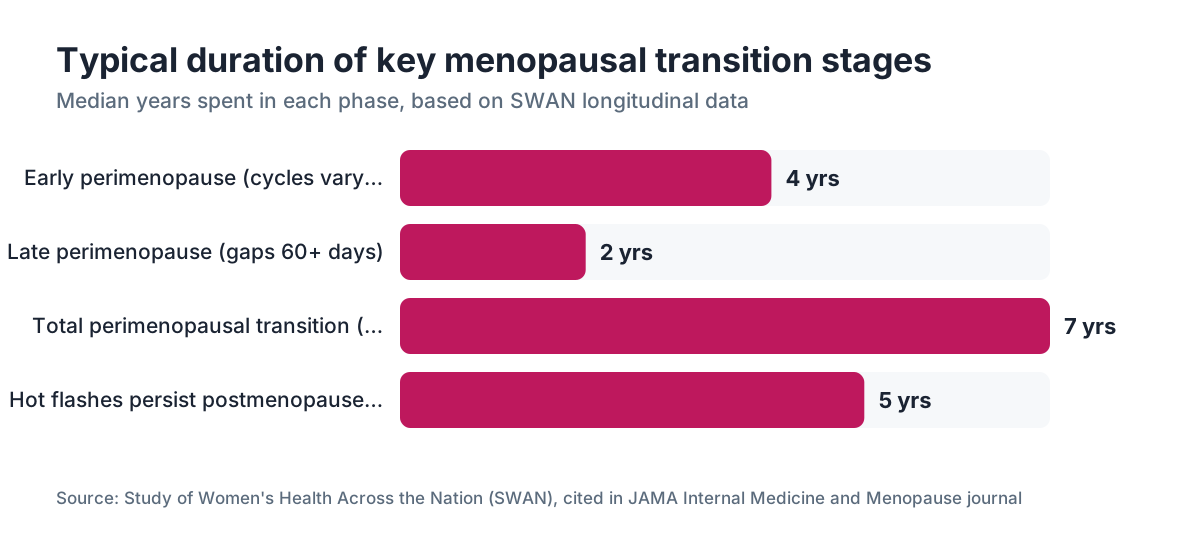
Periods becoming rare, more than irregular. Early perimenopause means cycles that vary by 7 or more days. Late perimenopause, the phase right before menopause, is defined by skipped periods of 60 days or longer. [3] If your periods have gone from "unpredictable" to "I haven't had one in three months," you're likely in late perimenopause. When the gaps stretch to four, five, six months, the end is close.
Hot flashes peaking, then fading. For most women, hot flash frequency peaks in the late perimenopausal and early postmenopausal window, right around the final menstrual period, then declines over the following years. [4] Hot flashes that were fierce and are now noticeably milder or less frequent are a real signal.
Vaginal and urinary changes getting louder. As estrogen drops toward its postmenopausal floor, the tissues of the vagina, vulva, and urethra thin and dry. This genitourinary syndrome of menopause (GSM) tends to worsen in late perimenopause and early postmenopause. New dryness, discomfort with sex, or more urinary urgency tells you estrogen is hitting sustained lows.
Sleep gets worse before it gets better. Many women report the worst insomnia of the whole transition in the final 12-18 months before their last period. It's partly hot-flash-driven and partly a direct effect of low progesterone. Bad sleep plus sparse periods points toward the late stage.
Mood stabilizes, eventually. Perimenopause is the most mood-turbulent phase for most women, driven by erratic estrogen. Once you're postmenopausal and estrogen settles at a steady low, many women say the unpredictable swings calm down, even though the estrogen level itself is lower. Fewer spikes, fewer crashes.
FSH rises and stays up. Follicle-stimulating hormone climbs as your ovaries become less responsive. A single FSH reading isn't diagnostic because it swings wildly during perimenopause, but FSH consistently above roughly 25-40 IU/L, on multiple tests weeks apart, says your ovarian reserve is nearly gone. [2]
Your periods, when they come, are lighter or shorter. The uterine lining thins as estrogen drops. Many women notice their last few periods are brief spotting rather than full flows. That thin lining is a sign the estrogen support behind it is mostly gone.
How long does perimenopause last and when does it typically end?
The median duration of perimenopause is about 4 to 8 years, and the range is genuinely wide. The Study of Women's Health Across the Nation (SWAN), one of the largest longitudinal studies of this transition, found the median total length of the perimenopause-to-menopause transition was 7.4 years. [3]
Most women in the U.S. reach menopause between ages 45 and 55, with the median around 51 to 52. [1] So perimenopause usually starts somewhere in the mid-to-late 40s, though starting in the early 40s is common. There's more on timing in our article on perimenopause age and when does menopause start.
Smokers tend to reach menopause 1-2 years earlier than nonsmokers. Women who had chemotherapy or radiation may have an accelerated timeline. Genetics carry weight: if your mother hit menopause at 48, that's a real data point for you.
The late stage of perimenopause, defined by those 60-plus-day gaps, lasts an average of 1-3 years before the final period arrives. So if you're already in the "periods every few months" pattern, you may be looking at 1-3 more years, not a decade.
Can a blood test confirm perimenopause is ending?
Sort of, but not as cleanly as you'd hope. No single blood test gives you a "done in 6 months" answer.
FSH is the test most clinicians order. As ovarian function declines, the pituitary releases more FSH to push the ovaries, so FSH rises. An FSH consistently above 25-40 IU/L alongside low estradiol (below 20-30 pg/mL) fits with approaching menopause. [2] The catch: during active perimenopause, FSH can be high one month and normal the next, because the ovaries are still firing on and off. One high reading confirms nothing.
Estradiol, the main form of estrogen, does fall toward postmenopausal levels (usually below 20-30 pg/mL) as you near your final period, but it fluctuates too. AMH (anti-Mullerian hormone) is a better marker of ovarian reserve and declines more steadily than FSH, reaching very low or undetectable levels in the 5 years before menopause. [5] AMH testing isn't standard practice for staging, though, and most insurers won't cover it for that.
Inhibin B also falls with declining follicle numbers, but it's rarely ordered outside research settings.
The honest clinical reality: your menstrual pattern is still the most reliable indicator. A woman with sparse, short, infrequent periods and an FSH consistently in the high range is almost certainly in late perimenopause. Labs confirm the picture. They don't replace it.
If you're on hormonal birth control, FSH and estradiol testing is mostly useless for staging because the pill suppresses your natural hormones. You'd have to stop contraception for at least 2-3 months for the labs to reflect your real ovarian status.
What symptoms get worse right before perimenopause ends?
The final stretch can feel like the worst part. That's more than in your head. SWAN found that hot flash frequency peaks around the time of the final menstrual period, not years before it. [4] So if you're having more hot flashes now than you did two years ago, you may be closer to the end than you think.
Sleep gets worse. Night sweats are the nocturnal version of hot flashes, driven by the same sharp estrogen swings. When estrogen drops toward its postmenopausal baseline, the hypothalamus, which runs body temperature, turns hypersensitive to small changes. This settles a year or two postmenopause for most women, but it peaks right at the transition.
Joint pain is underreported and underappreciated. Estrogen has anti-inflammatory effects, and its decline tracks with more joint stiffness and aching, especially in the hands, knees, and hips. SWAN found musculoskeletal pain worsened during the transition for many women, independent of aging. [3]
Brain fog and memory blips tend to peak in late perimenopause too. Part sleep deprivation, part the direct effect of fluctuating estrogen on neural signaling. Most women find cognitive symptoms improve postmenopause once estrogen holds steady at its new low.
Vaginal dryness and GSM symptoms worsen. Unlike hot flashes, they don't improve on their own after menopause. Left alone, they progress.
How is perimenopause different from menopause itself?
Perimenopause is the transition. Menopause is the point. Postmenopause is everything after.
Perimenopause runs on fluctuating, erratic ovarian hormones. Your estrogen doesn't just drop, it swings up and down without warning, which is why the symptoms feel so chaotic. Many women find early postmenopause more manageable in some ways because the wild swings stop, even though the baseline is lower.
Menopause itself is a single day: the 365th day after your last period. You can only name it looking back.
Postmenopause is the rest of your life. The health risks tied to low estrogen (bone loss, cardiovascular changes, genitourinary atrophy) build up during postmenopause. That's why the timing of hormone decisions matters. The "timing hypothesis" in hormone research, supported by the Women's Health Initiative re-analysis and the KEEPS trial, holds that starting hormone replacement therapy within 10 years of menopause or before age 60 carries a more favorable risk-benefit profile than starting later. [6]
For a fuller picture of what comes next, see our article on menopause and menopause age.
Does perimenopause ending mean symptoms stop?
No, and this is one of the most common misreadings of the whole process. Perimenopause ending does not switch off symptoms.
Hot flashes persist after the final period for a median of about 4-5 years, and for roughly 10-15% of women they run for a decade or longer. [4] The Menopause Strategies: Finding Lasting Answers for Symptoms and Health (MsFLASH) research network found a subset of women have hot flashes well into their 60s, regardless of when the hormonal transition happened.
GSM symptoms (dryness, discomfort, urinary urgency) don't improve on their own after menopause. They slowly worsen unless treated with local estrogen, vaginal DHEA, or ospemifene.
Bone loss speeds up in the first 5-7 years postmenopause. You lose roughly 1-2% of bone mineral density per year in that window without intervention. [7] That's the strongest argument for a bone density test around menopause. Our article on bone density test covers when to get one and what the scores mean.
What does get better for many women: the mood volatility, the unpredictable cycle-related symptoms, and the cognitive fog, once sleep improves. Hormones settling at a steady low is a real change from the wild fluctuations of perimenopause.
What health risks increase after perimenopause ends?
Postmenopause brings several risks that accelerate with sustained low estrogen. Knowing them is less about fear and more about aiming your attention and preventive care.
Bone density loss. The first 5-7 years postmenopause see the fastest bone loss of a woman's life, averaging 1-2% a year. [7] The Bone Health and Osteoporosis Foundation recommends a baseline DEXA scan at menopause or by age 65 at the latest. Women with risk factors (family history, low body weight, smoking, or early menopause) should get scanned sooner.
Cardiovascular risk. Estrogen protects the cardiovascular system, particularly lipid profiles and vascular inflammation. After menopause, LDL tends to rise, HDL may fall slightly, and triglycerides can climb. The American Heart Association names menopause a cardiovascular risk-modifying condition. [8]
Genitourinary syndrome. Vaginal and urinary tissue atrophy is progressive without treatment. Local low-dose vaginal estrogen is FDA-approved, highly effective, and carries minimal systemic absorption. It's underused.
Metabolic changes. Weight gain around menopause, especially visceral (abdominal) fat, is partly hormonal. Some women find it genuinely hard to shift through diet and exercise alone. This is one area where GLP-1 medications have become relevant for midlife women. WomenRx works with women who want to explore this medically. Our semaglutide for weight loss article covers what the evidence actually shows for perimenopausal and postmenopausal women.
Cognitive health. The link between estrogen and dementia risk is still being worked out. The timing hypothesis suggests early hormone therapy may protect the brain, but that isn't settled enough to start HRT for that reason alone. The WHIMS ancillary study to the WHI found increased dementia risk in women who started combined HRT after age 65, which reinforced the timing concept. [6]
Should you start hormone therapy as perimenopause ends?
This is probably the most consequential decision you'll make about this transition, and it deserves a real conversation with a clinician, not a blanket rule.
What the evidence shows: for women with bothersome symptoms (hot flashes, night sweats, sleep disruption, GSM), hormone therapy is the most effective treatment available. NAMS guidelines state that for healthy women under 60 or within 10 years of menopause, the benefits of hormone therapy generally outweigh the risks. [1] That's a strong endorsement from the leading professional society on this topic.
The risks depend heavily on the type of therapy. Estrogen-only therapy (for women who've had a hysterectomy) has a different, generally more favorable, risk profile than combined estrogen-progestogen therapy. The form of progesterone matters too: body-identical micronized progesterone (like Prometrium) appears to carry lower breast cancer and clot risk than synthetic progestins like medroxyprogesterone acetate, though the data isn't perfect. Delivery route matters: transdermal estrogen via an estrogen patch or gel skips first-pass liver metabolism and carries a lower clot risk than oral estrogen. [9]
If your main concern is vaginal dryness without significant hot flashes, local vaginal estrogen alone is a reasonable option with minimal systemic exposure.
If you're not a candidate for hormones or don't want them, non-hormonal options for hot flashes include the FDA-approved fezolinetant (Veozah), plus off-label SSRIs like paroxetine (the only FDA-approved non-hormonal option for vasomotor symptoms before fezolinetant), SNRIs, gabapentin, and oxybutynin. [10]
Timing matters. Starting HRT within a few years of menopause, while the cardiovascular and neural systems still respond to estrogen, is the window most practitioners focus on now. Waiting 10 or more years into postmenopause changes the risk math a lot.
For women who want to explore hormone options through telehealth, WomenRx offers evaluation by clinicians who specialize in this transition.
Can you still get pregnant when perimenopause is ending?
Yes. Until you've completed 12 consecutive months without a period, ovulation is possible. It gets less likely with each passing year of perimenopause, but "less likely" is not zero.
Unintended pregnancy in women over 40 is lower than in younger women, but it's not negligible. The CDC's National Survey of Family Growth has documented ongoing pregnancy rates in women aged 40-44. If you don't want to become pregnant, contraception is recommended until menopause is confirmed. [11]
If you're on combination hormonal birth control, it masks your natural cycle, so you can't use your period pattern to gauge where you are. Most guidelines suggest continuing contraception until age 50-55, then coming off under medical guidance, with FSH testing done after you've been off hormones for 4-6 weeks to confirm postmenopausal status.
Progestin-only pills, hormonal IUDs, and barrier methods all work for women in late perimenopause who need contraception. Low-dose hormonal IUDs (like Mirena) also provide endometrial protection and can pair with systemic estrogen HRT, a practical two-for-one in some cases.
What's the difference between premature menopause and late perimenopause?
Premature ovarian insufficiency (POI), sometimes called premature menopause, is when ovarian function declines before age 40. It affects roughly 1% of women. [12] It differs from natural perimenopause in a few ways: it can be intermittent (some women with POI have occasional periods and even pregnancies), it's often tied to autoimmune conditions or genetic factors, and it carries heavier long-term health consequences because it means decades of low estrogen during years when the body expects it.
Menopause between 40 and 45 is called early menopause. It's more common than POI, affecting about 5% of women, and carries intermediate risk between POI and average-age menopause. [12]
Periods that turn very irregular before age 40 deserve evaluation, not an assumption that you're in perimenopause. Thyroid disease, hyperprolactinemia, stress-related hypothalamic amenorrhea, and POI all belong on the differential.
For average-age perimenopause, symptoms starting in your mid-to-late 40s are expected. If you're unsure whether what you're feeling is perimenopause or something else, the workup starts with TSH, FSH, LH, estradiol, and a complete blood count at minimum.
What lifestyle changes help most as perimenopause ends?
The move into postmenopause is a real inflection point for long-term health. The habits you build now, in your late 40s to mid-50s, have outsized effects on the next 30 years.
Resistance training is probably the single most useful thing. It builds and preserves bone mineral density, holds onto muscle mass (which declines faster after menopause), improves insulin sensitivity (which worsens with estrogen loss), and helps mood and sleep. Two to three sessions a week, with progressive overload, is what the evidence supports. [7]
Protein intake needs to go up. Most perimenopausal and postmenopausal women eat less protein than they need to hold muscle. Current evidence supports 1.2-1.6 grams per kilogram of body weight per day, above the general recommendation of 0.8 g/kg, to preserve muscle through this transition.
Alcohol has a real cost here. Even moderate drinking worsens hot flashes, breaks up sleep architecture, raises breast cancer risk, and impairs bone metabolism. It's one of the levers with the clearest evidence for cutting back.
Sleep hygiene becomes structural, not optional. Cognitive behavioral therapy for insomnia (CBT-I) has evidence comparable to sleep medication for chronic insomnia and works well alongside other symptom management.
Cardio supports lipids and mood. 150 minutes a week of moderate-intensity aerobic activity is the minimum backed by cardiovascular guidelines. It won't prevent the lipid changes that come with menopause, but it softens them.
None of this replaces a conversation about whether hormone therapy is right for you. Lifestyle and hormones work best together, not as substitutes.
Frequently asked questions
How do I know if my last period was actually my last period?
You can only know in retrospect. Menopause is confirmed after 12 consecutive months without a period. No test predicts with certainty which period will be your last. Very elevated FSH (above 40 IU/L) alongside very low estradiol and no period for 6-8 months is a strong signal you're close, but the 12-month rule is the clinical standard.
Can hot flashes stop before perimenopause officially ends?
Yes. Hot flash patterns are highly individual. Some women have intense hot flashes in mid-perimenopause and find they ease before their periods stop. Others have their worst hot flashes right around the final period. Fewer hot flashes doesn't confirm you've hit menopause. Only the 12-month period-free window does that.
What FSH level indicates menopause is near?
An FSH consistently above 25-40 IU/L, especially with estradiol below 20-30 pg/mL and infrequent periods, points to late perimenopause or early postmenopause. Because FSH fluctuates throughout perimenopause, a single elevated reading isn't diagnostic. Two tests taken 4-6 weeks apart tell you more than one.
Can perimenopause last more than 10 years?
For most women, no. SWAN found a median duration of about 7.4 years. A small percentage of women have transitions that span 10 or more years, particularly those who start perimenopause early (in their late 30s or very early 40s). If symptoms have run for over a decade without reaching menopause, an evaluation for other causes is worth pursuing.
Is spotting normal in late perimenopause?
Light spotting instead of a full period is common in late perimenopause as estrogen drops and the uterine lining thins. But any bleeding after 12 consecutive months without a period (postmenopausal bleeding) is not normal and needs evaluation. It can point to endometrial hyperplasia or, less often, endometrial cancer. Don't assume postmenopausal bleeding is just perimenopause.
Do mood swings get better after perimenopause ends?
For many women, yes. Perimenopause is when mood is most volatile because estrogen fluctuates wildly. Once estrogen settles at a steady postmenopausal baseline, the swings ease even though the level is lower. Women with a history of premenstrual dysphoric disorder or postpartum depression are more sensitive to hormonal flux and may need extra support through the transition.
Can you go through perimenopause without realizing it?
Yes. Cycle changes are the most consistent sign, but women on hormonal contraception don't see them and can miss the transition entirely. Some women have minimal vasomotor symptoms. The first noticeable signs can be subtle: fatigue, poorer sleep, mild brain fog, or libido changes, none of which obviously scream hormones. Knowing the typical age range (early 40s to mid-50s) helps.
Does weight gain mean perimenopause is ending?
Not specifically. Weight gain, particularly the shift toward abdominal fat, happens throughout perimenopause and into postmenopause. It's driven by declining estrogen, declining muscle mass, aging-related metabolic changes, and often lifestyle factors. It's not a marker of being near the end. It's a feature of the whole hormonal shift that starts years before your last period.
What happens to libido after perimenopause ends?
Libido changes are common throughout perimenopause, driven by fluctuating estrogen and declining testosterone. For some women libido improves postmenopause, especially if GSM symptoms are treated (dryness and discomfort were suppressing desire). For others, sustained low testosterone and low estrogen reduce desire. Testosterone therapy for women, though not FDA-approved for this purpose, is used off-label and has reasonable evidence for hypoactive sexual desire disorder in postmenopausal women.
How soon after perimenopause ends should I get a bone density scan?
NAMS recommends clinical assessment at menopause, with DEXA imaging guided by risk factors. The U.S. Preventive Services Task Force recommends screening for all women at age 65, but earlier screening is appropriate for women with osteoporosis risk factors including early menopause, low body weight, smoking history, steroid use, or family history of hip fracture. Don't wait until 65 if you have risk factors.
Can perimenopause symptoms return after menopause?
Hot flashes and night sweats can persist or even worsen in early postmenopause before gradually declining. They don't return because they never fully stopped, they just change pattern. New vaginal or urinary symptoms in postmenopause are progression of GSM, not a return of perimenopause. A true return of cycling hormones after confirmed menopause would need investigation. It doesn't happen naturally.
Is it safe to use hormone therapy if I'm in late perimenopause but haven't reached menopause yet?
Yes, hormone therapy and low-dose hormonal contraception are both options in late perimenopause. The approach differs slightly: you may need contraception as well as symptom management. Low-dose combination oral contraceptives are sometimes used in late perimenopause to regulate bleeding, manage symptoms, and provide contraception at once. A clinician who specializes in this transition can help sort out which approach fits your situation.
Sources
- North American Menopause Society (NAMS), Menopause Practice guidelines
- Endocrine Society, Menopause hormone testing clinical guidance
- Study of Women's Health Across the Nation (SWAN), JAMA Internal Medicine 2011 and ongoing longitudinal data
- SWAN study, hot flash frequency and timing, Menopause journal 2014
- Obstetrics and Gynecology, AMH as marker of ovarian reserve approaching menopause
- NIH Women's Health Initiative and WHIMS, re-analysis and timing hypothesis publications
- Bone Health and Osteoporosis Foundation (BHOF), clinician's guide to prevention and treatment
- American Heart Association, menopause and cardiovascular disease position statement
- BMJ, transdermal versus oral estrogen and venous thromboembolism risk, 2015
- FDA, drug approval database, fezolinetant (Veozah) and paroxetine (Brisdelle) for vasomotor symptoms
- CDC National Survey of Family Growth, contraceptive use and pregnancy rates by age
- National Institute of Child Health and Human Development (NICHD), primary ovarian insufficiency information