Signs of perimenopause at 40: what's normal and what to do
TL;DR: Perimenopause commonly starts in the early-to-mid 40s, and about 1 in 10 women notice symptoms before 35. The signs to watch: irregular periods, hot flashes, broken sleep, mood swings, and brain fog. Most women spend 4 to 8 years here before their last period. Recognizing it early matters, because the hormone shifts touch bone, heart, and brain long before menopause arrives.
Can perimenopause really start at 40?
Yes, and it happens more often than most women are told. Perimenopause usually begins in the mid-to-late 40s, but roughly 1 in 10 women notice symptoms before 40, and plenty of women in their early 40s are already in early-stage perimenopause without knowing it [1]. The word "perimenopause" just means the years of hormonal fluctuation before the final menstrual period. It is not a single event. It is a transition that can run anywhere from 2 to 14 years, with 4 to 8 years being the most common range [2].
At 40, your body still makes estrogen and progesterone. What changes is the coordination between your brain and your ovaries. Estrogen swings up and down instead of cycling in the tidy pattern of your 20s and 30s. Progesterone often drops first, before estrogen ever looks low, because ovulation gets less reliable and progesterone only shows up after you ovulate. That progesterone gap is usually the first hormonal shoe to drop.
If your symptoms started at 40 and your doctor told you it was too early, get a second opinion. Perimenopause at 40 sits well inside the documented medical range. Getting waved off at this age is common, and it delays care that can protect your health for decades. See perimenopause age for a fuller look at the age-range data.
What are the most common signs of perimenopause at 40?
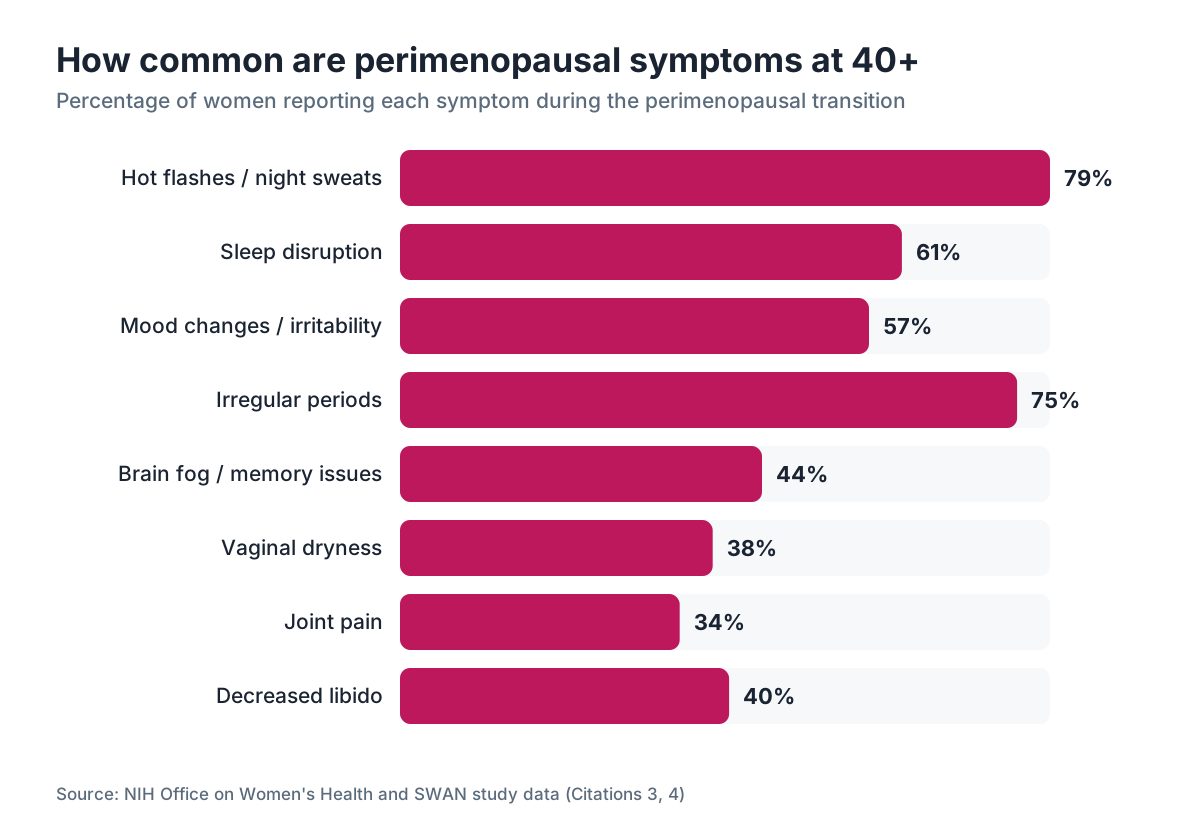
The symptoms fall into a few clusters, and most women do not get all of them. Some sail through with only irregular cycles and light sleep. Others get hit hard with hot flashes, anxiety spikes, and mental fog all at once. Here is what the clinical literature keeps naming as the most common signs [2][3].
Menstrual changes are often the first concrete clue. A 28-day cycle may stretch to 35 or shrink to 21. Periods get heavier or lighter. You skip a month, then have two cycles close together. A change in cycle length of 7 or more days is the clinical marker that defines early perimenopause [2].
Hot flashes and night sweats hit roughly 75 to 80 percent of women at some point in the transition [3]. At 40 they tend to be milder and less frequent than at 50, but they still wreck sleep and workdays. A hot flash is more than feeling warm. It is an abrupt wave of heat, often starting in the chest and rising to the face and neck, sometimes with visible flushing and sweat, sometimes chased by chills.
Sleep disruption often shows up before night sweats do. Many women in early perimenopause wake at 2 or 3 a.m. for no obvious reason. Part of that is progesterone loss (progesterone has a mild sedative effect) and part is circadian rhythm shifting as estrogen fluctuates.
Mood changes like irritability, low mood, and a shorter fuse are common. The perimenopausal brain is more sensitive to mood disruption than the premenopausal brain, even at similar estrogen levels. Women with a history of PMS or postpartum depression carry higher risk [3].
Brain fog is one of the most upsetting symptoms, partly because too few people take it seriously. Losing words mid-sentence, forgetting familiar names, struggling to concentrate. All of it is reported by a real fraction of perimenopausal women and links back to estrogen's effect on verbal memory and processing speed [4].
Vaginal and bladder changes are the last things most women connect to perimenopause, but they can start in the early 40s. Vaginal dryness, discomfort with sex, and more frequent urinary urgency or infections all trace to declining estrogen in vaginal and urethral tissue.
Joint pain and muscle aches are underreported but documented. Estrogen receptors sit in joint tissue, and as levels swing, some women develop new aching in hips, knees, and hands.
Skin and hair changes can include more dryness, thinner collagen, and heavier shedding. Thyroid problems cause the same look, so check TSH before you pin all of it on hormones.
How is perimenopause at 40 different from perimenopause at 48?
The biology is the same. The trajectory is not. At 40, estrogen is still fluctuating rather than sitting consistently low. So you can feel completely normal for two weeks and then get slammed the next two, because your estrogen just spiked and crashed. That spiky pattern of early perimenopause confuses people more than the steady low-estrogen state of late perimenopause.
Periods are more likely to still be regular or near-regular at 40 than at 47. You may not have the obvious cycle chaos that makes a diagnosis feel clean. That is exactly why 40-year-olds get missed. A woman at 48 with hot flashes and a skipped period gets diagnosed without pushback. A woman at 40 with the same symptoms gets told she is stressed.
The other practical difference is contraception. Perimenopause does not mean infertile. You can still get pregnant at 40 with irregular cycles, and you need contraception until you have gone 12 straight months without a period. Low-dose hormonal contraceptives can also mask symptoms and make perimenopause harder to track, so talk that tradeoff through with your provider.
See when does menopause start for the full timeline from perimenopause to confirmed menopause.
Which lab tests actually diagnose perimenopause at 40?
Here is the honest answer: no single lab test diagnoses perimenopause. The North American Menopause Society (NAMS) is clear that perimenopause is primarily a clinical diagnosis, based on symptoms and menstrual pattern [2]. FSH (follicle-stimulating hormone) is the test most providers reach for, but on its own it is unreliable during perimenopause because it swings day to day. One normal FSH does not rule anything out.
A panel of labs is still worth getting. Not to stamp a diagnosis, but to rule out other causes and get a baseline read on where you are hormonally. A reasonable starting panel for a woman at 40 with symptoms:
| Lab | Why it matters | |---|---| | FSH | High FSH (above 10-12 IU/L on day 2-3 of cycle) suggests declining ovarian reserve, but values vary widely | | Estradiol | Erratic or low estradiol on cycle day 2-3 supports the picture | | AMH (anti-Müllerian hormone) | Better marker of ovarian reserve; does not fluctuate with cycle day | | Progesterone (day 21 or 7 days post-ovulation) | Low levels suggest anovulatory cycles even when bleeding still happens | | TSH | Thyroid dysfunction mimics almost every perimenopausal symptom | | CBC, iron studies | Heavy perimenopausal bleeding causes iron deficiency in a meaningful number of women | | Fasting glucose / HbA1c | Estrogen changes affect insulin sensitivity |
AMH is the most informative single marker for ovarian reserve at 40. Women with AMH below 1.0 ng/mL at 40 have meaningfully lower reserve than their peers and are more likely to be in early perimenopause [5]. Ask for it by name if your provider skips it.
If your symptoms are severe and labs come back murky, a short therapeutic trial of progesterone or low-dose estrogen can be diagnostic by itself. Feel substantially better on hormones, and that tells you something real.
Can perimenopause cause anxiety and depression at 40?
Yes, and the mechanism is real, more than stress. Estrogen modulates serotonin, dopamine, and GABA pathways. When it swings erratically in perimenopause, those neurotransmitter systems get destabilized. A large prospective study in the Archives of General Psychiatry found the risk of a major depressive episode was roughly twice as high during perimenopause as in the premenopausal period, even in women with no prior history of depression [6].
Anxiety is often the sharper complaint at 40. Women describe a low hum of dread, a new habit of catastrophizing, or sudden panic that feels unhooked from anything happening. This is not a personality change. It is a neurochemical environment that shifted under you.
That matters for treatment. Start an SSRI or an anti-anxiety drug without anyone checking whether perimenopause is driving the mood, and you may be treating a symptom instead of the cause. Hormone therapy can be the more targeted move for mood tied clearly to the transition, though the evidence is strongest for depressed mood and vasomotor-linked mood disruption, weaker for anxiety as a standalone problem [3].
A history of PMS or PMDD raises your risk for significant mood symptoms during perimenopause. That is not destiny. It is a reason to act early instead of waiting until things get bad.
Does perimenopause at 40 cause weight gain?
Body composition shifts in perimenopause are real, and more nuanced than a number on the scale. The change runs toward more visceral fat (around the abdomen and organs) and less lean muscle, even when total weight barely moves. Estrogen normally sends fat to the hips and thighs. As it turns erratic and then falls, storage moves to the middle [7].
Metabolic rate drops too. A study following women through the transition found resting energy expenditure fell by roughly 50 calories a day, and physical activity tended to slide as well. That combination produces the "I haven't changed what I eat but I'm gaining weight anyway" experience. It is common, and it is legitimate.
Sleep disruption piles on. Poor sleep raises cortisol and ghrelin, both of which push toward fat storage and more appetite. The broken sleep of perimenopause is more than annoying. It has metabolic consequences downstream.
For women struggling hard with weight during perimenopause, GLP-1 receptor agonists are worth raising with a provider. The STEP and SURMOUNT trials showed significant body weight reduction in adults with obesity, and some women in perimenopause find GLP-1s break through metabolic resistance that diet and exercise alone will not budge [8]. This is a real conversation, not a shortcut. A provider who understands both hormonal transitions and metabolic medicine can help you sort out whether hormones, GLP-1s, or both fit your case. Resources like WomenRx focus on this intersection. See semaglutide for weight loss for the trial data.
Muscle loss is the piece nobody talks about. Resistance training 2 to 3 times a week protects lean mass through the transition better than any other single move except maybe hormone therapy. If you do one thing, lift weights.
What do perimenopause symptoms feel like versus PMS or thyroid problems?
This is one of the trickiest diagnostic problems in primary care. Perimenopause, PMS, PMDD, hypothyroidism, and anxiety disorder can all look nearly identical in a 40-year-old. Here is a rough guide.
PMS and PMDD are tied to the luteal phase (the two weeks before your period). If your symptoms reliably clear within a day or two of your period starting, PMS or PMDD is the better bet. Perimenopausal mood and sleep symptoms tend to be more unpredictable and less reliably phase-locked.
Hypothyroidism mimics perimenopause almost perfectly: fatigue, weight gain, brain fog, hair loss, mood changes, irregular periods. A TSH test separates them. Get one. About 10 percent of women over 40 have subclinical hypothyroidism, and missing it means treating the wrong thing [9].
Perimenopause is the likelier answer when cycles are turning noticeably irregular, hot flashes are present (PMS and thyroid disease do not cause true hot flashes), symptoms are not phase-locked, and you are in your 40s. The presence of vasomotor symptoms (hot flashes and night sweats) is probably the single strongest sign that perimenopause, rather than something else, is driving the picture.
You can have more than one thing going at once. Thyroid disease and perimenopause co-occur. Testing is not either/or.
What are the long-term health risks of perimenopause starting at 40?
Perimenopause is more than a symptom-management problem. The hormone shifts of this transition touch bone, cardiovascular, and cognitive health, and the earlier it starts, the longer your window of reduced hormonal protection runs.
Bone density starts falling once estrogen begins to drop. Bone loss is fastest in the two to three years before and after the final period, but it can begin during perimenopause [10]. A woman who enters perimenopause at 40 racks up roughly 10 more years of transitional bone loss before age 50 than a woman who starts at 48. A bone density test at baseline is worth discussing if you carry extra risk: family history of osteoporosis, low body weight, a smoking history, or long stretches of low estrogen.
Cardiovascular risk climbs after menopause, and the driver is largely estrogen. Estrogen helps LDL, HDL, and the vascular endothelium, and those benefits fade through the perimenopausal transition. Women who go through premature or early menopause have higher rates of cardiovascular disease than women who transition later [7].
Cognitive changes are an active research area. There is reasonable evidence from the Study of Women's Health Across the Nation (SWAN) that verbal memory and processing speed decline modestly during the transition, and many women report symptoms improve when estrogen therapy starts during the transition window rather than years later [4]. The "critical window" hypothesis, discussed in the Menopause journal, proposes that estrogen started early in the transition may carry cognitive benefits that vanish when it starts late.
None of this means every 40-year-old with symptoms needs to start hormone therapy tomorrow. It means the treatment decision deserves a real conversation that goes past symptom relief.
What treatments are available for perimenopause symptoms at 40?
Treatment depends on what bothers you most, your medical history, and how hard symptoms hit your quality of life. There is no single right answer, and anyone who says otherwise is oversimplifying.
Hormone therapy (HT) is the most effective treatment for hot flashes, night sweats, sleep disruption, and vaginal symptoms, and it protects bone [2][3]. For women under 60 and within 10 years of menopause onset, the benefit-risk ratio is generally favorable, per NAMS [2]. At 40 you are young enough that the math tends to look better than it does at 60. The HT conversation should cover your personal cardiovascular, clotting, and breast cancer risk, but the fear-based framing from the 2002 WHI study has been substantially revised. See hormone replacement therapy for what the current evidence says.
Progesterone alone can handle sleep disruption and mood changes in early perimenopause, when progesterone deficiency from anovulatory cycles is the dominant issue. Oral micronized progesterone (Prometrium) taken at night has a sedative effect and can meaningfully improve sleep. See progesterone for prescribing details.
Low-dose hormonal contraception can regulate cycles and suppress vasomotor symptoms while covering contraception. Some women at 40 do better on a low-dose combined pill than on traditional HT. The estrogen dose in a low-dose pill (typically 20 mcg ethinyl estradiol) runs higher than standard postmenopausal HT, so it is not right for everyone, but it belongs on the table.
Non-hormonal options for hot flashes include paroxetine (the only FDA-approved non-hormonal option, brand name Brisdelle), venlafaxine, gabapentin, and fezolinetant (Veozah), a newer NK3 receptor antagonist approved in 2023 specifically for vasomotor symptoms [3][11]. These are real options for women who cannot or will not use hormones.
Lifestyle is not filler. A consistent sleep schedule, less alcohol (it worsens hot flashes and sleep), aerobic exercise, and resistance training all help. They will not carry moderate-to-severe symptoms alone, but they are not nothing.
For women dealing with significant weight change alongside perimenopause, pairing hormone management with a metabolic medicine approach can beat either one alone. WomenRx is built for women working through that combination. See estrogen patch for transdermal delivery options.
How long does perimenopause last when it starts at 40?
The duration is genuinely variable and hard to predict up front. The SWAN study found a median perimenopause duration of about 7.4 years, from first symptom to final period [2]. Women who start earlier tend to have a longer total transition. So if you enter perimenopause at 40, you might not reach confirmed menopause (12 months without a period) until your late 40s.
The transition has phases. Early perimenopause brings cycle changes but still fairly regular ovulation. Late perimenopause begins once you have gone at least 60 days without a period, and that is when symptoms usually intensify and estrogen sits more consistently low. The late stage averages about 1 to 3 years before the final period.
You reach menopause after 12 consecutive months without a menstrual period. Cross that line, and you are postmenopausal. Before it, you are still in perimenopause, still ovulating sporadically, and still potentially fertile. See menopause age and menopause for what shifts after that 12-month mark.
When should you see a doctor about perimenopause symptoms at 40?
See a doctor if any of these fit: symptoms are wrecking your sleep most nights, your mood is significantly disrupted, hot flashes interfere with work or daily life, your periods have turned very heavy or very irregular, or you are simply losing quality of life and want to understand what is happening.
Do not wait for things to get severe. The evidence for starting hormone therapy early in the transition is stronger than the evidence for starting it late. The critical window matters here. Bone, cardiovascular, and cognitive benefits from hormone therapy are more likely when treatment starts during the perimenopausal window rather than years into menopause.
If your primary care provider brushes off your symptoms without testing or a real conversation, find a provider who specializes in menopause care. The Menopause Society (NAMS) keeps a directory of certified menopause practitioners at menopause.org. You deserve someone who takes this seriously.
Some symptoms need faster evaluation: periods so heavy you soak through protection hourly, significant pelvic pain, or any postmenopausal bleeding (bleeding after 12 months without a period) all need prompt workup to rule out structural or malignant causes.
Frequently asked questions
Can you be in perimenopause at 40 with regular periods?
Yes. Regular-looking periods do not rule out perimenopause. Cycle length can stay in the normal range while progesterone drops from anovulatory cycles, causing sleep disruption, mood changes, and breast tenderness. Early perimenopause is often defined by subtle hormonal shifts before obvious cycle irregularity shows up. AMH and day-2 FSH labs can give you more information even when periods look normal.
What does perimenopause brain fog feel like?
Most women describe losing words mid-sentence, forgetting names of familiar people or things, dropping a thought while still forming it, and struggling to concentrate on tasks that used to feel automatic. It is distinct from plain fatigue. Research from the SWAN study documented measurable declines in verbal memory and processing speed during the perimenopausal transition, and many women report improvement with estrogen therapy.
Is perimenopause at 40 considered early?
Technically, perimenopause starting between 40 and 45 is early but within the documented normal range. "Premature" perimenopause refers to ovarian insufficiency before 40 and is a separate condition needing different management. If you have clear perimenopausal symptoms at 40, you are not an outlier. About 10 percent of women get symptoms before 40, and many more start the transition in their early 40s.
Can a blood test confirm perimenopause at 40?
No single blood test confirms it. NAMS calls perimenopause primarily a clinical diagnosis based on symptoms and menstrual history. FSH swings too much to be reliable alone. AMH is the most stable marker of ovarian reserve. A reasonable panel includes AMH, FSH, estradiol, TSH, and a luteal-phase progesterone. The real purpose of labs at 40 is ruling out other causes (thyroid, anemia) and setting a hormonal baseline, not stamping a definitive answer.
Does perimenopause affect fertility at 40?
Yes, but it does not end fertility. Irregular ovulation lowers your odds, but pregnancy stays possible until you have gone 12 consecutive months without a period. Women in perimenopause still need reliable contraception if they want to avoid pregnancy. This misconception leads to unintended pregnancies in women who assumed they were past their fertile years.
Can perimenopause cause heart palpitations?
Yes. Palpitations (an awareness of your heartbeat, or a racing, fluttering sensation) are a documented perimenopausal symptom, usually triggered by estrogen swings affecting the autonomic nervous system. They are typically benign, but new palpitations at 40 always warrant a basic cardiac workup to rule out arrhythmia, thyroid disease, or anemia. Once structural and electrical causes are cleared, a perimenopausal cause is reasonable.
What is the difference between perimenopause and menopause?
Perimenopause is the transition of hormonal fluctuation before the final menstrual period. Menopause is a single point in time, defined as 12 consecutive months without a period. Everything before that mark is perimenopause. Everything after is postmenopause. Confusingly, most symptoms people blame on menopause (hot flashes, sleep disruption, mood changes) actually begin during perimenopause, often years before the final period.
Can stress cause perimenopause-like symptoms at 40?
Stress raises cortisol, which can suppress progesterone and disrupt cycle regularity, producing symptoms that overlap with early perimenopause. High cortisol can also worsen hot flashes and sleep. But stress does not cause ovarian aging. If your symptoms persist despite stress reduction and include classic vasomotor symptoms or cycle changes, get a hormonal workup rather than blaming everything on stress.
Does perimenopause cause hair loss?
It can. Declining estrogen and progesterone relative to androgens can trigger female-pattern diffuse thinning, especially along the part line and crown. Thyroid dysfunction produces nearly identical changes and is worth ruling out first. Iron deficiency from heavy perimenopausal periods is another common cause of shedding at 40. If labs are normal and thyroid and iron are adequate, estrogen fluctuation is the likely driver.
Is it safe to take hormone therapy if perimenopause starts at 40?
For most healthy women under 60 without contraindications, NAMS considers hormone therapy safe and appropriate for managing perimenopausal symptoms. Starting at 40 is not more dangerous than starting at 50 for most women. The relevant contraindications include a personal history of estrogen-receptor-positive breast cancer, active blood clots, unexplained vaginal bleeding, or active liver disease. Your provider should review your individual risk, but age 40 alone is not a barrier.
How do I track perimenopause symptoms to help my doctor?
A simple daily log of cycle dates, flow heaviness, sleep quality (rated 1-5), hot flash frequency and severity, and mood gives your provider useful pattern data within one to two cycles. Apps like Clue or a plain notebook both work. The goal is to show whether symptoms are phase-locked to your cycle (more PMS-like) or unpredictable (more perimenopausal). Three months of tracking is enough to see a meaningful pattern.
Can perimenopause cause weight gain even with a healthy diet?
Yes. The shift toward visceral fat during perimenopause comes partly from estrogen changes and partly from the muscle loss that rides along with the hormonal transition, more than calories. Resting metabolic rate drops modestly, sleep disruption raises hunger hormones, and insulin sensitivity can worsen. Women who track calories and exercise consistently still frequently report body composition changes that their usual approach cannot fix.
What lifestyle changes help perimenopause symptoms at 40?
Resistance training two to three times a week is the single most evidence-backed lifestyle move for preserving muscle, supporting bone density, and improving sleep. Cutting alcohol meaningfully reduces hot flash frequency. A consistent sleep and wake time steadies the circadian disruption. Reducing refined carbohydrates supports insulin sensitivity. None of these replace hormonal treatment for moderate-to-severe symptoms, but they make hormonal treatment work better.
Does perimenopause cause joint pain?
Yes. Estrogen receptors sit in joint cartilage, tendons, and synovial tissue. As estrogen swings and drops during perimenopause, joint pain and stiffness are documented symptoms, often in the hips, knees, and small joints of the hands. Some women say it feels like aging 10 years overnight. Rheumatoid arthritis can also first show up in this age range, so persistent or asymmetric joint pain with swelling warrants a rheumatology evaluation.
Sources
- NAMS (North American Menopause Society) - Perimenopause overview
- NAMS - The Menopause Society 2023 Position Statement on Hormone Therapy
- NIH Office on Women's Health - Menopause
- Study of Women's Health Across the Nation (SWAN) - published data on cognitive changes
- American College of Obstetricians and Gynecologists (ACOG) - Ovarian Reserve Testing
- Cohen LS et al. - Archives of General Psychiatry 2006; risk of depression during perimenopause
- Endocrine Society Clinical Practice Guideline - Treatment of Menopause
- Wilding JPH et al. - STEP 1 trial, NEJM 2021 - Semaglutide in adults with overweight or obesity
- American Thyroid Association - Thyroid Disease in Women
- Bone Health and Osteoporosis Foundation - Bone Basics
- U.S. Food and Drug Administration - Drug approvals
- NIH National Institute on Aging - Menopause