Signs of perimenopause: what's actually happening and when
TL;DR: Perimenopause usually starts in the mid-to-late 40s, though some women notice signs in their late 30s. The first reliable sign is a change in your menstrual cycle. Hot flashes, broken sleep, mood swings, brain fog, vaginal dryness, and joint aches are all common. Symptoms can run 4 to 10 years before periods stop for good.
What is perimenopause, and how is it different from menopause?
Perimenopause is the hormonal runway leading up to menopause. It is not menopause itself. Menopause is a single day: the moment you have gone 12 straight months without a period. Everything before that day is perimenopause, starting when estrogen and progesterone begin swinging erratically and ending the second you hit the 12-month mark. [1]
The two words get muddled everywhere, including in doctors' offices. Some clinicians say "menopause symptoms" when they mean what is actually happening during perimenopause, which is why searches for menopause perimenopause symptoms and signs and symptoms of menopause perimenopause end up lumped together. Here is the line that matters: if you still get any period at all, you are in perimenopause.
The average age at menopause in the United States is 51.4 years. [2] Perimenopause usually starts 4 to 10 years before that, which puts typical onset in the early-to-mid 40s. A real subset of women notice changes in their late 30s. If your periods stop before age 40, that is premature ovarian insufficiency (POI), a separate condition that needs its own workup.
The ovaries drive all of it. As the follicle pool runs down, the ovaries make less estrogen and stop responding well to FSH (follicle-stimulating hormone). The decline is not a smooth downhill slope. Estrogen can spike above normal one month and crash the next, which is exactly why early symptoms feel so random. See perimenopause age for a full breakdown of when transitions tend to happen.
What are the earliest signs of perimenopause?
The single most reliable early sign is a change in your menstrual cycle. Not periods stopping. Changing: cycles getting shorter (under 25 days), heavier flow, more clotting, or cycles that swing 7 or more days off your usual pattern. The Stages of Reproductive Aging Workshop (STRAW+10) criteria define the transition by that 7-day variability threshold, so the number is not made up. [3]
Past cycle changes, most women report at least one of these before hot flashes turn regular:
- Broken sleep, often waking at 2 or 3 a.m. for no obvious reason
- Worse PMS-like symptoms in the luteal phase (the two weeks before your period)
- Breast tenderness that feels different from your 30s
- New or louder anxiety, sometimes a sense of dread or doom
- A shorter fuse, irritability that feels out of proportion to whatever set it off
What surprises most women is that mood and sleep problems can arrive months or years before the first hot flash. Estrogen has receptors all over the brain, including the regions that run mood, sleep architecture, and temperature. When levels start bouncing, the brain feels it before the body's thermostat starts misfiring.
One more thing worth saying out loud: libido shifts. A drop in desire, or a change in how arousal works, hits a large share of perimenopausal women and is usually the symptom they least want to raise with a clinician. It is real, it is hormonal, and it is worth the conversation.
How common are hot flashes and night sweats in perimenopause?
Hot flashes (vasomotor symptoms, in the clinical wording) are the symptom most people tie to perimenopause and menopause. Roughly 75 to 80 percent of women in the United States get them at some point during the transition. [4] They usually start in perimenopause, peak around the final period, and can drag on for years after.
A hot flash is a sudden wave of heat, strongest in the face, neck, and chest, often followed by a sweat and then a chill. It lasts 30 seconds to 5 minutes. At night the same thing is a night sweat: you wake up drenched, sometimes changing the sheets.
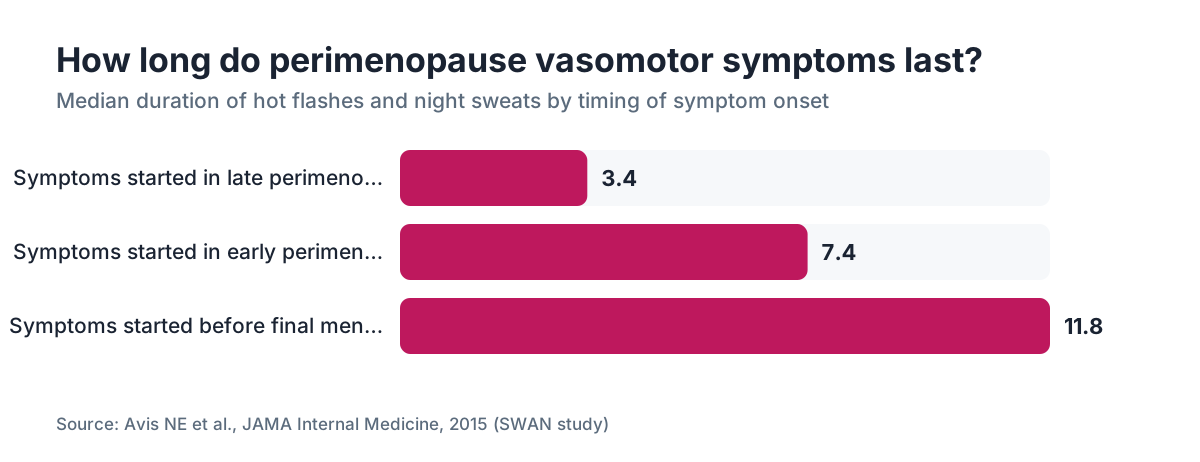
The SWAN study (Study of Women's Health Across the Nation), one of the largest long-running studies of the menopausal transition in U.S. women, found the median total duration of vasomotor symptoms was 7.4 years. Women who started having hot flashes early in perimenopause had the longest run, often more than 11 years. [4] That number floors most women and plenty of clinicians. Hot flashes are not a brief nuisance for everyone.
Frequency drives treatment. Women with more than 7 moderate-to-severe vasomotor symptoms a day are generally considered candidates for medication. Hormone therapy is still the most effective treatment for hot flashes, with symptom reduction usually reported at 75 to 90 percent in trials. [5]
For what to do once you have confirmed menopause has arrived, see our article on menopause.
How do periods change during perimenopause?
This is the most diagnostic sign, and it moves in two phases.
Early perimenopause: cycles get irregular in length (swinging 7 or more days), but you still get periods. They may run heavier. Flooding (soaking through a pad or tampon in under an hour) and clots bigger than a quarter are common complaints. A cycle length under 25 days is also an early marker.
Late perimenopause: you start skipping. You might go 60 days, then 90, without one. The closer you get to your final period, the longer the gaps. Cycles in this phase also tend to lighten, because the ovaries make less estrogen to build the lining.
Here is the point that matters clinically: heavy bleeding in perimenopause is common but not automatically fine. Uterine fibroids, polyps, endometrial hyperplasia, and, rarely, endometrial cancer can all cause heavy bleeding and all show up more in this age group. If you are soaking more than one pad an hour for over two hours, passing large clots, or bleeding between periods, see a clinician. An ultrasound or endometrial biopsy may be needed. The American College of Obstetricians and Gynecologists recommends endometrial evaluation for any abnormal uterine bleeding in women 45 and older. [6]
You can still get pregnant in perimenopause. Ovulation is irregular, but it still happens. Until you hit the 12-month mark of no periods, pregnancy is on the table, and contraception may be worth it depending on your situation.
What does perimenopause do to sleep, mood, and cognition?
Sleep problems are among the most wrecking and least-discussed symptoms. Up to 47 percent of perimenopausal women report sleep disturbance, versus about 33 percent of premenopausal women, per SWAN data. [7] The usual pattern is trouble staying asleep rather than falling asleep, often tied to night sweats but also happening on its own through estrogen's direct effects on sleep architecture and circadian rhythm.
Mood changes are real and biological. Perimenopause raises the risk of new depressive symptoms, even in women with no prior history of depression. A study in Archives of General Psychiatry found perimenopausal women were roughly two to four times more likely to have a major depressive episode than premenopausal women. [8] Low estrogen affects serotonin and dopamine regulation, which is the direct line to mood.
Brain fog is the everyday name for the cognitive stuff so many women report: losing a word mid-sentence, blanking on a name, feeling a beat slower than usual. SWAN documented real dips in processing speed and verbal memory during the transition. [7] The reassuring part of that research: for most women these changes are temporary, and cognition tends to settle once the transition is over.
Anxiety can show up or get worse, especially health anxiety or a low hum of dread. Some women get panic attacks with no prior history of panic disorder. These are hormonal, not personal failings, and they respond to treatment.
If you are dealing with mood symptoms and weight changes at once, read up on hormone replacement therapy and progesterone before you make treatment decisions.
What happens to weight and metabolism during perimenopause?
Body composition shifts hit almost everyone in perimenopause, and it is not simply eating more or moving less. Estrogen ties directly to insulin sensitivity and where you store fat. As estrogen drops, women tend to shift from a hip-and-thigh (gynoid) fat pattern to an abdominal (android) one, meaning more visceral fat, which carries higher metabolic risk.
Muscle mass falls with estrogen loss too. Muscle burns energy, so losing it lowers your resting metabolic rate. The result is familiar: women gain weight, or find it much harder to hold their weight, even with the same food and the same workouts.
None of this is fixed in stone. Resistance training holds onto muscle and is one of the highest-yield moves a perimenopausal woman can make. Protein matters more than it did in your 30s. Hormone therapy can blunt some of the visceral fat shift, though it is not a weight loss drug.
GLP-1 receptor agonists like semaglutide have become a real option for women who are not getting there on lifestyle alone. If that is a direction you are weighing, semaglutide for weight loss is a solid place to start on the evidence. WomenRx prescribes GLP-1s alongside hormone management, which matters because these two areas interact in perimenopausal women more than most practices admit.
One number to hold onto: SWAN found women gained about 1.5 kg (roughly 3.3 lbs) a year during the transition, on top of ordinary aging. [7]
What are the genitourinary signs of perimenopause?
Vaginal dryness, pain with sex, urinary urgency, repeat urinary tract infections, and changes in the vulvar tissue all sit under the term genitourinary syndrome of menopause (GSM). It used to be called vaginal atrophy, which is anatomically true but skipped the urinary piece and carried enough stigma that many women never brought it up.
GSM can start during perimenopause, before periods stop, because the vaginal and urethral tissues are very sensitive to estrogen. Estrogen keeps them thick, lubricated, and acidic (a low vaginal pH fends off infection). As estrogen drops, the tissue thins, loses stretch, and dries out. Unlike hot flashes, which often ease over time, GSM tends to get worse without treatment.
An estimated 50 to 60 percent of postmenopausal women have GSM symptoms, though it goes badly underreported during perimenopause. [9] Treatments run from over-the-counter vaginal moisturizers and lubricants to low-dose vaginal estrogen (barely any systemic absorption) to systemic hormone therapy.
Urinary changes, more frequent urges, leaking with a cough or sneeze, recurrent UTIs, are also estrogen-dependent and often respond to local estrogen. If you are noticing these, it is more than aging. It is treatable. An estrogen patch or vaginal estrogen is worth raising with your clinician.
What happens to bones and joints during perimenopause?
Estrogen is one of the main regulators of bone remodeling. When estrogen falls, breakdown (resorption) outpaces formation, and bone mineral density drops. The steepest fall happens in the two years before and two years after the final period. Women can lose 10 to 20 percent of their bone mass in the decade around menopause. [10]
That does not mean osteoporosis is your fate. It means perimenopause is the window to act. Weight-bearing exercise, enough calcium (1,200 mg a day for women over 50, per NIH guidance), vitamin D, and sometimes hormone therapy all protect bone. [12] A bone density test (DEXA scan) is recommended for women 65 and older by the U.S. Preventive Services Task Force, but women with real risk factors (early menopause, family history, smoking, low body weight) should be scanned sooner.
Joint pain and stiffness are common perimenopause complaints too, usually in the hands, knees, and hips. Plenty of women report them with no arthritis diagnosis at all. The likely link is estrogen's anti-inflammatory effect. When estrogen drops, inflammation can climb. The joints feel it.
If joint pain is loud, it is worth ruling out autoimmune causes (rheumatoid arthritis rates rise in midlife women) and checking thyroid function, which affects joints and overlaps with perimenopause in both timing and symptoms.
Perimenopause vs. menopause symptoms: what changes after your last period?
The core symptoms overlap a lot, which is why searches for menopause vs perimenopause symptoms are so common. Here are the practical differences.
| Symptom | Perimenopause | Postmenopause | |---|---|---| | Irregular periods | Defining feature | Absent (12+ months no period) | | Hot flashes | Common, variable | Often continue or worsen at first | | Night sweats | Common | Common, may persist years | | Mood / anxiety | Often prominent | Can improve or persist | | Vaginal dryness (GSM) | Can begin | Often worsens without treatment | | Bone loss | Accelerating | Fastest in first 2 years post-menopause | | Pregnancy risk | Still possible | None (barring rare exceptions) | | Fertility | Declining | None |
The main clinical difference: once you are postmenopausal, hormone levels settle into their new, lower state, and some symptoms like mood swings can actually ease. The wild estrogen swings of perimenopause are what drive many of the sharp, acute symptoms. The slow-burn ones, GSM and bone loss in particular, keep going and get worse without treatment.
For more on what happens after the transition finishes, read when does menopause start and menopause age.
How do doctors diagnose perimenopause, and what lab tests actually matter?
Diagnosing perimenopause is mostly clinical. Translation: your symptoms and your menstrual history, taken together, are the diagnosis. There is no single blood test that says "you are in perimenopause" with any reliability, which blindsides many women who have been told their labs look normal. [11]
FSH (follicle-stimulating hormone) gets checked a lot. A high FSH, generally over 30 to 40 IU/L depending on the lab's range, points to declining ovarian function. But FSH bounces wildly cycle to cycle in perimenopause. You can read 60 one month and 15 the next. A single normal FSH rules out nothing.
Estradiol (E2) has the same catch. Levels move day to day. A low result on a given day tells you estrogen was low that day. It does not tell you where you sit in the transition.
AMH (anti-Mullerian hormone) reflects ovarian reserve and falls more steadily than FSH or estradiol. It is more useful for guessing how close someone is to menopause than for diagnosing perimenopause right now.
Thyroid function (TSH, free T4) absolutely belongs on the panel. Hypothyroidism is common in this age group and mimics perimenopause almost point for point: fatigue, weight gain, brain fog, mood changes, irregular periods, joint pain. It is not perimenopause until hypothyroidism is off the table.
The North American Menopause Society (NAMS) states that the diagnosis of perimenopause rests on irregular menses and vasomotor symptoms, and that FSH testing is not required for clinical diagnosis in women over 45. [11] That is worth bringing to any clinician who insists your labs are normal so nothing is wrong.
What treatments are available for perimenopause symptoms?
The treatment menu is wider than most women realize when symptoms first hit.
Hormone therapy (HT) is the most effective treatment for hot flashes and it protects bone. The conversation around HT flipped after the Women's Health Initiative (WHI) results were misreported in 2002, and a lot of clinicians stopped prescribing it. The current consensus from NAMS, the Endocrine Society, and the British Menopause Society is that HT is appropriate and beneficial for most healthy women under 60 or within 10 years of menopause onset, with individual risk assessment. [5] Read hormone replacement therapy for the full evidence breakdown.
Progesterone matters specifically for women with a uterus, where it is required to protect the lining from unopposed estrogen. Micronized progesterone (Prometrium or compounded) also seems to help sleep and mood more than synthetic progestins do. progesterone covers this in detail.
Non-hormonal options include:
- SSRIs and SNRIs (low-dose paroxetine is FDA-approved for hot flashes; venlafaxine has strong evidence)
- Fezolinetant (Veozah), an FDA-approved non-hormonal drug for moderate-to-severe hot flashes, cleared in 2023
- Gabapentin (modest evidence, mostly for night sweats)
- Cognitive behavioral therapy (CBT), with evidence for both hot flashes and mood
For genitourinary symptoms, local vaginal estrogen is safe and effective with barely any systemic absorption. Even women who are not candidates for systemic HT can usually use it.
For weight and metabolism, lifestyle work is the base, but GLP-1 medications are increasingly part of the picture. If that fits your situation, a practice like WomenRx that handles hormones and GLP-1s together in perimenopausal women is worth a look.
When should you see a doctor about perimenopause symptoms?
The honest answer: earlier than most women go. The average woman waits years after symptoms start before getting evaluated, often because she was told her labs are normal, or she chalked it up to stress, or she did not know treatment even existed.
Go sooner if:
- Symptoms are hitting your work, relationships, or sleep
- You have heavy bleeding (soaking a pad or tampon hourly for 2+ hours)
- You have spotting between periods or after sex
- You have symptoms before age 40 (this needs a POI workup)
- You have a history of breast cancer, blood clots, or cardiovascular disease (this makes treatment decisions more complex, not impossible)
- Your mood symptoms feel clinical: persistent low mood, inability to function, panic attacks
The bone angle gets overlooked. The perimenopausal years are when action pays off most for long-term bone health. Waiting until a fracture at 65 to think about bone density is too late. A bone density test with your risk factors in mind is worth raising at your next annual visit.
Frequently asked questions
What is the most common first sign of perimenopause?
The most common early sign is a change in menstrual cycle length or pattern: cycles shortening to under 25 days, swinging 7 or more days off your usual, or turning heavier. Broken sleep and worse PMS often show up around the same time, sometimes before hot flashes start. Most women notice these shifts in their mid-to-late 40s, though some begin in the late 30s.
Can you be in perimenopause and still have regular periods?
Yes. Early perimenopause can bring hormonal swings while your cycles stay regular. Your periods may run heavier, arrive a little sooner, or come with worse PMS, all on a roughly predictable schedule. The 7-day cycle variability threshold used in the STRAW+10 staging criteria is not always present at the very start of the transition.
What age does perimenopause usually start?
Most women start perimenopause between 44 and 48, with symptoms sometimes appearing in the late 30s. The average age of menopause (the final period) in the U.S. is 51.4 years, and perimenopause runs 4 to 10 years before that. Starting before age 40 is considered premature ovarian insufficiency and needs a separate evaluation.
How long does perimenopause last?
Perimenopause runs anywhere from 1 to 10 years, with most women in the 4 to 7 year range. The SWAN study found hot flashes specifically lasted a median of 7.4 years total, and women who developed them early in perimenopause often had them for 11 years or more. There is no reliable way to predict your own timeline.
What are the signs of perimenopause in your 40s vs. your late 30s?
In the late 30s, the first signals are usually worse PMS, heavier periods, shorter cycles, and new or louder anxiety. Hot flashes are rare at this age but not impossible. In the 40s, cycle irregularity gets more pronounced, hot flashes and night sweats grow more common, sleep worsens, and belly weight gain shows up even without diet changes.
Can anxiety and depression be signs of perimenopause?
Yes, and their hormonal origin is often missed. Research in Archives of General Psychiatry found perimenopausal women were two to four times more likely to have a major depressive episode than premenopausal women. Estrogen affects serotonin and dopamine regulation. New anxiety, irritability, and mood instability in a woman in her 40s should prompt evaluation for hormonal changes alongside standard mental health assessment.
Is brain fog a real perimenopause symptom?
It is real and measurable. The SWAN study documented drops in verbal memory and processing speed during the transition. The mechanism involves estrogen's role in supporting neuronal function. For most women these cognitive changes are temporary and improve once the transition ends, though the acute experience can be disorienting. Ruling out thyroid dysfunction matters, because hypothyroidism causes identical symptoms.
What blood tests confirm perimenopause?
No single blood test confirms perimenopause reliably. The North American Menopause Society says the diagnosis is clinical, based on irregular cycles and symptoms in women over 45. FSH swings too much cycle to cycle to be definitive alone. TSH should always be checked to rule out thyroid disease, which mimics perimenopause closely. AMH reflects ovarian reserve and falls more steadily, but is not a standard diagnostic test.
Can perimenopause cause weight gain even if you haven't changed your diet?
Yes. SWAN data show women gain roughly 1.5 kg (about 3.3 lbs) a year during the transition, separate from behavior changes. Falling estrogen cuts insulin sensitivity, pushes fat toward the abdomen, and drives muscle loss, which lowers resting metabolic rate. Resistance training and enough protein are the highest-yield moves, and hormone therapy can blunt some of the metabolic shift.
What's the difference between perimenopause and menopause symptoms?
Perimenopause symptoms come from erratic, swinging estrogen and still include periods, regular or not. Menopause begins after 12 straight months without a period, when estrogen settles at a lower baseline. Hot flashes can continue in both phases. GSM (vaginal dryness, urinary changes) and bone loss tend to progress after menopause without treatment. Mood swings tied to estrogen swings often ease once the transition is done.
Is vaginal dryness a perimenopause symptom or does it only happen after menopause?
Vaginal dryness can start during perimenopause, before periods stop. The vaginal and urethral tissues are very sensitive to estrogen, so any meaningful drop can cause dryness, pain with sex, and more urinary urgency. Unlike hot flashes, which often ease over time, genitourinary symptoms tend to worsen without treatment. Low-dose vaginal estrogen is effective and barely absorbed systemically.
Can you still get pregnant during perimenopause?
Yes. Ovulation is irregular during perimenopause, but it still happens. Pregnancy stays possible until you reach the 12-month mark of no periods that defines menopause. Women who do not want to conceive need contraception throughout perimenopause. Hormonal contraceptives (low-dose pills, hormonal IUD) can also help manage irregular, heavy bleeding during this phase.
What lifestyle changes help with perimenopause symptoms?
Resistance training is the single highest-yield habit for muscle, bone, and metabolic health. Aerobic exercise helps hot flashes and mood. Protein of at least 1.2 g per kg of body weight a day matters more now than before. Cutting alcohol (a hot flash trigger and sleep wrecker), cooling the bedroom, and stress reduction through CBT or mindfulness all have evidence. None of these replace treatment for severe symptoms.
When is hormone therapy appropriate for perimenopause symptoms?
NAMS and the Endocrine Society both back hormone therapy for most healthy perimenopausal women under 60 or within 10 years of menopause onset, especially for moderate-to-severe hot flashes, GSM, and bone protection. Individual risk assessment is required. Women with a history of hormone-receptor-positive breast cancer, active blood clots, or unexplained vaginal bleeding need careful evaluation before starting HT.
Sources
- North American Menopause Society (NAMS), Menopause Practice: A Clinician's Guide
- National Institute on Aging (NIA), Menopause
- Harlow SD et al., Executive Summary of the Stages of Reproductive Aging Workshop +10 (STRAW+10), Menopause 2012
- Avis NE et al., Duration of Menopausal Vasomotor Symptoms Over the Menopause Transition, JAMA Internal Medicine 2015
- The Endocrine Society, Menopausal Hormone Therapy Clinical Practice Guideline
- American College of Obstetricians and Gynecologists (ACOG), Practice Bulletin: Abnormal Uterine Bleeding
- Study of Women's Health Across the Nation (SWAN), Overview and Key Findings
- Cohen LS et al., Risk for New Onset of Depression During the Menopausal Transition, Archives of General Psychiatry 2006
- Portman DJ et al., Genitourinary syndrome of menopause: new terminology for vulvovaginal atrophy, Menopause 2014
- Bone Health and Osteoporosis Foundation
- NAMS, The Menopause Guidebook, Clinical Diagnosis of Perimenopause
- NIH Office of Dietary Supplements, Calcium Fact Sheet for Health Professionals