Signs of menopause: every symptom explained with causes and timing
TL;DR: Menopause is confirmed after 12 months without a period, but the signs start years earlier in perimenopause. The common ones are hot flashes, night sweats, irregular periods, vaginal dryness, broken sleep, mood swings, and brain fog. Average onset is age 51, though symptoms can begin in the early 40s. Hormone therapy is the most effective treatment for most of them.
What are the signs of menopause?
Menopause is one day: the day you hit 12 straight months with no period [1]. When people say "signs of menopause," they mean the whole run of symptoms that show up in the years before that day (perimenopause) and the years after (postmenopause).
The North American Menopause Society (NAMS) recognizes more than a dozen symptoms tied to this hormonal shift [2]. They cluster into a few groups: vasomotor symptoms (hot flashes and night sweats), menstrual changes, genitourinary symptoms, sleep and mood disruption, and cognitive changes. Not every woman gets all of them. Some coast through with nothing worse than irregular periods. Others find the hot flashes genuinely disabling.
One thing drives all of it. Estrogen and progesterone fall as the ovaries wind down, and because estrogen receptors sit in almost every tissue (brain, skin, bone, blood vessels, bladder), lower levels reach nearly every organ system.
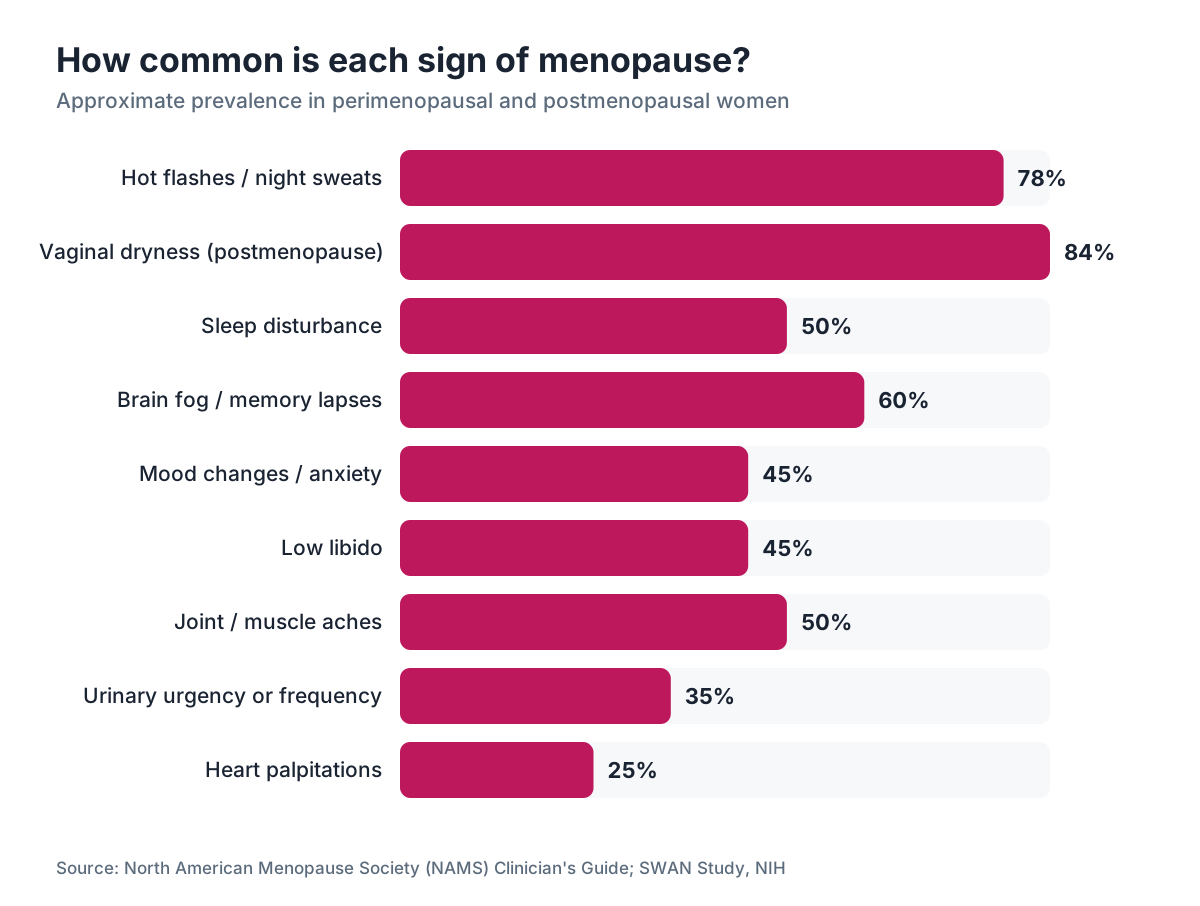
Here is a quick-reference list of the common signs, with prevalence from published research [2][3]:
| Symptom | Approximate prevalence in perimenopausal women | |---|---| | Hot flashes / night sweats | 75-80% | | Irregular or missed periods | Nearly universal in perimenopause | | Sleep disturbance | 40-60% | | Vaginal dryness | 27-55% perimenopause; up to 84% postmenopause | | Mood changes (anxiety, irritability) | 40-50% | | Brain fog / memory lapses | ~60% report some cognitive change | | Low libido | 40-50% | | Joint and muscle aches | ~50% | | Hair thinning | ~50% | | Weight gain or body composition change | Variable; central fat gain common | | Urinary urgency or frequency | 30-40% | | Headaches | ~10-15% | | Palpitations | ~25% |
That is the full map. The sections below take each category apart.
What is the difference between perimenopause signs and menopause signs?
The line matters because timing, intensity, and treatment can differ. Perimenopause is the transition. Menopause is a single 12-month milestone. What comes after is postmenopause.
Perimenopause usually begins in the mid-to-late 40s, though for some women it starts at 40 or earlier [4]. See perimenopause age for the full timeline. During perimenopause, estrogen does more than drift down. It swings, spiking high and crashing low, and those swings are often what produce the loudest early symptoms: mood instability, heavy or unpredictable periods.
At the 12-month mark you are postmenopausal, and estrogen settles at a new, steadily low baseline. Some symptoms behave differently after that. Hot flashes tend to peak in late perimenopause and early postmenopause, then ease. Vaginal dryness and urinary symptoms (together called genitourinary syndrome of menopause, or GSM) usually get worse over time if you leave them alone, because the tissue keeps thinning without estrogen.
For average timing, see when does menopause start and menopause age.
What do hot flashes and night sweats actually feel like?
A hot flash is a sudden wave of heat that rises from the chest into the neck and face, often followed by sweating and then a chill as your body overcorrects. It lasts anywhere from 30 seconds to a few minutes. Roughly 75-80% of women in Western populations get them [2].
Night sweats are hot flashes during sleep. They can soak the sheets and wake you several times a night, which is exactly how they feed the sleep problems below.
The mechanism sits in the hypothalamus, your brain's thermostat. Lower estrogen appears to narrow the thermoneutral zone, the temperature range where your body stays comfortable without triggering a cool-down [3]. A tiny rise in core temperature now fires a sweat response that never would have before.
For moderate-to-severe vasomotor symptoms, hormone therapy is the most effective treatment. Fezolinetant (Veozah), FDA-approved in 2023, is a non-hormonal option that blocks neurokinin B signaling in the hypothalamus, so it works for women who cannot or will not take estrogen [5].
To compare hormone therapy options, hormone replacement therapy covers the evidence, forms, and risks.
How do periods change as a sign of menopause?
Irregular periods are usually the first concrete sign. The Stages of Reproductive Aging Workshop (STRAW+10) criteria, the accepted clinical framework, define early perimenopause as cycles that vary by 7 or more days from your usual pattern [4]. Late perimenopause means at least one gap of 60 or more days between periods.
What that looks like in real life varies a lot. Some women get lighter, shorter periods. Some get heavier, flooding ones, because fluctuating estrogen can pile up the uterine lining more than usual. Some skip months, then have a period that seems completely normal. All of that fits the expected pattern.
Here is what does not. Bleeding heavy enough to soak a pad or tampon more than once an hour, bleeding between periods, or any bleeding after you have gone 12 months without one all need a clinician's eyes. These can point to uterine polyps, fibroids, or endometrial hyperplasia, and they should never be waved off as "just menopause" [1][4].
Why does menopause cause sleep problems and what can you do?
Broken sleep is one of the most life-wrecking signs of menopause, and it has more than one cause. Night sweats disrupt sleep directly. But women without much sweating still report insomnia in perimenopause, which suggests falling estrogen and progesterone change sleep architecture on their own [3].
Progesterone has a sedative effect through GABA receptors in the brain. As it drops, some women lose that built-in sleep aid and end up lying awake with racing thoughts or waking at 3 a.m. unable to drift back off. This gets mislabeled as anxiety or depression when it is really a hormonal sleep shift.
Then the sleep loss compounds everything else. It worsens mood, drives weight gain, drops insulin sensitivity, and fogs memory. Sleep is not a side problem in menopause. It is stitched into nearly every other symptom on this list.
Sleep hygiene, cognitive behavioral therapy for insomnia (CBT-I), and treating the hormonal driver (usually progesterone as part of hormone therapy) are the main tools. Oral micronized progesterone (Prometrium) is FDA-approved and has data behind improved sleep quality [1]. See progesterone for how it works in menopausal hormone therapy.
What do mood changes and anxiety look like as signs of menopause?
Mood symptoms are among the least talked-about and most underdiagnosed signs of the transition. They run from mild irritability and a short fuse to full depressive episodes. Women are 2-4 times more likely to have a major depressive episode during perimenopause than in their premenopausal years, according to a study in the Archives of General Psychiatry [6].
The mechanism is not fully worked out, but estrogen tunes serotonin and dopamine pathways. As estrogen swings and falls, those systems get shakier. Women who had bad PMS or postpartum depression seem more sensitive to hormonal shifts, which raises their risk for mood symptoms now.
Anxiety is underrecognized here too, including new generalized anxiety and panic attacks in women with no prior history. The same estrogen withdrawal that lights up a hot flash in the body can trip a threat response in the brain.
Hormone therapy can improve mood symptoms, especially when the changes clearly track the perimenopausal transition. It is not a substitute for antidepressants or therapy in a primary psychiatric disorder. But in hormonally driven cases, it treats the actual cause.
Is brain fog a real sign of menopause?
Yes. Brain fog is real, measurable, and common. Roughly 60% of women in the Study of Women's Health Across the Nation (SWAN) reported memory or concentration trouble during the transition [3].
SWAN found modest but real declines in verbal memory, processing speed, and attention during perimenopause, and it tied those declines to vasomotor symptom frequency. Women with more night hot flashes (and therefore worse sleep) had the sharpest cognitive changes. The reassuring part: for most women, cognitive function largely recovers once menopause is established, so this reads as a phase rather than permanent decline [3].
Here is the open question. Researchers are still investigating whether the low-estrogen window in perimenopause, especially if it runs long or starts early, raises long-term Alzheimer's risk. The data are not settled. The WHIMS study and later analyses complicated the picture rather than closing it, and the answer likely depends heavily on the age you start hormones and the formulation [7].
For day-to-day fog, the approach that works best is treating the sleep loss and hot flashes driving it.
What are the genitourinary signs of menopause?
Genitourinary syndrome of menopause (GSM) covers the symptoms caused by estrogen loss in the vagina, vulva, and urinary tract: vaginal dryness, atrophy, pain with sex (dyspareunia), burning, itching, urinary urgency, frequency, and recurrent UTIs [1][2].
GSM affects roughly 27-55% of women in perimenopause and up to 84% of postmenopausal women, which makes it more common than hot flashes over the long run [2][9]. Unlike hot flashes, which often fade on their own, GSM gets worse untreated, because the tissue keeps thinning as long as estrogen stays low [9].
It is badly undertreated. Many women are embarrassed to bring it up, and many clinicians never ask. Raise it directly.
Treatment runs from over-the-counter moisturizers and lubricants (which ease comfort but do not reverse tissue change) to low-dose vaginal estrogen (cream, ring, or tablet), which restores tissue health with very little systemic absorption. The estrogen patch and other systemic hormone therapies help GSM while treating other symptoms at the same time. For a non-hormonal route, ospemifene (Osphena) is an FDA-approved oral SERM for dyspareunia.
What are the signs of menopause at 40?
Menopause signs at 40 are more common than most people think. Perimenopause can start in the late 30s or early 40s, and at 40 the symptoms look exactly like perimenopause at any age: irregular cycles, hot flashes, night sweats, mood swings, poor sleep, vaginal dryness.
What changes at 40 is the label. Menopause before 40 is premature ovarian insufficiency (POI), and it affects about 1% of women [4]. Menopause between 40 and 45 is early menopause, affecting roughly 5-10% [4]. Both carry weight beyond symptom control. A longer stretch of estrogen deficiency raises the relative risk of cardiovascular disease, osteoporosis, and cognitive decline compared with women who reach menopause at the average age of 51.
Any woman under 45 with menopause signs should get a clinical evaluation. The workup usually includes FSH (follicle-stimulating hormone) and estradiol, though these mislead in perimenopause when levels bounce around. POI may call for chromosome analysis and more. Many guidelines, NAMS included, recommend hormone therapy for early menopause until at least age 51 unless there is a contraindication, because the bone and heart benefits in this group outweigh the risks [2].
See menopause for the broader overview.
What body changes and physical signs come with menopause?
Beyond the headline symptoms, menopause brings physical changes women notice but do not always trace back to hormones.
Weight and body composition. Menopause does not flip a switch on the scale, but fat distribution clearly shifts. Estrogen favors fat storage in hips and thighs. As it drops, fat moves to the abdomen, a pattern linked to higher cardiometabolic risk, and this happens even when total weight holds steady [3].
Bone density. Estrogen is the main brake on bone breakdown. In the first 5 to 7 years after menopause, women can lose 10-20% of bone density, faster than at any other point in adult life [8]. That is why a bone density test (DEXA scan) is usually recommended at menopause, especially for early or surgical menopause.
Joints and muscles. Many women report new joint pain, morning stiffness, or a general ache they never had. Estrogen has anti-inflammatory effects, and losing it appears to lower the pain threshold.
Skin and hair. Collagen drops sharply in the first years after menopause. Skin thins, dries, and loses elasticity. Scalp hair may thin while hair elsewhere gets coarser. Estrogen loss and the relative rise in androgen activity both drive this.
Cardiovascular changes. Before menopause, estrogen offers some heart protection, partly through favorable effects on LDL and HDL cholesterol. After menopause, LDL typically rises and heart disease risk climbs. By age 70, women's heart disease rates catch up to men's [7].
Women managing weight through this stretch sometimes look at GLP-1 receptor agonists. For context, see semaglutide for weight loss and semaglutide vs tirzepatide.
When should you see a doctor about menopause signs?
If symptoms are hitting your sleep, work, relationships, or daily function, that is reason enough to see someone. You do not need to wait for symptoms to turn severe or for the full 12 months to pass.
Some signs deserve faster attention: heavy or prolonged bleeding, any bleeding after 12 months without a period, symptom onset before age 40, or symptoms that do not fit the usual perimenopausal pattern [1][4][10].
Diagnosis is usually clinical. In women over 45 with classic symptoms, lab testing often is not needed to confirm it, though FSH and estradiol help in younger women or unclear cases. Thyroid disease, which gets more common in midlife, mimics several menopausal symptoms (fatigue, mood shifts, irregular periods, weight changes), so TSH is often checked too [10].
Telehealth has made menopause-knowledgeable clinicians far easier to reach. WomenRx focuses on hormonal care for women in this stage and can evaluate symptoms, order labs, and prescribe hormone therapy where appropriate, no in-person visit required. See hormone replacement therapy for what treatment actually involves.
What is the most effective treatment for menopause signs?
Hormone therapy (HT) is the most effective treatment for the vasomotor and genitourinary symptoms of menopause. That is the consensus of NAMS, the Endocrine Society, and the British Menopause Society [2]. For healthy women under 60 or within 10 years of menopause onset, the benefits generally outweigh the risks.
Most of the fear traces to a misreading of the Women's Health Initiative (WHI) results published in 2002. Later analyses showed the added risks were concentrated in older postmenopausal women (average age 63) taking oral conjugated equine estrogen with medroxyprogesterone acetate [7]. Younger women on transdermal estradiol with micronized progesterone have a much friendlier risk profile.
NAMS puts it plainly: "For women who are younger than 60 years or who are within 10 years of menopause onset and have no contraindications, the benefit-risk ratio is favorable for treatment of bothersome vasomotor symptoms" [2].
Non-hormonal options with FDA approval include fezolinetant (Veozah) for hot flashes and paroxetine (Brisdelle) for vasomotor symptoms [5]. SSRIs and SNRIs at standard doses are used off-label. These make sense for women with hormone-sensitive breast cancer or a strong preference against hormones, though they do not protect the genitourinary tissue or bone the way estrogen does.
If bone loss is the main worry, DEXA screening and possibly bisphosphonate therapy belong in the plan.
WomenRx offers telehealth evaluation and, where appropriate, prescriptions for FDA-approved hormone therapy and other menopause treatments. Learn more at menopause.
Frequently asked questions
What are the first signs of menopause most women notice?
The most common first signs are shifts in cycle regularity: periods that arrive earlier or later than usual, or that change in flow. Hot flashes and night sweats often start in this same window, along with broken sleep and irritability. Most women notice these in their mid-to-late 40s, though they can begin earlier. Irregular cycles are usually the earliest measurable sign.
Can you have signs of menopause but still have regular periods?
Yes. Hot flashes, mood changes, sleep trouble, and brain fog can all show up while cycles are still technically regular. Hormonal fluctuations begin years before periods become irregular. This early phase is sometimes called early perimenopause. If you have classic symptoms in your 40s but normal-looking cycles, it is worth discussing with a clinician and considering FSH and estradiol testing.
What signs of menopause at 40 are normal vs. concerning?
Perimenopausal symptoms at 40 are biologically normal: irregular periods, occasional hot flashes, mood shifts, and sleep changes can all begin here. What warrants evaluation is any symptom pattern before age 40 (possible premature ovarian insufficiency), very heavy bleeding, or periods stopping entirely before 45. Early menopause raises cardiovascular and bone risks, so a clinical workup and likely hormone therapy are recommended.
How long do menopause symptoms last?
The median duration of hot flashes is about 7 years from onset, but roughly 30-50% of women have them longer than a decade. Vasomotor symptoms tend to peak in the year or two around the final period, then ease. Genitourinary symptoms (vaginal dryness, urinary changes) behave differently: they usually persist and worsen without treatment, because the underlying tissue atrophy continues as long as estrogen stays low.
What blood tests confirm menopause?
FSH (follicle-stimulating hormone) and estradiol are the main tests. An FSH consistently above 30-40 mIU/mL with low estradiol supports the diagnosis, but single readings can mislead during perimenopause when levels fluctuate. In women over 45 with classic symptoms, most guidelines accept clinical diagnosis without lab confirmation. Younger women and unclear presentations warrant testing, often including TSH to rule out thyroid disease.
Is weight gain a sign of menopause?
Weight gain is common in midlife but is partly driven by aging and lifestyle rather than menopause alone. Menopause does cause a clear shift in fat distribution toward the abdomen, even without total weight gain, and that central fat raises cardiometabolic risk. Estrogen therapy does not cause weight gain and may modestly reduce the tendency toward central fat accumulation, per NAMS guidance.
Can menopause cause heart palpitations?
Yes. Palpitations, a fluttering or racing heartbeat, are reported by roughly 25% of perimenopausal women and are thought to reflect estrogen-driven changes in the autonomic nervous system. They are usually benign in otherwise healthy women, but get them evaluated if they are frequent, come with chest pain, dizziness, or fainting, or if you have any cardiac history, to rule out arrhythmia or other causes.
What is the difference between menopause and perimenopause symptoms?
The symptoms overlap heavily: both involve hot flashes, sleep trouble, mood changes, and vaginal dryness. What sets perimenopause apart is that periods are still happening (even if irregular) and estrogen is fluctuating rather than simply low. Menopause is the 12-month mark; postmenopause follows. Perimenopause symptoms are often more chaotic because of the hormonal swings, while postmenopausal symptoms reflect steadily low estrogen.
Does hormone therapy eliminate menopause signs?
For vasomotor symptoms, hormone therapy cuts hot flash frequency by roughly 75-90% in clinical trials, far better than any non-hormonal alternative. It also handles GSM, sleep disruption tied to vasomotor symptoms, and mood changes driven by hormonal swings. It does not erase every midlife change: sleep habits, cognitive health, and weight still need active attention alongside treatment.
Are there non-hormonal treatments for menopause signs?
Yes. Fezolinetant (Veozah), FDA-approved in 2023, cuts hot flashes by blocking the neurokinin B pathway in the hypothalamus without touching estrogen. Paroxetine 7.5mg (Brisdelle) is the only FDA-approved SSRI for vasomotor symptoms. Other SSRIs and SNRIs are used off-label. For GSM, moisturizers and lubricants ease comfort, though low-dose vaginal estrogen reverses tissue change more effectively. CBT-I treats sleep disturbance.
Can lifestyle changes reduce menopause signs?
Lifestyle changes help, though they are not as strong as hormone therapy for moderate-to-severe symptoms. Avoiding hot-flash triggers (caffeine, alcohol, spicy food, warm rooms) reduces frequency for some women. Aerobic exercise improves sleep, mood, and body composition. Strength training protects bone and muscle. Cognitive behavioral therapy for menopause (CBT-M) has randomized trial evidence for reducing the distress around hot flashes.
What signs of the menopause affect the urinary system?
Urinary urgency, frequency, stress incontinence, and recurrent UTIs are all recognized genitourinary syndrome of menopause (GSM) symptoms, affecting 30-40% of menopausal women. They happen because estrogen receptors in the bladder and urethra maintain tissue integrity; without estrogen, the urethra shortens and the bladder lining thins. Low-dose vaginal estrogen is highly effective and considered safe even for many women with a history of breast cancer.
Does surgical menopause cause more severe signs?
Yes. Surgical menopause, meaning both ovaries are removed, causes an immediate, complete loss of estrogen instead of the gradual decline of natural menopause. Symptoms usually begin within days and often hit harder. The cardiovascular and bone risks tied to early estrogen loss are also greater. Most guidelines recommend prompt hormone therapy after oophorectomy in women under 51, continued at least until natural menopause age.
What is the link between menopause signs and osteoporosis?
Estrogen suppresses osteoclasts, the cells that break down bone. When estrogen drops at menopause, bone resorption speeds up, and women can lose 10-20% of bone density in the first 5 to 7 years. That is why DEXA scanning is usually recommended at or shortly after menopause. Hormone therapy, bisphosphonates, and adequate calcium and vitamin D are the main tools for preventing fractures in this group.
Sources
- NIH MedlinePlus, Menopause Overview
- North American Menopause Society (NAMS), Menopause Practice: A Clinician's Guide
- Study of Women's Health Across the Nation (SWAN), National Institute on Aging / NIH
- Harlow SD et al., STRAW+10 staging criteria, Climacteric 2012; Endocrine Society
- FDA, Drugs section (Fezolinetant/Veozah approval, 2023)
- Cohen LS et al., Archives of General Psychiatry, 2006 (JAMA Network)
- Women's Health Initiative (WHI), National Heart, Lung, and Blood Institute / NIH
- Bone Health and Osteoporosis Foundation
- NIH MedlinePlus, Vaginal Dryness / Genitourinary Symptoms
- American College of Obstetricians and Gynecologists (ACOG), Menopause FAQ