Signs of low progesterone in women: what your body is telling you
TL;DR: Low progesterone shows up as irregular or heavy periods, spotting between cycles, sleep problems, anxiety, mood swings, breast tenderness, and trouble getting pregnant. These symptoms cluster in perimenopause but can happen at any reproductive age. A single blood test, serum progesterone drawn about 7 days before your next period, confirms whether your levels are actually low.
What does low progesterone actually feel like?
Most women don't wake up thinking "my progesterone is low." They wake up thinking they didn't sleep, their period is a mess, or they feel wired and anxious for no reason they can name. That gap between the symptom and the cause is exactly why low progesterone goes unrecognized for years.
Progesterone rises after ovulation, prepares the uterine lining for a possible pregnancy, then drops hard if conception doesn't happen, which triggers your period. It also quiets the nervous system. It does this by converting to a compound called allopregnanolone that acts on GABA receptors in the brain [1]. Take away the progesterone and you take away that calming effect, and the estrogen-heavy environment left behind drives a predictable cluster of symptoms.
The symptoms fall into two buckets: uterine and neurological. Uterine symptoms are changes in bleeding, spotting, and fertility problems. Neurological symptoms are insomnia, anxiety, irritability, and mood that swings on you. Plenty of women get both at once, which is why the whole picture feels scattered.
Some of it is subtle enough to blame on stress or age. Some of it, like flooding periods or waking at 3 a.m. every single night, is impossible to ignore.
What are the most common signs of low progesterone in women?
The symptoms below are the ones that show up most consistently in clinical practice and in the published work on luteal phase deficiency and perimenopause. Read them as a pattern, not a checklist, because one alone rarely means much.
Irregular periods or shorter cycles. Low progesterone shortens the luteal phase, the second half of your cycle. Cycles that used to run 28 days may compress to 21 to 24. You may skip periods entirely if you're not ovulating, since progesterone is only made after ovulation [2].
Heavy or prolonged bleeding. Without enough progesterone to stabilize the lining, it grows thicker under estrogen and then sheds unevenly and heavily. Clinicians call this estrogen breakthrough bleeding [2].
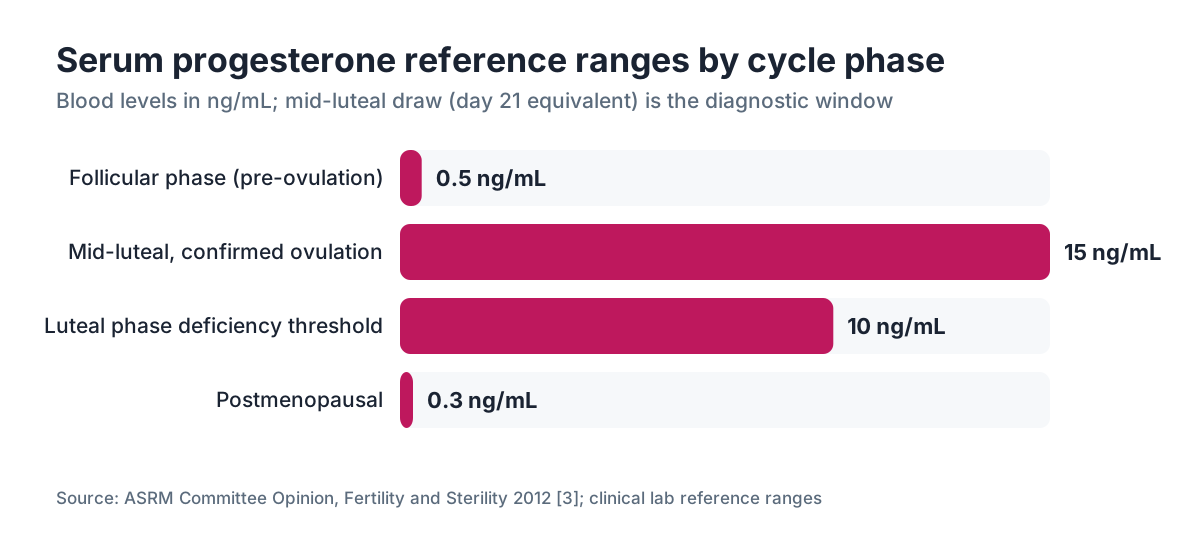
Spotting before your period. Light brown or pink spotting in the days before your period is a classic sign. The lining starts breaking down before it's supposed to. Some fertility specialists treat mid-luteal progesterone below 10 ng/mL as a threshold of concern, though the cutoff shifts by lab and assay [3].
Insomnia, especially waking mid-sleep. The allopregnanolone pathway sedates the brain. When progesterone drops, that sedation goes with it. Women with low progesterone often fall asleep fine but wake between 2 and 4 a.m. and can't get back down [1].
Anxiety and mood swings. The same GABA mechanism that governs sleep also modulates anxiety. Low progesterone leaves the nervous system less buffered, and many women feel on edge or emotionally reactive, especially the week before their period [1].
Breast tenderness. This one is counterintuitive. Some women with low progesterone get sore breasts because the relative estrogen dominance stimulates breast tissue. Not everyone gets it, but it's common enough to name.
Trouble getting pregnant or early miscarriage. Progesterone maintains the lining after implantation. Low levels in early pregnancy are linked to miscarriage, and reproductive endocrinologists routinely check luteal-phase progesterone when working up infertility [3].
Weight gain around the midsection. The direct evidence here is weaker. The estrogen-dominance pattern that rides along with low progesterone is tied to fluid retention and fat shifting toward the abdomen. It's probably more about the estrogen-to-progesterone ratio than progesterone alone.
Headaches or migraines. Some women get migraines that track their cycle, usually right before their period. Falling estrogen plus low progesterone in the late luteal phase is a known trigger.
How common is low progesterone, and who is most at risk?
Low progesterone is common. The biggest window for it is perimenopause, which usually starts in the mid-to-late 40s (sometimes the late 30s) and ends at the final period. During this stretch ovulation turns erratic. You can go months without ovulating, and no ovulation means no corpus luteum, and no corpus luteum means essentially no progesterone [4].
The North American Menopause Society puts the average start of perimenopause in a woman's mid-40s, with more than 80% of women reporting menstrual irregularity during the transition [4]. Since erratic ovulation drives most low-progesterone symptoms, it's fair to say most perimenopausal women hit some degree of progesterone insufficiency at points along the way.
Younger women aren't spared. Luteal phase deficiency, where the post-ovulatory phase runs too short or progesterone stays too low, is estimated at roughly 5 to 10% of reproductive-age women [3]. Risk factors: high-intensity exercise (competitive athletes have more anovulatory cycles), low body weight, thyroid disorders, hyperprolactinemia, and chronic stress [2].
Women who've had certain ovarian surgeries or who have premature ovarian insufficiency (POI) carry high risk too. POI affects about 1% of women under 40 [5].
See our article on perimenopause age for a closer look at when this transition tends to start and what sets the timing.
How does low progesterone differ from symptoms of perimenopause or menopause?
This is where it gets genuinely confusing. Low progesterone is one of the earliest hormonal shifts of perimenopause, and its symptoms overlap heavily with the broader perimenopause list.
In early perimenopause, estrogen is often still normal or even high in parts of the cycle, but progesterone is already dropping because ovulation is unreliable. So a woman in her mid-40s can have perfectly normal estrogen on a blood test and still feel terrible, because her progesterone-to-estrogen ratio is off.
By late perimenopause and into menopause, estrogen falls too, and the picture changes. Hot flashes and night sweats, driven mostly by falling estrogen acting on the hypothalamic thermostat, take over. Vaginal dryness shows up. Brain fog gets worse. Those are not primarily low-progesterone symptoms.
Here's the practical read. If your main complaints are mood, sleep, irregular periods, and PMS-type symptoms, and your periods haven't stopped, low progesterone is worth investigating. If hot flashes, night sweats, and vaginal dryness lead the list, you're more likely looking at an estrogen problem, possibly both at once.
For the full arc of the transition, our menopause and when does menopause start articles cover the staging in detail.
What causes low progesterone in the first place?
The single biggest cause is anovulation, a cycle where you don't ovulate. No ovulation means no corpus luteum, the temporary gland that forms after an egg releases and makes most of your progesterone. That's why anything that disrupts ovulation can produce low-progesterone symptoms [2].
Common causes:
Perimenopause. As the follicle pool runs down, ovulation gets irregular. This is the leading cause in women over 40 [4].
Hypothyroidism. Thyroid hormone is needed for normal ovulation. Even subclinical hypothyroidism (some experts flag TSH above 2.5 mIU/L, though the threshold is debated) can disrupt luteal function [2].
Elevated prolactin. Prolactin, the hormone behind milk production, suppresses the cascade that triggers ovulation. Benign pituitary tumors called prolactinomas, plus certain drugs including some antipsychotics and antidepressants, can raise prolactin and drop progesterone [2].
High stress and elevated cortisol. Chronic stress raises cortisol, which competes with progesterone at shared receptors. Some researchers argue chronic stress also diverts progesterone toward cortisol synthesis (the "pregnenolone steal"), but that pathway is contested in the human literature.
Low body fat or high exercise volume. Female athletes, especially those with low energy availability, often have disrupted ovulation (part of the female athlete triad). A 2022 review in the Journal of Clinical Endocrinology & Metabolism confirmed energy deficiency as a primary driver of suppressed LH pulsatility and the anovulatory cycles that follow [6].
Premature ovarian insufficiency. In POI the ovaries stop working normally before 40, estrogen and progesterone both fall, and FSH rises. The NIH estimates POI affects about 1 in 100 women under 40 [5].
How is low progesterone diagnosed, and which tests matter?
A serum progesterone blood test is the standard. The timing of the draw matters enormously. Progesterone peaks in the mid-luteal phase, roughly 7 days after ovulation. In a textbook 28-day cycle that's day 21. If your cycles run long or short, your provider should count back 7 days from your expected next period, more than grab the literal 21st day [3].
Interpretation depends on the lab and the assay, but these are the benchmarks used in practice:
| Phase / Status | Typical Progesterone Range | |---|---| | Follicular phase (pre-ovulation) | 0.1 to 0.9 ng/mL | | Mid-luteal (confirms ovulation) | 5 to 20+ ng/mL | | Luteal phase deficiency (suspected) | < 10 ng/mL (mid-luteal) | | Postmenopausal | < 0.5 ng/mL |
One low result needs context. Progesterone pulses through the day, so a single low reading doesn't always tell the whole story. Some clinicians draw it three times in one cycle for a better average. Others lean on symptom pattern plus one well-timed draw.
Because anovulation is usually the root, a full workup adds FSH, LH, estradiol, thyroid (TSH, free T4), and prolactin. If infertility is the concern, a reproductive endocrinologist may also use basal body temperature charting, ovulation predictor kits, or transvaginal ultrasound to confirm whether ovulation is happening at all.
For how progesterone fits the wider hormone picture, see our progesterone explainer.
Can low progesterone cause anxiety and depression specifically?
Yes, and the mechanism is well established. Progesterone is metabolized in the brain to allopregnanolone (ALLO), a neurosteroid that acts as a positive allosteric modulator of GABA-A receptors. In plain terms, ALLO makes the GABA system work more efficiently, and GABA is the brain's main inhibitory neurotransmitter, the biological brake on anxiety and overarousal [1].
When progesterone drops sharply, ALLO drops with it. This is thought to be a major driver of premenstrual dysphoric disorder (PMDD), the severe mood disorder tied to the luteal phase. The FDA approved brexanolone (Zulresso), a synthetic ALLO analog, for postpartum depression in 2019, which is the same GABA mechanism applied to the postpartum progesterone crash [1].
Perimenopausal depression earns its own line. A 2011 analysis from the Study of Women's Health Across the Nation, published in JAMA Psychiatry, found women were two to four times more likely to develop major depression during perimenopause than during premenopause, even after controlling for prior depression and life stressors [7]. The mechanism is probably falling and fluctuating estrogen plus the progesterone changes above.
This does not mean every anxious or depressed perimenopausal woman has a hormone problem. It does mean ruling out hormonal contributors is reasonable before defaulting to an SSRI as the first and only move.
What does low progesterone do to your sleep?
Sleep loss is one of the most disabling symptoms women report, and progesterone sits right in the middle of it. The allopregnanolone pathway is the same target benzodiazepines use to promote sleep. When it weakens, you get trouble staying asleep, lighter sleep with less deep slow-wave sleep, and that 3 a.m. wake-up so many perimenopausal women describe.
Micronized oral progesterone (Prometrium, 100 to 200 mg at bedtime) is sedating because of that same GABA conversion. Clinicians use the sedation on purpose and dose it at night rather than in the morning. A randomized trial published in Menopause in 2012 found oral micronized progesterone improved sleep quality scores versus placebo in postmenopausal women [8]. The effect showed up on polysomnography, more than self-report.
Progesterone cream and the progestins in combined birth control don't produce the same GABA effect. They either don't reach high enough systemic levels or use synthetic progestins that don't convert to allopregnanolone the way bioidentical progesterone does. That distinction matters a lot when you're choosing between hormone therapy options.
If you're weighing hormone replacement as part of a larger plan, our hormone replacement therapy article covers what the evidence actually shows on sleep.
Does low progesterone affect weight or metabolism?
The link is real but indirect, and it's worth being honest about what the evidence does and doesn't show.
Progesterone itself is mildly thermogenic. It raises basal body temperature slightly, which is why BBT charting works to confirm ovulation. Some research suggests it modestly bumps resting metabolic rate. When progesterone falls, that thermogenic effect fades.
The bigger issue is that low progesterone relative to estrogen creates relative estrogen dominance. Estrogen, acting at the receptor level in fat tissue, favors storage in the hips and thighs during the reproductive years. As progesterone declines and the ratio shifts, fat tends to migrate toward the abdomen, the "menopause belly" pattern. This is also when insulin sensitivity often starts to slip [4].
Fluid retention is another real and underrated piece. Progesterone is a mild aldosterone antagonist, meaning it gently opposes the hormone that makes you hold sodium and water. Less progesterone means less of that opposition, which can mean a few pounds of fluid that feels like weight gain but isn't fat.
Women dealing with metabolic changes alongside hormonal ones may also be looking at GLP-1 medications. If that's you, the semaglutide for weight loss article is worth reading beside this one, because how metabolic drugs and hormonal status interact genuinely matters in women.
What are the treatment options for low progesterone?
Treatment depends on why progesterone is low and what you want out of it.
Irregular cycles or luteal phase deficiency in women trying to conceive. Fertility specialists often prescribe luteal-phase progesterone, either vaginal suppositories (Crinone, Endometrin) or intramuscular injections. These are FDA-approved for this and carry decades of data in assisted reproduction [3].
Perimenopausal women with an intact uterus starting hormone therapy. Progesterone is required alongside any systemic estrogen to protect the uterine lining from hyperplasia and cancer. The default now is micronized progesterone (Prometrium) rather than synthetic progestins for most women, based on the Women's Health Initiative reanalysis and the French E3N cohort, which suggested micronized progesterone carries lower breast cancer risk than synthetic progestins [9]. It's still an active debate, not settled, but it has shifted practice.
Postmenopausal women who've had a hysterectomy. No progesterone is needed to protect a uterus you no longer have. Estrogen alone is typical.
Younger women with anovulation unrelated to menopause. Start with the cause. Treating hypothyroidism, restoring body weight and energy availability, or treating hyperprolactinemia often brings ovulation and progesterone back on its own, no direct supplementation needed.
Over-the-counter progesterone creams. These are everywhere, but they have a real limitation: transdermal progesterone absorbs poorly into the bloodstream, and most creams don't reliably raise serum progesterone to therapeutic levels. The Endocrine Society clinical practice guideline on menopausal hormone therapy does not recommend OTC creams as a substitute for prescription progesterone for uterine protection [10].
WomenRx connects women with clinicians who specialize in this kind of hormonal evaluation, including progesterone testing and prescription management, if you'd rather have a guided path than piece it together alone.
See also our estrogen patch article if you're evaluating combined estrogen-progesterone regimens.
What is the difference between progesterone and progestins, and does it matter?
It matters a lot, and plenty of women don't realize these aren't the same thing.
Progesterone (spelled out, also called "bioidentical" or "micronized") is the exact molecule your ovaries make. Prometrium is the FDA-approved oral micronized form. Crinone and Endometrin are FDA-approved vaginal gels and inserts.
Progestins are synthetic compounds built to mimic progesterone's action on the uterus. Examples: medroxyprogesterone acetate (MPA, the progestin in Provera and Prempro), norethindrone, and levonorgestrel. Progestins do their main job, protecting the uterine lining, well. But they differ from progesterone in ways that count. They don't convert to allopregnanolone, so they don't carry the same sleep or anti-anxiety benefit. Some progestins, MPA in particular, appear to have worse effects on cardiovascular markers and possibly breast tissue than micronized progesterone [9].
The Women's Health Initiative, which found higher breast cancer risk in the estrogen-plus-progestin arm, used conjugated equine estrogen plus MPA specifically [9]. It never tested micronized progesterone. That's why WHI results get misapplied to all hormone therapy, when the breast cancer signal was tied to that one progestin combination.
For most women who need a progestogen and have no specific reason to pick a synthetic one, micronized oral progesterone is now the default recommendation from the major menopause societies.
When should you actually see a doctor about these symptoms?
If your periods have turned much heavier or more irregular, or you're spotting between cycles, that deserves medical attention. Those symptoms can reflect low progesterone and relative estrogen dominance, but they can also reflect endometrial hyperplasia, polyps, fibroids, or, in some cases, early endometrial cancer. A hormone level is no substitute for a proper uterine evaluation when heavy or irregular bleeding is the main complaint.
Get seen promptly if:
- You're soaking through a pad or tampon every hour for more than two hours straight
- You're passing clots larger than a quarter
- You've gone more than 90 days without a period and you're not pregnant
- You have any spotting after menopause (12 or more months without a period)
For mood and sleep symptoms alone, the urgency is lower but it's still worth addressing. Many women tolerate years of broken sleep and mood swings because nobody connected it to a hormonal cause. A straightforward blood panel on the right cycle day can answer the question fast.
A provider who specializes in women's hormonal health reads the whole picture at once: progesterone, estradiol, FSH, thyroid, prolactin, and your symptom timeline together. Treating on symptoms alone with no lab confirmation, or treating off a badly timed draw, breeds a lot of unnecessary confusion.
Frequently asked questions
What are the signs of low progesterone during perimenopause specifically?
In perimenopause, low progesterone most often shows up as shorter cycles (24 to 25 days instead of 28), heavier periods, spotting before your period starts, worsening PMS-type mood symptoms, and a new pattern of waking in the middle of the night. Hot flashes and night sweats, which are more estrogen-driven, may not be prominent yet. This is often the earliest hormonal shift of the whole transition.
Can you have low progesterone but still have regular periods?
Yes. You can ovulate, get a period on schedule, and still have a luteal phase that makes inadequate progesterone. That's luteal phase deficiency. Cycle length looks normal on the calendar, but mid-luteal blood work (drawn 7 days before your expected next period) shows progesterone below the threshold for confirmed adequate ovulation, typically under 10 ng/mL in many labs.
What does low progesterone do to your skin and hair?
There's less direct evidence here than for the uterine and neurological symptoms. The relative estrogen dominance that comes with low progesterone can worsen androgenic symptoms in some women, including more oiliness and hair thinning at the temples. Fluid retention from reduced aldosterone opposition can make skin look puffy. Most midlife skin and hair changes, though, track falling estrogen and rising androgen ratios more than progesterone alone.
How quickly can progesterone levels drop before a period?
Fast. In a normal cycle, the corpus luteum starts breaking down around days 24 to 26 if fertilization hasn't happened. Progesterone can fall from a mid-luteal peak of 10 to 20 ng/mL to near zero over 48 to 72 hours. That sharp drop triggers the lining to shed. Women sensitive to the drop often notice mood or sleep changes 2 to 3 days before their period starts.
Is low progesterone linked to miscarriage?
Low progesterone in early pregnancy is associated with higher miscarriage risk, though whether it causes the loss or just marks a failing pregnancy is debated. The PROMISE trial, published in the New England Journal of Medicine in 2015, found vaginal progesterone did not significantly reduce miscarriage in women with unexplained recurrent loss. A follow-up trial, PRISM, found it did help women with early pregnancy bleeding. Context matters a great deal.
Can stress cause low progesterone?
Chronic stress raises cortisol, and high cortisol can suppress the LH pulse that triggers ovulation. No ovulation means no progesterone. Some researchers also point to competition between cortisol and progesterone at shared receptors. The evidence for the "pregnenolone steal," where stress literally converts progesterone to cortisol, is weaker in humans than in cell studies, but the ovulation-suppression pathway from chronic stress is well established.
What foods or supplements are said to raise progesterone naturally?
No food directly raises progesterone. Some foods carry zinc, vitamin B6, and magnesium, nutrients involved in progesterone synthesis, and deficiencies may impair production. Vitex (chasteberry) is the most-studied herb for luteal-phase symptoms; a few small trials suggest it may modestly raise luteal progesterone, but the evidence isn't strong enough for a clinical recommendation. Treating the root cause (anovulation, thyroid, stress) works better than supplementing around it.
Does birth control affect progesterone levels?
Combined hormonal contraceptives (pill, patch, ring) suppress ovulation, so they shut down natural progesterone almost completely. They swap in synthetic progestins, which act on the uterus but don't behave like progesterone in the brain. Women coming off hormonal birth control in their late 30s or early 40s sometimes find their natural progesterone was already declining, and they feel noticeably different than they did before starting contraception years earlier.
Can low progesterone cause bloating?
Yes, through two mechanisms. First, progesterone normally opposes aldosterone, the hormone that causes sodium and water retention, so lower progesterone means more fluid and bloating. Second, progesterone affects gut motility; some women notice slower digestion in the luteal phase when progesterone is high, but the bloating tied to low progesterone is mostly fluid-driven. The premenstrual bloat many women feel the week before their period runs largely on this mechanism.
What's the difference between low progesterone and estrogen dominance?
Estrogen dominance isn't a formal diagnosis, just a descriptive term for a state where estrogen's effects are unbalanced relative to progesterone. Low progesterone is one cause of relative estrogen dominance, but high estrogen with normal progesterone can create it too. Many low-progesterone symptoms are really symptoms of that imbalance rather than absolute progesterone absence. Testing both hormones, more than once, gives a clearer picture.
Can low progesterone affect bone density?
Estrogen is the main hormone protecting bone, so bone loss speeds up most sharply as estrogen falls in late perimenopause and menopause. Progesterone has some bone-protective effect through osteoblast stimulation, but its contribution is smaller than estrogen's. Women in early perimenopause with low progesterone but still-normal estrogen face lower immediate bone risk than postmenopausal women, though it's worth monitoring. See our article on bone density testing for more.
How long does it take for progesterone treatment to improve symptoms?
Sleep often improves within the first week of starting oral micronized progesterone at night, because the allopregnanolone effect kicks in fast. Cycle-related mood symptoms typically settle over one to three cycles. Heavy or irregular bleeding usually takes two to three months on a consistent regimen to stabilize. If you're treating an underlying cause like hypothyroidism, ovulation and progesterone may take three to six months of thyroid treatment to normalize.
Sources
- Bixo M et al., 'Progesterone-derived neurosteroids and menstrual cycle related psychiatric symptoms,' Frontiers in Neuroendocrinology
- The Endocrine Society, 'Female Reproductive Endocrinology' clinical practice resource
- Practice Committee of ASRM, 'Current clinical irrelevance of luteal phase deficiency: a committee opinion,' Fertility and Sterility 2012
- North American Menopause Society (NAMS), 'Menopause Practice: A Clinician's Guide'
- National Institute of Child Health and Human Development (NIH/NICHD), 'Primary Ovarian Insufficiency'
- Elliott-Sale KJ et al., 'Endocrine effects of relative energy deficiency in sport,' Journal of Clinical Endocrinology & Metabolism 2022
- Bromberger JT, Kravitz HM, 'Mood and menopause: findings from the Study of Women's Health Across the Nation (SWAN),' JAMA Psychiatry 2011
- Caufriez A et al., randomized trial of oral micronized progesterone and sleep, published in Menopause / J Clin Endocrinol Metab
- Women's Health Initiative (WHI), National Heart Lung and Blood Institute
- Endocrine Society Clinical Practice Guideline, 'Treatment of Symptoms of the Menopause'
- Coomarasamy A et al., 'A Randomized Trial of Progesterone in Women with Bleeding in Early Pregnancy (PRISM),' New England Journal of Medicine 2019
- FDA Drug Label, Prometrium (micronized progesterone capsules), DailyMed