Signs and symptoms of menopause: what's normal and what to watch
TL;DR: Menopause is confirmed after 12 straight months without a period, but symptoms start years earlier in perimenopause. The common signs: hot flashes, night sweats, broken sleep, vaginal dryness, mood shifts, and brain fog. Roughly 80% of women get hot flashes. Hormone therapy is still the most effective treatment for moderate-to-severe symptoms, and safest when started before age 60.
What are the most common signs and symptoms of menopause?
Menopause is a single day on the calendar: the one that marks 12 straight months without a period. Everything before it is perimenopause. Everything after is postmenopause. When women say they're "going through menopause," they almost always mean the whole symptomatic stretch, which can run a decade or more.
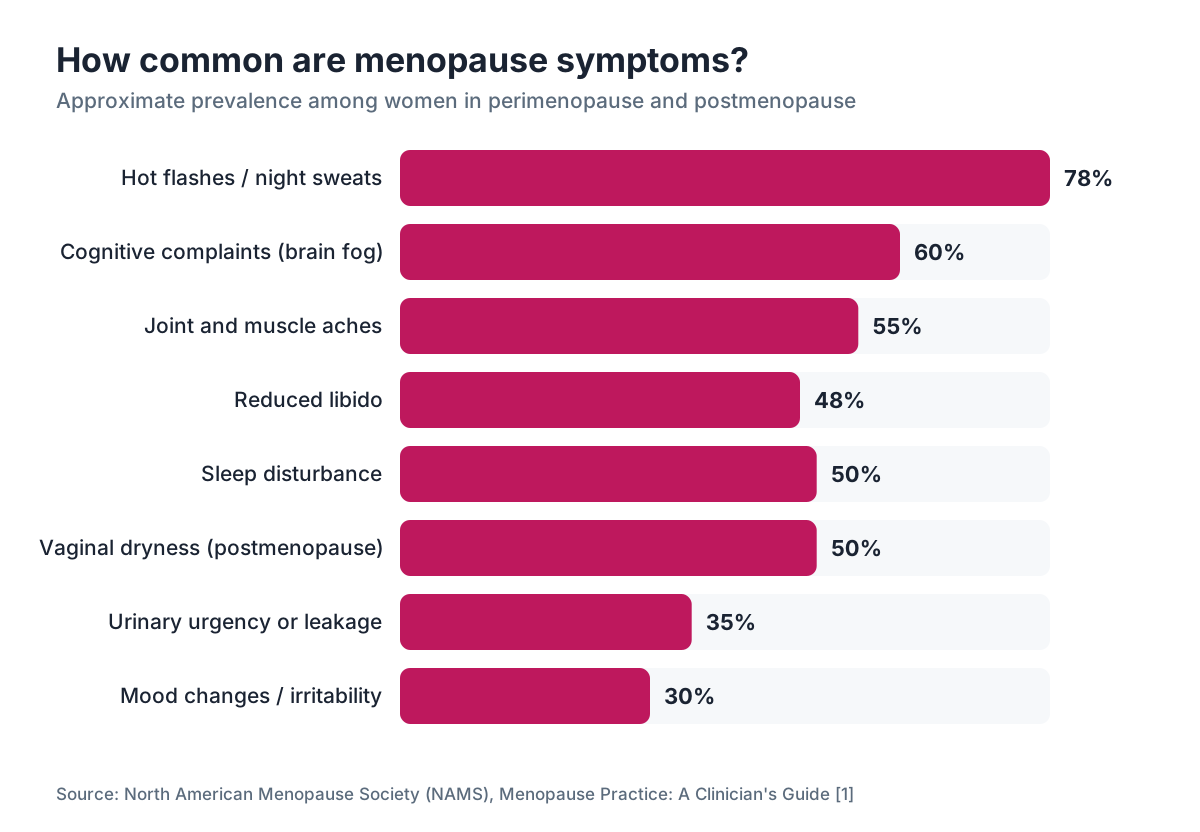
The North American Menopause Society (NAMS) tracks dozens of symptoms tied to the hormonal shift, and surveys tend to rank the common ones the same way [1]:
| Symptom | Approximate prevalence among menopausal women | |---|---| | Hot flashes / vasomotor symptoms | 75 to 80% | | Sleep disturbance | 40 to 60% | | Vaginal dryness | 27 to 60% (rises to ~50% postmenopause) | | Mood changes (irritability, low mood) | 20 to 40% | | Cognitive complaints (brain fog) | 60% report subjective changes | | Joint and muscle aches | 50 to 60% | | Headaches / migraine changes | 10 to 20% | | Reduced libido | 40 to 55% | | Urinary urgency or leakage | 30 to 40% | | Weight gain / body composition shift | Very common; exact % varies by study |
That list isn't the whole picture. Hair thinning, dry skin, heart palpitations, and anxiety show up in clinical surveys too. Severity swings hard from one woman to the next, and from one year to the next in the same woman.
Learn more about how this transition is defined in our menopause overview.
What do hot flashes feel like, and how long do they last?
A hot flash is a sudden wave of heat that usually starts in the chest and climbs to the face and neck, followed by flushing, sweating, then a chill. Most last 30 seconds to 5 minutes. Some women get a handful a week. Others get dozens a day.
The Study of Women's Health Across the Nation (SWAN), one of the longest-running menopause cohorts, found the median duration of frequent hot flashes is 7.4 years. For women whose symptoms start during perimenopause rather than after the final period, the median stretches to 11.8 years [2]. That figure floors most women, who expect a year or two of trouble and then relief.
Night sweats are the same event after dark. They soak sheets and break up sleep, which then feeds fatigue, irritability, and next-day fog. The mechanism isn't fully mapped, but the working model is this: falling estrogen narrows the thermoregulatory zone in the hypothalamus, so a tiny bump in core body temperature triggers a heat-dumping response that normally wouldn't fire [3].
Common triggers women name: alcohol, caffeine, spicy food, hot drinks, stress, and warm rooms. Tracking yours helps, but the list isn't universal.
How does menopause affect sleep?
Poor sleep is one of the most disabling menopause symptoms and one of the least mentioned in the exam room. Between 40% and 60% of perimenopausal and postmenopausal women report real sleep problems [1]. The causes pile on top of each other: night sweats wake you, falling estrogen degrades REM sleep, and progesterone (which is mildly sedating) drops too, so falling asleep in the first place gets harder [4].
The usual pattern is waking between 2 and 4 a.m. and lying there for 1 to 3 hours, then dragging through the next day. Chronic disruption at that scale isn't cosmetic. It pushes cardiovascular risk, insulin resistance, mood, and cognition in the wrong direction.
Sleep apnea risk climbs after menopause. Progesterone is thought to help keep the upper airway open, so its decline may make the airway more likely to collapse. If you snore, wake unrefreshed, or your partner notices you stop breathing, an overnight sleep study beats another lecture on sleep hygiene.
Estrogen therapy cuts night sweats and improves sleep in women whose problem is mainly vasomotor. When the picture is more tangled, adding low-dose progesterone or treating the apnea head-on may be what actually works. Read more about progesterone and its role in sleep and mood.
What causes brain fog during menopause, and is it permanent?
Brain fog is the informal name for a cluster of cognitive complaints: word-finding trouble, poor concentration, short-term memory slips, and feeling mentally slow. In clinical surveys, roughly 60% of women in perimenopause report some version of it [1].
The reassuring part comes from long-term studies. Objective testing during perimenopause does show small, measurable dips in processing speed and verbal memory, and those dips largely reverse in the postmenopausal years for most women [5]. The fog tends to lift. The exception is women who are chronically sleep-deprived or depressed, where the cognitive symptoms stick around and are probably driven by those conditions rather than estrogen itself.
Estrogen acts directly on neurons in memory-related regions, including the hippocampus. The evidence does not support hormone therapy for dementia prevention. It does support the idea that the cognitive dulling of perimenopause is real, hormone-driven, and usually temporary.
Here's the practical move. If the fog is bad enough to hit your work or daily function, rule out thyroid disease (hypothyroidism mimics menopause fog almost exactly), iron deficiency, vitamin B12 deficiency, and sleep apnea before you pin it all on estrogen.
What are the genitourinary symptoms of menopause, and why don't doctors always mention them?
Genitourinary syndrome of menopause (GSM) is the clinical name for the vaginal, vulvar, and urinary symptoms driven by estrogen loss in the lower urogenital tract [6]. GSM includes:
- Vaginal dryness and less lubrication during arousal
- Vaginal irritation, itching, or burning
- Pain with penetration (dyspareunia)
- Urinary urgency, frequency, or recurrent UTIs
- Mild stress incontinence
Hot flashes often fade on their own. GSM does the opposite: it gets worse without treatment. Estrogen receptors in the vaginal lining need steady estrogen to keep the tissue thick, the pH balanced, and blood flow up. When estrogen drops, the tissue thins and loses stretch, the pH rises (which invites UTIs), and natural lubrication falls off.
Why doctors skip it: patients skip it too. A survey from the International Society for the Study of Women's Sexual Health found fewer than 25% of women with GSM symptoms had ever raised them with a doctor [6]. The silence runs both directions, and it does real harm, because good treatments exist.
Local vaginal estrogen (a cream, ring, or tablet placed right on the tissue) is safe even for most women who can't take systemic hormones, including most breast cancer survivors working with their oncologist. Ospemifene, an oral SERM, is a non-hormonal option cleared by the FDA [6].
How does menopause affect mood, anxiety, and mental health?
Mood changes in perimenopause are biology, not weakness. Estrogen tunes serotonin and dopamine signaling, and the wild estrogen swings of perimenopause create genuine neurochemical instability. Irritability, low-grade anxiety, weepiness, a shorter fuse: these are among the most-reported symptoms and among the most startling to women who spent their whole adult lives on an even keel.
The risk of a first depressive episode roughly doubles during perimenopause compared with premenopause, even in women with no prior history of depression [7]. That's a biological vulnerability, full stop. SWAN found women with more hot flashes also had the highest rates of depressive symptoms, which points to sleep loss and vasomotor misery feeding the mood picture directly.
Anxiety belongs on the list too. New or worsening generalized anxiety, panic attacks, or a sense of dread with no cause is now recognized as a core perimenopause symptom. Plenty of women get handed an SSRI without anyone connecting it back to estrogen.
If you have a personal or family history of premenstrual dysphoric disorder (PMDD), postpartum depression, or depression tied to earlier hormonal shifts, your odds of significant mood trouble in perimenopause are meaningfully higher. Raise it with a clinician before it gets bad.
What changes in your menstrual cycle signal perimenopause?
Irregular periods are usually the first hard sign perimenopause has started. NAMS defines early perimenopause by cycle-length variability of 7 or more days compared with your own baseline [1]. Late perimenopause shows up as skipped periods, with gaps of 60 days or more between cycles.
The bleeding itself changes character. Some women get lighter, shorter periods. Others get flooding episodes far heavier than anything they saw in their 30s. Heavy bleeding comes from anovulatory cycles, where no egg releases and progesterone never rises to counterbalance estrogen's push on the uterine lining. The lining builds up, then sheds late and hard.
Heavy perimenopausal bleeding that soaks a pad or tampon in an hour for several hours running, or that passes clots bigger than a quarter, needs evaluation to rule out fibroids, polyps, or endometrial hyperplasia. Don't assume every strange thing is just perimenopause.
FSH (follicle-stimulating hormone) rises as ovarian reserve drops, and a high FSH on day 2 or 3 of the cycle is one lab marker clinicians use. But FSH bounces around a lot in perimenopause, so one normal result rules nothing out. AMH (anti-Mullerian hormone) is steadier and reflects ovarian reserve better. See our piece on perimenopause age for more on timing and lab interpretation.
Can menopause cause weight gain, and why does it happen in the belly?
Menopausal weight gain is real, but the story is more specific than "hormones make you fat." The average woman gains about 1.5 pounds a year in midlife, part aging and part the transition itself [8]. The bigger change is where the fat goes: it migrates from hips and thighs toward the belly.
Estrogen influences fat storage location. When it falls, fat starts collecting in the visceral compartment (around the organs in the abdomen) instead of under the skin. Visceral fat is the dangerous kind. It drives insulin resistance, inflammation, and cardiovascular risk more than the same pounds parked elsewhere.
Muscle mass also declines with age and drops a bit faster after menopause, which lowers resting metabolic rate. Women eating the same food and doing the same workouts find the math no longer balances.
Hormone therapy does not cause weight gain. Randomized trials show systemic estrogen either has no effect on weight or slightly reduces fat mass and softens the shift toward belly fat [8]. GLP-1 receptor agonists like semaglutide come up here too, especially for women who don't respond to hormone therapy or would rather not use it. WomenRx offers a clinical evaluation for both routes if you want help figuring out which fits your situation. See our coverage of semaglutide for weight loss for the evidence on GLP-1s in midlife women.
What happens to bones and the heart during and after menopause?
These are the quiet consequences. No daily symptom, but the highest health stakes.
Bone loss speeds up sharply in the first 1 to 3 years after the final period. Women can lose 3 to 5% of bone density a year in that early window [9]. Across the first decade after menopause, total loss averages 10 to 20%. Estrogen normally holds back osteoclasts, the cells that break down bone, so its exit tips the balance toward breakdown. Osteoporosis affects roughly 1 in 5 women over 50, and fragility fractures, hip fractures most of all, carry serious disability and death risk. A bone density test (DEXA scan) is recommended for all women at 65, and earlier with risk factors.
Cardiovascular risk rises after menopause. Before it, women have fewer cardiac events than men their age. After it, the gap closes. Estrogen helps vascular tone, cholesterol (raising HDL, lowering LDL), and inflammation, and those effects fade as estrogen falls.
Timing of hormone therapy matters here. The "timing hypothesis" from the Women's Health Initiative reanalysis and later data suggests women who start hormone therapy within 10 years of menopause (or before age 60) may see cardiovascular benefit, while starting late, in women already years into postmenopause, doesn't carry that benefit and may add risk [10]. This is a place where an individualized read from a clinician beats any blanket rule.
What treatments work for menopause symptoms?
Hormone replacement therapy (HRT, also called menopausal hormone therapy or MHT) is the most effective treatment available for hot flashes, sleep disruption, and GSM [1]. The Endocrine Society's clinical practice guideline states that "menopausal hormone therapy is the most effective treatment for vasomotor symptoms and should be offered to symptomatic, healthy, recently menopausal women" [10]. Women with a uterus add a progestogen to protect the uterine lining. Read more in our hormone replacement therapy guide.
For women who prefer or need non-hormonal options:
- Fezolinetant (Veoza), an FDA-approved neurokinin B antagonist, cuts hot flash frequency and severity without hormones. It reached the market in 2023 [11].
- SSRIs and SNRIs (escitalopram, venlafaxine, and desvenlafaxine in particular) reduce hot flash frequency by roughly 50 to 60% in trials, though less than estrogen does.
- Gabapentin has evidence for nighttime hot flashes specifically.
- Cognitive behavioral therapy adapted for menopause (CBT-M) has solid trial evidence for reducing hot flash distress even when it doesn't reduce how often they happen.
- Vaginal estrogen for GSM is low-dose, applied locally, and has a very favorable safety profile.
For mood symptoms, telling hormone-driven mood trouble apart from clinical depression matters, because the treatment differs. Some women do beautifully on estrogen alone for mood. Others need estrogen plus an antidepressant.
Lifestyle moves with real (if modest) evidence: regular aerobic exercise lowers hot flash severity, resistance training protects bone and muscle, and a diet lower in refined carbs blunts the weight and metabolic drift. None of these replaces hormone therapy for severe symptoms. None of them is worthless, either.
How do you know if what you're experiencing is menopause or something else?
This part is genuinely hard, because menopause lands at the same age as midlife stress, thyroid disease, autoimmune conditions, sleep disorders, and mood disorders, and on the surface they all look alike.
The conditions worth ruling out before you blame everything on menopause:
- Hypothyroidism: fatigue, brain fog, weight gain, mood changes, feeling cold, dry skin, and hair thinning overlap almost completely. A TSH is the first test.
- Hyperthyroidism or Graves' disease: palpitations, heat intolerance, anxiety, and irregular periods mimic perimenopause closely.
- Iron deficiency anemia: especially likely with heavy perimenopausal periods. Fatigue and cognitive symptoms improve once iron is replaced.
- Sleep apnea: risk rises after menopause and it's underdiagnosed in women.
- ADHD: often missed in women and can be unmasked or worsened by perimenopause's cognitive effects.
- Generalized anxiety disorder: can surface for the first time in midlife, hormonally driven or not.
A reasonable baseline workup for a woman in her 40s or 50s with these symptoms: TSH, CBC, ferritin, vitamin B12, vitamin D, fasting glucose, HbA1c, and a lipid panel. FSH and estradiol can help, but they swing wildly in perimenopause and should never confirm or exclude the diagnosis on their own.
When should you see a doctor about menopause symptoms?
The honest answer: sooner than most women do. Surveys find women wait an average of about 4 years from the start of symptoms before getting evaluation or treatment. Many describe years of being brushed off by providers who called it stress or aging.
See someone soon if:
- Hot flashes or night sweats break your sleep more than a few nights a week
- Mood changes are bad enough to hit your relationships or work
- Sexual function or vaginal comfort has changed noticeably
- Your periods have turned unpredictably heavy or you're soaking through protection
- You're worried about bone health (family history of osteoporosis, a prior fracture, or long-term steroid use)
- You have cardiovascular risk factors the hormonal shift might touch
You don't have to wait until it's unbearable. Perimenopause is a real medical transition, and talking to a clinician who takes it seriously early gives you more options, not fewer. Ideally that person is comfortable prescribing hormone therapy and isn't reflexively against it because of a misread of old research.
Providers with specific menopause training, including NAMS Certified Menopause Practitioners, are a good starting point. WomenRx is a telehealth platform built for this transition if you don't have a local specialist.
Frequently asked questions
What is the average age menopause symptoms start?
Perimenopause, when symptoms usually begin, starts on average around age 47, though it can begin anywhere from the early 40s to the mid-50s. The final menstrual period (true menopause) hits at a median age of 51 in the United States. Symptoms can show up 4 to 8 years before that last period, so many women deal with real hormonal symptoms through their mid-to-late 40s.
Can you have menopause symptoms but still have regular periods?
Yes. Early perimenopause often brings mood changes, sleep disruption, and even mild hot flashes while periods stay relatively regular. The hormonal swings that drive symptoms begin before cycles look irregular. If you're in your mid-40s with these symptoms and periods that still come monthly, perimenopause is a plausible and common explanation worth raising with a clinician.
How long do menopause symptoms last?
The SWAN study found moderate-to-severe hot flashes last a median of 7.4 years. Women who develop them early in perimenopause (before the final period) tend to have the longest run, sometimes past 11 years. Vaginal and urinary symptoms (GSM) tend to persist indefinitely without treatment. Mood and cognitive symptoms often improve in postmenopause once hormone levels settle at their new, lower baseline.
What are the first signs of menopause at 40?
In your early 40s the first signals are usually subtle: cycles slightly shorter or longer than your usual pattern, premenstrual symptoms that feel stronger than before, new or worse insomnia, and mood changes that seem out of proportion. Some women notice a first hot flash. These point to perimenopause beginning, which is normal in the early-to-mid 40s and occasionally in the late 30s.
Is heart palpitations a symptom of menopause?
Yes, palpitations are a recognized menopause symptom. Falling estrogen affects the autonomic nervous system and cardiac electrical conduction, which can cause skipped beats, fluttering, or a racing heart. They're usually benign and often line up with hot flash episodes. Still, new palpitations always warrant a cardiac evaluation to rule out arrhythmia, especially if they come with dizziness, chest pain, or fainting.
Does menopause cause anxiety and panic attacks?
It can. Estrogen modulates the stress response and GABA receptor function. As estrogen swings and falls, some women get new-onset anxiety, a persistent sense of dread, or panic attacks for the first time. This is a direct biological effect, not purely psychological. Women with a history of premenstrual mood sensitivity or postpartum anxiety carry higher risk. Treatment depends on severity and may include hormone therapy, SSRIs/SNRIs, or targeted anxiety care.
What does menopause fatigue feel like?
Menopause fatigue is often described as bone-deep tiredness that rest barely touches, paired with mental slowness and low motivation. It usually traces back to broken sleep from night sweats, lower estrogen (which normally supports energy regulation), and sometimes declining thyroid function or iron deficiency alongside menopause. It differs from ordinary tiredness because it persists despite enough hours in bed and often worsens in the afternoon.
Can menopause cause joint pain?
Yes. Roughly 50 to 60% of menopausal women report joint and muscle aches, and estrogen loss is the likely driver since estrogen is anti-inflammatory and supports cartilage. The joints hit most often are hands, knees, and hips. Pain is often worse in the morning and eases with movement. Hormone therapy reduces joint symptoms in some women. Ruling out inflammatory arthritis (like rheumatoid arthritis, which also peaks in midlife women) matters if symptoms are severe.
What is the difference between perimenopause and menopause symptoms?
The symptoms are largely the same; the difference is timing and hormonal pattern. Perimenopause runs on fluctuating estrogen that can spike high and crash low without warning, which makes symptoms feel erratic. After the final period (menopause and postmenopause), estrogen settles at a lower level, and symptoms like hot flashes often begin to ease, though GSM and bone loss keep progressing without treatment.
Are there menopause symptoms that are often missed or misdiagnosed?
Several. Genitourinary symptoms (dryness, painful sex, recurrent UTIs) get underreported and often treated symptom by symptom without addressing the hormonal cause. New anxiety or depression in women in their 40s is frequently treated as a standalone psychiatric condition. Joint pain gets chalked up to aging or arthritis. Cognitive changes get dismissed as stress. And sleep apnea, which increases after menopause, is often undiagnosed in women.
Can menopause symptoms start in your late 30s?
Yes, though it's less common. Perimenopause typically begins in the mid-40s, but some women notice hormonal shifts in their late 30s, especially changes in cycle length, premenstrual symptoms, or sleep. Premature ovarian insufficiency (POI), a separate condition from perimenopause, causes estrogen deficiency before age 40 and needs its own evaluation. If you're in your late 30s with these symptoms, a workup including FSH and AMH is worth doing.
Does hormone therapy help all menopause symptoms?
Systemic estrogen therapy (with progestogen if you have a uterus) is the most effective treatment for hot flashes, sleep disruption, mood instability, joint pain, and preventing bone loss. It also improves GSM when taken systemically, though local vaginal estrogen is often preferred for GSM alone. It doesn't fix everything: some cognitive complaints and mood disorders need extra treatment, and not every woman is a candidate given personal or medical history.
Sources
- North American Menopause Society (NAMS), Menopause Practice: A Clinician's Guide
- JAMA Internal Medicine, Duration of Menopausal Vasomotor Symptoms Over the Menopause Transition (SWAN study, Avis et al., 2015)
- National Institute on Aging, NIH, What is Menopause?
- National Sleep Foundation, Menopause and Sleep
- Menopause (journal), Cognitive Function Across the Menopause Transition, SWAN study data
- The American College of Obstetricians and Gynecologists (ACOG), Genitourinary Syndrome of Menopause (GSM)
- Archives of General Psychiatry, Risk of Depression During Perimenopause (Cohen et al.)
- Climacteric (journal), Weight Gain and Hormonal Changes at Menopause
- National Institute of Arthritis and Musculoskeletal and Skin Diseases (NIH), Osteoporosis
- Endocrine Society Clinical Practice Guideline, Treatment of Symptoms of the Menopause (2015, updated)
- FDA Drug Approval, Fezolinetant (Veoza) for Vasomotor Symptoms, 2023