Side effects of hormone replacement therapy: what's real, what's rare
TL;DR: Most women starting HRT get mild, short-lived effects like breast tenderness, bloating, and spotting that settle within 2 to 3 months. Serious risks, blood clots and breast cancer, are real but small, and they depend on the type, dose, route, and timing of therapy. Transdermal estrogen and micronized progesterone carry the most favorable safety profiles in current evidence.
What are the most common side effects of hormone replacement therapy?
Most women who start HRT notice something in the first 6 to 12 weeks, and most of it is mild and fades on its own. The North American Menopause Society (NAMS) lists breast tenderness, bloating, nausea, headache, and irregular vaginal bleeding as the effects women report most often early on. [1]
Breast tenderness tops the list. It usually peaks in weeks 2 through 4 and eases as your body adjusts to new estrogen levels. If it drags on past three months, your prescriber will typically lower the dose or switch the delivery method.
Bloating and fluid retention come next. Estrogen increases sodium retention in the kidneys at higher doses, which is why some women feel puffy in their hands and feet early on. Switching from an oral pill to a hormone replacement therapy patch often cuts this down because transdermal estrogen skips first-pass liver metabolism and produces lower, steadier blood levels.
Irregular spotting shows up in women who still have a uterus and take combined estrogen-progestogen therapy. The endometrium is adjusting to a new hormonal setting. Spotting that continues past 6 months, or any bleeding that returns after 12 months with no periods, needs investigation to rule out endometrial pathology.
Headache and mood changes, including low mood or irritability, can hit in the first few weeks. They happen more with synthetic progestogens (like medroxyprogesterone acetate, or MPA) than with micronized progesterone, which has a gentler neurological profile.
What are the serious risks of HRT and how common are they really?
Here the evidence is more layered than the headlines, so let's walk through each serious risk one at a time.
Blood clots (venous thromboembolism, or VTE)
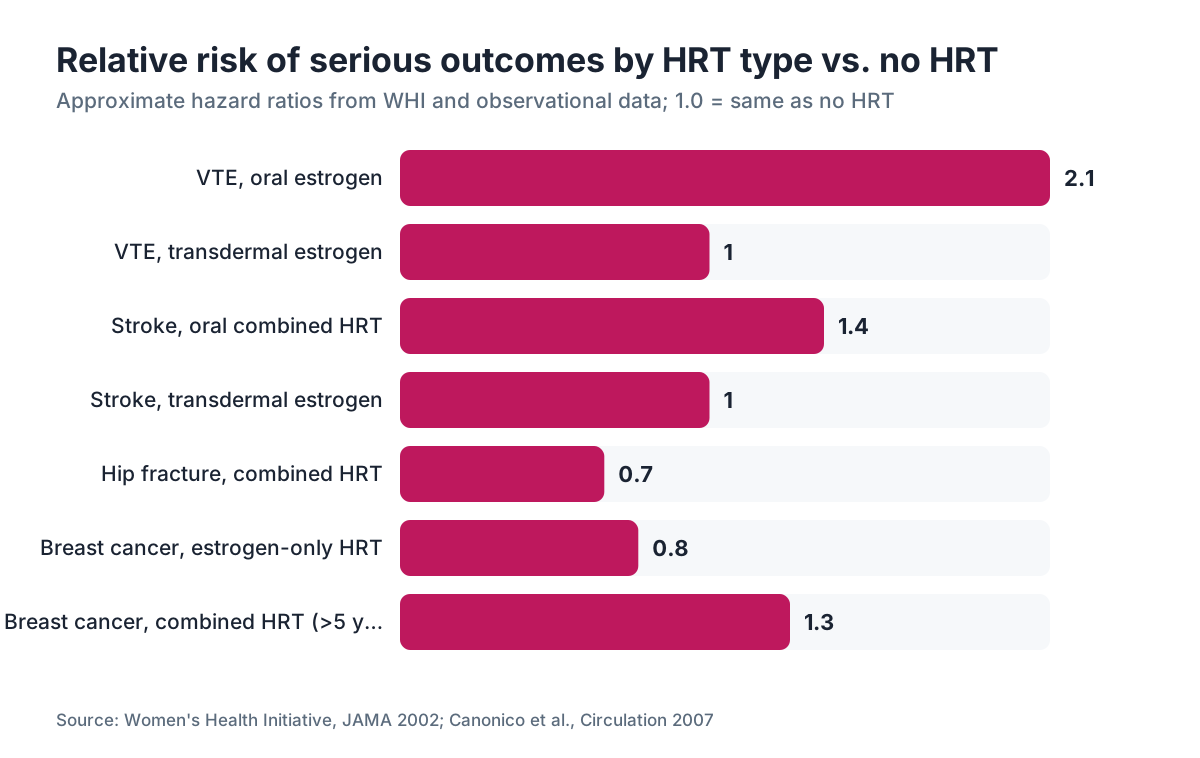
Oral estrogen roughly doubles the baseline risk of deep vein thrombosis and pulmonary embolism. [2] Baseline risk for a woman in her 50s is about 1 to 2 per 1,000 women per year, so doubling puts the absolute risk at 2 to 4 per 1,000 per year. That's a real number, not a rounding error.
Transdermal estrogen (patches, gels, sprays) does not appear to carry the same clot risk. A large French case-control study in Circulation found transdermal estrogen was not linked to increased VTE, while oral estrogen was. [3] This is one of the most useful distinctions in HRT prescribing, and it's why transdermal delivery is often the pick for women with obesity, a history of migraines with aura, or other VTE risk factors.
Stroke
Oral estrogen carries a small increase in ischemic stroke risk. The Women's Health Initiative (WHI) trial found a hazard ratio of about 1.37 for stroke in women on combined conjugated equine estrogen (CEE) plus MPA. [4] Transdermal estrogen at standard doses does not appear to raise this risk, based on observational data.
Breast cancer
This is the risk women ask about most. The picture is genuinely mixed. Estrogen-only HRT (used only by women who've had a hysterectomy) is not clearly linked to increased breast cancer risk and may even lower it, based on the WHI estrogen-alone arm. [4] Combined estrogen-progestogen therapy, especially with synthetic progestogens, carries a small increased risk after about 5 years of use. The Million Women Study estimated roughly 6 extra breast cancer cases per 1,000 women using combined HRT for 10 years. [5]
Micronized progesterone appears to carry a lower breast cancer risk than synthetic progestogens in observational data, though randomized trial evidence for that exact comparison is thin.
Endometrial cancer
Estrogen alone in a woman with an intact uterus raises endometrial cancer risk a lot. That's why women with a uterus always need progestogen added. When combined therapy is used correctly, endometrial cancer risk drops back to baseline or below.
Here's the honest summary: serious risks are real but small in absolute terms, and the type, route, and duration of HRT change the math enormously.
How do hormone replacement therapy patch side effects differ from pill side effects?
Patches send estrogen through the skin straight into the bloodstream, skipping the liver. That one pharmacokinetic difference explains most of the meaningful safety gap between the two delivery forms.
When you swallow estrogen, it moves through the gut, gets absorbed, and hits the liver in high concentrations before it reaches the rest of the body. The liver answers by making more clotting factors, more sex hormone-binding globulin, and more C-reactive protein. Those changes drive the higher clot and inflammatory risk seen with oral estrogen.
Patch side effects tend to be different in kind. The most common ones are local: skin irritation, redness, or itching at the application site. Roughly 10 to 20 percent of patch users report some skin reaction, though true contact dermatitis (as opposed to mild redness) is less common. [6] Rotating the site, using the inner arm or abdomen, and staying clear of areas that rub against waistbands usually helps.
Patches can also peel or slide off in heat and humidity, which hurts adherence. Some women switch to gels or sprays for that reason. On systemic side effects (bloating, breast tenderness, headaches), patches tend to cause fewer of them because they hold estrogen levels steady without the peaks that come with a daily pill.
For most women who tolerate oral HRT but worry about clot risk or liver strain, switching to a hormone replacement therapy patch or another transdermal form is a reasonable, evidence-backed move. Your prescriber can work out roughly equivalent doses.
See our full breakdown of hormone replacement therapy options for more on how delivery methods stack up.
Does the timing of when you start HRT change the risk profile?
Yes, and it's one of the most important findings from the post-WHI reanalysis. The "timing hypothesis," or "window of opportunity," describes evidence that starting HRT within 10 years of menopause onset, or before age 60, gives a more favorable benefit-risk balance than starting later. [1]
Many WHI participants were in their 60s and 70s when they began therapy, which was already unusual clinical practice at the time. When researchers reran the data by age and years since menopause, the cardiovascular signal that scared the public largely vanished in younger postmenopausal women who started early. [4]
For cardiovascular outcomes specifically, starting estrogen inside the window may protect the heart. Starting a decade or more after menopause, when atherosclerosis may already be set, does not carry the same benefit and may do harm in women with advanced plaque.
Timing matters for the brain too. Some observational data suggests starting estrogen in the early postmenopausal period may lower dementia risk, but this is not settled, and the Endocrine Society does not recommend HRT specifically to prevent dementia. [7]
If you're in perimenopause or early menopause and weighing whether to start, reading about perimenopause age and when menopause starts can help you place yourself in the transition and understand what that means for the timing conversation.
What side effects does progesterone specifically cause in HRT?
Women with an intact uterus need progestogen to protect the uterine lining. But progestogen is also the part of combined HRT that causes the symptoms women dislike most.
Synthetic progestogens, especially medroxyprogesterone acetate (the progestogen in Prempro and many older combined pills), are linked to bloating, breast tenderness, mood changes, depression, lower libido, and headaches. Part of the reason: synthetic progestogens bind androgen and glucocorticoid receptors on top of progesterone receptors, which produces off-target effects. [9]
Micronized progesterone (brand name Prometrium, also generic) is identical to the hormone the ovaries make and binds receptors more cleanly. Many women report fewer mood side effects on it. [9] It also breaks down into allopregnanolone, a neurosteroid with calming, sleep-promoting effects, which is why taking it at bedtime can improve sleep.
The main downside of micronized progesterone is drowsiness, which most women find manageable or even welcome at night. Some notice breast tenderness too, though less often than with MPA. On the clot side, micronized progesterone combined with transdermal estrogen is not linked to increased VTE, unlike synthetic progestogens. [8]
If a synthetic product is giving you real progestogen side effects, asking your prescriber about switching to micronized progesterone is reasonable and well supported. The switch does not mean starting over on estrogen dosing.
Who should not take HRT, and what are the absolute contraindications?
HRT is not for everyone. The FDA labels for estrogen-containing products list several conditions that are either absolute or strong relative contraindications. [6]
Absolute contraindications include active or recent arterial thromboembolic disease (heart attack, stroke), known or suspected estrogen-sensitive breast cancer, known or suspected estrogen-dependent cancer (some uterine cancers), undiagnosed abnormal uterine bleeding, known or suspected pregnancy, and active liver disease with impaired function.
Relative contraindications, where the benefit-risk math depends on the individual, include a personal history of VTE (blood clots), a strong family history of breast cancer with a known BRCA mutation, uncontrolled hypertension, active gallbladder disease, migraines with aura (specifically with oral estrogen, not transdermal), and severe obesity.
A relative contraindication does not close the door. It means the conversation with your clinician has to be thorough, the right formulation and route need picking, and monitoring needs to be in place. A woman with a prior VTE who has a strong reason for menopausal hormone therapy might reasonably use transdermal estrogen (which does not raise VTE risk the way oral does) under specialist guidance.
This is exactly the kind of individualized read a telehealth service like WomenRx is built for, matching women with clinicians who work this specific risk-benefit analysis instead of applying one blanket rule.
What does HRT do to cholesterol and cardiovascular health?
Estrogen does good things to lipids. Oral estrogen lowers LDL cholesterol, raises HDL cholesterol, and lowers Lp(a). It also lowers fibrinogen. On paper, that reads as heart-protective.
But oral estrogen also raises triglycerides and ramps up clotting factor production, which partly cancels those gains and explains the clot risk above. [3] Transdermal estrogen does not raise triglycerides much and does not increase clotting factors, which makes it the better option for women with high triglycerides.
For women who are healthy, recently menopausal, and start HRT inside the timing window, there's no evidence of higher cardiovascular disease risk, and some observational data points to protection. The NAMS 2022 position statement holds that for women under 60 or within 10 years of menopause onset without cardiovascular disease, the benefit-risk profile is generally favorable. [1]
Blood pressure can tick up slightly with oral estrogen in some women, especially those already hypertensive. That's another reason transdermal delivery is preferred for women with established high blood pressure.
Can HRT cause weight gain?
This is probably the most common question, and the honest answer is: probably not, and maybe the reverse.
The WHI trial showed no meaningful weight gain from HRT compared with placebo. [4] The menopause transition itself shifts body composition toward more visceral (belly) fat, slows metabolic rate, and changes how the body handles glucose. HRT appears to partly offset those changes by keeping estrogen signaling going in metabolically active tissue.
Some women do see a few pounds of water retention early on, especially with oral estrogen, that can feel like weight gain. It usually clears within 2 to 3 months. Real fat gain from HRT isn't backed by the clinical evidence.
If weight is also on your mind alongside menopause symptoms, GLP-1 receptor agonists like semaglutide and tirzepatide are increasingly used in perimenopausal and postmenopausal women, sometimes alongside HRT. The combination is an area of active clinical interest, though head-to-head trial data on the two together is still limited. You can read more about semaglutide for weight loss to see how that drug class works.
How does HRT affect bone density?
This is one of HRT's clearest benefits. Estrogen is the main brake on bone resorption in women. As estrogen falls after menopause, bone turnover speeds up and density drops. Bone loss is fastest in the 5 to 10 years right after menopause. [11]
HRT reliably preserves, and sometimes increases, bone mineral density at the hip, spine, and wrist. [10] The WHI showed a 34 percent reduction in hip fractures in women using combined HRT compared with placebo. [4] That's a meaningful drop, especially at the hip, where a fracture in older women carries serious consequences.
HRT is not the only tool for bones. For women who've already lost significant density or have osteoporosis, bisphosphonates and other dedicated osteoporosis drugs are often the better first-line choice. But for a woman starting HRT for menopause symptoms who also wants bone protection, HRT covers both at once.
If you don't know your baseline, getting a bone density test before or soon after starting HRT gives you a number to track over time.
The bone-protective effect fades after you stop, so fracture risk drifts back toward baseline within a few years of quitting.
Side effects by HRT type: a comparison
Different HRT formulations carry meaningfully different side effect profiles. The table below sums up the key differences from NAMS, the Endocrine Society, and published trials. [1][7]
| HRT type | Common side effects | VTE risk vs. baseline | Breast cancer risk (>5 yrs) | Notes | |---|---|---|---|---| | Oral estrogen (CEE, E2) | Bloating, breast tenderness, headache, nausea | Elevated (~2x) | Estrogen-only: neutral or reduced | Raises triglycerides | | Transdermal estrogen (patch, gel, spray) | Skin irritation at site, breast tenderness (milder) | Not elevated | Similar to oral; depends on progestogen | Lower VTE and stroke risk | | Oral synthetic progestogen (MPA) | Bloating, mood changes, low libido, breast tenderness | See estrogen component | Elevated vs. estrogen-only | Older formulation; still widely used | | Micronized progesterone (oral) | Drowsiness, mild breast tenderness | See estrogen component | Lower than synthetic progestogens (observational data) | Take at bedtime; favorable mood/sleep profile | | Vaginal estrogen (cream, ring, tablet) | Local irritation (uncommon) | Not elevated (systemic absorption minimal) | Not elevated | For genitourinary symptoms only; not for vasomotor symptoms | | Combined patch (estrogen + progestogen) | Skin irritation, breast tenderness | Not elevated (transdermal) | Depends on progestogen type | Convenient; less flexibility in dose adjustment |
Treat this as a starting point. Individual responses vary, and the right choice for any woman depends on her symptoms, medical history, and preferences.
How long do side effects last, and when should you call your doctor?
Most early side effects, breast tenderness, bloating, spotting, headaches, settle within 6 to 12 weeks as the body adjusts to new hormone levels. Standard clinical advice is to give any new formulation at least 2 to 3 months before deciding whether it's working or causing effects you can't live with.
Side effects that need prompt medical attention rather than a wait-and-see approach:
- Unexpected heavy vaginal bleeding, or bleeding that returns after 12 months with no periods
- Leg pain, swelling, or redness that could point to deep vein thrombosis
- Sudden shortness of breath or chest pain
- New or severe headache, especially with visual changes
- Sudden weakness or numbness on one side (stroke symptoms)
- Jaundice or severe abdominal pain (liver effects, rare)
- A new breast lump or nipple discharge
These are not common on HRT, but they're the red flags that need same-day or emergency evaluation.
For side effects that are annoying rather than alarming, a dose change, a switch in delivery route, or a change in progestogen type usually fixes it. The idea that you either put up with every symptom or quit HRT entirely is a false choice. Prescribers who specialize in menopause care spend a lot of their time on exactly this kind of fine-tuning.
For a broader grounding in menopause and how HRT fits the transition, that context helps the symptom timeline make sense.
What does the FDA currently say about HRT safety?
The FDA requires a boxed warning (the most serious label warning) on all estrogen-containing hormone therapy products. It covers increased risks of endometrial cancer (for estrogen-only products), breast cancer (for combined products), cardiovascular disorders, and probable dementia (in women 65 and older). [6]
The FDA label language reads: "Estrogens with or without progestins should be prescribed at the lowest effective doses and for the shortest duration consistent with treatment goals and risks for the individual woman."
That "lowest effective dose for shortest duration" wording was added after the 2002 WHI findings and has been contested in menopause medicine ever since. NAMS and the Endocrine Society both note that for women under 60 who are within 10 years of menopause, the risk profile does not necessarily justify duration limits for symptom relief, and that each woman's situation should be judged individually rather than under a blanket time cap. [1][7]
The label does not mean HRT is dangerous for most women who are candidates. It means the risks are real enough to require plain disclosure, and that prescribers should make individual decisions instead of reflexively writing the same script for everyone.
WomenRx clinicians work inside this framework, helping women read these label risks against their own health history before making a prescribing decision.
Frequently asked questions
How long does it take for HRT side effects to go away?
Most early side effects, including breast tenderness, bloating, and irregular spotting, ease within 6 to 12 weeks. Giving any new HRT formulation at least 2 to 3 months before switching is standard clinical advice. If side effects persist past 3 months, a dose adjustment or change in delivery route (for example, switching from oral to transdermal) usually helps rather than stopping therapy entirely.
Are hormone replacement therapy patch side effects different from pill side effects?
Yes, meaningfully so. Patches bypass the liver, which reduces systemic side effects like nausea, bloating, and fluid retention. They also do not increase blood clot or stroke risk the way oral estrogen does. The main patch-specific side effects are skin irritation or redness at the application site, which affects roughly 10 to 20 percent of users. Rotating sites and avoiding friction areas usually helps.
Does HRT increase breast cancer risk?
Combined estrogen-progestogen HRT is associated with a small increased risk after about 5 years of use. The Million Women Study estimated about 6 extra cases per 1,000 women over 10 years of combined therapy. Estrogen-only HRT (used by women without a uterus) does not clearly increase risk and may reduce it. Micronized progesterone appears to carry lower risk than synthetic progestogens based on observational data.
Can HRT cause blood clots?
Oral estrogen roughly doubles the baseline risk of venous blood clots (deep vein thrombosis and pulmonary embolism). Transdermal estrogen, delivered via patch, gel, or spray, does not appear to carry this increased risk based on multiple large studies. Women with personal or family histories of clotting disorders should discuss transdermal delivery and possible testing for clotting conditions before starting any HRT.
Does HRT cause weight gain?
Clinical trial data, including the Women's Health Initiative, does not support HRT as a cause of meaningful fat gain. Some women notice a few pounds of water retention in the first 2 to 3 months of oral estrogen use, which typically resolves. The menopause transition itself causes metabolic shifts that promote visceral fat accumulation; HRT may partially counteract those shifts rather than worsen them.
Who should not take hormone replacement therapy?
Absolute contraindications include active breast cancer or estrogen-sensitive cancer, recent heart attack or stroke, unexplained vaginal bleeding, active liver disease, and pregnancy. Relative contraindications requiring case-by-case discussion include prior blood clots, BRCA mutation, uncontrolled hypertension, active gallbladder disease, and migraines with aura (especially with oral estrogen). Transdermal estrogen is sometimes appropriate for women with relative contraindications where oral would not be.
Is it safe to take HRT long term?
NAMS and the Endocrine Society do not recommend arbitrary duration limits for women under 60 who are good candidates for therapy. The benefit-risk profile should be reassessed regularly, typically annually. Long-term use beyond 5 to 10 years carries incrementally higher breast cancer risk with combined therapy, which must be weighed against continued symptom control, bone protection, and quality of life on an individual basis.
Does the type of progestogen in HRT matter for side effects?
Significantly. Synthetic progestogens like medroxyprogesterone acetate are associated with more mood changes, bloating, breast tenderness, and reduced libido than micronized progesterone. Micronized progesterone is bioidentical and metabolizes to neurosteroids that can actually improve sleep and mood. It also appears to carry a lower breast cancer risk than synthetic progestogens, though the evidence comes primarily from observational studies rather than randomized trials.
Can HRT cause mood changes or depression?
Mood effects from HRT are largely progestogen-dependent. Synthetic progestogens, particularly MPA, are associated with irritability, low mood, and depression in some women. Micronized progesterone generally has a more positive or neutral effect on mood. Estrogen itself often improves mood in perimenopausal women whose depression is tied to hormonal fluctuation, though it is not a standalone treatment for clinical depression.
Does HRT protect bones, and does that benefit outweigh the risks for some women?
HRT reliably preserves bone mineral density and reduced hip fracture risk by 34 percent in the Women's Health Initiative trial. For women who are perimenopausal or early postmenopausal with both bothersome symptoms and osteopenia, starting HRT may address both issues simultaneously. For women who are primarily seeking fracture prevention without significant menopausal symptoms, dedicated osteoporosis medications may be a better primary approach.
What is the difference between bioidentical and conventional HRT side effects?
Bioidentical hormones have the same molecular structure as the hormones your ovaries produced. FDA-approved bioidentical options include estradiol patches, gels, sprays, and micronized progesterone. Compounded bioidentical hormones made by pharmacies are not FDA-tested for purity and potency. There is no strong clinical evidence that compounded bioidenticals are safer or cause fewer side effects than regulated bioidentical products, and the lack of quality control is a legitimate concern.
Can HRT affect cholesterol or triglycerides?
Oral estrogen lowers LDL, raises HDL, but also raises triglycerides, which can be a problem for women with already elevated levels. Transdermal estrogen improves LDL and HDL without the triglyceride rise, making it the preferred route for women with hypertriglyceridemia. Both forms avoid the clotting-factor increases associated with oral estrogen, but transdermal eliminates the triglyceride concern entirely.
What happens to HRT side effects when you stop taking it?
Stopping HRT typically brings a return of menopausal symptoms, sometimes abruptly if you stop quickly. Tapering the dose gradually over several months reduces rebound hot flashes and sleep disruption. Bone-protective effects diminish within a few years of stopping. The small increased breast cancer risk associated with combined HRT returns to baseline within about 5 years of discontinuation, based on data from the Million Women Study.
Does where I get HRT (telehealth versus in-person) affect the safety monitoring I receive?
The prescribing standard of care is the same regardless of setting. A thorough personal and family medical history, blood pressure check, and baseline symptom assessment should happen before starting. Annual follow-up to reassess symptoms, risks, and continued appropriateness of the prescription is standard. Reputable telehealth platforms follow these same protocols and can coordinate lab work and blood pressure monitoring locally when needed.
Sources
- North American Menopause Society, 2022 Hormone Therapy Position Statement
- FDA, Guidance on Estrogen and Estrogen with Progestogen Products for Postmenopausal Women
- Canonico M et al., Circulation 2007: Hormone Therapy and Venous Thromboembolism Among Postmenopausal Women
- Women's Health Initiative Investigators, JAMA 2002 and follow-up analyses
- Million Women Study Collaborators, Lancet 2003
- FDA, Approved Drug Products with Therapeutic Equivalence Evaluations (Orange Book) and prescribing information for Vivelle-Dot (estradiol transdermal)
- Endocrine Society Clinical Practice Guideline: Treatment of Symptoms of the Menopause, 2015 (updated)
- Scarabin PY, Thrombosis Research 2014: Progestogens and venous thromboembolism in menopausal women
- NAMS, Menopause journal: Estrogen and progestogen use in postmenopausal women
- Bone Health and Osteoporosis Foundation
- National Institute on Aging, NIH: Menopause and Bone Loss