Sex after menopause: what actually changes and what helps
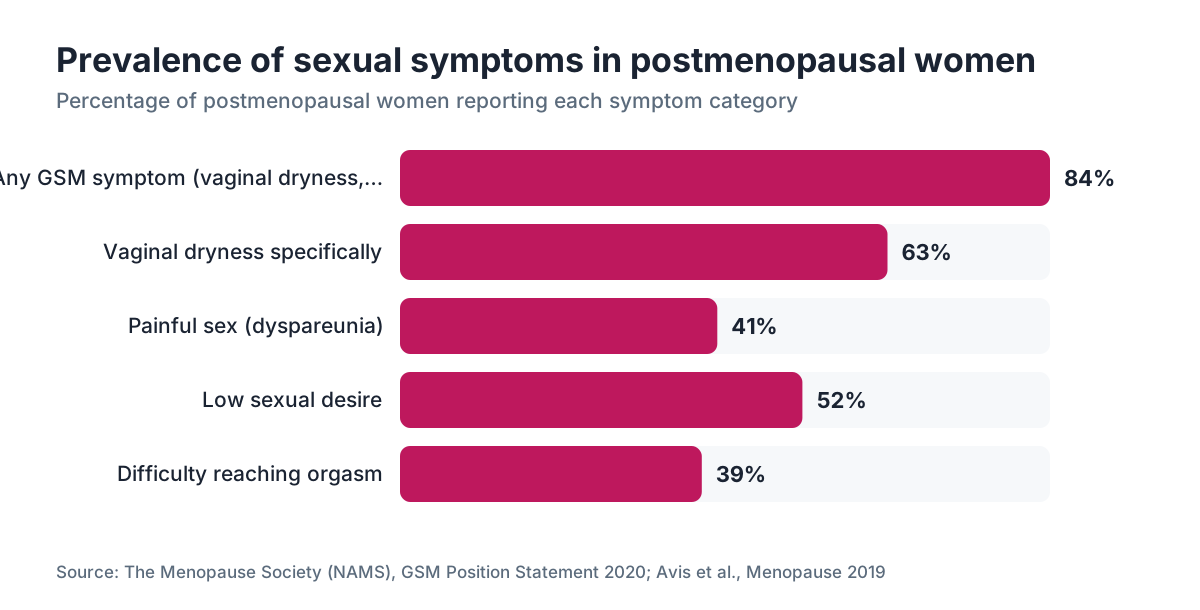
TL;DR: Sex after menopause changes because estrogen loss thins vaginal tissue, reduces lubrication, and can make intercourse painful. About half of postmenopausal women report low desire or pain during sex, but effective treatments exist: vaginal estrogen, systemic hormone therapy, ospemifene, and non-hormonal approaches. Most women who treat the underlying changes report meaningful improvement.
What actually happens to sex drive and arousal after menopause?
Desire does not vanish at menopause. It shifts, often in ways that feel confusing or distressing. The short version: estrogen and testosterone both drop, the tissues that respond to arousal get less sensitive, and the psychological load of midlife piles on top of all of it.
Estrogen keeps vaginal and vulvar tissue thick, elastic, and well-lubricated. When estrogen falls after the final menstrual period, the epithelium thins, blood flow to the genitals decreases, and the natural transudate that provides lubrication slows dramatically [1]. Arousal still happens neurologically, but the physical response lags or never fully arrives.
Testosterone matters too, though it is harder to measure and not FDA-approved for women in the United States as of 2025. The ovaries and adrenal glands produce testosterone throughout life, but levels decline gradually through perimenopause and postmenopause. Low androgen levels correlate with reduced genital sensitivity and lower spontaneous desire, though the relationship is not perfectly linear and serum levels do not reliably predict who will respond to treatment [2].
Neurotransmitter shifts add another layer. Dopamine pathways that drive novelty and reward are modulated by estrogen. Serotonin, which the brain also adjusts post-menopause, tends to suppress desire when elevated. This is part of why some antidepressants make sexual problems worse in this age group, and why clinicians who treat menopause-related sexual dysfunction look at the full medication list before adding anything new.
Sleep disruption, hot flashes, and mood changes wear down interest in sex independently of any hormonal mechanism. You can treat the tissue and still feel too exhausted to want anything at 11 pm. That happens to a lot of women, and it does not mean the treatment failed.
How common is painful sex after menopause?
Very common. The umbrella term for this is genitourinary syndrome of menopause (GSM), which replaced the older term vulvovaginal atrophy in 2014 because it describes the full picture more accurately: vaginal dryness, burning, irritation, urinary urgency, and pain with sex [1].
Studies put the prevalence of GSM symptoms at roughly 50 to 84 percent of postmenopausal women, though not all of those women seek care or identify their symptoms as treatable [3]. The NAMS 2020 position statement notes that unlike hot flashes, which often resolve over time without treatment, GSM symptoms tend to worsen progressively without intervention.
The pain has a specific pattern. It usually feels like burning or tearing at penetration, dryness throughout, and sometimes a raw soreness that persists for hours or days afterward. Some women also develop secondary vaginismus, an involuntary tightening of the pelvic floor muscles, because the brain learns to anticipate pain and responds protectively. That reflex does not go away automatically once you address the tissue. It often needs separate physical therapy.
Worth knowing: GSM also causes recurrent urinary tract infections in some women, because the urethral and bladder lining lose the same estrogen protection. If you are getting UTIs more frequently after menopause age, GSM is a plausible reason even if vaginal dryness is not your primary complaint.
Does low estrogen explain all sexual problems after menopause?
No, and treating it as though it does leads to incomplete care.
Estrogen deficiency explains GSM beautifully. It explains reduced lubrication and thinning tissue. But desire, orgasm difficulty, and relationship satisfaction involve a longer list of factors. Cardiovascular health matters: adequate blood flow to the clitoris and vaginal walls is required for arousal, and hypertension, diabetes, and smoking all impair that. Women who smoke reach menopause roughly two years earlier and often have more pronounced vascular effects on sexual response [4].
Medications are a big, underappreciated cause. Antidepressants (especially SSRIs and SNRIs), beta-blockers, antihistamines, and some antihypertensives all dampen sexual response. Hormonal contraceptives that are sometimes continued into perimenopause suppress endogenous testosterone via sex-hormone-binding globulin. Opioids suppress the hypothalamic-pituitary axis. If your sex life changed around the same time you started a new medication, that connection deserves a direct conversation with your prescriber.
Psychological and relational factors do real work here. A 2019 analysis in Menopause found that relationship quality was among the strongest predictors of sexual satisfaction for midlife women, stronger than hormone levels in some models [5]. That is not a reason to dismiss biology. It is a reason to address both.
Body image shifts matter too. Weight changes, surgical scars, the visual changes of aging: these affect how women feel about initiating or being seen. Programs that combine hormonal treatment with cognitive-behavioral therapy or sex therapy consistently outperform either approach alone in randomized trials.
What does vaginal estrogen actually do, and is it safe?
Vaginal estrogen delivers estrogen directly to local tissue at doses low enough that systemic absorption is minimal. It restores the epithelial thickness, glycogen content, and lactobacillus flora of the vagina. It increases lubrication. It lowers vaginal pH back toward the premenopausal range, which reduces irritation and cuts the risk of recurrent bacterial vaginosis and UTIs [1].
Formulations include creams (Premarin cream, Estrace cream), suppositories (Vagifem, Yuvafem), a ring (Estring, which releases 7.5 mcg per day), and an insert (Imvexxy). The ring is changed every 90 days and is convenient for women who want to forget about it. Suppositories are often preferred by women who find creams messy. Doses are typically used daily for two weeks, then twice weekly for maintenance.
The safety question almost always comes down to breast cancer risk. The FDA labeling on all estrogen products carries a class warning, but NAMS and the Menopause Society have stated clearly that low-dose vaginal estrogen is not expected to increase breast cancer risk and may be used by most women, including breast cancer survivors, in consultation with their oncologist [1]. The estradiol ring (Estring) at 7.5 mcg per day produces serum estradiol levels that stay within the postmenopausal range. A 2020 observational study published in JAMA Oncology found no significant increase in breast cancer recurrence in women using vaginal estrogen after a breast cancer diagnosis, though it was not a randomized trial.
Women who are using systemic hormone replacement therapy for hot flashes may still need vaginal estrogen because systemic doses are not always high enough to fully reverse GSM. That is not a sign something is wrong. The vaginal tissue sometimes just needs direct treatment.
For a transdermal option, the estrogen patch addresses systemic symptoms and provides some vaginal benefit, but typically not enough on its own for women with significant GSM.
What are the non-estrogen prescription options for painful sex?
Ospemifene (Osphena) is the only oral non-estrogen prescription approved by the FDA specifically for dyspareunia (painful sex) and vulvovaginal atrophy due to menopause [6]. It is a selective estrogen receptor modulator, a SERM, which means it acts like estrogen in vaginal tissue but blocks estrogen in the breast. It comes as a 60 mg daily tablet taken with food.
Ospemifene works. In phase 3 trials, it significantly reduced the most bothersome symptom of vulvovaginal atrophy versus placebo, with vaginal cell maturation index improvements that mirror those seen with vaginal estrogen [6]. The main side effect is hot flashes, which occur in about 7 percent of users. It carries a similar labeling caution as estrogens regarding endometrial and cardiovascular effects, so it is not the right choice for women with a history of or high risk for stroke or venous thromboembolism.
Prasterone (Intrarosa) is a vaginal insert containing DHEA, a precursor that converts locally in vaginal tissue to both estrogens and androgens. It was FDA-approved in 2016 for dyspareunia. The local conversion means minimal systemic hormone exposure. In three registration trials, prasterone significantly improved the signs and symptoms of moderate to severe dyspareunia and dryness [7]. It is a reasonable option for women who want to avoid any direct estrogen.
For women focused on systemic desire rather than local pain, flibanserin (Addyi) is FDA-approved for hypoactive sexual desire disorder in premenopausal women, but it is not approved for postmenopausal women specifically and the data in that group are limited. Bremelanotide (Vyleesi) is an injectable used before anticipated sexual activity and is similarly approved for premenopausal HSDD. Some clinicians use both off-label in postmenopausal women; the evidence is thinner than for the vaginal therapies.
Does hormone replacement therapy improve sex life broadly, more than locally?
For many women, yes. Systemic HRT addresses the hot flashes and night sweats that make sleep impossible and libido theoretical. Treating vasomotor symptoms alone often improves sexual function as a downstream effect, simply because a woman who sleeps eight hours feels different about sex than one who sweated through the sheets twice.
Beyond that, systemic estrogen restores some degree of genital blood flow and tissue responsiveness, though, as noted above, it does not always fully reverse advanced GSM without vaginal adjuncts. Estrogen also has effects on mood, energy, and the brain's dopamine pathways that support desire more directly [2].
Testosterone is the piece most likely to address desire specifically. It is not FDA-approved for women in the United States, but it is approved in Australia and the UK, and a 2019 systematic review and meta-analysis in The Lancet Diabetes and Endocrinology analyzing 36 randomized trials found that testosterone significantly improved sexual function in women, including desire, arousal, orgasm, and satisfaction, with no significant increase in androgenic side effects at recommended doses [2]. Many U.S. clinicians prescribe it off-label as compounded testosterone cream or gel, typically targeting a serum total testosterone in the physiologic female range.
The progesterone component of HRT is less clearly linked to sexual benefit; some women report that progesterone, particularly synthetic progestins, blunts desire, while others notice no effect. Micronized progesterone (Prometrium) tends to have fewer negative effects on mood and libido than medroxyprogesterone acetate, and is the preferred form in most current guidelines.
For women still in the transition, perimenopause age is the relevant starting point, because hormonal changes affecting sex begin years before the final period.
What over-the-counter products actually work for vaginal dryness?
Two categories matter here: lubricants and moisturizers. They are different, and many women use only one when they need both.
Lubricants are used during sex. They reduce friction in the moment. Water-based lubricants are compatible with latex condoms and silicone toys. Silicone-based lubricants last longer and are better for water-based activities, but they degrade silicone toys. Oil-based lubricants (coconut oil, mineral oil) are not condom-compatible and can disrupt vaginal flora with frequent use. NAMS recommends lubricants as a first step for mild symptoms before considering prescription options [1].
Vaginal moisturizers are used regularly, two to three times per week regardless of sexual activity. They work more like a topical treatment than a lubricant: they partially rehydrate vaginal cells and lower pH over time. Replens and similar polycarbophil-based products have the most evidence. A 2018 trial published in JAMA Internal Medicine found that vaginal moisturizer used regularly was similar to low-dose vaginal estrogen cream in improving dryness symptoms, though the estrogen group showed better improvement on objective tissue measures [8].
Hyaluronic acid-based vaginal products have gained attention and small studies show modest benefit for dryness. Larger trials are needed.
One honest note: over-the-counter products help with mild to moderate symptoms. If sex is painful enough that you are avoiding it, or if symptoms affect daily comfort, OTC products alone are usually not enough, and the prescription options above are worth pursuing.
How does pelvic floor health affect sex after menopause?
The pelvic floor is a group of muscles that support the bladder, uterus, and rectum, and those muscles are directly involved in sexual response, orgasm, and comfort during penetration. Estrogen receptors are dense in pelvic floor tissue, so menopause affects them directly.
Some women develop pelvic floor weakness after menopause, contributing to stress urinary incontinence and reduced sensation during sex. Others develop hypertonicity, an overly tight pelvic floor, often as a protective response to painful sex. Both conditions are treatable with pelvic floor physical therapy, a specialty area that remains dramatically underused in the U.S.
A 2020 Cochrane review found that pelvic floor muscle training improved sexual function outcomes including dyspareunia and orgasm difficulty in women with pelvic floor dysfunction [9]. The effect sizes are meaningful and the intervention has essentially no downsides.
If you have never had a pelvic floor PT evaluation and you have ongoing sexual difficulties after menopause, this is probably the first non-hormonal referral worth making. A good PT will assess for both weakness and tightness, teach appropriate exercises, and can address the reflex tightening (vaginismus) that develops secondary to painful sex.
Vaginal dilators, used at home as part of a PT program, help desensitize the pelvic floor response to penetration. They are not a fix on their own but work well as an adjunct.
Can losing weight or using GLP-1 medications affect sexual function after menopause?
Weight loss improves sexual function in women, through several mechanisms. Adipose tissue converts androgens to estrogen via aromatization, so significant weight changes can shift hormone balance. More directly, improved cardiovascular fitness means better genital blood flow, and reduced joint pain or mobility limitations make sex physically easier. Body image improvements from weight loss consistently show up in sexual satisfaction questionnaires.
GLP-1 receptor agonists like semaglutide and tirzepatide produce meaningful weight loss in clinical trials. The SURMOUNT-1 trial showed tirzepatide reducing body weight by up to 22.5 percent at 72 weeks [10]. Whether that weight loss translates to improved sexual function specifically in postmenopausal women has not been studied in dedicated trials as of mid-2025, but the mechanisms are plausible and the weight loss data are real.
GLP-1s also reduce inflammation and improve insulin sensitivity, both of which have downstream effects on vascular function and, potentially, sexual response. Some women report improved energy and mood on GLP-1s, which feeds back into desire.
The counterpoint: rapid weight loss can transiently drop estrogen further in women who were relying on peripheral aromatization for some estrogen production post-menopause. This is not a reason to avoid these medications, but it is worth monitoring symptoms and discussing with your prescriber. If you are exploring semaglutide for weight loss alongside menopause management, a provider who handles both in one place, like WomenRx, can keep those threads connected.
For context on the weight-loss medication landscape, the comparison of semaglutide vs tirzepatide covers efficacy differences in more detail.
What does the evidence say about orgasm and arousal changes after menopause?
Orgasm often takes longer to reach after menopause, feels less intense, or becomes harder to achieve. This is documented and physiologically grounded, not imagined or psychosomatic.
The clitoral and vaginal tissues that respond to stimulation depend on estrogen and androgen for blood flow, nerve density, and tissue health. When those drop, the physical sensation pathway becomes less efficient. A study published in the Journal of Sexual Medicine found that the prevalence of orgasm difficulty in postmenopausal women was significantly higher than in premenopausal women, after controlling for age [5].
Vibrators and direct clitoral stimulation become more important for many postmenopausal women, not because penetration no longer works but because clitoral arousal pathways are often better preserved. This is not a failure. It is adaptation.
Regular sexual activity, including masturbation, appears to help maintain tissue health independently of hormonal treatment. Blood flow to the vaginal walls during arousal provides some of the mechanical stimulus that keeps epithelial tissue from atrophying further. NAMS includes regular sexual activity in its recommendations for managing GSM alongside other therapies [1].
Some women also find that arousal takes more time and requires more direct physical setup than before. The spontaneous desire that characterizes the earlier years of sexual life often gives way to what sex researchers call responsive desire, meaning arousal follows stimulation rather than preceding it. This is a normal variant, not dysfunction, and recognizing it can reduce a lot of unnecessary distress.
When should you see a doctor about sex after menopause, and what should you ask?
The threshold is simple: if sexual changes are bothering you, that is reason enough. You do not need to rank your suffering against some objective scale.
Many primary care physicians do not ask about sexual health in midlife visits, and many women do not raise it because it feels peripheral or they assume nothing can be done. Both assumptions cost women years of unnecessary difficulty. The question to ask your provider is direct: 'I am having changes in my sexual function that are affecting my quality of life. Can we talk about treatment options?'
A thoughtful clinician will ask about the specific symptoms (dryness, pain, desire changes, orgasm changes, urinary symptoms), review your full medication list, check your history for contraindications to estrogen-based treatments, and discuss the full option set including vaginal estrogen, systemic HRT, SERMs, pelvic floor referral, and non-pharmacological strategies.
If your primary care doctor is not comfortable managing this, a gynecologist or a menopause specialist (look for NAMS Certified Menopause Practitioners at menopause.org) is the right referral. Telehealth has genuinely expanded access here, because many women find it easier to discuss sexual concerns in a text or video interface than in a face-to-face appointment.
Bring specifics: when symptoms started, what makes them worse, what you have already tried, and whether pain is present before, during, or after sex. That detail moves the appointment from vague to actionable.
WomenRx offers telehealth hormone evaluation specifically for women in this stage of life, including assessment of vaginal symptoms, if you want to start without waiting for an in-person appointment.
What lifestyle changes genuinely help with sex after menopause?
A few have real evidence behind them. A lot of wellness-adjacent advice does not.
Cardiovascular exercise is the most evidence-supported lifestyle intervention for sexual function in midlife women. It improves genital blood flow, reduces vasomotor symptoms, supports mood, and correlates with better sexual satisfaction scores in observational studies. Forty to sixty minutes of moderate aerobic activity most days of the week is the target that shows up in most recommendations.
Strength training preserves muscle mass and bone density, both of which affect physical confidence and mobility. It also supports testosterone production, which in women partly depends on lean muscle mass and overall anabolic signaling. For bone density test considerations specifically, strength training is one of the few non-pharmacological interventions with clear evidence for slowing bone loss.
Alcohol reduction matters more than most women realize. More than one drink per day suppresses sexual response, disrupts sleep architecture, and worsens hot flashes, all of which feed back into sexual function.
Smoking cessation is high-yield. Beyond accelerating menopause onset, smoking impairs vascular response and is associated with worse GSM symptoms [4].
Stress management has indirect but real effects. Cortisol is made from the same precursors as sex hormones, and chronic stress effectively steals substrate from the androgen pathway. It also keeps the nervous system in a sympathetic (fight-or-flight) state, which is physiologically incompatible with sexual arousal.
Communication with a partner, when one is present, is not a soft variable. Studies consistently show that couples who discuss sexual changes and adapt together report higher satisfaction than those who don't. Couples therapy or sex therapy is underused and evidence-based.
Frequently asked questions
Is it normal to lose all interest in sex after menopause?
Reduced spontaneous desire is common after menopause, affecting roughly half of postmenopausal women in various surveys, but total loss of interest that bothers you is not something you have to accept. Low desire can stem from estrogen and androgen changes, poor sleep from hot flashes, medication side effects, or relationship factors. Most causes are treatable. If it is distressing, it deserves a clinical evaluation, not reassurance that it is just aging.
Can you get sexually transmitted infections after menopause?
Yes. STI risk does not disappear at menopause, and thinned vaginal tissue from estrogen loss may actually make transmission easier by reducing the epithelial barrier. Rates of STIs in adults over 50 have risen steadily in CDC surveillance data. Women who are not in mutually monogamous relationships should continue using barrier methods regardless of contraceptive needs, which end at menopause.
Does vaginal estrogen raise breast cancer risk?
At standard low doses, the evidence does not show an increased risk. The Menopause Society states that low-dose vaginal estrogen is acceptable even for most breast cancer survivors, in consultation with their oncologist, because systemic absorption is minimal. The class-level FDA warning on all estrogen products does not distinguish between systemic and vaginal doses, which creates confusion. Discuss your personal history with your prescriber rather than treating the label as a blanket prohibition.
How long does it take for vaginal estrogen to work?
Most women notice improvement in dryness and comfort within four to eight weeks of consistent use. Full tissue restoration, meaning measurable changes in vaginal maturation index and pH, typically takes 12 weeks. The two-week daily loading phase followed by twice-weekly maintenance is the standard protocol; skipping doses during the loading period slows results. Pain during sex usually improves more gradually than dryness because secondary pelvic floor tightening takes longer to resolve.
Is testosterone therapy safe for women after menopause?
At physiologic female doses, testosterone has not shown significant safety concerns in the 36 randomized trials reviewed in the 2019 Lancet Diabetes and Endocrinology meta-analysis. Androgenic side effects like acne or hair growth are dose-dependent and uncommon at recommended levels. Testosterone is not FDA-approved for women in the U.S., so it is prescribed off-label as compounded cream or gel. Long-term cardiovascular and breast cancer data are still accumulating, which is a real limitation.
What is genitourinary syndrome of menopause (GSM)?
GSM is the clinical term for the collection of vaginal, vulvar, and urinary symptoms caused by estrogen loss at menopause. It includes vaginal dryness, burning, irritation, painful sex, urinary urgency, and recurrent UTIs. Unlike hot flashes, GSM does not tend to resolve on its own over time and usually worsens without treatment. It affects an estimated 50 to 84 percent of postmenopausal women, though many are undertreated because they do not report symptoms.
Can sex after menopause get better over time without treatment?
Vasomotor symptoms like hot flashes often improve naturally over two to five years. GSM, desire, and orgasm changes generally do not improve without treatment, and GSM progressively worsens as estrogen levels stay low. Regular sexual activity maintains some tissue health through increased blood flow, but it does not reverse atrophy. For most women, waiting it out is not an effective strategy for sexual symptoms specifically.
What lubricant is best for sex after menopause?
For most women, a silicone-based lubricant works best during sex because it lasts longer and does not dry out mid-activity the way water-based ones can. Water-based lubricants are fine and are condom-compatible. Avoid anything with glycerin (which can feed yeast), fragrance, or flavoring. Separately, a polycarbophil-based vaginal moisturizer used two to three times weekly addresses baseline dryness; lubricant alone does not treat the underlying tissue changes.
Does menopause affect ability to orgasm?
Yes. Orgasm takes longer to reach, may be less intense, and is harder to achieve for many postmenopausal women due to reduced clitoral and vaginal blood flow and tissue sensitivity from estrogen loss. Direct clitoral stimulation and vibrators become more useful. Vaginal estrogen partially restores tissue responsiveness over time. Pelvic floor physical therapy helps when secondary tightening is involved. Responsive desire replacing spontaneous desire is a normal shift, not a dysfunction, and adapting stimulation patterns helps significantly.
Is it safe to have sex after a hysterectomy or oophorectomy?
Yes, with appropriate healing time after surgery. Women who have had their ovaries removed (oophorectomy) experience an abrupt menopause immediately after surgery and often have more acute sexual symptoms than women who go through natural menopause gradually. Hormone therapy is typically recommended after surgical menopause in women under 50, and vaginal estrogen addresses local symptoms. Surgical menopause without hormone treatment is associated with faster bone loss and more severe vasomotor symptoms, making treatment particularly important.
Can pelvic floor physical therapy really help with painful sex after menopause?
Yes, with good evidence. A 2020 Cochrane review found pelvic floor muscle training significantly improved sexual function including dyspareunia in women with pelvic floor dysfunction. Many women develop secondary vaginismus, involuntary tightening from anticipating pain, which hormonal treatments alone do not resolve. A pelvic floor PT evaluates for both weakness and hypertonicity, uses manual therapy and dilator protocols, and typically sees meaningful improvement within six to twelve sessions.
What should I tell my doctor if I want help with sex after menopause?
Be specific rather than general. Say: 'I have dryness and pain during sex that is affecting my relationship and I want to discuss treatment options.' Mention when symptoms started, what makes them worse, whether you have urinary symptoms too, and every medication you take. Bring up your personal and family history of breast cancer, blood clots, or cardiovascular disease because those affect which treatments are appropriate. If your doctor does not engage with this directly, ask for a referral to a menopause specialist.
Does being postmenopausal mean I can stop using contraception?
Menopause is confirmed after 12 consecutive months without a menstrual period. Most guidelines recommend continuing contraception for 12 months after the last period if you are over 50, and 24 months if you are under 50, because ovulation can still occur sporadically in perimenopause. Once you are confirmed postmenopausal, pregnancy is no longer a risk, but STI protection remains relevant for women who are not in mutually monogamous relationships.
Do GLP-1 medications like semaglutide affect sexual function?
There is no dedicated trial on GLP-1s and sexual function in postmenopausal women as of mid-2025. Mechanistically, significant weight loss improves cardiovascular fitness and genital blood flow, both of which support sexual response. GLP-1s also improve mood and energy in many users. The SURMOUNT-1 trial showed up to 22.5 percent weight reduction with tirzepatide, a magnitude associated with sexual function improvements in bariatric surgery literature. Rapid weight loss can transiently reduce peripheral estrogen, so monitoring GSM symptoms is reasonable.
Sources
- The Menopause Society (NAMS), Genitourinary Syndrome of Menopause Position Statement 2020
- Davis SR et al., The Lancet Diabetes and Endocrinology, 2019 – Global Consensus Position Statement on Testosterone for Women
- Portman DJ, Gass ML, Vulvovaginal Atrophy Terminology Consensus Conference Panel. Menopause, 2014
- Office on Women's Health, U.S. Department of Health and Human Services – Menopause
- Avis NE et al., Menopause 2019 – Sexual Function Across the Menopause Transition
- FDA Drug Approval Package, Ospemifene (Osphena), NDA 203505
- FDA Drug Approval, Prasterone (Intrarosa), NDA 208470
- Mitchell CM et al., JAMA Internal Medicine, 2018 – Vaginal Moisturizer vs. Vaginal Estrogen
- Bø K et al., Cochrane Database of Systematic Reviews, 2020 – Pelvic Floor Muscle Training for Female Sexual Dysfunction
- Jastreboff AM et al., SURMOUNT-1 Trial, NEJM 2022
- CDC, Sexually Transmitted Infections Surveillance – STIs in Older Adults
- Endocrine Society Clinical Practice Guideline – Menopause and Hormone Therapy, 2015