Semaglutide withdrawal symptoms: what actually happens when you stop
TL;DR: Semaglutide doesn't create pharmacological withdrawal the way opioids or benzodiazepines do. What people call withdrawal is the return of the biology the drug suppressed: hunger, cravings, sometimes mild nausea, and fairly quick weight regain. The STEP 1 extension trial found people regained about two-thirds of lost weight within 12 months of stopping. You can quit abruptly without physical danger.
Is semaglutide withdrawal a real thing?
Not in the pharmacological sense. But stopping feels disruptive enough that the word has stuck, and dismissing it as fake helps nobody.
Semaglutide is a GLP-1 receptor agonist. It binds to receptors in your gut, pancreas, and brain that regulate insulin secretion, gastric emptying, and appetite. While the drug is on board, your brain gets a steady 'fed' signal. Stop, and that signal disappears. Your own GLP-1 secretion never ramped up to compensate; your body was riding the drug the whole time. So what comes back is the original biology: stronger hunger, faster gastric emptying, and the food noise the medication quieted.
That is categorically different from dependence. The FDA label for Ozempic and Wegovy does not list withdrawal as a risk or a recognized adverse effect [1]. There is no rebound hyperglycemia that wouldn't have existed before you started. There is no physical danger in stopping abruptly. But 'not dangerous' and 'not uncomfortable' are two different things.
Here's the honest framing. Semaglutide manages a chronic condition. Stopping it is closer to stopping a blood pressure pill than quitting caffeine. The condition comes back, often fast.
What symptoms do people report after stopping semaglutide?
Reports cluster into a handful of patterns, and hunger leads every list. Most people describe appetite returning within a few days of a missed dose, sometimes inside 24 to 48 hours as blood levels start to drop. Semaglutide has a half-life of about seven days [1], so it clears slowly, but hunger often shows up before the drug is gone.
Food noise comes back. That term, used in patient communities and now in clinical writing, describes the near-constant mental chatter about food that many people say vanished on the medication. Its return is one of the most common reasons people ask to restart.
Nausea after stopping sounds backwards, but it's documented. Some people who never had nausea on the drug feel mildly queasy in the first week or two off it. The likely mechanism: gastric emptying speeds back up and the gut briefly overshoots its pre-drug pace. It usually settles on its own within one to two weeks.
Other reported symptoms include cravings for high-fat or high-sugar food, low motivation or mild low mood, and fatigue. None of these are listed as formal adverse effects in the prescribing information, and the evidence for them is mostly observational and self-reported. The closest controlled data come from the STEP 1 extension trial, which followed participants after stopping, but it tracked body weight and cardiometabolic markers rather than subjective symptom scores [2].
Headache and vague GI discomfort get mentioned too, but they're nonspecific and hard to pin on the medication stopping rather than on the diet changes that follow it.
For women, the picture gets muddier. Estrogen influences GLP-1 receptor sensitivity, and plenty of women in perimenopause or postmenopause are already dealing with shifting appetite, sleep, and mood. Separating 'stopped semaglutide' effects from ongoing hormonal change is genuinely hard. If you're in that window, a prescriber who handles both hormones and metabolic health is worth finding. A telehealth practice like WomenRx that covers both GLP-1 prescribing and hormone therapy can help sort out what's driving what.
How much weight do you regain when you stop semaglutide?
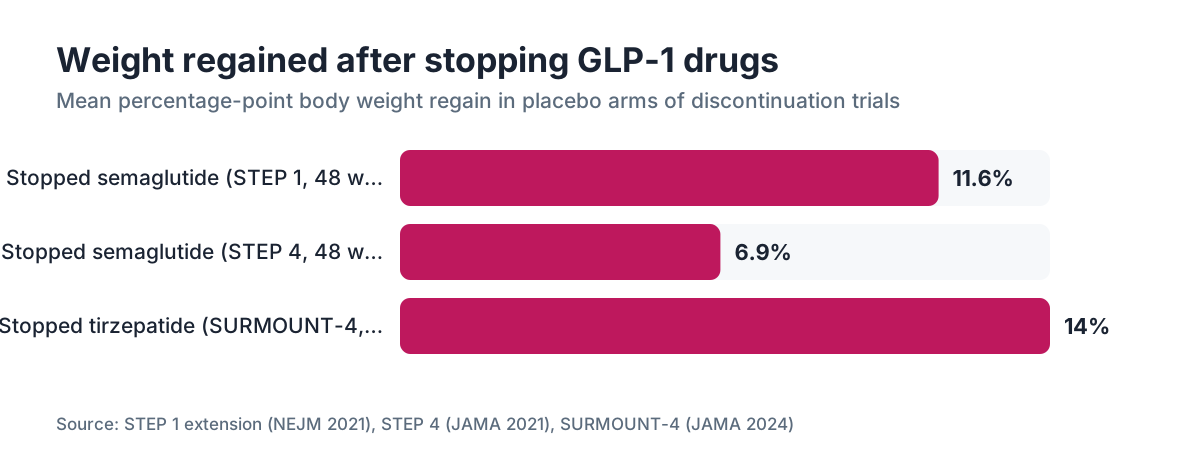
This is the question with the hardest data behind it, and the numbers sting. On average, people regain about two-thirds of lost weight within a year of stopping, per the STEP 1 extension trial [2].
That trial enrolled people who had finished 68 weeks of semaglutide 2.4 mg, then randomized them to continue or switch to placebo for another 48 weeks. The placebo group (the stoppers) regained a mean of 11.6 percentage points of body weight over those 48 weeks, recapturing roughly two-thirds of what they'd lost [2]. Their waist circumference, blood pressure, and lipid gains largely reversed too.
Tirzepatide tells the same story. In SURMOUNT-4, participants who switched from tirzepatide to placebo after 36 weeks regained about 14 percentage points of body weight over the following 52 weeks, while the group that stayed on the drug kept losing [3].
None of this is unique to GLP-1 drugs. Nearly every obesity drug trial shows meaningful regain after stopping. Obesity has a strong biological component. The drug wasn't correcting a deficiency; it was offsetting one. Remove the offset and the biology reasserts itself.
One caveat matters. Regain isn't uniform. People who built durable changes to their food environment, eating patterns, and activity while on the drug tend to regain less. But trial numbers are averages across diverse populations, and averages are what they are.
How long does it take for semaglutide to clear your system?
About five to six weeks after your last shot. Semaglutide has a half-life of roughly seven days [1], so half the drug is gone one week after your final dose, half of that after two weeks, and so on. By five to six half-lives, around 97 percent has cleared.
In practice, most people feel hunger returning well before the drug is gone. That fits the pharmacology. Receptor occupancy doesn't have to hit zero for appetite suppression to fade. Even small drops in circulating semaglutide can weaken the signal enough for hunger to break through.
Abrupt stop versus taper changes the curve slightly. Some prescribers suggest a gradual dose reduction over a few weeks to soften the appetite rebound, though no clinical trial has compared abrupt stop to taper for symptom control. Call it reasonable clinical judgment, not settled protocol.
Does stopping semaglutide cause nausea or GI symptoms?
It can, though it's less common than the GI trouble people hit during dose escalation.
The leading explanation is gastric motility. Semaglutide slows gastric emptying as part of how it works. Stop, and emptying normalizes or briefly speeds up. That shift can bring bloating, loose stools, or nausea in some people, usually in the first week or two.
Severity is generally mild and short-lived. It doesn't touch the nausea some people feel when starting or moving up a dose.
If GI symptoms are severe or last beyond two weeks, call your prescriber. Severe symptoms after stopping are more likely to reflect something unrelated to the medication.
Can you stop semaglutide cold turkey, or do you need to taper?
You can stop cold turkey without medical danger. The FDA label doesn't require tapering before discontinuation [1]. There's no physiological reason to wean off the way you would a corticosteroid or a benzodiazepine.
That said, an abrupt stop produces a sharper appetite rebound than a gradual step-down. Some clinicians drop the dose in stages, say 2.4 mg to 1.7 mg to 1.0 mg over several weeks, before stopping entirely. The logic holds up, but the evidence is observational. Nobody has run a randomized trial comparing stop versus taper for symptoms.
If you're stopping because of cost or supply rather than by choice, you'll probably have to stop abruptly. Expect appetite and food noise back within the first week. A plan for that week, behavioral strategies, dietary structure, or a scheduled restart date, helps more than trying to taper a drug you can't afford to keep buying.
If you're stopping because of a side effect, abrupt cessation is usually fine, and faster is better.
What happens to blood sugar after stopping semaglutide?
For people using semaglutide for type 2 diabetes (Ozempic), stopping lets blood glucose drift back toward pre-treatment levels. The A1c drop the drug produced (the SUSTAIN trial program showed mean reductions of 1.0 to 1.8 percentage points depending on dose and population [4]) reverses once you stop.
This isn't a withdrawal effect. It's the underlying disease returning. People with type 2 diabetes should not stop semaglutide without a management plan from their prescriber, because uncontrolled hyperglycemia carries real risk.
For people using it for weight loss without diabetes, the blood sugar effects after stopping are milder. Fasting glucose and insulin sensitivity may drift back toward baseline, especially as weight returns. But dangerous acute hypoglycemia or hyperglycemia from stopping isn't expected in people without diabetes.
If you're on semaglutide plus another diabetes medication, talk to your prescriber before stopping. Some combination regimens need to be adjusted together.
Why do cravings and food noise return so strongly?
Because the drug was quieting a brain system, and the quiet ends when the drug clears. The neuroscience here is getting clearer.
GLP-1 receptors sit in the hypothalamus and in dopamine reward pathways. Semaglutide's action in the brain reduces the reward pull of food cues, so food simply stops feeling as compelling. Functional MRI studies show reduced activity in reward-related brain regions in response to food images in people on GLP-1 drugs compared with placebo [5].
When the drug clears, that dampening lifts. For people who had strong food reward signaling before treatment, the return can feel more intense than their old baseline, though controlled data don't confirm that. It reads like a contrast effect: after months of quiet, the noise coming back feels louder.
This is where the chronic disease framing earns its keep. Cravings and food noise aren't moral failures. They're the output of a neurobiological system. The drug was modulating that system. Stop the drug and the modulation stops.
Are there strategies to minimize weight regain after stopping?
Yes, and the time to work on them is before you stop, not after.
The most consistent predictor of a better outcome is behavioral consolidation while you're still on the drug. People who use their treatment window to rebuild meal structure, address emotional eating, change their food environment, and move more tend to regain less. The drug makes behavior change easier. The behavior change has to outlast the drug.
What actually has support:
Protein. Higher-protein diets consistently track with better satiety and lean mass preservation during weight loss, and there's good reason to keep protein high after stopping to guard against fat-preferential regain [6].
Strength training. Muscle mass drives resting metabolic rate. People who lose weight without holding onto muscle regain fat faster. A steady resistance program is one of the better bets you can make on GLP-1 therapy for what comes after.
Sleep. Poor sleep amplifies hunger hormones and food reward. Not a minor lever.
Lower-dose maintenance. Some prescribers use a dose below the weight-loss dose (say 0.5 or 1.0 mg weekly instead of 2.4 mg) to hold onto some appetite suppression at lower cost and possibly fewer side effects. No large trials on this yet. It's clinical extrapolation, but the pharmacology is plausible.
For women in perimenopause or postmenopause, the hormones matter on their own. Estrogen decline itself pushes up adiposity, especially visceral fat, and cuts insulin sensitivity [7]. Managing hormonal status, possibly with hormone replacement therapy, addresses one of the drivers of regain that semaglutide was partly masking. A bone density test is worth considering if you've been on a GLP-1 and are in the peri or postmenopausal window, since rapid weight loss can speed bone loss in this group.
No single move erases regain risk. But behavioral consolidation, enough protein, resistance training, and appropriate hormonal management where it applies give you the best realistic odds.
Should you restart semaglutide after stopping?
For most people who stopped against their preference (cost, shortage, a side effect that has since resolved), restarting is a reasonable clinical choice.
The evidence treats obesity as a chronic condition that needs ongoing management. The 2023 American Diabetes Association Standards of Care state that obesity is a chronic, relapsing disease and that long-term pharmacotherapy is appropriate when indicated [8]. The Endocrine Society's obesity pharmacotherapy guideline says the same.
If you restart after a gap, you generally re-titrate from a lower dose, especially if you were off for more than a few weeks. GI tolerance resets. Jumping straight to your old maintenance dose after a washout tends to bring more nausea and GI trouble than continuing at that dose ever would have.
Some people switch to tirzepatide (Zepbound) on restart, especially if semaglutide's weight loss felt insufficient. The mechanisms overlap but aren't identical; tirzepatide is a dual GIP/GLP-1 agonist and generally produces greater weight loss in head-to-head comparisons. Our article on semaglutide vs tirzepatide covers how they stack up.
If cost is what pushed you off, compounded semaglutide has been available from 503A and 503B pharmacies during shortage periods, though the FDA has signaled it will restrict this as branded supply stabilizes. Check current FDA guidance before making decisions based on compounded availability.
The short version on restarting: if obesity management was working and you stopped for a reversible reason, there's no clinical reason to hold back. Waiting until you've regained a lot of weight before restarting buys you nothing.
How does stopping semaglutide affect women in perimenopause and menopause differently?
This intersection is thin in the literature, but the biology points to a few specific things worth watching.
Estrogen modulates GLP-1 receptor expression and GLP-1 secretion. Animal models and some human data suggest estrogen augments the appetite-suppressing effect of GLP-1 agonists, which may be one reason some postmenopausal women on estrogen therapy find these drugs particularly effective [7]. The flip side: falling estrogen in perimenopause may blunt GLP-1 sensitivity and make regain after stopping faster or more pronounced. Nobody has run that experiment in a controlled trial, but the mechanistic case is credible.
Mood is another one. Low mood and flagging motivation get reported after stopping semaglutide. Perimenopausal women already run a higher risk of mood disruption from estrogen swings. The two can stack. If you're in perimenopause and notice real mood changes after stopping, working out how much is hormonal and how much is medication-related is worth doing with a clinician who knows both.
Visceral fat climbs during the perimenopause transition regardless of what the scale says overall [9]. Semaglutide specifically trims visceral fat. Women who stop during this window may see visceral fat come back faster than subcutaneous fat, with downstream effects on metabolic health, cardiovascular risk, and insulin sensitivity.
If you're in this life stage and thinking about stopping, get a full picture of your hormonal and metabolic status first. A practice that handles both, like WomenRx, can help you sequence or combine GLP-1 and hormone therapy in a way that makes physiological sense.
What does the evidence say about long-term stopping versus staying on semaglutide?
The STEP 4 trial answered this head-on. Participants who had already lost weight on semaglutide were randomized to continue or switch to placebo. Those who continued lost another 7.9 percentage points of body weight over the next 48 weeks. Those switched to placebo regained 6.9 percentage points [10]. By week 68, the gap between the groups was nearly 15 percentage points.
The takeaway is blunt: semaglutide's effects are maintenance-dependent. This isn't a short antibiotic course where you treat and stop. The drug works as long as you take it, and the benefits largely reverse when you don't.
The SELECT trial, which found a 20 percent reduction in major adverse cardiovascular events in people with obesity and established cardiovascular disease on semaglutide 2.4 mg, implies that stopping means giving up that cardiovascular protection, though the trial didn't directly measure outcomes after stopping [11].
For women, the long-term bone story raises a flag. Rapid weight loss on any method, GLP-1 drugs included, can speed bone mineral density loss, especially in postmenopausal women already at risk. Whether stopping and regaining weight restores any of that bone is unknown. That's another reason a bone density test is worth considering if you've been on semaglutide a year or more and are postmenopausal.
Frequently asked questions
How long do semaglutide withdrawal symptoms last?
There are no true pharmacological withdrawal symptoms with a fixed duration. What most people feel is returning appetite and cravings, which show up within a few days of stopping and stay as long as you're off the drug. Mild nausea or GI changes from shifting gastric motility usually clear within one to two weeks. Weight regain continues for roughly 48 to 52 weeks before stabilizing, based on the STEP 1 extension trial.
Can stopping semaglutide cause headaches?
Headaches are sometimes reported after stopping, but there's no clear pharmacological mechanism linking the two, and the prescribing information doesn't list headache as a discontinuation effect. More likely culprits are dietary changes (eating more sugar or carbohydrates) or dehydration from shifting eating patterns. If headaches are severe or persistent after stopping, a different cause should be investigated.
Will I gain all the weight back if I stop semaglutide?
On average, people regain about two-thirds of lost weight within 12 months of stopping, per the STEP 1 extension trial. That's an average, not a guarantee. People who built durable changes during treatment, especially around protein, activity, and food environment, tend to regain less. The drug isn't fixing an underlying cause; it's managing a chronic condition. Without it, that condition reasserts itself.
Is it safe to stop semaglutide suddenly?
Yes, for most people. Unlike corticosteroids or benzodiazepines, semaglutide doesn't require a taper to avoid physical danger. You can stop abruptly without medical risk from the cessation itself. People with type 2 diabetes need a glucose management plan in place, because blood sugar will rise. Some clinicians recommend a gradual dose reduction to soften appetite rebound, but that's clinical judgment, not established protocol.
Does stopping semaglutide cause depression or anxiety?
Low mood, reduced motivation, and mood changes are reported by some people after stopping. These aren't listed as formal adverse effects in the FDA label for Ozempic or Wegovy, and the controlled trial data don't include mood as a primary endpoint for the post-discontinuation period. GLP-1 receptors sit in the brain and likely influence dopamine signaling, so the return of food reward signaling may affect mood. Anyone with a history of mood disorders should watch this closely.
How do I manage hunger after stopping semaglutide?
Structured meal timing, high protein (targeting 1.2 to 1.6 grams per kilogram of body weight daily), limiting ultra-processed foods that drive cue-triggered eating, and consistent sleep all cut appetite somewhat. None of these fully replaces the drug's appetite suppression, but they create a more favorable hormonal environment. Behavioral strategies built during treatment hold up better than ones started after stopping.
Can you take semaglutide on and off, cycling it?
There's no evidence-based protocol for intentional cycling. Some clinicians use it this way for cost management, but the STEP trial data show stopping reliably leads to weight regain and reversal of cardiometabolic markers. Each restart needs re-titration. If cost is the driver, lower-dose maintenance or compounded formulations (where available and legal) may be more practical than cycling on and off full therapeutic doses.
Does semaglutide get harder to stop the longer you take it?
Not in the pharmacological dependence sense. There's no tolerance, no escalating dose requirement, no physical dependency building over time. Behaviorally, people who've been on it longer may find the on-versus-off contrast more striking, because they've had more time to adapt to reduced food noise. Longer treatment isn't associated with worse discontinuation outcomes in the available trial data.
What is the difference between semaglutide side effects and withdrawal symptoms?
Side effects happen while you take the drug. Withdrawal means symptoms caused by stopping. For semaglutide, true withdrawal doesn't exist pharmacologically. What people call withdrawal is the unmasking of the conditions the drug was managing: hunger, cravings, and progressive weight gain. Nausea and GI changes after stopping are an exception, since they seem to reflect gastric motility readjusting, but they're mild and brief.
Does stopping semaglutide affect thyroid or thyroid cancer risk?
The FDA label for Ozempic and Wegovy carries a boxed warning about thyroid C-cell tumors based on rodent studies. Human epidemiological data have not confirmed elevated thyroid cancer risk. Stopping doesn't erase any theoretical risk from the period you were on it, but no post-marketing signal has emerged in humans as of mid-2025. Thyroid function itself isn't directly altered by GLP-1 drugs in clinical studies.
How is stopping semaglutide different from stopping tirzepatide?
The experience is similar. Both drugs suppress appetite via GLP-1 receptor agonism, and both show significant weight regain after stopping. Tirzepatide also agonizes GIP receptors. The SURMOUNT-4 trial showed roughly 14 percentage points of weight regain within 52 weeks of stopping tirzepatide, comparable to semaglutide data. Hunger and food noise return in both cases. Neither drug causes true pharmacological withdrawal.
Can stopping semaglutide affect my menstrual cycle or hormones?
Semaglutide can affect reproductive hormones indirectly, through weight loss and reduced adiposity. Some women on GLP-1 drugs have had unexpected pregnancies, likely because weight loss restored ovulation. Stopping and regaining weight could theoretically reverse some of those shifts. There are no controlled data on menstrual cycle changes specifically after stopping semaglutide. If your cycle changes significantly after stopping, hormonal evaluation is appropriate.
Sources
- FDA, Wegovy (semaglutide) Prescribing Information
- Wilding JPH et al., STEP 1 extension trial, NEJM 2021
- Aronne LJ et al., SURMOUNT-4 trial, JAMA 2024
- Marso SP et al., SUSTAIN-6 trial, NEJM 2016
- Farr OM et al., Diabetes Care 2016 (GLP-1 and brain reward)
- Leidy HJ et al., American Journal of Clinical Nutrition 2015
- Mauvais-Jarvis F et al., Endocrine Reviews 2023
- American Diabetes Association, Standards of Care in Diabetes 2023
- Toth MJ et al., International Journal of Obesity 2000 (visceral fat and menopause)
- Rubino DM et al., STEP 4 trial, JAMA 2021
- Lincoff AM et al., SELECT trial, NEJM 2023