Semaglutide with B12: what the combination actually does
TL;DR: Compounded semaglutide is often mixed with vitamin B12 on the theory that B12 curbs nausea, supports energy, and protects nerves during calorie restriction. No randomized trial has tested the exact combination, but B12 deficiency is a real risk on GLP-1 therapy, and the add-on is low-risk at standard doses. Whether it's worth the extra cost depends on your baseline B12 level.
What is compounded semaglutide with B12?
Compounded semaglutide with B12 is a formulation made by a 503A or 503B compounding pharmacy that combines semaglutide base (or semaglutide sodium) with cyanocobalamin or methylcobalamin, the two most common pharmaceutical forms of vitamin B12. The solution gets drawn into a syringe and injected under the skin, usually once a week, matching the schedule of brand-name Ozempic or Wegovy.
The FDA-approved versions of semaglutide, Ozempic (for type 2 diabetes) and Wegovy (for chronic weight management), do not contain B12 [1]. The combination lives only in the compounded market, where pharmacies gained legal standing to produce it while semaglutide sat on the FDA's drug shortage list. That shortage designation for Wegovy was removed in February 2025, and for Ozempic in March 2025, which stripped most compounding pharmacies of the automatic right to produce copies after those dates [2].
Some 503B outsourcing facilities still produce compounded semaglutide with B12 under specific criteria (clinically different formulation, patient-specific need), but the regulatory picture keeps shifting. If you're sourcing a compounded version right now, confirm your pharmacy's current legal basis for production. See our full breakdown at compounded semaglutide for the current status.
The B12 component usually shows up in the 500 mcg to 1,000 mcg range per weekly dose, though some formulations go higher. That range sits well within the tolerable upper intake. The National Institutes of Health has set no formal upper limit for B12 because the body excretes the excess in urine [3].
Why is B12 added to semaglutide in the first place?
Three rationales come up over and over in prescribing circles, and they vary a lot in how much evidence backs them.
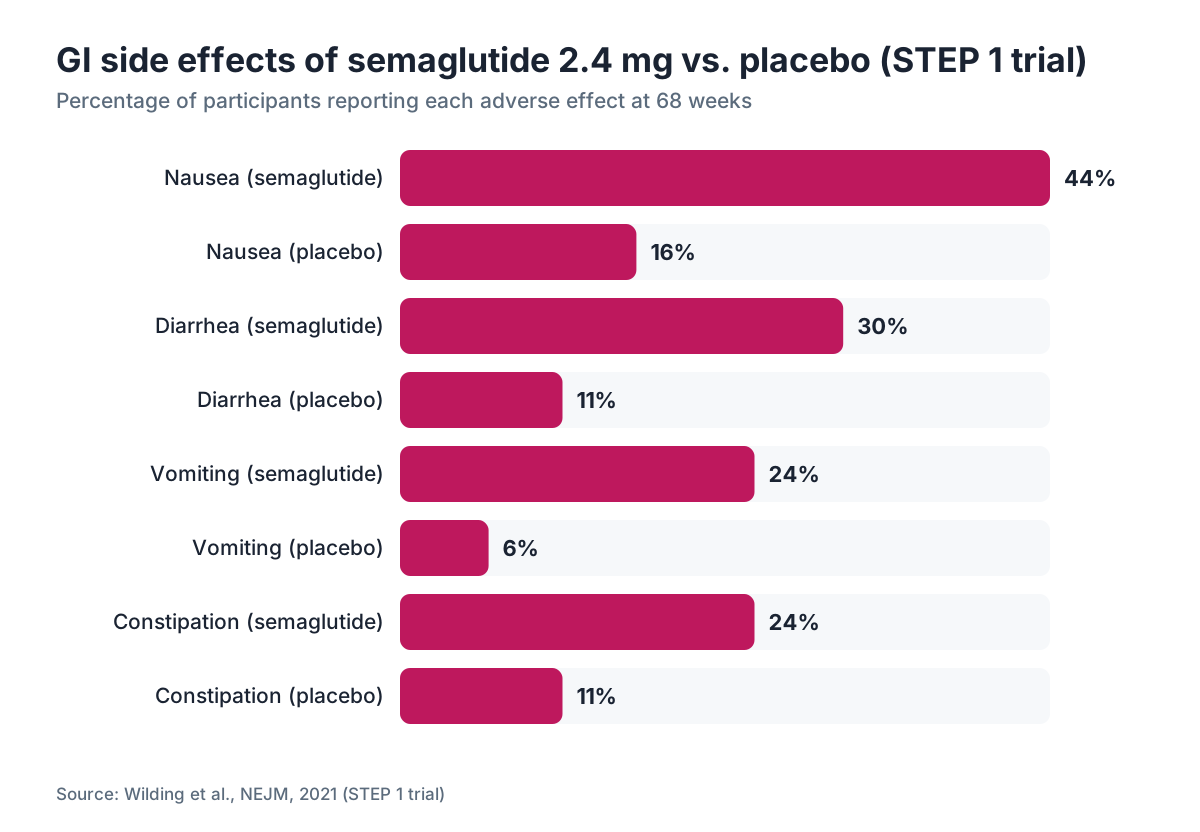
First, nausea management. GLP-1 receptor agonists like semaglutide slow gastric emptying, which drives the nausea, vomiting, and bloating that are the top reasons people quit the medication. In the STEP 1 trial, 44% of participants on semaglutide 2.4 mg reported nausea versus 16% on placebo [4]. B12 proponents point to older literature showing vitamin B6 (pyridoxine) reduces pregnancy nausea, and they stretch that logic to B12. The problem: pyridoxine is not cobalamin. No published trial shows B12 specifically reduces GLP-1-induced nausea. The claim is plausible, not proven.
Second, energy support. Many patients on semaglutide eat a lot less, and a low-calorie diet can leave gaps in micronutrient intake. B12 comes from food (meat, fish, dairy, eggs), so someone eating 1,000 to 1,400 calories daily might slowly deplete stores. B12 is essential for neurological function, red blood cell formation, and DNA synthesis, and deficiency produces real symptoms: fatigue, brain fog, tingling in hands and feet [3]. Adding B12 to the injection is a hedge against that depletion.
Third, metformin overlap. Many women on semaglutide for weight loss or diabetes also take metformin, which independently reduces B12 absorption by about 19% over the long term, according to a 2019 meta-analysis in Diabetes Care [5]. If you take both, the case for B12 monitoring, and possibly supplementation, gets stronger.
There's a practical argument too, and it has nothing to do with pharmacology: compounding pharmacies can charge more for a multi-ingredient formulation, and some prescribers throw in B12 because it's become the market norm. That's not a clinical reason. Know the difference.
Does B12 actually reduce semaglutide side effects?
Honestly, nobody has good prospective data on this specific question. The closest evidence comes from adjacent literature.
A 2020 Cochrane review on interventions for nausea and vomiting in early pregnancy found that vitamin B6 (pyridoxine) reduced nausea with moderate-quality evidence, but the review did not evaluate vitamin B12 (cobalamin) [6]. GLP-1-induced nausea is mechanistically different from pregnancy nausea anyway. It runs primarily on central GLP-1 receptor activation and delayed gastric emptying, not hormonal changes. So even the best nausea data for B vitamins doesn't translate cleanly.
For nerve protection and energy, the story is simpler. If you're B12-deficient (serum B12 below roughly 200 pg/mL is the conventional cut-off, though some labs use 300 pg/mL) [3], supplementing does reduce neurological symptoms. If you're not deficient, supplementing produces no measurable benefit in neurological outcomes.
Here's the practical upshot. B12 in a compounded semaglutide formulation is almost certainly harmless at standard doses, may genuinely help if you're deficient or heading that way, and is probably pointless if your levels are fine. Get a baseline serum B12 before starting, and recheck at six to twelve months.
What does B12 deficiency look like on a GLP-1, and who is most at risk?
B12 deficiency creeps up slowly because the liver stores one to four years' worth. When symptoms do appear, they include fatigue, memory lapses, numbness or tingling in extremities, mouth sores, and a smooth or swollen tongue. In severe cases it causes subacute combined degeneration of the spinal cord, neurological damage that can be permanent [3].
Women at highest risk on semaglutide therapy include those who also take metformin (which reduces B12 absorption in the ileum), those who have had bariatric surgery (reduced intrinsic factor), those who are vegan or near-vegan (no dietary animal products), those over 50 (gastric atrophy cuts intrinsic factor production naturally), and those on long-term proton pump inhibitors (reduced stomach acid impairs B12 release from food) [3][5].
Perimenopause and menopause add another layer. As estrogen drops, gastric function and absorption efficiency shift, and many women in their 40s and 50s already take several medications. If you're weighing hormone replacement therapy alongside a GLP-1, track your micronutrient status as part of that care. For more on the hormone picture, see our articles on hormone replacement therapy and perimenopause age.
The Endocrine Society's clinical practice guidelines on obesity pharmacotherapy recommend monitoring nutritional status, including B12, in patients on long-term GLP-1 therapy who carry risk factors for deficiency [7].
How much B12 is in a typical compounded semaglutide vial?
Doses vary by pharmacy and prescription, but the range you see most in clinical practice is 500 mcg to 1,000 mcg of cyanocobalamin or methylcobalamin per weekly injection. Some high-dose formulations run up to 2,500 mcg per dose.
For context, the recommended dietary allowance for B12 in adult women is just 2.4 mcg per day [3]. A 1,000 mcg weekly injection delivers roughly 60 times the weekly RDA. That sounds dramatic, but B12 toxicity from cobalamin supplements is essentially unreported in the medical literature because the kidneys clear the excess efficiently. The NIH Office of Dietary Supplements states plainly that no tolerable upper limit has been established for B12 [3].
The form matters somewhat. Cyanocobalamin is the most stable and cheapest form and is the version in most FDA-approved B12 injections. Methylcobalamin is the biologically active form that skips conversion in the liver, which some practitioners prefer for patients with MTHFR gene variants who have impaired cobalamin metabolism. Neither form has beaten the other in large clinical trials for general supplementation, though methylcobalamin has some evidence in peripheral neuropathy treatment specifically [3].
The table below shows common compounded formulations as they turn up in prescribing practice.
Compounded semaglutide vs. brand-name: what's actually different?
Brand-name Ozempic and Wegovy contain semaglutide as the active molecule, formulated with specific excipients and delivered through a prefilled auto-injector pen. Compounded versions use the same active molecule (or semaglutide sodium, a salt form with slightly different chemistry) plus compounding-specific excipients, often including B12, in a vial with a separate syringe [2].
The FDA has not evaluated compounded formulations for safety or efficacy. That's not a scare tactic. It's a regulatory fact. The agency's position, stated in guidance issued in 2024, is that compounded copies of FDA-approved drugs are not FDA-approved and may differ from the reference product in ways that affect safety and efficacy [2]. Novo Nordisk, which makes Ozempic and Wegovy, does not endorse or license any compounded version.
For many women, brand-name access has been blocked by insurance denials or cost. Wegovy's list price runs about $1,350 per month without insurance as of 2025; compounded versions typically cost $150 to $400 per month. That gap is real and it matters for access. The WomenRx platform, for example, works directly with licensed pharmacies to source compounded formulations when brand-name coverage isn't available, with physician oversight throughout.
See the full comparison at semaglutide for weight loss and semaglutide vs tirzepatide for a head-to-head look at the main GLP-1 options right now.
Is compounded semaglutide with B12 legal and safe to use?
Legality is nuanced and has been changing fast. While semaglutide sat on the FDA shortage list, 503A and 503B pharmacies had explicit permission to compound it. After the FDA removed Wegovy from the shortage list in February 2025 and Ozempic in March 2025, the agency issued guidance saying most 503A pharmacies should stop producing copies of those drugs [2]. Enforcement has come in phases, and many pharmacies argue their formulations qualify as clinically distinct because of added ingredients like B12.
The FDA's current position is that adding B12 to semaglutide does not automatically make it a legally distinct compounded drug under the Food, Drug, and Cosmetic Act. A 2024 FDA memo noted that a compounded drug is not considered essentially a copy of a commercially available drug only if a prescriber documents a specific clinical need, such as a documented allergy to an excipient in the brand product [2].
On pure safety, B12 at the doses used in these formulations has an excellent record. The semaglutide molecule itself carries the same risks as brand-name versions: nausea, vomiting, diarrhea, pancreatitis (rare), and a potential risk of thyroid C-cell tumors seen in rodent studies (clinical significance in humans is uncertain) [1]. The FDA's Ozempic prescribing information carries a boxed warning about that rodent finding and rules out semaglutide in patients with a personal or family history of medullary thyroid carcinoma or MEN 2 [1].
Quality control is the real variable. A 503B outsourcing facility undergoes FDA inspection and operates under current good manufacturing practice standards. A 503A pharmacy does not face the same inspection rigor. If you're using a compounded formulation, verify the pharmacy is accredited by PCAB (Pharmacy Compounding Accreditation Board) or is a registered 503B facility.
How does semaglutide interact with women's hormones during perimenopause and menopause?
This is one of the least-studied and most clinically relevant questions in the GLP-1 space right now. The STEP trials enrolled mostly women, but they did not stratify by menopausal status or hormone therapy use, so the specific data are thin.
What we do know: estrogen loss during perimenopause and menopause shifts fat storage toward visceral (abdominal) fat, which raises cardiometabolic risk [8]. GLP-1 receptor agonists preferentially reduce visceral fat, which may make semaglutide particularly effective during this hormonal transition. Small retrospective studies suggest menopausal women lose comparable weight on semaglutide to premenopausal women, though head-to-head prospective data are lacking.
Hormone therapy itself may affect GLP-1 response. Estrogen receptors sit in pancreatic beta cells and in hypothalamic GLP-1 pathways, so estrogen status theoretically modulates GLP-1 sensitivity. One 2023 analysis published in Obesity found that postmenopausal women on hormone therapy had slightly better metabolic outcomes on GLP-1 therapy than those not on it, but the study was small and observational [8].
B12 connects here too. Estrogen supports gastric lining health, and as estrogen drops, some women develop subclinical reductions in intrinsic factor production, setting up B12 insufficiency even before GLP-1 therapy cuts food intake further. If you're in perimenopause or menopause, ask your prescriber to include B12 in your baseline lab panel alongside other standard markers. See our coverage of menopause for the full hormonal picture, and progesterone if you're also sorting out the progesterone side of HRT.
What labs should you check before starting semaglutide with B12?
A sensible pre-treatment panel for a woman starting compounded semaglutide with B12 includes fasting glucose and HbA1c (to rule out undiagnosed diabetes and set a baseline), a metabolic panel (kidney and liver function), a lipid panel, serum B12, folate, a complete blood count (to check for macrocytic anemia, the classic hematologic sign of B12 deficiency), TSH (to rule out thyroid disease, which affects weight and GLP-1 metabolism), and, for women in perimenopause or menopause, FSH, estradiol, and a vitamin D level.
Serum B12 interpretation: levels above 300 pg/mL are generally considered adequate; 200 to 300 pg/mL is a gray zone where some clinicians supplement; below 200 pg/mL indicates deficiency requiring treatment [3]. Methylmalonic acid (MMA) and homocysteine are more sensitive functional markers of B12 status, and your clinician may order these if serum B12 is borderline.
If you take metformin at the same time, the American Diabetes Association's Standards of Care recommend checking B12 levels periodically, stating: "Long-term use of metformin is associated with vitamin B12 deficiency, and periodic measurement of vitamin B12 levels should be considered in metformin-treated patients" [9].
Bone health is worth flagging too. Rapid weight loss on GLP-1s can speed bone mineral density loss, especially in postmenopausal women who already carry higher baseline risk. The STEP 5 trial found modest reductions in bone mineral density at 104 weeks in participants on semaglutide 2.4 mg [4]. Consider a bone density test if you're postmenopausal or have other risk factors before starting.
What are the real side effects of the combination to watch for?
The side effect profile of compounded semaglutide with B12 runs almost entirely off the semaglutide component. B12 at standard doses adds essentially no new risk.
Gastrointestinal effects lead the list. In STEP 1, nausea hit 44%, diarrhea 30%, vomiting 24%, and constipation 24% of participants on semaglutide 2.4 mg [4]. These effects peak in the first eight to twelve weeks and usually ease as the body adjusts. They're dose-dependent, which is why the approved titration schedule ramps up slowly over sixteen to twenty weeks.
Pancreatitis is rare but serious. The prescribing information for Ozempic and Wegovy notes reported cases of acute pancreatitis; patients should know the symptoms (severe abdominal pain radiating to the back, nausea, vomiting) and seek immediate care if they occur [1].
Gallbladder disease. Rapid weight loss of any kind raises gallstone risk. The STEP trials reported higher rates of gallbladder-related events in the semaglutide group, with cholelithiasis occurring in 2.6% of semaglutide participants versus 1.2% on placebo in STEP 1 [4].
Muscle mass loss. GLP-1-driven weight loss takes lean mass along with fat mass, averaging roughly 25 to 39% of total weight lost as lean tissue in some studies. That's clinically important for perimenopausal and postmenopausal women, who are already losing muscle from estrogen decline. Resistance training and enough protein (at least 1.2 g/kg body weight per day is commonly recommended, though the optimal target is debated) are essential companions to GLP-1 therapy.
B12 injection site reactions happen but stay rare at standard doses. Cyanocobalamin can occasionally cause itching or redness where you inject.
How should you dose and store compounded semaglutide with B12?
Dosing follows the same titration logic as brand-name Wegovy: 0.25 mg of semaglutide once weekly for the first four weeks, then 0.5 mg, then 1.0 mg, then 1.7 mg, and finally 2.4 mg as the maintenance dose, with four-week steps at each level [1]. Many prescribers move slower for patients hit hard by nausea, holding a sub-therapeutic dose longer. The B12 component stays fixed per dose rather than titrated.
Storage: most compounded vials need refrigeration at 36 to 46 degrees Fahrenheit and protection from light. Unopened, they're typically stable for 30 to 90 days depending on the pharmacy's stability testing. Always ask your pharmacy for its documented beyond-use date and storage instructions. Compounded products do not carry the same manufacturer-backed stability data as branded pens.
Injection technique: subcutaneous injection into the abdomen, thigh, or upper arm. Rotate sites weekly. Inject slowly, pull the needle straight out, and apply gentle pressure. Do not rub the site. Use a new needle each time.
What to do if you miss a dose: if it's been fewer than five days since your scheduled injection, take it and resume your normal schedule. If it's been five or more days, skip that dose and resume on your regular day. Never double-dose [1].
Who should not take compounded semaglutide with B12?
Absolute contraindications to semaglutide apply no matter the compounded formulation. These include a personal or family history of medullary thyroid carcinoma, multiple endocrine neoplasia syndrome type 2 (MEN 2), and a known hypersensitivity to semaglutide or any excipient in the formulation [1].
Semaglutide is also not approved for use in pregnancy. The FDA guidance is essentially avoid it. Animal studies showed fetal harm at doses producing maternal plasma exposures comparable to human therapeutic exposure. Women of reproductive age should use effective contraception while on semaglutide. If you're thinking about stopping to become pregnant, the prescribing information for Wegovy recommends discontinuing at least two months before a planned pregnancy [1].
Pancreatitis history is a relative contraindication. If you've had acute pancreatitis, raise it explicitly with your prescriber before starting.
For the B12 component specifically, cyanocobalamin contains a small amount of cyanide (the cyano- prefix), clinically irrelevant at standard doses but occasionally flagged for patients with Leber's disease (hereditary optic neuropathy), where cyanocobalamin can worsen optic nerve damage. Methylcobalamin is preferred in that population [3].
WomenRx clinicians review all contraindications during intake, which makes that kind of personalized safety screen part of the standard workup rather than an afterthought.
Is paying extra for B12 in your semaglutide worth it?
Blunt answer: it depends on your B12 status and your baseline diet.
If your serum B12 sits above 400 pg/mL and you eat animal protein regularly, you're almost certainly not going to benefit from the B12 add-on. The nausea-reduction claim has no trial evidence, so you'd be paying for a theoretical, unproven benefit.
If your B12 is below 300 pg/mL, you're on metformin, you eat a mostly plant-based diet, you're over 50, or you've had any gastric surgery, the B12 component earns its place. The cost difference at most pharmacies is modest, roughly $10 to $30 more per vial for a B12-containing formulation, and the safety profile is excellent.
A practical middle path many clinicians use: order the compounded semaglutide without B12, check a baseline B12 level, and add a separate sublingual or oral B12 supplement (500 to 1,000 mcg methylcobalamin daily is a common recommendation) if needed. Oral or sublingual B12 works for most people who can absorb it, and it costs far less than compounded injection add-ons.
The exception is patients with true pernicious anemia or significant intrinsic factor deficiency, who can't absorb oral B12 and genuinely need the injectable form. For them, having it in the semaglutide vial is convenient but possibly under-dosed for therapeutic B12 repletion. Dedicated B12 injection therapy (typically 1,000 mcg cyanocobalamin IM daily for one to two weeks, then monthly) is the standard treatment approach [3].
For a broader look at your GLP-1 options and whether semaglutide is the right starting point for you, or whether tirzepatide might be better, see semaglutide vs tirzepatide.
Frequently asked questions
Does B12 in compounded semaglutide actually help with nausea?
There is no randomized trial proving that B12 reduces semaglutide-induced nausea. The claim is borrowed loosely from pyridoxine (B6) data in pregnancy nausea, which is mechanistically different. GLP-1 nausea runs on central receptor activation and slowed gastric emptying. Managing it with slower titration and smaller meals has far more evidence behind it than adding B12.
What is the difference between semaglutide with B12 and regular semaglutide?
The active GLP-1 molecule is the same. The difference is that compounded formulations add cyanocobalamin or methylcobalamin to the vial. Brand-name Ozempic and Wegovy do not contain B12. The compounded combination exists because pharmacies can add ingredients to create what they argue is a clinically distinct product, though the FDA has questioned whether B12 alone counts as a meaningful clinical distinction.
Can I take oral B12 supplements instead of getting it compounded into my semaglutide?
Yes, for most people. Oral or sublingual B12 (500 to 1,000 mcg daily of methylcobalamin or cyanocobalamin) works for anyone whose intrinsic factor production is intact. That covers the majority of patients on semaglutide. The only people who genuinely need injectable B12 are those with pernicious anemia, significant intrinsic factor deficiency, or major absorptive dysfunction after gastric surgery.
How much B12 is typically in compounded semaglutide?
Most formulations contain 500 mcg to 1,000 mcg of B12 per weekly dose, some as high as 2,500 mcg. The adult RDA for B12 is only 2.4 mcg per day, so these doses are pharmacological rather than nutritional. No upper tolerable intake level has been set because excess B12 is excreted in urine and toxicity is not reported at these dose levels.
Is compounded semaglutide with B12 FDA-approved?
No. No compounded drug is FDA-approved; compounding exists outside the approval process. Brand-name Ozempic and Wegovy are FDA-approved, but they do not contain B12. Compounded formulations with B12 were widely available during the FDA shortage period (which ended in early 2025 for both drugs) and continue at some pharmacies under specific legal arguments about clinical distinctiveness.
Does metformin affect B12 levels in women on semaglutide?
Yes. Metformin reduces B12 absorption by blocking ileal uptake of the B12-intrinsic factor complex. Long-term metformin use lowers serum B12 by roughly 19% on average, per a 2019 meta-analysis in Diabetes Care. Women taking both metformin and semaglutide, especially those eating less from GLP-1 appetite suppression, face a real risk of B12 insufficiency and should have levels monitored annually.
How often should I check my B12 levels while on semaglutide?
Get a baseline before starting. If you're low-risk (omnivorous diet, no metformin, no GI surgery, under 50), recheck at 12 months. If you're higher risk (vegan, on metformin, post-bariatric surgery, over 50, or on PPIs), recheck at 6 months. Ask for methylmalonic acid and homocysteine if serum B12 is borderline, since those functional markers catch deficiency that serum B12 misses.
Can semaglutide with B12 affect bone density in menopausal women?
Semaglutide itself, not B12, is the relevant factor here. The STEP 5 trial found modest reductions in bone mineral density at 104 weeks on semaglutide 2.4 mg. Postmenopausal women already face elevated fracture risk from estrogen loss, so rapid weight loss from GLP-1 therapy adds another variable. A baseline bone density scan and resistance training throughout treatment are prudent steps. B12 has no known direct effect on bone density.
What form of B12 is best in compounded semaglutide: cyanocobalamin or methylcobalamin?
For most patients, either form works. Cyanocobalamin is more stable and cheaper; methylcobalamin is the bioactive form and skips hepatic conversion. Methylcobalamin is preferred in patients with MTHFR variants that impair cobalamin metabolism and in those with Leber's hereditary optic neuropathy, who should avoid cyanocobalamin. In practice, the difference is clinically minor for the majority of women on GLP-1 therapy.
What are the symptoms of B12 deficiency I should watch for on semaglutide?
Key symptoms include fatigue that caloric restriction doesn't explain, tingling or numbness in hands and feet, memory lapses or brain fog, mouth sores, a smooth or swollen tongue, and mood changes. In blood work, look for elevated MCV (large red blood cells) and low hemoglobin, which signal macrocytic anemia. Symptoms can develop slowly because the liver stores enough B12 for one to four years.
Can I use compounded semaglutide with B12 if I'm also on hormone replacement therapy?
There are no known pharmacokinetic interactions between semaglutide and standard HRT formulations (estradiol patches, gels, or oral progesterone). Clinically, the two therapies may complement each other for perimenopausal and postmenopausal women: HRT addresses the hormonal drivers of weight redistribution and metabolic change, while semaglutide directly reduces appetite and body weight. Tell your prescriber about both medications so they can monitor labs appropriately.
How long does it take to see results with semaglutide with B12?
Weight loss results are driven by semaglutide, not B12. Most people see meaningful appetite reduction within the first two to four weeks, even at the starting 0.25 mg dose. Clinical weight loss (5% or more of body weight) typically shows up by 12 weeks in responders. The STEP 1 trial reported an average 14.9% body weight reduction at 68 weeks on semaglutide 2.4 mg. B12 does not independently speed weight loss.
Is semaglutide with B12 safe during perimenopause?
Semaglutide is not contraindicated in perimenopause, and many clinicians see the perimenopausal window as a time when GLP-1 therapy can be particularly effective given the visceral fat accumulation that comes with falling estrogen. B12 at standard compounded doses adds no meaningful risk. The key is monitoring: labs including B12, metabolic markers, and bone density matter more in this life stage than in younger women with fewer baseline variables.
What happens if I stop semaglutide with B12 suddenly?
Stopping semaglutide abruptly typically brings appetite back within one to two weeks and weight regain over months. The STEP 4 withdrawal trial showed that participants who stopped semaglutide after 20 weeks regained about two-thirds of their lost weight within one year. There is no withdrawal effect specific to B12. If you stop, consider keeping a separate oral B12 supplement if your dietary intake is limited.
Sources
- FDA, Wegovy (semaglutide) Prescribing Information
- NIH Office of Dietary Supplements, Vitamin B12 Fact Sheet for Health Professionals
- Wilding JPH et al., STEP 1 Trial, New England Journal of Medicine, 2021
- Out M et al., Diabetes Care 2019 meta-analysis on metformin and vitamin B12
- Cochrane Database of Systematic Reviews, Interventions for nausea and vomiting in early pregnancy, 2020
- Endocrine Society, Clinical Practice Guideline on Pharmacological Management of Obesity
- Obesity journal, 2023 analysis on postmenopausal women and GLP-1 outcomes
- American Diabetes Association, Standards of Medical Care in Diabetes
- Rubino DM et al., STEP 4 Trial, JAMA 2021
- PCAB (Pharmacy Compounding Accreditation Board), Accreditation Standards