Semaglutide weight loss injections: how they work, what to expect, and who they're for
TL;DR: Semaglutide is a weekly GLP-1 receptor agonist injection approved for chronic weight management under the brand name Wegovy. In the STEP 1 trial, adults lost an average of 14.9% of body weight over 68 weeks. It works by slowing digestion, cutting appetite, and steadying blood sugar. It needs a prescription and ongoing medical supervision.
What is semaglutide and how does it cause weight loss?
Semaglutide is a synthetic copy of a hormone your gut already makes, called glucagon-like peptide-1, or GLP-1. When you eat, GLP-1 gets released from your intestinal lining and does three things: it signals your brain that you're full, slows how fast your stomach empties, and tells your pancreas to release insulin. Semaglutide mimics all of that. It just stays in your body far longer than the real thing. The natural GLP-1 you produce has a half-life of about two minutes. Semaglutide's half-life is roughly one week, which is why it's dosed once a week [1].
That long action means your appetite stays suppressed and your blood sugar stays steady around the clock, not only after a meal. You eat less because you're genuinely less hungry. Smaller portions fill you up. Over weeks and months, that quiet caloric deficit adds up to real weight loss.
For women in perimenopause or postmenopause, this mechanism matters more than most people expect. Estrogen decline changes how your body stores fat (more visceral, less subcutaneous) and dulls the satiety signaling you used to run on. Semaglutide doesn't fix the hormone problem. It works on a separate pathway that stays functional no matter where you are in the transition. If you want to see how hormonal changes layer on top of this, the hormone replacement therapy and perimenopause age articles go deeper.
There are two FDA-approved semaglutide products used for weight. Ozempic is approved for type 2 diabetes (2 mg maximum dose, though it's widely prescribed off-label for weight loss at lower doses). Wegovy is approved specifically for chronic weight management at a 2.4 mg weekly dose [2]. Same molecule, different approved dose ceilings and different labeled uses.
What does the clinical trial evidence actually show for weight loss?
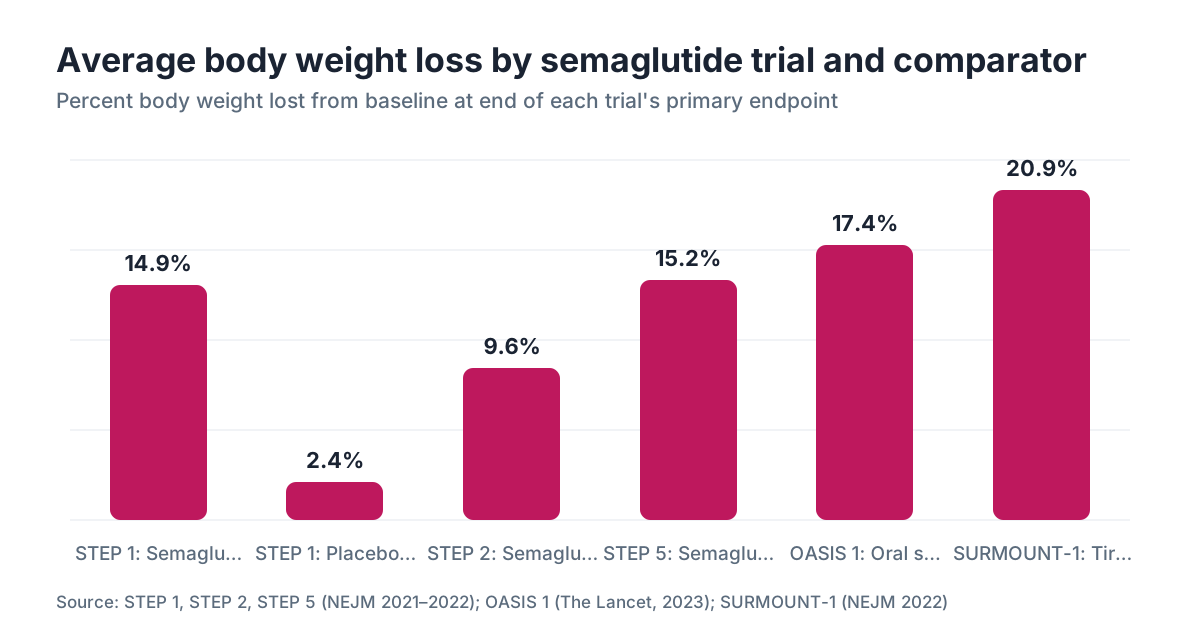
The STEP program (Semaglutide Treatment Effect in People with Obesity) is the core evidence base. STEP 1 enrolled 1,961 adults with obesity (BMI ≥ 30) or overweight with at least one weight-related condition. After 68 weeks of semaglutide 2.4 mg weekly plus lifestyle support, participants lost an average of 14.9% of their body weight, compared to 2.4% in the placebo group [3]. That's a real gap, not a rounding error.
STEP 5 pushed follow-up to 104 weeks and found participants held an average weight loss of 15.2% at two years. The effect sticks with continued use [3].
STEP 2 studied people with type 2 diabetes and found weaker results, around 9.6% average body weight reduction, because insulin resistance and beta-cell trouble make the metabolic response harder to get [3]. Most women using semaglutide purely for weight will land closer to the STEP 1 numbers than STEP 2, as long as they don't have poorly controlled diabetes.
Here's a number that usually gets buried. In STEP 1, 86.4% of semaglutide participants lost at least 5% of their body weight, and 69.1% lost at least 10% [3]. Non-responders exist, but they're the minority. About one in three people on semaglutide lose 20% or more of their body weight, which starts to approach what some bariatric surgeries produce.
A fair caveat: almost all STEP participants were white, and most of the studies didn't break results down by menopausal status. Smaller analyses hint that women in menopause may lose weight a little more slowly than premenopausal women, but the direction is the same. Nobody has a clean RCT specifically in postmenopausal women.
How does a semaglutide injection work week to week?
You inject once a week, on the same day, into the abdomen, thigh, or upper arm. The injection is subcutaneous (under the skin, not into muscle), using a very fine needle that comes preloaded in the Wegovy pen. Most people barely feel it.
Dosing follows a step-up protocol built to blunt nausea and GI side effects. The FDA-approved escalation schedule for Wegovy is [2]:
| Weeks | Dose | |---|---| | 1 to 4 | 0.25 mg/week | | 5 to 8 | 0.5 mg/week | | 9 to 12 | 1.0 mg/week | | 13 to 16 | 1.7 mg/week | | 17+ | 2.4 mg/week (maintenance) |
The 0.25 mg starting dose does almost nothing for weight loss on its own. It's purely a tolerance-building step. Don't judge the drug by month one. Most people start noticing real appetite reduction somewhere around weeks 5 to 8, when the dose crosses 0.5 mg.
If side effects are rough at a given step, your prescriber can pause the escalation and hold you at the current dose for another four weeks before moving up. This is common, and it doesn't predict your long-term outcome. Some people find 1.7 mg is their personal sweet spot and never need 2.4 mg. Titration is individual.
Storage matters. Wegovy pens must be refrigerated (36 to 46°F / 2 to 8°C) until first use, then can sit at room temperature for up to 28 days [2]. Don't freeze them. A frozen pen is a ruined pen.
What are the real side effects of semaglutide injections for women?
Nausea is the big one. In the STEP 1 trial, 44.2% of semaglutide participants reported nausea versus 16.1% on placebo [3]. For most people it peaks in the first weeks of each dose step and then fades. Vomiting, diarrhea, and constipation each hit roughly 20 to 30% of users at some point during escalation. None of these are automatic reasons to quit. They're usually manageable.
Things that actually help: eat smaller portions than you think you need, skip high-fat meals during escalation, drink a lot of water, and don't lie down right after eating. Ginger tea and acupressure bands are low-risk add-ons some people like, though there's no trial evidence for either in this specific context.
Serious but rare side effects the FDA label flags as warnings [2]:
- Pancreatitis. Stop immediately if you have severe, persistent abdominal pain.
- Thyroid C-cell tumors. Semaglutide caused thyroid tumors in rodents at high doses. The FDA carries a boxed warning. The human relevance is unknown, but semaglutide is off-limits for anyone with a personal or family history of medullary thyroid carcinoma or Multiple Endocrine Neoplasia syndrome type 2 (MEN 2).
- Gallbladder problems. Fast weight loss from any cause raises gallstone risk. Semaglutide nudges that up a bit.
- Diabetic retinopathy complications in people already managing diabetic eye disease.
For women watching bone density, one concern is worth knowing. Rapid weight loss from any cause, semaglutide included, can speed up bone mineral density loss, especially in postmenopausal women who are already losing bone. Pairing semaglutide with resistance training and enough protein appears to soften this. A bone density test before starting is smart if you're postmenopausal. This doesn't mean semaglutide is off the table. It means it deserves attention.
Muscle loss is the other real concern. On average, roughly 40% of the weight lost on GLP-1 agonists is lean mass rather than fat, based on body composition data in the STEP trials [3]. High protein intake (at minimum 1.2 grams per kilogram of goal body weight per day) and resistance training at least two days a week are the evidence-backed levers to hold onto muscle. For women over 45, this part isn't optional.
Who qualifies for semaglutide weight loss injections?
The FDA approved Wegovy for adults with a BMI of 30 or higher (obesity), or a BMI of 27 or higher with at least one weight-related condition such as high blood pressure, type 2 diabetes, or high cholesterol [2]. That's the on-label bar.
Contraindications are firm and non-negotiable [2]:
- Personal or family history of medullary thyroid carcinoma
- Personal or family history of MEN 2
- Pregnancy or breastfeeding
- Prior serious hypersensitivity reaction to semaglutide or any component of the formulation
Pregnancy is a hard stop. Semaglutide should be stopped at least two months before a planned pregnancy. The drug hasn't been studied adequately in pregnant women, and animal data showed fetal harm [2]. If you're in perimenopause and still potentially fertile, talk contraception with your prescriber.
Who isn't a great candidate even if they technically qualify? Women with a significant history of eating disorders, particularly restrictive types, need a careful psychological evaluation first. The appetite suppression on semaglutide can interact in messy ways with disordered eating, and monitoring has to be close.
Women with a history of pancreatitis, severe gastroparesis, or inflammatory bowel disease also need a real risk-benefit conversation with a gastroenterologist before starting.
How much does semaglutide injection cost without insurance?
Wegovy's list price is about $1,349 per month for the 2.4 mg maintenance dose as of mid-2025, though actual pharmacy prices vary and manufacturer savings cards can cut this a lot for commercially insured patients [4]. Without insurance and without a savings card, most women pay somewhere between $900 and $1,400 a month out of pocket.
Insurance coverage is patchy and often maddening. Medicare Part D currently does not cover weight loss drugs, though legislative efforts to change that keep coming up. Many commercial plans either exclude GLP-1s for weight loss outright or demand prior authorization with documented failure of lifestyle changes first. Medicaid coverage varies by state.
Novo Nordisk (Wegovy's maker) runs a savings program that can drop the cost to as low as $0 for eligible commercially insured patients, or to a fixed monthly price for cash-pay patients. Check the manufacturer's website for current terms, since these programs change often.
Compounded semaglutide flooded the market during the national shortage, when Wegovy sat on the FDA shortage list. The FDA pulled semaglutide off the shortage list in early 2025, which means compounding pharmacies can no longer legally make copies of Wegovy in most cases [5]. If you're currently using compounded semaglutide, the compounded semaglutide overview walks through where things stand legally and clinically.
Telehealth prescribing has made access easier, but price still swings by platform, subscription model, and what's bundled in. Look at what you're actually getting (lab monitoring, provider visits, medication management) when you compare costs across platforms.
Is oral semaglutide (tablets) as effective as injections for weight loss?
This comes up constantly, and the honest answer has some nuance. Rybelsus is an oral semaglutide tablet approved for type 2 diabetes in doses of 3 mg, 7 mg, and 14 mg daily. It is not FDA-approved for weight management. A higher-dose oral semaglutide (25 mg and 50 mg daily) is being developed specifically for obesity, and the 50 mg dose showed 17.4% average body weight reduction at 68 weeks in the OASIS 1 trial published in The Lancet in 2023 [6].
Oral bioavailability of semaglutide is tiny, around 1%, which is why the injection doses are measured in milligrams and the oral doses in tens of milligrams. The tablet is co-formulated with a permeation enhancer (SNAC) to get the drug absorbed in the stomach before acid destroys it. The administration rules are strict: take the tablet in the morning on an empty stomach with no more than 4 oz of plain water, then wait 30 minutes before eating, drinking anything else, or taking other medications [7].
For most women asking whether tablets are a real option right now: Rybelsus at 14 mg is an off-label choice some prescribers use, but the weight loss data at that dose is weaker than the injection data. It's reasonable if needles are a genuine barrier for you, not if you're just squeamish about a once-weekly shot. Once the higher-dose oral formulation gets FDA approval (potentially 2025 to 2026 based on Novo Nordisk's pipeline), the math changes.
For a full comparison between the injection options and their alternatives, the semaglutide vs tirzepatide piece maps the landscape.
How does semaglutide interact with menopause and hormones?
This is an underexplored area with real relevance for women 40 and older. The short version: semaglutide and menopause hormone therapy aren't mutually exclusive, and for many women they may work better together than either one alone.
Estrogen decline in perimenopause shifts fat toward the abdomen and visceral depots, raises insulin resistance, and lowers resting metabolic rate. Those changes make weight gain likelier even when your diet and activity haven't budged. Semaglutide handles the appetite and insulin side. Estrogen replacement handles the metabolic and fat-distribution side. The combination hasn't been tested in an RCT as of this writing, but mechanistically the logic holds up.
What does exist: a 2023 analysis in the journal Menopause found postmenopausal women had comparable, and in some cases better, metabolic responses to GLP-1 agonists than premenopausal women with obesity, though the data were observational [8]. The Menopause Society (NAMS) noted in its 2023 position statement that GLP-1 receptor agonists are a reasonable option for weight management in postmenopausal women, while calling for more dedicated research [8].
Progesterone and other hormones don't appear to have meaningful pharmacokinetic interactions with semaglutide. Thyroid hormone users should know that semaglutide slows gastric emptying, which can affect levothyroxine absorption timing. Take thyroid medication at least 30 minutes before your semaglutide injection day, and keep the two on separate schedules.
WomenRx providers work with women sitting right at this intersection, which is why many patients use the platform to manage GLP-1 prescriptions alongside hormone therapy conversations. You can look at their approach to GLP-1 care if you're trying to figure out how these fit together. For context on where menopause lands in your timeline, see when does menopause start and menopause.
If you're on an estrogen patch or other transdermal estrogen, there's no known absorption interaction with subcutaneous semaglutide. They use entirely different routes.
What happens if you stop semaglutide injections?
Weight regain after stopping is real and well-documented. The STEP 4 trial extended the original STEP 1 cohort: participants who stopped semaglutide after 20 weeks regained two-thirds of their prior weight loss within one year of stopping [3]. This isn't a willpower failure. It's the pharmacology. The drug is suppressing appetite and improving satiety signaling. Take it away and those effects vanish too.
The FDA label for Wegovy describes it as a chronic weight management medication, meaning the intent is long-term use, like antihypertensives or statins, not a finite course.
There are legitimate reasons to take breaks: pregnancy planning (stop at least two months before), surgery requiring anesthesia (generally held 1 to 2 weeks before, depending on the procedure), cost, or managing a serious medical event. If you stop and plan to restart, the dose escalation typically has to begin again from the bottom to avoid brutal GI side effects.
Some women ask whether they can taper to a lower maintenance dose instead of the full 2.4 mg and hold onto at least partial results. The evidence for that is thin. Some clinicians try 1.0 or 1.7 mg as a lower-cost maintenance option, but no RCT confirms weight maintenance at sub-maximal doses. It's an individualized call with your prescriber.
How is semaglutide injection different from tirzepatide?
Tirzepatide (Zepbound for weight loss, Mounjaro for diabetes) is a dual GIP/GLP-1 receptor agonist. It hits two receptors instead of one. In the SURMOUNT-1 trial, tirzepatide 15 mg produced average weight loss of 20.9% at 72 weeks, meaningfully higher than semaglutide's 15% range [9]. The SURMOUNT-4 trial confirmed the results hold with continued use.
Who might do better on tirzepatide? Someone with heavy insulin resistance, a higher starting BMI, or someone who hasn't responded well to semaglutide. There's no prospective head-to-head RCT in weight loss directly comparing the two (as of mid-2025), but indirect comparisons consistently favor tirzepatide for degree of weight loss.
The side effect profiles look similar: nausea, vomiting, diarrhea, constipation. Tirzepatide's list price sits in the same range as Wegovy.
Semaglutide is not the loser here. It has a longer track record, more published data across diverse populations, and some women tolerate it better than tirzepatide. The right choice depends on your metabolic profile, your response history, and your prescriber's judgment. The semaglutide vs tirzepatide article covers this comparison in full.
How do you get a semaglutide prescription and start treatment?
You need a licensed prescriber, a medical history review, and usually some recent labs. A reasonable pre-treatment workup includes a metabolic panel, thyroid function (TSH at minimum), HbA1c or fasting glucose, a lipid panel, and a full medication list. Some providers also check kidney function if there's any concern.
Primary care physicians, endocrinologists, obesity medicine specialists, and gynecologists can all prescribe semaglutide. Telehealth platforms have made this far more accessible, though quality varies a lot. Look for platforms that require a real clinical evaluation (more than a questionnaire), have licensed physicians or NPs/PAs supervising prescriptions in your state, and offer ongoing monitoring.
Once you have a prescription, most patients fill it through a specialty pharmacy (Walmart Health, Costco, or the specialty pharmacies Novo Nordisk works with) or major chain pharmacies where stock allows. Check availability before you commit; Wegovy shortages, while improving, haven't fully cleared in every market.
For women who want to fold this into a broader hormone and metabolic health evaluation, telehealth platforms focused on women's health (like WomenRx) can be a practical starting point, since they already think about perimenopause, hormone therapy, and GLP-1s together instead of in separate lanes. Treating any one of these in isolation tends to miss the bigger picture.
Before your first appointment, read the semaglutide for weight loss overview for the full landscape, and look at semaglutide for the pharmacology detail.
Frequently asked questions
How long does it take for semaglutide injections to start working for weight loss?
Most people notice reduced appetite around weeks 4 to 8, when the dose reaches 0.5 mg. Visible weight loss often starts between weeks 8 to 12. Meaningful results (5 to 10% body weight loss) typically appear by weeks 12 to 20. Maximum effect comes at the 2.4 mg maintenance dose, which most people reach around week 17 per the FDA escalation schedule. Don't judge results until you've been at maintenance for at least 8 weeks.
Do you inject semaglutide into your stomach?
You can, but it's one of three approved sites. The Wegovy pen goes subcutaneously into the abdomen (at least 2 inches from the navel), the front or outer thigh, or the upper arm. Rotating sites each week lowers the risk of localized skin reactions. The injection lands in fatty tissue just under the skin, not into muscle. Most people find the abdomen or thigh easiest to self-administer.
Can semaglutide tablets replace the injection for weight loss?
Not yet in the US for most people. Rybelsus, the current oral semaglutide, is only FDA-approved for type 2 diabetes, not weight management. Higher-dose oral semaglutide (50 mg daily) showed 17.4% average weight loss in the OASIS 1 trial and is in late-stage review. Until an oral formulation is approved for obesity, the injection (Wegovy) is the evidence-backed standard for weight management.
Is semaglutide safe for women in menopause?
Current evidence points to yes, with appropriate monitoring. The Menopause Society's 2023 position statement treats GLP-1 receptor agonists as a reasonable weight management option in postmenopausal women. Key watch points: bone density (significant weight loss can speed bone loss in already-at-risk women), muscle mass preservation, and thyroid function monitoring if relevant. Menopause itself doesn't make it off-limits.
Will I gain all the weight back when I stop semaglutide?
Most people regain a significant portion. The STEP 4 trial found participants regained about two-thirds of their lost weight within one year of stopping semaglutide. The drug suppresses appetite through ongoing pharmacological action; stopping it removes that effect. The FDA labels Wegovy a chronic weight management medication, meaning long-term use is the intended model, not a finite course.
Does semaglutide affect muscle mass?
Yes, this is a real concern. Body composition analyses from the STEP trials found roughly 40% of total weight lost came from lean mass, not fat. That matters most for women over 45 who are already at risk for age-related muscle loss. High protein intake (at least 1.2 g per kilogram of goal body weight daily) and resistance training at least twice a week are the best-evidence strategies to hold onto muscle.
Can I use semaglutide if I'm also on hormone replacement therapy?
Yes. There are no known clinically significant pharmacokinetic interactions between semaglutide and estrogen, progesterone, or testosterone therapies. Transdermal estrogen (patches, gels, creams) absorbs through the skin and doesn't interact with subcutaneous semaglutide. If you take oral estrogen or progesterone, semaglutide's effect on gastric emptying could in theory shift absorption timing slightly, though this isn't well-studied. Tell your prescriber every medication you take.
How much weight can you realistically expect to lose on semaglutide?
In the STEP 1 trial, the average was 14.9% of body weight over 68 weeks at 2.4 mg weekly, with lifestyle support. On a 200-pound woman, that's about 30 pounds. About one-third of participants lost 20% or more. Non-responders (less than 5% loss by week 16 to 20) exist but are a minority. Results run better with higher protein intake, exercise, and consistent adherence.
What should I eat while taking semaglutide injections?
No specific diet is required, but the evidence strongly favors high protein intake to preserve muscle during weight loss. Prioritize lean protein at every meal, eat smaller portions than you think you need (appetite suppression helps), skip high-fat foods during dose escalation to reduce nausea, and stay well hydrated. Alcohol tends to cause more pronounced nausea on semaglutide, especially early on.
Is compounded semaglutide still available in 2025?
Largely no, for most patients. The FDA removed semaglutide from its drug shortage list in early 2025, which means 503B outsourcing facilities and most 503A compounding pharmacies can no longer legally make copies of Wegovy or Ozempic for general sale. Some narrow exceptions may apply for specific patient needs. The situation keeps shifting; check the current FDA shortage database and talk to your prescriber before seeking compounded versions.
Can semaglutide help with belly fat specifically?
Yes, preferentially. GLP-1 receptor agonists are linked to reduction in visceral adipose tissue (VAT, the deep belly fat around organs) as well as subcutaneous fat. Visceral fat loss tends to improve metabolic markers like insulin resistance and triglycerides more than subcutaneous fat loss does. That matters for perimenopausal and postmenopausal women, who shift toward visceral fat storage as estrogen declines.
How is semaglutide dosed differently for weight loss versus diabetes?
For diabetes (Ozempic), the starting dose is 0.25 mg weekly, escalating to 0.5 mg, 1 mg, or 2 mg. For weight management (Wegovy), the escalation climbs higher: 0.25 mg starting, then 0.5 mg, 1 mg, 1.7 mg, and reaching 2.4 mg as the maintenance target. The higher dose drives greater appetite suppression and weight loss. Both use the same molecule; Wegovy is simply approved at a higher ceiling dose.
What labs should I get before starting semaglutide?
A reasonable pre-treatment workup includes HbA1c or fasting glucose, a metabolic panel (including kidney and liver function), a lipid panel, TSH (thyroid), and a full medication review. If you're postmenopausal, a baseline DEXA scan for bone density is worth considering, since significant weight loss can speed bone mineral density decline. Your prescriber may also check amylase/lipase if there's any pancreatitis history.
Sources
- FDA, Ozempic (semaglutide) Prescribing Information
- FDA, Wegovy (semaglutide) Prescribing Information / Label
- Wilding JPH et al., STEP 1 trial, New England Journal of Medicine, 2021
- Novo Nordisk, Wegovy US pricing and savings program
- FDA, Drug Shortages Database, semaglutide shortage resolution notice
- Knop FK et al., OASIS 1 trial, The Lancet, 2023
- FDA, Rybelsus (oral semaglutide) Prescribing Information
- The Menopause Society (NAMS), 2023 Menopause Hormone Therapy Position Statement
- Jastreboff AM et al., SURMOUNT-1 trial, New England Journal of Medicine, 2022
- Endocrine Society, Clinical Practice Guideline: Pharmacological Management of Obesity
- FDA, Approved Drug Products (Orange Book), Wegovy indication