Semaglutide vs tirzepatide: which GLP-1 is better for women?
TL;DR: Tirzepatide (Zepbound/Mounjaro) produces greater average weight loss than semaglutide (Wegovy/Ozempic), roughly 20-22% of body weight versus 15%, based on the SURMOUNT-1 and STEP 1 trials. Both are weekly injections. Tirzepatide adds a GIP mechanism semaglutide lacks. Out-of-pocket cost is similar. The best choice depends on your metabolic profile, insurance, and any perimenopausal hormone changes you're managing at the same time.
What is the difference between semaglutide and tirzepatide?
The biggest structural difference is the number of hormones each drug mimics. Semaglutide activates only the GLP-1 (glucagon-like peptide-1) receptor. Tirzepatide activates both GLP-1 and GIP (glucose-dependent insulinotropic polypeptide) receptors. That dual action is why tirzepatide gets called a "twincretin" in the pharmacology literature [1].
Both drugs are weekly subcutaneous injections. Both slow gastric emptying, quiet appetite signals in the brain, and improve blood sugar regulation. Here's the difference that matters: GIP receptors sit in fat tissue and may change how efficiently the body uses and stores fat, which researchers think partly explains tirzepatide's edge in the weight loss trials [2].
Semaglutide was approved first. The FDA cleared Ozempic (semaglutide, 0.5-2 mg) for type 2 diabetes in December 2017, Wegovy (semaglutide, 2.4 mg) for chronic weight management in June 2021, and Rybelsus (oral semaglutide) for type 2 diabetes in 2019 [3]. Tirzepatide came later: Mounjaro for type 2 diabetes in May 2022, Zepbound for chronic weight management in November 2023 [4].
Both require a BMI of 30 or higher, or 27 or higher with at least one weight-related condition, to qualify under their FDA weight-management approvals. Neither is approved as a standalone treatment for perimenopause or menopause. Clinicians still prescribe them in that context, because weight gain is one of the most common and metabolically significant complaints of the menopause transition.
Which drug produces more weight loss: semaglutide or tirzepatide?
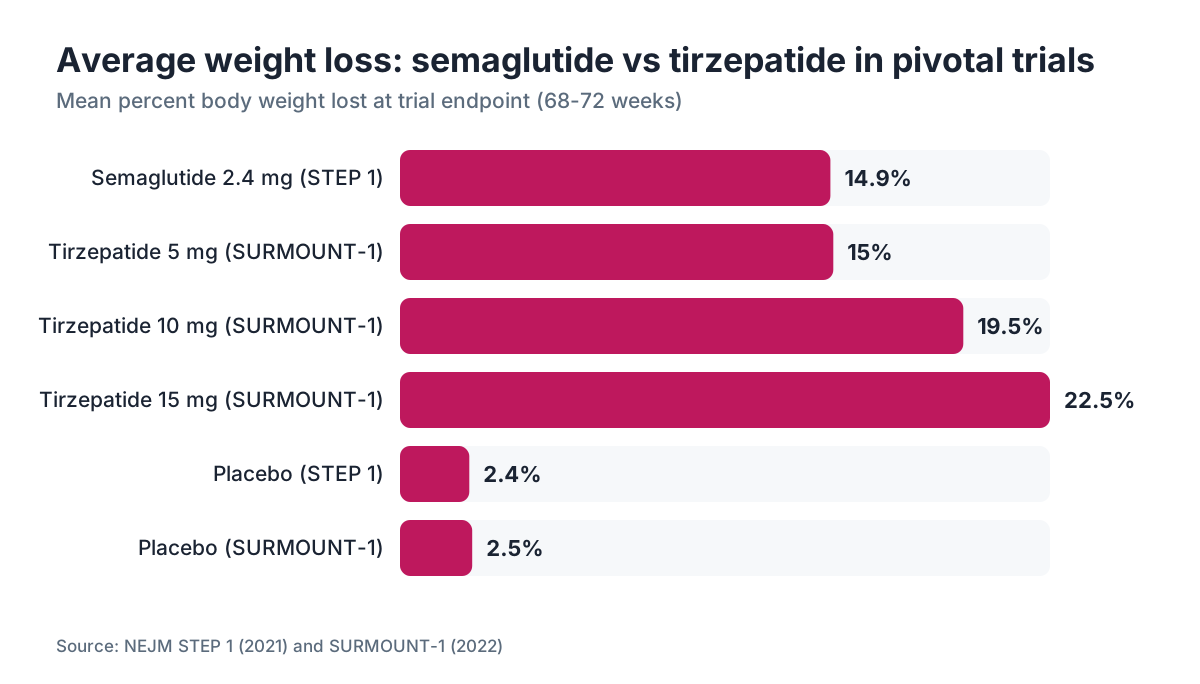
Tirzepatide wins on average weight loss in the trials, and the gap is real. SURMOUNT-1 (2022, NEJM) randomized 2,539 adults with obesity but without diabetes to tirzepatide 5, 10, or 15 mg or placebo for 72 weeks. The 15 mg group lost a mean of 22.5% of body weight [2]. STEP 1 (2021, NEJM) randomized 1,961 adults to semaglutide 2.4 mg or placebo for 68 weeks. The semaglutide group lost a mean of 14.9% [5].
No head-to-head randomized trial has put the two weight-loss drugs against each other in the same population at the same time. The SURMOUNT and STEP trials ran separately with somewhat different populations, so direct percentage comparisons have limits. A 2023 network meta-analysis in The Lancet pooled trials across both drugs and concluded tirzepatide produced greater weight reduction at equivalent treatment durations [6].
For a woman who weighs 200 pounds, those percentages translate roughly like this:
| Drug | Dose | Average weight loss (%) | Approximate lbs lost at 200 lb baseline | |---|---|---|---| | Semaglutide (Wegovy) | 2.4 mg/wk | ~15% | ~30 lbs | | Tirzepatide (Zepbound) | 10 mg/wk | ~19.5% | ~39 lbs | | Tirzepatide (Zepbound) | 15 mg/wk | ~22.5% | ~45 lbs |
Those are averages. Individual response varies a lot. Some women lose more on semaglutide than others lose on the highest tirzepatide dose. Genetics, gut microbiome, baseline insulin resistance, and where you are in the menopause transition all seem to matter, though nobody has great data on exactly how much.
How do the side effects compare between tirzepatide and semaglutide?
The side effect profiles look similar, because both drugs slow gastric emptying and work on overlapping gut-brain pathways. The common complaints with both are nausea, vomiting, diarrhea, constipation, and stomach discomfort, worst during dose escalation. In STEP 1, roughly 44% of semaglutide participants reported nausea; in SURMOUNT-1, about 30% of tirzepatide participants did [2][5]. That lower nausea rate with tirzepatide is one reason some clinicians reach for it in patients who struggled to tolerate semaglutide, though the trial populations were not identical.
Both drugs carry the same black-box warning for thyroid C-cell tumors based on rodent studies, and both are contraindicated in people with a personal or family history of medullary thyroid carcinoma or MEN2 syndrome [3][4]. Neither drug has been shown to cause thyroid cancer in humans at clinical trial follow-up. The FDA requires the warning because of the animal data.
Muscle loss is a legitimate concern with both, especially for women already facing age-related sarcopenia. Some studies find that 25-40% of weight lost on GLP-1 drugs is lean mass rather than fat, and the range shifts with exercise and protein intake. Resistance training and adequate protein (1.2-1.6 g per kg of body weight daily, the general evidence-based range) are the practical tools to protect muscle.
One area where the data is genuinely thin: how these drugs interact with the hormonal shifts of perimenopause. Estrogen decline changes insulin sensitivity, fat distribution, sleep, and appetite signaling. No large trial has studied either drug specifically in perimenopausal women. Clinicians working at the intersection of GLP-1s and hormone therapy, including those at telehealth practices like WomenRx, are extrapolating from general population data while managing hormone levels in parallel.
What do semaglutide and tirzepatide cost, and does insurance cover them?
Out-of-pocket cost for brand-name versions of both drugs runs roughly $900-$1,400 per month in the United States as of mid-2025, before any manufacturer savings card or insurance [3][4]. List prices move, so treat those numbers as a range, not a guarantee.
Insurance is the real variable. Wegovy and Zepbound carry weight-management approvals, which matters for coverage. Ozempic and Mounjaro are approved for type 2 diabetes, and many insurers cover them for that indication while refusing to cover Wegovy or Zepbound for weight alone. The Inflation Reduction Act capped insulin costs for Medicare but did not cap GLP-1 costs, so Medicare coverage for weight-management GLP-1s stays limited as of this writing [7].
Manufacturer savings cards can bring costs to $25-$550 per month for commercially insured patients who qualify. Novo Nordisk (semaglutide) and Eli Lilly (tirzepatide) both run these programs, but eligibility rules change often.
Compounded versions of both drugs exist at lower prices, often $200-$500 per month through compounding pharmacies. The FDA has flagged compounded semaglutide and tirzepatide as a concern, because neither API (active pharmaceutical ingredient) appears on the FDA's list of bulk substances approved for compounding under Section 503A or 503B of the Federal Food, Drug, and Cosmetic Act [8]. The legal and safety picture for compounded semaglutide shifts frequently, so confirm the current status with the prescribing clinician.
| Cost category | Semaglutide (Wegovy) | Tirzepatide (Zepbound) | |---|---|---| | Brand list price/month | ~$1,300-$1,400 | ~$1,000-$1,060 | | With manufacturer card (eligible patients) | As low as $25-$550 | As low as $25-$550 | | Compounded (market range, varies) | ~$200-$500 | ~$200-$500 |
How does each drug work mechanically, and why does the GIP receptor matter?
GLP-1 receptors sit in the pancreas (where they trigger insulin release in response to food), the brain (where they cut appetite), the stomach (where they slow emptying), and the liver. Semaglutide hits all of those by binding to GLP-1 receptors with higher affinity than the body's own GLP-1 hormone, and it lasts about a week per injection because a fatty acid chain makes it stick to albumin in the blood [1].
GIP receptors sit in the pancreas, brain, fat cells, and bone. GIP naturally stimulates insulin release after meals. For years, researchers assumed activating GIP would backfire in people with obesity or type 2 diabetes, because GIP's incretin effect is blunted in those populations. The surprise: pharmacologically activating GIP alongside GLP-1 seems to restore sensitivity and adds weight loss benefit rather than blunting it. The exact mechanism is still under active investigation [2].
For women, the GIP-bone connection is genuinely interesting. GIP receptors on osteoblasts (bone-building cells) have turned up in laboratory studies, and GIP signaling may protect bone metabolism. Whether tirzepatide's GIP activity translates into meaningful bone protection in postmenopausal women is not established by clinical trial data yet. Given that estrogen loss already speeds up bone density decline at menopause, this is a question worth tracking.
Semaglutide also has a cardiovascular outcome trial behind it. SELECT (2023) showed a 20% reduction in major adverse cardiovascular events in adults with obesity and established cardiovascular disease who did not have diabetes [9]. Tirzepatide's cardiovascular outcomes trial (SURPASS-CVOT) was ongoing as of 2025, with results expected but not yet published in a peer-reviewed journal. That evidence gap matters if a patient's main goal is heart protection rather than weight loss alone.
Which is better for women in perimenopause or menopause?
Neither drug has been studied in a perimenopause- or menopause-defined population in a dedicated trial. What we know comes from subgroup analyses and clinical observation.
The menopause transition usually starts in the mid-to-late 40s, driven by falling estrogen and progesterone. That shift adds visceral fat, drops insulin sensitivity, wrecks sleep, and raises the risk of metabolic syndrome. GLP-1 drugs touch every one of those pathways, at least in theory.
Estrogen itself changes how GLP-1 receptors function. Animal studies show estrogen modulates GLP-1 receptor expression in the brain and pancreas, which could mean women in early perimenopause (higher estrogen) respond differently than women who are fully postmenopausal (very low estrogen). No large human trial has tested this directly.
Here's what clinicians commonly see, and this is clinical experience rather than trial data: women in perimenopause often struggle to lose weight with lifestyle changes alone precisely because of these hormonal shifts, and GLP-1 drugs can break through that plateau. Whether to add hormone replacement therapy alongside a GLP-1 comes up more and more in practice. HRT, especially estrogen, improves insulin sensitivity and may enhance GLP-1 response, though the specific interaction trials do not exist yet.
From a purely pharmacological standpoint: if weight loss is the primary goal and a woman is a good candidate for both drugs, tirzepatide's larger average weight reduction is the logical choice, unless cost, tolerability, or prescriber preference points elsewhere. If cardiovascular protection is the primary concern, semaglutide has the stronger published outcomes data right now (the SELECT trial) [9].
Can you switch from semaglutide to tirzepatide, or take both at once?
You can switch. Taking both at the same time is not recommended and is not standard clinical practice. There are no published trials on combining both drugs, and the stacked GI side effect burden would be considerable.
Switching from semaglutide to tirzepatide happens fairly often, usually when a patient has plateaued on semaglutide or wants a shot at greater weight loss. The standard approach is to stop semaglutide and start tirzepatide at its low dose (2.5 mg), then titrate up on the same 4-week schedule new starters use. There is no mandatory washout based on pharmacology, though some clinicians wait one injection cycle (7 days) before the new drug.
Switching the other direction, tirzepatide to semaglutide, is less common but happens when cost or insurance forces the change. Some patients notice more nausea moving to semaglutide after tirzepatide, possibly because semaglutide's GLP-1 receptor selectivity produces a more concentrated effect on GI motility.
For more detail on how semaglutide works on its own and what doses are used, see our article on semaglutide for weight loss.
What do the STEP and SURMOUNT trials actually tell us about women specifically?
STEP 1 enrolled 1,961 participants; about 74% were women [5]. SURMOUNT-1 enrolled 2,539 participants; roughly 67% were women [2]. Women are well-represented in both datasets, but neither trial reported subgroup analyses by menopausal status.
In STEP 1, overall mean weight loss was 14.9% at 68 weeks on semaglutide 2.4 mg. In SURMOUNT-1, mean weight loss was 20.9% at 72 weeks on tirzepatide 10 mg and 22.5% on 15 mg. The placebo groups lost roughly 2-3% in both trials, which reflects the regression-to-the-mean effect of trial participation and behavior change.
Both trials also showed that weight returns when the drug stops. A STEP 1 extension study (STEP 4) found participants regained about two-thirds of lost weight within a year of stopping semaglutide [5]. SURMOUNT-4 showed similar regain after stopping tirzepatide [2]. That is not a flaw in the drug. It reflects that obesity is a chronic condition needing ongoing management, not a temporary intervention.
The Endocrine Society's 2023 clinical practice guideline on obesity pharmacotherapy names both drug classes as first-line options for eligible patients and notes that benefits require continued therapy [10]. The NAMS 2023 position statement on menopause does not address GLP-1 drugs directly, but it does discuss managing the metabolic consequences of estrogen loss [11].
How do injection schedules and titration differ between semaglutide and tirzepatide?
Both are once-weekly subcutaneous injections. The titration schedules are where the detail differs.
Wegovy (semaglutide for weight loss) starts at 0.25 mg weekly for four weeks, moves to 0.5 mg for four weeks, then 1.0 mg, then 1.7 mg, and reaches the maintenance dose of 2.4 mg at week 17. Slow titration keeps nausea down.
Zepbound (tirzepatide for weight loss) starts at 2.5 mg weekly for four weeks, then increases to 5 mg. From there, dose increases of 2.5 mg every four weeks can bring patients to 10 mg or 15 mg depending on response and tolerability.
Both come in pre-filled auto-injector pens for the approved brand versions. Injection sites are the abdomen, thigh, or upper arm. Most patients find them straightforward to self-administer after a brief tutorial.
One practical point for women juggling hormone therapy: both semaglutide and tirzepatide are injected, and so are injectable estradiol and some compounded progesterone formulations. Some women and their clinicians prefer to line up injection days or rotate sites to reduce skin irritation. There is no pharmacological interaction between GLP-1 drugs and estrogen patches or other topical hormone formulations.
Is semaglutide or tirzepatide better for blood sugar control in women with prediabetes or type 2 diabetes?
Both drugs lower HbA1c meaningfully. In SURPASS-2 (semaglutide vs tirzepatide head-to-head in type 2 diabetes), tirzepatide 10 mg and 15 mg cut HbA1c by 2.01% and 2.30% respectively, against 1.86% for semaglutide 1 mg [12]. Tirzepatide again showed a modest advantage, and it produced greater weight loss in that diabetic population too.
For women with prediabetes, which is extremely common in the perimenopause and early menopause years thanks to estrogen-driven insulin resistance changes, both drugs may prevent or delay progression to type 2 diabetes. The FDA has not approved either drug specifically for prediabetes prevention, but this is an active area of clinical interest.
Women with type 2 diabetes prescribed Ozempic or Mounjaro (the diabetes-indication versions) often get better insurance coverage than women seeking Wegovy or Zepbound for weight alone. That is a practical reason some providers write the diabetes-indication brands even for patients whose primary goal is weight management. This is a real practice pattern, though it lives in a gray zone of on-label vs off-label prescribing.
For a fuller picture of how GLP-1s fit into menopause care, our article on semaglutide covers the mechanism in more depth.
What questions should women ask their doctor before choosing between semaglutide and tirzepatide?
The choice between these two drugs is more than a pharmacology question. It runs on insurance, personal history, and goals that only you and a prescriber can weigh together.
Ask about your cardiovascular risk. If you have established heart disease or high cardiovascular risk, semaglutide has the SELECT trial data showing a 20% reduction in MACE in non-diabetic adults with obesity and cardiovascular disease [9]. Tirzepatide does not have a published equivalent yet. That gap may matter for your risk profile.
Ask about your insurance and what prior authorizations are required. Many insurers want documented failure of behavioral interventions, a specific BMI threshold, and sometimes a co-morbidity. Some cover Mounjaro for diabetes but not Zepbound for weight. The wrong prescription can delay access by months.
Ask about where you are in the menopause transition. If your weight gain is recent, tied to perimenopause, and you have significant vasomotor symptoms, it may be worth discussing hormone replacement therapy alongside or before a GLP-1. Some clinicians find that stabilizing hormones first makes GLP-1 therapy more effective, though this has not been formally tested in trials.
Ask about bone health. Both drugs are linked to bone loss indirectly through rapid weight loss, and postmenopausal women already face accelerated bone loss. A bone density test baseline before starting a GLP-1 is a reasonable ask, especially if you're past 50.
WomenRx clinicians field this question constantly and can help you think through the hormonal context alongside the GLP-1 choice. Either way, this article should give you enough grounding to have a genuinely informed conversation with any qualified prescriber.
Frequently asked questions
What is the main difference between semaglutide and tirzepatide?
Semaglutide activates only GLP-1 receptors. Tirzepatide activates both GLP-1 and GIP receptors. That dual mechanism gives tirzepatide a larger average weight loss in clinical trials, roughly 20-22% of body weight vs 15% for semaglutide. Both are weekly injections. Side effect profiles are similar, with nausea the most common complaint for both.
Which produces more weight loss, semaglutide or tirzepatide?
Tirzepatide produces more weight loss on average. SURMOUNT-1 showed 22.5% weight loss at 72 weeks on 15 mg tirzepatide; STEP 1 showed 14.9% at 68 weeks on semaglutide 2.4 mg. These trials were not head-to-head, so individual results vary. A 2023 Lancet network meta-analysis confirmed tirzepatide's advantage across comparable trial durations.
Is tirzepatide safer than semaglutide?
Neither drug is clearly safer than the other. Both carry the same black-box warning for thyroid C-cell tumors (based on rodent data), the same GI side effect profile, and the same contraindications including MEN2 and medullary thyroid carcinoma history. Nausea rates appear somewhat lower with tirzepatide in trials, but the study populations were not identical.
Can women in menopause use semaglutide or tirzepatide?
Yes. Neither drug is contraindicated in menopause, and both are used often by postmenopausal women. No large trial has focused specifically on menopausal women, so efficacy data comes from general obesity trials where women are well-represented. Many clinicians use GLP-1 drugs alongside hormone therapy in this population, though combination-specific trials do not yet exist.
How much do semaglutide and tirzepatide cost per month?
Brand-name list prices run roughly $1,300-$1,400/month for Wegovy (semaglutide) and $1,000-$1,060/month for Zepbound (tirzepatide) before insurance or savings cards. Manufacturer cards can lower costs to $25-$550/month for eligible commercially insured patients. Compounded versions cost roughly $200-$500/month but carry regulatory uncertainty.
Can you take semaglutide and tirzepatide at the same time?
No. Taking both at once is not standard clinical practice, has no published safety or efficacy data, and would likely worsen GI side effects significantly. If you want to switch from one to the other, the usual approach is to stop the first drug, wait one injection cycle (7 days), then start the second at its lowest titration dose.
Does tirzepatide work if semaglutide stopped working?
Many clinicians do switch patients to tirzepatide after a plateau on semaglutide, and anecdotally this often restarts weight loss progress. The GIP receptor activation in tirzepatide engages a different pathway than semaglutide alone. However, there is no published randomized trial specifically testing tirzepatide in semaglutide non-responders or plateau patients.
What is the titration schedule difference between semaglutide and tirzepatide?
Wegovy (semaglutide) starts at 0.25 mg weekly and reaches its 2.4 mg maintenance dose over 17 weeks across five dose steps. Zepbound (tirzepatide) starts at 2.5 mg weekly and increases by 2.5 mg every four weeks, reaching 10-15 mg maintenance. Both use slow titration to reduce nausea during the adjustment period.
Which drug is better for blood sugar control, semaglutide or tirzepatide?
Both lower HbA1c significantly. In the SURPASS-2 head-to-head trial in type 2 diabetes, tirzepatide 15 mg reduced HbA1c by 2.30% vs 1.86% for semaglutide 1 mg. Tirzepatide also produced more weight loss in that trial. For most patients with type 2 diabetes, tirzepatide has the edge on both metrics, though individual response varies.
Does semaglutide or tirzepatide have better heart health evidence?
Semaglutide currently has stronger published cardiovascular outcome data. The SELECT trial (2023) showed semaglutide reduced major adverse cardiovascular events by 20% in adults with obesity and established cardiovascular disease who did not have diabetes. Tirzepatide's cardiovascular outcomes trial (SURPASS-CVOT) was still ongoing as of mid-2025, with results not yet published.
Is compounded semaglutide or compounded tirzepatide a safe alternative?
The FDA has raised concerns about compounded versions of both drugs, noting that neither active pharmaceutical ingredient is on the approved bulk drug substance list for compounding under federal law. Quality and potency can vary between compounding pharmacies. Some patients use compounded versions for cost reasons. Always confirm current regulatory status and use an FDA-registered 503B outsourcing facility if you go that route.
Will I regain weight when I stop semaglutide or tirzepatide?
Most people do. STEP 4 data showed participants regained about two-thirds of lost weight within one year of stopping semaglutide. SURMOUNT-4 showed a similar pattern for tirzepatide. This reflects the chronic nature of obesity, not a drug failure. Both medications are generally intended for long-term, ongoing use rather than a fixed treatment course.
Does semaglutide or tirzepatide cause muscle loss?
Both can. Studies suggest roughly 25-40% of weight lost on GLP-1 drugs may be lean mass rather than fat, which matters especially for women already facing age-related muscle loss. Resistance training and adequate protein intake (the evidence-based range is about 1.2-1.6 g per kg of body weight daily) are the main protective strategies. Neither drug is uniquely worse for muscle than the other.
What are the brand names for semaglutide and tirzepatide?
Semaglutide brand names are Ozempic (injection, type 2 diabetes), Wegovy (injection, weight management), and Rybelsus (oral tablet, type 2 diabetes), all made by Novo Nordisk. Tirzepatide brand names are Mounjaro (injection, type 2 diabetes) and Zepbound (injection, weight management), both made by Eli Lilly.
Sources
- Jastreboff AM et al., NEJM 2022, SURMOUNT-1 trial (tirzepatide for obesity)
- FDA, Drug Approvals and Databases (Wegovy, Ozempic, Rybelsus)
- FDA, Drug Approvals and Databases (Mounjaro, Zepbound)
- Wilding JPH et al., NEJM 2021, STEP 1 trial (semaglutide for obesity)
- Srivastava G et al., The Lancet 2023, network meta-analysis of GLP-1 and GIP/GLP-1 agonists
- Lincoff AM et al., NEJM 2023, SELECT cardiovascular outcomes trial (semaglutide)
- Endocrine Society, Clinical Practice Guideline on Pharmacological Management of Obesity 2023
- Frías JP et al., NEJM 2021, SURPASS-2 trial (tirzepatide vs semaglutide in type 2 diabetes)