Semaglutide versus tirzepatide: which works better for women?
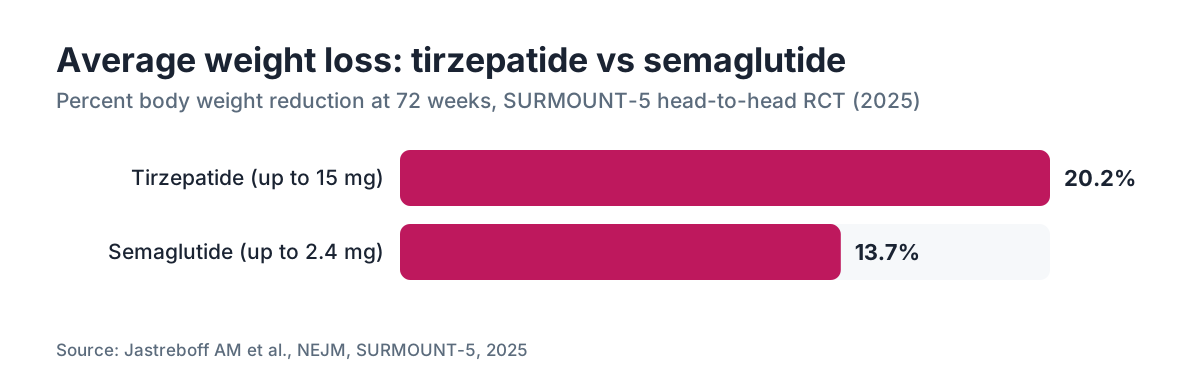
TL;DR: Tirzepatide (Zepbound/Mounjaro) produces more weight loss on average than semaglutide (Wegovy/Ozempic). The SURMOUNT-5 trial found 20.2% body weight reduction with tirzepatide versus 13.7% with semaglutide over 72 weeks. Both are weekly injections. Tirzepatide hits two receptors (GIP and GLP-1); semaglutide hits one. Cost, side-effect tolerance, and insurance coverage decide the real answer for you.
What is the difference between semaglutide and tirzepatide?
Semaglutide is a GLP-1 receptor agonist. It mimics glucagon-like peptide-1, a gut hormone that slows stomach emptying, damps appetite, and nudges the pancreas to release insulin only when blood sugar is actually rising. Tirzepatide does all of that and also activates the GIP (glucose-dependent insulinotropic polypeptide) receptor. That second mechanism appears to drive additional fat loss and, in some people, a better side-effect profile because the two receptors seem to offset nausea signals differently.
Think of it this way. Semaglutide is a single-action drug that happens to be very good at its job. Tirzepatide is a dual-action drug that is, on average, even better at fat loss. But "on average" hides a lot of individual variation, and average does not always translate to the right answer for any one woman.
Both drugs are weekly subcutaneous injections. Semaglutide is also available as a daily oral tablet (Rybelsus) approved only for type 2 diabetes, but the injection form (Wegovy for weight loss, Ozempic for diabetes) is what most trials and real-world comparisons use. Tirzepatide comes as Mounjaro (diabetes indication) and Zepbound (weight and obesity indication), both injectable [1][2].
Which drug causes more weight loss: semaglutide or tirzepatide?
Tirzepatide wins on average, and by a wide margin. The clearest answer comes from SURMOUNT-5, a head-to-head randomized controlled trial published in the New England Journal of Medicine in early 2025. Participants with obesity or overweight (without type 2 diabetes) were assigned to either tirzepatide (up to 15 mg weekly) or semaglutide (up to 2.4 mg weekly). After 72 weeks, tirzepatide users lost an average of 20.2% of body weight; semaglutide users lost 13.7%. That is a statistically significant 47% relative difference in weight reduction [3].
The earlier STEP trials (semaglutide, 2021) and SURMOUNT-1 trial (tirzepatide, 2022) cannot be compared directly because patient populations and protocols differed. STEP 1 showed semaglutide 2.4 mg producing about 14.9% weight loss at 68 weeks [4]. SURMOUNT-1 showed tirzepatide at 15 mg producing up to 22.5% weight loss at 72 weeks [5]. SURMOUNT-5 is the only study that put both drugs against each other in the same population under the same conditions, so it carries the most weight.
Here is the catch. Roughly 1 in 3 people respond better to the drug they tolerate rather than the drug that wins the average. If tirzepatide's gastrointestinal side effects force a dose reduction, real-world results can end up lower than semaglutide at a well-tolerated dose.
For women specifically, hormonal context matters. Estrogen decline during perimenopause and menopause shifts fat storage toward the abdomen and slows metabolic rate. Both drugs help with visceral fat, but no large RCT has yet stratified SURMOUNT-5 results by menopausal status. Smaller mechanistic studies suggest GLP-1 agonists improve insulin sensitivity independently of estrogen levels, which is meaningful because postmenopausal women have higher rates of insulin resistance [6].
See semaglutide for weight loss for a deeper look at the semaglutide-only data.
How do the side effects compare between semaglutide and tirzepatide?
The two profiles overlap heavily because both drugs work on GLP-1 receptors. Nausea, vomiting, diarrhea, and constipation are the most common complaints with each, and they usually peak in the first four to eight weeks as the dose titrates up. Across the STEP and SURMOUNT trials, nausea affected roughly 40-44% of participants on either drug. Vomiting affected about 24% on tirzepatide and 24% on semaglutide in the SURMOUNT-5 data specifically [3].
Where they differ: some clinicians report that tirzepatide's nausea feels less severe in practice, possibly because GIP receptor activity tempers GLP-1-driven gastric effects. That impression lines up with SURMOUNT-5's discontinuation rates: 6.4% stopped tirzepatide due to adverse events versus 8.0% who stopped semaglutide [3]. A small difference, but in the same direction.
Both drugs carry an FDA boxed warning about a potential risk of thyroid C-cell tumors based on rodent data. This is a class warning. It does not mean the risk is confirmed in humans, but anyone with a personal or family history of medullary thyroid carcinoma or Multiple Endocrine Neoplasia type 2 should not use either drug [1][2].
Pancreatitis risk exists for both. Acute gallbladder disease (gallstones, cholecystitis) is modestly elevated with rapid weight loss on either agent. Heart rate goes up by about 2-4 beats per minute on both. These are not trivial concerns, but for most women without underlying contraindications they are manageable.
Muscle loss is a real issue with GLP-1 drugs generally. Studies suggest 25-40% of weight lost on GLP-1 agonists comes from lean mass rather than fat, which matters for bone density and long-term metabolic health. Resistance training and adequate protein intake (1.2-1.6 g per kg body weight is the commonly cited range) blunt this. Checking a bone density test at baseline and after significant weight loss is reasonable for women over 50.
What do semaglutide and tirzepatide cost, and which is covered by insurance?
List prices without insurance run roughly $935-$1,000 per month for brand Wegovy (semaglutide 2.4 mg) and about $1,060-$1,100 per month for brand Zepbound (tirzepatide, weight-loss indication) as of mid-2025. These figures shift with pharmacy and any manufacturer coupons, so treat them as order-of-magnitude guidance [7].
Insurance coverage is patchwork and getting patchier. The Inflation Reduction Act of 2022 expanded Medicare drug negotiation authority, but Medicare Part D still does not broadly cover GLP-1s for obesity alone (as opposed to type 2 diabetes) as of this writing. Some commercial plans cover Wegovy. Fewer cover Zepbound. Your actual out-of-pocket depends entirely on your specific plan formulary.
Compounded semaglutide and compounded tirzepatide became widely available during drug shortages. The FDA has confirmed that neither Wegovy nor Zepbound are currently on its shortage list (as of 2025), which has implications for whether compounded versions are legally dispensable from 503B outsourcing facilities. The regulatory picture here has moved fast; see compounded semaglutide for current details on the regulatory status and what to look for in a legitimate compounder.
Manufacturer savings cards can help. Novo Nordisk offers a Wegovy savings card that can bring cost down to $499/month for eligible commercially insured patients. Eli Lilly offers a Zepbound savings card with a similar structure. Income-based patient assistance programs exist for both. These change, so verify directly with the manufacturer before relying on them.
Is tirzepatide or semaglutide better for women in perimenopause or after menopause?
Neither drug has an FDA approval specifically for perimenopausal or postmenopausal weight gain, and no large RCT has enrolled only women in those life stages. What we do have: secondary analyses from STEP and SURMOUNT trials that include substantial numbers of women over 45, plus mechanistic research on how sex hormones interact with GLP-1 and GIP receptors.
Estrogen has its own appetite-suppressing and insulin-sensitizing effects. When estrogen drops in perimenopause and menopause, some of that natural metabolic protection goes away. GLP-1 agonists compensate for part of that loss, but they do not replace estrogen's broader effects on brain, bone, and cardiovascular tissue. This is why many women pursuing GLP-1 therapy are also weighing hormone replacement therapy: the two are not mutually exclusive, and combining them may address more of the underlying biology [6].
A 2023 analysis published in Menopause (the journal of the Menopause Society, formerly NAMS) found that postmenopausal women using GLP-1 agonists had improvements in fasting insulin and waist circumference, though the studies included were heterogeneous in design. The Menopause Society's position is that weight management is a core component of menopause care and that pharmacological options including GLP-1 agonists are appropriate when lifestyle modification is insufficient [6].
Practical point: if you are weighing these drugs alongside HRT decisions, a provider who knows both areas is worth seeking. Telehealth platforms that specialize in women's hormones and GLP-1s, including WomenRx, can coordinate those conversations. More on hormone replacement therapy and its interaction with metabolic health is worth reading before that appointment.
Bone health deserves a separate mention. Rapid weight loss reduces bone mineral density. Estrogen loss compounds that. A woman who is postmenopausal, losing weight on a GLP-1, and not on estrogen therapy is under triple pressure on her skeleton. Neither drug is contraindicated here, but monitoring matters.
How do semaglutide and tirzepatide affect cardiovascular risk?
Semaglutide has the more mature cardiovascular evidence. The SELECT trial (2023) enrolled over 17,600 adults with obesity and established cardiovascular disease (no diabetes) and found that semaglutide 2.4 mg reduced major adverse cardiovascular events by 20% versus placebo over about 3 years. This was a pre-specified primary outcome, not a secondary finding [8].
For tirzepatide, the SURPASS-CVOT trial is ongoing. Interim data and mechanistic studies are encouraging, and the 2024 SUMMIT heart failure trial found tirzepatide significantly reduced the risk of worsening heart failure or cardiovascular death in people with heart failure with preserved ejection fraction and obesity [9]. Full cardiovascular outcome data for tirzepatide in the same mold as SELECT are not yet published.
Here is the honest summary. Semaglutide has a confirmed cardiovascular mortality benefit in high-risk patients. Tirzepatide's full CV outcome picture is still emerging, but early signals are positive. For a woman with known heart disease, semaglutide currently has the stronger evidence base. For a woman whose main concern is weight loss and metabolic health without established CV disease, tirzepatide's superior weight loss may tip the scales.
What are the dosing and titration schedules for each drug?
Both drugs use slow titration to minimize gastrointestinal side effects. Starting low and going slow is not optional. It is the mechanism by which most people reach a therapeutic dose without quitting.
Semaglutide (Wegovy) for weight loss starts at 0.25 mg weekly for four weeks, then steps up through 0.5 mg, 1.0 mg, 1.7 mg, and finally 2.4 mg. Full titration takes about 16-20 weeks. Some people never tolerate the top dose and stay at 1.7 mg, which still produces meaningful weight loss.
Tirzepatide (Zepbound) starts at 2.5 mg weekly for four weeks, then steps to 5 mg, 7.5 mg, 10 mg, 12.5 mg, and 15 mg. Full titration to max dose takes about 20 weeks. Most of the impressive SURMOUNT-1 weight loss data comes from the 10 mg and 15 mg dose groups.
Neither drug should be stopped abruptly if you have type 2 diabetes without medical supervision. For weight management without diabetes, pausing is lower risk but weight regain is well-documented: the STEP 4 trial showed that stopping semaglutide led to regain of about two-thirds of lost weight within a year [10]. Tirzepatide data show a similar pattern. These are chronic-disease medications for most people, not short-term interventions.
See semaglutide for the full prescribing context on the semaglutide side.
Can you switch from semaglutide to tirzepatide, or take both at once?
Taking both at the same time is not approved and carries a real risk of stacked nausea, hypoglycemia in people with diabetes, and heart rate increases. No trial supports combined use, and no prescriber should offer it outside a research setting.
Switching is common in clinical practice and is generally safe with the right guidance. The typical approach is to stop semaglutide and start tirzepatide at the lowest dose (2.5 mg), treating it as a fresh titration regardless of what dose you were on with semaglutide. Some providers overlap by one week if discontinuation timing is complicated, but there is no pharmacokinetic reason this is necessary: semaglutide's half-life is about one week, so it clears meaningfully before tirzepatide builds up.
Reasons a clinician might suggest switching: inadequate weight loss on maximum tolerated semaglutide, insurance formulary changes, drug availability shifts, or a patient wanting to try the drug with stronger average efficacy data.
Reasons to stay on semaglutide: you have well-established cardiovascular disease and the SELECT mortality data matters to you; you tolerate semaglutide well and have hit your goal; tirzepatide is not covered and costs are prohibitive.
How do compounded versions of these drugs compare to brand-name?
Compounded semaglutide and tirzepatide products became common during FDA drug shortages in 2022-2024. They are typically sold at lower prices, often $200-$400 per month, from telehealth-affiliated compounding pharmacies.
The FDA does not review compounded drugs for efficacy, safety, or manufacturing consistency the way it does approved drugs. Quality varies across compounders. Some add ingredients (B12, carnitine, NAD+) that are not in the FDA-approved formulations and have not been tested in combination with these drugs.
As of 2025, the FDA has stated that Wegovy and Zepbound are no longer on shortage lists, meaning 503A and 503B compounders have limited legal authority to keep producing copies [11]. Enforcement timelines have been contested legally, and several compounding pharmacies are challenging FDA guidance in court. The situation is genuinely unsettled.
If you are considering a compounded product, the safety checks that matter most are these: confirm the pharmacy holds current 503B outsourcing facility accreditation from the FDA, confirm the active ingredient is semaglutide or tirzepatide (not a salt like semaglutide sodium, which has different pharmacokinetics), and confirm doses are clearly labeled and match what peer-reviewed protocols use. See compounded semaglutide for more on how to vet this.
WomenRx providers can help clarify whether a brand or compounded path makes sense for your specific clinical and insurance situation.
Which drug should you actually choose? A practical framework
There is no single right answer, but three questions narrow it down.
First: do you have established cardiovascular disease? If yes, semaglutide's SELECT cardiovascular outcome data is a real asset. Tirzepatide may catch up with more trial data, but right now semaglutide has proven mortality benefit in that population [8].
Second: is maximum weight loss your main goal, with cardiovascular risk not a distinguishing factor? Tirzepatide wins on average weight loss by a meaningful margin in SURMOUNT-5, and the gap is large enough that it is not noise [3].
Third: what does your insurance actually cover, and what can you afford long-term? A drug you cannot sustain financially will not work. The coverage landscape changes quarterly, so check your formulary now, not six months ago.
Beyond those three, individual tolerance matters most. Prescribers cannot predict who will be nauseated, who will lose muscle more than fat, or who will hit a plateau at lower doses. A thoughtful titration period with real follow-up is as important as the initial drug choice.
For women sorting through these decisions alongside hormonal changes, reading about menopause age and what happens metabolically at different stages can clarify what is weight-loss-drug territory versus what is hormone territory. Some of what feels like GLP-1 resistance is actually estrogen-driven metabolic shift that responds better to an estrogen patch than a higher GLP-1 dose.
Frequently asked questions
Is tirzepatide stronger than semaglutide?
On average, yes. SURMOUNT-5, a head-to-head RCT published in 2025, found tirzepatide produced 20.2% body weight reduction versus 13.7% for semaglutide over 72 weeks. That is a 47% relative difference. Individual response varies, though, and some people tolerate semaglutide better, which can close the practical gap.
Can I take semaglutide and tirzepatide at the same time?
No. There is no approved protocol for combining them, and doing so would stack GLP-1 receptor activation beyond studied doses. Side effects including nausea, vomiting, and heart rate increases would compound. If you want to switch, stop one and start the other at the lowest titration dose.
Which drug has fewer side effects, semaglutide or tirzepatide?
Both have similar GI side-effect profiles. SURMOUNT-5 showed slightly lower discontinuation due to adverse events with tirzepatide (6.4%) versus semaglutide (8.0%). Neither drug is clearly kinder to everyone; individual tolerance varies a lot. Slow titration reduces nausea risk for both.
Does tirzepatide work for women over 50?
SURMOUNT trials included women over 50, and subgroup data suggest efficacy is maintained. No large RCT has enrolled only postmenopausal women, but mechanistic evidence supports GLP-1 and GIP agonism improving insulin sensitivity regardless of estrogen status. Bone health monitoring becomes more important after significant weight loss in this age group.
What is the cost difference between semaglutide and tirzepatide?
Brand Wegovy (semaglutide) runs about $940-$1,000 per month list price; Zepbound (tirzepatide) runs about $1,060-$1,100. Both manufacturers offer savings cards that can reduce cost for eligible commercially insured patients. Medicare does not broadly cover either for obesity alone as of mid-2025.
How long does it take to see weight loss results with each drug?
Most people notice appetite reduction within the first two to four weeks, but meaningful scale changes typically show at six to twelve weeks. Both drugs require 16-20 weeks to reach maximum dose via titration. The SURMOUNT-5 and STEP trials measured primary endpoints at 68-72 weeks, which reflects that maximal effects take over a year.
Will I regain weight when I stop semaglutide or tirzepatide?
Almost certainly some. The STEP 4 trial found that stopping semaglutide led to regain of roughly two-thirds of lost weight within one year. Tirzepatide data show a similar pattern. These drugs suppress appetite while you take them; that effect reverses when you stop. Most specialists treat them as chronic medications, not short courses.
Is compounded tirzepatide safe and legal?
The regulatory status is contested. FDA removed Zepbound from its shortage list in 2025, limiting compounders' legal authority to copy it. Quality control at compounders varies widely. If you use a compounded product, verify the pharmacy holds FDA 503B outsourcing facility status, that it contains actual tirzepatide (not a salt), and that dosing matches published protocols.
Which drug is better for insulin resistance without type 2 diabetes?
Both improve insulin sensitivity in people with insulin resistance or prediabetes. Tirzepatide's additional GIP receptor action appears to produce greater improvements in fasting insulin and HOMA-IR scores in SURMOUNT trial data. Neither is FDA-approved specifically for insulin resistance without diabetes, but both are used off-label for this purpose.
Does tirzepatide affect hormones in women?
No direct hormonal effect on estrogen, progesterone, or thyroid has been established in large trials. Weight loss itself can lower androgens in women with PCOS and may affect sex hormone-binding globulin. Tirzepatide carries a boxed warning about theoretical thyroid C-cell tumor risk based on rodent data, though human evidence does not confirm this risk.
How do I know if I need semaglutide or tirzepatide versus just hormone therapy?
Weight gain during perimenopause has two overlapping drivers: hormonal shifts that redistribute fat and reduce metabolic rate, and caloric surplus. HRT addresses the first; GLP-1 drugs address the second. Many women need both. A thorough evaluation including hormone labs and metabolic markers helps clarify which component is dominant in your case.
What happens to muscle mass on tirzepatide versus semaglutide?
Both drugs cause loss of some lean muscle alongside fat loss. Studies estimate 25-40% of total weight lost may come from lean mass on GLP-1 agonists. There is no large head-to-head data showing one drug preserves muscle better than the other. Resistance training and protein intake of 1.2-1.6 g per kg body weight are the best-supported interventions to reduce this.
Sources
- FDA, Wegovy (semaglutide) Prescribing Information
- FDA, Zepbound (tirzepatide) Prescribing Information
- Jastreboff AM et al., New England Journal of Medicine, SURMOUNT-5 trial, 2025
- Wilding JPH et al., New England Journal of Medicine, STEP 1 trial, 2021
- Jastreboff AM et al., New England Journal of Medicine, SURMOUNT-1 trial, 2022
- The Menopause Society (formerly NAMS), Menopause journal, position statement on menopause and weight management
- GoodRx, Wegovy and Zepbound pricing data, 2025
- Lincoff AM et al., New England Journal of Medicine, SELECT trial, 2023
- Packer M et al., New England Journal of Medicine, SUMMIT trial, 2024
- Rubino DM et al., JAMA, STEP 4 trial, 2021
- FDA, Drug Shortages information
- Endocrine Society, Clinical Practice Guideline on Pharmacological Management of Obesity, 2015 (updated guidance ongoing)