Semaglutide telehealth consultation: what to expect and how to prepare
TL;DR: A semaglutide telehealth consultation takes 20-45 minutes, covers your weight history, metabolic labs, and any contraindications, and can end with a prescription sent to a pharmacy the same day. Most visits cost $0-$200 depending on your insurance and platform. You need a BMI of 27+ with a weight-related condition, or 30+, to qualify under FDA criteria.
What actually happens during a semaglutide telehealth visit?
Most semaglutide telehealth appointments run 20 to 45 minutes. You do a video or async-text visit with a licensed prescriber, typically a physician, NP, or PA, who reviews your medical history, current medications, weight history, and any symptoms that might be relevant to GLP-1 therapy.
The prescriber is checking three things. First, do you meet FDA-approved criteria? Second, do you have any contraindications? Third, what starting dose and titration schedule makes sense for you specifically? This is not a rubber-stamp visit, at least not at a legitimate platform. A good prescriber will ask about your thyroid history, your family history of medullary thyroid carcinoma, your history of pancreatitis, and whether you have gastroparesis or severe GI disease. All of these can disqualify you or require extra caution.
You will likely need labs before or shortly after the visit. A basic metabolic panel, HbA1c, fasting glucose, lipid panel, and TSH are standard. Some platforms let you upload recent labs (within 90 days); others send you a lab order to a draw site like Quest or LabCorp first. If you are in perimenopause or menopause, a prescriber should also ask about your hormonal status, because estrogen loss directly worsens insulin resistance and changes how GLP-1 drugs behave in the body. For more on that intersection, see semaglutide for weight loss.
At the end of the visit the prescriber either sends a prescription to your preferred pharmacy, to a mail-order pharmacy, or, on some platforms, to a compounding pharmacy. You will also usually get a follow-up scheduled at 4-8 weeks to check tolerability and titrate dose. [1][2]
Who qualifies for semaglutide? What the FDA criteria actually say
The FDA approved semaglutide (Wegovy, 2.4 mg weekly) for chronic weight management in adults who have a BMI of 30 or higher, or a BMI of 27 or higher with at least one weight-related comorbidity: type 2 diabetes, hypertension, dyslipidemia, obstructive sleep apnea, or cardiovascular disease. The label also requires use alongside a reduced-calorie diet and increased physical activity. [1]
Semaglutide as Ozempic (up to 2 mg weekly) is FDA-approved specifically for type 2 diabetes and, since 2021, for reducing cardiovascular events in adults with T2D and established cardiovascular disease. Many providers prescribe Ozempic off-label for weight loss at doses below the Wegovy ceiling, which is legal but means your insurer almost certainly won't cover it for that indication.
A telehealth prescriber who does not verify your BMI and comorbidities before prescribing is cutting corners. The FDA's Wegovy prescribing information states the drug is contraindicated in patients with a personal or family history of medullary thyroid carcinoma or in patients with Multiple Endocrine Neoplasia syndrome type 2 (MEN 2). Those are hard stops, not negotiables. [1]
For women in perimenopause, qualifying is often easier than they expect. Weight gain in the 40s and 50s frequently brings hypertension or prediabetes along with it, even at a BMI below 30. A thorough telehealth visit should check for these. See perimenopause age for context on why metabolic changes accelerate in that window.
What labs do you need before a telehealth semaglutide prescription?
There is no single national standard, but the following labs are requested by most evidence-based platforms:
| Lab test | Why it matters for semaglutide | |---|---| | HbA1c | Diagnoses prediabetes or T2D; affects which formulation makes sense | | Fasting glucose | Baseline for monitoring hypoglycemia risk | | Basic metabolic panel | Kidney function (eGFR); semaglutide is used cautiously with severe renal impairment | | Lipid panel | Establishes cardiovascular risk baseline | | TSH | Rules out thyroid dysfunction driving weight gain; also thyroid context for MTC risk discussion | | Liver enzymes (AST/ALT) | Baseline, especially if fatty liver is suspected |
For women over 40, a thoughtful prescriber may also order fasting insulin, a uric acid level if gout is in the history, and for those with hormonal symptoms, an FSH and estradiol. These are not required by the FDA label but they give a much cleaner clinical picture. Treating weight in a woman who is also dealing with hot flashes and poor sleep without knowing her hormonal status is doing half the job. For more on how hormones and weight intersect, see menopause and hormone replacement therapy.
If you have labs from your primary care doctor within the past 90 days, most telehealth platforms will accept them. Upload them before your visit so the prescriber isn't reviewing them cold during the call. [2][3]
How much does a semaglutide telehealth consultation cost?
The consultation itself ranges from $0 to $200. Platforms with in-network insurance billing (Teladoc, MDLive, some Amazon Clinic partners) may cover the visit at your normal specialist copay. Direct-pay telehealth platforms typically charge $50-$150 for the initial consultation and $25-$100 for follow-ups. A handful of platforms fold consultation fees into a monthly membership that also includes medication coordination, running $150-$400 per month total. [4]
The bigger cost is the medication. Brand-name Wegovy has a list price around $1,350 per month without insurance as of mid-2025. Novo Nordisk's Wegovy savings program can bring out-of-pocket cost to $0-$25 per month for commercially insured patients who qualify, though the program excludes federal insurance (Medicare, Medicaid, TRICARE). [5]
Compounded semaglutide from 503A or 503B pharmacies has run $200-$500 per month and does not require insurance. The FDA added semaglutide to its drug shortage list in 2022, which made compounding legal during that period; the agency removed it from the shortage list in early 2025, which means compounding pharmacies must now wind down semaglutide production. Any platform still heavily promoting compounded semaglutide in late 2025 deserves scrutiny. See compounded semaglutide for the full regulatory picture. [6]
For women who also want hormonal evaluation at the same visit, a platform like WomenRx, which focuses specifically on women's hormones and GLP-1 care, can address both in a single consultation rather than bouncing you between separate providers.
How do you find a legitimate semaglutide telehealth provider?
Start with state licensure. A prescriber must be licensed in the state where you are located at the time of the visit, and the telehealth platform must be legally operating in that state. The Ryan Haight Online Pharmacy Consumer Protection Act (21 U.S.C. 829) requires that a prescriber complete at least one in-person medical evaluation before prescribing a controlled substance via telemedicine, but semaglutide is not a controlled substance, so that rule does not apply here. What does apply is the standard of care: a real medical evaluation, real labs, real follow-up. [7]
Red flags in a telehealth semaglutide platform:
- No lab requirement before prescribing
- Prescribing after a 2-minute questionnaire with no live prescriber review
- No follow-up visits built into the program
- Claiming to offer brand-name Wegovy at $200/month (that price only works for compounded product)
- No clear disclosure of which pharmacy fills the prescription
- No mechanism to reach a prescriber if you have side effects
Green flags:
- Licensed prescribers visible by name, credential, and state
- Lab order or lab upload required before or immediately after the initial visit
- Structured titration protocol matching the FDA-approved schedule
- Clear refund and cancellation policy
- HIPAA-compliant video platform
The Federal Trade Commission has issued warnings about deceptive telehealth weight loss practices. The FDA has separately warned consumers about counterfeit semaglutide. Verify that any compounded product you receive comes from an FDA-registered 503B outsourcing facility or a state-licensed 503A compounding pharmacy with a valid patient-specific prescription. [6][8]
What questions will the prescriber ask you?
A thorough semaglutide consultation covers more ground than most patients expect. Here is what a good prescriber works through:
Weight history: When did you start gaining weight? Have you lost significant weight before? How? What happened afterward? This gives context on whether this is primarily lifestyle-driven, hormonal, or medication-related.
Medications: A long list of drugs can cause weight gain or complicate GLP-1 therapy, including SSRIs, antipsychotics, insulin, sulfonylureas, beta blockers, corticosteroids, and hormonal contraceptives at certain doses.
GI symptoms: Semaglutide commonly causes nausea, vomiting, diarrhea, and constipation, especially in the titration phase. If you already have significant GERD, gastroparesis, or inflammatory bowel disease, that changes the calculus.
Thyroid history: more than current diagnosis but family history. Medullary thyroid carcinoma runs in families. The prescriber should ask specifically about MEN2 syndrome.
Pancreatitis: A personal history of acute pancreatitis is a relative contraindication. The prescriber should ask directly.
Cardiovascular history: The SELECT trial, published in the New England Journal of Medicine in 2023, found that semaglutide 2.4 mg reduced major adverse cardiovascular events by 20% in overweight adults with established cardiovascular disease. The study found that "semaglutide reduced the incidence of death from cardiovascular causes, nonfatal myocardial infarction, or nonfatal stroke" compared with placebo. [9] This makes prior CV history important to document, more than because it's a comorbidity but because it affects how insurance covers the drug.
For women in their 40s and 50s, the prescriber should also ask about menstrual changes, hot flashes, sleep, and mood. These are not tangential. Hormonal flux in perimenopause affects appetite, insulin sensitivity, and the clinical picture for GLP-1 prescribing. If yours doesn't ask, bring it up yourself.
How does semaglutide work, and what results should you realistically expect?
Semaglutide is a GLP-1 receptor agonist. It mimics glucagon-like peptide-1, a gut hormone that slows gastric emptying, reduces appetite signaling in the hypothalamus, and increases insulin secretion in a glucose-dependent way (meaning it is not causing hypoglycemia at therapeutic doses in non-diabetics). [1]
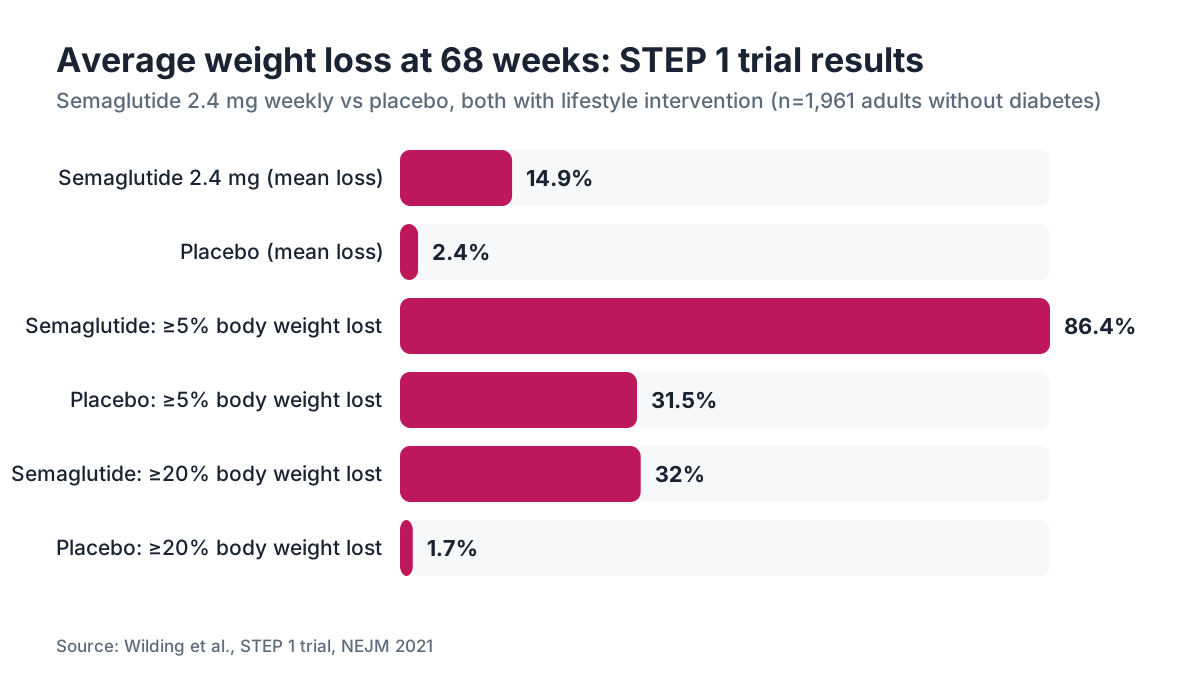
The STEP 1 trial, published in the New England Journal of Medicine in 2021, is the anchor efficacy study for weight management. It enrolled 1,961 adults without diabetes, randomized to semaglutide 2.4 mg weekly or placebo, both with lifestyle intervention. At 68 weeks, participants on semaglutide lost an average of 14.9% of body weight versus 2.4% with placebo. About one-third of participants lost 20% or more of body weight. [10]
For a woman who starts at 185 pounds, that 14.9% average means roughly 27 pounds. About one-third would lose 37 pounds or more. Those are meaningful numbers. They are also averages, and real-world response varies quite a bit.
Key things that affect your response:
- Starting insulin resistance level (women in menopause tend to have higher insulin resistance, which may actually improve response)
- Whether you are on estrogen therapy (estrogen improves insulin sensitivity, which can complement GLP-1 action)
- Sleep quality (poor sleep raises ghrelin and blunts GLP-1 effect)
- Titration adherence (moving up too fast increases GI side effects and causes people to quit)
For context on how tirzepatide compares in efficacy, see semaglutide vs tirzepatide.
Weight loss with semaglutide slows or stops when you stop taking it. The STEP 4 trial showed that participants who discontinued semaglutide after 20 weeks regained about two-thirds of the weight they lost within a year. This is a chronic therapy, not a short course. [3]
What are the most common side effects, and how do you manage them?
Gastrointestinal side effects are by far the most common reason people reduce their dose or stop semaglutide entirely. In STEP 1, nausea affected 44% of participants on semaglutide versus 16% on placebo; vomiting affected 24% versus 6%; diarrhea affected 30% versus 16%. Most of these effects were mild to moderate and peaked during dose escalation. [10]
Practical management:
- Eat smaller, lower-fat meals. Fat slows gastric emptying and semaglutide already slows it further. The combination is rough.
- Stay ahead of dehydration. Vomiting and diarrhea cause fluid loss quickly. Electrolyte drinks help.
- Don't rush the titration. The FDA-approved titration schedule for Wegovy is 0.25 mg weekly for 4 weeks, then 0.5 mg for 4 weeks, then 1.0 mg for 4 weeks, then 1.7 mg for 4 weeks, then 2.4 mg maintenance. Many patients need to hold a dose level for 8 weeks instead of 4. A good telehealth program accommodates this.
- If nausea is severe at a dose, dial back one level. This is not failure.
Muscle mass loss is a real concern that gets underweighted in marketing. Semaglutide causes loss of both fat and lean mass. In STEP 1, roughly 39% of weight lost was lean mass. For women over 40 who are already losing muscle due to declining estrogen and normal aging, this matters a lot. Resistance training, high protein intake (1.2-1.6 g/kg body weight), and, for eligible women, estrogen therapy are all evidence-supported ways to preserve lean mass during GLP-1 therapy. [10][11]
Bone density is a related concern. Rapid weight loss, regardless of method, reduces bone mineral density. For women near or in menopause, that risk compounds with estrogen deficiency. A baseline bone density test makes sense for women over 45 starting semaglutide, especially if they have other risk factors. [11]
Does insurance cover semaglutide prescribed via telehealth?
Insurance coverage for the consultation and for the medication follow entirely separate rules.
For the telehealth visit itself, most major commercial insurers now cover telehealth visits at parity with in-person visits following the Consolidated Appropriations Act of 2023, which extended telehealth flexibilities. Medicare covers telehealth for established patients under several conditions. Verify your specific plan's telehealth benefit before booking. [7]
For the medication, coverage of Wegovy for weight management (not diabetes) is highly variable. As of 2025, Medicare Part D covers Wegovy specifically for patients who have established cardiovascular disease, following the SELECT trial results and subsequent CMS guidance, but generally does not cover it for obesity alone without that indication. Many commercial plans do cover it with prior authorization. Medicaid coverage varies enormously by state. [5][9]
The practical playbook:
- Call your insurer's pharmacy benefit line and ask specifically about Wegovy (NDC codes for semaglutide 2.4 mg) and about semaglutide under Ozempic.
- Ask what diagnosis codes qualify (E11 for T2D, E66 for obesity, I25 for CAD, etc.).
- Ask about step therapy requirements (some plans require a trial of a different agent first).
- If you have T2D, Ozempic coverage is far more consistent than Wegovy coverage for weight.
- Use the Novo Nordisk savings card for commercial insurance; it can reduce copay to $25/month for eligible patients. [5]
How does perimenopause or menopause change the semaglutide consultation?
This is where most standard telehealth weight loss platforms fall short, and it is the single most important thing for women in their 40s and 50s to understand.
Menopause and perimenopause change body composition in ways that look like simple weight gain but are mechanistically different from weight gain at age 30. Declining estradiol increases visceral adiposity, worsens insulin resistance, disrupts sleep (which raises cortisol and ghrelin), and accelerates muscle loss. The result is often a woman at the same scale weight but with much higher metabolic risk, or a woman gaining weight who previously never struggled with it. See when does menopause start for more on the hormonal timeline.
A 2023 analysis published in Menopause (the journal of the Menopause Society, formerly NAMS) found that menopausal status was independently associated with greater difficulty losing weight and with higher rates of weight regain after loss, even after controlling for age. [12] This means a cookie-cutter semaglutide consultation that ignores hormonal status is missing a core clinical variable.
What a good consultation for a perimenopausal or menopausal woman should include:
- Assessment of vasomotor symptoms (hot flashes, night sweats) because sleep disruption from these worsens GLP-1 outcomes
- Discussion of whether hormone replacement therapy is appropriate alongside GLP-1 therapy
- FSH and estradiol levels if the hormonal picture is unclear
- Explicit discussion of muscle and bone preservation strategies
- Whether an estrogen patch or oral estrogen therapy might meaningfully improve both quality of life and metabolic outcomes
Combining estrogen therapy and semaglutide has not been studied in a large randomized trial specifically. The closest evidence base is from studies showing estrogen therapy improves insulin sensitivity and reduces visceral fat, effects that are at least directionally complementary to semaglutide. No major clinical guideline currently recommends against combining them; it's a clinical judgment call based on individual risk-benefit. Ask your prescriber directly. [11][12]
What happens after the first telehealth consultation?
The initial visit is the beginning, not the event. Here is the typical arc of a semaglutide telehealth program over 6 months:
Weeks 1-4: Starting dose 0.25 mg/week. Most people feel little effect on appetite. Side effects, if any, are mild. This is a ramp-up dose, not a therapeutic dose. Don't judge efficacy yet.
Weeks 5-8: Dose increases to 0.5 mg. Appetite suppression becomes noticeable for most people. GI side effects peak here for those who get them. A follow-up visit at week 4-6 is standard on a good platform.
Weeks 9-16: Dose increases to 1.0-1.7 mg. Most people are seeing meaningful scale movement by week 12. Weight loss averages about 1-2 pounds per week at therapeutic doses, though this varies.
Months 4-6+: Approaching or at maintenance dose of 2.4 mg. Follow-up labs (HbA1c, metabolic panel, lipids) to document benefit and check kidney function. Weight loss rate typically slows. Body recomposition continues.
A good telehealth program also adjusts your protocol if you are not responding. Non-response (less than 5% body weight loss by 16 weeks) is a signal to reassess: Is the medication getting absorbed? Are there competing medications or conditions? Is tirzepatide a better fit? See semaglutide vs tirzepatide for how the two compare. WomenRx, for example, offers follow-up protocol reviews that address hormonal factors alongside GLP-1 response, rather than treating the medication in isolation.
Long-term, the expectation is that semaglutide is a chronic medication. Stopping it typically means weight regain. The decision to continue indefinitely should be revisited annually with labs and a clinical visit, weighing benefits against cost, side effect burden, and evolving insurance coverage. [3][10]
Frequently asked questions
Can I get semaglutide prescribed at a telehealth visit without going to a lab first?
Some platforms will prescribe on the strength of recent labs from your primary care doctor, uploaded before the visit. A few will prescribe first and require labs within 30 days. Skipping labs entirely is a red flag. At minimum, a prescriber needs fasting glucose and HbA1c to safely prescribe a GLP-1 drug, because undiagnosed diabetes changes the dose and monitoring picture significantly.
How long does the telehealth semaglutide consultation take?
Most initial consultations run 20 to 45 minutes for a live video visit. Asynchronous platforms (where you fill out a detailed questionnaire and a provider reviews it without a live call) can be faster but give you less chance to ask questions. Follow-up visits are typically 15 to 20 minutes. Budget extra time the first visit for technical setup and uploading any lab documents.
Is a telehealth semaglutide prescription just as valid as one from an in-person doctor?
Yes, legally. Semaglutide is not a controlled substance, so the Ryan Haight Act's in-person visit requirement does not apply. A telehealth prescription carries the same legal weight as an in-person one, provided the prescriber is licensed in your state. The quality difference is clinical, not legal: an in-person provider can do a physical exam, which a telehealth provider cannot. For most semaglutide candidates, labs and history are more informative than the exam anyway.
What BMI do I need for a telehealth provider to prescribe semaglutide?
The FDA-approved threshold for Wegovy is BMI 30 or higher, or BMI 27 or higher with at least one weight-related comorbidity such as hypertension, type 2 diabetes, dyslipidemia, sleep apnea, or cardiovascular disease. Prescribing below a BMI of 27 without a comorbidity is off-label and most reputable platforms won't do it. Your BMI is typically self-reported at the telehealth visit but may need to be verified with documentation.
Can I use my HSA or FSA to pay for a telehealth semaglutide consultation?
Yes. Telehealth medical consultations qualify as a medical expense under IRS Publication 502 and are eligible for HSA and FSA reimbursement. The medication itself also qualifies if it is prescribed, including Wegovy and Ozempic. Compounded semaglutide from a licensed compounding pharmacy with a valid prescription is also eligible. Keep your receipt and prescription documentation for records.
What happens if I have side effects from semaglutide after my telehealth visit?
A good telehealth platform gives you a clear pathway to reach a prescriber between scheduled visits, either via messaging, a nurse line, or an unscheduled video call. You should know this pathway before you start the medication. Common side effects like nausea usually resolve with dose adjustment, which can be managed remotely. Rare but serious ones like severe abdominal pain, which could signal pancreatitis, require emergency care, not a telehealth message.
Is compounded semaglutide still available from telehealth providers?
As of early 2025, the FDA removed semaglutide from its drug shortage list, which legally restricts compounding pharmacies from making semaglutide copies. Platforms still selling compounded semaglutide after the shortage resolution are operating in a legally uncertain area. The FDA has issued warnings about counterfeit and adulterated compounded semaglutide products. For current status, see our full article on compounded semaglutide.
Will my primary care doctor know I was prescribed semaglutide via telehealth?
Only if the telehealth provider sends records to your primary care doctor, which you can usually authorize during the visit, or if you tell them. The prescription will appear in pharmacy records accessible to any provider who checks your medication history. Most clinical guidelines recommend informing your primary care provider about new chronic medications, both for coordination and because semaglutide can affect doses of other medications like insulin or blood pressure drugs.
Can I get both semaglutide and hormone therapy from the same telehealth provider?
Yes, if the platform is designed for it. Most generic weight loss telehealth platforms only prescribe GLP-1 drugs and do not evaluate or manage hormonal therapy. Platforms focused on women's health, like WomenRx, can assess hormonal status alongside metabolic health in the same visit and prescribe both if appropriate. For women in perimenopause or menopause, this integrated approach is worth seeking out rather than managing two separate telehealth programs.
How does semaglutide affect women differently than men?
The STEP 1 trial enrolled roughly 75% women and showed comparable average weight loss across sexes. However, women in menopause tend to have higher visceral adiposity and lower muscle mass than premenopausal women or men at equivalent BMI, which affects both baseline risk and the importance of muscle preservation strategies. GI side effects appear to be reported more frequently in women in clinical practice, though the STEP trials did not show a large sex difference in documented adverse events.
What should I do if a telehealth platform prescribes semaglutide after only a questionnaire with no live review?
Proceed with caution. Automated prescribing without a licensed provider reviewing your specific case is a regulatory gray area and a clinical risk. The prescriber is responsible for your care regardless of how the visit is structured. If you cannot identify the specific licensed provider who reviewed your case and is responsible for the prescription, that is a problem. You can report concerns about unsafe telehealth prescribing to your state medical board.
Does Medicare cover semaglutide prescribed via telehealth?
As of 2025, Medicare Part D covers Wegovy specifically for beneficiaries with established cardiovascular disease under CMS guidance following the SELECT trial. Medicare does not broadly cover semaglutide for obesity alone without the cardiovascular indication. The telehealth consultation itself may be covered under Medicare Part B under the extended flexibilities in current law, but check your specific plan. Coverage rules are evolving and a call to your plan's pharmacy benefit line is the most reliable way to verify.
What questions should I ask during my semaglutide telehealth consultation?
Ask: Which formulation and dose are you recommending and why? What labs do you need and when? What is the titration schedule? How do I reach you between visits if I have side effects? What is your protocol if I'm not losing weight by week 16? Is there any interaction with my current medications? For women over 40, also ask: Should we evaluate my hormonal status before starting, and does it affect your recommendation?
How often do I need follow-up telehealth visits while on semaglutide?
Most programs schedule a follow-up at 4-6 weeks to assess tolerability and titrate the dose, then every 4-8 weeks during the escalation phase (roughly months 2-5), then every 3 months once you reach maintenance dose. Follow-up labs are typically repeated at 3 and 6 months. Skipping follow-ups is more than a program requirement, it is how early problems like significant nausea, muscle loss, or inadequate response get caught and addressed.
Sources
- FDA, Wegovy (semaglutide) prescribing information
- Endocrine Society, Obesity Pharmacotherapy Clinical Practice Guideline
- Wilding JPH et al., STEP 4 trial, JAMA 2021;325(14):1414-1425
- KFF Health News, Telehealth cost and coverage analysis
- Novo Nordisk, Wegovy savings program information
- HHS Office for Civil Rights, Telehealth guidance and Ryan Haight Act summary
- FDA, Consumer warning on counterfeit semaglutide products
- Lincoff AM et al., SELECT trial, NEJM 2023;389(24):2221-2232
- Wilding JPH et al., STEP 1 trial, NEJM 2021;384(11):989-1002
- Menopause journal, analysis of menopausal status and weight loss outcomes, 2023