Semaglutide tablets: what women need to know about oral Ozempic
TL;DR: Oral semaglutide (brand name Rybelsus) is an FDA-approved pill form of the same GLP-1 drug in Ozempic and Wegovy injections. It's approved for type 2 diabetes, not weight loss, in the U.S. The pill reaches lower blood levels than the shot, demands strict morning fasting to absorb, and costs roughly $900 to $1,000 a month without insurance.
What is oral semaglutide and how is it different from the injection?
Semaglutide is a glucagon-like peptide-1 (GLP-1) receptor agonist. One molecule, three products: Ozempic (weekly shot for type 2 diabetes), Wegovy (weekly shot for weight loss), and Rybelsus (daily pill for type 2 diabetes). All three come from Novo Nordisk and carry the same active ingredient. The pill and the shot are not interchangeable in practice.
Here's the problem the pill had to solve. Your gut is hostile to a protein-based drug like semaglutide. Digestive enzymes shred it before it reaches the bloodstream. Novo Nordisk got around that by pairing semaglutide in Rybelsus with a small-molecule absorption enhancer called sodium N-(8-[2-hydroxybenzoyl]amino)caprylate, or SNAC. SNAC buffers stomach acid briefly and opens a local absorption window in the stomach lining. [1]
Even with SNAC, only about 1% of an oral dose reaches the blood compared to the subcutaneous injection. [1] That sounds alarming. It isn't, because the pill doses are built for it. Rybelsus comes in 3 mg, 7 mg, and 14 mg tablets, against Ozempic's 0.5 mg, 1 mg, and 2 mg injections. Net drug exposure at equivalent therapeutic doses lands close enough to produce real glucose lowering, but the swing in absorption from day to day is much wider with the pill. Any food, beverage, or other medication within 30 minutes of the tablet can cut absorption by half or more. [2] That sensitivity is the single feature that defines this drug.
For women researching semaglutide broadly, the pill is worth understanding. It also asks more of you every morning than a once-a-week shot, and it has no FDA approval for weight loss.
Is oral semaglutide FDA-approved, and for what conditions?
The FDA approved Rybelsus in September 2019 for adults with type 2 diabetes to improve blood sugar control. [3] That approval rested on the PIONEER program, eight large randomized trials pitting oral semaglutide against placebo and against other diabetes drugs including empagliflozin, sitagliptin, and injectable semaglutide.
Rybelsus is not approved for chronic weight management in the U.S. The injectable Wegovy (2.4 mg weekly) holds that indication. Novo Nordisk has been testing a higher-dose oral semaglutide for obesity, up to 50 mg, in the OASIS and PIONEER PLUS programs. As of mid-2025, the FDA has not approved any oral semaglutide product for weight loss. [3] A clinician can prescribe Rybelsus off-label at 14 mg for weight loss, which is legal, but it falls outside the approved label and insurance almost never pays for it that way.
One more thing women need up front. Neither form of semaglutide is approved during pregnancy or breastfeeding. The Rybelsus label carries this instruction: the drug "should be discontinued at least 2 months before a planned pregnancy" because of animal reproduction data showing fetal harm. [2]
How much does oral semaglutide cost with and without insurance?
Cash price for Rybelsus (any dose, 30 tablets) runs roughly $900 to $1,000 a month at U.S. pharmacies. [4] That sits in the same range as Ozempic's list price and below Wegovy's $1,300-plus, though list prices tell you little once insurers negotiate.
Coverage splits along one line: diabetes yes, weight loss no. Most commercial plans cover Rybelsus for type 2 diabetes with prior authorization. Medicare Part D covers it when prescribed for diabetes. Neither Medicare nor most commercial plans pay for any semaglutide product for weight loss without an obesity indication on the claim, and Rybelsus doesn't have one. [5]
Novo Nordisk runs a savings program. Patients with commercial insurance can pay as little as $10 a month, with an annual cap on the savings. Without insurance, the manufacturer's patient assistance program (NovoCare) may supply the drug free or reduced if household income falls below set thresholds. Rules change, so contact Novo Nordisk directly for current eligibility. At this price, checking every assistance avenue before you pay cash pays for itself.
| Semaglutide product | Form | Approved use | Approximate U.S. list price/month | |---|---|---|---| | Rybelsus 7 mg or 14 mg | Daily pill | Type 2 diabetes | $900-$1,000 [4] | | Ozempic 1 mg or 2 mg | Weekly injection | Type 2 diabetes | $900-$1,000 [4] | | Wegovy 2.4 mg | Weekly injection | Chronic weight management | $1,300-$1,400 [4] | | Compounded semaglutide | Varies | Off-label (varies by state) | $200-$600 [6] |
Compounded versions live in a gray area. When the FDA listed semaglutide as in shortage, state-licensed compounding pharmacies were allowed to make copies. That shortage status has since shifted. Check the compounded semaglutide article for current FDA guidance before you order from any compounding pharmacy.
What does the clinical trial data show for weight loss with oral semaglutide?
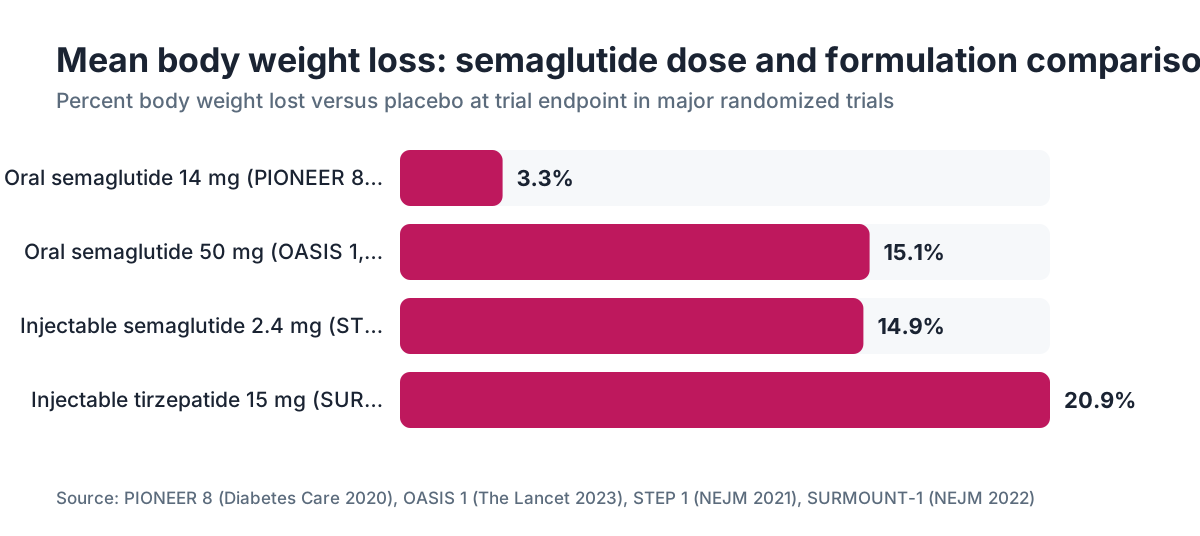
Start with the honest number. Rybelsus at 14 mg is a modest weight-loss drug. The PIONEER 8 trial (Diabetes Care, 2020) tested 14 mg oral semaglutide against placebo in 731 adults with type 2 diabetes already on insulin. At 52 weeks, the 14 mg group lost a mean of 3.3 kg (7.3 lbs) more than placebo. [7] Meaningful for a diabetes drug. Small next to a dedicated weight-loss trial.
Then came the high dose. Novo Nordisk ran OASIS 1 for obesity using 50 mg oral semaglutide, a dose that isn't on the market. In OASIS 1 (The Lancet, 2023), participants without diabetes lost a mean of 15.1% of body weight at 68 weeks versus 2.4% for placebo. [8] That 15% is near injectable territory and it turned heads. A future obesity-approved oral semaglutide would likely use 50 mg, not the current 14 mg Rybelsus.
For comparison, the STEP 1 trial of injectable Wegovy produced 14.9% mean body weight loss at 68 weeks in adults without diabetes. [9] So the high-dose pill reaches similar ground. PIONEER PLUS extended the picture to people with obesity and type 2 diabetes and found comparable results at 50 mg. None of this makes Rybelsus at 14 mg equivalent to Wegovy for weight loss. It isn't. The dose gap is real and it's the whole story.
Women in perimenopause or menopause weighing GLP-1 therapy for weight should read both the semaglutide for weight loss and semaglutide vs tirzepatide articles before picking a path.
How do you take oral semaglutide correctly? The absorption rules matter more than most people realize
Take Rybelsus first thing in the morning, on an empty stomach, with no more than 4 ounces (120 mL) of plain water. [2] Then wait at least 30 minutes before eating, drinking anything but water, or taking any other oral medication. That window is the drug. Skip it and you've swallowed an expensive placebo.
Even a cup of coffee or a few bites of food inside those 30 minutes can drop absorption by more than half.
Swallow the tablet whole. Don't crush it, split it, or chew it. The SNAC mechanism depends on the tablet dissolving at a set rate in the stomach.
Dosing starts at 3 mg once daily for the first 30 days. That starter dose is for gut tolerance, not effect. On day 31 you move to 7 mg, and after another 30 days you can go to 14 mg if you need more glucose lowering. Most people need 7 or 14 mg for anything meaningful.
Missed a dose? Skip it and take the next one the following morning. Never double up. Vomited soon after taking it? Don't retake it that day.
If you travel a lot, work night shifts, or have chaotic mornings, the fasting-and-timing routine is a real quality-of-life question. The weekly injection sidesteps all of it. Sounds minor. Over months, it's the thing that decides whether you stay on the drug.
What are the side effects of semaglutide tablets?
The side effects of oral semaglutide track the injectable forms closely, because the mechanism is identical: GLP-1 receptor activation slows gastric emptying and quiets appetite through the brain. The common ones are nausea, diarrhea, vomiting, abdominal pain, and constipation. [2]
In the PIONEER trials, nausea hit roughly 20% of patients on 14 mg, most of it mild to moderate. [7] Nausea peaks in the first weeks after each dose bump and usually settles within a month. Smaller, lower-fat meals help. Staying upright after eating helps more than people expect.
Rarer but serious risks:
- Pancreatitis: stop the drug immediately if severe, persistent abdominal pain shows up. [2]
- Diabetic retinopathy complications: seen in patients with existing retinopathy who had fast glucose improvement. [2]
- Thyroid C-cell tumors: a class warning based on rodent data. Rybelsus is contraindicated in anyone with a personal or family history of medullary thyroid carcinoma or multiple endocrine neoplasia syndrome type 2. [2] No human causal link is established, but the warning stands.
- Hypoglycemia: low on its own, real when combined with insulin or sulfonylureas.
- Heart rate increase: small mean rises of 1 to 4 beats per minute across GLP-1 drugs.
For women specifically, there's no head-to-head data on how the hormonal swings of perimenopause or menopause change oral semaglutide absorption. Some practitioners note anecdotally that GI symptoms feel harder to manage in the luteal phase, when progesterone naturally slows gut motility. The evidence for that is thin. If you're also on hormone replacement therapy, tell your prescriber. Estrogen has modest effects on GLP-1 signaling in some animal models, though what that means in humans is unclear.
Who is a good candidate for the pill versus the injection?
The pill fits if a genuine needle phobia is what's stopping you from starting any GLP-1 therapy at all. It also fits someone who can reliably run the morning fasting routine and whose main goal is blood sugar control in type 2 diabetes rather than large weight loss.
The injection is generally the better tool for women whose primary goal is significant weight reduction. Wegovy's 2.4 mg dose delivers steadier drug exposure and carries the FDA obesity indication, which matters for insurance. If you can tolerate a weekly shot, the pharmacokinetics favor it for weight-loss outcomes on current data.
Neither form fits if you have active pancreatitis, inflammatory bowel disease with unpredictable absorption, a history of medullary thyroid carcinoma, or you're trying to conceive.
For women in their 40s and 50s juggling metabolic health and the hormonal shifts of perimenopause, the wider picture matters. Perimenopausal weight gain usually mixes declining estrogen, rising insulin resistance, and fat moving toward the abdomen. A GLP-1 drug hits the insulin resistance and appetite piece. It does not replace what estrogen or progesterone do for body composition. The best outcomes tend to show up when hormonal and metabolic treatments are paired on purpose. Menopause care and GLP-1 therapy are not an either-or choice.
Can you get oral semaglutide through a telehealth provider?
Yes. Rybelsus can be prescribed by telehealth in most U.S. states, because it's an FDA-approved medication, not a controlled substance. The prescribing clinician still has to take a real history, check contraindications, and establish a diagnosis (type 2 diabetes, or a documented off-label rationale). No telehealth prescriber can skip the clinical assessment.
Most telehealth platforms built around metabolic health and women's hormones offer semaglutide evaluation inside their GLP-1 programs. WomenRx, for one, provides GLP-1 consultations for women alongside a hormonal workup, which matters when you're trying to sort out whether your weight struggle is mostly metabolic, mostly hormonal, or both. That context, gathered before you start any GLP-1 drug, makes the plan hold together.
When you vet a telehealth provider for this drug, confirm four things: the prescriber is a licensed MD, DO, NP, or PA in your state; you get a real clinical consultation, not a questionnaire rubber-stamp; follow-up monitoring for thyroid, pancreatic symptoms, and glucose is built in; and the dispensing pharmacy is accredited. The FDA has warned about telehealth operations dispensing compounded semaglutide of unverified quality. [6]
How does oral semaglutide compare to tirzepatide pills?
As of mid-2025, there's no tirzepatide pill. Tirzepatide (the active ingredient in Mounjaro and Zepbound) exists only as a once-weekly injection. Novo Nordisk has an oral GLP-1 drug; Eli Lilly has no oral GLP-1/GIP dual agonist on the U.S. market yet, though it's in development.
So the comparison people most want, oral semaglutide against injectable tirzepatide, isn't a fair fight by formulation. Injectable tirzepatide (Zepbound) at 15 mg produced 20.9% mean body weight loss at 72 weeks in SURMOUNT-1. [10] Oral semaglutide at 14 mg produces roughly 3 to 5% weight loss in people with diabetes. The 50 mg experimental oral semaglutide reaches around 15% in obesity trials but you can't buy it.
If the goal is maximum weight loss with a product that actually exists, the injectable route, semaglutide or tirzepatide, wins on current evidence. The pill's edge is convenience for people who want to avoid needles, and its blood-sugar control at 7 to 14 mg is genuinely good. See the semaglutide vs tirzepatide comparison for the injectable head-to-head.
What happens if you stop taking semaglutide tablets?
The weight comes back. Weight regain after stopping any semaglutide product is well documented. The STEP 4 trial (JAMA, 2021) found that participants who stopped injectable semaglutide regained about two-thirds of their lost weight within one year. [11] No long-duration withdrawal trial exists for oral semaglutide at 14 mg specifically, but it's the same molecule and there's no reason to expect a different result.
Blood sugar behaves the same way. Stopping Rybelsus in someone managing type 2 diabetes on no other medication lets HbA1c drift back toward baseline. The drug manages diabetes; it doesn't cure it. Stopping is a medical decision that needs a transition plan.
Tapering the dose before stopping may soften rebound nausea or GI discomfort in some people, though the evidence for a formal taper is weak. Most prescribers just stop, since the oral form has a reasonably short effective half-life (roughly a week, driven by absorption characteristics, versus the longer half-life of the injectable).
This stop-and-regain pattern is why many clinicians and patients treat GLP-1 therapy as a long-term commitment, closer to managing hypertension or hypothyroidism than a short course. Knowing that going in sets honest expectations.
Are semaglutide tablets safe for women in perimenopause or menopause?
Honestly, nobody has studied this group directly. No large trial has enrolled an exclusively perimenopausal or postmenopausal population to test oral semaglutide. The PIONEER trials included adults with type 2 diabetes across a wide age span; the OASIS obesity trial didn't stratify by menopausal status in the primary analysis. That's a real gap.
What the broader GLP-1 literature shows: postmenopausal women with obesity responded to injectable semaglutide in the STEP trials, and subgroup analyses didn't show meaningfully worse outcomes by menopausal status than for premenopausal women. Weight loss percentages ran similar. GI side effects ran similar. [9]
The bone question deserves its own line. Rapid weight loss from any cause, GLP-1 drugs included, can speed bone density loss, especially in postmenopausal women already losing bone as estrogen drops. A 2023 analysis in the Journal of Clinical Endocrinology and Metabolism flagged this concern for GLP-1 receptor agonists broadly. [12] If you're postmenopausal and starting semaglutide tablets or injections, get a bone density test at baseline and talk through calcium, vitamin D, and weight-bearing exercise with your clinician. Hormone therapy's bone-protective effect may partly offset GLP-1-associated bone risk, one more reason the hormonal and metabolic conversations belong in the same appointment.
Women wondering about perimenopause age and when menopause starts may want to assess their hormonal status before choosing a GLP-1 strategy, since estrogen decline can drive a real share of insulin resistance and weight gain, and that share is addressable by separate means.
Where to get oral semaglutide and what to ask your prescriber
Rybelsus is dispensed through standard retail and mail-order pharmacies with a prescription. No specialty pharmacy needed. GoodRx and similar discount programs can trim the cash price by 10 to 20% at some pharmacies, but check current pricing because these deals move around.
Before your appointment, gather: a recent HbA1c or fasting glucose if you have one, a full medication list (several interactions matter, including thyroid hormone taken in the morning and certain antibiotics), any history of pancreatitis, any thyroid cancer in you or a first-degree relative, and a plain account of your weight history and past attempts.
Ask your prescriber these questions directly. Is 14 mg Rybelsus the right tool for my goal, or would an injectable work better? Will my insurance cover this, and who files the prior authorization? What's the monitoring plan for the first three months? How does this interact with any hormonal therapy I'm on or considering? What are the signs of pancreatitis I should watch for?
WomenRx offers GLP-1 consultations for women that fold in hormonal context, which helps you see whether estrogen, insulin, or appetite signaling is the main driver in your case. That distinction shapes which treatments, alone or combined, make sense.
If cost is the wall, ask specifically about the NovoCare patient assistance program, the commercial savings card (for insured patients), and whether your state Medicaid plan covers Rybelsus for diabetes, because coverage varies a lot by state. [5]
Frequently asked questions
Is there a generic version of oral semaglutide available?
No. Rybelsus has no FDA-approved generic as of mid-2025. Novo Nordisk holds patents on both the semaglutide molecule and the SNAC absorption technology. Generic competition isn't expected before the early 2030s at the earliest. Compounded versions using raw semaglutide API exist but are not generics and operate under different regulatory rules, with the FDA issuing warnings about quality and safety.
Can I take semaglutide tablets with my thyroid medication?
This is a real timing conflict. Levothyroxine (Synthroid, Tirosint) is also taken first thing in the morning on an empty stomach. You can't take both with the same glass of water. Most clinicians advise spacing them: take levothyroxine first, wait 30 to 60 minutes, then take Rybelsus and wait its own 30-minute window before eating. Work out the exact schedule with your prescriber and pharmacist, since thyroid absorption is timing-sensitive too.
Does oral semaglutide cause hair loss?
Hair loss has been reported with injectable semaglutide in post-marketing surveillance and appears in FDA adverse event databases. The likely mechanism is telogen effluvium from rapid caloric restriction rather than a direct drug effect. The same risk exists with the pill if weight loss is fast and large. Adequate protein (at least 1.2 g per kg of body weight daily) and slower dose escalation appear to reduce but not eliminate it.
How long does it take for semaglutide tablets to work?
Blood sugar usually improves within 4 to 8 weeks at therapeutic doses (7 to 14 mg). Weight changes, when they happen, tend to show after 8 to 12 weeks. The titration schedule means you spend the first month at the 3 mg sub-therapeutic starter. Full effect at 14 mg takes several months to plateau. Patience through the ramp-up matters; quitting in week 2 or 3 because nothing's happening is common and avoidable.
What happens if I eat within 30 minutes of taking Rybelsus?
Absorption drops hard. A meal or a real drink before the 30-minute window closes can cut the drug reaching your bloodstream by more than half, based on Novo Nordisk's pharmacokinetic data. You've effectively taken a much lower dose that day. Repeated violations make the drug look like it isn't working when the real issue is absorption failure.
Can semaglutide tablets help with PCOS or insulin resistance without diabetes?
Some clinicians prescribe Rybelsus off-label for polycystic ovary syndrome (PCOS) or insulin resistance without diabetes. GLP-1 receptors sit in ovarian tissue, and GLP-1 agonists lower insulin, which is central to PCOS. Small trials and observational data show improvements in menstrual regularity and androgen levels. No large randomized trial has tested oral semaglutide for PCOS specifically, so this use is off-label.
Is semaglutide in pill form covered by Medicare?
Medicare Part D covers Rybelsus when prescribed for type 2 diabetes with a qualifying diagnosis code. Medicare does not cover any semaglutide product for weight loss (the TREAT and SAVE Act, which would change this, hasn't passed as of mid-2025). If you have Medicare plus a secondary insurer, coordinate benefits before filling. The Inflation Reduction Act's $35 insulin cap does not apply to semaglutide, so expect standard Part D cost-sharing.
Can you drink alcohol while taking semaglutide tablets?
Alcohol doesn't interact with semaglutide pharmacokinetically, but it complicates things. It can worsen nausea, a common early side effect. It also lowers blood sugar on its own, raising hypoglycemia risk in people on insulin or sulfonylureas. Some people report sharply reduced alcohol cravings on GLP-1 drugs, an effect being studied in addiction medicine. Occasional moderate use isn't contraindicated; heavy use is a bad idea on any medical therapy.
What is the difference between Rybelsus 7 mg and 14 mg?
The 7 mg dose is the first full therapeutic dose after the 3 mg starter month. For many people with type 2 diabetes, 7 mg produces adequate HbA1c reduction. The 14 mg dose adds more glucose lowering and slightly more weight-loss effect, with somewhat higher rates of GI side effects. The prescriber decides whether to escalate based on HbA1c response and tolerability after 4 weeks at 7 mg. Most obesity-focused protocols aim for 14 mg.
How does oral semaglutide affect appetite and food cravings?
GLP-1 receptors in the hypothalamus and brainstem regulate satiety. Semaglutide activates them, slowing gastric emptying (so smaller meals keep you full longer) and cutting hunger signals between meals. Many patients say cravings for highly processed, high-fat foods drop specifically. This isn't placebo; GLP-1 receptors in reward pathways appear to modulate dopamine signaling around food. The effect at 14 mg oral is real but generally milder than at higher injectable doses.
Are semaglutide tablets available outside the United States?
Yes. Rybelsus is approved and marketed in the European Union, Canada, Japan, Australia, and many other countries for type 2 diabetes. Regulatory status for weight loss varies by country. In the EU, the European Medicines Agency approved oral semaglutide 3 to 14 mg for diabetes. Pricing outside the U.S. is generally lower because of price controls, but the drug is the same molecule with the same safety profile.
Can I switch from injectable semaglutide to the pill?
Switching is possible but needs prescriber guidance on timing, since the two forms have different half-lives and dose equivalencies. A common approach is to stop the weekly injection and start the oral titration (at 3 mg) once the injection's usual dosing window passes. Expect a step-down in drug exposure during titration, which may briefly reduce the appetite suppression you felt on the shot. Switching just to avoid needles is a legitimate reason; go in knowing the oral absorption is less consistent.
Does oral semaglutide protect the heart the way injectable semaglutide does?
Injectable semaglutide showed a 26% reduction in major adverse cardiovascular events in SUSTAIN-6 and further cardiovascular benefit in the SELECT trial for Wegovy. For the oral form, PIONEER 6 in high-risk cardiovascular patients showed non-inferiority to placebo for MACE (no harm) but not the same magnitude of benefit seen with injectables. A larger cardiovascular outcomes trial for oral semaglutide is ongoing. The heart-protective data is currently stronger for the injectable forms.
Sources
- New England Journal of Medicine: oral semaglutide pharmacokinetics and SNAC mechanism (Buckley et al. 2018)
- FDA: Rybelsus (oral semaglutide) prescribing information label
- FDA: Drugs, approvals and databases (Rybelsus approval history)
- GoodRx Health: semaglutide drug prices across formulations
- CMS (Centers for Medicare and Medicaid Services): Medicare drug coverage
- FDA: drug safety communications on compounded semaglutide
- Diabetes Care: PIONEER 8 trial, oral semaglutide 14 mg vs placebo in T2D on insulin (2020)
- The Lancet: OASIS 1 trial, oral semaglutide 50 mg for obesity (2023)
- New England Journal of Medicine: STEP 1 trial, injectable semaglutide 2.4 mg for weight management (Wilding et al. 2021)
- New England Journal of Medicine: SURMOUNT-1 trial, tirzepatide 15 mg for obesity (Jastreboff et al. 2022)
- JAMA: STEP 4 trial, weight regain after stopping injectable semaglutide (Rubino et al. 2021)
- Journal of Clinical Endocrinology and Metabolism: GLP-1 receptor agonists and bone density (2023)
- New England Journal of Medicine: PIONEER 6 trial, cardiovascular outcomes with oral semaglutide (Husain et al. 2019)