Semaglutide starting dose: what to expect in week one and beyond
TL;DR: Semaglutide starts at 0.25 mg injected once weekly for four weeks. That dose does almost nothing for weight loss on its own; its only job is tolerability. The standard escalation tops out at 2.4 mg weekly (Wegovy) or 2.0 mg weekly (Ozempic for diabetes). Most people reach their effective dose between weeks 12 and 20, sometimes slower.
What is the starting dose of semaglutide?
The starting dose of semaglutide is 0.25 mg once weekly, injected subcutaneously, for the first four weeks. That number comes directly from the FDA-approved prescribing information for both Wegovy (semaglutide 2.4 mg for chronic weight management) and Ozempic (semaglutide for type 2 diabetes) [1][2].
Here is what most patients do not realize: 0.25 mg is not a therapeutic dose. It does not lower blood sugar meaningfully. It probably will not produce noticeable weight loss. The FDA label calls it a "dose initiation" step, not a maintenance step [1]. You spend an entire month teaching your gut to tolerate a GLP-1 receptor agonist before the dose does its real work.
GLP-1 receptor agonists slow gastric emptying and act on the brain's appetite centers. Both effects get stronger as the dose climbs, and both can produce nausea, vomiting, and constipation when introduced too quickly. The four-week low-dose ramp is about one thing: avoiding a miserable first month that sends people off the medication before they ever see results.
If you are using compounded semaglutide, the starting dose is still 0.25 mg by convention, matching the brand-name protocol, though compounded formulations are not FDA-approved and the prescriber has more discretion than with branded pens [3].
How does the semaglutide dose escalation schedule work?
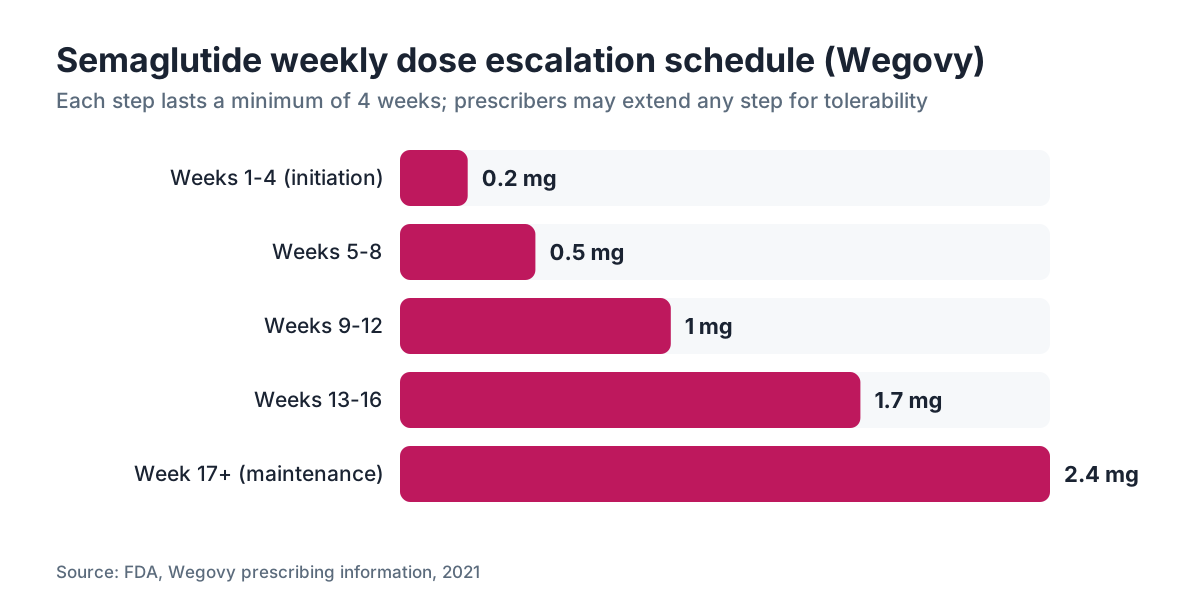
The full Wegovy escalation schedule runs 16 weeks to reach the 2.4 mg maintenance dose, with several stopping points where many people stay if they cannot tolerate going higher.
| Week | Dose | Notes | |------|------|-------| | 1-4 | 0.25 mg | Initiation only; not a therapeutic dose | | 5-8 | 0.5 mg | First therapeutic step | | 9-12 | 1.0 mg | Meaningful weight loss often begins here | | 13-16 | 1.7 mg | Bridging dose before max | | 17+ | 2.4 mg | FDA-approved maintenance for weight management |
Ozempic for type 2 diabetes follows a different, shorter ramp: 0.25 mg for 4 weeks, then 0.5 mg as the first maintenance dose, with an optional increase to 1 mg and a maximum of 2 mg approved for glycemic control [2]. The 2.4 mg dose is only approved under the Wegovy brand for weight management.
The schedule is a minimum pace, not a maximum. Plenty of people need more time at each step. The FDA label says that if a patient does not tolerate a dose escalation, the prescriber can delay the increase by four additional weeks [1]. In real clinical practice, some women stay at 1.0 mg for months because nausea is still bothersome at 1.7 mg. That is not failure. That is reasonable medicine.
If a dose escalation causes intolerable side effects, the standard move is to drop back one dose level for four weeks, then try again. Nobody should white-knuckle through daily vomiting just to reach 2.4 mg on schedule.
Why does the starting dose of semaglutide matter so much?
Starting too high is the most common reason people quit semaglutide in the first month.
The STEP 1 trial, published in the New England Journal of Medicine in 2021, enrolled 1,961 adults and followed the standard escalation protocol. The trial reported nausea in about 44% of participants in the semaglutide group versus 16% in placebo, and vomiting in about 24% versus 6% [4]. Those numbers sound alarming, but they cover the full trial period. The worst GI symptoms cluster in the escalation phase and generally settle once the dose stabilizes.
When prescribers skip the 0.25 mg initiation and start patients at 0.5 mg or above, nausea and dropout rates climb sharply. There is no good randomized trial isolating exactly how much worse, but the pharmacokinetic rationale is sound: semaglutide's half-life is roughly one week, so it takes about five weeks to reach steady state at any given dose [1]. The slow ramp keeps peak concentrations from spiking too fast.
For women specifically, there are a few extra reasons to take the starting dose seriously. Estrogen levels affect gastric motility. During perimenopause and menopause, erratic estrogen can already cause GI symptoms on its own. Adding a GLP-1 agonist on top of that without a careful ramp is a recipe for an awful first month. If you are also managing menopause symptoms or just beginning hormone replacement therapy, tell your prescriber both things so they can sequence them thoughtfully.
What side effects are worst at the starting dose and how do you manage them?
Nausea is the headline, but the full picture is more varied.
At 0.25 mg, most people feel little to nothing. Some feel mild nausea in the 24 to 48 hours after the injection. A small number feel fatigued. Very few vomit at the starting dose if it is genuinely 0.25 mg.
The side effect burden climbs at each escalation step, particularly at the jumps from 0.5 to 1.0 mg and from 1.0 to 1.7 mg. These are the steps where women most often call their prescriber or think about stopping. Management strategies with reasonable evidence behind them:
Take the injection on a day when you can rest the following day if needed. Many patients do Sunday evening injections so Monday is available for a slow start. Eat small, low-fat meals. Semaglutide slows gastric emptying, and a heavy fatty meal on top of that is what causes the worst nausea. Stay upright for at least two hours after eating. Ginger (tea, capsules, chews) has modest evidence for general nausea and is low-risk. Over-the-counter antinauseants like dimenhydrinate or ondansetron prescribed off-label by your doctor can help bridge difficult escalation weeks.
Constipation deserves more attention than it usually gets. The STEP trials reported constipation in roughly 24% of participants on semaglutide [4]. Good hydration, a fiber-rich diet, and sometimes a gentle osmotic laxative (polyethylene glycol) make a real difference. Waiting for it to become a serious problem before acting is a mistake.
One underappreciated concern: semaglutide sharply reduces appetite and food intake, and if a woman is already restricting calories, she may not be getting enough protein or micronutrients. The Endocrine Society's 2023 clinical practice guideline on obesity pharmacotherapy recommends that all patients on GLP-1 receptor agonists receive dietary counseling focused on protein adequacy [5].
Does body weight or BMI change the starting dose?
No. The starting dose is 0.25 mg regardless of starting weight.
The FDA label does not specify different starting doses based on BMI, and no published trial has tested weight-stratified initiation protocols for semaglutide [1][2]. The escalation schedule is standardized because the tolerability issue is not about how much drug you need relative to body size. It is about receptor sensitization in the gut and brain.
That said, heavier patients may notice weight loss stalls at lower doses while lighter patients see results sooner, simply because the absolute drug concentration per kilogram of body weight differs. This is one practical reason the 2.4 mg dose (rather than stopping at 1 mg) was specifically studied in the STEP trials: higher absolute doses were needed to produce clinically meaningful weight loss across a range of starting weights [4].
For women in perimenopause or postmenopause, fat distribution shifts toward visceral (abdominal) fat even without big BMI changes, because of falling estrogen. Semaglutide appears to reduce visceral fat preferentially in women, based on body composition data from the STEP 1 and STEP 5 trials, though the mechanism is not fully established [4][6]. The starting dose and escalation schedule stay the same regardless of menopausal status.
What if you miss a dose during the escalation phase?
The FDA label for Wegovy states that if a dose is missed and the next scheduled dose is more than 48 hours away, take the missed dose as soon as possible. If the next scheduled day is 48 hours away or less, skip the missed dose and resume on the regular schedule [1].
Do not double up. Ever. A double dose sharply increases GI side effect risk and does not produce twice the efficacy.
If you miss two or more consecutive weeks during the escalation phase, your prescriber may recommend stepping back one dose level before re-escalating, because your GI tolerance effectively resets during a significant gap. The same logic applies if you have a major illness, surgery, or procedure that requires a pause. Step back down, re-ramp, then move forward again. It feels slower, but it works better than forcing through at a dose your gut no longer tolerates.
How does the starting dose differ between Wegovy, Ozempic, and Rybelsus?
All three are semaglutide, but the approved doses, routes, and indications differ a lot.
| Product | Route | Starting dose | Max approved dose | Approved indication | |---------|-------|--------------|-------------------|---------------------| | Wegovy | Subcutaneous injection | 0.25 mg weekly | 2.4 mg weekly | Chronic weight management (BMI ≥30, or ≥27 with comorbidity) | | Ozempic | Subcutaneous injection | 0.25 mg weekly | 2.0 mg weekly | Type 2 diabetes | | Rybelsus | Oral tablet | 3 mg daily | 14 mg daily | Type 2 diabetes |
Rybelsus has a completely different starting protocol because oral semaglutide has poor bioavailability (roughly 1% compared to subcutaneous) and must be taken on an empty stomach with no more than 4 oz of plain water, waiting 30 minutes before eating or drinking anything else [7]. The 3 mg daily oral dose is for initiation only; the first glycemic-effective dose is 7 mg daily.
If you are comparing semaglutide to tirzepatide, the dosing logic is similar (start low, ramp slowly) but the escalation schedule and top doses differ. See semaglutide vs tirzepatide for a full comparison. Tirzepatide (Zepbound/Mounjaro) starts at 2.5 mg weekly and reaches a maximum of 15 mg weekly, with trial data showing somewhat greater average weight loss at maximum doses [8].
For women researching semaglutide for weight loss specifically, Wegovy's 2.4 mg is the dose with the strongest weight-loss trial data.
Can you slow down the escalation schedule, and should you?
Yes, and often you should.
The published schedule is a minimum escalation pace. Slowing down is explicitly supported by the FDA label and by the Endocrine Society guideline [1][5]. The goal is to reach the dose that produces meaningful benefit with tolerable side effects, not to hit 2.4 mg by a specific calendar date.
In practice, many women do well staying at 1.0 mg or 1.7 mg long-term rather than pushing to 2.4 mg. The STEP 5 trial, which followed patients for two years, found that sustained weight loss was achievable at the 2.4 mg dose, but the trial did not test whether lower maintenance doses would produce comparable results in patients who tolerated them well [6]. That is a gap in the literature.
WomenRx clinicians, like most telehealth GLP-1 prescribers working with women specifically, typically build a slower-than-standard escalation into the initial plan for women who are perimenopausal or postmenopausal, since baseline GI symptoms from hormonal flux can make it genuinely hard to tell whether nausea is semaglutide-driven or estrogen-driven. Worth knowing if you are comparing telehealth programs.
One honest note: some prescribers and online programs rush escalations to produce faster results and better short-term retention. That is not in your interest. If your prescriber is pushing you to escalate faster than you feel ready, you are entitled to say no.
What happens to your dose if you reach a plateau in weight loss?
A weight loss plateau on semaglutide usually means one of three things: you have reached your individual biological ceiling at that dose, your caloric intake has crept back up, or you need to move to the next dose level.
The FDA label does not define a specific plateau duration that triggers dose escalation; that is a clinical judgment call. Most prescribers use 8 to 12 weeks of stalled weight loss as a threshold before considering an increase, provided the current dose is being tolerated [5].
If you are already at 2.4 mg (the maximum Wegovy dose) and have plateaued, the evidence does not support going higher. Practical options include reassessing diet composition, adding resistance training to preserve muscle mass (which matters enormously for long-term weight maintenance and bone health, especially post-menopause), or discussing with your prescriber whether switching to tirzepatide makes sense given your profile.
Bone density is a real concern for women on significant caloric restriction alongside GLP-1 therapy. Rapid weight loss is associated with bone loss, and postmenopausal women are already at elevated risk. If you are losing weight quickly on semaglutide, a bone density test is worth discussing with your doctor, particularly if you are not on hormone therapy.
Is the starting dose different if you have already used semaglutide before?
If you stopped semaglutide and are restarting, the approach depends on how long the gap was.
A gap of less than two weeks: most prescribers continue at the dose you left off, since steady-state concentration has not fully cleared.
A gap of two to four weeks: clinical judgment varies, but many prescribers step down one dose level and re-escalate over four weeks before returning to the previous dose.
A gap of more than four weeks: the FDA label for Wegovy recommends restarting at 0.25 mg and re-escalating from the beginning [1]. Your GI tolerance effectively resets.
The reason for the reset is pharmacological. Semaglutide's half-life is about one week, so after four to five half-lives (four to five weeks), the drug is effectively cleared. Your gut receptors are no longer adapted, and hitting them again with a high dose produces the same tolerability issues as a first exposure.
This matters most for women who pause semaglutide during a planned pregnancy, illness, or surgery. Coming back at a high dose is a mistake. Come back slow.
How does semaglutide dosing interact with menopause and hormonal changes?
This is where the evidence is thin but the clinical questions are real.
No large randomized trial has specifically studied how menopausal status changes semaglutide dose-response or tolerability. The STEP trials enrolled a broad adult population; the published subgroup analyses do not break out results by menopausal status in a clinically actionable way [4][6].
What we do know: estrogen affects gastric motility, appetite signaling, and fat distribution. Postmenopausal women tend to have slower baseline gastric emptying than premenopausal women of the same age, which may compound semaglutide's gastric slowing and increase constipation risk. Dropping estrogen levels are also linked to increased appetite and preferential fat gain in visceral depots, which is exactly the pattern GLP-1 agonists seem to address.
Whether being on hormone replacement therapy changes semaglutide's efficacy is genuinely unknown. There are biological reasons to think estrogen and GLP-1 agonists might complement each other (both affect appetite and fat distribution), but there is no controlled trial data. The Endocrine Society's obesity pharmacotherapy guideline makes no specific recommendation about combining HRT with GLP-1 therapy [5].
If you are in perimenopause and starting semaglutide, be honest with your prescriber about your current symptom burden so the escalation schedule can be built around your actual situation, not a generic protocol designed for a 45-year-old man in a phase 3 trial.
What should you tell your prescriber before starting semaglutide?
A few things genuinely change how semaglutide is dosed or monitored.
Personal or family history of medullary thyroid carcinoma (MTC) or Multiple Endocrine Neoplasia syndrome type 2 (MEN 2): semaglutide carries a boxed warning for these conditions, and it is contraindicated if you have either [1]. This is not theoretical risk management. It is a hard stop.
History of pancreatitis: the FDA label lists a history of pancreatitis as a reason for caution, though not an absolute contraindication [1]. Your prescriber needs to know.
Gastroparesis: semaglutide sharply slows gastric emptying. In a woman who already has gastroparesis, this can be dangerous. The label directs caution in patients with severe gastrointestinal disease [1].
Current medications: semaglutide slows gastric absorption and can alter the timing of oral medications, including oral contraceptives, thyroid hormone, and some diabetes medications. If you take levothyroxine, your thyroid levels are worth monitoring more often in the first six months on semaglutide.
Menopausal status and current hormone therapy: as covered above, this helps the prescriber design a sensible escalation plan.
Kidney function: semaglutide does not require dose adjustment for renal impairment per the current labeling, but dehydration from nausea or vomiting can stress kidneys already operating below full capacity. If you have CKD, your prescriber should know.
You can also ask about semaglutide basics in your intake so you and your prescriber are using the same vocabulary.
Frequently asked questions
Is 0.25 mg of semaglutide enough to lose weight?
Probably not on its own. The 0.25 mg starting dose is an initiation dose, not a therapeutic one. The FDA label calls it out specifically for tolerability, not efficacy [1]. Most people begin losing meaningful weight at 0.5 to 1.0 mg and above. If you are four weeks in at 0.25 mg and have lost nothing, that is expected. Stay the course and escalate as directed.
Can I start semaglutide at a higher dose to lose weight faster?
Starting above 0.25 mg sharply increases the risk of nausea and vomiting severe enough to make you quit the medication entirely. The FDA-approved escalation schedule exists because the trial data showed worse tolerability with faster ramps. Going faster is not worth the tradeoff for most people. The STEP 1 trial's results were achieved with the standard four-step schedule [4].
How long does it take to reach the full semaglutide dose of 2.4 mg?
At the standard Wegovy schedule, you reach 2.4 mg at week 17 at the earliest: four weeks at each of the four preceding dose levels (0.25, 0.5, 1.0, and 1.7 mg). Many people take longer because they stay at one level for extra weeks to manage side effects. Reaching the target dose in 20 to 24 weeks is completely normal and clinically appropriate.
What is the starting dose of semaglutide for type 2 diabetes versus weight loss?
The starting dose is the same: 0.25 mg weekly for four weeks. The difference is in the maintenance target. For type 2 diabetes (Ozempic), the effective glycemic dose is typically 0.5 to 1.0 mg, with a maximum of 2.0 mg. For weight management (Wegovy), the target is 2.4 mg. The escalation steps and timing are similar but the endpoint differs [1][2].
Does semaglutide work differently in women than in men?
The STEP trials included both sexes, and overall efficacy was similar, but the weight loss response showed some sex-based variation in subgroup analyses. Women in the STEP 1 trial lost slightly less weight on average than men at 2.4 mg, though both groups showed statistically and clinically significant losses [4]. GI side effect rates were broadly similar. Menopausal status specifically has not been analyzed as a separate subgroup in published data.
What is the maximum dose of semaglutide approved for weight loss?
The FDA-approved maximum dose of semaglutide for chronic weight management is 2.4 mg once weekly, under the brand name Wegovy. This was established through the STEP clinical trial program and approved by the FDA in June 2021 [1][9]. Going above 2.4 mg is not supported by approved labeling, and no published trial has established safety or efficacy above that threshold.
Can I take semaglutide if I am on hormone therapy for menopause?
There is no contraindication in the FDA label, and many women use both. The honest answer is that no controlled trial has studied the combination, so exact interaction data are unavailable [1][5]. Tell your prescriber about your HRT regimen. Oral HRT (versus patch or gel) may have its absorption timing affected by semaglutide's gastric slowing, so transdermal estrogen via a patch may be more reliable.
How is the oral semaglutide starting dose different from the injection?
Oral semaglutide (Rybelsus) starts at 3 mg daily for 30 days, taken on an empty stomach with no more than 4 oz of water, waiting 30 minutes before food or other medications. This 3 mg phase is for tolerability only; the first effective glycemic dose is 7 mg daily. The maximum approved oral dose is 14 mg daily. Oral bioavailability is roughly 1%, far lower than the injection [7].
Why do I feel nausea at the starting dose if it is so low?
Some people are more sensitive to even very low GLP-1 receptor activation. Nausea at 0.25 mg is uncommon but real. If it is severe, contact your prescriber rather than pushing through. Mild nausea at the starting dose often resolves within the first week as your gut adapts. It does not necessarily predict severe side effects at higher doses, though it is a useful data point for your prescriber to have.
What happens if semaglutide is not working at the highest dose?
If you have been at 2.4 mg for at least 16 weeks and lost less than 5% of body weight, the FDA label and clinical guidelines suggest reconsidering semaglutide as a treatment option [1][5]. Some prescribers discuss switching to tirzepatide, which acts on both GLP-1 and GIP receptors and showed greater average weight loss in the SURMOUNT-1 trial at maximum doses [8]. Non-response does happen and is not a personal failure.
Do I need to adjust semaglutide dose if I have kidney disease?
The FDA label for Wegovy does not require dose adjustment for renal impairment, including in patients with severe CKD [1]. But dehydration from GI side effects (nausea, vomiting, diarrhea) can cause acute kidney injury in anyone with compromised renal function. Close monitoring of hydration and kidney function matters more in this group than dose modification, but your nephrologist and prescriber should communicate.
Is compounded semaglutide dosed the same as brand-name Wegovy?
By convention, compounded semaglutide prescribers typically follow the same 0.25 mg initiation schedule, but compounded products are not FDA-approved and there is no regulatory requirement that they match the brand-name protocol [3]. The concentration and formulation of compounded semaglutide vials can vary by pharmacy. Confirm the exact starting dose and escalation plan in writing with your prescriber before injecting anything.
Can you stop semaglutide abruptly or do you need to taper?
There is no pharmacological requirement to taper semaglutide. You can stop abruptly without withdrawal symptoms in the traditional sense. The practical consequence of stopping is that appetite returns, often strongly, within weeks, and weight regain typically follows. The STEP 1 extension trial found that participants who stopped semaglutide regained most of their lost weight within one year [4]. Stopping is a clinical decision, not a pharmacological emergency.
How do I know which semaglutide dose is right for long-term maintenance?
The right maintenance dose is the highest dose you tolerate that produces continued benefit, up to the approved maximum of 2.4 mg. If you are maintaining weight loss and tolerating 1.0 mg without GI issues, there is no absolute requirement to escalate further, though the 2.4 mg dose has the most trial evidence for sustained loss [6]. Have this conversation with your prescriber every three to four months, not once.
Sources
- FDA, Wegovy (semaglutide) prescribing information
- FDA, Ozempic (semaglutide) prescribing information (Drugs@FDA)
- FDA, Compounding and the FDA (drug compounding section)
- Wilding JPH et al., STEP 1 trial, New England Journal of Medicine, 2021
- Endocrine Society, Clinical Practice Guidelines
- Garvey WT et al., STEP 5 trial, Nature Medicine, 2022
- FDA, Rybelsus (oral semaglutide) prescribing information
- Jastreboff AM et al., SURMOUNT-1 trial, New England Journal of Medicine, 2022
- FDA, Drugs@FDA approvals database
- Davies M et al., SCALE Obesity and Prediabetes trial, NEJM, 2015