Semaglutide side effects and cancer: what the evidence actually shows
TL;DR: Semaglutide carries an FDA boxed warning for thyroid C-cell tumors based on rodent data, but no confirmed causal link to thyroid or pancreatic cancer in humans has been established. Observational studies show a possible reduced risk of several obesity-related cancers. The risk picture is genuinely uncertain in some areas, and anyone with a personal or family history of medullary thyroid carcinoma should not use semaglutide.
What does the FDA label actually say about semaglutide and cancer?
The FDA-approved label for Ozempic and Wegovy carries a boxed warning, the strongest warning type the agency issues, stating that semaglutide caused dose-dependent thyroid C-cell tumors in rodent studies [1]. The label language reads: "It is unknown whether Ozempic causes thyroid C-cell tumors, including medullary thyroid carcinoma (MTC), in humans, as the human relevance of semaglutide-induced rodent thyroid C-cell tumors has not been established" [1]. That distinction matters enormously. A boxed warning does not mean the drug causes cancer in humans. It means regulators saw a concerning signal in animal models and want prescribers and patients to know about it before deciding to use the drug.
Medullary thyroid carcinoma (MTC) is a rare cancer of the thyroid's parafollicular C-cells, which produce calcitonin. It accounts for roughly 4 percent of all thyroid cancers in the United States [2]. The rodent studies that triggered the warning showed C-cell hyperplasia and tumors at exposures relevant to therapeutic doses. The mechanism proposed for rodents (GLP-1 receptor activation on C-cells) may not apply the same way in humans, because human thyroid tissue has a much lower density of GLP-1 receptors than rodent thyroid tissue [3].
Semaglutide is contraindicated in people with a personal or family history of MTC or Multiple Endocrine Neoplasia syndrome type 2 (MEN 2), and prescribers are instructed to tell patients to report neck lumps, hoarseness, difficulty swallowing, or shortness of breath [1]. Outside of those contraindications, the FDA has not restricted use of semaglutide based on a cancer finding in humans.
Does semaglutide cause thyroid cancer in people?
Honest answer: we don't know with certainty, but the human evidence so far does not show a clear causal increase.
A large French pharmacovigilance study published in Nature Medicine in 2023, using data from over 1.6 million patients with type 2 diabetes, found that GLP-1 receptor agonists were associated with a 1.58-fold higher risk of thyroid cancer compared with other antidiabetics [4]. The absolute risk was still small, and the authors specifically noted they could not rule out detection bias, meaning people on GLP-1 drugs may simply be screened more often. Observational studies cannot establish causation.
The other side of the ledger looks reassuring. A 2023 analysis drawing on the SELECT cardiovascular outcomes trial (17,604 adults with overweight or obesity, no diabetes) found no significant difference in thyroid cancer events between the semaglutide group and the placebo group over a median follow-up of about 40 months [5]. SELECT, published in the New England Journal of Medicine, is the largest randomized controlled trial of semaglutide for cardiovascular outcomes and gives us the best controlled data available [5].
Calcitonin monitoring comes up as a way to catch early C-cell changes. The FDA label does not require routine calcitonin monitoring, though some endocrinologists recommend a baseline level in patients who will be on long-term therapy. An abnormally high calcitonin reading or a palpable thyroid nodule warrants evaluation before or during treatment.
For women already dealing with thyroid issues alongside menopause, this overlap deserves attention. Thyroid dysfunction is more common in perimenopausal women, and sorting out what's driving symptoms gets complicated fast. If you're weighing semaglutide alongside other hormonal changes, talk to an endocrinologist or a clinician experienced in semaglutide for weight loss and hormonal health.
What about semaglutide and pancreatic cancer?
Concerns about GLP-1 drugs and the pancreas have circulated since the drug class first appeared. Early case reports and a disputed 2013 analysis suggested a possible connection between GLP-1 receptor agonists and pancreatitis, which theoretically could precede pancreatic cancer [6]. Regulatory agencies in the US, Europe, and Canada reviewed those signals and did not find sufficient evidence to restrict use. The EMA and FDA joint review concluded that a causal link between GLP-1 receptor agonists and pancreatic cancer had not been established [6].
The LEADER trial (liraglutide, the predecessor drug in the same GLP-1 class) and the SUSTAIN trials for semaglutide did not show a statistically significant increase in pancreatic malignancy [7]. The STEP clinical trial program, which evaluated semaglutide 2.4 mg for weight management in over 4,500 participants, also did not identify a pancreatic cancer signal within its follow-up windows [8].
Pancreatic cancer is still rare in the general population (about 13 cases per 100,000 person-years in the US), which means any trial of a few years' duration with a few thousand participants will have very low statistical power to detect even a doubled relative risk [2]. Long-term post-market surveillance will matter more here than the initial trial data. The FDA and manufacturer Novo Nordisk are required to submit ongoing post-market safety reports, and the FDA's Sentinel System keeps monitoring for these signals in real-world data.
A history of chronic pancreatitis, pancreatic cancer, or unexplained sustained abdominal pain while on semaglutide warrants prompt evaluation and a conversation with your prescriber about whether to continue.
Could semaglutide actually reduce cancer risk?
Here the evidence gets more interesting, and arguably more reassuring for most women.
Obesity is a well-established risk factor for at least 13 types of cancer, including postmenopausal breast cancer, endometrial cancer, colorectal cancer, ovarian cancer, and kidney cancer [9]. The biological mechanisms involve chronic inflammation, elevated insulin and IGF-1 levels, higher circulating estrogen from adipose tissue, and altered adipokine signaling. If semaglutide produces meaningful, sustained weight loss (and in the STEP 1 trial, participants lost an average of 14.9 percent of body weight at 68 weeks [8]), then reducing excess adiposity could lower obesity-related cancer risk over the long run.
A notable 2024 retrospective study published in JAMA Network Open examined over 1.6 million adults with obesity or overweight treated with semaglutide, looked at cancer incidence across 13 obesity-associated cancers, and compared outcomes with those taking metformin or insulin [9]. Semaglutide use was associated with significantly lower rates of 10 of the 13 cancers studied, including gallbladder cancer, meningioma, and colorectal cancer. The researchers, based at Case Western Reserve University, could not rule out confounding, but the finding has drawn heavy research interest.
For women in perimenopause and menopause specifically, endometrial cancer risk is tied directly to estrogen excess, which runs higher in women with more visceral fat. Sustained weight reduction is one of the few modifiable factors that can meaningfully shift that risk profile. Still, no randomized trial has yet shown that semaglutide treatment reduces cancer incidence as a primary outcome. The JAMA Network Open data is hypothesis-generating, not conclusive [9].
Here's the nuanced reality: semaglutide carries one real mechanistic cancer concern in a specific contraindicated population (MTC/MEN2 history), a plausible but unconfirmed signal for thyroid cancer in the general population, no established pancreatic cancer link, and growing observational evidence of possibly reduced obesity-related cancer risk. That's a complicated picture, not a simple warning to be afraid or to dismiss concerns entirely.
How does compounded semaglutide change the cancer risk calculation?
Compounded semaglutide became widely available during the Ozempic and Wegovy shortage period, and many women accessed it through telehealth platforms at a much lower cost. From a cancer-risk standpoint, the core molecule (semaglutide peptide) is the same, so the theoretical thyroid C-cell concerns from GLP-1 receptor activation apply equally. There is no evidence that compounded versions carry a higher or lower cancer risk than the branded products.
The compounded semaglutide side effects concern that regulators have focused on is not cancer. The FDA's primary worry has been dosing accuracy, contamination, and the use of semaglutide salt forms (like semaglutide sodium or acetate) rather than the base form used in FDA-approved products [10]. These salt-form variations have unknown pharmacokinetics and could produce unexpected exposures, though no direct cancer link has been raised. The FDA issued guidance in 2024 stating that compounded semaglutide from 503A and 503B facilities cannot be marketed as bioequivalent to Ozempic or Wegovy [10].
If you've been using or considering compounded semaglutide, the cancer-specific considerations are essentially the same as for branded versions: avoid if you have MTC or MEN2 personal or family history, watch for symptoms of thyroid abnormality, and report unexplained abdominal pain. Quality sourcing from a licensed compounding pharmacy matters for overall safety, though it doesn't change the cancer risk profile.
WomenRx, for what it's worth, sources compounded semaglutide from licensed 503A pharmacies and requires a full medical intake before prescribing, which includes reviewing personal cancer history.
Who should not use semaglutide because of cancer risk?
This list is short but non-negotiable.
Semaglutide is contraindicated in anyone with a personal or family history of medullary thyroid carcinoma (MTC) [1]. MTC can be hereditary, often presenting as part of Multiple Endocrine Neoplasia type 2 (MEN 2), an inherited syndrome that also raises the risk of pheochromocytoma and parathyroid disease. If you or a first-degree relative has been diagnosed with MTC or MEN 2, semaglutide is not the right GLP-1 option for you, and you should ask your provider about alternatives.
Beyond MTC/MEN2, there is no current contraindication for a prior history of other cancers. Many oncologists now prescribe or approve GLP-1 drugs in cancer survivors with obesity, particularly where the obesity itself raises the risk of recurrence (endometrial cancer being the clearest example). The data in active cancer treatment contexts is limited, so coordinating with your oncologist before starting semaglutide is essential if you have any current or recent malignancy.
Women with a history of pancreatitis, including idiopathic pancreatitis, should use semaglutide cautiously and discuss the risk-benefit balance with their prescriber. The link between pancreatitis and eventual pancreatic cancer risk is real in that population, even if semaglutide itself hasn't been shown to increase it.
Pregnancy is another contraindication, and this matters for women in perimenopause who may not have confirmed they are fully postmenopausal. Semaglutide has shown fetal harm in animal studies and is not recommended during pregnancy. If you're in perimenopause, clarify your pregnancy status before starting.
What cancer-related symptoms should you watch for while on semaglutide?
The FDA label lists specific symptoms that warrant contacting a healthcare provider promptly [1]. For thyroid-related concerns, these include a lump or swelling in the neck, hoarseness, difficulty swallowing, or shortness of breath. These can indicate thyroid enlargement or, in rare cases, a thyroid tumor. None of these symptoms automatically mean you have cancer, but they shouldn't be watched and waited on without evaluation.
For pancreatic concerns, persistent severe abdominal pain that radiates to the back is the key symptom of acute pancreatitis. Pancreatitis is a recognized, though uncommon, adverse event with GLP-1 drugs, occurring in roughly 0.1 to 0.2 percent of patients in clinical trials [7]. Most cases are mild and resolve with stopping the drug. If you develop these symptoms, stop the drug and seek evaluation.
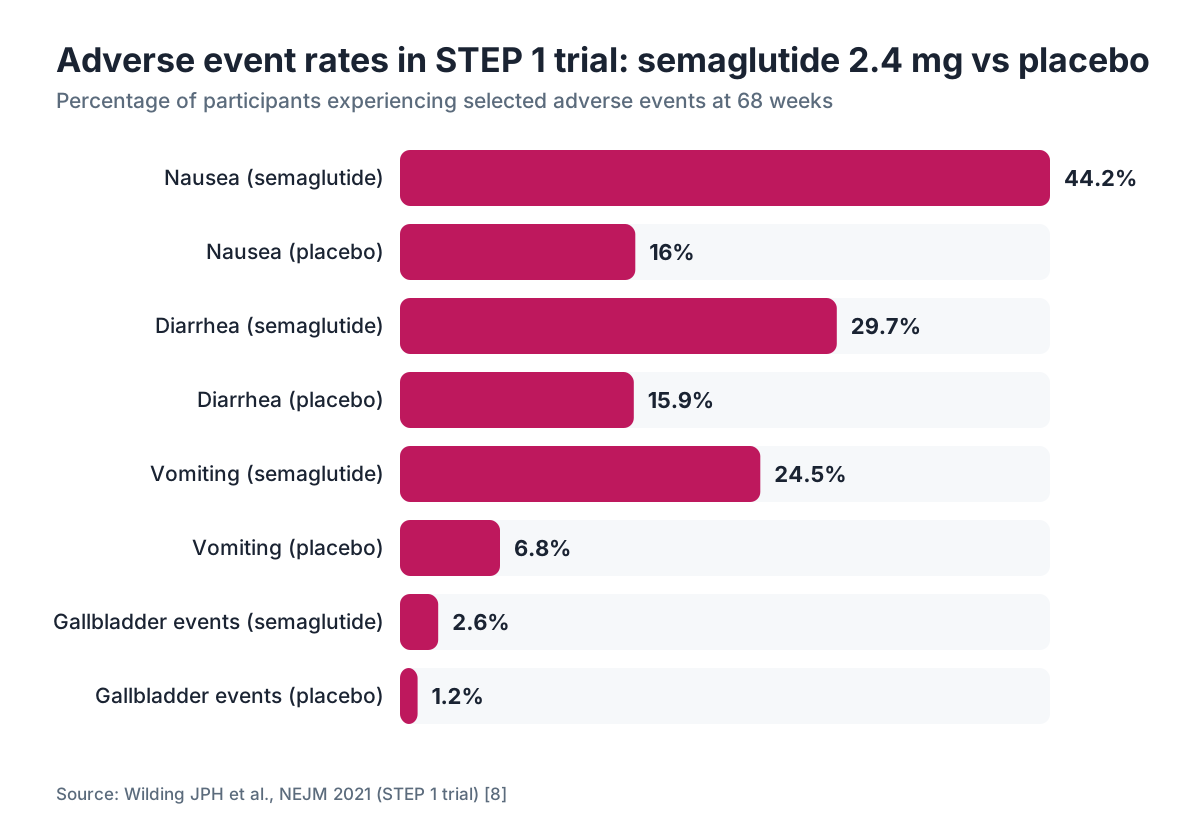
Gallbladder disease, including gallstones and cholecystitis, is more clearly linked to rapid weight loss on semaglutide. In the STEP trials, gallbladder-related adverse events occurred in about 2.6 percent of the semaglutide group versus 1.2 percent of placebo [8]. Gallbladder cancer is rare, but persistent right-upper-quadrant pain during treatment deserves an ultrasound, more than reassurance.
Routine screening stays the same. Getting on semaglutide does not replace your mammogram, Pap smear, colonoscopy, or other age-appropriate cancer screening. Women in their 40s, 50s, and 60s should continue whatever screening schedule their primary care provider recommends, independent of GLP-1 therapy.
How does semaglutide compare to tirzepatide on cancer risk?
Tirzepatide (Mounjaro, Zepbound) is a dual GIP/GLP-1 receptor agonist, meaning it activates both glucose-dependent insulinotropic peptide receptors and GLP-1 receptors, whereas semaglutide only activates GLP-1 receptors [11]. The boxed warning for tirzepatide is identical in structure to semaglutide's: rodent thyroid C-cell tumors, contraindicated in MTC/MEN2, human relevance unknown [11].
There is no head-to-head cancer safety comparison trial between the two drugs. Mechanistically, the GLP-1 component is what drives the theoretical thyroid C-cell concern, so tirzepatide carries the same plausible risk pathway. Whether the added GIP receptor activation adds any cancer risk or protection is genuinely unknown at this point.
In the SURMOUNT-1 trial for tirzepatide, the rate of serious adverse events including neoplasms was similar between treatment arms and placebo [11]. No new cancer signal emerged. If you're comparing these two options, cancer risk is not currently a differentiating factor. The choice comes down to efficacy, side effect tolerance, cost, and your specific clinical profile. Read the full comparison at semaglutide vs tirzepatide.
Both drugs carry the same MTC/MEN2 contraindication, and both require the same symptom vigilance.
What do long-term cardiovascular trial data tell us about cancer in semaglutide users?
SELECT is the most important data source here. It was a double-blind, randomized, placebo-controlled trial of semaglutide 2.4 mg weekly in 17,604 adults with pre-existing cardiovascular disease and overweight or obesity (but without diabetes), followed for up to about 5 years [5]. The primary outcome was cardiovascular events, but cancer was tracked as a secondary safety endpoint.
The New England Journal of Medicine SELECT publication reported that "the incidence of neoplasms was similar in the two groups" at the time of the primary analysis [5]. No specific cancer type reached statistical significance as elevated in the semaglutide group. The trial's median follow-up of roughly 40 months may still be too short to detect cancers with long latency periods, so these results don't completely close the book on long-term cancer risk. They are, however, the most rigorous randomized data we have for an adult population at real-world therapeutic doses.
For context: the SCALE trials for liraglutide (3 mg, the predecessor GLP-1 drug) and the LEADER cardiovascular trial also did not show a cancer incidence increase over 3 to 5 years of follow-up [7]. The GLP-1 class has now been studied in humans for over a decade in large trials. If there were a large absolute cancer risk increase, we would likely be seeing it by now in randomized data. A modest risk increase or a risk increase in specific cancer subtypes could still be missed in the current follow-up windows.
The honest summary: the randomized trial evidence is reassuring in the short-to-medium term, the observational data is mixed, and we genuinely need longer follow-up. That is not a reason to avoid semaglutide if you meet criteria, but it is a reason to stay engaged with your prescriber and continue recommended cancer screening.
How should women in perimenopause and menopause think about semaglutide and cancer risk?
This question sits at the crossroads of several real concerns women in their 40s and 50s are managing at once: rising obesity prevalence in the menopause transition, more intense cancer screening in this decade of life, hormonal changes that affect cancer risk (particularly breast and endometrial cancers), and now GLP-1 drugs as a weight-management tool.
The menopause transition typically causes a redistribution of fat toward visceral adiposity even without significant weight gain. This matters because visceral fat drives more of the inflammation and estrogen-excess pathways that link obesity to cancer than subcutaneous fat does. Women who gain significant weight in perimenopause are at higher risk for postmenopausal breast cancer and endometrial cancer specifically [2]. Semaglutide's ability to reduce visceral fat could work in their favor on those cancer risk factors, though this hasn't been confirmed in prospective cancer endpoint studies.
Hormone replacement therapy (HRT) is another layer. The Women's Health Initiative data from 2002 raised concerns about combined estrogen-progestogen HRT and breast cancer risk that have been substantially refined in the two decades since. For most women in early menopause, the risk-benefit calculation for HRT has shifted in a more favorable direction than early WHI reporting suggested. That's a separate question from semaglutide. The two interventions are not mutually exclusive, and there is no known interaction between semaglutide and HRT that changes cancer risk in either direction. You can explore the HRT context further through hormone replacement therapy.
WomenRx sees many women managing both weight and menopausal symptoms at once, and the clinical picture is never just about one intervention. If you're weighing semaglutide alongside menopause care, the cancer risk discussion is part of a broader, individualized conversation, not a generic warning that applies equally to everyone.
What questions should you ask your doctor before starting semaglutide?
A few specific questions will get you concrete answers rather than generic reassurance.
Ask whether you have any personal or family history that meets the MTC or MEN2 contraindication. This sometimes requires a family history review that patients haven't thought to do. Ask whether your thyroid has ever been abnormal on labs, and whether a baseline TSH and calcitonin level makes sense given your history.
Ask about your personal cancer history. If you've had any cancer in the past, your prescriber should know, and ideally your oncologist should weigh in on whether a GLP-1 drug is appropriate.
Ask specifically about pancreatic risk if you have any history of gallstones, alcohol use, or elevated triglycerides, since these are independent risk factors for pancreatitis.
Ask about your current cancer screening status. Are your mammograms, Pap smears, and colonoscopy up to date? Starting semaglutide is a good prompt to check.
Ask how long your prescriber plans to follow you on the drug and what the plan is if you develop any of the warning symptoms. A clear follow-up structure is more than bureaucratic box-checking. It's how any small signal gets caught early.
Frequently asked questions
Does semaglutide cause thyroid cancer in humans?
No causal link has been established in human clinical trials. A 2023 French observational study found a 1.58-fold higher relative risk of thyroid cancer in GLP-1 users, but the absolute risk remained small and detection bias could not be ruled out. The SELECT randomized trial (17,604 participants) found no significant difference in thyroid cancer incidence between semaglutide and placebo groups. The FDA boxed warning is based on rodent data.
Who should avoid semaglutide because of cancer concerns?
Anyone with a personal or family history of medullary thyroid carcinoma (MTC) or Multiple Endocrine Neoplasia type 2 (MEN 2) should not use semaglutide. This is an FDA contraindication. People with a history of pancreatitis should discuss risk carefully with their prescriber. There is no current contraindication for survivors of other cancer types, though oncologist input is wise if you have a recent cancer history.
Is there a pancreatic cancer risk with semaglutide?
No confirmed causal link exists. The STEP trials, SUSTAIN trials, and SELECT cardiovascular trial did not show a significant increase in pancreatic cancer. The FDA and EMA reviewed the GLP-1 class for a pancreatic cancer signal in 2013 and did not restrict use. Pancreatitis (a separate, less serious adverse event) occurs in roughly 0.1 to 0.2 percent of patients and warrants stopping the drug and seeking evaluation.
Could semaglutide actually lower cancer risk?
Possibly, for obesity-related cancers. A 2024 JAMA Network Open study of over 1.6 million adults found semaglutide users had significantly lower rates of 10 of 13 obesity-associated cancers compared to those on other antidiabetic drugs. The finding is observational and cannot confirm causation, but it fits the established biological link between obesity reduction and lower cancer risk for conditions like endometrial and colorectal cancer.
Does compounded semaglutide have a different cancer risk profile than branded Ozempic or Wegovy?
No cancer-specific difference has been identified. The core molecule is the same, so the theoretical thyroid C-cell concerns apply equally. The FDA's concerns about compounded semaglutide center on dosing accuracy and use of unapproved salt forms, not a cancer-specific risk. The same contraindications (MTC/MEN2 history) apply regardless of whether you use branded or compounded versions.
What does the FDA boxed warning on semaglutide actually mean?
A boxed warning is the FDA's strongest caution, required when animal data or post-market experience shows a serious risk that prescribers and patients must weigh. For semaglutide, it warns that rodent studies showed thyroid C-cell tumors at therapeutic exposures. The FDA explicitly states human relevance is unknown. The warning triggers the MTC/MEN2 contraindication and requires patients to be told about thyroid-related symptoms to watch for.
Does tirzepatide (Mounjaro/Zepbound) have the same cancer risks as semaglutide?
Structurally yes: tirzepatide carries an identical boxed warning for rodent thyroid C-cell tumors and the same MTC/MEN2 contraindication. No head-to-head cancer comparison trial exists. The SURMOUNT-1 trial did not show an elevated cancer rate versus placebo. Because tirzepatide also activates GLP-1 receptors, the same mechanistic concern about C-cell stimulation applies, making cancer risk a non-differentiating factor between the two drugs currently.
Should I monitor my calcitonin level while taking semaglutide?
The FDA label does not require routine calcitonin monitoring. Some endocrinologists recommend a baseline calcitonin level before starting long-term semaglutide therapy, particularly in patients with any thyroid history, to have a reference point. If calcitonin is abnormal or if you develop a neck lump, hoarseness, or difficulty swallowing, those findings warrant a full thyroid evaluation before continuing the drug.
How does semaglutide affect breast cancer risk?
There is no established causal link between semaglutide and breast cancer in either direction. Obesity is a known risk factor for postmenopausal breast cancer, largely through elevated estrogen production in adipose tissue. Weight loss from semaglutide could reduce this risk pathway, but no randomized trial has breast cancer incidence as a primary endpoint. Current clinical trial data do not show an elevated breast cancer rate in semaglutide users.
What symptoms during semaglutide use should prompt cancer evaluation?
Per the FDA label, report these to your provider promptly: a lump or swelling in the neck, hoarseness, trouble swallowing, or shortness of breath (possible thyroid C-cell tumor signs). Also report persistent severe abdominal pain radiating to the back (possible pancreatitis). Persistent right upper quadrant pain may indicate gallbladder disease. None of these are definitive cancer indicators, but each warrants evaluation rather than watchful waiting.
Does semaglutide interact with cancer treatments or chemotherapy?
No well-documented pharmacokinetic interactions between semaglutide and standard chemotherapy agents have been established. The practical concern is more about nausea and appetite suppression compounding chemo-related side effects, and about weight and nutritional status during treatment. If you are currently in active cancer treatment, your oncologist should be directly involved in any decision to use a GLP-1 drug.
Is gallbladder cancer a risk with semaglutide?
Gallbladder disease is a recognized adverse effect of rapid weight loss on semaglutide. In the STEP trials, gallbladder-related events occurred in about 2.6 percent of semaglutide users versus 1.2 percent of placebo. Gallbladder cancer itself is rare and has not been shown to be elevated in semaglutide trials. If you develop persistent right-upper-quadrant pain on semaglutide, an ultrasound is appropriate to rule out gallstones or cholecystitis.
How long do you need to take semaglutide before cancer risk can be assessed?
Most cancers have latency periods of a decade or more, so the 3 to 5 year follow-up in current trials cannot fully characterize long-term risk. The SELECT trial followed participants for a median of about 40 months and found no elevated cancer signal. Meaningful longer-term post-market surveillance data will accumulate over the next decade. This uncertainty is real and is one reason ongoing screening and prescriber follow-up matter throughout treatment.
Can women with a BRCA mutation use semaglutide?
There is no FDA contraindication for BRCA mutation carriers, and no data showing semaglutide increases breast or ovarian cancer risk in this population specifically. BRCA carriers are already in high-surveillance programs and should discuss any new medication with their oncology team. The weight-loss benefit could reduce some obesity-related cancer risks, but this has not been studied in BRCA populations specifically.
Sources
- National Cancer Institute, SEER Cancer Statistics
- Bjerre Knudsen L et al., Diabetes 2010; GLP-1 receptor expression in human versus rodent thyroid
- Bezin J et al., Nature Medicine 2023; GLP-1 receptor agonists and thyroid cancer risk
- Lincoff AM et al., New England Journal of Medicine 2023; SELECT trial (semaglutide 2.4 mg for cardiovascular outcomes)
- European Medicines Agency and FDA joint communication, 2013; GLP-1 class and pancreatic safety review
- Marso SP et al., New England Journal of Medicine 2016; LEADER trial (liraglutide cardiovascular outcomes)
- Wilding JPH et al., New England Journal of Medicine 2021; STEP 1 trial (semaglutide 2.4 mg for weight management)
- Wang L et al., JAMA Network Open 2024; semaglutide and obesity-associated cancer incidence
- FDA, Guidance on Compounded Semaglutide Products, 2024
- FDA, Zepbound (tirzepatide) Prescribing Information