Semaglutide shots: how they work, dosing, and what to expect
TL;DR: Semaglutide shots are weekly subcutaneous injections of a GLP-1 receptor agonist approved for type 2 diabetes (Ozempic) and chronic weight management (Wegovy). Clinical trials show average weight loss of 15% over 68 weeks. Doses start low and escalate over months to reduce nausea. Most women inject into the abdomen, thigh, or upper arm.
What is a semaglutide shot and how does it work?
Semaglutide is a synthetic version of a hormone your gut naturally makes after you eat, called glucagon-like peptide-1 (GLP-1). When you inject it once a week, it binds to GLP-1 receptors throughout your body and does several things at once: it slows how fast food leaves your stomach, tells your pancreas to release insulin only when blood sugar is actually rising, suppresses glucagon (the hormone that tells your liver to dump more glucose into your blood), and signals your brain's appetite centers to reduce hunger and cravings.[1]
The practical result? You feel full faster, stay full longer, and stop thinking about food as constantly. Many women describe it as the first time in their adult lives that food isn't occupying a large share of their mental bandwidth. That's not willpower. That's pharmacology.
Semaglutide is sold under three brand names in the United States. Ozempic is a 0.5 mg to 2 mg weekly injection approved by the FDA for type 2 diabetes. Wegovy is a higher-dose formulation (up to 2.4 mg weekly) approved specifically for chronic weight management in adults with a BMI of 30 or above, or 27 or above with at least one weight-related condition.[2] Rybelsus is an oral tablet version, but the shots are what most people mean when they say semaglutide.
For women navigating perimenopause or menopause, this matters extra. Estrogen decline shifts fat storage toward the abdomen, slows metabolism, and disrupts appetite-regulating hormones. A drug that directly addresses appetite signaling and insulin sensitivity hits a real gap. You can read more about what happens to your body during this shift in the menopause overview.
What are the FDA-approved doses and how does the shot schedule work?
The Wegovy dosing schedule was deliberately designed to start low and climb slowly, because the GI side effects (nausea, vomiting, diarrhea) that come with semaglutide are dose-dependent. Ramping up gives your body time to adjust.[2]
Here is the full approved escalation schedule for Wegovy:
| Phase | Dose | Duration | |---|---|---| | Initiation | 0.25 mg/week | 4 weeks | | Step 1 | 0.5 mg/week | 4 weeks | | Step 2 | 1.0 mg/week | 4 weeks | | Step 3 | 1.7 mg/week | 4 weeks | | Maintenance | 2.4 mg/week | Ongoing |
If side effects at any step are intolerable, the FDA label says you can delay the next dose increase for up to 4 additional weeks.[2] Some prescribers keep patients at an intermediate dose permanently if they're losing weight well and feeling okay. There is no rule that says you must reach 2.4 mg.
Ozempic starts at 0.25 mg weekly for 4 weeks, then moves to 0.5 mg. If more glycemic control is needed, it can go to 1 mg and then 2 mg. The diabetes dosing maxes out lower than the weight-loss dosing, which reflects how the two drugs were separately studied and approved.
You inject semaglutide subcutaneously, meaning just under the skin, not into muscle. The three approved injection sites are the abdomen (at least 2 inches from your navel), the front of your thigh, or the back of your upper arm. Rotate sites each week. The Wegovy autoinjector pen makes this fairly straightforward: uncap, press against skin, click the button, hold for 10 seconds.[2]
How much weight do women actually lose on semaglutide shots?
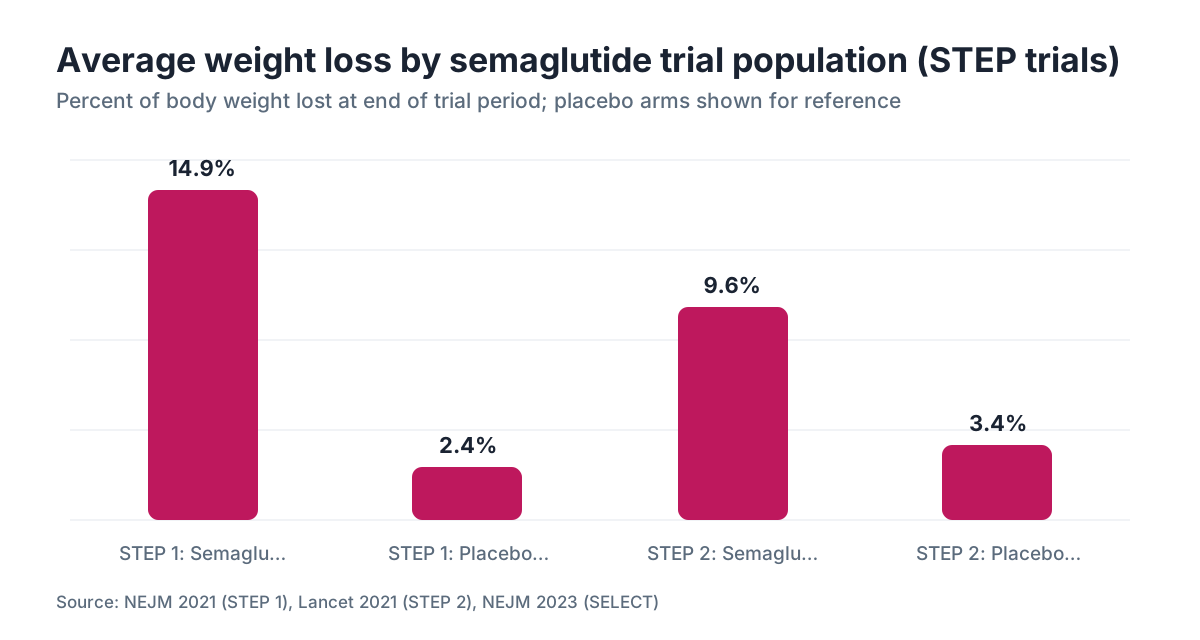
The STEP 1 trial, published in the New England Journal of Medicine in 2021, is the dataset everyone cites. It enrolled 1,961 adults without diabetes, randomized to either 2.4 mg semaglutide weekly or placebo, with lifestyle counseling in both groups, over 68 weeks. Participants on semaglutide lost an average of 14.9% of body weight versus 2.4% on placebo.[3] About one-third of semaglutide participants lost 20% or more.
For a woman who weighs 200 pounds, 15% is 30 pounds. That is a real, clinically meaningful number, not a marginal effect.
The STEP 2 trial focused on people with type 2 diabetes, where weight loss was somewhat lower (9.6% at 2.4 mg). This matters because insulin resistance and existing metabolic dysfunction blunt the response.[4]
A few honest caveats. Roughly 6% of STEP 1 participants discontinued due to GI side effects. Average weight loss conceals a wide range: some women lose very little, some lose much more. Weight loss slows after the first six months and most people plateau around month 10-12. And the STEP 5 trial showed that when people stop the drug, they regain about two-thirds of lost weight within a year.[5] Semaglutide works while you take it. It is not a cure for obesity.
For a direct comparison with tirzepatide, which activates both GLP-1 and GIP receptors and tends to produce somewhat greater weight loss, see semaglutide vs tirzepatide.
What side effects should women expect from semaglutide injections?
GI effects are the most common and the most likely to make you want to quit in the first eight weeks. In STEP 1, nausea affected 44% of semaglutide participants versus 16% on placebo. Vomiting hit 24% versus 6%. Diarrhea and constipation were both elevated as well.[3] The good news is that most of this peaks during dose escalation and improves once you've been on a stable dose for a few weeks.
Practical things that help: eat smaller meals, eat slowly, avoid high-fat or spicy food during the first month at each new dose, and don't lie down right after eating. Some women find the nausea is worst the day of or day after the injection, so injecting on a Friday night when you can take it easy on Saturday is a real strategy.
More serious but less common side effects to know:
- Pancreatitis. The FDA label includes a warning. If you get severe abdominal pain that radiates to your back, stop the drug and seek care immediately.[2]
- Gallbladder disease. Rapid weight loss with any method increases gallstone risk. Semaglutide appears to add modest additional risk beyond that.[2]
- Thyroid C-cell tumors. This is a black box warning on both Ozempic and Wegovy, based on animal studies in rodents. No human cases have been definitively attributed to semaglutide, but the drug is contraindicated if you have a personal or family history of medullary thyroid carcinoma or MEN2.[2]
- Vision changes. A 2024 study in JAMA Ophthalmology found a possible association between semaglutide and non-arteritic anterior ischemic optic neuropathy (NAION), a rare but serious condition. The absolute risk was low but worth knowing if you have existing optic nerve issues.[6]
Muscle and bone loss are concerns specific to women, and worth taking seriously. Rapid weight loss of any kind loses lean mass alongside fat. In the STEP trials, about 40% of total weight lost was lean mass, which is similar to other weight-loss interventions but still meaningful for women who already face age-related sarcopenia.[3] Resistance training matters here. So does protein intake. A bone density test before and periodically during treatment is worth discussing with your prescriber if you're over 45.
How do semaglutide shots interact with menopause and hormones?
This is where the evidence is thin but the clinical questions are thick. There are no completed large trials specifically studying semaglutide in perimenopausal or postmenopausal women as a distinct population. Most trial data lumps together all adult women, and most participants in the STEP trials were premenopausal or early perimenopausal.
What we do know from basic physiology and indirect data:
Estrogen loss in menopause shifts fat storage from subcutaneous (hips, thighs) to visceral (abdomen) and reduces insulin sensitivity.[11] Semaglutide specifically reduces visceral fat and improves insulin sensitivity, so the mechanism fits the problem well. Several observational studies report that postmenopausal women lose similar or slightly less weight than premenopausal women on GLP-1 drugs, though head-to-head trial data is sparse.
Semaglutide does not affect estrogen, progesterone, or testosterone levels directly, based on current evidence. It does not replace hormone therapy. These are different tools for different jobs. HRT addresses hot flashes, bone loss, vaginal symptoms, and mood disruption from estrogen decline. Semaglutide addresses appetite, metabolic syndrome, and weight. Many women benefit from both, and there's no known clinically significant interaction between semaglutide and standard hormone therapy regimens, though your prescriber should know your full medication list.
If you're weighing the role of hormones alongside GLP-1 therapy, the hormone replacement therapy article lays out the evidence on who benefits most from HRT, and the perimenopause age piece covers when these metabolic shifts typically start.
One practical note: semaglutide slows gastric emptying, which can theoretically affect the absorption timing of oral medications, including oral estrogen or oral progesterone. Injectable or transdermal hormone delivery (patches, gels, pellets) bypasses this entirely. See the estrogen patch overview for more on transdermal options.
Who is a good candidate for a semaglutide shot?
The FDA approval criteria for Wegovy are a BMI of 30 or higher, or a BMI of 27 or higher with at least one weight-related condition: type 2 diabetes, hypertension, dyslipidemia, obstructive sleep apnea, or cardiovascular disease.[2] These are minimum thresholds for approval, not the only people who might benefit clinically.
Women who tend to do well include those with significant insulin resistance (whether or not they have a diabetes diagnosis), women with PCOS (where insulin dysregulation is central to the condition), and women in perimenopause and menopause dealing with metabolic shifts that haven't responded to diet and exercise changes alone.
Women who should not take semaglutide include those who are pregnant or planning to become pregnant (the drug should be discontinued at least two months before a planned pregnancy), anyone with a personal or family history of medullary thyroid carcinoma or MEN2, and people with a history of severe GI motility disorders like gastroparesis, since slowing gastric emptying further can cause real problems.[2]
Semaglutide is also not appropriate as a short-term quick fix. The STEP 5 trial showed that nearly all weight is regained within two years of stopping.[5] This means the drug is for people prepared to treat obesity as a chronic condition requiring ongoing management, just like hypertension or hypothyroidism.
For a broader look at what semaglutide is and the full landscape of who it's approved for, the semaglutide overview is a good starting point. If you're specifically focused on weight loss outcomes, semaglutide for weight loss goes deeper on the evidence.
How much do semaglutide shots cost without insurance?
Cost is the biggest barrier for most women, full stop. Without insurance, Wegovy's list price as of 2024 is approximately $1,300 to $1,350 per month in the United States.[7] Ozempic lists at a similar price. These are before any discounts or manufacturer savings programs.
Novo Nordisk (the manufacturer) offers a savings card for Wegovy that can bring the cost down to $0 for a limited period for commercially insured patients, or to a flat monthly fee for some uninsured patients, but these programs have income and eligibility requirements and don't last indefinitely.[7]
Insurance coverage varies enormously. Medicare Part D does not cover Wegovy for weight loss, though a recent rule change allows coverage under Medicare if a patient has cardiovascular disease, following the SELECT trial showing semaglutide reduced major cardiac events by 20% in that population.[8] Medicaid coverage depends entirely on the state. Many commercial insurers cover Wegovy with a prior authorization requiring documented BMI criteria and sometimes a documented history of failed dietary interventions.
Compounded semaglutide, made by compounding pharmacies, became widely available during the Wegovy and Ozempic shortage period. The FDA has indicated that once brand-name semaglutide is no longer in shortage, compounded versions lose their legal status under 503A and 503B pathways.[9] The regulatory situation is evolving quickly. If cost is the issue, compounded semaglutide covers the current legal landscape and quality questions in detail.
At WomenRx, we work with women to figure out the most realistic access path given their insurance situation before writing a prescription, because a drug you can't afford past month one doesn't help anyone.
How do you inject semaglutide correctly?
Wegovy comes in a prefilled autoinjector pen. Each pen is single-use and delivers one dose. Here's the basic process:
- Take the pen out of the refrigerator and let it sit at room temperature for 30 minutes before injecting. Cold injections sting more.
- Wash your hands.
- Choose your injection site: abdomen, front of thigh, or back of upper arm. Clean the site with an alcohol swab and let it dry.
- Remove the pen cap. You'll see a small needle covered by a rubber shield.
- Press the pen firmly against your skin at a 90-degree angle.
- Press and hold the injection button. You'll hear or feel a click when the dose starts. Hold for 10 full seconds to make sure the full dose delivers.
- Remove the pen. A small yellow indicator in the window confirms the dose was delivered.
- Dispose of the pen in a sharps container.[2]
Rotate your injection site each week. Don't inject into the same spot twice in a row. If you notice lumps, bruising, or skin changes at an injection site, move to a different area and mention it to your prescriber.
If you miss a dose and your next scheduled dose is more than 48 hours away, inject as soon as you remember. If your next scheduled dose is within 48 hours, skip the missed dose and stick to your regular schedule. Never double-dose.[2]
Storage matters. Wegovy pens should be stored in a refrigerator (36 to 46 degrees Fahrenheit) and kept away from light. An unopened pen can also be stored at room temperature up to 77 degrees Fahrenheit for up to 28 days if needed.[2]
How long does it take semaglutide to start working?
Most women notice reduced appetite within the first one to two weeks, even at the low 0.25 mg starting dose. Some notice it within days. The biological half-life of semaglutide is about one week, which is why once-weekly dosing works, and steady-state blood levels aren't reached for about four to five weeks.[1]
Meaningful weight loss on the scale typically starts showing up around weeks four through eight, once you've been at 0.5 mg or higher. Don't expect dramatic numbers in month one. The body takes time.
The fastest rate of loss usually happens between months two and six, as doses escalate and the appetite suppression becomes more consistent. Most people's rate of loss slows considerably after month six and plateaus somewhere between months nine and twelve.[3]
For women in perimenopause who are also dealing with water retention from fluctuating estrogen, the first-month scale numbers can be confusing. Semaglutide doesn't cause rapid water weight loss the way very low-carb diets do. The loss tends to be slower and steadier.
One thing worth managing upfront: the STEP 1 trial showed that people who didn't respond (less than 5% weight loss) by week 16 were very unlikely to become strong responders later.[3] If you're not seeing any response by month four, that's a real signal to reassess with your prescriber rather than push forward indefinitely.
Can you use semaglutide shots long-term, and what happens if you stop?
The FDA has approved semaglutide for chronic, long-term use in eligible adults. There is no built-in time limit on the prescription. The STEP 5 trial followed participants for two years and found that the drug remained effective and safe across that period, with no new safety signals emerging from longer exposure.[5]
The harder truth is what happens when you stop. The STEP 1 withdrawal extension study followed participants for 52 weeks after they stopped semaglutide and found that on average, people regained about two-thirds of their lost weight within a year.[5] Hunger returns to baseline. The biological drive to regain weight is powerful and not a personal failing.
This doesn't mean everyone regains everything. Women who have made lasting changes to eating habits and have maintained muscle mass through resistance training tend to regain less. But the population-level data is clear: stopping the drug usually means returning toward prior weight over time.
For some women, the question isn't whether to stay on semaglutide forever but whether to cycle off during periods when access is difficult and back on when access resumes. The pharmacology allows this. There's no known harm from restarting after a break, though you generally need to re-escalate the dose from the beginning rather than jumping back to your previous dose.
The honest framing: semaglutide is treating a chronic condition. Stopping blood pressure medication doesn't cure hypertension. Stopping semaglutide doesn't cure the underlying biology driving weight gain either.
Is there a difference between semaglutide shots for diabetes vs weight loss?
Yes, and the difference matters clinically. Ozempic (diabetes) and Wegovy (weight loss) both contain semaglutide, but Wegovy's maximum approved dose (2.4 mg weekly) is higher than Ozempic's maximum approved dose (2 mg weekly). The STEP trials that established 15% average weight loss used the 2.4 mg dose.[3]
The formulations are also slightly different. Wegovy is in a single-dose pen format that delivers the full dose with one injection. Ozempic uses a multi-dose pen where you dial in the dose. The concentrations differ, so Ozempic pens are not a simple substitute for Wegovy and the doses are not directly interchangeable in pen form.
Some physicians prescribe Ozempic off-label for weight loss, particularly when Wegovy is unavailable or when the patient also has diabetes or pre-diabetes. This is legal and common. Off-label prescribing is well within a physician's authority. The practical limitations are that doses above 2 mg require Wegovy's formulation, and insurance coverage may differ depending on the diagnosis code used.
For women specifically being treated for insulin resistance or pre-diabetes alongside weight management, Ozempic's diabetes indication can sometimes make insurance coverage more straightforward to obtain, even if weight loss is also a goal.
What should women ask their doctor before starting a semaglutide shot?
A good pre-prescription conversation covers more than just the BMI criteria. Here are specific questions worth asking:
First, ask whether your current medications could interact. Oral contraceptives and oral medications for hypothyroidism (levothyroxine) may have delayed or altered absorption due to slowed gastric emptying. Your prescriber may want to adjust timing of those medications or switch to a different formulation.
Ask about baseline labs. Most experienced prescribers will want a fasting glucose, HbA1c, lipid panel, thyroid function, and a liver enzyme panel before starting. This documents where you started and catches contraindications.
Ask what their protocol is for side effect management. Do they have an anti-nausea plan for the first month? Will they adjust your escalation schedule if you're struggling? Knowing this upfront tells you whether you have a real support structure or just a prescription.
Ask about what success looks like and over what timeline. Setting a clear checkpoint (say, 16 weeks) where you honestly assess whether the drug is working for you prevents the trap of staying on a medication that isn't doing much while paying $1,300 a month for it.
Ask specifically about lean mass preservation. Semaglutide does not selectively burn fat. Without adequate protein intake and resistance training, meaningful muscle loss happens alongside fat loss. This is especially relevant for women over 45 already dealing with age-related sarcopenia. Getting a DEXA scan before and after can quantify what you're actually losing.
If you're in perimenopause or menopause, ask whether your hormone status should be addressed alongside GLP-1 therapy. The progesterone and hormone replacement therapy articles can help you think through the hormone side of that conversation before your appointment.
Frequently asked questions
How often do you take a semaglutide injection?
Once a week, on the same day each week. You can take it at any time of day, with or without food. The one-week interval matches semaglutide's biological half-life of approximately seven days, which keeps blood levels steady. If you shift your injection day, make sure at least two days pass between doses.
Where do you inject semaglutide?
The three approved sites are the abdomen (at least two inches from the navel), the front of the thigh, and the back of the upper arm. Inject subcutaneously, meaning just under the skin, not into muscle. Rotate sites each week to avoid skin irritation or lumps at any single spot.
Does semaglutide cause hair loss?
Hair loss (telogen effluvium) has been reported by some users and is listed in post-marketing adverse event data, though it was not a significant finding in the main STEP trials. It appears related to rapid weight loss rather than being a direct drug effect. Most cases resolve within six months. Adequate protein intake and not losing weight too fast both help reduce the risk.
Can you take semaglutide while on hormone replacement therapy?
Yes. There is no known clinically significant pharmacokinetic interaction between semaglutide and standard HRT. The main practical consideration is that semaglutide slows gastric emptying, which can affect absorption timing of oral medications. If you use oral estrogen or oral progesterone, ask your prescriber whether switching to a patch or gel makes sense to avoid this issue entirely.
What happens to semaglutide effectiveness after menopause?
Postmenopausal women do lose weight on semaglutide, but some observational data suggests the average amount lost may be modestly lower than in premenopausal women. No large head-to-head trial has examined this directly. The STEP trials included postmenopausal women without analyzing them separately, so the honest answer is that the data is incomplete here.
Is compounded semaglutide the same as Wegovy?
Compounded semaglutide contains the same active molecule but is not FDA-approved and has not undergone the same manufacturing quality standards as Novo Nordisk's branded products. Potency, sterility, and inactive ingredient quality can vary between compounding pharmacies. The FDA permitted compounding during the shortage period, but that pathway is narrowing as supply normalizes.
How long does it take semaglutide to suppress appetite?
Most women notice some appetite reduction within one to two weeks, even at the lowest 0.25 mg starting dose. The effect becomes more consistent and pronounced as the dose escalates over the first four to five months. Maximum appetite suppression typically occurs at the 2.4 mg maintenance dose after the full escalation schedule is completed.
What is the difference between Ozempic and Wegovy?
Both contain semaglutide but are approved for different indications. Ozempic is approved for type 2 diabetes management and maxes out at 2 mg weekly. Wegovy is approved for chronic weight management and maxes out at 2.4 mg weekly. The higher dose in Wegovy is why clinical trials for weight loss were run using the Wegovy formulation specifically.
Does semaglutide cause muscle loss?
Yes, to a degree. In the STEP 1 trial, roughly 40% of total weight lost was lean mass rather than fat. This is similar to other calorie-deficit interventions but still meaningful, particularly for women over 45 who face age-related muscle loss. Resistance training at least two to three days per week and eating at least 1.2 grams of protein per kilogram of body weight significantly reduces this.
Can semaglutide help with PCOS?
Semaglutide is not FDA-approved specifically for PCOS, but there is good biological rationale for its use there. PCOS involves insulin resistance and weight-related hormone disruption, both of which semaglutide addresses. Several small trials show improvements in menstrual regularity, androgen levels, and metabolic markers in women with PCOS on GLP-1 drugs. Larger trials are ongoing.
What is the maximum dose of a semaglutide shot?
For Wegovy (weight management), the maximum approved weekly dose is 2.4 mg. For Ozempic (type 2 diabetes), the maximum is 2 mg weekly. The higher 2.4 mg dose is what produced the approximately 15% average weight loss in the STEP 1 trial. Some prescribers maintain patients at lower doses if they're losing weight adequately and tolerating the drug well.
How do you store semaglutide pens?
Unopened Wegovy pens should be refrigerated at 36 to 46 degrees Fahrenheit. They can also be stored at room temperature up to 77 degrees Fahrenheit for up to 28 days. Keep them away from direct light and heat. Never freeze them. Once removed from the refrigerator, note the date and use or discard within 28 days.
Will I gain the weight back if I stop semaglutide?
Most people do. The STEP 1 withdrawal extension study found that participants regained about two-thirds of lost weight within one year of stopping. Hunger returns to pre-treatment levels because the underlying biology driving appetite has not changed. Women who maintain resistance training and protein-forward eating habits tend to regain less, but the population average is clear.
Is semaglutide safe for women over 60?
The FDA has not set an upper age limit for semaglutide use. The STEP trials enrolled adults up to age 75, and the drug appeared effective and well-tolerated in older subgroups. The main considerations for women over 60 are heightened attention to lean mass preservation (sarcopenia risk is greater) and bone health, making a DEXA scan before and during treatment worth discussing.
Sources
- FDA, Wegovy prescribing information (semaglutide injection 2.4 mg)
- Wilding JPH et al., STEP 1 trial, New England Journal of Medicine, 2021
- Davies M et al., STEP 2 trial, The Lancet, 2021
- Wilding JPH et al., STEP 5 and STEP 1 withdrawal extension, Diabetes, Obesity and Metabolism, 2022
- Hathout L et al., JAMA Ophthalmology, 2024
- Lincoff AM et al., SELECT trial, New England Journal of Medicine, 2023
- The Endocrine Society, Clinical Practice Guideline on Pharmacological Management of Obesity, 2023
- The Menopause Society (formerly NAMS), position statement on weight and body composition in menopause
- FDA, Drugs@FDA: Wegovy approval history and label