Semaglutide reviews: what real trial data and women's experiences show
TL;DR: Semaglutide produces meaningful weight loss, averaging 15% of body weight over 68 weeks in the STEP 1 trial. Most women tolerate it, though nausea and GI side effects are common early on. Compounded versions cost less but carry real quality risks. Results vary by dose, diet adherence, and hormonal status, especially around menopause.
What do clinical trials actually say about semaglutide results?
The short answer: semaglutide works, and the trial data is unusually strong for a weight-loss drug.
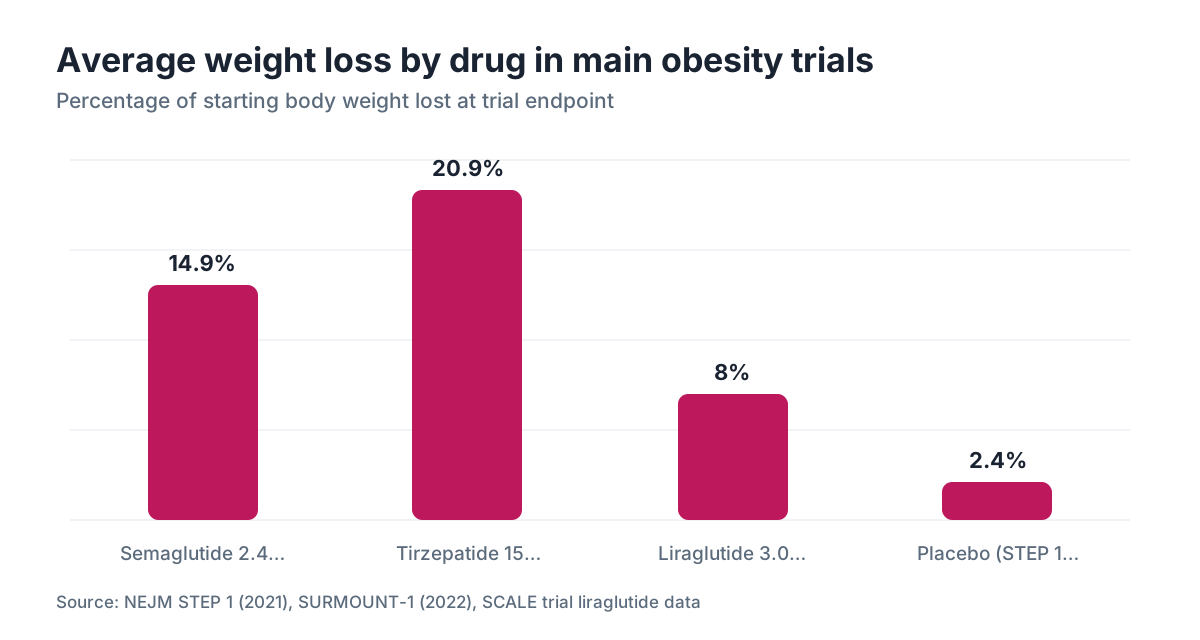
The STEP 1 trial, published in the New England Journal of Medicine in 2021, randomized 1,961 adults with obesity (BMI 30 or higher, or BMI 27 with a weight-related condition) to 2.4 mg semaglutide weekly or placebo for 68 weeks. The semaglutide group lost an average of 14.9% of body weight versus 2.4% in the placebo group [1]. That is not a rounding error. For a 200-pound woman, 14.9% is roughly 30 pounds.
STEP 2, which focused specifically on people with type 2 diabetes, found a more modest average loss of 9.6% [10]. Blood sugar control is one reason: elevated insulin and glucose can blunt fat loss somewhat, so results in women with insulin resistance or prediabetes may fall between these two numbers.
The STEP 5 trial ran for two years rather than 68 weeks and found that the weight loss held, with participants maintaining a 15.2% reduction at 104 weeks [2]. That matters because the perennial criticism of weight-loss drugs is that you regain everything when you stop. You do regain substantially if you stop semaglutide, but the drug does sustain results while you stay on it.
One number worth sitting with: about one-third of participants in STEP 1 lost 20% or more of body weight [1]. Another third lost 10 to 20%. The bottom third lost less than 10%. So the average of 15% masks real variation. Some women are high responders; some are not, and nobody can predict perfectly in advance which group you'll fall into.
STEP trials enrolled both men and women, but women represented roughly 75% of the obesity-focused cohorts, which means the data is reasonably applicable to female physiology [1].
What do women specifically report about semaglutide side effects?
Nausea is the dominant complaint. In STEP 1, nausea affected 44% of semaglutide users versus 16% on placebo [1]. Most people describe it as worst during the first four to eight weeks of a new dose escalation, then it fades. The standard titration schedule spaces dose increases four weeks apart precisely to manage this.
Vomiting hit about 24% of semaglutide users in STEP 1, and diarrhea or constipation each affected roughly 30% [1]. These are not rare edge cases. If you start semaglutide and feel rough for a month, that is a normal response, not a sign the drug is wrong for you.
Fatigue comes up a lot in patient forums and has a plausible mechanism: eating significantly less changes energy intake rapidly. Women in perimenopause already contend with fatigue from disrupted sleep and declining estrogen, so layering GI side effects on top of that can feel overwhelming in the first few weeks.
Hair loss, or telogen effluvium, is not listed as a formal adverse event in the STEP trials but gets mentioned frequently in patient communities. The likely driver is rapid caloric restriction rather than the drug itself. Adequate protein (most clinicians suggest at minimum 1 gram per kilogram of body weight daily) and, if you are a candidate, optimizing thyroid and estrogen status seem to reduce its severity.
Serious adverse events were rare. Pancreatitis was reported in less than 1% in the STEP trials. The FDA label carries a boxed warning about thyroid C-cell tumors based on rodent studies, though no causal link has been established in humans [3]. Women with a personal or family history of medullary thyroid carcinoma or multiple endocrine neoplasia syndrome type 2 should not take semaglutide.
Gallbladder disease, including gallstones, occurred more often in semaglutide users than placebo (2.6% vs 1.2% in STEP 1) [1]. Rapid weight loss is a known gallstone trigger regardless of the method, so this is partly a class effect of effective weight loss rather than a drug-specific toxicity.
How does semaglutide compare to tirzepatide for women?
This is the comparison that matters most right now. Tirzepatide (brand name Mounjaro for diabetes, Zepbound for obesity) hits both GLP-1 and GIP receptors, while semaglutide targets GLP-1 alone.
The SURMOUNT-1 trial of tirzepatide found average weight loss of 20.9% at the highest dose (15 mg) over 72 weeks [4]. The STEP 1 semaglutide number is 14.9%. Head-to-head trials comparing the two directly in people without diabetes (SURMOUNT-5) show tirzepatide producing roughly 20% greater relative weight loss than semaglutide [4].
For women with significant insulin resistance, which is extremely common in perimenopause, the dual mechanism of tirzepatide may offer an additional advantage. Estrogen decline affects insulin sensitivity directly, so targeting GIP alongside GLP-1 may matter more for perimenopausal women than for younger, metabolically healthy women.
That said, semaglutide has a longer track record. It has cardiovascular outcomes data from the SUSTAIN 6 and SELECT trials, and it is available as Ozempic (weekly injection, approved for type 2 diabetes) and Wegovy (weekly injection, approved for chronic weight management). Many clinicians start patients on semaglutide precisely because there are more data on long-term safety.
For a side-by-side breakdown, see our article on semaglutide vs tirzepatide.
| Drug | Mechanism | Avg. weight loss (main trial) | FDA obesity approval | |---|---|---|---| | Semaglutide (Wegovy) | GLP-1 agonist | ~15% (STEP 1, 68 wks) | Yes (2021) | | Tirzepatide (Zepbound) | GLP-1 + GIP agonist | ~21% (SURMOUNT-1, 72 wks) | Yes (2023) | | Liraglutide (Saxenda) | GLP-1 agonist | ~8% (SCALE trial) | Yes (2014) |
Are compounded semaglutide reviews trustworthy, and is it safe?
Compounded semaglutide has flooded the market over the past two years, and opinions on it range from enthusiastic to alarmed. The honest picture is somewhere in between.
FDA-approved Wegovy uses semaglutide base. Many compounding pharmacies use semaglutide sodium or semaglutide acetate, salt forms that have not been tested in clinical trials and whose bioequivalence to semaglutide base is unknown. In 2024 and 2025 the FDA issued multiple warnings about these salt forms, stating they have not been shown to be safe or effective [3]. That is the regulator's position, and it is worth taking seriously.
Compounded semaglutide is also not subject to the same quality controls as FDA-approved drugs. Concentration errors, sterility problems, and contamination have all been documented in FDA inspections of compounding facilities. In November 2024, the FDA removed semaglutide from its shortage list, which legally limits the ability of 503A and 503B compounders to continue making it. Enforcement timelines have shifted repeatedly, so check the FDA drug shortage database for current status [3].
The price difference is real: brand-name Wegovy lists around $1,350 per month without insurance, while compounded versions have ranged from roughly $150 to $600 per month depending on the pharmacy and dose. For women without insurance coverage, that gap is significant.
If you choose a compounded source, the minimum due diligence is verifying the pharmacy holds 503B outsourcing facility status (FDA-registered, subject to cGMP inspections) rather than operating as a 503A pharmacy with no federal inspection requirement [9]. Our article on compounded semaglutide covers how to vet a pharmacy step by step.
Reviews of compounded semaglutide online are genuinely mixed. Many women report the same weight loss and side effect profile as with branded Wegovy. Others report erratic results that may reflect dosing inconsistencies. Neither experience proves the compound is identical to or different from the branded drug, because no peer-reviewed head-to-head data exist.
How does semaglutide work differently in perimenopausal and menopausal women?
This is a gap in the published literature that matters enormously for the women reading this.
The STEP trials did not stratify results by menopausal status. What we do know from separate research is that estrogen decline in perimenopause drives visceral fat accumulation, insulin resistance, and slower resting metabolic rate [5]. GLP-1 receptor agonists work partly by slowing gastric emptying and reducing appetite signals in the hypothalamus. Both of those mechanisms are independent of ovarian estrogen, which suggests semaglutide should still work mechanistically in postmenopausal women.
Smaller studies and clinical observation suggest that women on hormone replacement therapy may respond somewhat better to GLP-1 drugs, likely because estrogen helps maintain lean muscle mass and insulin sensitivity. The North American Menopause Society has noted that weight gain during menopause is driven partly by hormonal changes and partly by aging, and that addressing hormonal drivers alongside lifestyle or pharmacotherapy is reasonable [5]. Semaglutide and hormone replacement therapy are not mutually exclusive.
Muscle loss is a specific concern in this population. Semaglutide produces weight loss from both fat and lean mass. In the STEP 1 trial, roughly 40% of total weight lost was lean mass [1]. In younger women that proportion rebounds somewhat with resistance training. In postmenopausal women, declining estrogen makes muscle preservation harder. Resistance training and protein intake are not optional add-ons here. They are the difference between body recomposition and just becoming a smaller, weaker version of yourself.
For women in perimenopause wondering whether hormonal changes are driving their weight gain, our articles on menopause and perimenopause age give more context on what is actually happening metabolically.
Bone density is a separate concern that does not get enough attention. Rapid weight loss from any cause reduces mechanical load on bones and can lower bone mineral density. Women over 45 who lose more than 10% of body weight rapidly should discuss a bone density test with their clinician.
What does semaglutide cost, and will insurance cover it?
Brand-name Wegovy (semaglutide 2.4 mg, obesity indication) has a list price of approximately $1,349 per month as of 2025 [6]. Ozempic (semaglutide up to 2 mg, diabetes indication) lists around $935 per month.
Insurance coverage is the variable that changes everything. Medicare Part D covers Wegovy for patients who also have cardiovascular disease, following the SELECT trial results (semaglutide reduced major cardiovascular events by 20% versus placebo in people with obesity and established cardiovascular disease) [7]. Medicare does not cover Wegovy for obesity alone without cardiovascular comorbidity.
Commercial insurance coverage varies enormously. Many employer plans exclude all anti-obesity medications outright; others cover Wegovy with prior authorization requiring a BMI of 30 or above, or 27 with a comorbidity. The Novo Nordisk savings card brings out-of-pocket cost to $0 to $99 per month for commercially insured patients who qualify, but it cannot be used with government insurance.
Generic semaglutide does not exist yet. Novo Nordisk's U.S. patents on semaglutide run through the early 2030s. Compounded versions fill the access gap for many women, but as noted above, they carry their own risks.
For a detailed cost breakdown and insurance navigation guide, see our article on semaglutide for weight loss.
How long does it take to see results on semaglutide?
Most women notice appetite reduction within the first week or two at even the starting dose (0.25 mg weekly). Actual scale movement tends to start showing clearly around weeks four to eight.
The standard titration schedule for Wegovy is: 0.25 mg for weeks 1 through 4, 0.5 mg for weeks 5 through 8, 1 mg for weeks 9 through 12, 1.7 mg for weeks 13 through 16, then 2.4 mg maintenance from week 17 onward [3]. The dose escalation is slow by design. Rushing it dramatically increases GI side effects without meaningfully improving efficacy.
In STEP 1, participants had lost an average of roughly 6% of body weight by week 12 and continued losing through approximately week 60, when the curve began to plateau [1]. The plateau is real and frustrating. It reflects the body's adaptation to a new lower set point, not a failure of the drug.
Women sometimes report that the plateau breaks when progesterone or estrogen is optimized simultaneously. There is no controlled trial data on this, but the hormonal environment does affect appetite regulation, sleep quality, and metabolic rate, so the observation is biologically plausible. See our article on progesterone for more on how progesterone affects weight and metabolism.
If you have lost less than 5% of starting weight after 16 weeks at the maintenance dose, current clinical guidance suggests reassessing whether semaglutide is the right drug for you rather than staying on an ineffective treatment indefinitely [8].
What are the most common complaints in negative semaglutide reviews?
Beyond GI side effects, the complaints that show up most often in patient forums and clinical practice fall into a few categories.
Cost and access frustration dominate. Women who lose insurance coverage or whose prior authorization gets denied face a stark choice between paying full list price and stopping the drug. Stopping means weight regain, which the STEP 4 trial confirmed: participants who switched from semaglutide to placebo regained about two-thirds of their lost weight over the following 48 weeks [2]. That regain curve is emotionally brutal for many patients.
Fatigue and brain fog at the starting dose get mentioned frequently. This appears partly nutritional (eating less means less fuel) and partly an effect of the drug on brain GLP-1 receptors, which regulate more than just appetite. It tends to improve after the first month.
Muscle loss and the "skinny fat" outcome concern a lot of women who expected body recomposition but got a lower weight with similar body composition ratios. This is real and addressable with resistance training, but it requires more effort than taking the medication alone.
Food aversion beyond what is wanted is another complaint. Some women find that the appetite suppression becomes so complete that eating feels like a chore, protein intake drops, and they feel weak. This is a signal to discuss dose reduction with the prescribing clinician, not a reason to push through.
Finally, some women report that semaglutide did not work for them at all, particularly those with hypothyroidism that was not optimally treated, with significant insulin resistance, or who had a genetic predisposition that reduces GLP-1 receptor sensitivity. These are not failures of willpower. They are pharmacogenomic realities that the current prescribing model does not account for well.
Who gets the best results on semaglutide, and who may not be a good candidate?
The women who tend to do best on semaglutide combine the medication with consistent protein intake, resistance training two to three times per week, and reasonable sleep. The drug reduces appetite; it does not build muscle or fix sleep deprivation or optimize hormones. Those pieces still require active work.
Women with primarily emotional or stress-driven eating sometimes find semaglutide less helpful because it does not change the psychological relationship with food. It reduces physiological hunger but not the drive to eat when anxious or bored. Behavioral support alongside the medication improves outcomes in these cases.
Women with moderate to severe obesity (BMI above 35) tend to see the largest absolute pound losses even if percentage losses are similar. Women closer to the BMI 27 threshold may find the effort-to-return ratio lower.
Women who are not candidates include those with a personal or family history of medullary thyroid cancer or MEN2, those with a current or recent history of pancreatitis, those who are pregnant or trying to conceive (Novo Nordisk recommends stopping semaglutide at least two months before attempting pregnancy), and those with active eating disorders involving restriction [3].
WomenRx clinicians evaluate hormonal status alongside GLP-1 candidacy because treating menopause and GLP-1 response as separate silos misses real interactions. If you are also navigating perimenopause, the combination of hormonal optimization and GLP-1 therapy often produces better outcomes than either alone.
For women considering starting, our main semaglutide overview covers mechanism, candidacy criteria, and how to approach the prescribing conversation in more detail.
Is Wegovy worth it given the cost and side effects?
My honest take: for women with obesity or significant weight-related health risk who have already tried sustained dietary and lifestyle changes, semaglutide is one of the most effective tools available, and the STEP trial data is genuinely impressive compared to the history of anti-obesity drugs.
The SELECT cardiovascular trial, published in the New England Journal of Medicine in 2023, found that semaglutide reduced major adverse cardiovascular events by 20% in people with obesity and established cardiovascular disease who did not have diabetes [7]. That is an outcome benefit beyond just weight loss, and it matters for long-term health decisions.
That said, semaglutide is not a cure. The regain data from STEP 4 make clear that stopping the drug means most of the weight comes back unless you have fundamentally restructured eating behavior and activity during the treatment period. Framing it as a lifelong medication, like a blood pressure drug, is more honest than framing it as a short course.
The cost barrier is real and the disparity in insurance coverage is genuinely unfair. Women with identical BMIs and health risks pay wildly different amounts based purely on their employer's benefit choices. That is a systemic problem, not a reflection of what the drug is worth medically.
For women in perimenopause or early menopause, addressing estrogen and progesterone decline alongside GLP-1 therapy is worth the conversation with a clinician. The estrogen patch and GLP-1 are not competing treatments. For many women in midlife, they address different aspects of the same metabolic shift.
Frequently asked questions
Does semaglutide work for weight loss in postmenopausal women?
The STEP trials did not publish separate results by menopausal status, so there is no definitive trial answer. Mechanistically, semaglutide's appetite-suppressing effects work through pathways independent of ovarian estrogen, so it should remain effective postmenopause. Clinical observation suggests combining semaglutide with hormone therapy may improve lean mass preservation, though controlled data on this combination are limited.
How much weight can I realistically expect to lose on semaglutide?
The STEP 1 trial average was 14.9% of starting body weight over 68 weeks. About one-third of participants lost 20% or more. About one-third lost less than 10%. Results vary with dose adherence, protein intake, exercise, hormonal status, and individual pharmacogenomics. A 180-pound woman losing 15% would reach approximately 153 pounds. Expect the first six months to show the steepest losses, then a plateau.
What is the difference between Ozempic and Wegovy?
Both contain semaglutide. Ozempic is approved for type 2 diabetes management, with a maximum approved dose of 2 mg weekly. Wegovy is approved for chronic weight management in obesity (BMI 30 or higher) or overweight with a comorbidity (BMI 27), with a maintenance dose of 2.4 mg weekly. The higher dose drives somewhat greater weight loss. Insurance coverage rules differ significantly between the two approvals.
Can I take semaglutide while on hormone replacement therapy?
There is no contraindication to combining semaglutide with hormone replacement therapy. No pharmacokinetic interaction has been identified. Some clinicians observe that women on estrogen preserve lean mass better during GLP-1-driven weight loss, which is biologically plausible given estrogen's role in muscle and insulin sensitivity. Disclose all medications to your prescribing clinician and monitor bone density if losing weight rapidly.
Is compounded semaglutide safe?
Compounded semaglutide made by 503B FDA-registered outsourcing facilities is held to higher manufacturing standards than 503A pharmacy compounding, but neither has FDA approval. Many compounders use semaglutide sodium or acetate salt forms the FDA says have not been shown to be safe or effective. The FDA removed semaglutide from its shortage list in 2024, limiting legal compounding going forward. Verify your pharmacy's registration and test for 503B status before ordering.
What happens when you stop taking semaglutide?
Most people regain a significant portion of lost weight after stopping. The STEP 4 trial found that participants who switched from semaglutide to placebo regained on average about two-thirds of their lost weight over 48 weeks. The regain comes primarily from the appetite and metabolic rate returning to baseline levels. This makes semaglutide more like a chronic disease management drug than a finite course treatment.
How do I manage nausea on semaglutide?
Eat small, low-fat meals and avoid lying down immediately after eating. Ginger tea and anti-nausea bands help some women. Do not rush the titration schedule; each dose escalation should be four weeks apart. If nausea is severe at a given dose, talk to your clinician about staying at the previous dose longer rather than pushing through. Most nausea resolves within four to six weeks of reaching a stable dose.
Does semaglutide cause hair loss?
Hair loss is not listed as a formal adverse event in the STEP trial data, but telogen effluvium from rapid caloric restriction is well documented. The mechanism is nutritional stress rather than the drug itself. Eating adequate protein (roughly 1 gram per kilogram of body weight daily), ensuring iron and ferritin levels are normal, and not losing weight too rapidly all reduce risk. Hair typically regrows once weight loss slows and nutrition stabilizes.
At what BMI does semaglutide make sense?
Wegovy's FDA approval covers BMI 30 or above, or BMI 27 or above with at least one weight-related condition such as hypertension, type 2 diabetes, high cholesterol, or obstructive sleep apnea. Using it below BMI 27 is off-label. Clinicians may consider it at lower BMIs in women with significant metabolic dysfunction, insulin resistance, or cardiovascular risk, but insurance coverage typically requires meeting the approved thresholds.
How long does it take for semaglutide to start working?
Appetite reduction is usually noticeable within the first one to two weeks at even the starting 0.25 mg dose. Meaningful scale movement (2 to 4% of body weight) typically appears by weeks four to eight. The full maintenance dose of 2.4 mg is not reached until week 17 under the standard Wegovy titration. Most weight loss occurs between weeks 4 and 60, after which a plateau is common.
Can semaglutide help with belly fat specifically?
Semaglutide produces overall weight loss; you cannot direct it exclusively to abdominal fat. That said, visceral fat (the metabolically active fat around organs) tends to respond well to GLP-1 agonists, likely because visceral adipose tissue is more insulin-sensitive than subcutaneous fat. Several STEP substudies using DEXA and MRI confirmed preferential visceral fat reduction. Pairing semaglutide with resistance training shifts more of the loss toward fat relative to lean mass.
What should I eat while taking semaglutide?
Prioritize protein at every meal to protect muscle mass, aiming for at least 25 to 30 grams per meal. Appetite suppression makes it easy to under-eat protein inadvertently. Avoid high-fat meals that slow gastric emptying further and worsen nausea. Vegetables and fiber-rich carbohydrates support gut motility, which helps with constipation. Alcohol amplifies nausea for many women on semaglutide and should be limited especially during dose escalation.
Is online semaglutide prescribing legitimate?
Telehealth prescribing of semaglutide is legal when a licensed clinician in your state conducts a synchronous or asynchronous evaluation that meets the prescribing standard of care. The Ryan Haight Act required in-person evaluation before telehealth prescribing of controlled substances, but semaglutide is not a controlled substance, so telehealth-only prescribing is permissible. Verify the platform employs licensed prescribers, more than order-takers, and that it includes follow-up monitoring.
Does semaglutide interact with thyroid medication?
No established pharmacokinetic interaction exists between semaglutide and levothyroxine or other thyroid medications. However, GI side effects from semaglutide can affect levothyroxine absorption if taken together, since levothyroxine absorption is sensitive to stomach contents and timing. Take levothyroxine on an empty stomach as directed, separate from semaglutide injection timing. Hypothyroidism should be optimally treated before starting semaglutide, as undertreated hypothyroidism can blunt weight-loss response.
Sources
- Wilding JPH et al., New England Journal of Medicine, 2021 (STEP 1 trial)
- Rubino DM et al., JAMA, 2021 (STEP 4 trial); Garvey WT et al., Nature Medicine, 2022 (STEP 5 trial)
- FDA Prescribing Information and Drug Shortage Database, Wegovy (semaglutide injection)
- Jastreboff AM et al., New England Journal of Medicine, 2022 (SURMOUNT-1 trial); SURMOUNT-5 results 2024
- North American Menopause Society (NAMS), Menopause journal position statement on weight and menopause
- Novo Nordisk, Wegovy list price, 2025
- Lincoff AM et al., New England Journal of Medicine, 2023 (SELECT trial)
- Endocrine Society Clinical Practice Guideline, Pharmacological Management of Obesity, 2015 and 2023 update
- FDA, 503B Outsourcing Facility registration information
- Davies M et al., New England Journal of Medicine, 2021 (STEP 2 trial)