Semaglutide results: what the clinical trials actually show
TL;DR: In the STEP 1 trial, adults on semaglutide 2.4 mg lost a mean 14.9% of body weight over 68 weeks. Placebo lost 2.4%. Appetite usually drops in the first two weeks, the scale moves by weeks 4 to 12, and results peak near the one-year mark. Response varies by starting weight, diet, dose escalation, and hormonal status.
What weight loss results does semaglutide produce on average?
About 15% of body weight over roughly 16 months, in people who stay on the drug and change how they eat and move. That number comes from STEP 1, the phase 3 trial published in the New England Journal of Medicine in 2021. It enrolled 1,961 adults with a BMI of 30 or higher (or 27+ with a weight-related condition). Participants on semaglutide 2.4 mg once weekly lost a mean of 14.9% of body weight by week 68. The placebo group lost 2.4%. [1]
That 14.9% is an average, so the spread matters more than the headline. About a third of STEP 1 participants lost 20% or more. Roughly 86% lost at least 5%, the threshold most guidelines use for clinically meaningful weight loss.
Start at 220 pounds and 14.9% is about 33 pounds gone. That's a real number. But roughly 14% of participants lost less than 5%, meaning the drug barely worked for them, and the trial can't tell us why.
Brand matters. Ozempic (semaglutide up to 1.0 mg, approved for type 2 diabetes) produces less weight loss than Wegovy (semaglutide 2.4 mg, approved for chronic weight management) because the dose is lower. People using Ozempic off-label at 1.0 mg should expect closer to 6 to 9% body weight reduction, based on the SUSTAIN 6 cardiovascular outcomes trial. [2]
How long does semaglutide take to show results?
Most people feel appetite suppression within the first one to two weeks, even at the 0.25 mg starting dose. The scale usually follows at weeks four through twelve, though it moves slowly early because the dose is still climbing.
The Wegovy escalation runs like this: 0.25 mg for weeks 1 to 4, 0.5 mg for weeks 5 to 8, 1.0 mg for weeks 9 to 12, 1.7 mg for weeks 13 to 16, then 2.4 mg maintenance from week 17 on. Most of the real movement in STEP 1 happened after week 20, once people had spent time at or near the maintenance dose. [1]
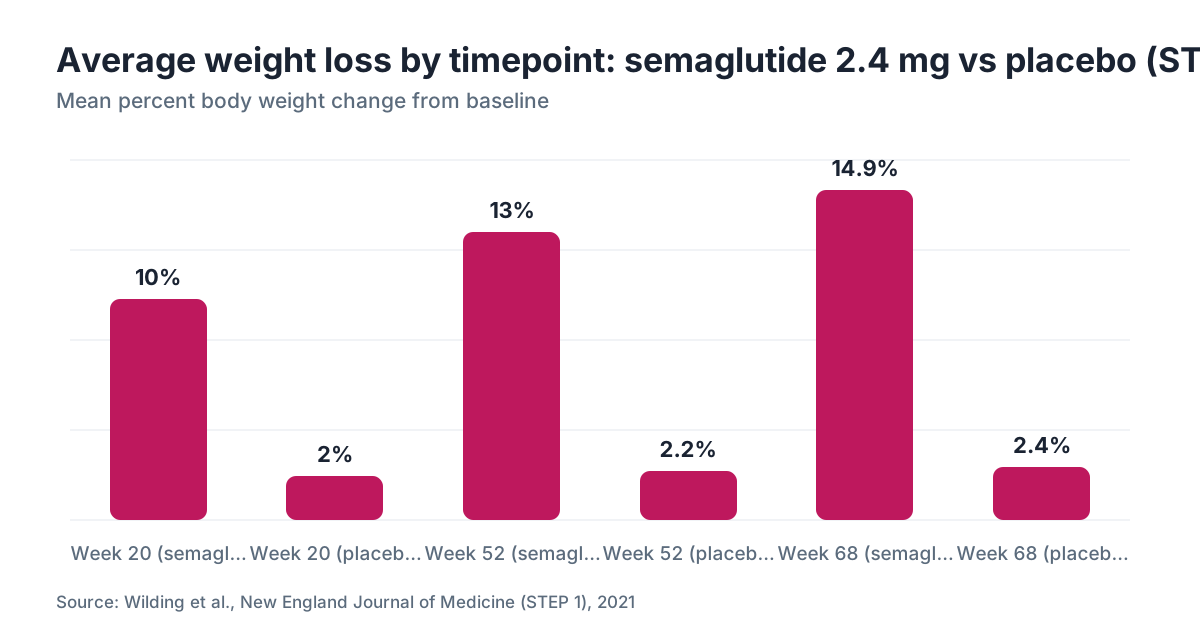
By week 20, the semaglutide group had lost roughly 10% of body weight on average. The curve kept dropping through week 60, then flattened. That plateau throws people. Patients and prescribers sometimes read it as the drug quitting, when it actually means the body has settled at a new set point. Stop the drug and weight comes back, which we'll cover below.
Timeline summary:
| Timepoint | Average weight loss (semaglutide 2.4 mg) | Average weight loss (placebo) | |---|---|---| | Week 4 | ~1-2% | ~0.5% | | Week 20 | ~10% | ~2% | | Week 52 | ~13% | ~2.2% | | Week 68 | 14.9% | 2.4% |
Data from STEP 1, Wilding et al., NEJM 2021. [1]
How do semaglutide results compare to tirzepatide results?
Tirzepatide (Mounjaro for diabetes, Zepbound for weight management) outperforms semaglutide across trials. In SURMOUNT-1, tirzepatide 15 mg produced a mean weight loss of 22.5% at 72 weeks, against semaglutide's roughly 15% at a comparable point. [3]
No perfect head-to-head trial compares the two at their highest approved weight-management doses, so the comparison leans on cross-trial data. That always carries caveats about different populations, enrollment criteria, and endpoint definitions.
SURPASS-2 did compare them directly, but at semaglutide 1.0 mg (the diabetes dose, not the 2.4 mg weight dose) in people with type 2 diabetes. At 40 weeks, tirzepatide 15 mg produced 12.4 lbs more weight loss than semaglutide 1.0 mg. [4]
The question most women actually ask: should I request tirzepatide instead? If you've been on semaglutide six months and lost under 5%, switching is a fair conversation with your prescriber. If you're dropping weight steadily, there's no reason to jump ship.
For a full side-by-side, see semaglutide vs tirzepatide.
Does semaglutide work differently in women, especially during perimenopause or menopause?
Here the data gets genuinely thin. The STEP trials ran majority-female (about 74% in STEP 1), so the headline numbers represent women better than most drug trials do. But the published results don't break out by menopausal status, and that's a real gap. [1]
What basic endocrinology tells us: estrogen shapes fat distribution, insulin sensitivity, and appetite signaling. As estrogen falls in perimenopause and after menopause, many women shift toward central (abdominal) fat, a lower metabolic rate, and stronger appetite for calorie-dense food. GLP-1 receptors sit in the hypothalamus, which also handles estrogen-driven appetite signals, so there's a plausible mechanism for hormonal status to shape semaglutide response. [5]
Clinicians who prescribe GLP-1s to perimenopausal and postmenopausal women often report slower early results in this group than in premenopausal women. That's observation, not trial data, so hold it loosely.
Hormone therapy may help. A 2022 North American Menopause Society position statement notes that postmenopausal women on menopause hormone therapy show better insulin sensitivity and less visceral fat accumulation than non-users. [11] The Endocrine Society's 2023 menopause guideline adds that systemic hormone therapy does not cause net weight gain and may reduce fat redistribution to the abdomen. [5]
If you're in perimenopause or menopause and results are slower than you hoped, optimizing hormones is worth exploring. See hormone replacement therapy and menopause for how to think about that.
WomenRx focuses on running GLP-1 therapy and hormone optimization together, which is exactly where those two tracks meet for women in this stage.
What happens to your results when you stop semaglutide?
Weight regain after stopping is real and well documented. STEP 4, a withdrawal study, found that people who stopped semaglutide after 20 weeks regained about two-thirds of their lost weight over the next 48 weeks off the drug. By the end of the withdrawal period, weight reduction from baseline had fallen to 5.6%, down from the 17.4% they'd reached before stopping. [6]
This isn't unique to semaglutide. Obesity carries a strong physiological pull back toward the old weight, and GLP-1 agonists work by muting that drive, not by permanently resetting it.
So for most people, semaglutide is a long-term or indefinite medication if weight management is the goal. That changes the cost math a lot. Some people hold their results on a lower maintenance dose, and researchers are studying dosing strategies for sustained effect at lower exposure, but the FDA-approved label still says continue at 2.4 mg for maintenance.
What results does semaglutide produce beyond weight loss?
Weight loss is the headline. It isn't the whole story.
Cardiovascular outcomes. The SELECT trial, published in NEJM in 2023, enrolled 17,604 adults with obesity and established cardiovascular disease but no diabetes. Semaglutide 2.4 mg cut major adverse cardiovascular events (heart attack, stroke, cardiovascular death) by 20% versus placebo over a mean 34 months of follow-up. The authors wrote that semaglutide "resulted in a significantly lower incidence of death from cardiovascular causes, nonfatal myocardial infarction, or nonfatal stroke." [7] This is the first weight loss drug to show a cardiovascular benefit in a large outcomes trial, and it matters for women, who are chronically undertreated for cardiovascular risk.
Blood sugar and diabetes prevention. STEP 1 participants with prediabetes at baseline reverted to normal blood sugar in about 84% of cases, versus 48% on placebo, by week 68. [1]
Blood pressure. Systolic pressure fell about 6 mmHg more in the semaglutide group than placebo in STEP 1. [1]
Sleep apnea. STEP 7 showed meaningful reductions in apnea-hypopnea index in people with obstructive sleep apnea. (The SURMOUNT-OSA trial showed a similar effect but used tirzepatide.)
Joint pain and mobility. STEP 1 showed statistically significant gains in the IWQOL-Lite-CT physical function score, which captures pain and movement quality. Dropping 15% of body weight takes real load off the knees.
What it does not do: semaglutide doesn't protect lean mass without resistance exercise. Studies consistently find that 25 to 40% of the weight lost on GLP-1 therapy is lean mass (muscle and bone). That's a real problem for older women already at risk for sarcopenia and low bone density. Pairing semaglutide with progressive resistance training isn't optional if you care about long-term function.
What factors predict whether you'll get good results?
No reliable biomarker predicts individual response before you start. That's the honest answer. But a handful of factors track with better outcomes in the evidence we have.
Dose completion. People who reached and held 2.4 mg did substantially better than those stuck at lower doses because of side effects. If nausea or gut discomfort blocks your escalation, manage it aggressively rather than settling for a dose that's too low to work.
Lifestyle changes. STEP 1 built in a 500-calorie deficit through diet counseling plus physical activity guidance. The drug without any behavior change produces less. Nobody has clean data on exactly how much less, because every blinded placebo-controlled trial includes some lifestyle intervention, but real-world registries suggest the gap is meaningful.
Starting BMI. People with higher starting BMI lose more absolute pounds, but percentage weight loss stays fairly steady across a wide BMI range.
Diabetes status. People with type 2 diabetes lose somewhat less, roughly 9 to 11% versus 14 to 15%, possibly because diabetes dulls some of the same signaling the drug is trying to switch on. [2]
Hormonal environment. Menopausal status and thyroid function both plausibly shape results. Rule out hypothyroidism if you're a poor responder, since untreated thyroid disease blunts weight loss no matter the medication.
Adherence over time. Results compound. People who stay on the drug for 24 months keep losing, slower, even past the first plateau.
What are typical semaglutide results in real-world settings vs. clinical trials?
Real-world results run lower than trials, and the reasons are boring but real. Trial participants get screened, monitored, and coached on diet, and their adherence is high because they're in a study. Ordinary care is messier.
A 2023 Epic Research analysis of roughly 3,000 patients on semaglutide in real clinical settings (mostly Ozempic at diabetes doses, not the full 2.4 mg) found average weight loss of about 5.9% at six months. A 2024 retrospective cohort study in JAMA Health Forum looking specifically at Wegovy at 2.4 mg found a 9.3% mean weight loss at 12 months, against the roughly 13% seen in STEP 1 at the same point. [8]
The gap comes from a few places. Discontinuation is higher in the real world, with estimates that 30 to 40% of people stop within the first year, often over cost or side effects. Doses often never reach 2.4 mg. And diet changes slip without a structured support program.
None of this makes real-world results bad. Even 9% at a year is clinically meaningful. Just go in clear-eyed about the distance between what the drug can do under ideal conditions and what you're likely to see.
How do side effects affect semaglutide results?
GI side effects, mainly nausea, vomiting, diarrhea, and constipation, are the top reason people cut their dose or quit, and both moves shrink weight loss. In STEP 1, about 44% of semaglutide participants reported nausea and 24% reported vomiting at some point, versus 16% and 6% on placebo. [1]
Most of it peaks during dose escalation and eases once the maintenance dose is stable. Smaller meals, skipping high-fat food during escalation, and staying upright after eating all cut nausea a lot.
Serious events. About 7% of semaglutide participants in STEP 1 stopped because of GI events. Pancreatitis showed up in a small number of patients. The FDA label carries a warning about a potential (unproven in humans) risk of thyroid C-cell tumors from rodent studies. The label states that "semaglutide causes dose-dependent and treatment-duration-dependent thyroid C-cell tumors at clinically relevant exposures in both genders of rats and mice." That hasn't been confirmed in human surveillance, but it's why semaglutide is contraindicated in anyone with a personal or family history of medullary thyroid carcinoma or MEN2. [9]
Gallbladder disease. Rapid weight loss from any cause raises gallstone risk, and semaglutide is no exception. Cholelithiasis hit about 2.6% of the semaglutide group in STEP 1 versus 1.2% on placebo. Worth knowing if you've had gallbladder trouble before.
Is compounded semaglutide as effective as branded Wegovy?
We don't know, because there are no randomized trials of compounded semaglutide. The FDA has never approved a compounded version, and compounded drugs aren't held to the efficacy and safety testing that branded products are. [10]
During the Wegovy shortage (2022 to 2024), the FDA let compounding pharmacies make semaglutide under shortage exemptions. As of mid-2025, the FDA has declared the shortage resolved and most compounding has to stop, though litigation and some state-level exemptions have muddied that.
Compounded semaglutide can vary in concentration, excipients, and actual semaglutide content. If you got strong results on a compounded version, that tells you something about your own response, but you can't know whether the branded product would have done the same.
For the full regulatory and practical breakdown, see compounded semaglutide.
What results should you realistically expect in your first 3, 6, and 12 months?
Expectations matter, because people who count on losing 20 pounds in month one tend to quit when the early numbers come in modest.
Month 1 to 3: mostly dose escalation. Appetite drops noticeably. Weight loss of 2 to 5% is realistic. Start at 200 pounds and that's 4 to 10 pounds. The scale won't move in a straight line: some weeks flat, some weeks down 2 or 3 pounds.
Month 3 to 6: you've reached or are nearing 2.4 mg maintenance, and results speed up. Weight loss of 8 to 12% from baseline is realistic by the six-month mark for people who tolerate the full dose and change how they eat.
Month 6 to 12: results keep coming but slow. The curve flattens. Most fully adherent people land between 12 and 17% below baseline by the one-year mark. The job shifts from losing to holding and building habits that keep the loss.
Beyond 12 months: mostly plateau. A small group keeps losing slowly into year two. Most are maintaining.
For a woman running semaglutide alongside hormone therapy, a platform like WomenRx that watches both tracks can help sort whether slow results are a hormone issue, a dose issue, or ordinary variation.
See also semaglutide for weight loss for dosing and access.
Frequently asked questions
How much weight can you lose in 3 months on semaglutide?
In clinical trials, participants lost roughly 5 to 10% of body weight in the first 12 weeks. Real-world results run closer to 3 to 6% at this stage because the dose is still being escalated. For someone starting at 200 pounds, that's roughly 6 to 12 pounds by week 12. Appetite drops noticeably before the scale reflects much change.
Does semaglutide work better if you also take estrogen or HRT?
No randomized trial tests semaglutide plus HRT against semaglutide alone in women. Observationally, postmenopausal women on HRT show better insulin sensitivity and less visceral fat than non-users. The two drugs work through different mechanisms, and combining them isn't contraindicated. Whether HRT meaningfully amplifies semaglutide weight loss stays an open research question.
Why am I not losing weight on semaglutide?
Common reasons: still escalating the dose, not yet at 2.4 mg, eating more calorie-dense food to offset nausea, untreated thyroid dysfunction, or being a genuine non-responder (about 14% in STEP 1 lost under 5%). If you're at full dose for more than 12 weeks with under 5% loss, talk to your prescriber about switching or adding another intervention.
What percentage of people lose 20% or more of their body weight on semaglutide?
In STEP 1, about a third of semaglutide 2.4 mg participants hit 20% or greater weight loss by week 68, roughly 32 to 33% of the active treatment group. Not everyone reaches that threshold, and real-world rates run lower because of discontinuation and doses that never reach maintenance.
Do semaglutide results last permanently?
No. STEP 4, the withdrawal trial, showed participants regained about two-thirds of lost weight within a year of stopping. That mirrors other obesity treatments: the biology driving regain resumes when the drug leaves. Long-term or indefinite use is what holds most of the benefit.
How does semaglutide affect belly fat specifically?
Semaglutide reduces overall body fat, including visceral (abdominal) fat. CT scan substudies from the STEP trials showed significant drops in visceral adipose tissue. That matters beyond looks, because visceral fat is the metabolically active fat most tied to insulin resistance, cardiovascular risk, and inflammation. Perimenopause speeds visceral fat gain, so this benefit hits home for women in that stage.
Is semaglutide effective for weight loss in women over 50?
The STEP trials didn't publish subgroup analyses by menopausal status, so there's no definitive trial evidence on this specifically. The trials did include women over 50, and their data sits inside the overall results. In practice, women over 50 do lose weight on semaglutide, though some clinicians see slower results, possibly from lower metabolic rate, hormonal shifts, or both.
How does semaglutide compare to older weight loss medications like phentermine or Qsymia?
Semaglutide 2.4 mg produces roughly twice the weight loss of older agents. Phentermine-topiramate (Qsymia) produces about 7 to 9% mean weight loss. Phentermine alone produces 3 to 5%. Neither has the cardiovascular outcomes data semaglutide got from SELECT. For women without contraindications, semaglutide is now the standard GLP-1 option when tirzepatide isn't accessible.
Will semaglutide cause muscle loss?
Some muscle loss is likely without deliberate prevention. Studies show roughly 25 to 40% of weight lost on GLP-1 therapy is lean mass. For women approaching menopause, when muscle already tends to decline, this is a real concern. Pairing semaglutide with progressive resistance training and enough dietary protein (at least 1.2 g per kg of body weight) sharply reduces lean mass loss.
What is the average weight loss on Ozempic 1 mg compared to Wegovy 2.4 mg?
Ozempic at 1.0 mg (the maximum approved diabetes dose) produces about 6 to 9% body weight reduction, based on SUSTAIN trial data. Wegovy at 2.4 mg produced about 15% in STEP 1. The difference is mostly dose, not a different drug. Both are semaglutide; Wegovy is the higher-dose formulation approved for weight management.
Does semaglutide improve cholesterol and triglycerides?
Yes. STEP 1 showed drops in triglycerides, LDL cholesterol, and VLDL, with a rise in HDL. Triglycerides fell about 26% more in the semaglutide group than placebo. Those shifts likely reflect both the weight loss itself and direct effects of GLP-1 receptor agonism on lipid metabolism, though separating the two is hard.
Can semaglutide help with PCOS-related weight loss?
PCOS isn't an approved indication, but insulin resistance sits at the center of PCOS, and GLP-1 agonists improve insulin sensitivity. Small studies and case series suggest GLP-1s reduce weight and androgen levels in women with PCOS. Larger controlled trials are underway. Many endocrinologists treat it as a reasonable off-label option when lifestyle changes and metformin fall short.
How long does it take for semaglutide to start working on appetite?
Appetite suppression usually begins within the first one to two weeks at the 0.25 mg starting dose, before meaningful weight loss shows on the scale. The mechanism is direct: GLP-1 receptor agonism in the hypothalamus and brainstem quiets hunger signaling and slows gastric emptying. Most people report feeling full faster and thinking about food less within the first two weeks.
What happens to semaglutide results if you take a dose holiday?
Short breaks (one to two weeks for illness, surgery, or supply gaps) usually bring appetite back rather than immediate regain. Breaks of four weeks or more can lead to measurable regain. If you restart after a gap longer than two weeks, some prescribers re-escalate slowly instead of jumping straight to maintenance, to avoid a fresh wave of GI side effects.
Sources
- Wilding et al., New England Journal of Medicine (STEP 1 trial), 2021
- Marso et al., New England Journal of Medicine (SUSTAIN 6 trial), 2016
- Jastreboff et al., New England Journal of Medicine (SURMOUNT-1 trial), 2022
- Frías et al., New England Journal of Medicine (SURPASS-2 trial), 2021
- Endocrine Society Clinical Practice Guideline on Menopause, 2023
- Rubino et al., JAMA (STEP 4 withdrawal trial), 2021
- Lincoff et al., New England Journal of Medicine (SELECT trial), 2023
- JAMA Health Forum, real-world cohort study on Wegovy 2.4 mg outcomes, 2024
- FDA Prescribing Information, Wegovy (semaglutide) label
- FDA Drug Shortages and Compounding Policy, FDA.gov
- NAMS (North American Menopause Society) Position Statement on Menopause Hormone Therapy, 2022