How to get a semaglutide prescription: what women need to know
TL;DR: Semaglutide requires a prescription from a licensed provider. You qualify if your BMI is 30 or higher, or 27 or higher with a weight-related condition like type 2 diabetes or hypertension. Ozempic is FDA-approved for type 2 diabetes; Wegovy is FDA-approved for chronic weight management. Telehealth has made getting a semaglutide prescription online faster, but the medical evaluation is still real and required.
What is semaglutide and why does it require a prescription?
Semaglutide is a GLP-1 receptor agonist, a drug class that mimics the hormone glucagon-like peptide-1 to slow gastric emptying, suppress appetite, and signal satiety to the brain. It is not a supplement. It is not available over the counter. The FDA classifies it as a prescription drug because it acts on the cardiovascular and gastrointestinal systems, carries real risks at wrong doses, and requires individualized medical evaluation before use. [1]
The drug exists under two brand names with different approved indications. Ozempic (0.5 mg, 1 mg, and 2 mg weekly injection) is FDA-approved for type 2 diabetes and, specifically in patients with established cardiovascular disease, to reduce major cardiovascular events. Wegovy (2.4 mg weekly injection) is FDA-approved for chronic weight management in adults with obesity or overweight plus at least one weight-related comorbidity. [1] A third product, Rybelsus, delivers semaglutide as a once-daily oral tablet and is approved for type 2 diabetes only.
Prescription status means a licensed prescriber, a physician, nurse practitioner, or physician assistant, must evaluate you, confirm a qualifying diagnosis, review your medical history and current medications, and write a valid order before any pharmacy can dispense the drug. Buying injectable semaglutide without that process is illegal in the United States and, frankly, dangerous, because the dose titration schedule matters a great deal for tolerability.
Women have specific reasons to care about this distinction. Hormonal shifts during perimenopause and menopause alter insulin sensitivity, fat distribution, and appetite regulation in ways that make weight management genuinely harder after 40. [See our explainer on perimenopause age for the full picture.] That biological context is exactly what a good prescriber needs to hear before choosing a starting dose or pairing semaglutide with other treatments.
Who qualifies for a semaglutide prescription?
The FDA-approved criteria for Wegovy are a BMI of 30 or higher (obesity), or a BMI of 27 or higher (overweight) plus at least one weight-related condition such as type 2 diabetes, hypertension, dyslipidemia, obstructive sleep apnea, or cardiovascular disease. [1] The STEP 1 trial, the registration study published in the New England Journal of Medicine in 2021, enrolled adults with a mean BMI of about 37.9. The label's criteria are the floor, not the typical profile.
For Ozempic, the qualifying condition is type 2 diabetes diagnosed by a provider, typically confirmed by a fasting glucose of 126 mg/dL or higher on two occasions, or an HbA1c of 6.5% or higher. [2] Some prescribers also write Ozempic off-label for weight loss in patients who do not have diabetes, particularly when Wegovy is unavailable due to shortage. Off-label prescribing is legal and common, but insurers rarely cover it under that framing.
Absolute contraindications matter here, and a real clinical evaluation screens for them. Semaglutide carries an FDA boxed warning for a personal or family history of medullary thyroid carcinoma (MTC) or Multiple Endocrine Neoplasia syndrome type 2 (MEN 2). The drug caused dose-dependent thyroid C-cell tumors in rodents; the relevance to humans is unresolved, but the warning stands. [1] Pregnancy is another contraindication; the drug should be stopped at least two months before attempting conception.
Pancreatitis history, severe gastrointestinal disease, and certain medication interactions (insulin secretagogues, for example) are not automatic disqualifiers but require careful review. A prescriber who skips that review and approves you in 90 seconds based on a weight entry alone is not doing a real evaluation.
For women on hormone replacement therapy or other medications, drug interaction screening is part of what a legitimate prescription visit should cover. HRT itself does not contraindicate semaglutide, but the full medication list matters.
What does the semaglutide prescription process actually look like?
The process has three parts: clinical evaluation, prescription writing, and pharmacy dispensing. Whether you go in-person or use a telehealth platform, all three steps have to happen.
Clinical evaluation typically takes 20 to 45 minutes for an initial visit. The provider reviews your BMI or weight history, any qualifying comorbidities, contraindications, current medications, and your goals. Many will order or ask for recent lab work: a metabolic panel, HbA1c, thyroid function, and lipids are common. Some telehealth platforms accept labs done within the last 12 months; others require new results before prescribing.
Prescription writing, once you're approved, happens in the patient's chart and gets sent electronically to a pharmacy. The initial prescription is almost always for the starting dose: 0.25 mg weekly for four weeks, then 0.5 mg. The full titration to 2.4 mg (Wegovy) takes about 16 to 20 weeks. Each dose step may or may not require a follow-up visit, depending on the prescriber and platform.
Pharmacy dispensing is where things get complicated right now. Novo Nordisk's branded Wegovy had supply challenges since its 2021 launch, though availability improved a lot through 2024 and into 2025. Many patients end up at specialty pharmacies rather than chain retail. Compounded semaglutide from 503A or 503B compounding pharmacies became widespread during the shortage; the FDA declared the shortage resolved in early 2025 and directed compounders to stop producing copies of the branded drug, though litigation and regulatory back-and-forth continued. [3] If you're considering compounded versions, read our piece on compounded semaglutide before deciding.
Follow-up visits matter. A responsible prescriber checks in at 4 weeks and again at each dose escalation, at minimum, to catch nausea, vomiting, or other GI effects early and to confirm weight and metabolic response. The STEP trials ran for 68 weeks with structured follow-up; real-world use that mirrors that structure produces better outcomes.
How does getting a semaglutide prescription online work?
Telehealth changed access dramatically. Before GLP-1 telehealth platforms became widespread, you generally needed a primary care physician or endocrinologist referral, sometimes a wait of weeks. Now you can complete an intake form, have a video or asynchronous text visit with a licensed clinician, and receive a prescription within 24 to 72 hours if you qualify. [4]
The evaluation is still required. Legitimate semaglutide prescription online services ask for height, weight, medical history, current medications, and contraindication screening. The best ones require lab work. Platforms that skip the medical interview entirely and just collect a credit card number are not practicing medicine; they are selling an experience, and the prescription that comes out of that process may not be valid or safe.
State licensing governs which providers can prescribe to you. A provider must be licensed in the state where you, the patient, are physically located at the time of the visit. Most national telehealth platforms hold multi-state licenses or use provider networks that cover all 50 states, but it's worth confirming before you start.
Asynchronous (text-based, no live video) prescribing is legal in many states, but some states require a synchronous visit for controlled substances or new prescriptions. Semaglutide is not a controlled substance, so asynchronous prescribing is generally permissible, though individual platform policies vary.
Cost through telehealth platforms varies widely. Membership fees run from $0 to $200 per month on top of medication costs. Some platforms include labs and follow-up visits; others charge separately. Get the full cost breakdown before enrolling. WomenRx, for instance, structures its GLP-1 program around women's hormonal context, meaning the prescriber considers your menopausal status, any HRT you're on, and metabolic history as part of the evaluation, more than your BMI.
If you're already managing menopause symptoms and want to understand how semaglutide fits into that picture, a provider who thinks about both at once is more useful than one who only sees a weight number.
What does a semaglutide prescription cost, with and without insurance?
Branded Wegovy has a list price of approximately $1,349 per month as of 2024. [5] Branded Ozempic lists at roughly $936 per month for the 2 mg dose. These are not what most people actually pay, but they set the ceiling.
With insurance, coverage depends heavily on your plan. Medicare Part D excluded coverage for weight loss drugs until the Inflation Reduction Act passed; even now, Medicare coverage of Wegovy specifically for obesity (without a separate qualifying cardiovascular diagnosis) remains limited. [6] Many commercial plans cover Ozempic for type 2 diabetes but exclude Wegovy for weight management. About 27% of large employer plans covered GLP-1s for weight loss as of 2023, according to KFF employer health benefits data. [7]
Novo Nordisk's savings programs can reduce out-of-pocket cost to $0 to $25 per month for commercially insured patients who qualify, and to $99 to $199 per month for cash-pay patients through their savings card, though eligibility criteria and program availability change. Check Novo Nordisk's official savings program pages directly for current terms.
Compounded semaglutide, when legally available, has typically run $200 to $500 per month depending on dose and pharmacy, a big difference. The tradeoff is less regulatory oversight, variable quality control, and the uncertain legal and supply status discussed above.
The table below gives a realistic cost snapshot based on published list prices and common insurance scenarios:
| Scenario | Monthly cost estimate | |---|---| | Wegovy, list price, no insurance | ~$1,349 | | Wegovy, commercial insurance (covered) | $0, $100 copay, plan-dependent | | Wegovy, Novo Nordisk savings card (commercially insured) | $0, $25 | | Ozempic, list price, no insurance | ~$936 | | Ozempic, commercial insurance for T2D | $25, $100 copay, plan-dependent | | Compounded semaglutide (when legally available) | $200, $500 |
These figures reflect 2024 market conditions; prices and programs shift. [5][7]
How much weight can women expect to lose on semaglutide?
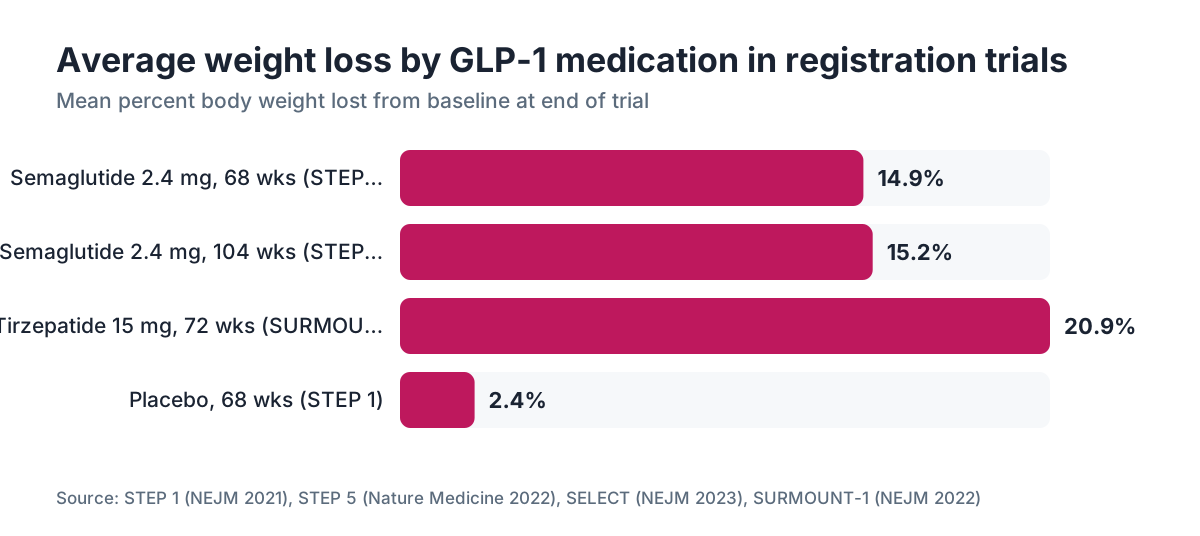
The STEP 1 trial showed a mean weight reduction of 14.9% of body weight at 68 weeks with semaglutide 2.4 mg weekly versus 2.4% with placebo. [8] That 14.9% figure is the most-cited number in GLP-1 research, and it comes from a well-designed randomized controlled trial of 1,961 adults, so it's a fair benchmark.
Women specifically: STEP 1 did not report stratified results by sex in its primary publication, and sex-disaggregated data in GLP-1 trials are still limited. What we do know from body composition research is that women tend to lose a higher proportion of fat mass relative to lean mass than men on caloric restriction, but muscle loss remains a concern for perimenopausal and postmenopausal women who already face estrogen-driven shifts in lean mass. [See our article on semaglutide for weight loss for a detailed breakdown.]
The STEP 5 trial, a two-year extension study, showed that weight loss was largely maintained over 104 weeks with continuous treatment, with a mean reduction of 15.2% from baseline. [9] Discontinuation, however, is associated with substantial regain. The SELECT trial, published in 2023, added cardiovascular evidence: semaglutide 2.4 mg reduced major adverse cardiovascular events by 20% in adults with overweight or obesity and established cardiovascular disease, regardless of weight loss magnitude. [10]
For women in perimenopause or menopause, the hormonal backdrop matters for realistic expectations. Estrogen decline changes fat distribution toward visceral accumulation, which GLP-1s do appear to address, but the effect of declining estrogen on metabolic rate means some women lose more slowly than the trial averages. Nobody has clean prospective data on semaglutide outcomes stratified by menopausal status. The honest answer is that individual response varies more than the trial means suggest.
What are the real side effects women should know about?
The most common side effects across the STEP trials were gastrointestinal: nausea (44% of semaglutide group vs. 16% placebo in STEP 1), diarrhea (30% vs. 16%), vomiting (24% vs. 6%), and constipation (24% vs. 11%). [8] Most GI symptoms were mild to moderate and peaked during dose escalation before improving.
Nausea is the reason the titration schedule exists. Starting at 0.25 mg and moving up every four weeks gives the body time to adapt. Eating smaller meals, avoiding high-fat foods, and staying upright after eating helps a lot. This is practical, not optional.
The boxed warning for thyroid C-cell tumors is animal-study-based and applies to anyone with a personal or family history of MTC or MEN 2. The FDA is clear that the human risk is uncertain, but the contraindication is firm. [1]
Pancreatitis is a rare but serious risk. Patients should stop the drug and seek care immediately if they experience severe, persistent abdominal pain. [1] The FDA label also lists gallbladder disease (cholelithiasis and cholecystitis) as adverse events that occurred more often with semaglutide than placebo.
Muscle loss is a real concern that doesn't always get enough attention. Rapid weight loss on GLP-1s can include significant lean mass reduction. For women over 40, who are already losing muscle mass as estrogen and progesterone decline, this warrants attention. Adequate protein intake (at least 1.2 g/kg body weight) and resistance training are the evidence-based countermeasures. Some providers are pairing semaglutide with peptides like BPC-157 or MK-677 for lean mass support; the evidence base for that combination is thin and evolving, so approach with eyes open.
Injection site reactions, headache, fatigue, and dizziness round out the common adverse effect profile. None of these are reasons to avoid the drug for most women, but they should be part of the informed consent conversation before you start.
How does semaglutide interact with menopause and hormones?
This is where the conversation gets genuinely interesting and where most general GLP-1 content falls short.
Estrogen decline during perimenopause and menopause shifts metabolism in several ways: insulin resistance increases, visceral fat accumulates even without caloric excess, and the gut microbiome changes in ways that affect appetite signaling. GLP-1 receptors are expressed in the hypothalamus, an area also affected by fluctuating estrogen, which may be part of why some women report appetite changes independent of weight during the menopausal transition.
Semaglutide reduces hepatic glucose production and improves insulin sensitivity, which directly addresses some of the metabolic consequences of estrogen loss. There is no head-to-head trial of semaglutide versus estrogen replacement for metabolic outcomes, and there probably won't be soon. What exists is mechanistic evidence and a fairly strong clinical consensus that both interventions have merit for different indications.
Women on estrogen therapy, particularly oral estradiol, should know that oral estrogen increases sex hormone-binding globulin and has first-pass hepatic effects that semaglutide does not share. An estrogen patch, which bypasses hepatic metabolism, may be preferred in women who are also managing metabolic concerns. This is a conversation for your prescriber, not a DIY decision.
The question of bone density is real. Rapid weight loss, including from GLP-1s, is associated with accelerated bone mineral density loss, particularly at the hip. The STEP trials did not show significant bone density effects, but those trials weren't powered for fracture outcomes and didn't specifically enrich for postmenopausal women. If you're already at risk for osteoporosis, getting a bone density test before starting semaglutide and monitoring during treatment is sensible.
Progesterone's role in weight regulation and GLP-1 response is understudied. Some researchers hypothesize that low progesterone in perimenopause contributes to the same visceral fat accumulation that GLP-1s target, but there's no clinical trial data to confirm an additive effect. [See our piece on progesterone for more background.]
Semaglutide vs tirzepatide: which prescription is right for you?
Tirzepatide (Mounjaro for type 2 diabetes, Zepbound for weight management) is a dual GIP/GLP-1 receptor agonist, meaning it acts on two hormone pathways instead of one. The SURMOUNT-1 trial showed a mean weight reduction of 20.9% at 72 weeks with the 15 mg tirzepatide dose versus 3.1% with placebo. [11] That's a meaningfully larger average than STEP 1's 14.9% for semaglutide.
Head-to-head data is limited but growing. The SURMOUNT-5 trial published in 2025 directly compared tirzepatide and semaglutide in adults with obesity; tirzepatide produced about 47% more relative weight loss on average. Individual response, however, varies a lot, and some patients do better on semaglutide.
Prescription criteria are similar: BMI of 30 or higher, or 27 or higher with a qualifying comorbidity. Side effect profiles overlap heavily, both are primarily GI, though tirzepatide's dual mechanism may produce a slightly different tolerability pattern for some patients.
Cost and insurance coverage for tirzepatide are similar to semaglutide and equally unpredictable by plan. The choice between them should factor in your personal health history, how you tolerate the GI effects, cost, and your provider's clinical judgment, more than the headline weight loss numbers.
Our full comparison is at semaglutide vs tirzepatide if you want the detailed breakdown.
Red flags to watch for when seeking a semaglutide prescription
The telehealth GLP-1 market grew extremely fast, and not everyone in it is operating at the same standard. A few things should make you pause.
No medical interview. If a platform asks only for your weight and credit card and offers a prescription within minutes, there is no real clinical evaluation happening. Semaglutide at the wrong dose in someone with undiagnosed pancreatitis or a family history of MEN 2 is genuinely dangerous.
No follow-up structure. A responsible prescribing practice includes dose titration check-ins and a way to report serious side effects. If a platform sends you medication and then disappears, that's a problem.
Promises of specific results. No ethical prescriber guarantees a specific percentage of weight loss. The trial averages are population means; your result may be higher, lower, or zero. Platforms that guarantee outcomes are making claims the science does not support.
Selling outside normal pharmacy channels. Semaglutide dispensed from sources outside US-licensed pharmacies (including certain international online pharmacies) may be counterfeit, underdosed, or contaminated. The FDA has issued warnings about fraudulent semaglutide products. [3]
Pressure to buy bundled supplements or extra products. A legitimate GLP-1 program may reasonably recommend protein supplements or a multivitamin. It should not require you to buy unproven add-ons as a condition of access to the prescription.
WomenRx positions its GLP-1 program within a hormonal health context, which means the clinical intake includes menopausal status, HRT use, and relevant lab work, more than BMI. That approach won't be right for everyone, but it is the kind of clinical thinking that should be happening somewhere in your care.
What to bring to your semaglutide prescribing appointment
Preparation makes your first visit faster and more useful. Here's what a thorough prescriber will want to know.
Your current weight and height, ideally measured the same morning. Many telehealth platforms accept self-reported, but if you've recently been at a doctor's office, bring that number.
Recent labs, if you have them. HbA1c, fasting glucose, a basic metabolic panel, thyroid function (TSH at minimum), and a lipid panel within the past 6 to 12 months are ideal. If you don't have recent labs, ask whether the platform orders them before prescribing or whether you need to get them independently.
Your full medication list. Include any hormones (estradiol, progesterone, testosterone), thyroid medication, blood pressure drugs, cholesterol medications, and supplements. Semaglutide slows gastric emptying, which affects the absorption timing of oral medications; a good prescriber notes this and may recommend timing adjustments.
Your personal and family medical history, specifically any history of pancreatitis, gallbladder disease, kidney disease, eating disorders, thyroid cancer, or MEN 2 in family members.
A clear sense of your goals. Weight loss? Blood sugar control? Cardiovascular risk reduction? The answer shapes which formulation and dose makes sense and what success looks like at 6 months.
For women in perimenopause or menopause, your symptom picture matters too. If you're dealing with hot flashes, sleep disruption, and weight gain at the same time, a provider who sees those as connected will serve you better than one treating only the metabolic piece. Understanding when menopause starts and where you are in the transition can help frame that conversation.
Frequently asked questions
Can a primary care doctor prescribe semaglutide, or do I need a specialist?
Any licensed MD, DO, NP, or PA can prescribe semaglutide. You do not need an endocrinologist or obesity medicine specialist, though those specialists may have more experience with dose management and side effect handling. Primary care providers prescribe Ozempic for type 2 diabetes routinely. For Wegovy specifically, some PCPs refer to obesity medicine, but it's not required.
Does insurance cover semaglutide for weight loss?
It depends entirely on your plan. Many commercial insurance plans cover Ozempic for type 2 diabetes. Wegovy for obesity is covered by roughly 27% of large employer plans as of 2023, per KFF data. Medicare coverage for weight loss GLP-1s is still limited. Prior authorization is almost always required. Check your specific plan's formulary and call your insurer before assuming coverage.
How long does a semaglutide prescription last?
Prescriptions are typically written for 30 days at a time, though some providers write 90-day supplies. Most prescribers require a check-in before each dose escalation, which happens every 4 weeks during the titration phase. Once you're at your maintenance dose, visits may be less frequent, often every 3 months, but this varies by practice and platform.
Can I get a semaglutide prescription without going to a doctor's office in person?
Yes. Telehealth platforms allow video or asynchronous visits with licensed prescribers who can write semaglutide prescriptions in most states. The clinical evaluation must still happen, including medical history review and contraindication screening. Lab work may be required before prescribing. The prescription is then sent electronically to a pharmacy that ships to you.
What BMI qualifies me for a Wegovy prescription?
The FDA-approved criteria are a BMI of 30 or higher (obesity), or a BMI of 27 or higher combined with at least one weight-related condition such as type 2 diabetes, hypertension, dyslipidemia, sleep apnea, or cardiovascular disease. BMI is the screening threshold, not the only factor; a good prescriber also considers overall metabolic health, medications, and contraindications.
Is semaglutide safe to take with birth control or hormone therapy?
Semaglutide slows gastric emptying, which can theoretically reduce the absorption rate of oral medications including oral contraceptives and oral estradiol. Most clinical guidance suggests this effect is modest and not a contraindication, but timing of oral medications may matter. Transdermal or injectable hormone therapies are not affected. Discuss your full hormone regimen with your prescriber before starting.
What happens if I stop taking semaglutide?
Weight regain is common after stopping. The STEP 4 withdrawal trial found that patients who stopped semaglutide after 20 weeks regained about two-thirds of their lost weight by one year, while those who continued lost an additional 7.9%. This suggests semaglutide works while you're on it but doesn't permanently reset metabolism. Long-term or indefinite use is increasingly the clinical norm for chronic weight management.
Can semaglutide help with blood sugar even if I don't have diabetes?
Yes. Semaglutide improves insulin sensitivity and reduces fasting glucose even in people without diabetes. In STEP trials, prediabetes rates dropped significantly and some participants reverted to normal glucose tolerance. Ozempic is not approved for prediabetes, but the metabolic effects occur regardless of baseline diagnosis. This is one reason some providers prescribe it off-label for prediabetes in higher-risk patients.
How is the semaglutide injection given and how often?
Semaglutide (Ozempic and Wegovy) is a once-weekly subcutaneous injection, typically in the abdomen, thigh, or upper arm. The pen is prefilled and autoinjector-style; most patients find it straightforward after the first use. It's given on the same day each week, with or without food. Rybelsus is the oral tablet form, taken once daily on an empty stomach with no more than 4 oz of water.
What is the difference between Ozempic and Wegovy?
Both contain semaglutide. Ozempic is approved for type 2 diabetes and cardiovascular risk reduction, available in 0.5 mg, 1 mg, and 2 mg weekly doses. Wegovy is approved for chronic weight management in obesity or overweight with comorbidity, and its maintenance dose is 2.4 mg weekly. Wegovy's higher approved maintenance dose is why it typically produces more weight loss than Ozempic in real-world use.
Will I lose muscle mass on semaglutide?
Some muscle loss occurs with the rapid weight reduction that semaglutide produces, which is a concern especially for women over 40 who already face estrogen-related lean mass changes. The STEP trials did not specifically measure muscle mass outcomes. Resistance training and adequate protein intake, at least 1.2 grams per kilogram of body weight daily, are the evidence-based strategies to minimize lean mass loss during GLP-1 treatment.
Can I take semaglutide while breastfeeding?
The FDA label for both Ozempic and Wegovy advises against use during breastfeeding because there is no adequate data on the drug's presence in human breast milk, its effects on milk production, or effects on the nursing infant. Animal studies showed semaglutide present in milk. Most clinicians recommend discontinuing semaglutide while breastfeeding and discussing timing of restart with the prescriber.
How is semaglutide different from older weight loss drugs?
Older approved weight loss medications like phentermine-topiramate, naltrexone-bupropion, and orlistat work on different mechanisms, primarily appetite suppression via adrenergic pathways, reward circuit modulation, or fat absorption blocking. Semaglutide's GLP-1 mechanism produces larger average weight loss than older agents and also delivers cardiovascular and glycemic benefits. The SELECT trial's 20% reduction in cardiovascular events is something no older weight loss drug demonstrated.
Sources
- FDA, Wegovy (semaglutide) prescribing information
- FDA, Ozempic (semaglutide) prescribing information
- FDA, Drug Shortages and Compounded Semaglutide guidance
- Health Resources and Services Administration (HRSA), Telehealth policy overview
- Novo Nordisk, Wegovy list price and savings information
- Centers for Medicare & Medicaid Services (CMS), Medicare drug coverage
- KFF, Employer Health Benefits Survey 2023
- Wilding JPH et al., NEJM 2021 (STEP 1 trial)
- Garvey WT et al., Nature Medicine 2022 (STEP 5 trial)
- Lincoff AM et al., NEJM 2023 (SELECT trial)
- Jastreboff AM et al., NEJM 2022 (SURMOUNT-1 trial)