Semaglutide pills: how oral Ozempic works, doses, and what women should know
TL;DR: Oral semaglutide (brand name Rybelsus) is an FDA-approved once-daily pill for type 2 diabetes. It contains the same GLP-1 receptor agonist as Ozempic and Wegovy but uses an absorption enhancer called SNAC to survive stomach acid. Weight loss is real but modest compared to injectable semaglutide. No oral semaglutide is currently FDA-approved for weight loss in the U.S., though that is changing.
What is a semaglutide pill and how does it differ from the injection?
Semaglutide is a GLP-1 receptor agonist, a drug that mimics glucagon-like peptide-1, the gut hormone that slows gastric emptying, suppresses appetite, and tells the pancreas to release insulin only when blood sugar is actually elevated. The injectable forms, Ozempic (approved 2017) and Wegovy (approved 2021), deliver semaglutide under the skin once a week. Rybelsus is the oral version, approved by the FDA in September 2019, and it delivers semaglutide by mouth once a day. [1]
The core molecule is identical. What changes is the delivery system. GLP-1 peptides are normally destroyed almost instantly by stomach acid and digestive enzymes, which is why earlier GLP-1 drugs could not be swallowed. Novo Nordisk solved this with a co-formulation technology using sodium N-(8-[2-hydroxybenzoyl]amino)caprylate, known as SNAC. SNAC temporarily raises the pH right around the tablet as it dissolves, creating a microenvironment that protects semaglutide long enough for it to absorb through the gastric mucosa rather than the intestine. [2]
Bioavailability is still low compared to injections. The 14 mg Rybelsus tablet delivers roughly 1 mg equivalent of semaglutide in systemic circulation, while a 1 mg Ozempic injection is fully bioavailable. That gap partly explains why doses on the pill are expressed in milligrams that look larger (3 mg, 7 mg, 14 mg) but don't produce the same plasma exposures as injectable doses labeled in milligrams. [2]
Here's the short version for women weighing their options. The pill is real semaglutide, it works, but the dose ceiling is lower and the weight-loss results in trials have been more modest than weekly injections. If convenience or needle aversion is the deciding factor, the pill is a legitimate path, especially for semaglutide users managing type 2 diabetes who don't need maximum GLP-1 effect.
Is there an oral semaglutide pill approved for weight loss?
As of mid-2025, Rybelsus is approved only for type 2 diabetes in the United States. There is no FDA-approved oral semaglutide for weight loss yet, though Novo Nordisk has been running trials. [1]
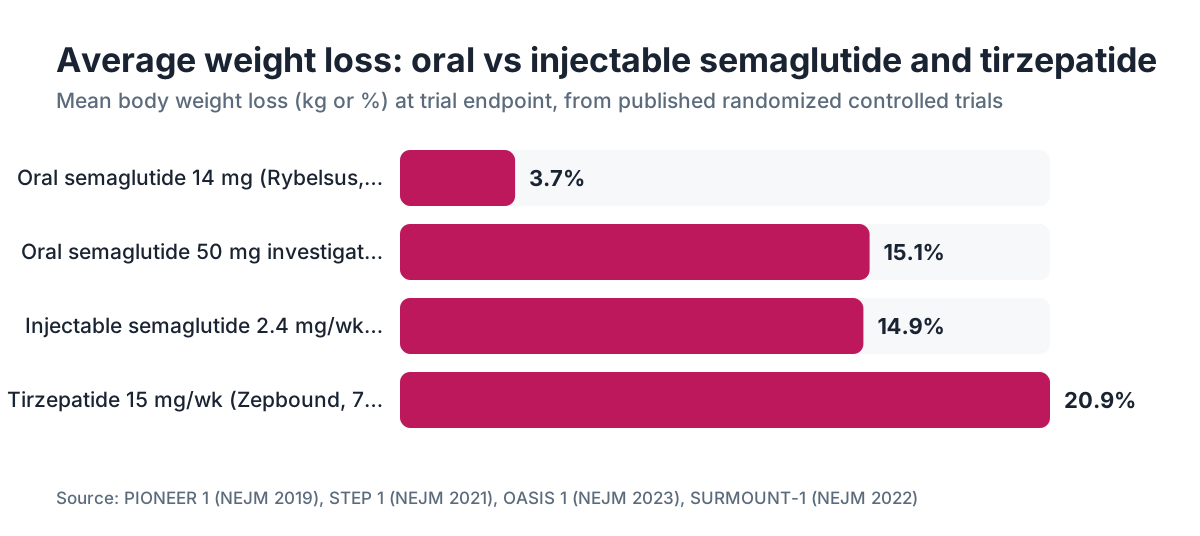
That gap is worth understanding precisely. The PIONEER trials, which supported Rybelsus approval, showed weight reductions of roughly 2 to 5 kg at the 14 mg dose over 26 weeks, meaningful but far below the 15 percent body weight loss seen in the STEP 1 trial for 2.4 mg injectable Wegovy. [3][4] The lower systemic exposure from oral delivery is the primary reason.
Novo Nordisk developed a higher-dose oral semaglutide formulation at 25 mg and 50 mg (those are formulation-dose numbers, not equivalent to 25 mg of injected semaglutide) and ran the OASIS 1 trial, which reported about 15.1 percent body weight loss at 68 weeks with the 50 mg oral dose. [5] The FDA accepted a supplemental application for this higher-dose oral semaglutide for obesity in late 2023 and issued a complete response letter in 2024 requesting additional manufacturing data. The review was ongoing as of mid-2025. Check the FDA's drug database for current status. [1]
The practical takeaway for women looking at semaglutide for weight loss: the currently available Rybelsus pill is a modest weight-loss tool, not a Wegovy replacement. If weight loss is the primary goal, injectable semaglutide or tirzepatide has far better evidence right now.
How do you take oral semaglutide correctly, and why does it matter so much?
This is the part most people get wrong, and it genuinely affects whether the drug works at all.
Rybelsus must be taken on a completely empty stomach with no more than 4 ounces (120 mL) of plain water, at least 30 minutes before any food, drink other than that small amount of water, or other oral medications. The FDA label is explicit about this. Even a sip of coffee, a supplement, or a second glass of water before the 30-minute window can reduce absorption by more than 50 percent. [1]
Why? SNAC's mechanism depends on a very specific local gastric environment. Any volume of liquid beyond 120 mL dilutes it. Food activates gastric emptying patterns that move the tablet away from the absorptive site too quickly. Other medications can interact with the pH-altering mechanism or bind to semaglutide directly.
In practice, this means setting an alarm early enough to take the tablet, then waiting the full 30 minutes before coffee, breakfast, or anything else. Many women find taking it the moment they wake up, before getting out of bed, then setting a separate alarm for breakfast, works best. Missing the timing window doesn't mean skipping the dose entirely. Skip it and take the next day's dose at the right time; don't double up. [1]
Non-adherence to the dosing window is almost certainly responsible for a portion of the "it's not working" reports with Rybelsus. Injectable semaglutide has none of these constraints, which is one reason clinicians often prefer it for patients who have variable morning schedules or take multiple morning medications.
What doses does the semaglutide pill come in, and how does titration work?
Rybelsus comes in three strengths: 3 mg, 7 mg, and 14 mg. The titration schedule in the FDA-approved label is:
| Phase | Dose | Duration | |---|---|---| | Starting dose | 3 mg once daily | 30 days | | Intermediate dose | 7 mg once daily | 30 days minimum | | Maintenance dose | 14 mg once daily | Ongoing |
The 3 mg dose is purely a starter dose for tolerability. It has no meaningful glucose-lowering or weight-loss effect on its own. [1] Moving to 7 mg after 30 days is the protocol unless GI side effects are severe. Most patients who stay at 7 mg long-term are doing so because their A1C is already at goal or because they can't tolerate 14 mg. The 14 mg dose is where the therapeutic effect for both A1C and body weight is most meaningful.
For the investigational higher-dose formulations (25 mg, 50 mg) being studied for obesity, Novo Nordisk used a different tablet technology and a separate titration with doses expressed as formulation milligrams not directly comparable to the approved Rybelsus doses. These are not available by prescription in the U.S. as of mid-2025. [5]
Dose adjustments for kidney or liver disease: the approved label does not require dose modification for mild to moderate chronic kidney disease or hepatic impairment, but severe renal impairment data is limited. [1] Women in perimenopause who have developed metabolic syndrome often have some degree of insulin resistance and mild kidney stress; a prescribing clinician should review the full label in those cases.
How much weight do women actually lose on the semaglutide pill?
Honest answer: less than the injection, and the evidence from real-world use suggests results are variable.
In the PIONEER 1 trial, participants taking 14 mg oral semaglutide as monotherapy lost about 3.7 kg (roughly 8 lbs) over 26 weeks versus 1.4 kg on placebo. That's a 2.3 kg drug-attributable loss at the approved maximum dose. [6] Other PIONEER trials that allowed dose escalation toward the higher investigational doses showed more loss, but those are not the doses in your prescription.
The PIONEER 6 cardiovascular outcomes trial included people with established cardiovascular disease and showed a 4.2 kg weight loss at 14 mg over a median 16 months, which is consistent. [7]
For women in perimenopause or post-menopause, the picture is more nuanced. Hormonal shifts lower estrogen, which changes where body fat is stored (more visceral, less subcutaneous) and makes losing it harder. GLP-1 agonists work through appetite suppression and slower gastric emptying regardless of hormone status, but the hormonal context affects the starting weight, baseline insulin resistance, and total weight-loss ceiling. There's no trial specifically powered for postmenopausal women on oral semaglutide alone.
Women who want the GLP-1 drug's weight loss benefits but are managing menopausal symptoms at the same time may find that combining hormone replacement therapy with a GLP-1 is a reasonable approach. HRT helps preserve muscle mass during caloric restriction and addresses vasomotor symptoms that can disrupt sleep and compound weight gain. That's a real clinical conversation to have, not a theoretical one.
If you are comparing the semaglutide pill's weight loss potential to injectable options, the honest comparison is about 4 to 5 kg on the pill versus 12 to 15 kg on 2.4 mg weekly Wegovy, based on available trial data.
What are the side effects of the semaglutide pill women report most often?
The GI side effects are the same class as injectable semaglutide: nausea, vomiting, diarrhea, constipation, abdominal discomfort. The frequency may actually be slightly higher with oral semaglutide because you're dosing every day rather than once a week, which means there's no drug-free interval.
In the PIONEER trials, nausea occurred in about 20 percent of patients at 14 mg, compared to roughly 20 percent for 1 mg weekly injectable semaglutide in STEP trials. [6][3] That parallel is somewhat reassuring, though the daily exposure pattern means some women find oral semaglutide harder to tolerate in the first month.
Other reported effects:
- Decreased appetite (technically the desired effect, but it can feel like a disorienting loss of interest in food at first)
- Fatigue in the first 2 to 4 weeks
- Burping and early satiety
- Rarely: hypoglycemia when combined with sulfonylureas or insulin
Serious but rare risks are the same as injections: pancreatitis (a warning in the label), gallbladder disease, and a theoretical risk of thyroid C-cell tumors based on rodent data (the relevant clinical risk in humans is unknown). The label carries a boxed warning about thyroid C-cell tumors; patients with a personal or family history of medullary thyroid carcinoma or MEN 2 should not use it. [1]
Bone density is worth raising specifically for perimenopausal women. Rapid weight loss from any GLP-1 drug can speed up bone mineral density loss, especially without adequate protein intake and resistance training. Getting a bone density test before starting and monitoring during treatment is something clinicians should discuss, particularly if you're already at elevated fracture risk from declining estrogen.
How does the semaglutide pill compare to Ozempic and Wegovy injections?
| Feature | Rybelsus (oral) | Ozempic (injection) | Wegovy (injection) | |---|---|---|---| | FDA approval | Type 2 diabetes | Type 2 diabetes, CV risk reduction | Obesity/overweight | | Approved doses | 3, 7, 14 mg daily | 0.5, 1, 2 mg weekly | 0.25 to 2.4 mg weekly | | Average weight loss (trials) | 3-5 kg at 14 mg | 4-6 kg at 1-2 mg | 12-15 kg at 2.4 mg | | Dosing constraint | Strict empty stomach, 30-min wait | Subcutaneous injection, any time | Subcutaneous injection, any time | | Bioavailability | ~1% oral | ~89% subcutaneous | ~89% subcutaneous | | Needle required | No | Yes | Yes | | Cost (list price, U.S.) | ~$900-$1,000/month | ~$900-$1,000/month | ~$1,300-$1,400/month |
Cost data reflects 2024 U.S. list prices before insurance; actual out-of-pocket cost varies widely by insurance status and manufacturer savings programs. [1]
The bioavailability gap is the defining feature. About 1 percent of the oral dose reaches systemic circulation intact, compared to roughly 89 percent with subcutaneous injection. [2] The higher milligram numbers on the Rybelsus label compensate somewhat, but there is still a ceiling on plasma concentration that limits its GLP-1 effect relative to weekly injections.
For women who genuinely cannot self-inject, have severe needle phobia, or travel constantly and find sharps disposal burdensome, Rybelsus is a real option. For women whose primary goal is meaningful weight loss, the injectable forms have a much stronger evidence base. Women managing both type 2 diabetes and overweight without severe obesity might find the 14 mg pill hits their A1C goal adequately while producing a modest weight benefit, which may be exactly the right fit.
Can you get a compounded oral semaglutide, and is it safe?
This question is everywhere in 2024 and 2025, and the answer requires real nuance.
During the FDA's drug shortage listing for injectable semaglutide, 503A and 503B compounding pharmacies were legally permitted to compound semaglutide formulations. Most of what was compounded was injectable. Some pharmacies began offering compounded oral semaglutide capsules or sublingual preparations. [8]
The FDA removed semaglutide from the shortage list for Wegovy in late 2024 and for Ozempic in early 2025, which means 503A and 503B compounders generally cannot legally compound semaglutide for most patients once the shortage ends. The timeline for full enforcement was still being worked out as of mid-2025. [8]
Here's the part that matters most: compounded oral semaglutide is not the same as Rybelsus. Rybelsus works because of the SNAC co-formulation technology, which is proprietary and not reproducible by a compounding pharmacy. A compounded oral capsule of semaglutide powder without SNAC will have extremely poor bioavailability because stomach acid degrades it. Whether you absorb a therapeutic amount is genuinely unknown; there are no published pharmacokinetic studies on compounded oral semaglutide without SNAC.
A compounded oral semaglutide that doesn't absorb isn't only ineffective. It's also not free of risk if the dose was calculated assuming normal bioavailability. If you're considering compounded semaglutide, the safer compounded option is the injectable form from a verified 503B facility, not an oral capsule of unclear bioavailability.
WomenRx connects women to licensed prescribers who can review the current regulatory landscape and help identify which formulations are legally available and clinically appropriate for their situation.
Who is the semaglutide pill actually right for?
Rybelsus makes the most sense for a specific profile: a woman with type 2 diabetes, who is not on insulin or sulfonylureas (which increase hypoglycemia risk with GLP-1s), whose primary goal is A1C reduction with a secondary benefit of modest weight loss, and who has a structured morning routine that makes the 30-minute empty-stomach requirement feasible.
It's also worth considering for women with significant needle phobia where injectable adherence is genuinely unlikely. A medication that gets taken every day beats an injection that doesn't happen.
The pill is less ideal for:
- Women whose primary goal is significant weight loss (the injection evidence is much stronger)
- Anyone with unpredictable morning schedules, travel, or late wake times who can't reliably hit the dosing window
- Women taking thyroid hormone (levothyroxine must be spaced away from Rybelsus by at least 30 minutes, complicating the morning routine)
- Women with gastroparesis or other GI motility issues where daily nausea would be particularly burdensome
- Anyone with a personal or family history of medullary thyroid carcinoma
For women in the perimenopausal or postmenopausal window who are asking whether a GLP-1 fits their overall health picture, the hormone-weight-metabolic triad is worth addressing together. Declining progesterone and estrogen shift insulin sensitivity and fat distribution in ways that make GLP-1 therapy more or less necessary depending on the individual. A clinician who understands both hormonal health and GLP-1 pharmacology is worth finding.
What does the semaglutide pill cost, and does insurance cover it?
Rybelsus list price is approximately $900 to $1,000 per month in the United States as of 2024 to 2025. The actual price depends on the pharmacy, any negotiated insurance rates, and whether you qualify for Novo Nordisk's savings programs. [1]
Insurance coverage is better for Rybelsus than for Wegovy in many commercial plans because Rybelsus has a diabetes indication, which most insurance contracts cover. Wegovy's obesity indication is often excluded from commercial insurance under policies that don't cover weight management drugs. Medicare Part D covers Wegovy starting in 2026 under the Inflation Reduction Act provisions for anti-obesity medications, but Rybelsus coverage under Medicare has varied by plan formulary.
Novo Nordisk offers a savings card that can reduce out-of-pocket costs significantly for commercially insured patients who are not on Medicare or Medicaid. The program details change; check Novo Nordisk's official site for current terms.
For uninsured women, the cash price at major pharmacy chains for Rybelsus 14 mg (30 tablets) ranged from approximately $850 to $1,050 in 2024. GoodRx and similar discount programs reduced this to roughly $750 to $900 at some pharmacies, though those prices are not guaranteed and fluctuate.
One comparison worth keeping in mind: injectable Ozempic (1 mg weekly) also runs about $900 to $1,000 per month list price, which means the pill offers no price advantage over its closest injectable equivalent. Wegovy runs $1,300 to $1,400 per month list price, so if cost is the concern and the diabetes indication applies, Rybelsus can be modestly cheaper in practice when insurance cooperates.
What does the research say about semaglutide pills and heart health?
The PIONEER 6 trial, published in the New England Journal of Medicine in 2019, was a cardiovascular outcomes trial for oral semaglutide 14 mg in adults with type 2 diabetes and high cardiovascular risk. The trial's stated conclusion was that "oral semaglutide was noninferior to placebo with respect to major adverse cardiovascular events" and showed a numeric trend toward benefit that did not reach statistical significance, partly because the trial was powered for noninferiority, not superiority. [7]
That distinction matters. PIONEER 6 proved the pill doesn't increase cardiovascular risk (a concern that plagued earlier diabetes drugs). It did not prove the same clear cardiovascular benefit that the SUSTAIN 6 trial showed for injectable semaglutide, which reduced major cardiovascular events by 26 percent relative to placebo in a similar population. [7]
The injectable form has a much stronger cardiovascular evidence base, including the SELECT trial published in 2023, which showed a 20 percent reduction in major cardiovascular events in people with overweight or obesity but without diabetes using 2.4 mg weekly Wegovy. [3] No comparable cardiovascular superiority trial has been completed for oral semaglutide.
For women with established heart disease or multiple cardiovascular risk factors, injectable semaglutide has a clearer evidence-based benefit. For women using Rybelsus primarily for diabetes management, the cardiovascular safety data is reassuring even if the benefit case is not as strong.
How long does it take for oral semaglutide to work?
Blood sugar effects are measurable within 2 to 4 weeks at 7 mg or 14 mg, though A1C is a 3-month average by definition, so the full picture takes a quarter. Most prescribers check A1C at 3 and 6 months after reaching maintenance dose.
Appetite reduction is often noticeable during the first month at 7 mg for women who are sensitive to GLP-1 effects, but it's not guaranteed. Some women feel the appetite suppression strongly; others barely notice it at oral doses.
Weight on the scale typically starts moving at 4 to 8 weeks after reaching the 14 mg dose, assuming the dosing window is being respected consistently. Expecting dramatic changes in the first month is the wrong frame. The PIONEER trials measured outcomes at 26 weeks, and meaningful weight loss at 14 mg was 3 to 5 kg over that period, so roughly half a kilogram per month on average. [6]
If you've been on 14 mg for 12 weeks with consistent adherence to the morning protocol and see no change at all in weight or appetite, that's worth discussing with your prescriber. Either the dosing window isn't being respected, or you're in the population that doesn't respond well to oral semaglutide's lower systemic exposure. Switching to injectable semaglutide or trialing tirzepatide are both reasonable next steps in that scenario.
For women considering WomenRx for GLP-1 prescribing, the clinical team reviews the full picture including hormone status, which affects the metabolic response to GLP-1 therapy.
Can oral semaglutide be combined with hormone therapy or other medications?
There are no known direct pharmacokinetic interactions between semaglutide and estradiol, progesterone, or testosterone at standard HRT doses. The two drug classes work through entirely different mechanisms and different receptors. Women on an estrogen patch or oral hormone replacement therapy can generally take Rybelsus without concern about a drug-drug interaction per se.
The timing issue is real, though. Oral HRT in pill form, like estradiol pills or Bijuva, must be dosed carefully relative to Rybelsus because semaglutide's 30-minute fasting window after the SNAC-assisted absorption phase needs to pass before other oral medications are absorbed normally. The practical solution is to take Rybelsus on waking, wait the full 30 minutes, and then take all other morning medications including oral hormones with a full glass of water and food. Transdermal hormone options (patches, gels, sprays) sidestep this entirely since they don't involve oral administration.
The important drug interactions to know about are with sulfonylureas (increased hypoglycemia risk), insulin (dose adjustment often needed), and warfarin (GLP-1 drugs slow gastric emptying and can slightly affect absorption timing of warfarin, requiring closer INR monitoring). [1]
Levothyroxine is the most common practical problem. Thyroid hormone is itself exquisitely sensitive to co-administration timing, and women taking levothyroxine are supposed to take it on an empty stomach. Both levothyroxine and Rybelsus want the first slot after waking. One approach: take Rybelsus first with 4 oz water, then 30 minutes later take levothyroxine with another small glass of water, then 30 more minutes before food. Your prescriber and pharmacist should confirm this sequencing for your specific regimen.
Frequently asked questions
Is Rybelsus the same as Ozempic in a pill?
The active molecule, semaglutide, is identical in Rybelsus and Ozempic. The delivery is completely different: Ozempic is a once-weekly injection with high bioavailability, while Rybelsus is a once-daily pill using the SNAC absorption technology with about 1 percent bioavailability. The pill requires strict fasting protocols and produces lower systemic semaglutide levels, which is why weight loss results differ between the two forms.
Can I take the semaglutide pill if I don't have diabetes?
Rybelsus is only FDA-approved for type 2 diabetes. Prescribing it off-label for weight loss in someone without diabetes is legal but not standard of care. No oral semaglutide is currently approved for obesity in the U.S. The higher-dose oral semaglutide formulations being developed for obesity (25 mg, 50 mg) are not yet approved. For weight loss without diabetes, injectable semaglutide (Wegovy) or tirzepatide (Zepbound) have stronger evidence and regulatory approval.
What happens if I eat or drink before the 30-minute window with Rybelsus?
Absorption drops sharply. Studies show that food or more than 4 ounces of water reduces semaglutide bioavailability by more than 50 percent. If you accidentally drink coffee before the 30 minutes is up, don't double the next dose. Simply continue your normal schedule the next day and try to protect the fasting window. Consistent timing violations explain many cases where Rybelsus appears not to be working.
How does menopause affect how well the semaglutide pill works?
Menopause lowers estrogen, which shifts fat storage toward visceral (abdominal) fat and worsens insulin resistance. GLP-1 drugs work through appetite and insulin mechanisms that function regardless of hormone status, but the hormonal environment affects your baseline metabolic state and the amount of weight you can realistically lose. Women in menopause may find that combining GLP-1 therapy with hormone replacement therapy preserves muscle mass and improves overall metabolic response. No randomized trial has specifically studied this combination.
Does the semaglutide pill cause muscle loss?
Any significant caloric deficit can cause muscle loss, and GLP-1 drugs are no exception. Weight lost on semaglutide includes both fat and lean mass. Studies suggest roughly 25 to 40 percent of total weight lost on GLP-1 drugs is lean mass, though this varies by protein intake and exercise. Resistance training and adequate protein intake (at least 1.2 g per kg of body weight per day) are the main tools to protect muscle. Women in perimenopause or post-menopause are at higher baseline risk for muscle loss and should address this proactively.
Is a compounded oral semaglutide capsule as effective as Rybelsus?
Almost certainly not. Rybelsus works because of proprietary SNAC technology that creates a protective microenvironment in the stomach. A compounded capsule of semaglutide powder lacks this technology, meaning stomach acid likely degrades most of the active ingredient before it can absorb. Bioavailability is unknown and probably very low. Beyond effectiveness concerns, regulatory status for compounded semaglutide is in flux after FDA removed it from the shortage list. The injectable compounded form at least bypasses the absorption problem.
How long do you have to take the semaglutide pill to keep the weight off?
Like all GLP-1 drugs, the effects on appetite and blood sugar depend on continued use. When oral semaglutide is stopped, GLP-1 receptor stimulation ends, appetite returns to baseline, and weight regain is common. A 2022 withdrawal study of injectable semaglutide showed patients regained about two-thirds of lost weight within one year of stopping. Oral semaglutide likely follows a similar pattern. Long-term use is the expectation, not a short-term course.
Can the semaglutide pill cause thyroid problems?
GLP-1 receptor agonists including semaglutide caused thyroid C-cell tumors in rodent studies at doses producing prolonged high exposure. Whether this translates to humans is unknown. The FDA label carries a boxed warning, and semaglutide is contraindicated in anyone with a personal or family history of medullary thyroid carcinoma or Multiple Endocrine Neoplasia syndrome type 2. Monitoring thyroid function beyond standard care is not required in the current label for otherwise healthy patients, but discuss your personal history with your prescriber.
What is the starting dose of Rybelsus and how fast can I increase it?
The starting dose is 3 mg once daily for 30 days. After 30 days, it increases to 7 mg. If additional glucose control is needed after another 30 days minimum, the dose can go to 14 mg, the maximum approved dose. The 3 mg phase is purely for tolerability; it has no meaningful therapeutic effect. Rushing the titration increases nausea and vomiting risk without any established clinical benefit.
Does oral semaglutide interact with birth control pills?
No direct pharmacokinetic interaction has been identified between semaglutide and oral contraceptives. However, GLP-1 drugs slow gastric emptying, which can theoretically affect absorption timing of oral contraceptives taken after a meal. Taking your birth control pill at least 30 minutes after Rybelsus, and at a consistent time, is prudent. If you experience significant vomiting in the first few weeks of Rybelsus, the same missed-dose protocols that apply to vomiting with oral contraceptives would apply.
Is semaglutide in pill form covered by Medicare?
Rybelsus has a type 2 diabetes indication, which is covered by most Medicare Part D plans, though formulary placement varies. Medicare coverage for Wegovy (injectable semaglutide for obesity) begins expanding in 2026 under Inflation Reduction Act provisions. If you're on Medicare and your prescriber wants to use Rybelsus off-label for weight loss without a diabetes diagnosis, coverage is unlikely. Always verify your specific Part D formulary.
How does oral semaglutide compare to tirzepatide for weight loss?
There is no head-to-head trial comparing oral Rybelsus to tirzepatide. Comparing available trial data: tirzepatide at 15 mg weekly (Zepbound) produced about 20 to 22 percent body weight loss in the SURMOUNT-1 trial, far exceeding the 3 to 5 kg typical of 14 mg Rybelsus. Oral semaglutide at currently available doses is not competitive with either injectable tirzepatide or injectable semaglutide for weight loss. For a full comparison, see our semaglutide vs tirzepatide breakdown.
Can I split or crush the Rybelsus tablet to make it easier to take?
No. Rybelsus tablets should be swallowed whole. Splitting or crushing the tablet disrupts the SNAC distribution within the tablet matrix, which is essential for the absorption mechanism to work. A split tablet cannot reliably deliver semaglutide to the right location in the stomach lining, and bioavailability would be unpredictable. If swallowing tablets whole is a genuine problem, discuss alternative formulations with your prescriber.
What bloodwork should women get before starting the semaglutide pill?
Standard pre-treatment labs include fasting glucose, hemoglobin A1c, a basic metabolic panel (kidney function, electrolytes), liver enzymes, lipid panel, and thyroid function. A complete blood count is reasonable. For perimenopausal or postmenopausal women, FSH and estradiol help contextualize metabolic risk. If bone health is a concern, a baseline bone density scan before starting any GLP-1 drug is worth considering, since significant weight loss can affect bone mineral density.
Sources
- FDA, Rybelsus (semaglutide) prescribing information
- Novo Nordisk / Clinical Pharmacokinetics: SNAC mechanism and oral semaglutide bioavailability (~1%)
- New England Journal of Medicine, STEP 1 trial (Wilding et al., 2021)
- New England Journal of Medicine, PIONEER 1 trial (Aroda et al., 2019)
- New England Journal of Medicine, OASIS 1 trial (Knop et al., 2023)
- Lancet, PIONEER trial program overview (Pratley et al., 2019)
- New England Journal of Medicine, PIONEER 6 cardiovascular outcomes trial (Husain et al., 2019)
- FDA, drug shortage information and compounding guidance
- Endocrine Society, Clinical Practice Guideline on Pharmacological Management of Obesity
- SURMOUNT-1 trial (Jastreboff et al., 2022), New England Journal of Medicine
- NAMS (Menopause Society), position statement on weight and menopause
- New England Journal of Medicine, semaglutide withdrawal study (Wilding et al., 2022)