Semaglutide peptide: what it is, how it works, and what women need to know
TL;DR: Semaglutide is a synthetic peptide that mimics the gut hormone GLP-1. It slows digestion, reduces appetite, and lowers blood sugar. FDA-approved as Ozempic (diabetes) and Wegovy (obesity), it produced about 15% body weight loss over 68 weeks in the STEP 1 trial. Women in perimenopause and menopause respond well but face specific risks worth knowing before starting.
What exactly is semaglutide, and why is it called a peptide?
Semaglutide is a glucagon-like peptide-1 (GLP-1) receptor agonist, meaning it is a synthetic molecule built to mimic the peptide hormone GLP-1 that your gut releases naturally after you eat. The word peptide just means a short chain of amino acids, smaller than a protein. Your body already makes GLP-1. Semaglutide is an engineered version that lasts far longer in circulation.
Natural GLP-1 has a half-life of about two minutes because an enzyme called DPP-4 breaks it down almost immediately [1]. Semaglutide was redesigned with a fatty acid side chain that binds to albumin in the blood and resists that breakdown. The result is a half-life of roughly one week, which is why weekly injections work.
Novo Nordisk developed semaglutide and the FDA approved the subcutaneous injection form in December 2017 for type 2 diabetes under the brand name Ozempic, then in June 2021 for chronic weight management at a higher dose under the brand name Wegovy [2]. There is also an oral daily tablet form, Rybelsus, approved in 2019 for diabetes. The molecule itself is identical across all three products. The dose, delivery method, and approved indication differ.
Calling semaglutide a "peptide" in wellness and telehealth contexts sometimes creates confusion, because the peptide world also includes growth hormone secretagogues, BPC-157, and other compounds. Semaglutide is categorically different. It is an FDA-approved drug with large randomized controlled trial data behind it, not a research peptide sold in a gray market. That distinction matters a lot for safety and sourcing decisions.
See also: semaglutide for the full drug overview.
How does semaglutide work in the body?
GLP-1 receptors sit in the pancreas, the brain, the stomach, the heart, and the kidneys. Semaglutide activates all of them at once, which is why its effects reach well beyond blood sugar.
In the pancreas, it stimulates insulin release in a glucose-dependent way, meaning it only triggers insulin when blood sugar is actually elevated. It also suppresses glucagon, the hormone that tells the liver to dump stored glucose into the bloodstream. Together those two actions lower fasting and post-meal glucose without causing hypoglycemia in people who do not take insulin [1].
In the brain, specifically in the hypothalamus and brainstem, semaglutide reduces appetite and increases satiety signals. A 2021 paper in the New England Journal of Medicine described the mechanism this way: GLP-1 receptor agonists act on "areas of the brain involved in appetite regulation and reward" to reduce energy intake [3]. That is not willpower becoming easier. The drug changes the biochemistry of hunger.
In the stomach, semaglutide slows gastric emptying, the rate at which food moves from your stomach into the small intestine. Food sits longer, you feel full sooner, and post-meal blood sugar spikes are blunted. This effect is strongest at lower doses and softens somewhat over time.
Cardiovascular data from the SUSTAIN-6 trial showed a 26% relative reduction in major adverse cardiovascular events (MACE) in adults with type 2 diabetes and established cardiovascular disease [4]. The SELECT trial, published in 2023, extended that finding to people with obesity but without diabetes, showing a 20% reduction in MACE [5]. Those cardiovascular benefits now shape how clinicians weigh the risk-benefit math, especially for women whose cardiovascular risk climbs sharply after menopause.
Kidney data are emerging too. The FLOW trial, stopped early for overwhelming benefit, found semaglutide cut the risk of serious kidney outcomes by 24% in people with type 2 diabetes and chronic kidney disease [6].
How much weight does semaglutide actually cause women to lose?
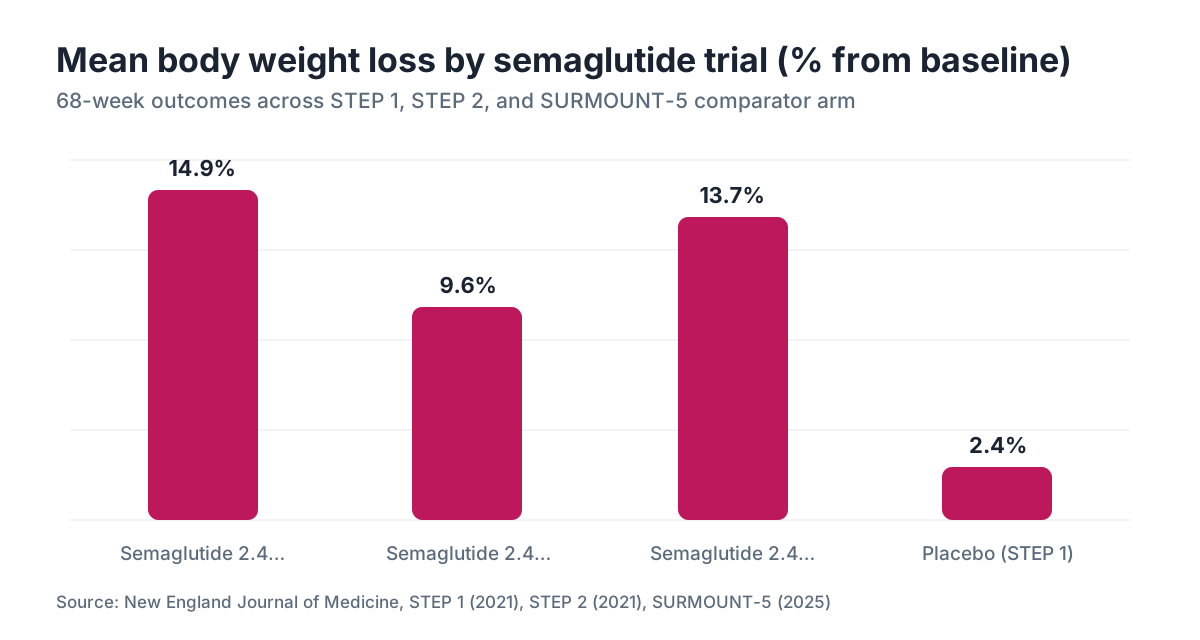
The STEP 1 trial, published in the New England Journal of Medicine in 2021, is the anchor study. It enrolled 1,961 adults with obesity or overweight plus at least one weight-related condition. Participants on semaglutide 2.4 mg weekly lost a mean of 14.9% of body weight over 68 weeks, versus 2.4% on placebo [3]. Roughly two-thirds of the semaglutide group lost at least 10% of body weight.
The STEP 2 trial looked at adults with type 2 diabetes and found smaller losses, averaging 9.6% with the 2.4 mg dose. Insulin resistance and diabetes medications make weight loss harder, and this is where you see it [3].
STEP 5, which tested semaglutide as an add-on to intensive behavioral therapy, showed the drug added benefit on top of structured lifestyle work rather than replacing it.
Here is what a 15% loss looks like for a woman weighing 200 pounds: 30 pounds over roughly 16 months. Some women lose more, some less. Genetics, baseline metabolic health, dietary patterns, and whether someone is on hormonal contraception or hormone therapy all likely influence response, though the evidence on hormone interactions specifically is thin.
Weight loss tends to plateau around months 12 to 16. And it comes back when the drug stops. The STEP 4 trial, which withdrew semaglutide after 20 weeks and followed people for another 48 weeks, showed participants regained about two-thirds of their lost weight within a year of stopping [3]. That is the hard truth no one should gloss over: this is a long-term medication, not a finite course.
For a head-to-head comparison with tirzepatide, see semaglutide vs tirzepatide. For the full weight-loss evidence base, see semaglutide for weight loss.
What are the FDA-approved forms and doses of semaglutide?
| Brand | Indication | Route | Starting dose | Max approved dose | |---|---|---|---|---| | Ozempic | Type 2 diabetes | Weekly subcutaneous injection | 0.25 mg x 4 weeks | 2 mg | | Wegovy | Chronic weight management (BMI ≥30, or ≥27 with comorbidity) | Weekly subcutaneous injection | 0.25 mg x 4 weeks | 2.4 mg | | Rybelsus | Type 2 diabetes | Daily oral tablet | 3 mg x 30 days | 14 mg |
Dosing always steps up gradually, over roughly four to five months for Wegovy, to reduce gastrointestinal side effects. Jumping to a therapeutic dose too fast is the number one reason people quit in the first eight weeks.
The FDA's prescribing information for Wegovy includes a contraindication for people with a personal or family history of medullary thyroid carcinoma (MTC) or Multiple Endocrine Neoplasia syndrome type 2 (MEN 2), based on animal data showing thyroid C-cell tumors at high doses [2]. No causal link has been established in humans, but the contraindication stands.
Ozempic is approved only for type 2 diabetes but gets prescribed off-label for weight loss at doses up to 1 mg or 2 mg. Wegovy at 2.4 mg is the only dose with FDA approval for obesity. That distinction matters for insurance coverage.
For details on compounded versions of the drug, see compounded semaglutide.
What side effects do women most commonly experience on semaglutide?
Nausea is the most common side effect, reported by 44% of participants on Wegovy 2.4 mg in STEP 1 versus 16% on placebo [3]. It usually peaks in the first one to two weeks after each dose increase and improves with time. Vomiting, diarrhea, and constipation follow. Eating smaller meals, skipping fatty or spicy food during dose escalation, and injecting in the evening rather than the morning all help in practice.
More serious but less common: acute pancreatitis has been reported. The absolute risk is low but real. Anyone with a personal or family history of pancreatitis, gallstones, or heavy alcohol use should raise it with their prescriber before starting.
Gallbladder disease is a real concern. Rapid weight loss of any kind raises gallstone risk, and semaglutide is no exception. The FDA updated the Ozempic label in 2022 to add cholelithiasis (gallstones) as a notable adverse event [2].
A lesser-discussed but significant issue for women: muscle and bone loss. STEP 1 data showed that about 40% of weight lost on semaglutide came from lean mass, not fat [3]. For a woman in her late forties or fifties who is already shedding muscle as estrogen declines, that matters enormously. Adequate protein intake (most clinicians target 1.2 to 1.6 grams per kilogram of body weight daily) and resistance training are not optional add-ons. They are essential to protect muscle while on this drug.
Bone density is a parallel concern. Postmenopausal women on semaglutide should consider a baseline bone density test before starting, since fast weight loss can compound the bone loss that estrogen withdrawal causes. This is one area where combining semaglutide with hormone replacement therapy may be protective, though head-to-head trial data on that combination do not yet exist.
The so-called "Ozempic face" (volume loss in the face from rapid fat reduction) is cosmetically real but medically minor. Women with higher baseline body fat tend to notice it more.
How does semaglutide interact with menopause and perimenopause?
Weight gain during perimenopause and menopause is not mostly about eating more. Declining estrogen shifts fat from subcutaneous stores (hips and thighs) to visceral fat (the abdomen), raises insulin resistance, and slows resting metabolic rate. That is why calorie-counting fails so many perimenopausal women even when their adherence is near perfect.
Semaglutide hits the insulin resistance and appetite dysregulation piece directly, which is why many clinicians see it as well-matched to this life stage. There are no large trials specifically in perimenopausal or menopausal women yet, but secondary analyses from STEP 5 suggest women with metabolic syndrome markers respond well.
One real tension: estrogen also affects GLP-1 receptor sensitivity. Rodent data suggest estrogen increases GLP-1 receptor expression. Whether that means postmenopausal women need higher doses for equivalent effects is genuinely unknown. Nobody has good human data on this yet.
Hormone therapy may improve semaglutide's efficacy indirectly. Estrogen reduces visceral fat and improves insulin sensitivity, and both make the metabolic environment more responsive [10]. The North American Menopause Society notes that estrogen therapy reduces visceral fat redistribution in menopausal women, though its guidance does not test semaglutide specifically.
If you are in your mid-to-late forties and wondering whether weight gain is perimenopause or something else, the articles on perimenopause age and when does menopause start will help you place your own timeline.
WomenRx, a telehealth practice for women's hormones and GLP-1 medications, is one example of a clinic that treats semaglutide and hormone therapy as a single metabolic picture rather than siloing them. That combined approach is increasingly where the clinical evidence points.
Can you take semaglutide while on hormone replacement therapy?
There are no known pharmacokinetic interactions between semaglutide and estradiol, progesterone, or testosterone. The two drug classes work through different receptor systems and are not metabolized through the same liver pathways. Clinically, they are routinely prescribed together.
The more interesting question is whether they should be used together on purpose. Hormone replacement therapy (HRT) treats the hormonal driver of menopausal weight gain and metabolic shift. Semaglutide treats appetite and insulin resistance. They are not duplicative. They pull different levers.
Women on oral estrogen should know it raises clotting factors and triglycerides, and that the combination with the modest triglyceride bump of rapid weight cycling deserves attention. Transdermal estrogen via an estrogen patch skips the hepatic first-pass effect and is generally preferred in women with metabolic concerns [10].
Progesterone form matters too. Micronized progesterone (Prometrium, generic) has a more favorable metabolic profile than synthetic progestins. For more, see progesterone.
The short answer: yes, you can take both. But your prescriber should have the full picture, including your HRT formulation, dose, and route, when calibrating your semaglutide plan.
For a broader look at menopausal hormone therapy, see hormone replacement therapy and menopause.
What is compounded semaglutide and is it the same thing?
Compounded semaglutide is semaglutide base or semaglutide sodium mixed by a compounding pharmacy, often sold at much lower cost than branded Ozempic or Wegovy. During the FDA drug shortage period (2022 through early 2025 for Wegovy, variable for Ozempic), compounding was permitted under federal shortage provisions.
The FDA removed Wegovy from its shortage list in February 2025 and began sending warning letters to compounders and telehealth platforms selling compounded semaglutide shortly afterward, citing concerns about the safety of unapproved versions [12]. As of mid-2025, the legal status of compounded semaglutide at large 503B outsourcing facilities is in active regulatory flux.
The core issue: compounded versions use semaglutide sodium or semaglutide base, not the identical salt form used in Wegovy or Ozempic, and there are no bioequivalence studies confirming they perform the same way. The FDA has stated that "compounded versions of semaglutide are not FDA-approved and may present risks to patients" [12].
For a full breakdown of what to look for and what to avoid, see compounded semaglutide.
How much does semaglutide cost and does insurance cover it?
Wegovy's list price in the United States is about $1,350 per month for the 2.4 mg maintenance dose, per 2024 Novo Nordisk data. Ozempic lists at roughly $935 to $970 per month depending on dose. Discount programs like GoodRx run lower, typically $800 to $1,000 for Ozempic.
Insurance coverage for Wegovy (weight management) is substantially worse than for Ozempic (diabetes). Medicare Part D cannot cover Wegovy for weight loss under current law. The Treat and Reduce Obesity Act, which would change that, has been proposed in multiple sessions of Congress without passing as of mid-2025. Medicaid coverage varies by state.
Private coverage for Wegovy is expanding. About 50% of large employer plans covered GLP-1s for obesity as of 2024, up from roughly 25% in 2022, according to the Kaiser Family Foundation [7]. But many plans require prior authorization, documented BMI thresholds, and failed attempts at supervised diet programs.
Novo Nordisk's savings card program for commercially insured patients can bring Wegovy down to around $25 per month for eligible patients. It does not apply to Medicare or Medicaid beneficiaries.
Compounded semaglutide has been priced as low as $200 to $400 per month at various telehealth platforms, which explains both its popularity and its regulatory scrutiny.
Who should not take semaglutide?
The FDA-labeled contraindications for Wegovy and Ozempic are [2]:
- Personal or family history of medullary thyroid carcinoma (MTC)
- Multiple Endocrine Neoplasia syndrome type 2 (MEN 2)
- Known hypersensitivity to semaglutide or any excipient
Beyond the hard contraindications, clinicians typically avoid or use extreme caution in women with:
Active pancreatitis or a history of severe pancreatitis. A prior episode does not automatically rule out use, but the risk-benefit math changes.
Severe gastroparesis. Semaglutide slows gastric emptying further, which can worsen the condition substantially.
Pregnancy or a pregnancy planned within the cycle. Animal data show fetal harm. Because of the long half-life, women trying to conceive should stop semaglutide at least two months before attempting pregnancy. Any pregnancy that occurs on semaglutide should prompt immediate discontinuation and consultation.
Severe eating disorder history, particularly restrictive patterns. The appetite suppression is powerful and can reinforce harmful restriction. This calls for careful psychiatric assessment, not an automatic disqualification.
Severe renal impairment or dialysis. No dose adjustment is formally required, but clinical data in this population are limited, and dehydration from GI side effects becomes more dangerous.
Women with a BMI under 27 and no comorbidities fall outside the FDA-approved indication for Wegovy. Prescribing in that range is off-label and harder to justify medically.
How is semaglutide injected, and how long does it take to see results?
Wegovy and Ozempic come in prefilled autoinjector pens. You inject subcutaneously (under the skin) once weekly into the abdomen, thigh, or upper arm. Rotating sites reduces the small risk of lipodystrophy. The injection takes a few seconds. Most people describe it as a mild pinch.
The Wegovy escalation schedule runs like this: 0.25 mg for weeks 1 through 4, 0.5 mg for weeks 5 through 8, 1.0 mg for weeks 9 through 12, 1.7 mg for weeks 13 through 16, then 2.4 mg from week 17 onward. Your prescriber may slow that pace if GI side effects hit hard.
Blood sugar improvements in people with type 2 diabetes often show up within the first two to four weeks. Noticeable weight loss usually starts around weeks four to eight, though the first month on the low 0.25 mg starting dose rarely produces dramatic changes. Most weight loss in STEP 1 happened between months three and twelve [3].
A common frustration: women expect to feel different immediately and get discouraged during escalation. The drug is doing metabolic work even when the scale is not moving. Patience through the escalation phase is genuinely warranted.
Missed doses: if you miss a dose and your next scheduled dose is more than two days away, inject as soon as you remember. If the next dose is less than two days away, skip the missed dose and resume your schedule. Do not double-dose.
Is semaglutide the same as Ozempic, Wegovy, and Rybelsus?
Yes. The same molecule, semaglutide, is the active ingredient in all three products [8]. Ozempic is the 0.5 mg, 1 mg, and 2 mg weekly injection approved for type 2 diabetes. Wegovy is the 2.4 mg weekly injection approved for chronic weight management. Rybelsus is the 7 mg and 14 mg daily oral tablet approved for type 2 diabetes.
The differences are dose, delivery system, and FDA-approved indication. Novo Nordisk priced and branded them separately partly for commercial reasons and partly because the different indications required separate trial programs.
In practice, many people on Ozempic for weight loss are taking it off-label. Wegovy is on-label for weight management. If your insurance covers Ozempic for diabetes but not Wegovy for obesity, some prescribers write Ozempic off-label for weight loss at doses up to 2 mg. That is a common workaround, but be transparent with your insurer about your diagnosis to avoid claim issues.
Oral semaglutide (Rybelsus) is less commonly prescribed for weight management. The oral form has much lower bioavailability (roughly 1% absorbed in the intestine compared to near-complete subcutaneous absorption), and the weight loss data for oral semaglutide at diabetes doses are weaker than for injectable Wegovy [1].
Frequently asked questions
Is semaglutide a natural peptide or a synthetic drug?
Semaglutide is synthetic. It is engineered to mimic the natural gut hormone GLP-1 but was redesigned with a fatty acid side chain so it lasts roughly one week in the body instead of two minutes. Your body does not produce semaglutide. Novo Nordisk manufactures it, and the FDA regulates it as a prescription drug, not as a supplement or natural compound.
How is semaglutide different from older GLP-1 drugs like liraglutide (Victoza, Saxenda)?
The core mechanism is the same: both activate GLP-1 receptors. The key difference is duration. Liraglutide requires daily injection; semaglutide works with one injection per week. Head-to-head trials (SUSTAIN 7) showed semaglutide produced greater HbA1c and weight reduction than liraglutide. The STEP and SCALE trial programs confirm semaglutide 2.4 mg outperforms liraglutide 3 mg for weight loss at 68 weeks.
Can semaglutide help with PCOS?
Semaglutide is not FDA-approved for PCOS, but insulin resistance is central to PCOS, and GLP-1 receptor agonists directly reduce it. Small trials and case series show improvements in menstrual regularity, androgen levels, and weight in women with PCOS on semaglutide. It is an active area of research. Ask your endocrinologist or gynecologist whether it makes sense for your specific situation.
Will semaglutide cause muscle loss?
Yes, some muscle loss happens alongside fat loss, accounting for roughly 40% of total weight lost in STEP 1 data. That proportion is similar to other weight loss methods but is concerning for older women already losing muscle from aging and declining estrogen. High protein intake (targeting 1.2 to 1.6 grams per kilogram of body weight) and consistent resistance training are the main evidence-based countermeasures.
Does semaglutide affect thyroid cancer risk in women?
Animal studies at very high doses showed thyroid C-cell tumors (medullary thyroid carcinoma type). Human data have not confirmed a causal link, but the FDA keeps a contraindication for anyone with a personal or family history of MTC or Multiple Endocrine Neoplasia type 2. If you have a thyroid nodule or family history of thyroid cancer, raise it specifically with your prescriber before starting.
How does semaglutide affect cardiovascular risk in women?
The SELECT trial, published in 2023, enrolled 17,604 adults with obesity and established cardiovascular disease (no diabetes) and found semaglutide 2.4 mg reduced major adverse cardiovascular events by 20% over about 34 months. Women were a minority of trial participants (about 28%), so sex-specific effect sizes are less precise, but the overall signal is clearly positive for people with existing cardiovascular disease.
Can you take semaglutide while breastfeeding?
There is no human data on semaglutide in breastmilk. Animal studies show the drug is present in milk. Because the risks to a nursing infant are unknown and weight loss drugs are generally not recommended postpartum, most guidelines advise against using semaglutide while breastfeeding. Talk to your OB or prescriber about timing if you plan to breastfeed.
Does semaglutide interact with birth control pills or the pill?
Semaglutide slows gastric emptying, and oral contraceptives absorbed in the stomach may in theory have altered absorption during the initial weeks of treatment. The Wegovy prescribing information recommends using a non-oral contraceptive or adding a barrier method during the first four weeks of each dose escalation and for four weeks after. Injectable, IUD, patch, and ring contraceptives are not affected.
What happens when you stop taking semaglutide?
Weight returns. The STEP 4 withdrawal trial followed people who stopped semaglutide after 20 weeks of use; within one year they regained about two-thirds of the weight they had lost, and metabolic markers like blood pressure and blood sugar worsened proportionally. This does not mean the drug failed. It means obesity is a chronic condition and semaglutide works only while you are taking it, similar to blood pressure medication.
How does semaglutide compare to tirzepatide (Mounjaro, Zepbound)?
Tirzepatide activates both GLP-1 and GIP receptors, while semaglutide activates GLP-1 only. Head-to-head data from the SURMOUNT-5 trial, published in 2025, showed tirzepatide produced about 20% body weight loss versus 14% for semaglutide in people with obesity without diabetes. Tirzepatide also tends to cause less nausea. Whether its dual-receptor action is always better depends on individual response and tolerability. See semaglutide vs tirzepatide.
Is it safe to get semaglutide from an online pharmacy or telehealth platform?
Legitimate telehealth prescribers can prescribe branded Wegovy or Ozempic, dispensed by licensed pharmacies. That is legal and safe when done through a proper clinical evaluation. The risk comes from compounded semaglutide sold without a valid prescription or from overseas pharmacies with no regulatory oversight. FDA-approved products from licensed US pharmacies are the safest path regardless of how the prescription is delivered.
What blood tests should I get before starting semaglutide?
Most clinicians order fasting glucose or HbA1c (baseline blood sugar), a lipid panel, a complete metabolic panel (kidney and liver function), TSH (thyroid), and a pregnancy test if relevant. Women over 50 with multiple risk factors for bone loss may also benefit from a baseline DEXA scan before starting, since rapid weight loss can speed up bone mineral density reduction on top of menopause-related loss.
Can you build tolerance to semaglutide over time?
Partial fading of the gastric emptying effect is documented over the first few months, but appetite suppression and metabolic benefits persist in long-term data through at least two years. Weight loss plateaus are real but reflect the body adapting to a new set point rather than the drug quitting on you. Some people do better with dose increases or a fresh look at diet and exercise habits alongside the medication.
Sources
- Drucker DJ. Mechanisms of Action and Therapeutic Application of Glucagon-like Peptide-1. Cell Metabolism, 2018
- FDA, Wegovy (semaglutide) prescribing information and drug approval history
- Wilding JPH et al. Once-Weekly Semaglutide in Adults with Overweight or Obesity (STEP 1). New England Journal of Medicine, 2021
- Marso SP et al. Semaglutide and Cardiovascular Outcomes in Patients with Type 2 Diabetes (SUSTAIN-6). New England Journal of Medicine, 2016
- Lincoff AM et al. Semaglutide and Cardiovascular Outcomes in Obesity without Diabetes (SELECT). New England Journal of Medicine, 2023
- Perkovic V et al. Semaglutide and Kidney Outcomes in Patients with Type 2 Diabetes and Chronic Kidney Disease (FLOW). New England Journal of Medicine, 2024
- Kaiser Family Foundation (KFF), Employer Health Benefits Survey 2024
- FDA, Ozempic (semaglutide) label and approval information
- Jastreboff AM et al. Tirzepatide versus Semaglutide for Treatment of Obesity (SURMOUNT-5). New England Journal of Medicine, 2025
- North American Menopause Society (NAMS), 2023 Menopause Hormone Therapy Position Statement
- FDA, Drug Shortages and Compounding: Semaglutide Shortage Resolution Statement 2025