Semaglutide and osteoarthritis: what the research actually shows
TL;DR: A 2023 New England Journal of Medicine trial (STEP 9) found semaglutide 2.4 mg reduced knee osteoarthritis pain scores by 41.7 mm on a 100-mm scale versus 27.5 mm with placebo, a statistically significant difference. Weight loss drove much of the benefit, but researchers suspect direct anti-inflammatory effects too. The drug is not FDA-approved specifically for osteoarthritis.
What did the semaglutide osteoarthritis study actually find?
The headline trial is STEP 9, published in the New England Journal of Medicine in May 2023 [1]. Investigators enrolled 407 adults with obesity and knee osteoarthritis, all of whom had a body mass index of at least 30 and moderate-to-severe knee pain. Half received weekly subcutaneous semaglutide 2.4 mg (the same dose as the weight-loss drug Wegovy), and half received placebo. Both groups got basic lifestyle counseling.
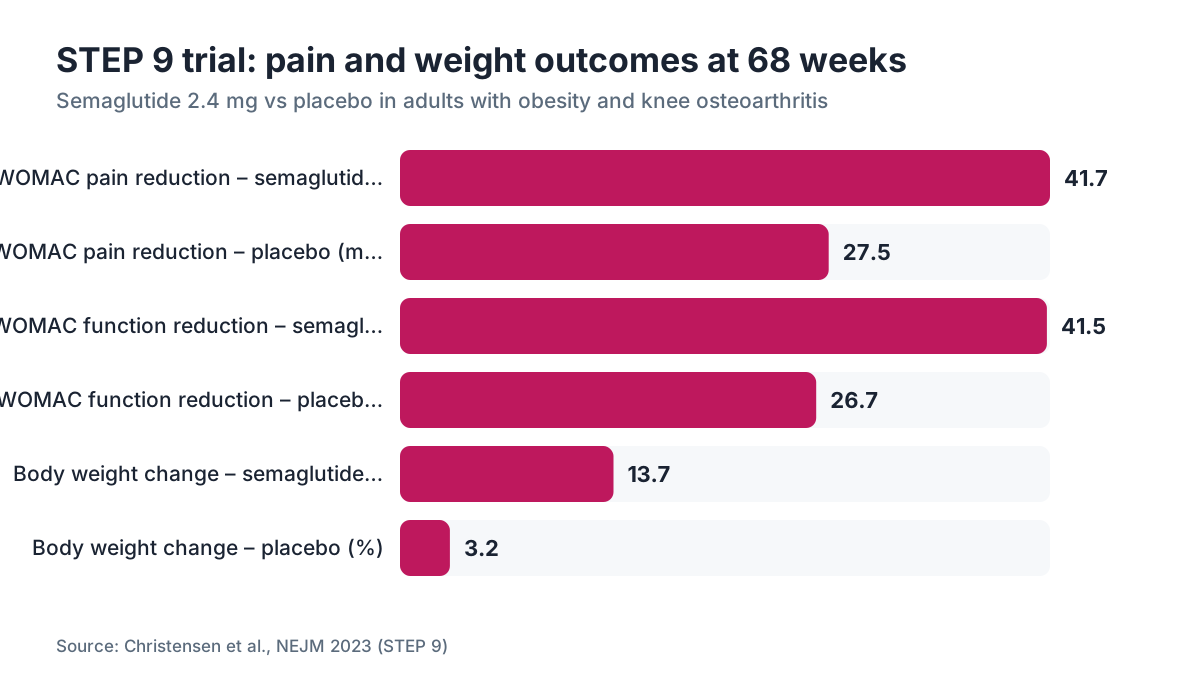
After 68 weeks, the semaglutide group reported a pain reduction of 41.7 mm on the WOMAC pain subscale (scored 0-100 mm, where higher means more pain), compared with 27.5 mm in the placebo group [1]. That is a 14.2 mm treatment difference, and it crossed the threshold the researchers had pre-specified as clinically meaningful (around 10 mm for this scale). Physical function scores improved by 41.5 points in the semaglutide group versus 26.7 points in the placebo group, using the WOMAC function subscale.
Body weight fell by 13.7% in the semaglutide group versus 3.2% in the placebo group [1]. Because every kilogram of weight removed from the lower extremity reduces compressive knee force by roughly three to four kilograms, a meaningful share of the joint benefit almost certainly comes through mechanical offloading. Whether semaglutide does something directly anti-inflammatory on top of that is a live research question, not yet settled.
This was a phase 3 randomized controlled trial, sponsored by Novo Nordisk, which makes semaglutide. Industry sponsorship does not invalidate the findings, but it is worth knowing when you evaluate how the results were framed.
How does semaglutide reduce joint pain, and is it just the weight loss?
The honest answer is: weight loss is clearly the main mechanism, and direct effects are plausible but not yet confirmed in humans.
Knee osteoarthritis is a load-driven disease. Excess body weight increases contact force across the medial compartment of the knee with every step. A 10% reduction in body weight produces measurable decreases in knee joint loading [2]. In STEP 9, participants on semaglutide lost an average of about 13.7% of body weight, which is substantial enough to explain a significant portion of pain reduction through mechanics alone.
That said, GLP-1 receptors exist in synovial tissue and immune cells. Animal studies show GLP-1 agonists reduce inflammatory cytokines such as interleukin-6 and tumor necrosis factor-alpha in joint tissue [3]. Whether that translates to a clinically meaningful direct effect in human joints is not established by any rigorous human trial as of mid-2025. The STEP 9 authors noted the question and called for mechanistic follow-up work.
One indirect clue: the trial did not include a group that lost equivalent weight by other means, so there is no way to separate the drug's specific effect from the weight-loss effect in this data set. That is a real gap. A future trial comparing semaglutide to, say, bariatric surgery or intensive dietary intervention at matched weight loss would be more informative.
For practical purposes, if you have knee osteoarthritis and obesity, the two effects together, mechanical plus possible direct, may reinforce each other. That is not a small thing.
What were the key numbers from STEP 9?
| Outcome | Semaglutide 2.4 mg | Placebo | Difference | |---|---|---|---| | WOMAC pain score reduction (mm) | 41.7 | 27.5 | 14.2 mm | | WOMAC function score reduction (points) | 41.5 | 26.7 | 14.8 pts | | Body weight change (%) | -13.7% | -3.2% | -10.5% | | Patients achieving ≥10% weight loss | 63.5% | 13.1% | 50.4% | | Serious adverse events | 10% | 12% | (similar) |
Source: Christensen et al., NEJM 2023 [1]
A few things stand out. First, the placebo group also improved substantially, 27.5 mm on pain. That is classic for osteoarthritis trials: attention, lifestyle support, and the expectation of treatment all produce real symptom relief. The drug still beat placebo convincingly, but the baseline effect reminds you that placebo-controlled design was essential here.
Second, 63.5% of semaglutide participants lost at least 10% of body weight. Among that subgroup, the pain benefits were the largest, which supports the mechanical hypothesis.
Third, serious adverse events were similar between groups (10% semaglutide vs 12% placebo), and no new safety signals emerged beyond the known GI side effects of semaglutide.
Is semaglutide FDA-approved for osteoarthritis?
No. As of July 2026, the FDA has not approved semaglutide for osteoarthritis [4]. The agency has approved two semaglutide formulations for unrelated indications: Ozempic (0.5-2 mg weekly) for type 2 diabetes and cardiovascular risk reduction, and Wegovy (2.4 mg weekly) for chronic weight management in adults with obesity or overweight plus a weight-related condition [4].
Knee osteoarthritis does appear on the FDA's listed weight-related conditions that qualify a patient for Wegovy, so if you have obesity and osteoarthritis, you may legitimately qualify for the weight-loss indication. That is a meaningful practical point. You would not be using it off-label; you would be using it for its approved indication, with osteoarthritis as the qualifying comorbidity.
The FDA required a boxed warning on semaglutide for a risk of thyroid C-cell tumors observed in rodents, and it is contraindicated in people with a personal or family history of medullary thyroid carcinoma or Multiple Endocrine Neoplasia type 2 [4]. Those are the same restrictions whether the clinical context is diabetes, weight loss, or osteoarthritis.
No supplemental application for an osteoarthritis indication had been submitted or approved as of this writing. That could change if long-term structural data, showing semaglutide slows cartilage loss on MRI, emerges from ongoing trials.
Who was studied, and does it apply to women in perimenopause or menopause?
STEP 9 enrolled adults with a BMI of at least 30 and radiographically confirmed knee osteoarthritis. The average age was around 56 years, and roughly two-thirds of participants were women [1]. That skew toward middle-aged women is actually representative of the osteoarthritis population, since postmenopausal women carry a disproportionate burden of the disease.
Why menopause matters here is not trivial. Estrogen has direct cartilage-protective and anti-inflammatory effects in joint tissue. Estrogen receptors are present in chondrocytes, the cells that maintain cartilage. Women who enter menopause experience a steep drop in estrogen and a measurable acceleration in cartilage loss [5]. Osteoarthritis rates in women roughly equal those in men before age 50, then substantially exceed them after 50, which strongly implicates estrogen withdrawal as a driver.
This means a woman in her late 40s moving through perimenopause with early knee pain is dealing with at least two overlapping processes: mechanical load from any excess weight, and hormonal changes that reduce the joint's own protective capacity. Semaglutide addresses the mechanical side. Hormone replacement therapy may address the hormonal side. These are not competing treatments; they hit different parts of the same problem, and nothing in the current literature suggests they cannot be used together.
The STEP 9 trial did not stratify results by menopausal status, so there is no direct data on whether postmenopausal women responded better or worse. That remains an open question.
Does semaglutide affect bone density, and should women worry?
This is a real concern that does not get enough airtime. Rapid weight loss from any cause, including GLP-1 agonists, can reduce bone mineral density, because bone remodeling responds to mechanical loading and fat-derived hormones such as leptin and estrogen [6]. When you lose a significant amount of weight quickly, bones lose some of that loading stimulus.
The STEP 1 trial (68 weeks, 1961 participants) found modest reductions in bone mineral density at the hip in the semaglutide group [7]. The reductions were small and within the range seen with other weight-loss interventions, but they were real. Whether they translate to increased fracture risk over years is not yet determined.
For perimenopausal and postmenopausal women already at elevated risk for bone loss, this is not nothing. If you are starting semaglutide for weight loss or osteoarthritis symptom relief, getting a baseline bone density test (DEXA scan) is a reasonable step, particularly if you are 50 or older. The National Osteoporosis Foundation recommends DEXA for all women 65 and older and for younger postmenopausal women with risk factors [6].
Resistance training during weight loss reduces bone loss. So does adequate calcium and vitamin D intake. If your provider is not talking about these co-interventions when prescribing semaglutide, bring it up yourself.
For a broader comparison of semaglutide and tirzepatide on this and other parameters, see our piece on semaglutide vs tirzepatide.
Are there other trials or ongoing studies on GLP-1s and joint disease?
STEP 9 is the largest and best-designed trial so far, but it is not the only signal. A few things are worth knowing.
Liraglutide, an older GLP-1 agonist, showed reduced inflammatory markers and improved function in smaller OA studies conducted before STEP 9. Those studies had methodological limitations but pointed in the same direction [3].
Novo Nordisk registered a follow-on mechanistic study looking at MRI-assessed cartilage volume in participants who received semaglutide versus placebo. Structural outcomes, meaning whether the drug actually slows cartilage degradation rather than just reducing pain, are the next evidentiary frontier. Pain relief without structural protection would still be valuable, but structural protection would be a much bigger deal.
There is also growing interest in whether GLP-1 agonists reduce systemic inflammation markers such as high-sensitivity C-reactive protein (hsCRP) independent of weight loss. The SELECT trial, which studied cardiovascular outcomes with semaglutide in non-diabetic adults with obesity, found significant reductions in hsCRP [8]. Chronic inflammation drives osteoarthritis progression, so if GLP-1 agonists genuinely dampen systemic inflammation, that could matter for joint disease beyond just cartilage mechanics.
Tirzepatide, which activates both GLP-1 and GIP receptors, produced even larger weight losses in the SURMOUNT-1 trial (up to 22.5% at the highest dose) [9]. Whether that larger weight reduction translates to larger OA benefits has not been tested in a dedicated osteoarthritis trial yet.
How does semaglutide compare to other osteoarthritis treatments?
| Treatment | Evidence level | Average pain reduction | Notes | |---|---|---|---| | Semaglutide 2.4 mg (STEP 9) | RCT, 407 patients | 41.7 mm (WOMAC) | Obesity required; GI side effects | | NSAIDs (oral) | Strong RCT evidence | Moderate | GI and cardiovascular risks | | Intra-articular corticosteroids | Multiple RCTs | Short-term relief only | No structural benefit; repeated injections risky | | Exercise therapy | Strong RCT evidence | Moderate (sustained) | Underused; no systemic risks | | Knee replacement (TKA) | Strong | Large, durable | Invasive; recovery 3-6 months | | Weight loss (non-drug) | Good evidence | Load-dependent | Adherence is the limiting factor |
Semaglutide is not the only option, and it is not necessarily the first one. Clinical guidelines from the American College of Rheumatology still prioritize exercise, weight loss by any effective means, physical therapy, and appropriate analgesics as first-line approaches [10]. Semaglutide fits into the weight-loss category as a tool that dramatically improves adherence and magnitude of weight reduction in people who have struggled with lifestyle-only approaches.
The drug costs roughly $1,000-$1,350 per month at retail without insurance for the Wegovy formulation [11]. Insurance coverage for weight management remains inconsistent. Medicare Part D historically excluded coverage for weight-loss drugs, though legislative changes have been under discussion. If cost is prohibitive, compounded semaglutide has been an option for some patients, though FDA restrictions on compounding have tightened as branded supply normalized.
For women specifically, WomenRx offers GLP-1 consultations that can factor in menopausal status, bone health, and hormonal context, areas that a general internist or orthopedist may not fully integrate.
What side effects matter most for women using semaglutide for joint pain?
The side effect profile for semaglutide 2.4 mg in STEP 9 was consistent with what larger trials have shown [1]. Nausea was the most common complaint, reported by about 44% of the semaglutide group versus about 16% in the placebo group. Vomiting and diarrhea were also more frequent with the drug. Most GI symptoms peaked in the first 12-16 weeks as the dose escalated and then improved.
For women in their 40s and 50s, a few specific issues deserve attention beyond the generic GI warnings.
Gallstones. Rapid weight loss increases bile concentration and gallstone risk. Semaglutide is associated with a higher rate of cholelithiasis (gallstones) compared to placebo, about 2.6% versus 1.2% in the STEP 1 trial [7]. Women already carry higher baseline gallstone risk than men. If you have any history of gallbladder issues, this is a conversation to have with your prescriber before starting.
Muscle mass. GLP-1-mediated weight loss includes loss of lean mass, more than fat. Estimates from STEP 1 suggest roughly 40% of weight lost was lean tissue [7]. That matters for osteoarthritis because muscle strength around the knee is protective. High-protein intake (at least 1.2 grams per kilogram of body weight daily) and resistance training reduce this, but you have to be intentional about it.
Mood and sleep. Anecdotally reported by some users; the data here is mixed and not definitive. If you are also managing perimenopausal mood symptoms, be aware of the overlap and communicate any changes to your provider.
For a full overview of the drug, including dosing, titration schedule, and how it works, see our semaglutide overview and our piece on semaglutide for weight loss.
Should women with both osteoarthritis and menopause consider HRT alongside semaglutide?
The trials have not answered this directly, but the underlying biology suggests the combination deserves serious consideration for eligible women.
Estrogen deficiency accelerates cartilage breakdown. Multiple observational studies and some mechanistic data show that estrogen replacement is associated with lower rates of osteoarthritis progression and lower rates of joint replacement in postmenopausal women, though the evidence is observational rather than from dedicated RCTs [5]. NAMS (the North American Menopause Society) recognizes musculoskeletal pain, including joint pain, as a legitimate symptom domain of menopause that can respond to hormonal therapy [12].
The practical picture: a woman in her early 50s with a BMI of 33, knee osteoarthritis, hot flashes, and disrupted sleep is a candidate for both interventions. Semaglutide addresses weight and possibly direct joint inflammation. Estrogen therapy addresses the hormonal deficit that is accelerating cartilage loss and driving systemic symptoms. These are not redundant.
Whether to use an estrogen patch, oral estrogen, or another delivery method depends on individual cardiovascular and breast cancer risk factors, uterine status (if the uterus is intact, progesterone is added to protect the endometrium), and patient preference. That is a conversation for a hormone-competent provider.
HRT does not replace semaglutide's weight-loss benefit, and semaglutide does not replace estrogen's cartilage and bone effects. Thinking of them as either/or is a false choice.
What should you actually ask your doctor before starting semaglutide for osteoarthritis?
Start here. Not with enthusiasm about the STEP 9 results, but with a clear picture of your own clinical context.
First, confirm you meet the current approval criteria. You need a BMI of 30 or more, or 27 or more with a qualifying weight-related condition (which osteoarthritis is, per Wegovy's label) [4]. If you do not meet those criteria, semaglutide for osteoarthritis alone would be off-label with even less insurer support.
Second, get a baseline. That means weight, BMI, blood glucose, HbA1c, lipids, kidney function, and ideally a DEXA scan if you are 50 or older or have additional bone-loss risk factors. You want to track what changes.
Third, ask specifically about the muscle-loss issue and get a plan for protein intake and resistance exercise. This is not optional supplementation; it is mechanistically important for preserving the muscle function that protects your knee.
Fourth, ask about cost and insurance before the prescription is written. The prior authorization process for Wegovy is slow. Some insurers require documented failure of previous weight-loss interventions. Having that documentation ready speeds things up.
Fifth, if you are perimenopausal or postmenopausal, ask whether a hormonal evaluation makes sense alongside the GLP-1 prescription. Many prescribers operate in silos, treating the weight or the joint separately from the hormonal context. Integrating these is where you get the best outcomes.
Frequently asked questions
Does semaglutide reduce knee osteoarthritis pain?
Yes, with meaningful effect in the STEP 9 trial. Semaglutide 2.4 mg reduced WOMAC knee pain scores by 41.7 mm over 68 weeks versus 27.5 mm with placebo, a statistically significant 14.2 mm difference. Much of this benefit came from weight loss, which reduces compressive force on the knee. Direct anti-inflammatory effects of the drug are biologically plausible but not yet confirmed in humans.
Is semaglutide FDA-approved to treat osteoarthritis?
No. Semaglutide is FDA-approved for type 2 diabetes (Ozempic) and for chronic weight management (Wegovy). It is not specifically approved for osteoarthritis. However, knee osteoarthritis is listed as a qualifying weight-related comorbidity under Wegovy's indication, so a patient with obesity and osteoarthritis may be eligible for Wegovy without using it off-label.
What was the STEP 9 trial and who was in it?
STEP 9 is a phase 3 randomized controlled trial published in the New England Journal of Medicine in 2023. It enrolled 407 adults with a BMI of at least 30 and radiographically confirmed knee osteoarthritis. About two-thirds of participants were women, with an average age in the mid-50s. Participants received weekly semaglutide 2.4 mg or placebo for 68 weeks alongside lifestyle counseling.
How much weight do you need to lose to see osteoarthritis benefits?
Guidelines from the American College of Rheumatology suggest that a 10% reduction in body weight produces clinically meaningful improvements in knee osteoarthritis pain and function. In STEP 9, 63.5% of semaglutide participants lost at least 10% of body weight, compared to 13.1% in the placebo group, which closely tracked with the pain outcomes in each group.
Can postmenopausal women use semaglutide for joint pain?
Yes, if they meet BMI and comorbidity criteria. Most STEP 9 participants were women in their 50s, and results apply to that demographic. Postmenopausal women losing weight on semaglutide should also be aware of bone density changes and may benefit from concurrent estrogen therapy to address the hormonal component of cartilage loss. A provider familiar with both GLP-1s and menopause medicine is the right fit.
Does semaglutide cause bone loss, and should I get a DEXA scan first?
Semaglutide is associated with modest reductions in hip bone mineral density, consistent with rapid weight-loss effects seen with other interventions. The STEP 1 trial documented small but real decreases. For women 50 and older or those with menopause-related bone risk, a baseline DEXA scan before starting is a reasonable precaution. Resistance training and adequate calcium and vitamin D intake help reduce bone loss during treatment.
How long does it take for semaglutide to reduce joint pain?
STEP 9 showed statistically significant pain separation from placebo by around week 16, with continued improvement through 68 weeks. The timing tracks the dose-escalation schedule and the accumulation of weight loss. Expecting dramatic relief in the first four to eight weeks is unrealistic; the benefit builds gradually as body weight falls.
What are the main risks of semaglutide for women with osteoarthritis?
The main risks are nausea and vomiting (common, usually peak at weeks 4-16), gallstone formation (about 2.6% vs 1.2% placebo in STEP 1), lean muscle mass loss (roughly 40% of total weight lost), and modest reductions in bone mineral density. Women with prior thyroid cancer or MEN2 history cannot use it. GI side effects are the leading reason people discontinue.
Is tirzepatide better than semaglutide for osteoarthritis?
No dedicated osteoarthritis trial for tirzepatide exists yet. Tirzepatide produced larger average weight loss than semaglutide in head-to-head and independent trials (up to 22.5% body weight in SURMOUNT-1 vs about 15% in STEP 1). If mechanical offloading drives the OA benefit, tirzepatide might produce larger joint effects, but that is inference, not trial data. See our comparison piece for the full breakdown.
Will insurance cover semaglutide for osteoarthritis?
Insurers do not cover semaglutide for osteoarthritis as a stand-alone indication because it lacks FDA approval for that use. Coverage under the obesity indication (Wegovy) varies widely. Medicare Part D historically excluded weight-loss drugs, though legislative proposals have aimed to change that. Private insurers often require prior authorization with documented comorbidities. Retail cost without coverage is approximately $1,000-$1,350 per month.
Does semaglutide reduce inflammation in joints directly, or only through weight loss?
Both mechanisms are possible, but weight loss is the demonstrated mechanism. GLP-1 receptors exist in synovial tissue and immune cells, and animal studies show reduced inflammatory cytokines with GLP-1 agonist treatment. However, no human trial has isolated a direct anti-inflammatory joint effect independent of weight loss. The SELECT cardiovascular trial found semaglutide reduced hsCRP, a systemic inflammation marker, which is indirect but relevant evidence.
Can I use semaglutide alongside hormone replacement therapy?
Nothing in the current evidence base contraindicates using semaglutide and HRT together, and many women with both obesity and menopause-related symptoms are candidates for both. They address different mechanisms: semaglutide reduces joint load through weight loss, while estrogen may slow cartilage degradation and reduce systemic inflammation through hormonal pathways. Confirm with a provider who understands both treatment areas.
How does the WOMAC scale used in STEP 9 work?
WOMAC stands for Western Ontario and McMaster Universities Osteoarthritis Index. The pain subscale runs from 0 to 100 mm, where 0 means no pain and 100 means the worst possible pain. A difference of 10 mm or more is generally considered clinically meaningful. STEP 9 used the visual analog version. The 14.2 mm treatment advantage for semaglutide exceeded that threshold.
Are there any structural benefits, meaning does semaglutide actually protect cartilage?
Not yet demonstrated. STEP 9 measured pain and function, not structural outcomes like cartilage volume on MRI or joint space narrowing on X-ray. Follow-on mechanistic studies are registered to assess structural changes. Until those results appear, semaglutide's benefit for osteoarthritis is established for symptom relief and functional improvement, not for slowing or reversing structural joint damage.
Sources
- Christensen et al., New England Journal of Medicine, 2023 (STEP 9 trial)
- Messier et al., JAMA, 2013 (IDEA trial) – weight loss and knee joint loads
- Zhao et al., Frontiers in Pharmacology, 2021 – GLP-1 receptors in joint tissue
- FDA – Wegovy (semaglutide) Prescribing Information
- Sniekers et al., Arthritis Research & Therapy, 2008 – estrogen and cartilage
- National Osteoporosis Foundation – Bone Density Testing
- Wilding et al., New England Journal of Medicine, 2021 (STEP 1 trial)
- Lincoff et al., New England Journal of Medicine, 2023 (SELECT trial)
- Jastreboff et al., New England Journal of Medicine, 2022 (SURMOUNT-1 trial – tirzepatide)
- American College of Rheumatology – OA Guideline 2021
- GoodRx – Wegovy retail pricing data, 2024
- The Menopause Society (NAMS) – 2023 Position Statement on Hormone Therapy