How to get semaglutide online: what's real, what's risky, and what it costs
TL;DR: You can get semaglutide online two legal ways: a telehealth prescriber does a real medical evaluation and sends brand-name Ozempic or Wegovy to your pharmacy, or a compounding pharmacy ships compounded semaglutide to your door. Brand-name runs roughly $935 to $1,349 a month without insurance. Compounded versions run $200 to $500. The FDA has flagged real safety risks with sellers that skip the prescription.
What does it actually mean to get semaglutide online?
Getting semaglutide online means one of two legitimate things. You do a telehealth visit with a licensed prescriber, get a prescription, and fill it at a licensed pharmacy that ships to you. Or you order compounded semaglutide from a compounding pharmacy tied to a telehealth platform, and the vials arrive at your door.
Semaglutide is a GLP-1 receptor agonist sold under two FDA-approved brand names: Ozempic (for type 2 diabetes) and Wegovy (for chronic weight management) [1].
Neither legal path means buying a vial off a website with no prescription. That is illegal in the United States, and the FDA has issued repeated warnings about counterfeit and substandard semaglutide sold through non-prescription channels [2]. A site that offers to sell you semaglutide with no doctor visit is a red flag, not a shortcut.
The legitimate telehealth route works the way your in-person doctor would. A prescriber reviews your medical history, checks your BMI and any contraindications, writes a prescription if you qualify, and you fill it. The whole thing happens over video or an asynchronous questionnaire, and nobody makes you sit in a waiting room.
For women in perimenopause and menopause, the online pathway got popular because it bundles weight management with hormone care in one appointment. Providers who focus on women's health can assess both your semaglutide for weight loss needs and whether hormone replacement therapy belongs in the conversation, since estrogen loss speeds up fat redistribution and metabolic slowdown.
Is buying semaglutide online legal?
Yes, if it's structured right. Semaglutide is a prescription drug, so federal law requires a valid prescription from a licensed practitioner before any pharmacy can dispense it [3]. A telehealth prescription written after a real medical evaluation meets that requirement. Most states allow telehealth prescriptions as long as the prescriber holds a license in the patient's state.
What is not legal: buying semaglutide from a vendor that skips the prescription, or importing it from a foreign pharmacy without FDA authorization. The FDA states it is illegal to import prescription drugs from other countries for personal use in most circumstances [2].
Compounded semaglutide sits in a grayer, still legal, zone. Under federal law (21 U.S.C. 503A and 503B), licensed compounding pharmacies can legally prepare copies of drugs on the FDA's drug shortage list [4]. Semaglutide (specifically Wegovy) sat on that list from 2022 through early 2025. The FDA declared the Wegovy shortage resolved in February 2025 [5], which stripped FDA-registered 503B outsourcing facilities of the legal basis for large-scale semaglutide compounding after a phase-out period. As of mid-2025, the ground is still moving. Some 503A pharmacies filling individual patient prescriptions may still compound, but FDA enforcement has tightened hard.
Here's the honest bottom line. If you want to buy semaglutide online legally today, your safest path is a telehealth prescription for brand-name Wegovy or Ozempic, or compounded semaglutide from a 503A pharmacy tied to a prescriber who has verified your individual medical need. Ask any platform exactly which pharmacy they use and whether it is PCAB-accredited or FDA-registered.
What does semaglutide cost online, with and without insurance?
Cost is where most women feel the sharpest pain. Brand-name Wegovy has a list price of about $1,349 a month for the 2.4 mg maintenance dose as of 2025, per Novo Nordisk's published pricing [6]. Ozempic lists around $935 a month for the 1 mg dose. Neither is reliably covered by commercial insurance for weight loss alone.
Medicare Part D was barred from covering obesity drugs for years, and as of mid-2025 Medicare coverage stays limited to specific situations like cardiovascular risk reduction.
Novo Nordisk offers a Wegovy savings card that can drop out-of-pocket costs as low as $0 for some commercially insured patients, or roughly $99 to $225 a month for qualifying cash-pay patients. Income and insurance limits apply [6].
Compounded semaglutide from telehealth platforms generally ran $200 to $500 a month depending on dose and supplier. Some platforms went as low as $149 at starter doses during the shortage. After the shortage ended, prices from the remaining legal compounders climbed as supply tightened.
Telehealth consultation fees add $50 to $200 for an initial visit, with monthly follow-ups sometimes folded into a subscription. Platforms that bundle labs, prescriptions, and follow-up visits into one fee usually beat the ones that charge separately for every piece.
For women also managing menopause symptoms, combining a GLP-1 consultation with a hormone panel in one telehealth visit can save time and money versus two separate specialty appointments.
| Option | Approx. monthly cost (cash pay) | Prescription required | FDA-approved form | |---|---|---|---| | Wegovy (brand, savings card) | $99-$225 | Yes | Yes | | Wegovy (brand, no card) | ~$1,349 | Yes | Yes | | Ozempic (brand, off-label for weight) | ~$935 | Yes | Yes (for diabetes) | | Compounded semaglutide (503A, telehealth) | $200-$500 | Yes | No (compounded) | | Unregulated online sellers | varies, often $100-$300 | None offered | No |
The last row is not a viable option. It's listed only so you see why the price gap exists. Those sellers aren't operating legally, and their products haven't been tested for potency or sterility.
How does a telehealth semaglutide visit actually work?
Most legitimate platforms follow the same sequence. You fill out a medical intake covering your weight history, current medications, and relevant conditions. A licensed prescriber, usually an MD or DO, reviews it and either schedules a video call or responds asynchronously within 24 to 48 hours.
To qualify for Wegovy under its FDA label, you need a BMI of 30 or higher, or 27 or higher with at least one weight-related condition such as hypertension, high cholesterol, or type 2 diabetes [1]. Prescribers can write Ozempic off-label for weight loss at their discretion, though the off-label piece is worth discussing openly.
If the prescriber approves, the prescription goes to your local pharmacy or to a partner pharmacy that ships. For compounded versions, the partner pharmacy ships direct. You typically get auto-injector pens or vials depending on the form.
Dose titration matters more than almost anything else. The standard protocol starts at 0.25 mg weekly for four weeks, then steps up every four weeks toward the target dose [1]. Rushing the titration is the single biggest driver of the nausea, vomiting, and delayed-stomach-emptying symptoms that make women quit. A good telehealth provider checks in at each step and slows down when you're struggling.
Women in perimenopause or postmenopause may process drugs differently and may have sharper GI side effects. If you're also on progesterone or an estrogen patch, tell your prescriber. There are no major known interactions with semaglutide, but the combination affects appetite, mood, and energy in ways worth watching.
What is compounded semaglutide and how is it different from Wegovy?
Compounded semaglutide is semaglutide prepared by a licensed pharmacy rather than manufactured by Novo Nordisk. The active molecule is the same. The formulation, excipients, concentration, and quality controls differ. Compounders buy the active pharmaceutical ingredient (API) from chemical suppliers, not from Novo Nordisk, and the FDA does not review compounded drugs for safety, efficacy, or consistency the way it reviews brand-name products [4].
During the Wegovy shortage, FDA enforcement eased for 503B outsourcing facilities compounding semaglutide. Once the shortage was declared resolved, the FDA said 503B facilities must stop compounding semaglutide unless they can show a specific patient need the commercial product can't meet [5]. This is a genuine regulatory shift, and platforms still offering compounded semaglutide at scale after mid-2025 may be operating outside FDA guidance.
The FDA has also flagged compounded products containing semaglutide sodium and acetate salt rather than the base form used in Wegovy. The agency says these salt forms are not pharmaceutical equivalents and may carry unknown risks [5]. When you buy compounded semaglutide online, ask the pharmacy which salt form they use and whether the facility is 503A or 503B registered.
None of this makes compounded semaglutide inherently dangerous. Plenty of women used it safely during the shortage. It means the regulatory footing has changed, and you need to ask harder questions of any platform selling it now.
What are the real risks of getting semaglutide online?
The risks split into two buckets: medical and supply-chain.
On the medical side, semaglutide carries a boxed warning for thyroid C-cell tumors based on rodent studies, though causation in humans hasn't been established [1]. It's contraindicated in people with a personal or family history of medullary thyroid carcinoma or Multiple Endocrine Neoplasia syndrome type 2. It can cause severe delayed gastric emptying, pancreatitis, and gallbladder disease. The STEP 1 trial, which enrolled 1,961 adults, found 4.5 percent of the semaglutide group quit because of gastrointestinal side effects, versus 0.8 percent on placebo [7]. Real numbers, worth knowing before you start.
For women in their 40s and 50s, rapid weight loss also risks accelerated bone loss. The STEP trials showed small but measurable drops in lean mass alongside fat loss. If bone density already worries you (see our piece on bone density tests), raise it with your prescriber before starting.
On the supply-chain side, FDA testing in 2023 and 2024 of products sold as semaglutide through non-prescription channels found samples with wrong potency, contamination, and unlabeled ingredients [2]. The agency warned specifically that products labeled "research use only" or "semaglutide peptide" are not pharmaceutical grade and should not be injected.
Safest approach: use a platform that names its pharmacy partner, confirm that pharmacy is PCAB-accredited or FDA-registered as a 503A or 503B facility, and confirm the prescriber holds a license in your state. You can verify pharmacy licenses at your state board of pharmacy website.
How do you find a legitimate online semaglutide prescriber?
Judge the prescriber by what they do, not what the platform promises. A legitimate provider requires a complete medical intake and reads it before prescribing, checks for contraindications, follows FDA-labeled dosing, requires follow-up visits, and will refer you to in-person care when your situation calls for it.
Questions worth asking before you pay a dime:
- Is the prescriber licensed in my state? Ask for their NPI number and verify it at the NPPES registry (nppes.cms.hhs.gov).
- Which pharmacy fills the prescription, and what is that pharmacy's DEA and state registration number?
- If compounded, what salt form of semaglutide do they use, and can they provide a certificate of analysis?
- What's the escalation protocol if I have a serious side effect?
Platforms built around women's health tend to handle this better than general-purpose GLP-1 mills, because they're used to juggling more than one condition in a single visit. WomenRx, for example, is built around licensed practitioners who evaluate GLP-1 candidacy alongside hormonal health, which matters because perimenopause and insulin resistance are tightly linked.
Red flags to walk away from: no prescriber name visible on the platform, a price far below market (under $100 a month for a full dose), no requirement for labs or medical history, and any claim that the product is "research grade" or "not for human injection."
Does semaglutide work for weight loss in women over 40?
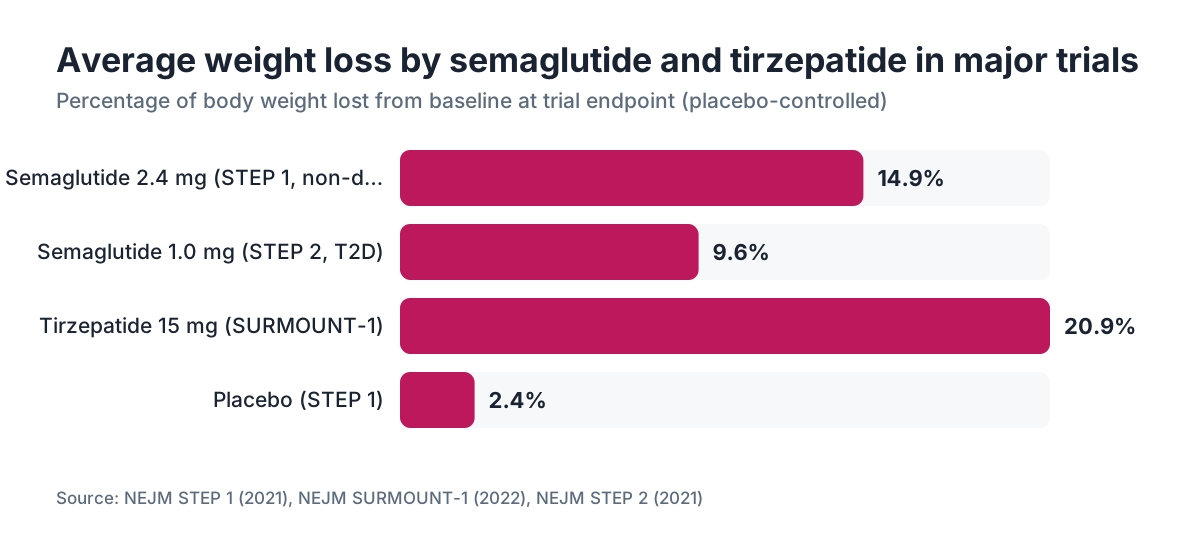
The evidence is strong, but the average result isn't every individual result. The STEP 1 trial found mean weight loss of 14.9 percent of body weight at 68 weeks with 2.4 mg semaglutide weekly, versus 2.4 percent on placebo [7]. Wilding and colleagues, writing in the New England Journal of Medicine in 2021, concluded semaglutide produced "a mean change in body weight of -14.9%" compared with placebo. STEP 2, in adults with type 2 diabetes, showed 9.6 percent at the same dose. Those are averages across mixed-sex populations.
Women-specific subgroup data from the STEP trials showed similar or slightly better results than the overall population in some analyses, though the trials weren't powered to pin down sex differences. What complicates the picture over 40 is that declining estrogen shifts fat toward visceral storage, worsens insulin sensitivity, and rewires appetite-regulating hormones. Some researchers think GLP-1 agonists may be especially useful here precisely because they hit the insulin resistance component, but well-powered trials in perimenopausal women specifically don't exist yet.
The SURMOUNT-1 trial tested tirzepatide (a dual GIP/GLP-1 agonist) and found higher average weight loss of 20.9 percent at the top dose [8]. For how the two drugs stack up, see our breakdown of semaglutide vs tirzepatide.
Weight loss with semaglutide is real and clinically meaningful. It requires lifestyle work to hold, and it doesn't fix the hormonal drivers of menopausal weight gain on its own. Stop the drug and the weight tends to come back. The STEP 4 withdrawal trial found participants who stopped semaglutide regained two-thirds of their lost weight within a year [9].
How does online semaglutide interact with menopause and hormone therapy?
This is where the two biggest health concerns for women in their 40s and 50s meet, and where the telehealth model either earns its keep or shows its limits.
Menopause-related weight gain is driven partly by falling estrogen, which pushes fat storage toward the abdomen and lowers metabolic rate. GLP-1 agonists work on weight through appetite suppression and slowed gastric emptying, not through hormones. They don't replace estrogen. But several observational studies suggest women on hormone therapy may do better on GLP-1s because estrogen improves insulin sensitivity, which may make the drug more effective.
There are no known direct pharmacokinetic interactions between semaglutide and standard hormone therapy: oral estrogen, estradiol patches, progesterone capsules, or vaginal estrogen. That said, semaglutide slows gastric emptying, which could in theory affect absorption of oral medications taken with food. If you use oral estrogen or oral progesterone, timing your dose away from peak semaglutide effect (roughly two hours after injection) is a reasonable precaution, though nobody has studied this formally.
The Endocrine Society's clinical practice guideline on obesity notes that reversible causes and contributors to weight gain should be assessed before starting pharmacotherapy [10]. That backs the integrated telehealth approach over treating weight in isolation. If your symptoms suggest when menopause starts may apply to you, working the hormonal and metabolic factors together tends to beat chasing each one alone.
What labs do you need before starting semaglutide online?
A responsible prescriber wants, at minimum, a fasting glucose or HbA1c (to catch undiagnosed diabetes and set a baseline), a lipid panel, a thyroid panel (TSH at least, given the thyroid warning), and a basic metabolic panel. Some add a fasting insulin or HOMA-IR to map insulin resistance more precisely.
You don't strictly need labs to get a prescription. Some platforms prescribe on intake alone. That's a lower bar than most obesity medicine specialists would set. If a platform skips labs entirely, ask why.
If you're in perimenopause or postmenopause, a hormone panel (FSH, estradiol, sometimes progesterone) adds useful context. Thyroid dysfunction is more common in this age group and can both mimic and pile onto the metabolic problems you're asking semaglutide to fix.
On follow-up, GI side effects are the main thing to monitor for the first three to six months. Severe abdominal pain is a reason to stop the drug and get in-person care, not to fire off a portal message. Kidney function can drop with big GI fluid losses, so hydration and electrolytes matter more than many platforms bother to say.
What should you expect after you place your first online semaglutide order?
For brand-name Wegovy or Ozempic through a telehealth prescription sent to a retail pharmacy: expect two to seven days for the prescription to process and the pharmacy to dispense. Specialty pharmacies handling Wegovy may run waiting lists given ongoing supply constraints. Your prescriber or platform should flag it if your pharmacy is out of stock and help you find one that isn't.
For compounded semaglutide shipped direct: most platforms ship within three to five business days of approval. The product usually arrives as multi-dose vials with syringes, not the auto-injector pen Wegovy uses. You draw and inject yourself, which is manageable but has a learning curve. The platform should send injection instructions.
Weeks one through four: most women tolerate 0.25 mg weekly with minimal side effects. Mild nausea after injection, usually peaking two to eight hours post-dose, is common. Smaller, lower-fat meals and injecting at night before sleep both help. Constipation is underreported but hits a meaningful minority of users.
By week eight to twelve, at 0.5 to 1 mg, appetite suppression gets noticeable. This is when most women see the scale move. Expecting dramatic results in month one just sets you up for disappointment. The drug's full effect takes four to six months.
If you haven't lost at least 5 percent of your body weight by week 16, the FDA label for Wegovy recommends reassessing whether to continue [1]. That checkpoint deserves an actual conversation with your prescriber, not an automatic refill.
What are the alternatives if you can't afford brand-name semaglutide?
Four realistic paths exist for women who find $1,000-plus a month unworkable.
Manufacturer savings programs come first. Novo Nordisk's Wegovy savings card brings the price to $0 or $99 to $225 for eligible commercially insured patients, and a separate program helps uninsured patients who meet income thresholds. These programs aren't permanent and can change, so confirm current terms at wegovy.com before you count on them.
Insurance appeals come second. If your doctor documents that obesity is driving a specific comorbidity, some commercial plans will cover Wegovy after an appeal. That usually means a letter of medical necessity and sometimes a prior authorization denial to appeal.
Compounded semaglutide from a 503A pharmacy comes third, while it stays legally available for individual patients. The savings are real: $200 to $500 versus $1,349 adds up over a year. The trade-off is the quality-control uncertainty covered earlier.
Tirzepatide comes fourth. Mounjaro and Zepbound (tirzepatide's brand names) match or beat semaglutide's efficacy in trials [8] and are sometimes easier to get depending on insurance or compounding availability. See our comparison of semaglutide vs tirzepatide for the full breakdown.
WomenRx offers GLP-1 consultations that help you work through these options and land on an approach that fits your situation and budget, instead of defaulting to the priciest one.
What is not a realistic alternative: unregulated injectable peptides sold through research chemical websites. Unknown potency, possible contamination, no oversight. The risk is too high against any dollars saved.
Frequently asked questions
Can I get semaglutide online without an in-person doctor visit?
Yes. A telehealth evaluation, by video or by an asynchronous questionnaire reviewed by a licensed prescriber in your state, meets the legal requirement for a valid prescription. You don't need an in-person visit. But the prescriber must actually review your medical history and check for contraindications. Platforms that skip that step are not operating legally, whatever they claim.
How long does it take to get semaglutide through an online prescriber?
Most telehealth platforms finish the intake and prescriber review within 24 to 72 hours. If the prescription goes to a retail pharmacy, add two to seven days for dispensing. Compounded semaglutide shipped straight from the compounding pharmacy usually arrives within three to five business days of approval. Stock shortages can stretch these timelines for brand-name Wegovy.
Is compounded semaglutide the same as Wegovy?
The active molecule is semaglutide in both, but they're not identical products. Wegovy is FDA-approved and made under strict quality standards. Compounded semaglutide is prepared by a licensed pharmacy using API from a chemical supplier. The FDA does not review compounded drugs for safety or efficacy, so quality varies by pharmacy. Always ask for a certificate of analysis and confirm the salt form is semaglutide base, not a salt variant the FDA has flagged.
What BMI qualifies you for semaglutide for weight loss?
The FDA-approved Wegovy label requires a BMI of 30 or higher (obesity), or 27 or higher with at least one weight-related condition such as high blood pressure, high cholesterol, or type 2 diabetes. Prescribers can use clinical judgment for off-label Ozempic, but most telehealth platforms hold to the same BMI thresholds for consistency and liability reasons.
Does insurance cover semaglutide prescribed through telehealth?
Coverage depends on your plan, not how the prescription was written. Commercial insurers generally treat a telehealth prescription the same as an in-person one for pharmacy benefits. The catch is that many commercial plans don't cover Wegovy for weight management at all, no matter how you got the prescription. Check your formulary before assuming coverage. If you have a commercial plan and qualify, Novo Nordisk's savings card can cut your cost sharply.
What side effects should I watch for with semaglutide?
The common ones are nausea, vomiting, diarrhea, and constipation, mostly during dose escalation. The STEP 1 trial found 4.5 percent of participants quit over GI side effects. More serious but less common risks include pancreatitis, gallbladder disease, kidney injury from dehydration, and the boxed warning for thyroid C-cell tumors (from rodent studies). Severe abdominal pain means stop and get in-person care immediately, not message a platform.
Can semaglutide help with menopause weight gain specifically?
It can address the excess weight, but it doesn't replace estrogen or reverse the hormonal shifts causing the gain. Falling estrogen raises visceral fat and worsens insulin resistance. GLP-1 agonists improve insulin sensitivity and cut appetite, which counters some of that. Some clinicians think combining hormone therapy with semaglutide beats either alone, but well-controlled trials in menopausal women specifically are still thin.
What happens if I stop taking semaglutide?
Weight returns. The STEP 4 trial found participants who stopped semaglutide after significant weight loss regained roughly two-thirds of it within 12 months. Semaglutide works while you take it; it doesn't reprogram your metabolism for good. That's not a reason to skip it, but it's a reason to have a long-term plan before you start, including whether you'll stay on it indefinitely or use it as a bridge to lasting lifestyle change.
Are there online semaglutide options that are free or very low cost?
Truly free options are rare. Novo Nordisk's Wegovy savings program can drop cost to $0 for commercially insured patients who qualify, or roughly $99 to $225 a month for some cash-pay patients. Patient assistance programs exist for uninsured people with very low incomes. Compounded semaglutide at $200 to $500 a month is the most realistic low-cost route for people who don't qualify for savings programs. There's no legitimate free semaglutide; treat any offer claiming otherwise with suspicion.
Can I use semaglutide while on hormone replacement therapy?
There are no known direct pharmacokinetic interactions between semaglutide and standard HRT, including estradiol patches, vaginal estrogen, or progesterone. Semaglutide slows gastric emptying, which could in theory affect absorption of oral medications; if you take oral estrogen or oral progesterone, timing doses away from peak semaglutide effect is a reasonable precaution. Tell your prescriber about every medication, HRT included, before you start.
How do I know if an online semaglutide seller is legitimate?
Legitimate sellers require a valid prescription from a licensed prescriber. They name the prescriber and the pharmacy. The pharmacy is PCAB-accredited or registered with the FDA as a 503A or 503B facility. You can verify the prescriber's license through the NPPES registry at nppes.cms.hhs.gov. Sellers that skip the prescription, price far below market, or call their product 'research grade' are not operating legally.
Is online semaglutide safe for women over 50?
The general safety profile applies to women over 50 as to anyone else, with a few added considerations. Rapid weight loss can speed bone loss, which matters more post-menopause. Thyroid disorders are more common in this age group, so a baseline TSH is especially worth doing. GI side effects may hit harder. The STEP trials included participants up to age 75, so this isn't an unstudied group, but the menopausal subgroup hasn't had a dedicated large trial.
What is the difference between getting Ozempic and Wegovy online?
Both contain semaglutide, at different approved doses and for different indications. Ozempic is FDA-approved for type 2 diabetes at doses up to 2 mg weekly. Wegovy is FDA-approved for chronic weight management at 2.4 mg weekly. Prescribing Ozempic for weight loss is off-label but legal. Wegovy is the on-label weight choice. Cost and insurance coverage differ by plan. Some platforms prescribe Ozempic off-label because it stayed more consistently available during shortage periods.
Do I need to change my diet while taking semaglutide?
The Wegovy FDA label specifies use alongside a reduced-calorie diet and more physical activity. The drug suppresses appetite hard, which cuts intake for most people, but diet quality still drives long-term outcomes and lean mass preservation. Enough protein (at least 1.2 grams per kilogram of body weight) matters especially during weight loss to hold onto muscle while you lose fat, a bigger concern for women over 40.
Sources
- FDA, Wegovy (semaglutide) Prescribing Information
- FDA, Medications Containing Semaglutide Marketed for Type 2 Diabetes or Weight Loss
- FDA, Prescription Drug requirements under the Federal Food, Drug, and Cosmetic Act
- FDA, Human Drug Compounding (section 503A and 503B)
- FDA, Update on Semaglutide Shortage Resolution (February 2025)
- Novo Nordisk, Wegovy Cost and Savings Program
- Wilding JPH et al., STEP 1 Trial, New England Journal of Medicine, 2021
- Jastreboff AM et al., SURMOUNT-1 Trial, New England Journal of Medicine, 2022
- Rubino DM et al., STEP 4 Trial, JAMA, 2021
- Endocrine Society, Pharmacological Management of Obesity Clinical Practice Guideline, 2015