Semaglutide nausea: why it happens and how to relieve it
TL;DR: Nausea is the most common side effect of semaglutide, hitting roughly 20 to 44% of users in clinical trials. It peaks during dose escalation and usually eases within 4 to 8 weeks. Slowing dose increases, eating smaller meals, avoiding fatty or spicy food, and timing your injection can cut it down a lot. Most people never need to stop treatment.
Why does semaglutide cause nausea in the first place?
Semaglutide is a GLP-1 receptor agonist, meaning it mimics a gut hormone called glucagon-like peptide-1. GLP-1 receptors sit throughout your gastrointestinal tract, in the brainstem, and along the vagus nerve. When semaglutide switches those receptors on, it slows gastric emptying, sometimes by 30 to 50% compared to baseline [1]. Food sits in your stomach longer. Your brain's nausea center, the area postrema, also has GLP-1 receptors, so direct activation there is a second, separate pathway to nausea that has nothing to do with your stomach at all [2].
This is not an allergy or a sign something has gone wrong. It is the drug doing exactly what it was built to do, just more intensely than your body expected. The GI tract adapts over time, which is why nausea tends to ease after the first several weeks on a stable dose.
That adaptation is why the dose escalation schedule matters so much. Ozempic (the diabetes label) and Wegovy (the weight-loss label) both start at 0.25 mg weekly for four weeks before moving to 0.5 mg. The Wegovy schedule keeps stepping up every four weeks, reaching 2.4 mg as the maintenance dose [3]. Each step is a fresh nausea trigger, but a smaller one than if you had jumped straight to the target dose.
How common is nausea on semaglutide, and does it go away?
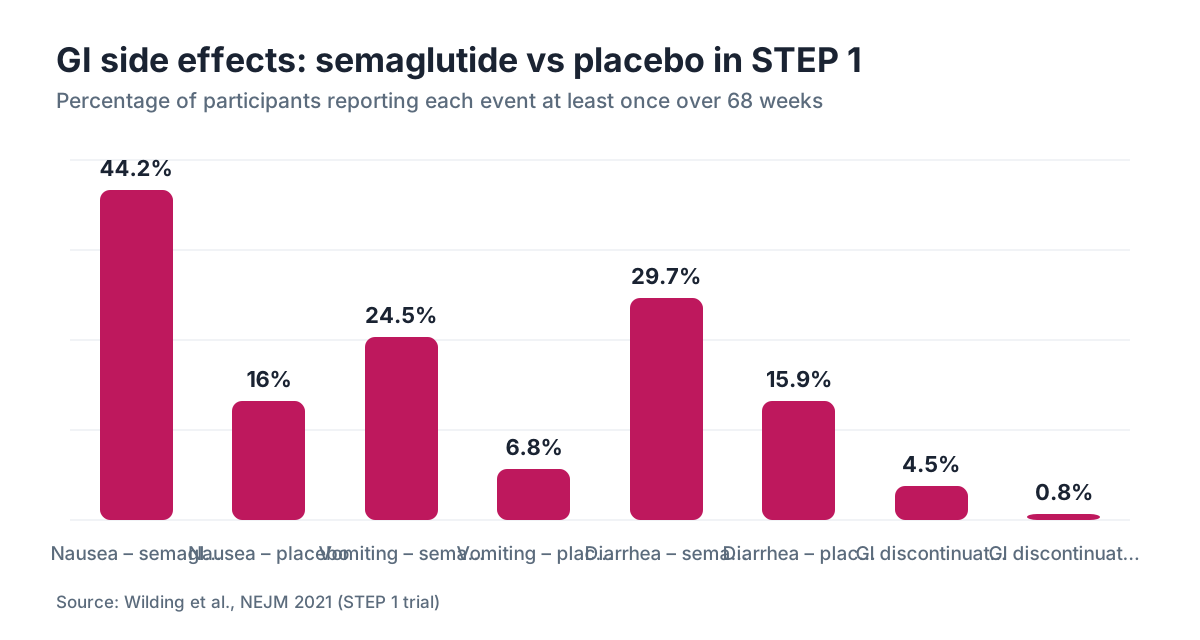
Nausea is the number one side effect, and for most people it fades. The STEP 1 trial, which tested 2.4 mg semaglutide weekly in 1,961 adults with obesity, reported nausea in 44.2% of the semaglutide group versus 16.0% on placebo [4]. Vomiting hit 24.5% versus 6.8%. Those numbers sound alarming, but they count anyone who reported nausea even once over 68 weeks. Persistent, daily nausea is far rarer.
In STEP 1, the rate of treatment discontinuation from GI side effects was 4.5% for semaglutide versus 0.8% for placebo [4]. So about 95% of people stayed on the drug despite GI symptoms.
The pattern holds across trials. Nausea peaks during the first 12 to 16 weeks while doses are climbing, then drops off sharply. By the time patients reach the maintenance dose and have been on it a month or two, most describe nausea as mild or gone. The FDA-approved Wegovy label lists nausea as decreasing over time with continued treatment [3].
For women in perimenopause or menopause, there is an extra wrinkle. Estrogen decline affects gut motility on its own, and some women already deal with GI sensitivity as a hormonal symptom. If that describes you, starting at the lowest dose and escalating slowly is especially smart. You can read more about semaglutide for weight loss and how hormonal context shapes outcomes.
When does semaglutide nausea peak and how long does it last?
Timing tracks the dose schedule almost exactly. Each dose increase tends to produce a new, short wave of nausea in the 24 to 72 hours after injection, then a gradual climb-down over the following week. The worst window sits in weeks 4 to 16, which covers the first several escalation steps.
For most people on the Wegovy schedule, noticeable nausea fades by week 16 to 20. Some are largely symptom-free within four to six weeks if they handle early escalation well. A smaller group, maybe 10 to 15% based on trial dropout data, finds nausea stubborn enough to need a dose hold or reduction.
Nausea that starts after months of stable dosing, or that turns severe with sharp abdominal pain, is a reason to call your prescriber. Pancreatitis is rare but real, and it produces a very different pain: severe, radiating, often with vomiting that does not relieve the nausea [3]. That is nothing like the mild queasiness most people describe.
What actually works to relieve nausea from semaglutide?
Several of these have real evidence or strong pharmacological logic behind them. A few are just common sense that happens to work.
Slow your dose escalation. This is the single most effective tool you have. The prescribing information allows dose holds: if nausea at one level is intolerable, staying at the lower dose for an extra four weeks before stepping up is clinically appropriate [3]. Do not skip this conversation with your prescriber.
Eat smaller, lower-fat meals. Fatty foods trigger more GLP-1 release and slow gastric emptying even further. A large fatty meal on top of semaglutide can feel brutal. Small portions of low-fat, easy-to-digest food (plain rice, toast, boiled chicken, bananas) cut the gastric load and ease nausea in most patients. Eating slowly matters too.
Do not lie down for at least two hours after eating. A stomach that empties slower than normal, plus lying flat, is a reliable recipe for reflux and nausea.
Time your injection. There is no consensus on the single best time, but many patients find injecting at bedtime means the worst of the 24 to 48 hour peak lands while they are asleep. Others prefer morning so they can eat carefully through the day. Try both and see which pattern suits your body.
Stay hydrated, but sip rather than gulp. Dehydration makes nausea worse. Large volumes of liquid at once can distend an already slow-emptying stomach. Small, frequent sips beat drinking a full glass in one go.
Ginger. Multiple randomized controlled trials in chemotherapy-related and pregnancy-related nausea support ginger as a mild antiemetic [5]. No trials exist for semaglutide nausea specifically, but the mechanism, inhibiting serotonin receptors in the gut, is the same. Ginger tea, ginger chews, or 250 mg capsules of ginger extract are low-risk additions.
Over-the-counter antiemetics. Ondansetron (Zofran) is prescription-only and has strong evidence for nausea. Meclizine (Dramamine Less Drowsy) and dimenhydrinate are OTC options with modest evidence for general nausea. None have been tested in GLP-1-specific trials, but prescribers commonly recommend short courses during escalation. Ask yours before starting anything new.
Vitamin B6. Used for nausea of pregnancy at doses of 10 to 25 mg three times daily, B6 is safe and has decent trial support [6]. Some clinicians suggest it for GLP-1 nausea by analogy. The evidence is indirect, but the safety profile is friendly.
Does the injection site or injection day affect nausea?
The short answer: injection site probably does not matter much, but injection timing relative to meals does.
Semaglutide is a weekly subcutaneous injection given in the abdomen, thigh, or upper arm. Absorption rates vary slightly by site, but not enough to produce a meaningful difference in nausea in any published study. Rotating sites is recommended to reduce injection site reactions, not to reduce nausea [3].
Injection day relative to meals is a different story. Because semaglutide peaks in the blood roughly 24 to 72 hours after injection [3], the worst nausea window often lands a day or two after the shot. Injecting on a day when you can eat lightly and rest if needed is practical advice, even though no prescribing guideline says it.
Some patients also find that injecting right before a light meal, rather than on a completely empty or completely full stomach, produces fewer symptoms. Nobody has run a trial on this. It is plausible based on gastric physiology, and the only cost is experimenting with timing.
Are some women more likely to get nausea from semaglutide?
Yes. Women as a group report higher rates of GLP-1-related nausea than men in the clinical trials, though this is partly confounded by women being more likely to report symptoms and more likely to enroll in weight-loss trials [4]. The absolute difference is not dramatic, but it is consistent.
Women with a history of nausea during pregnancy, motion sickness, or migraine have more sensitive nausea pathways and tend to struggle more with escalation. If that is you, tell your prescriber before starting. Starting at 0.25 mg and stretching each escalation step to six or eight weeks instead of four is a reasonable plan.
Hormonal status adds another layer. Estrogen influences gut motility and gastric emptying. Women in perimenopause or early postmenopause often have a gut that is already somewhat off balance. No trial has studied nausea severity by menopausal status directly, but it is a clinically plausible effect worth naming. If you are on hormone replacement therapy or managing menopause symptoms, mention this to whoever prescribes your GLP-1, ideally the same clinician.
Anxiety also amplifies nausea through the gut-brain axis. Women who approach the injection anxiously, bracing for nausea, sometimes feel it more intensely. This is not a character flaw. It is how visceral sensitization works. Cognitive behavioral strategies and distraction during the peak window genuinely help some people.
Should you reduce your semaglutide dose if nausea is bad?
Reducing or holding your dose is not a failure. It is exactly what the prescribing guidelines tell you to do when nausea is significant.
The FDA label for Wegovy states that if a patient cannot tolerate a dose increase, they can stay on the previous dose for an additional four weeks before re-attempting the escalation [3]. If the 2.4 mg maintenance dose is not tolerated, 1.7 mg is an acceptable long-term dose. Efficacy drops off somewhat at lower doses, but the weight-loss and metabolic benefits are still meaningful at 1.7 mg, as the STEP trials showed [4].
The mistake to avoid is suffering in silence until you quit entirely. Roughly 4.5% of STEP 1 participants discontinued for GI reasons. Many of those exits could probably have been prevented with a temporary dose reduction. Talk to your prescriber early and often during escalation.
One caveat: do not reduce your dose without telling your prescriber. At WomenRx, clinicians track dose changes alongside your full response, because adjustments affect how fast you see results and how your body composition shifts over time.
What foods and drinks make semaglutide nausea worse?
Some foods reliably amplify GI symptoms on GLP-1 agonists. Knowing which ones is genuinely useful.
| Food or drink category | Why it worsens nausea | Practical swap | |---|---|---| | High-fat meals (fried food, creamy sauces) | Further slows gastric emptying | Grilled, baked, or steamed versions | | Very large portions | Overdistends a slow-emptying stomach | Half portions, two smaller meals | | Spicy foods | Irritates gastric mucosa | Mild seasoning during escalation | | Alcohol | Gastric irritant, also dehydrates | Skip or limit to one drink with food | | Carbonated beverages | Increases gastric distension | Still water or herbal tea | | High-sugar foods and beverages | Rapid gastric stimulation | Whole fruit, low-sugar options | | Very high-fiber foods (raw brassicas, legumes) | Gas and bloating compound nausea | Cooked vegetables, limited portions | | Caffeine on empty stomach | Gastric acid stimulant | Pair with food, limit before noon |
This is not a permanent list. Once you reach a stable dose and your body adapts, you can bring most of these foods back. The restriction phase runs about 4 to 8 weeks per dose level, not forever.
Can semaglutide nausea lead to dangerous complications?
For most people, no. Mild to moderate nausea without vomiting is uncomfortable but not medically dangerous.
Prolonged or severe vomiting is another matter. It can cause dehydration, electrolyte imbalances, and in extreme cases Mallory-Weiss tears (small tears in the esophagus from repeated retching). If you cannot keep liquids down for more than 12 to 24 hours, contact your prescriber or go to urgent care.
Severe abdominal pain that does not resolve is the flag that warrants emergency care. Acute pancreatitis has been reported with GLP-1 agonists. The FDA label for Wegovy carries a warning: "Acute pancreatitis, including fatal and non-fatal hemorrhagic or necrotizing pancreatitis, has been observed in patients treated with GLP-1 receptor agonists" [3]. The incidence in STEP trials was low and not statistically different from placebo, but the possibility exists, and pain that radiates to the back, runs severe, and comes with vomiting is a reason to go to the emergency room, not to try another ginger tea.
Gallbladder disease is also listed in the Wegovy label and is more likely a consequence of rapid weight loss (which concentrates bile) than of the drug itself [3]. Right upper quadrant pain or pain after fatty food should be checked out.
How is semaglutide nausea different from nausea on tirzepatide?
Tirzepatide (Mounjaro, Zepbound) is a dual GIP/GLP-1 agonist. It hits a second hormone receptor, glucose-dependent insulinotropic polypeptide (GIP), on top of GLP-1. That difference matters for nausea.
The SURMOUNT-1 trial of tirzepatide for obesity reported nausea in roughly 28 to 32% of participants at the highest doses (10 mg and 15 mg) versus about 10% on placebo [7]. That runs lower than the 44% reported in STEP 1 for semaglutide at 2.4 mg, which has led many clinicians to see tirzepatide as easier on the gut.
Head-to-head data is limited. The SURMOUNT-5 trial compared the two drugs in adults with obesity, but GI side effects were a secondary endpoint, and the results need careful reading because the escalation schedules differ [8]. The honest answer: some women do better on tirzepatide, some do better on semaglutide, and individual variation is large. If nausea is severe and persistent on one, it is worth asking your prescriber about the other. See the full comparison at semaglutide vs tirzepatide.
Does compounded semaglutide cause more or less nausea?
Compounded semaglutide contains the same active molecule (semaglutide base or semaglutide sodium) but is prepared by a compounding pharmacy rather than Novo Nordisk. The FDA has noted that compounded versions are not bioequivalent to brand-name Ozempic or Wegovy and have not been shown to match their safety or efficacy profile [9].
There is no published data comparing nausea rates between compounded and branded semaglutide. In theory, if the delivered dose varies (which it can in compounded preparations, thanks to differences in formulation and quality control), nausea could run higher or lower. A dose that accidentally delivers more than intended would produce more nausea. Some patients on compounded semaglutide say switching to brand-name produced fewer GI symptoms; others report the opposite. The data simply do not exist to settle it.
If you are using or considering compounded semaglutide, work through the dose verification and escalation protocol carefully with your prescriber. The nausea management strategies are identical no matter the source.
When should you contact your doctor about semaglutide nausea?
Call your prescriber promptly if:
- Nausea is severe enough to keep you from eating or drinking for more than one day
- You are vomiting repeatedly and cannot stay hydrated
- You develop severe, persistent abdominal pain, especially if it radiates to your back
- You notice yellowing of the skin or eyes (jaundice, a sign of gallbladder or liver involvement)
- Nausea begins after weeks or months of feeling fine, without a corresponding dose increase
- You are losing weight faster than about 1 to 2 pounds per week, especially combined with nausea, which can point to over-medication
You do not need the emergency room for ordinary GLP-1 nausea. But you should not white-knuckle through severe symptoms hoping they pass. The drug can be held, reduced, or stopped if needed, and earlier action usually means you get back on treatment sooner.
If you are managing both GLP-1 therapy and hormonal changes, a clinician who sees the full picture helps. Providers at WomenRx prescribe both GLP-1s and hormonal therapies, so you are not juggling two separate prescribers who never talk to each other.
Frequently asked questions
How long does nausea from semaglutide last?
For most people, the worst nausea lasts 24 to 72 hours after each dose increase, then improves. It tends to fade a lot by weeks 12 to 16 as the body adapts. Once you reach a stable maintenance dose and stay there, most people find nausea mild or gone within a month or two. About 4 to 5% of users in clinical trials discontinued because of persistent GI symptoms.
What is the best time of day to take semaglutide to avoid nausea?
No single best time is proven in trials, but many patients find injecting at bedtime helps because the peak nausea window (24 to 48 hours post-injection) falls partly during sleep. Others prefer morning so they can control their diet through the day. Experiment with both and pick whichever produces fewer symptoms. Avoid injecting right after a large or fatty meal.
Can I take Zofran or another anti-nausea medicine with semaglutide?
Yes. Ondansetron (Zofran) is commonly used by clinicians during GLP-1 dose escalation and is not contraindicated with semaglutide. OTC options like meclizine or dimenhydrinate are also used. None have been formally studied in semaglutide-specific trials. Always tell your prescriber you want to add an antiemetic so they can check for interactions with any other medications you take.
Does eating before a semaglutide injection help with nausea?
Eating a small, low-fat meal before or shortly after injecting may reduce nausea compared to injecting on a completely empty stomach. Large or fatty meals do the opposite: they worsen nausea by adding to the gastric load semaglutide is already slowing. A light snack (toast, crackers, plain rice) around injection time is a reasonable approach for people who find empty-stomach injections hard.
Will I still lose weight if I reduce my semaglutide dose because of nausea?
Yes, though weight loss is somewhat dose-dependent. In the STEP trials, lower maintenance doses produced meaningful but smaller average weight loss than 2.4 mg. The 1.7 mg dose of Wegovy is an approved alternative if 2.4 mg is not tolerated. Losing weight slower at a dose you can stay on consistently beats quitting a higher dose entirely. Discuss the tradeoff with your prescriber.
Is semaglutide nausea worse in women than in men?
Women do report higher rates of GI side effects in GLP-1 trials, consistently. The gap is not enormous, but it is real. Women with a history of nausea during pregnancy, motion sickness, or migraine appear more susceptible. Hormonal changes in perimenopause and menopause may compound GI sensitivity. Slower dose escalation is especially worthwhile for women who know their nausea threshold is low.
Can I skip a semaglutide dose to let my stomach recover?
A single missed week is not dangerous, and the FDA label allows temporary dose holds. But skipping doses inconsistently can cause fluctuating drug levels, which may worsen GI side effects when you restart. A planned dose reduction or extended time at a lower dose, under your prescriber's guidance, works better than random skips. Tell your prescriber so they can document the hold and plan your return to escalation.
Does ginger actually help with semaglutide nausea?
Ginger has decent evidence for nausea in pregnancy and chemotherapy settings, two contexts where it has been tested in randomized trials. No trial has tested it for GLP-1-related nausea specifically. The mechanism (inhibiting 5-HT3 serotonin receptors in the gut) is the same one ondansetron uses, just much weaker. Ginger tea, ginger chews, or 250 mg extract capsules are low-risk options worth trying during escalation.
Should I eat differently on the day I inject semaglutide?
Eating smaller, lower-fat, easy-to-digest meals on injection day and the day after reduces nausea for many patients. Avoid alcohol, fried food, large portions, and carbonated drinks in the 24 to 48 hours after the injection. This does not have to be permanent. Once you are stable at your maintenance dose and adapted to it, most dietary restrictions can loosen up.
Can semaglutide nausea cause dangerous dehydration?
Mild nausea without significant vomiting rarely causes dangerous dehydration. Repeated vomiting over more than 12 to 24 hours can. Signs of dehydration: dark urine, dizziness when standing, rapid heart rate, dry mouth. If you cannot keep liquids down for more than a day, contact your prescriber or visit urgent care. Severe dehydration from GLP-1 nausea is uncommon but does happen in the minority who vomit persistently.
Is nausea a sign that semaglutide is working?
Not directly. Nausea means GLP-1 receptors in your gut and brainstem are being activated, the same mechanism driving appetite suppression and metabolic benefit. But the degree of nausea does not predict how much weight you will lose. Some people with very little nausea lose substantial weight; some with significant nausea lose less than expected. Nausea is a side effect of the mechanism, not a marker for efficacy.
What if my nausea on semaglutide never goes away?
A small share of people, roughly 4 to 5% in STEP trials, find nausea persistent enough to quit. Before you do, try extending the escalation schedule, dropping to the prior dose, and adding an antiemetic during the worst windows. If nausea is still intolerable at the lowest dose after six to eight weeks, tirzepatide (which has a somewhat different GI side-effect profile) may be worth discussing with your prescriber as an alternative.
Does semaglutide nausea mean I should stop taking it?
Not automatically. Most nausea on semaglutide is temporary and manageable with the strategies above. The drug's benefits for weight loss and metabolic health are substantial and well-documented. Stopping because of nausea should be the last option, after trying dose reduction, dietary changes, and antiemetics. The exceptions are severe or worsening abdominal pain, inability to stay hydrated, or signs of pancreatitis or gallbladder disease.
Sources
- Nauck et al., Diabetes Care 2011 – GLP-1 effects on gastric emptying
- Madsbad S., Diabetes, Obesity and Metabolism 2014 – GLP-1 receptor distribution including area postrema
- FDA – Wegovy (semaglutide) prescribing information
- Wilding et al., NEJM 2021 – STEP 1 trial of semaglutide 2.4 mg for obesity
- Viljoen et al., Nutrition Journal 2014 – systematic review of ginger for nausea
- ACOG Practice Bulletin 189 – Nausea and Vomiting of Pregnancy
- Jastreboff et al., NEJM 2022 – SURMOUNT-1 trial of tirzepatide for obesity
- Aronne et al., NEJM Evidence 2025 – SURMOUNT-5 trial comparing tirzepatide and semaglutide
- FDA – Medicines Containing Semaglutide Marketed for Type 2 Diabetes or Weight Loss
- Nauck & Meier, Nature Reviews Endocrinology 2019 – GLP-1 receptor agonist mechanisms