Semaglutide mechanism of action: how it works in your body
TL;DR: Semaglutide is a GLP-1 receptor agonist that copies a gut hormone released after you eat. It slows stomach emptying, tells the brain you're full, quiets glucagon, and pushes insulin only when blood sugar is high. In the STEP 1 trial, people lost 14.9% of body weight over 68 weeks. A half-life near 7 days allows once-weekly dosing.
What exactly is semaglutide and where does it come from?
Semaglutide is a lab-built copy of glucagon-like peptide-1 (GLP-1), a hormone your gut releases when you eat. Natural GLP-1 falls apart in minutes. Semaglutide was redesigned to last about seven days by adding a fatty acid chain to the peptide and swapping one amino acid (alanine for alpha-aminoisobutyric acid at position 8) so the enzyme DPP-4 can't chop it up [1].
Novo Nordisk made it. The FDA approved the weekly injection (Ozempic) for type 2 diabetes in December 2017, the oral tablet (Rybelsus) in September 2019, and the higher-dose weekly injection (Wegovy, 2.4 mg) for chronic weight management in June 2021 [2]. The molecule is 94% structurally identical to human GLP-1, yet it acts nothing like the fleeting natural version because of that long half-life.
The starting dose is almost always 0.25 mg weekly, titrated up over 16 to 20 weeks to keep nausea down. Wegovy tops out at 2.4 mg weekly and is the version studied in the STEP weight-loss trials. Ozempic goes up to 2 mg weekly for blood sugar. Same molecule, different dose ceilings, different approved uses.
Semaglutide sits in the GLP-1 receptor agonist class alongside liraglutide, dulaglutide, and tirzepatide. Tirzepatide adds a second hormone target (GIP), which is one reason it beats semaglutide on weight in head-to-head data. The full breakdown lives at semaglutide vs tirzepatide.
How does semaglutide activate GLP-1 receptors throughout the body?
GLP-1 receptors live far beyond the pancreas. They show up in the brain (hypothalamus, brainstem, and reward circuits), the stomach, the small intestine, the heart, the kidneys, the lungs, and fat tissue [3]. When semaglutide binds one, it sets off a chain: the receptor couples to a Gs protein, which switches on adenylyl cyclase, raising cyclic AMP (cAMP), which then activates protein kinase A and the signaling downstream of it.
In pancreatic beta cells, that rise in cAMP closes ATP-sensitive potassium channels and opens voltage-gated calcium channels. Calcium floods in, and insulin granules release. This only happens when blood glucose is already high, which is why GLP-1 agonists rarely cause low blood sugar on their own. No high glucose, no real insulin push.
In pancreatic alpha cells, semaglutide holds back glucagon, the hormone that tells your liver to dump stored sugar into the blood. Less glucagon means less glucose coming out of the liver, which matters most when you're fasting and in type 2 diabetes, where glucagon runs high.
The beta-cell action and the glucagon brake explain the blood sugar effects. They don't explain the weight loss. That story is in the brain and the gut.
How does semaglutide reduce appetite and food intake?
Appetite is where the weight-loss story actually happens. Semaglutide reaches GLP-1 receptors in the brain, either by crossing the blood-brain barrier or by acting where the barrier is thin, engaging the hypothalamic arcuate nucleus and the brainstem's nucleus of the solitary tract [3]. Those areas add up your hunger and fullness signals.
Turning on arcuate GLP-1 receptors ramps up pro-opiomelanocortin (POMC) neurons and dials down neuropeptide Y (NPY) and agouti-related peptide (AgRP) [10]. Put simply: the "eat now" neurons go quiet and the "you're full, stop" neurons get louder.
Semaglutide also hits the mesolimbic dopamine system, the brain's reward wiring. Animal work and early human imaging suggest GLP-1 activation cuts the pull toward rich, calorie-dense food [10]. People on it keep saying the same thing: food just feels less interesting, more than they feel stuffed. That is a different experience from white-knuckling a diet.
The brain effect scales with dose. Going from 1 mg to 2.4 mg in the Wegovy trials produced clearly more weight loss, which researchers pin largely on this central appetite suppression growing with dose [4].
Cravings for sweets and fatty foods fade for a lot of people. Nobody has a clean answer for exactly which receptors drive that. The reward-circuit hypothesis is the front-runner.
What does semaglutide do to stomach emptying and digestion?
Slower stomach emptying is one of semaglutide's most obvious peripheral effects. GLP-1 activation delays food moving from the stomach into the small intestine [3]. Nutrients hit your blood more gradually, which flattens post-meal glucose spikes. Your stomach also stays full longer, sending steady stretch-receptor and vagal signals back to the brain that reinforce fullness.
This gut effect is strongest at lower doses and early on. Some research shows gastric emptying partly resets over months even as appetite suppression and weight loss hold, which says the brain effect is the real long-term driver.
The same slowing explains the common side effects. Nausea, bloating, constipation, and sometimes vomiting are basically slow-emptying symptoms. They peak during dose escalation and usually ease after 4 to 8 weeks at a steady dose. Smaller meals, less fatty food, and staying upright after eating all help.
Women in perimenopause or menopause often start from slower gut motility already (estrogen influences motility, and as it drops constipation can worsen). The GI burden can feel heavier early on for this group, so fiber and hydration matter more here than most people expect.
What happens in the STEP trials: how much weight do people actually lose?
The STEP program is the main clinical evidence for semaglutide 2.4 mg in weight management. STEP 1 (New England Journal of Medicine, 2021) enrolled 1961 adults with obesity, or overweight plus a weight-related condition, and no diabetes. Over 68 weeks, the semaglutide group lost a mean of 14.9% of body weight versus 2.4% on placebo. Half of the semaglutide participants lost at least 15% of their body weight [4].
STEP 2 enrolled people with type 2 diabetes. Weight loss was real but smaller (9.6% vs 3.4% on placebo), which fits the known way diabetes blunts GLP-1-driven weight loss [4].
STEP 4 showed what happens when you quit. Participants who finished 20 weeks on semaglutide were randomized to stay on it or switch to placebo. By week 68, the switchers had regained about two-thirds of the weight they'd lost [13]. That's exactly what the mechanism predicts: GLP-1 receptors need steady stimulation to keep appetite down. Stop the drug and the biology goes back to where it started.
STEP 5 ran follow-up to 104 weeks and confirmed the loss held as long as treatment continued, with a mean 15.2% at two years [4].
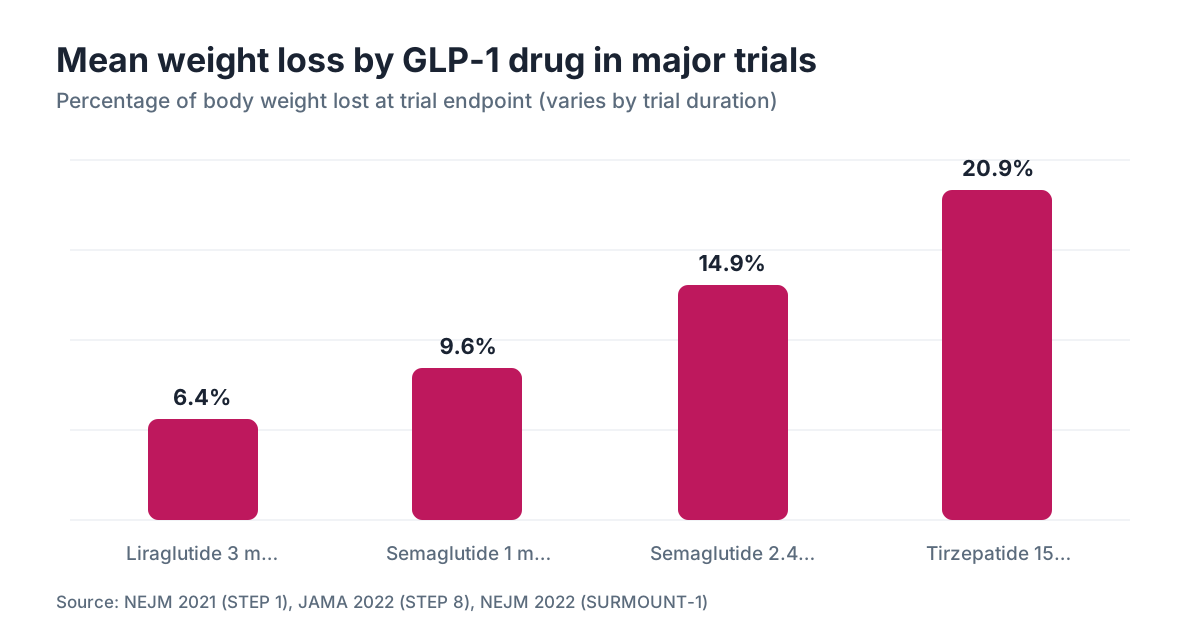
Semaglutide also beat daily liraglutide head-to-head. In STEP 8 (JAMA, 2022), semaglutide 2.4 mg produced 15.8% loss versus 6.4% with liraglutide 3 mg over 68 weeks [11]. For more on weight-loss outcomes, see semaglutide for weight loss.
How does the mechanism differ in women, especially around menopause?
Here the science is genuinely thin, and it's worth saying so. The STEP trials enrolled mostly women (roughly 73-75% female in STEP 1), so the efficacy numbers represent women well. But the trials weren't built to compare outcomes by menopausal status, and almost no published subgroup analysis splits results by hormonal phase.
What we do know: estrogen and GLP-1 talk to each other. Estrogen raises GLP-1 receptor expression in the hypothalamus and pancreas in animal models, and losing estrogen at menopause pushes fat toward the belly (visceral fat), a depot that's more metabolically active and more responsive to GLP-1-linked fat-mobilization signals [5]. In theory that makes GLP-1 agonists a good fit for the visceral fat that piles on during menopause, though direct evidence in menopausal women specifically is still limited [14].
Estrogen also shapes the gut microbiome, gut motility, and central serotonin signaling, all of which touch GLP-1 pathways. Falling estrogen raises appetite and can dull the brain's fullness signals. Semaglutide's central action may partly make up for that.
Some clinicians see perimenopausal women respond well but fight the GI side effects harder than younger women, likely from that pre-existing slow motility. Whether to pair semaglutide with hormone replacement therapy is a real clinical question with no randomized trial behind it yet. The mechanistic case is there. The outcome data isn't. See hormone replacement therapy for what HRT does on its own.
WomenRx evaluates hormonal status and GLP-1 candidacy together, because these systems don't work in separate rooms.
Does semaglutide affect blood sugar even in people without diabetes?
Yes, and that matters for prevention. In people without diabetes who carry extra weight, semaglutide improves insulin sensitivity and lowers fasting glucose even when the starting glucose reads normal [4]. In STEP 1, HbA1c dropped a small but measurable amount in participants who had no diabetes at baseline.
The SELECT trial (New England Journal of Medicine, 2023) enrolled 17,604 adults with established cardiovascular disease and overweight or obesity but no diabetes. Semaglutide 2.4 mg cut major adverse cardiovascular events by 20% versus placebo over a mean 33.3 months [6]. On the strength of that, the FDA approved Wegovy for cardiovascular risk reduction in adults with established heart disease in March 2024.
SELECT hinted the heart benefit isn't fully explained by weight loss, which points back to direct GLP-1 receptor effects in the heart and blood vessels. GLP-1 receptors on cardiac and endothelial cells lower inflammation, improve endothelial function, and may cut oxidative stress on their own.
A drug that drops cardiovascular events by 20% in a high-risk group is doing more than trimming calories. For women, who carry a different cardiovascular risk profile after menopause, that matters: menopause speeds up unfavorable changes in lipids and vascular function, and the SELECT population is exactly where those changes bite.
What is semaglutide's half-life and why does it matter for dosing?
Semaglutide's plasma half-life runs about 165 to 184 hours, roughly seven days [1]. That's what makes once-weekly injection possible. Native GLP-1, by contrast, lasts one to two minutes. Liraglutide (Victoza, Saxenda) has a half-life near 13 hours and needs a daily shot. Semaglutide lasts because the fatty acid chain lets it grab onto albumin in the blood, shielding it from the kidneys and enzymes.
Steady-state plasma levels arrive after four to five weekly doses. That's a big reason dose bumps happen every four weeks: you want the full effect of one dose before you climb to the next.
Oral semaglutide (Rybelsus) takes a different route. The tablet pairs semaglutide with sodium N-(8-(2-hydroxybenzoyl)amino)caprylate (SNAC), an absorption helper that briefly raises local stomach pH and lets the peptide slip across the gastric lining. Oral bioavailability is only about 1%, which is why the oral doses (7 mg and 14 mg) are far larger by mass than the injection yet deliver less into the bloodstream. The oral form is approved for type 2 diabetes only, not weight loss, as of this writing.
For the full rundown of formulations and access, including the compounded versions that flooded in during the Ozempic and Wegovy shortage, see compounded semaglutide.
Does semaglutide affect muscle mass or bone density?
This is one of the more overlooked questions, and it matters a lot for women in midlife. Fast weight loss from any cause, semaglutide included, risks taking lean mass along with fat. In STEP 1, roughly 39% of total weight lost was lean mass, which tracks with weight-loss physiology in general but is worrying in a population already facing age-related muscle loss [4].
Semaglutide has no direct muscle-building effect. It lowers appetite across the board, and if protein intake falls because total food falls, muscle loss speeds up. High-protein eating (1.2 to 1.6 grams of protein per kilogram of body weight a day) and resistance training are the main tools to protect lean mass on a GLP-1. For women over 50, muscle ties directly to metabolic health, fall prevention, and daily function. It's not a footnote.
Bone is less settled. GLP-1 receptors sit on osteoblasts (bone-building cells), and some animal data suggests activation may support bone formation. But weight loss itself reduces the mechanical load on bone, which can lower bone mineral density. An FDA safety review found no significant rise in fracture risk at 68 weeks in STEP analyses, though 68 weeks is a short window for bone [7]. Postmenopausal women with declining estrogen and baseline bone loss are exactly the group where tracking bone density during long-term use makes sense. See bone density test for when to schedule a DEXA scan.
Estrogen protects bone through its own pathway. For women pairing semaglutide with hormone therapy, some of the bone risk from weight-loss unloading may be offset by estrogen's effect on bone resorption.
How does semaglutide compare mechanistically to other GLP-1 drugs?
Every GLP-1 receptor agonist shares the same core move: bind and switch on GLP-1 receptors. The differences come down to half-life, receptor selectivity, dose exposure, and whether a second hormone pathway gets added.
Liraglutide (Saxenda for weight, 3 mg daily) hits the same receptors but clears faster and reaches lower total receptor activation, which likely explains its smaller average loss (roughly 5-8% in trials versus 15% for semaglutide 2.4 mg).
Tirzepatide (Zepbound for weight, Mounjaro for diabetes) is a dual GIP/GLP-1 agonist. Turning on GIP receptors in fat tissue may boost fat mobilization and ease the GI side effect load compared to pure GLP-1 action. In SURMOUNT-1, tirzepatide 15 mg produced a mean 20.9% loss at 72 weeks, ahead of semaglutide in indirect comparisons and in the direct SURPASS-2 diabetes trial [8].
For a woman choosing between them, the mechanism is the deciding factor worth understanding: tirzepatide's added GIP action may give greater fat-specific effects with somewhat less nausea for some, but response varies a lot person to person. Full comparison at semaglutide vs tirzepatide.
| Drug | Receptor | Half-life | Typical Max Dose | Avg Weight Loss (Trial) | |---|---|---|---|---| | Liraglutide (Saxenda) | GLP-1R | ~13 hrs | 3 mg daily | ~5-8% | | Semaglutide (Wegovy) | GLP-1R | ~7 days | 2.4 mg weekly | ~14.9% | | Tirzepatide (Zepbound) | GLP-1R + GIPR | ~5 days | 15 mg weekly | ~20.9% |
What are the known risks and safety signals in the mechanism?
Because GLP-1 receptors are spread all over the body, semaglutide does things beyond appetite and glucose. Most are manageable. A few need monitoring.
Pancreatitis is the most-discussed serious risk. GLP-1 activation in pancreatic ductal cells could in theory raise ductal pressure. Observed pancreatitis rates in semaglutide trials were low (under 0.5% in STEP 1) and matched placebo, but the FDA label still says to stop the drug if pancreatitis is suspected. People with a pancreatitis history are generally kept off it [2].
Thyroid C-cell tumors carry a black-box warning. Rodents given high-dose GLP-1 agonists for long periods developed C-cell hyperplasia and medullary thyroid carcinoma. Rodent thyroid C-cells carry far more GLP-1 receptors than human ones, and no rise in medullary thyroid cancer has turned up in human trials or post-marketing data so far. The drug is contraindicated for anyone with a personal or family history of medullary thyroid carcinoma or MEN 2 syndrome [2].
Gallbladder disease (gallstones and cholecystitis) is a real signal. In STEP 1, gallbladder disorders hit 2.6% of the semaglutide group versus 1.2% on placebo. Fast weight loss raises bile saturation and gallstone risk no matter the cause, and semaglutide's effect on gallbladder motility (GLP-1 receptors sit there too) may add to it.
The FDA-approved Wegovy label is the authoritative source for the full safety profile and is public at the FDA website [2].
How does semaglutide interact with menopause hormones and HRT?
No large randomized trial has tested semaglutide alongside estrogen or progesterone therapy. That's a real gap. What we have is mechanistic reasoning and small observational data.
Estrogen cuts visceral fat through its own receptor pathway (mainly ERalpha). Semaglutide cuts visceral fat through GLP-1-driven appetite suppression and possibly direct effects on fat tissue [14]. On paper the two work through different enough routes that combining them could add up on body composition, especially belly fat. In practice, women who start hormone therapy often report better insulin sensitivity and less abdominal fat, which could make GLP-1 action more effective or let a lower dose do the job.
The GI side effects may interact with oral estrogen. Oral estradiol raises liver production of certain proteins and shifts lipid metabolism in ways transdermal estrogen doesn't. Semaglutide slows gastric emptying, which could in theory change when oral hormones get absorbed, though no pharmacokinetic study has measured that specifically. Transdermal or injectable hormones sidestep the issue entirely.
Progesterone is worth a note. Progesterone can raise appetite and promote fat storage in the luteal phase. Some perimenopausal women notice more hunger on certain progestogens. Whether GLP-1 action cancels out that progestogen-driven hunger is unstudied but plausible. See progesterone for how progestogens differ, and hormone replacement therapy for the combined approach.
WomenRx providers evaluate hormone therapy and GLP-1 candidacy together because the interaction between these systems is real, even though the randomized data hasn't caught up.
Who is and isn't a candidate for semaglutide based on its mechanism?
FDA approval for Wegovy (weight management) needs a BMI of 30 or above, or 27 or above with at least one weight-related condition such as hypertension, type 2 diabetes, or dyslipidemia [2]. The cardiovascular indication from SELECT added adults with established atherosclerotic cardiovascular disease and a BMI above 27.
Mechanistically, the drug works best when excess weight is driven largely by appetite dysregulation and visceral fat. When the cause is structural or mechanical instead (untreated hypothyroidism, Cushing's syndrome), fix that first.
Women who should not use semaglutide include those who are pregnant, those with a personal or family history of medullary thyroid carcinoma or MEN 2, and those with a history of severe pancreatitis. People with severe kidney or liver impairment need close monitoring, though the albumin-binding pharmacokinetics mean the kidneys aren't the main exit route.
Older women with significant muscle loss deserve a real conversation about protecting lean mass before starting. The drug lowers appetite indiscriminately, so if protein drops because total intake drops, muscle can go with it. A dietitian who knows GLP-1 therapy belongs in the plan, not on the maybe list.
For women tracking where weight changes meet hormonal shifts, perimenopause age and when does menopause start give context on the metabolic changes specific to this stage.
Frequently asked questions
How long does it take for semaglutide to start working on appetite?
Most people notice less appetite within the first one to four weeks, even at the 0.25 mg starting dose. Real weight loss usually begins around weeks four to eight and builds over months as the dose climbs. Steady-state blood levels arrive after four to five weekly doses at any given level, so the effect keeps intensifying through the titration period rather than hitting full strength on day one.
Why does semaglutide cause nausea and how does the mechanism explain it?
Nausea comes straight from GLP-1 receptor activation in the gut and brainstem. Semaglutide slows gastric emptying, so the stomach stays fuller longer and signals the area postrema in the brainstem, which controls nausea and vomiting. It's strongest during dose increases and usually eases after four to eight weeks at a steady dose. Smaller portions, less fatty food, and staying upright after meals all cut the symptom load.
Can semaglutide cause low blood sugar in women without diabetes?
Semaglutide's insulin-boosting effect is glucose-dependent. It only pushes insulin meaningfully when blood glucose is already high. In people without diabetes, the risk of hypoglycemia from semaglutide alone is very low. The risk rises if it's combined with insulin or a sulfonylurea. Skipping meals on semaglutide can still leave you low on energy, but true hypoglycemia is uncommon in non-diabetic users.
Does semaglutide work differently depending on menopausal status?
The STEP trials enrolled mostly women but didn't analyze outcomes by menopausal status. Mechanistically, estrogen and GLP-1 interact: estrogen raises GLP-1 receptor expression in the hypothalamus and pancreas in animal models. After menopause, visceral fat rises and fullness signaling weakens. Semaglutide's central appetite suppression may partly make up for that. Direct comparative outcome data in pre- versus postmenopausal women doesn't exist yet.
Will I regain weight when I stop semaglutide?
Yes, most people regain a big share of what they lost after stopping. The STEP 4 extension found that participants who switched from semaglutide to placebo at 20 weeks regained about two-thirds of their lost weight by week 68. That's expected: the drug suppresses appetite through GLP-1 receptor activation, and that effect ends when the drug clears. Long-term or indefinite treatment is often needed to hold results.
How does semaglutide reduce cardiovascular risk beyond just weight loss?
The SELECT trial showed a 20% cut in major adverse cardiovascular events with semaglutide 2.4 mg in adults with established heart disease, even though they lost less weight than in the STEP trials. GLP-1 receptors on cardiac and endothelial cells appear to lower inflammation, improve endothelial function, and reduce oxidative stress through routes that work independent of weight loss. The FDA approved Wegovy for cardiovascular risk reduction in March 2024 on these findings.
Does semaglutide cause muscle loss and how can I prevent it?
Fast weight loss from any cause can include lean mass. In STEP 1, roughly 39% of total weight lost was lean mass, which fits general weight-loss data. Semaglutide doesn't directly break down muscle, but it lowers overall food intake, which can drag protein down with it. Aiming for 1.2 to 1.6 grams of protein per kilogram of body weight daily and doing regular resistance exercise are the most effective ways to keep muscle.
Is the mechanism of action the same for oral semaglutide (Rybelsus) and injectable semaglutide?
The molecule is identical: the same GLP-1 receptor agonist. Delivery and bioavailability differ. Oral semaglutide uses the absorption helper SNAC to get across the gut lining, reaching only about 1% bioavailability. The oral form is approved for type 2 diabetes at 7 mg and 14 mg. The injection reaches much higher systemic exposure at lower doses. The oral version has not been approved for weight management as of this writing.
Can semaglutide affect thyroid function?
The main thyroid concern is medullary thyroid carcinoma, based on rodent studies showing C-cell tumors at high doses. GLP-1 receptor density on thyroid C-cells is far lower in humans than in rodents, and no rise in medullary thyroid cancer has appeared in clinical trials or post-marketing data. The drug is contraindicated for anyone with a personal or family history of medullary thyroid carcinoma or MEN 2. It doesn't directly affect TSH, T3, or T4 in people with normal thyroid function.
How does the mechanism explain why semaglutide reduces food cravings, more than portion size?
Semaglutide acts on the mesolimbic dopamine reward circuits, the same wiring behind the drive to chase highly palatable food. GLP-1 receptor activation there appears to lower the reward value of food, more than the physical sense of hunger. That's why so many users say foods they once couldn't resist are simply less interesting now, which is a different experience from willpower-based calorie restriction.
What is the difference between semaglutide and tirzepatide in terms of how they work?
Semaglutide activates only GLP-1 receptors. Tirzepatide activates both GLP-1 receptors and GIP (glucose-dependent insulinotropic polypeptide) receptors. The added GIP action appears to boost fat mobilization in fat tissue and may ease GI side effects for some users. In trials, tirzepatide 15 mg produced about 20.9% weight loss versus semaglutide's roughly 14.9%, though the two haven't been directly compared head-to-head for weight loss in a published trial.
How does semaglutide affect hunger hormones beyond GLP-1?
Semaglutide's primary target is the GLP-1 receptor, but the weight loss and lower calorie intake shift other hunger hormones secondarily. Ghrelin (the main hunger hormone) usually rises with weight loss, yet semaglutide-treated patients in some studies show a blunted ghrelin climb compared to diet-alone weight loss. Peptide YY (PYY) and cholecystokinin (CCK), both fullness signals, may run modestly higher. The net effect leans toward satiety more than plain calorie cutting does.
Does the GLP-1 mechanism explain benefits for polycystic ovary syndrome (PCOS)?
PCOS involves insulin resistance, high androgens, and often obesity, all areas where GLP-1 receptor action has a plausible benefit. Small trials and case series show better menstrual regularity, insulin sensitivity, and androgen levels in women with PCOS on GLP-1 agonists. The mechanism runs through improved insulin signaling (less high insulin driving ovarian androgen production) and direct central appetite effects. Semaglutide isn't FDA-approved specifically for PCOS, but off-label use here is increasingly common.
Why does semaglutide need to be dose-escalated slowly?
Fast GLP-1 receptor activation in the gut and brainstem causes heavy nausea and vomiting in most people if therapeutic doses come too quickly. The standard titration (starting at 0.25 mg weekly, rising every four weeks to 0.5, 1.0, 1.7, then 2.4 mg) gives GI receptors time to partly adapt. Going slow also lets steady-state blood levels settle at each dose before the next bump, so the prescriber sees the real effect before moving up.
Sources
- Drugs.com: Semaglutide pharmacology and pharmacokinetics
- FDA: Wegovy (semaglutide) prescribing information
- Holst JJ et al., 'The Physiology of Glucagon-like Peptide 1', Physiological Reviews, 2007
- Wilding JPH et al., 'Once-Weekly Semaglutide in Adults with Overweight or Obesity', New England Journal of Medicine, 2021
- Davis SR et al., 'Understanding weight gain at menopause', Climacteric, 2012
- Lincoff AM et al., 'Semaglutide and Cardiovascular Outcomes in Obesity without Diabetes', New England Journal of Medicine, 2023 (SELECT trial)
- FDA Drug Safety Communication: GLP-1 receptor agonists and bone fracture risk review
- Jastreboff AM et al., 'Tirzepatide Once Weekly for the Treatment of Obesity', New England Journal of Medicine, 2022 (SURMOUNT-1)
- Endocrine Society Clinical Practice Guideline: Pharmacological Management of Obesity
- Kalvala AK et al., 'GLP-1 and the gut-brain axis in appetite regulation', Frontiers in Endocrinology, 2022
- Rubino DM et al., 'Effect of Weekly Subcutaneous Semaglutide vs Daily Liraglutide on Body Weight in Adults With Overweight or Obesity Without Diabetes' (STEP 8), JAMA, 2022
- Wadden TA et al., 'Effect of Subcutaneous Semaglutide vs Placebo as an Adjunct to Intensive Behavioral Therapy on Body Weight in Adults With Overweight' (STEP 3), JAMA, 2021
- Rubino D et al., 'Effect of Continued Weekly Subcutaneous Semaglutide vs Placebo on Weight Loss Maintenance' (STEP 4), JAMA, 2021
- NAMS (North American Menopause Society): Position Statement on Hormone Therapy