Semaglutide injection: how it works, where to inject, and what to expect
TL;DR: Semaglutide is a once-weekly GLP-1 receptor agonist you inject under the skin of your abdomen, thigh, or upper arm. The STEP 1 trial found an average 14.9% body weight loss over 68 weeks at the 2.4 mg dose. You start at 0.25 mg weekly and step up every four weeks. Most side effects are gut-related and fade.
What exactly is a semaglutide injection and how does it work?
Semaglutide is a glucagon-like peptide-1 (GLP-1) receptor agonist. Your gut releases GLP-1 after you eat. That hormone tells your pancreas to make insulin, slows digestion, and signals your brain that you're full. Semaglutide copies that signal. It also has a fatty acid chain attached that lets it bind to albumin in the bloodstream, which stretches its half-life to about seven days. One shot a week is enough. [1]
There are two FDA-approved injectable forms. Ozempic (approved 2017) treats type 2 diabetes at doses up to 2 mg weekly. Wegovy (approved 2021) treats chronic weight management at 2.4 mg weekly, and it's the version most women seeking weight loss will use. [2] The molecule in both is identical. Only the top dose and the label differ.
In the brain, semaglutide acts on the hypothalamus to turn down appetite and the pull of food reward. In the stomach, it slows gastric emptying, which is a big reason nausea shows up early. In the pancreas, it raises insulin secretion only when blood sugar is elevated, so hypoglycemia stays rare in people without diabetes. [1]
For women, this mechanism matters during perimenopause and menopause. Falling estrogen shifts fat toward the belly and raises insulin resistance. A GLP-1 agonist works on the appetite side and the insulin-sensitivity side of that problem, though it does nothing for estrogen. There's more on the hormonal backdrop in our overview of semaglutide for weight loss.
What does the clinical trial data actually show for weight loss?
The STEP (Semaglutide Treatment Effect in People with Obesity) program is the main evidence base. Four large trials ran from 2019 to 2021.
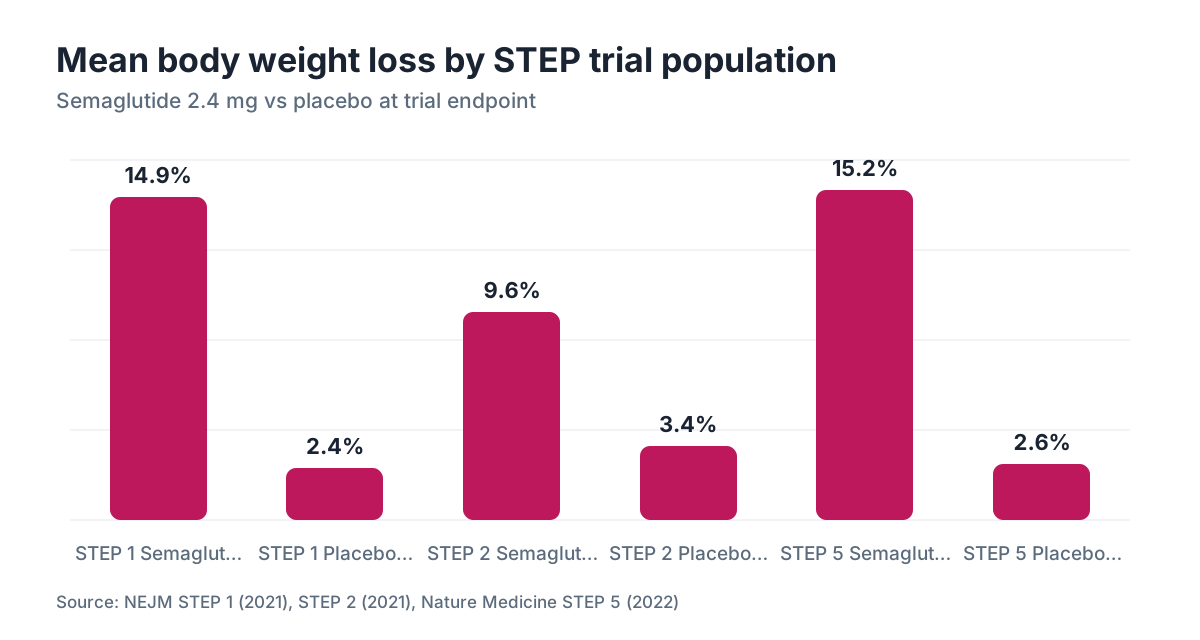
STEP 1 enrolled 1,961 adults with obesity, or overweight plus at least one weight-related condition, and no diabetes. At 68 weeks, the semaglutide 2.4 mg group lost a mean 14.9% of body weight against 2.4% on placebo. [3] On a 220-pound person, that's roughly 33 pounds.
STEP 5 is the long-term number. Over 104 weeks (two full years) at 2.4 mg, participants held an average 15.2% weight loss compared with 2.6% on placebo. [4] Weight regain after stopping is real and fast, which is the honest part of the conversation nobody loves having.
For women with type 2 diabetes the results run smaller. STEP 2 showed 9.6% weight loss at 68 weeks in that group, against 3.4% for placebo. [3] Diabetes biology caps how far any GLP-1 can move weight.
A separate cardiovascular trial, SELECT (2023), enrolled 17,604 adults with established cardiovascular disease and obesity but no diabetes. Semaglutide 2.4 mg cut major cardiovascular events by 20% over a median 34.2 months. [5] The FDA added that cardiovascular benefit to the Wegovy label in March 2024.
| Trial | Population | Duration | Semaglutide weight loss | Placebo weight loss | |---|---|---|---|---| | STEP 1 | Obesity/overweight, no diabetes | 68 weeks | 14.9% | 2.4% | | STEP 2 | Obesity + type 2 diabetes | 68 weeks | 9.6% | 3.4% | | STEP 5 | Obesity/overweight, no diabetes | 104 weeks | 15.2% | 2.6% | | SELECT | CVD + obesity, no diabetes | ~34 months | 20% reduction in MACE* | n/a |
*MACE = major adverse cardiovascular events [3][4][5]
What is the correct semaglutide dosing schedule?
The FDA-approved dose escalation for Wegovy (semaglutide 2.4 mg) runs like this: [2]
- Weeks 1-4: 0.25 mg once weekly
- Weeks 5-8: 0.5 mg once weekly
- Weeks 9-12: 1 mg once weekly
- Weeks 13-16: 1.7 mg once weekly
- Week 17 onward: 2.4 mg once weekly (maintenance)
The slow ramp exists to cut GI side effects. Skipping steps because you feel fine is a common mistake. Your gut needs time to adapt to slowed emptying, and jumping ahead almost always buys you worse nausea, vomiting, or constipation that forces you to drop back anyway.
If an escalation step causes side effects you can't live with, the label lets you stay at the lower dose for an extra four weeks before trying to move up again. Some women never reach 2.4 mg and do fine at 1.7 mg. That's a legitimate stopping point. [2]
Ozempic, the diabetes version, tops out at 2 mg weekly on a different schedule. Its prescribing information is public from the FDA.
One timing note. Inject on the same day each week. The time of day doesn't matter, and you can take it with or without food. Consistency is the thing, because the pharmacokinetics are built around a 7-day cycle.
Where do you inject semaglutide and does injection site matter?
The three approved injection sites are the abdomen (at least 2 inches from the navel), the front of the thigh, and the outer, fatty part of the upper arm. [2] All three are subcutaneous, meaning you go into the fat layer just under the skin, not into muscle.
Absorption is essentially the same across all three sites in pharmacokinetic studies. So the guidance is to rotate locations to avoid lipohypertrophy, a thickening of fatty tissue that builds up when you inject the same exact spot over and over. Lipohypertrophy blunts absorption and feels like a firm lump under the skin. If you develop it, switch sites and let that area rest for several weeks.
A rotation that works: abdomen week 1, left thigh week 2, right thigh week 3, then repeat. Or map a grid on each site and shift a few centimeters each time. Never inject skin that's bruised, scarred, or already thickened.
The Wegovy auto-injector pens have a hidden needle, so you never see it. You hold the pen flat against the skin, press the button, and hold for about 10 seconds until the yellow indicator confirms the full dose went in. [2] No pinching needed for most women, because the needle is only 4 mm.
Storage runs on temperature. Keep unused pens refrigerated (36 degrees F to 46 degrees F). Once in use, a pen can sit at room temperature for up to 28 days. Never freeze a Wegovy pen. Freezing destroys the formulation. [2]
What side effects should women expect from semaglutide injections?
Nausea leads the list, reported by about 44% of Wegovy participants in trials against 16% on placebo. [2] It peaks during dose escalation and usually eases after four to eight weeks at a stable dose. Smaller portions, skipping high-fat meals, and staying upright after eating all help.
The full GI picture from trial data: nausea (44%), diarrhea (30%), vomiting (24%), constipation (24%), and abdominal pain (20%). [2] The numbers sound scary, but most cases are mild to moderate and pass. In STEP 1, the discontinuation rate from GI events was about 4.5% for semaglutide against 0.8% for placebo, so most people push through.
Hair loss (telogen effluvium) deserves a mention for women, because it's common, distressing, and often left out of the headline trial discussions. It seems to track with rapid caloric restriction and nutritional stress rather than the drug itself, and it usually resolves within six months. Enough protein (most clinicians suggest at least 1 gram per kilogram of goal body weight per day) reduces how much you shed.
Muscle and bone loss are real concerns. STEP 1 showed that roughly 39% of the weight lost was lean mass. [3] For perimenopausal and postmenopausal women already losing muscle and bone density, that matters. Resistance training and high protein are the mitigations with evidence behind them. A bone density test before you start is reasonable if you're postmenopausal.
Rare but serious risks flagged on the FDA label include thyroid C-cell tumors (seen in rodents at high doses, not confirmed in humans, but the label carries a boxed warning and semaglutide is contraindicated in anyone with a personal or family history of medullary thyroid carcinoma or MEN2), pancreatitis, and gallbladder disease. Gallstones and cholecystitis are the most clinically relevant of these, especially with fast weight loss. [2]
For women on combined hormone therapy, there are no documented interactions between semaglutide and estrogen or progesterone. Slowed gastric emptying could, in theory, affect absorption of oral medications. Injectable or transdermal hormones (an estrogen patch, say) sidestep that worry entirely.
How does semaglutide compare to tirzepatide for women?
Tirzepatide (Mounjaro for diabetes, Zepbound for weight loss) hits two receptors, GLP-1 and GIP. That dual mechanism produces larger average weight loss than semaglutide alone. SURMOUNT-1 showed 20.9% body weight reduction at 72 weeks with tirzepatide 15 mg, against 14.9% at 68 weeks with semaglutide 2.4 mg in STEP 1. [6] A head-to-head trial (SURMOUNT-5) published in 2025 showed tirzepatide winning directly, with roughly 47% more weight loss.
Still, semaglutide works well for most women, especially those who are GI-sensitive. Tirzepatide has a similar side effect profile, and some clinicians report a bit more nausea with it at higher doses.
Cost and availability count too. As of mid-2025, both drugs face supply pressure and steep out-of-pocket prices without insurance. There's a fuller breakdown in our semaglutide vs tirzepatide comparison.
For women managing menopause-related weight changes, neither drug beats the other on a hormonal basis. The choice usually comes down to individual response, tolerability, cost, and prescriber experience.
What about compounded semaglutide? Is it the same thing?
While Wegovy sat on the FDA shortage list (a designation that started in 2022), FDA rules let 503A and 503B compounding pharmacies legally make compounded semaglutide. [7] The FDA pulled Wegovy off its shortage list in February 2025, which means most compounders now have to stop unless a specific patient has a documented medical need for a customized formulation.
Compounded semaglutide is not FDA-approved. It hasn't cleared the same manufacturing quality and purity standards as branded products. The FDA has warned repeatedly about compounded products made with acetate salt instead of the active sodium salt form used in Ozempic and Wegovy, and about dosing errors that sent patients to the emergency room. [7]
That doesn't make every compounded product dangerous. Licensed 503B outsourcing facilities face tighter oversight than 503A pharmacies. But the honest answer is that you can't verify what you're getting the way you can with an FDA-approved drug.
If cost is the barrier, manufacturer patient assistance programs and specialty pharmacy discounts exist for Wegovy. The full picture on compounded versions, including what to ask your prescriber, is in our compounded semaglutide piece.
For our overview of the drug category as a whole, see semaglutide.
How does menopause affect semaglutide response?
Women in perimenopause and postmenopause face a hormonal setup that makes weight loss harder. Estrogen loss shifts fat toward the belly, drops resting metabolic rate, disrupts sleep (which raises ghrelin and cortisol), and raises insulin resistance. [8] GLP-1 agonists work on appetite and insulin sensitivity. They don't restore estrogen.
The STEP trials didn't split results by menopausal status, so there's no clean trial data comparing semaglutide response in pre- versus postmenopausal women. What we have is mechanism and clinical observation. Most practitioners report that menopausal women respond well but may lose weight more slowly, and lean mass loss looms larger because muscle is already declining with age.
Pairing hormone replacement therapy with GLP-1 therapy comes up more and more in practice, because estrogen helps hold onto muscle and shifts fat distribution, which could complement what semaglutide does. A 2023 paper in the journal Menopause noted that estrogen therapy may cut visceral fat on its own, and combining it with a GLP-1 agonist is an active research question. [9] Nobody has a large randomized trial on this yet.
Women working through menopause or perimenopause symptoms alongside weight management often do better with care that looks at hormones and metabolism together. That's the kind of combined approach a telehealth practice like WomenRx is built for, with prescribers who read hormones and GLP-1s in the same clinical picture instead of siloing them.
Here's the honest bottom line. Semaglutide works in menopausal women, and you'll likely get more from it if your hormone status is managed too. Estrogen alone helps some women lose weight. Semaglutide alone helps more. The combination hasn't been formally tested, but it has a sound biological rationale.
How much does semaglutide cost and is it covered by insurance?
Wegovy's list price as of 2025 is about $1,349 per month for the maintenance 2.4 mg dose. [10] What you actually pay swings hard based on insurance.
Medicare does not cover Wegovy for weight loss alone, though it will cover it when prescribed for cardiovascular risk reduction following the SELECT data. The Treat and Reduce Obesity Act has been introduced in Congress repeatedly and still hasn't passed as of mid-2025. Many commercial plans exclude obesity drugs outright, filing them under lifestyle rather than medical treatment.
Novo Nordisk offers a savings card for commercially insured patients that can bring the cost down to around $650 per month or less in some cases. For uninsured patients, its NovoCare patient assistance program provides free medication to qualifying low-income individuals.
Ozempic's list price runs roughly $935 per month, but it's covered more widely because it carries a diabetes indication. Using Ozempic off-label for weight loss is common, though coverage is far from guaranteed and some plans are tightening up on it.
The compounded route, legal ground now narrowing, currently runs $200 to $600 per month depending on the pharmacy and dose. That price is why it drew so many patients during the shortage.
Who should not use semaglutide injections?
The FDA label lists two absolute contraindications: a personal or family history of medullary thyroid carcinoma (MTC), and Multiple Endocrine Neoplasia syndrome type 2 (MEN2). The boxed warning exists because GLP-1 receptor agonists caused dose-dependent thyroid C-cell tumors in rodent studies. No causal link has been confirmed in humans, but the contraindication stands. [2]
Semaglutide is also off the table if you've had a serious hypersensitivity reaction to it before.
Precautions, meaning use with careful monitoring rather than a flat no, cover a history of pancreatitis, severe gastroparesis, chronic kidney disease, and active gallbladder disease.
Pregnancy is a strong caution. Stop semaglutide at least two months before trying to conceive, because the drug lingers in the body for weeks after the last dose thanks to its long half-life. Weight loss itself isn't recommended during pregnancy. [2]
People on insulin secretagogues (sulfonylureas, for example) need dose adjustments when starting semaglutide because of hypoglycemia risk. Semaglutide on its own, as noted above, carries very low hypoglycemia risk without other diabetes medications.
If you take oral contraceptives, slowed gastric emptying during escalation could, in theory, reduce absorption. Most guidance suggests a backup method during titration if you rely on the pill for pregnancy prevention.
How do you actually self-inject semaglutide at home?
The Wegovy auto-injector is genuinely simple. Here's the step-by-step from the prescribing information and patient instructions for use: [2]
- Take the pen out of the fridge 30 minutes before injecting. Cold medication stings more.
- Wash your hands. Clean the site with an alcohol swab and let it dry fully.
- Remove the pen cap. Check the solution through the window. It should be clear to slightly yellow with no particles. Don't use a pen that's cloudy or has visible particles.
- Place the pen flat against the skin at a 90-degree angle. No pinching needed with the 4 mm needle.
- Press the button firmly until you hear or feel a click.
- Hold the pen in place for 10 seconds, then check the yellow indicator in the window confirming full dose delivery.
- Lift the pen straight off. The needle retracts on its own.
- Drop the used pen in a sharps container. Never recap or share pens.
Missed a dose? Inject as soon as you remember if the missed day was within five days. If more than five days have passed, skip it and resume on your next scheduled day. Don't double up. [2]
If self-injecting makes you anxious, the hidden needle design helps. The sting is minimal, about the same as a blood glucose finger prick for most people. The harder part, honestly, is remembering to do it on the same day every week. Set a phone alarm and keep the pen where you'll see it, not buried in the back of the fridge.
WomenRx includes injection guidance in its GLP-1 program, so a first-timer won't be decoding a package insert alone.
What happens when you stop semaglutide injections?
Weight regain after stopping is the most uncomfortable truth about semaglutide. A STEP 4 extension study found that people who came off semaglutide after 20 weeks regained roughly two-thirds of what they'd lost within a year. [4] The reason is simple. GLP-1 receptor agonists suppress appetite but don't fix whatever drove the weight gain in the first place. Stop the drug and the appetite signals come back.
So treating semaglutide as a short course you take, lose weight with, then quit is usually the wrong model. The FDA approved Wegovy for chronic weight management, which means long-term or indefinite use for most people, the way you'd think about a blood pressure medication.
For women who do stop, whether for cost, side effects, pregnancy, or personal choice, the tools that slow regain are the predictable ones: steady protein intake, ongoing resistance training, and attention to any hormonal factors (especially estrogen status after menopause). There's no evidence-backed drug holiday that preserves your results.
Some clinicians are trying dose reduction instead of full discontinuation once a patient hits her goal, easing down to the lowest effective maintenance dose. That's reasonable clinical practice, but it hasn't been formalized in trial data yet.
Frequently asked questions
How long does it take for semaglutide injections to start working?
Most women notice appetite suppression within the first one to two weeks at the starting 0.25 mg dose. Real movement on the scale usually shows up by weeks four to eight. The full effect builds across the entire 16-week titration. STEP 1 data showed most of the weight loss happening in the first 60 weeks, with the curve flattening at maintenance dose.
Can you inject semaglutide in the same spot every time?
No. Rotate between the abdomen, thigh, and upper arm, and move at least a few centimeters within each site each week. That prevents lipohypertrophy, the thickening of fat tissue that comes from repeated injections in one place. Lipohypertrophy blunts drug absorption and can take months to resolve.
What should I eat while on semaglutide injections?
No specific diet is required, but high-protein foods (eggs, Greek yogurt, lean meat, legumes) matter more than usual, because semaglutide causes some lean muscle loss alongside fat loss. Clinicians commonly recommend at least 1 gram of protein per kilogram of target body weight per day. Small, frequent meals help with nausea during titration. High-fat and very spicy meals tend to worsen GI side effects.
Is semaglutide the same as Ozempic and Wegovy?
Yes. Ozempic and Wegovy both use semaglutide as the active ingredient. Ozempic is FDA-approved for type 2 diabetes at a maximum dose of 2 mg weekly. Wegovy is FDA-approved for chronic weight management at 2.4 mg weekly. The molecule is identical; the doses and approved uses differ. Rybelsus is oral semaglutide, approved for diabetes.
Does semaglutide affect hormones or menstrual cycles?
Semaglutide doesn't directly change estrogen, progesterone, or thyroid hormones. But significant weight loss from any cause can disrupt menstrual cycles, and rapid caloric restriction can temporarily lower sex hormone production. Perimenopausal women may find it hard to tell semaglutide-related cycle changes from those driven by declining ovarian function. If your cycle shifts a lot, tell your prescriber.
How do you store semaglutide pens?
Wegovy pens must be refrigerated between 36 degrees F and 46 degrees F before first use. Once in use, a pen can stay at room temperature (up to 77 degrees F) or refrigerated for up to 28 days. Never freeze any semaglutide pen. Keep pens out of direct sunlight. If a pen has been frozen, throw it out, even if it looks normal after thawing.
Can semaglutide and hormone replacement therapy be taken together?
There are no documented pharmacokinetic interactions between semaglutide and HRT. Injectable or transdermal estrogen (patches, gels) isn't affected by slowed gastric emptying. Oral estrogen could, in theory, be affected during escalation when gastric emptying slows most. Most clinicians treating menopausal women on both therapies use transdermal HRT and haven't reported clinical problems.
What if I get nausea that won't go away on semaglutide?
Persistent nausea past eight weeks at a stable dose is worth raising with your prescriber. Options include holding at the lower dose rather than escalating, adjusting meal timing and content, or short-term antiemetics for some patients. Severe or persistent vomiting that stops you from eating or drinking is a reason to call your provider urgently rather than wait it out.
Is semaglutide safe long-term?
STEP 5 followed patients for two years with a good safety profile. SELECT ran a median 34 months and showed cardiovascular benefit, not harm. Data beyond five years doesn't exist yet for the weight-loss indication. The thyroid C-cell tumor finding in rodents has not shown up in human surveillance, but long-term thyroid monitoring is reasonable for patients on multi-year therapy.
Why is semaglutide so expensive and will prices drop?
Wegovy's list price is about $1,349 per month as of 2025. Novo Nordisk holds patents protecting the formulation through at least 2032 in the United States, so generic competition is years away. International prices are far lower (the UK NHS pays roughly one-fifth of the US list price), which reflects negotiating power more than production cost. Savings cards, patient assistance programs, and insurance advocacy are the near-term options.
Can semaglutide injections cause hair loss?
Hair loss (telogen effluvium) is reported by a meaningful number of semaglutide users, though it wasn't consistently captured in the primary STEP trials. It's most likely driven by rapid caloric restriction and nutritional stress, not the drug itself. It generally resolves within six months. Enough protein, plus a check for iron and zinc deficiency if needed, are the most useful steps.
What's the difference between semaglutide and tirzepatide for weight loss?
Tirzepatide (Zepbound) acts on both GLP-1 and GIP receptors. SURMOUNT-1 showed 20.9% body weight reduction at 72 weeks against 14.9% for semaglutide in STEP 1. A 2025 head-to-head trial confirmed tirzepatide produces greater weight loss on average. Both drugs have similar GI side effects. Tirzepatide is often preferred when maximum weight loss is the goal; semaglutide has a longer track record and cardiovascular outcome data.
Do I need a prescription for semaglutide injections?
Yes. Semaglutide injections (Wegovy and Ozempic) aren't controlled substances, but they require a valid prescription from a licensed prescriber in the United States. Telehealth platforms can prescribe via video or asynchronous consultation in most states. No legitimate pharmacy, domestic or foreign, can legally dispense semaglutide without a prescription.
How often do you inject semaglutide?
Once weekly, on the same day each week. You can inject at any time of day, with or without food. If you miss your dose by less than five days, inject as soon as you remember. If more than five days have passed since the missed dose, skip it and resume on your next scheduled injection day.
Sources
- FDA, Wegovy (semaglutide) prescribing information, clinical pharmacology section
- Wilding JPH et al., STEP 1 trial, New England Journal of Medicine, 2021
- Garvey WT et al., STEP 5 trial, Nature Medicine, 2022
- Lincoff AM et al., SELECT trial, New England Journal of Medicine, 2023
- Jastreboff AM et al., SURMOUNT-1 trial, New England Journal of Medicine, 2022
- FDA, Medications containing semaglutide: compounding and shortage information
- The Menopause Society (NAMS), Menopause Practice: A Clinician's Guide, metabolic changes section
- The Menopause Society, journal Menopause, review of estrogen therapy and body composition, 2023
- Novo Nordisk, Wegovy US list price, NovoCare patient assistance program
- Endocrine Society, Clinical Practice Guidelines section, pharmacological management of obesity