Semaglutide headache: why it happens and how to get relief
TL;DR: Headache is one of the most common side effects of semaglutide, reported by roughly 6-14% of participants in the STEP trials. Most headaches peak in the first 4-8 weeks as your dose increases, then fade. The main drivers are dehydration, low calorie intake, and the drug's direct effects on GLP-1 receptors in the brain. Staying well hydrated and eating regular small meals usually resolves them.
How common are headaches with semaglutide?
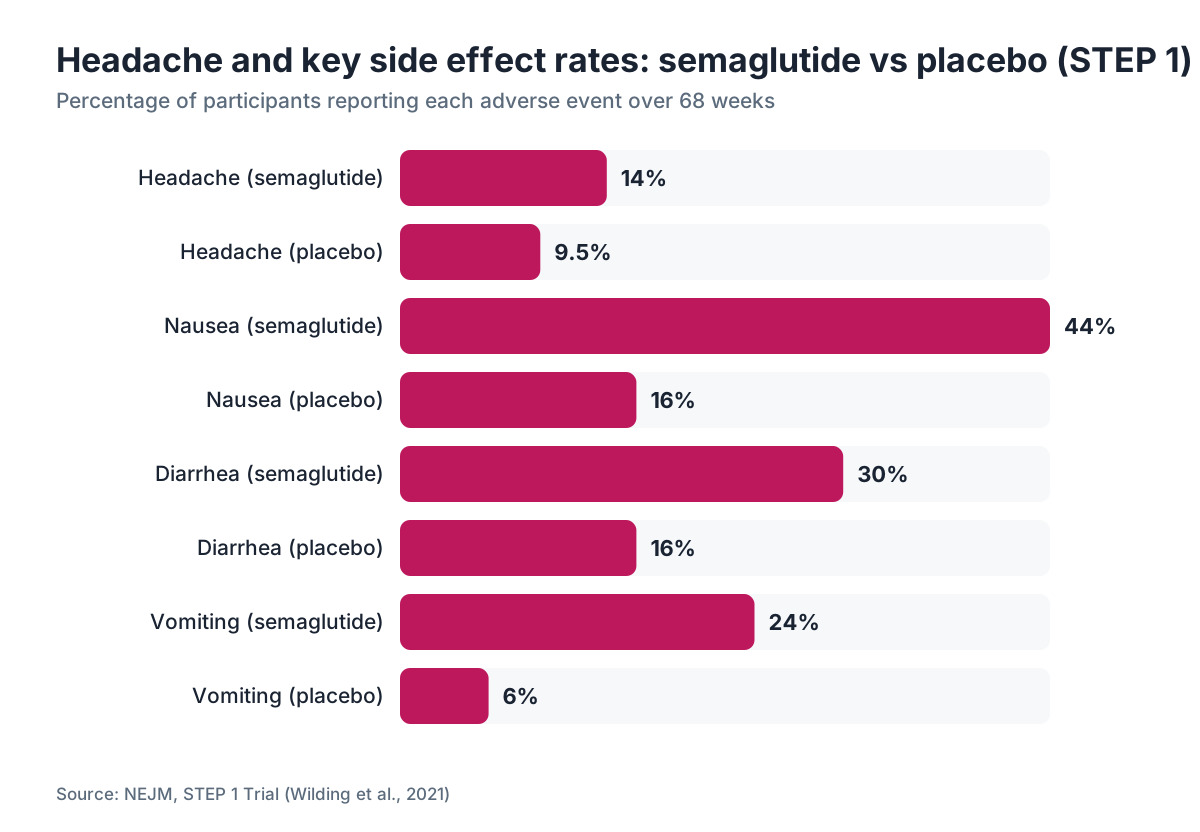
More common than most people expect. In the STEP 1 trial, the 68-week weight-management study published in the New England Journal of Medicine in 2021, headache was reported by approximately 14% of the semaglutide 2.4 mg group compared with 9.5% in the placebo group [1]. The cardiovascular outcomes trial SUSTAIN-6 and the diabetes-management STEP 2 trial showed similar patterns, with headache consistently ranking among the top five reported adverse events for semaglutide users [2].
So if you started Ozempic or Wegovy and you're now dealing with a persistent dull ache behind your eyes or at the base of your skull, you are not imagining it and you are not alone.
Here's the reassuring part. Most of these headaches are mild to moderate. Severe headache that disrupts daily function is much less common. In the STEP trials, adverse events labeled as serious that involved headache occurred in under 1% of participants, and discontinuation specifically because of headache was rare [1].
Why does semaglutide cause headaches?
Three mechanisms tend to work together, and for most people it's the combination rather than one clean cause.
First, dehydration. Semaglutide slows gastric emptying and reduces appetite, which means many people eat and drink less overall. Reduced fluid intake on its own is one of the most reliable triggers for tension-type headaches. Add the nausea that often shows up in the first few weeks of a new dose, and staying hydrated gets genuinely hard.
Second, caloric restriction and blood sugar shifts. Eating significantly less means your brain runs on fewer glucose calories than it's used to. Even in people without diabetes, a real drop in caloric intake can create transient fluctuations in blood sugar that the brain registers as stress, often expressed as a headache or "brain fog." This matters most during dose escalation weeks, when appetite suppression is strongest.
Third, direct central nervous system effects. GLP-1 receptors live in more places than the gut and pancreas. They're expressed in the hypothalamus, the brainstem, and the area postrema (the brain's nausea center) [3]. Semaglutide crosses the blood-brain barrier to some degree, and its activity at central GLP-1 receptors affects neuronal activity, vascular tone, and the inflammatory signaling that underlies many headaches. A 2023 review in Cephalalgia noted that GLP-1 receptor agonists show both pro- and anti-nociceptive properties depending on dose and brain region, which is why some migraine researchers are actually studying these drugs as potential migraine treatments [4].
For women in perimenopause or menopause, there's an extra layer. Estrogen fluctuations are already a well-documented migraine trigger. If you're in the hormonal turbulence of perimenopause and you add semaglutide, the headaches you feel may have two engines running at once. See our overview of perimenopause age and when does menopause start for context on where you might be hormonally.
When do semaglutide headaches start and how long do they last?
Timing follows a predictable pattern that mirrors the dose escalation schedule. The standard Wegovy titration starts at 0.25 mg weekly for four weeks, increases to 0.5 mg for four weeks, and keeps stepping up every four weeks until it reaches the 2.4 mg maintenance dose, a process that takes about 16-20 weeks [5].
Most people report headaches in the first week after each dose increase, usually within 24-72 hours of the injection. That window matches the drug reaching peak plasma concentration, which occurs roughly 24-72 hours after a subcutaneous injection of semaglutide [5].
For most users, headaches settle within the first 4-8 weeks of starting and do not come back at the same intensity once the body adjusts to a stable dose. A smaller group keeps getting milder headaches at each new dose step but finds they clear within a day or two once that dose becomes routine.
Persistent daily headaches beyond 8 weeks at a stable dose, or headaches getting worse rather than better, are worth bringing to your prescriber. That pattern is less typical and may warrant evaluation for something unrelated to semaglutide.
What does a semaglutide headache actually feel like?
Most people describe a tension-type headache: a dull, bilateral pressure across the forehead, temples, or back of the skull. It's usually not throbbing, and it tends not to come with the light sensitivity or nausea of a true migraine, unless you already have a migraine history.
For women with pre-existing migraines, the picture changes. Some report that semaglutide worsens their migraines in the early weeks, especially around dose increases. Others, interestingly, report fewer migraines after several months on the drug, possibly because sustained weight loss reduces migraine burden (obesity is an independent risk factor for chronic migraine) or because of the drug's central GLP-1 receptor activity [4].
A sudden, severe headache that hits like a thunderclap is never a semaglutide side effect. That presentation needs immediate emergency evaluation regardless of what medications you're taking.
How do you get rid of a semaglutide headache?
Practical steps first, because most headaches respond to these before you need medication.
Drink more water than you think you need. The general target for adults is around 2-3 liters per day, and when you're eating less, a meaningful chunk of the fluid that normally comes from food disappears. Electrolytes help. Plain water is fine, but a low-sugar electrolyte packet (sodium, potassium, magnesium) can speed relief when dehydration is the driver.
Don't skip meals. This sounds backwards on a drug that removes your appetite, but eating at least three small structured meals keeps blood glucose steadier. You don't need to eat much. You need to eat regularly.
Time your injection strategically. Some people find that injecting on a Friday evening puts the peak side effects, including headache, on a weekend when they can rest and hydrate rather than push through a work day. Not a perfect fix, but worth trying.
Over-the-counter analgesics work for most semaglutide headaches. Acetaminophen (Tylenol) is generally the first choice. Ibuprofen and naproxen are effective but should be used cautiously if you're already having GI side effects. Aspirin is fine for most people, but check with your prescriber if you have any cardiovascular conditions.
Caffeine can help in the short term if you're a regular caffeine user, but caffeine withdrawal is itself a major headache trigger. If you've cut back on coffee because semaglutide killed your appetite (and your morning coffee ritual with it), that reduction alone could be causing your headaches. Taper caffeine gradually rather than cutting it abruptly.
If headaches are severe or frequent enough to affect your quality of life, tell your prescriber. Options include slowing the dose escalation (more time at each step), briefly pausing the escalation, or in rare cases trying a different GLP-1. If you're wondering whether semaglutide vs tirzepatide might have a different side effect profile for you, that's a real conversation worth having.
Does semaglutide headache mean something is wrong?
Almost always, no. A mild to moderate headache in the first weeks of semaglutide, or after a dose increase, is a normal physiological response to a drug that is meaningfully changing your appetite, hydration, and neurochemistry. It is not a sign of organ damage, an allergic reaction, or a reason to stop the medication.
There are exceptions. The FDA label for semaglutide (Wegovy, Ozempic) lists several serious adverse events that can include headache as one feature among others [5]. These include:
- Pancreatitis: presents with severe, persistent abdominal pain that may radiate to the back, sometimes with nausea and vomiting. Headache alone is not a sign of pancreatitis.
- Gallbladder disease: cholelithiasis (gallstones) is more common with rapid weight loss and was observed in the STEP trials at a higher rate in the semaglutide group. Gallbladder pain sits in the upper right abdomen, not the head.
- Severe allergic reaction: anaphylaxis brings swelling, difficulty breathing, hives, and potentially low blood pressure, well beyond a headache.
A headache combined with visual changes, confusion, weakness, or speech difficulty is a neurological emergency. Call 911. That is not a semaglutide side effect; that's a stroke presentation.
For women also on hormone therapy, one flag: very high estrogen doses combined with migraine with aura carry a small but real increased stroke risk. If you have migraine with aura and you're starting both semaglutide and estrogen-based HRT, get that combination reviewed by your prescriber. Our articles on hormone replacement therapy and estrogen patch have more on HRT safety context.
Are women more likely to get headaches from semaglutide than men?
The clinical trial data doesn't cleanly separate headache incidence by sex, because the STEP trials enrolled a majority of women (about 75-80% of STEP 1 participants were female) [1]. So we don't have a clean male vs. female comparison.
What we do know from headache epidemiology more broadly: women are about three times more likely than men to have migraines in adulthood, largely because of estrogen's influence on trigeminal pain pathways [6]. That pre-existing vulnerability means women may be more sensitive to any headache trigger, including a new medication that shifts fluid balance and central receptor activity.
Women in perimenopause sit in a particularly complex spot. Fluctuating estrogen is already destabilizing their migraine threshold. Adding semaglutide, even when the drug otherwise suits them well, can tip that threshold more easily in the early weeks. This does not mean perimenopausal women shouldn't take semaglutide. It means they should start at the lowest dose, escalate slowly, and have a clear pain management plan ready.
Some clinicians at practices like WomenRx manage GLP-1 therapy alongside hormonal care, which allows for that kind of coordinated approach. If your headaches seem tied to your cycle or to the timing of any hormone therapy you're on, that connection is real and worth tracking.
Can semaglutide actually help migraines in the long run?
This is genuinely interesting, and the science is early but suggestive.
A 2023 paper in Cephalalgia reviewed preclinical and clinical evidence on GLP-1 receptor agonists and headache disorders [4]. The authors noted that GLP-1 receptors are expressed in the trigeminal ganglia, the primary pain relay for migraine, and that GLP-1 receptor activation appears to have anti-inflammatory effects in those pathways. Several small observational studies found that patients on GLP-1 receptor agonists for diabetes reported fewer migraine days over time.
The mechanism may also be indirect. Obesity roughly doubles the risk of chronic migraine, and even a modest 5-10% weight reduction can meaningfully reduce migraine frequency in people with obesity [4]. Since semaglutide produced average weight loss of around 15% of body weight at the 2.4 mg dose in the STEP 1 trial [1], the downstream effect on migraine burden could be substantial for women carrying that risk.
Nobody has good randomized controlled trial data on semaglutide for migraine prevention yet. The closest we have is observational data and receptor pharmacology. But if you're a woman with chronic migraines who also needs weight management, the chance that semaglutide could help both problems over time is a legitimate thing to raise with your neurologist and your GLP-1 prescriber.
Does the headache get worse at higher doses of semaglutide?
Often, yes, but only briefly. Each time the dose steps up, the headache risk tends to reset. So someone who had headaches at the 0.5 mg dose and then adapted may find the headaches come back for a few days when they move to 1.0 mg.
This is why slow titration matters. The FDA-approved titration schedule for Wegovy is deliberately gradual, adding four weeks at each dose level specifically to reduce the intensity of GI and neurological side effects [5]. If headaches are making each dose step miserable, your prescriber can extend the time at your current dose before moving up. That's a standard clinical decision, not a failure of treatment.
Compounded semaglutide (available from 503B outsourcing facilities during the shortage period) sometimes comes in different concentrations and without the same pharmacist counseling. If you're on compounded semaglutide, be especially careful that the dose you're drawing up matches what your provider prescribed, because dosing errors with compounded products can produce side effects that are worse than expected.
What should you tell your doctor about semaglutide headaches?
Be specific. A vague report of "headaches" is less useful to your clinician than a description that includes when they started relative to your injection day, how long they last, where on your head they sit, what makes them better or worse, and whether you had headaches before starting semaglutide.
Bring a simple log if you can. Even a week of notes in your phone recording injection day, headache day, severity out of 10, and what you ate and drank gives your prescriber real information instead of a general complaint.
If you have a migraine history, tell your prescriber before starting semaglutide, not after the first bad week. There are preventive strategies, including a hydration protocol and a rescue medication plan, that are much easier to set up in advance.
When to call the same day: a headache that is the worst of your life, a headache with fever and stiff neck, a headache with vision changes, or any headache alongside other new neurological symptoms. These are not semaglutide side effects. These are emergencies.
Frequently asked questions
How long do semaglutide headaches last?
For most people, headaches tied to a new semaglutide dose last 1-3 days and resolve on their own. During the dose escalation phase (roughly the first 16-20 weeks), headaches may reappear briefly with each increase and then fade again. Persistent daily headaches lasting more than 2 weeks at a stable dose are not typical and should be evaluated by your prescriber.
Is headache a sign that semaglutide is working?
Not exactly. Headache is a side effect of the drug's activity on GLP-1 receptors in the brain and its effects on appetite and hydration, but it doesn't indicate that semaglutide is working better or worse. People who have headaches and people who don't have similar weight loss outcomes in clinical trials. It's a tolerability issue, not a signal of efficacy.
Can dehydration from semaglutide cause headaches?
Yes, and this is likely the most common and most fixable cause. Semaglutide reduces appetite, which also reduces fluid intake from food and beverages. Many users don't realize how much of their daily hydration came from eating. Actively drinking 2-3 liters of water per day, with electrolytes if needed, resolves a significant portion of semaglutide-related headaches within 24-48 hours.
Should I stop taking semaglutide if I have a headache?
Mild to moderate headache alone is not a reason to stop semaglutide. The STEP trials showed headache rates return toward baseline over time for most participants. Stopping and restarting can mean restarting the dose titration from scratch. If the headache is severe, disabling, or accompanied by any other neurological symptom, contact your prescriber before your next injection. Don't stop without guidance.
What pain reliever is safe to take for a semaglutide headache?
Acetaminophen (Tylenol) is the safest first choice, especially if you're experiencing any GI side effects, since NSAIDs like ibuprofen and naproxen can irritate the stomach. If you tolerate NSAIDs without GI issues, they're effective. Aspirin works too. Avoid using any pain reliever more than 10-15 days per month, as frequent use can itself cause medication overuse headache.
Do headaches from semaglutide go away on their own?
Yes, for the vast majority of users. In the STEP 1 trial, most adverse events including headache were reported at higher rates early in treatment and decreased over time without any change to the drug. The body adapts to semaglutide's central GLP-1 receptor activity over weeks to months. Staying hydrated and maintaining structured eating habits speeds up that adaptation.
Does semaglutide cause migraines specifically, or just regular headaches?
Clinical trials classified headache as a single adverse event and didn't distinguish migraine from tension-type headache. In practice, people with pre-existing migraines often report worsened migraines early in treatment, while some report improvement after months of stable dosing and weight loss. People without migraine history typically report tension-type headaches, not true migraines, during the early adjustment period.
Does tirzepatide cause fewer headaches than semaglutide?
The SURMOUNT-1 trial for tirzepatide reported headache rates of around 11-13% across the three dose groups tested. That's broadly similar to semaglutide's 14% in STEP 1. There isn't strong evidence that tirzepatide is meaningfully better or worse for headache than semaglutide. Individual responses vary. If headaches are severe on one drug, switching may or may not help.
Can hormonal changes make semaglutide headaches worse in perimenopause?
Yes. Estrogen fluctuations are a documented migraine and headache trigger, and perimenopausal women are already dealing with irregular hormone shifts. Adding a new medication that changes fluid balance and central receptor activity can lower the headache threshold further. Starting semaglutide at the lowest dose and escalating slowly is especially important for perimenopausal women with any migraine history.
Is headache listed on the official semaglutide prescribing information?
Yes. The FDA-approved prescribing information for Wegovy (semaglutide 2.4 mg) lists headache as a common adverse reaction observed in clinical trials. The package insert reports headache occurring in approximately 14% of Wegovy-treated patients compared with 9.5% in the placebo group in the STEP 1 trial, making it one of the five most frequently reported side effects.
How soon after my semaglutide injection does the headache start?
Most people notice headaches within 24-72 hours of their weekly injection, which corresponds to the time semaglutide reaches peak plasma concentration after subcutaneous injection. If your headache consistently appears on day 2 or 3 post-injection and resolves by day 5 or 6, that timing pattern is a reliable sign it's drug-related rather than coincidental.
Can I take magnesium to prevent semaglutide headaches?
Magnesium is one of the best-studied supplements for migraine prevention, with a 2021 review in Nutrients finding it significantly reduces migraine frequency in people who are deficient. People on semaglutide who eat less may consume less dietary magnesium. Supplementing 200-400 mg of magnesium glycinate or oxide at night is low-risk and worth trying if headaches are frequent. Discuss with your prescriber first.
Do semaglutide headaches mean I'm on too high a dose?
Not necessarily. Headaches can occur at any dose step, including the starting 0.25 mg dose. But if your headaches are severe or lasting more than a few days after a dose increase, slowing the escalation schedule is reasonable. Many clinicians extend time at each dose level from four weeks to six or eight weeks for patients who are sensitive to side effects, without any loss of long-term effectiveness.
Sources
- New England Journal of Medicine, STEP 1 Trial (Wilding et al., 2021)
- New England Journal of Medicine, SUSTAIN-6 Trial (Marso et al., 2016)
- National Institutes of Health / NCBI, GLP-1 receptor distribution review
- Cephalalgia, GLP-1 receptor agonists and headache disorders review (2023)
- FDA, Wegovy (semaglutide) Prescribing Information
- American Migraine Foundation, Sex and Migraine
- New England Journal of Medicine, SURMOUNT-1 Trial (Jastreboff et al., 2022)
- FDA, Ozempic (semaglutide) Prescribing Information
- Nutrients, Magnesium and Migraine Prevention Review (2021)
- National Institute of Neurological Disorders and Stroke (NINDS), Headache Information