Semaglutide for weight loss: dosages, results, and what women need to know
TL;DR: Semaglutide (Ozempic, Wegovy) is a GLP-1 receptor agonist that produces average body weight loss of 12 to 15% over 68 weeks at the 2.4 mg weekly dose approved for obesity. It slows gastric emptying and quiets appetite signaling. Women without diabetes follow the same escalation schedule as everyone else, starting at 0.25 mg weekly and stepping up every four weeks.
What is semaglutide and how does it cause weight loss?
Semaglutide is a glucagon-like peptide-1 (GLP-1) receptor agonist. It copies a gut hormone your body releases after eating, binding to GLP-1 receptors in the pancreas, the hypothalamus, and the gut wall. Three things happen at once: insulin secretion rises in response to meals, glucagon drops, and gastric emptying slows. That last part drives most of the weight loss in people without diabetes. Food sits in your stomach longer, you feel full on less, and the appetite signals coming from your brain go quiet.
Semaglutide is not a stimulant and not a fat-burner in the old sense. It changes the architecture of hunger. Most people describe the mental noise around food, the constant background thinking about the next meal, simply switching off. That is the hypothalamic piece at work.
The FDA has approved two semaglutide products for two separate uses [1]. Ozempic (0.5 mg, 1 mg, 2 mg) is approved for type 2 diabetes and cardiovascular risk reduction. Wegovy (2.4 mg) is approved for chronic weight management in adults with a BMI of 30 or higher, or 27 or higher with at least one weight-related condition. Using Ozempic for weight loss is off-label, though it happens constantly. Wegovy is on-label for obesity. Same molecule, different approved ceiling.
For women between 35 and 65, semaglutide matters for a reason that goes past the scale. Estrogen loss during perimenopause and menopause pushes fat storage toward the abdomen and raises insulin resistance. Perimenopause and menopause build a metabolic environment where losing weight the conventional way gets genuinely harder, and GLP-1 medications act on the same insulin-resistance axis that goes sideways during the transition. That is not marketing. That is the mechanism.
What does the semaglutide dosage chart look like for weight loss?
The FDA-approved escalation schedule for Wegovy (semaglutide 2.4 mg) is the standard reference for weight loss dosing. It moves slowly on purpose. Rushing the step-up is the single biggest reason people quit over nausea.
| Week | Dose (mg) | Approximate volume (1 mg/mL prefilled pen) | |---|---|---| | 1 to 4 | 0.25 mg | 0.25 mL | | 5 to 8 | 0.5 mg | 0.5 mL | | 9 to 12 | 1.0 mg | 1.0 mL | | 13 to 16 | 1.7 mg | 1.7 mL | | 17+ (maintenance) | 2.4 mg | 2.4 mL |
The volume column matters if you use compounded semaglutide, which usually comes as a multi-dose vial at 1 mg/mL, 2.5 mg/mL, or 5 mg/mL. At 2.5 mg/mL, the 2.4 mg maintenance dose is roughly 0.96 mL. At 5 mg/mL, it is about 0.48 mL. Your provider will write the exact volume on the prescription. Do not convert doses yourself without confirming the vial concentration first. Dosing errors here are the most common safety problem with compounded versions [2].
If nausea is bad at any step, holding at the prior dose for an extra four weeks is legitimate practice. The Wegovy label says outright that you can stay at 1.7 mg if 2.4 mg is not tolerated [1]. Some women never reach 2.4 mg and still lose meaningful weight. The therapeutic minimum is not a fixed number. It is the dose where you get appetite suppression without GI symptoms you can't live with.
Semaglutide for weight loss in people without diabetes follows the exact schedule above. There is no separate non-diabetic protocol. The distinction shapes prescribing decisions (Wegovy versus Ozempic, insurance coverage) but not how you escalate.
How much weight can you actually lose on semaglutide?
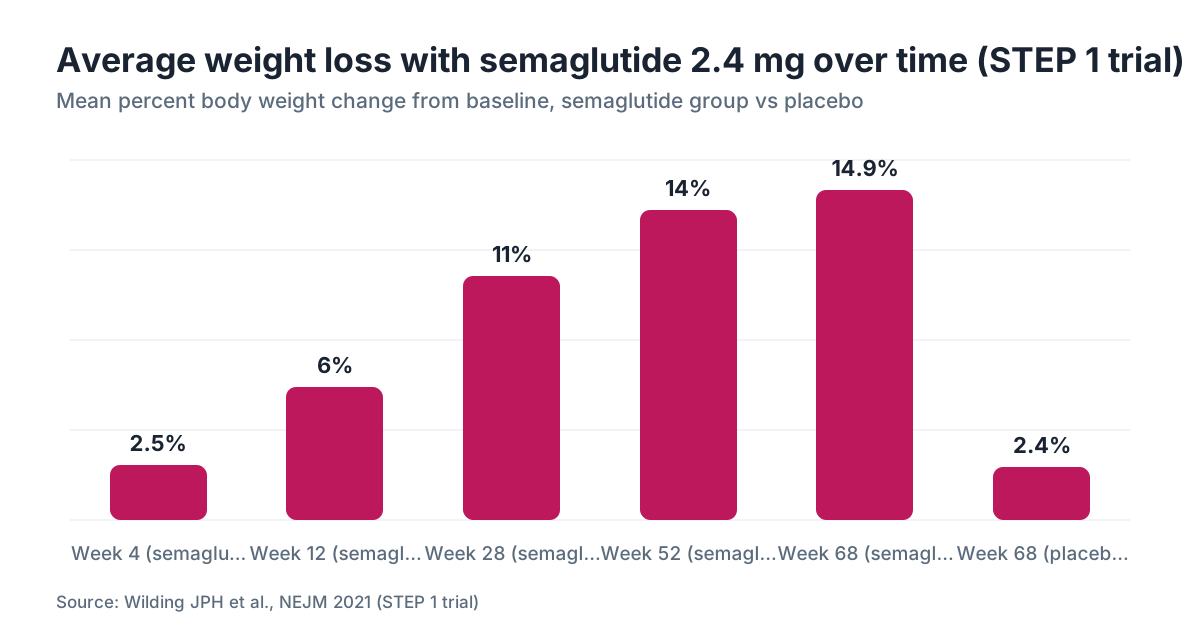
The STEP 1 trial, published in the New England Journal of Medicine in 2021, is the anchor. 1,961 adults without diabetes got either 2.4 mg semaglutide weekly or placebo for 68 weeks. The semaglutide group lost a mean of 14.9% of body weight versus 2.4% on placebo [3]. About one-third of participants lost 20% or more. For a 200-pound woman, 15% is 30 pounds and 20% is 40 pounds.
The STEP 5 trial ran to 104 weeks and held weight loss at roughly 15.2% with continued treatment, with regain once the drug stopped [4]. That trial says the quiet part out loud: for most people, semaglutide is chronic therapy. Stop it, and you regain about two-thirds of the lost weight inside a year. That is not a personal failure. It is the biology of GLP-1 signaling. Appetite suppression lasts only while the drug is in your system.
Real-world numbers run lower than trial numbers. Clinical practice data reflects looser adherence and more varied patients than a controlled trial, and mean six-month losses in those settings often land closer to 5 to 10%. Nobody has clean long-term data on perimenopausal and postmenopausal women specifically, though the STEP 1 subgroups don't show a sex-based difference in efficacy at the same dose.
Timeline expectations:
| Timepoint | Average weight loss (STEP 1) | |---|---| | Week 4 | ~2 to 3% | | Week 12 | ~6% | | Week 28 | ~11% | | Week 52 | ~14% | | Week 68 | ~15% |
Who qualifies for semaglutide weight loss treatment?
FDA labeling for Wegovy sets two thresholds: a BMI of 30 or higher (obesity), or a BMI of 27 or higher with at least one weight-related condition. The conditions the FDA counts include hypertension, type 2 diabetes, dyslipidemia, obstructive sleep apnea, and cardiovascular disease [1]. The Endocrine Society's obesity pharmacotherapy guideline supports GLP-1 agonists at these same BMI cutoffs [8].
For women in perimenopause and early menopause, this plays out in a specific way. Central fat gained during the hormonal transition often pushes BMI past 27 even in women who used to be lean. Blood pressure and lipids drift up in the same window. Plenty of women who wouldn't have qualified at 40 do qualify at 52.
The contraindications are firm. A personal or family history of medullary thyroid carcinoma is an absolute stop. Multiple endocrine neoplasia syndrome type 2 (MEN 2) is another hard stop [1]. So is active or recent pancreatitis. Pregnancy is a contraindication, and semaglutide should be stopped at least two months before a planned pregnancy, which matters for women in early perimenopause who haven't ruled pregnancy out.
Semaglutide is a poor fit for women with a history of eating disorders, especially restrictive types, unless psychiatric oversight is close and ongoing. The appetite suppression can get strong enough to feed restrictive patterns. This is a genuine clinical concern, and any provider who waves it away isn't paying attention.
What are the side effects of semaglutide, especially for women?
Nausea is the most common side effect, reported in about 44% of STEP 1 participants on semaglutide versus 16% on placebo [3]. It usually peaks in the first two to four weeks after each dose increase and eases once you've held a stable dose for a month. Smaller meals, less fatty food, and injecting in the evening all help.
Vomiting, diarrhea, and constipation come next in frequency. Constipation tends to dominate for women who don't push fiber and water. This gets underplayed: slower gastric motility plus less food volume equals constipation for many women, and it can get bad enough to need real intervention.
The rare but serious risks:
- Pancreatitis: stop the drug at once if severe, persistent abdominal pain shows up.
- Gallbladder disease: the STEP trials showed higher gallstone rates on semaglutide, about 2.6% versus 1.2% for placebo in STEP 1 [3]. Rapid weight loss on its own is a gallstone risk factor.
- Diabetic retinopathy complications: relevant mainly for people who already have diabetic eye disease.
- Higher heart rate: a mean bump of roughly 1 to 4 beats per minute, which doesn't matter clinically for most people.
Muscle loss is a real concern that skips most side-effect lists but shows up in body composition data. The STEP trials tracked total weight, not lean mass. Observational data and expert commentary put lean mass at roughly 25 to 40% of the total weight lost on GLP-1 medications. Resistance training and enough protein (1.2 to 1.6 grams per kilogram of body weight per day) are the standard defenses. For women already fighting age-related muscle loss (sarcopenia speeds up after menopause), this is no footnote.
Bone density is the second women-specific concern. Rapid weight loss from any cause cuts the mechanical load on bone and can speed up bone mineral density loss. Women at or past menopause are already losing bone faster from estrogen withdrawal. There is no semaglutide-specific long-term bone data yet. A bone density test before you start and again at two years is a sensible precaution that most prescribers won't bring up on their own.
How does semaglutide interact with menopause hormones and HRT?
There are no pharmacokinetic drug interactions between semaglutide and estradiol, progesterone, or most formulations used in hormone replacement therapy. They don't share metabolic pathways in any way that shifts either drug's blood level.
The clinical question is more interesting than the drug-interaction one. Estrogen loss at menopause raises insulin resistance and drives visceral fat. Estrogen therapy reverses part of that insulin resistance, which is one reason the estrogen patch carries modest metabolic benefits apart from weight. NAMS notes estrogen therapy is linked to reduced visceral fat and better insulin sensitivity in menopausal women [9]. Running estrogen alongside semaglutide creates no conflict. If anything, the mechanisms line up.
Progesterone is a different story. Synthetic progestins, medroxyprogesterone acetate (MPA) in particular, can worsen insulin resistance and blunt some of estrogen's metabolic benefit. Micronized progesterone (Prometrium and compounded bioidentical progesterone) has a more neutral metabolic profile. When you're also managing metabolic risk with a GLP-1, the choice of progestogen may matter a bit. More at progesterone.
Whether women on HRT lose more or less weight on semaglutide than women not on HRT is genuinely unsettled. No randomized trial has tested it head-on. The honest answer: nobody knows yet, and the closest data we have (STEP subgroup analyses never designed for this question) shows no clear signal either way.
Semaglutide vs. tirzepatide: which produces more weight loss?
Tirzepatide (Mounjaro for diabetes, Zepbound for obesity) hits both GLP-1 and GIP receptors. Head-to-head data is thin, but one trial settles the top-line question. SURMOUNT-5, published in 2025, randomized 751 adults to tirzepatide or semaglutide for 72 weeks. The tirzepatide group lost a mean of 20.2% of body weight versus 13.7% on semaglutide, about 47% more weight loss with tirzepatide [5].
That gap is real and clinically meaningful. For a 200-pound woman, it is the difference between 27 pounds and 40. Side effect profiles look broadly similar (nausea, GI symptoms). Both drugs carry the same thyroid carcinoma warning from rodent data in their labels; neither carries more of it than the other.
The messier truth: some women do better on semaglutide than tirzepatide for reasons nobody can predict. Response varies. Cost and insurance coverage differ by product and plan. Fuller comparison at semaglutide vs tirzepatide.
Right now tirzepatide holds the stronger efficacy data. Semaglutide holds longer safety follow-up, more published trial data, and often a lower out-of-pocket cost.
What is compounded semaglutide, and is it safe?
During the Wegovy and Ozempic shortage (2022 to 2024), compounding pharmacies started making semaglutide from active pharmaceutical ingredient. The FDA acknowledged the shortage and allowed compounding under specific conditions. Then, in late 2024 into 2025, the FDA declared the Wegovy shortage resolved and told compounders to wind down copies of the branded product [2].
Compounded semaglutide comes through 503A (patient-specific) and 503B (outsourcing facility) pharmacies. Quality varies. The FDA has flagged dosing errors, contamination, and unapproved additives in some compounded products [2]. That is not a reason to reflexively avoid compounding. It is a reason to care a lot about which pharmacy fills your prescription.
Here is the checklist worth using. Your compounding pharmacy should be PCAB-accredited (Pharmacy Compounding Accreditation Board). It should hand you certificate-of-analysis documentation for its batches. And it should work through a licensed provider who tracks your response and your labs. Telehealth platforms that ship compounded semaglutide with no clinical follow-up are cutting corners that matter.
WomenRx uses FDA-registered compounding pharmacies and builds provider follow-up into its GLP-1 programs, which is worth confirming for any platform you consider. Read more about compounded semaglutide.
How much does semaglutide cost for weight loss without insurance?
Wegovy's list price as of 2024 is roughly $1,349 per month for the branded pen [6]. With the Novo Nordisk savings card, commercially insured patients may pay as little as $0 to $25 a month. Uninsured patients without a savings program can use a coupon (GoodRx, NovoCare) that may drop it to $500 to $800 a month, though those move around and can be pulled.
Compounded semaglutide through telehealth generally runs $150 to $400 a month depending on dose and platform. That price gap is why compounding grew into a huge market.
Insurance coverage is uneven. Under current statute, Medicare Part D cannot cover drugs approved solely for weight loss [11], though the Treat and Reduce Obesity Act has been introduced repeatedly to change that. Medicaid coverage varies by state. Many commercial plans do cover Wegovy with prior authorization, which usually means a documented BMI threshold and often a failed trial of a behavioral weight loss program.
For women who also have type 2 diabetes, Ozempic (semaglutide up to 2 mg) is far more likely to be covered because payers accept the diabetes indication [7]. The double standard is real: the same molecule, wildly different coverage, decided by a diagnosis code.
How long does it take to see results, and when should you stop?
Most women notice reduced appetite in the first one to two weeks, even at the lowest 0.25 mg dose. Measurable weight loss usually starts in weeks three to six. By week twelve, you should have a clear read on whether the drug is working for you.
If you've held 1.0 mg for four weeks with no change in appetite or weight, raise it with your provider before you keep escalating. Some people are non-responders. The working definition in practice is less than 5% weight loss after 16 weeks at the maximum tolerated dose. That is when the risk-benefit math changes.
Stopping is a clinical decision, not a personal failure. Reasons to stop include side effects that won't ease, clear non-response, cost that is doing financial harm, or a planned pregnancy (stop at least two months prior). Regain after stopping is expected and doesn't mean you can't restart later.
Long-term use data now reaches two years (STEP 5) with no new serious signals beyond what appeared in year one [4]. Data past two years in large randomized trials isn't published yet. The honest answer on 5-year or 10-year safety: we don't know.
Should you consider semaglutide if you're also managing menopause symptoms?
The peak years for the menopause transition and the years when metabolic health slips overlap, and that is no accident. Visceral fat climbs after menopause even in women whose total weight holds steady. That visceral fat is metabolically active and raises cardiovascular risk apart from BMI. It is worth managing.
Semaglutide handles the fat accumulation. Hormone therapy handles estrogen deficiency symptoms, bone loss, and some of the insulin resistance. The two don't compete. Many women benefit from both, and the evidence suggests hormone replacement therapy doesn't dull GLP-1 efficacy.
Starting both at once makes it harder to pin any side effect or benefit on one intervention. Most practitioners settle you on one before adding the other. That is practice preference, not a hard rule.
If you're in perimenopause and gaining weight with no real change in diet or activity, the hormonal shift is likely part of it. GLP-1 therapy is a reasonable tool, and so is talking hormone therapy through with a provider who knows the current evidence rather than the outdated cautions from the misread WHI data. WomenRx handles both GLP-1 prescribing and hormone management, which matters because getting both from providers who talk to each other (or from the same provider) keeps the decisions coherent.
For the full hormone picture, what HRT is has the detail.
Frequently asked questions
What is the starting dose of semaglutide for weight loss?
The starting dose is 0.25 mg injected under the skin once weekly for the first four weeks. This dose is not therapeutic for weight loss; it is a tolerance dose to hold nausea down. You move to 0.5 mg at week five and keep escalating every four weeks until you reach the 2.4 mg maintenance dose, which is the FDA-approved dose for chronic weight management in Wegovy.
How long does it take semaglutide to start working for weight loss?
Appetite reduction is often noticeable within one to two weeks at 0.25 mg, though measurable weight loss usually begins between weeks three and six. By week twelve you should see a clear signal. The STEP 1 trial showed roughly 6% mean weight loss by week twelve in the active group, building to about 15% by week sixty-eight.
Can I take semaglutide for weight loss if I don't have diabetes?
Yes. Wegovy (semaglutide 2.4 mg) is FDA-approved specifically for weight management in people without diabetes who meet the BMI criteria. The STEP 1 trial enrolled only people without diabetes and showed 14.9% mean weight loss at 68 weeks. The dose escalation schedule is identical for people with and without diabetes.
What is the semaglutide dosage chart in mL for weight loss injections?
Volume depends on concentration. At 1 mg/mL (a common Wegovy pen concentration): 0.25 mg = 0.25 mL, 0.5 mg = 0.5 mL, 1.0 mg = 1.0 mL, 1.7 mg = 1.7 mL, 2.4 mg = 2.4 mL. Compounded vials often come at 2.5 mg/mL or 5 mg/mL, which changes the volumes a lot. Always confirm the concentration with your pharmacy before drawing a dose.
Does semaglutide cause muscle loss?
Body composition data suggests 25 to 40% of weight lost on GLP-1 medications can come from lean mass, not fat alone. The STEP trials measured total body weight, not lean mass. Defending against it takes resistance exercise at least two to three times weekly and protein of 1.2 to 1.6 grams per kilogram of body weight per day. This matters especially for women over 45 who are already losing muscle with age.
Will I regain weight when I stop semaglutide?
Most people regain a large share of lost weight after stopping. The STEP 1 extension (STEP 4) showed that one year after discontinuation, participants had regained about two-thirds of the weight lost. This reflects GLP-1 suppression ending, not a personal failure. For many women, semaglutide works as long-term chronic therapy, much like blood pressure medication.
Is semaglutide safe to take with hormone replacement therapy?
There are no significant pharmacokinetic interactions between semaglutide and standard HRT formulations, including estradiol patches, gels, or oral micronized progesterone. Clinically the mechanisms line up: estrogen therapy reduces menopause-related insulin resistance while semaglutide handles appetite and metabolic weight. No randomized trial has studied the combination directly, but practitioners routinely use both with no reported interaction.
How much does semaglutide cost per month for weight loss?
Branded Wegovy has a list price of roughly $1,349 per month as of 2024. With the Novo Nordisk NovoCare savings card, commercially insured patients may pay as little as $0 to $25. Compounded semaglutide through telehealth platforms typically costs $150 to $400 per month. Medicare Part D cannot legally cover weight loss drugs under current statute, leaving many older women paying full out-of-pocket.
What are the most common side effects of semaglutide for weight loss?
Nausea is most common, affecting about 44% of people in the STEP 1 trial at the 2.4 mg dose. Vomiting, diarrhea, and constipation follow in frequency. These are worst during dose escalation and usually ease at stable doses. Serious but rare risks include pancreatitis, gallstones (roughly 2.6% versus 1.2% for placebo in STEP 1), and, in people with pre-existing diabetic eye disease, retinopathy complications.
What is the difference between Ozempic and Wegovy for weight loss?
The active molecule is identical: semaglutide. The difference is the approved indication and maximum dose. Ozempic is approved for type 2 diabetes and cardiovascular risk reduction, with a maximum dose of 2 mg weekly. Wegovy is approved for chronic weight management at 2.4 mg weekly. Using Ozempic for weight loss is off-label. Wegovy at 2.4 mg is on-label. Insurance coverage differs a lot based on these diagnosis-linked approvals.
Is compounded semaglutide as effective as Wegovy?
Compounded semaglutide contains the same active ingredient and should produce similar effects at equivalent doses if it is made correctly. The risk is quality variability: the FDA has flagged dosing errors, contamination, and unapproved additives in some compounded products. A PCAB-accredited pharmacy with certificate-of-analysis documentation reduces that risk. Branded Wegovy has tighter manufacturing quality control by definition.
Can semaglutide affect bone density in menopausal women?
There is no semaglutide-specific long-term bone density trial in menopausal women yet. The concern is indirect: rapid weight loss from any cause reduces mechanical loading on bone, which speeds up bone mineral density loss. Postmenopausal women are already losing bone faster from estrogen withdrawal. A baseline bone density test before starting and again at two years is a sensible precaution that many prescribers won't raise on their own.
How does semaglutide compare to tirzepatide for weight loss results?
The SURMOUNT-5 trial (2025) compared the two drugs head-to-head in 751 adults over 72 weeks. Tirzepatide produced 20.2% mean body weight loss versus 13.7% for semaglutide, roughly 47% more weight loss with tirzepatide. Side effect profiles are broadly similar. Semaglutide has the longer published safety track record. Tirzepatide currently has the stronger efficacy data for weight loss.
Who should not take semaglutide for weight loss?
Absolute contraindications include a personal or family history of medullary thyroid carcinoma, Multiple Endocrine Neoplasia syndrome type 2 (MEN 2), and active pancreatitis. Semaglutide must be stopped at least two months before a planned pregnancy. Women with a history of restrictive eating disorders need close clinical oversight. Anyone with a current or recent gastroparesis diagnosis should weigh the risks carefully with a provider before starting.
Sources
- FDA, Wegovy (semaglutide) Prescribing Information
- FDA, Medications Containing Semaglutide - Drug Safety Communication
- Wilding JPH et al., NEJM 2021 (STEP 1 trial)
- Garvey WT et al., Nature Medicine 2022 (STEP 5 trial)
- Rubino DM et al., NEJM 2025 (SURMOUNT-5 trial)
- Novo Nordisk, Wegovy US list price disclosure
- FDA, Ozempic (semaglutide) Prescribing Information
- Endocrine Society, Clinical Practice Guideline on Pharmacological Management of Obesity
- NAMS (North American Menopause Society), 2022 Hormone Therapy Position Statement
- Davies M et al., Lancet 2021 (STEP 2 trial, diabetes subpopulation)
- CMS Medicare Part D coverage restriction on weight loss drugs
- Wadden TA et al., NEJM 2021 (STEP 3 trial)