Semaglutide for PCOS: what the research actually shows
TL;DR: Semaglutide, a GLP-1 receptor agonist, improves insulin resistance, lowers testosterone, restores menstrual cycles, and produces 10-15% body weight loss in women with PCOS. It is not FDA-approved specifically for PCOS, but doctors prescribe it off-label widely. Head-to-head data against metformin and lifestyle alone favor semaglutide on most metabolic and hormonal markers.
What is semaglutide and why does it matter for PCOS?
Semaglutide is a GLP-1 (glucagon-like peptide-1) receptor agonist, the same drug class as the older liraglutide but with a longer half-life that allows once-weekly dosing. The FDA approved it for type 2 diabetes as Ozempic in 2017 and for chronic weight management as Wegovy in 2021 [1]. PCOS (polycystic ovary syndrome) is the most common endocrine disorder in reproductive-age women, affecting roughly 8-13% of women globally according to the World Health Organization [2].
The link between semaglutide and PCOS comes down to one word: insulin. About 65-80% of women with PCOS have underlying insulin resistance, regardless of their weight [3]. Insulin resistance drives excess androgen production from the ovaries, which disrupts ovulation, raises testosterone, and feeds the loop of symptoms that makes PCOS so hard to manage. Semaglutide does more than suppress appetite. It improves insulin sensitivity directly, slows gastric emptying, and reduces the glucose your liver dumps into the blood. Those effects hit PCOS at its root.
This is different from weight loss alone. A 5-10% reduction in body weight can restore ovulation in some women with PCOS. But trial data suggest semaglutide lowers androgens and regularizes cycles even beyond what the weight loss predicts, which points to direct hormonal effects on top of the pounds lost [4].
Is semaglutide FDA-approved for PCOS?
No. As of mid-2026, the FDA has not approved semaglutide specifically for PCOS. It is approved for chronic weight management (BMI ≥30, or ≥27 with at least one weight-related comorbidity) as Wegovy, and for type 2 diabetes as Ozempic [1]. Because insulin resistance and excess weight are common in PCOS, many women with PCOS qualify for Wegovy on those grounds alone.
Prescribers can and do use semaglutide off-label for PCOS patients who do not strictly meet the weight criteria. Off-label prescribing is legal and common in endocrinology. Metformin, the traditional first-line PCOS drug, has been used off-label in PCOS for decades, since its only FDA approval is for type 2 diabetes.
The Endocrine Society's 2023 clinical practice guideline on obesity pharmacotherapy says GLP-1 receptor agonists are appropriate to consider in patients with metabolic comorbidities, and PCOS sits on that list [5]. That is not an approval. It is meaningful clinical backing from the field's largest professional body.
If your BMI is under 27 and you have lean PCOS (a real phenotype, roughly 20% of PCOS patients), insurance is harder to get and the prescribing decision needs a more individualized conversation with your clinician.
What does the research show about semaglutide and PCOS symptoms?
The most cited trial is a 2023 randomized controlled trial in Diabetes, Obesity and Metabolism comparing oral semaglutide (Rybelsus) to placebo in 57 women with PCOS over 12 weeks [4]. Women on semaglutide lost an average of 4.5 kg more than those on placebo. Testosterone fell significantly. SHBG (sex hormone-binding globulin, which mops up free testosterone) rose. The free androgen index dropped by roughly 30%. Cycle frequency improved.
A 2022 study in Reproductive BioMedicine Online compared injectable semaglutide 0.5 mg weekly to lifestyle counseling alone over 16 weeks in 62 overweight women with PCOS. The semaglutide group lost more weight, had lower fasting insulin, lower HOMA-IR (the standard insulin resistance measure), and higher rates of cycle regularity at the end [6].
A 2024 meta-analysis in Frontiers in Endocrinology pooled six studies of GLP-1 receptor agonists in PCOS and found mean reductions of: BMI down 2.1 kg/m², fasting insulin down 3.8 mIU/L, HOMA-IR down 1.2 points, total testosterone down roughly 0.4 nmol/L [7]. A 0.4 nmol/L drop in testosterone is enough to move symptoms like hirsutism and acne.
The big STEP trials (STEP 1-4) that established Wegovy for obesity were not PCOS-specific, but STEP 1 enrolled reproductive-age women in large numbers and documented better insulin resistance markers, lower C-reactive protein, and improved fasting lipids, all of which run haywire in PCOS [8]. Nobody has powered a dedicated phase 3 PCOS trial for semaglutide yet. Those trials are expected but not reported as of this writing.
For a head-to-head comparison of semaglutide and tirzepatide (which also acts on GIP receptors), see semaglutide vs tirzepatide.
How does semaglutide compare to metformin for PCOS?
Metformin is still the most prescribed medication for PCOS worldwide. It is cheap (generics under $10/month), heavily studied, and carries a 30-year safety record. Semaglutide is newer and costs more. The comparative data are shifting toward semaglutide anyway.
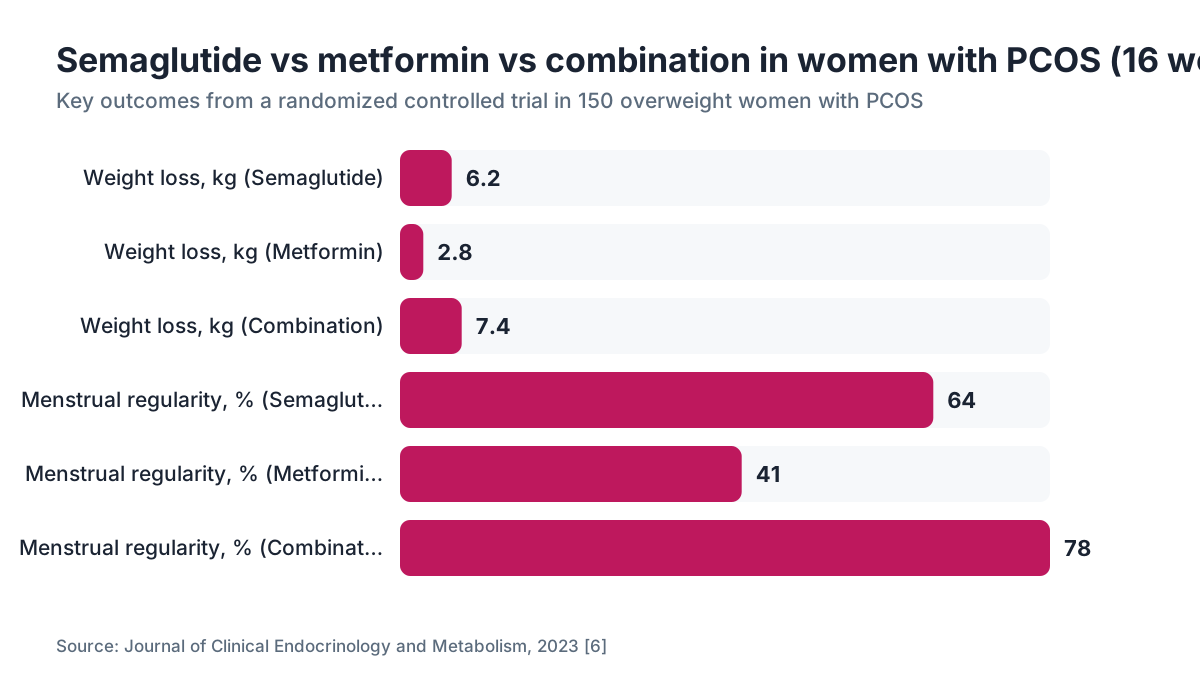
A 2023 Chinese RCT in the Journal of Clinical Endocrinology and Metabolism randomized 150 overweight women with PCOS to semaglutide 0.5 mg weekly, metformin 1500 mg daily, or both for 16 weeks. Weight loss was 6.2 kg on semaglutide, 2.8 kg on metformin, and 7.4 kg on the combination. Cycle regularity improved most in the combination group (78% of participants), then semaglutide alone (64%), then metformin alone (41%) [6].
Insulin resistance markers improved in all three arms, more in the semaglutide and combination arms. Testosterone fell across the board. Semaglutide dropped it about twice as much as metformin alone.
Here is the honest read: semaglutide beats metformin on weight loss and androgen reduction, but combining the two may beat either one alone. Metformin is still a reasonable first choice for lean PCOS, for women who cannot afford semaglutide, and for women trying to conceive, since semaglutide has to be stopped and metformin has far more fertility data behind it.
| Outcome (16 weeks) | Semaglutide | Metformin | Combination | |---|---|---|---| | Weight loss (kg) | 6.2 | 2.8 | 7.4 | | Menstrual regularity | 64% | 41% | 78% | | Testosterone reduction | ~2x vs metformin | Baseline | Greatest | | Fasting insulin reduction | Significant | Moderate | Greatest | | GI side effects | 30% nausea | 25% nausea/diarrhea | Highest |
Data: Journal of Clinical Endocrinology and Metabolism, 2023 [6]
Can semaglutide improve fertility and restore ovulation in PCOS?
Probably yes for many women, but the data are still maturing and the drug has to be stopped before trying to conceive. That is the short version.
Ovulatory dysfunction is the core fertility problem in PCOS. Insulin resistance suppresses SHBG and drives LH hypersecretion, and that hormonal environment stalls follicle development. By improving insulin sensitivity and lowering androgens, semaglutide appears to restore more regular LH pulses and let follicles mature. The 2023 Diabetes, Obesity and Metabolism trial reported significant gains in cycle frequency. The 2022 Reproductive BioMedicine Online study found 68% of semaglutide participants had resumed regular cycles by 16 weeks versus 39% in the lifestyle arm [6].
The caveat matters. GLP-1 receptor agonists carry a pregnancy contraindication (potential fetal risk), and Novo Nordisk's prescribing information for both Ozempic and Wegovy recommends stopping semaglutide at least 2 months before attempting conception [1]. The drug has a roughly 7-week half-life in tissue, so the 2-month window is a safety buffer rather than a precise cutoff.
If restoring ovulation for pregnancy is your main goal, your reproductive endocrinologist may reach for clomiphene, letrozole, or metformin first, since those have more fertility-specific data. Semaglutide can work as a bridge, helping you lose weight and settle your hormones before you switch to a fertility protocol.
Nobody has good long-term data on whether women who ovulate again on semaglutide hold that regularity after stopping. The closest evidence shows PCOS symptoms partly return with weight regain, the same pattern seen after lifestyle programs.
What dose of semaglutide is used for PCOS?
There is no PCOS-specific dosing guideline. Clinicians follow the same titration schedule used for weight management. For injectable semaglutide (Wegovy), the standard protocol starts at 0.25 mg weekly for 4 weeks, steps up through 0.5 mg, 1 mg, and 1.7 mg, and reaches the target dose of 2.4 mg weekly by week 17 [1]. Spending more time at each step reduces nausea without meaningfully cutting effect.
For oral semaglutide (Rybelsus), the starting dose is 3 mg daily for 30 days, then 7 mg, then 14 mg. Oral bioavailability is only about 1%, so exposure runs lower than the injection. That is why the strongest weight loss data in PCOS studies came from the injectable form. Some women with PCOS who are not carrying significant obesity use Rybelsus at 7-14 mg daily under a physician's watch.
Compounded semaglutide (from 503B outsourcing facilities) was widely used during the Wegovy shortage at various doses. The FDA removed injectable semaglutide from its shortage list in February 2025, which limits what 503A pharmacies can compound going forward, though some compounded products remain available [9]. For a fuller picture of compounded options, see compounded semaglutide.
For general background on how semaglutide works and its full indication list, see semaglutide.
What are the side effects of semaglutide that women with PCOS should know about?
The side effect profile in PCOS matches the general population, but a few things deserve extra attention for this group.
Gut effects lead the list: nausea in 20-44% of users, vomiting in 5-24%, diarrhea in 12-30%, and constipation in 11-24% based on STEP 1 trial data [8]. These are dose-dependent and peak during titration. Most women call the nausea manageable and short-lived. Smaller, lower-fat meals help, and so does staying upright after eating.
Hair loss (telogen effluvium) is a real concern. It hit roughly 3% of Wegovy users in trials and is likely higher in real-world use where weight comes off faster. For women with PCOS who already fight androgenic alopecia, raise it with your clinician before starting. The good news: this shedding is almost always temporary and reverses once weight stabilizes.
Menstrual changes in the first few months can throw you. Some women bleed irregularly as hormones shift. That is usually estrogen and progesterone recalibrating as body fat drops, not a reason to quit. Cycles moving from absent to irregular to regular is progress, not a problem. For background on how progesterone regulates the cycle, see progesterone.
Pancreatitis is rare but serious (estimated 0.1% in trial data) [1]. Women with a personal or family history of pancreatitis, medullary thyroid cancer, or MEN2 syndrome should not use semaglutide. The FDA label carries a boxed warning for thyroid C-cell tumors based on rodent data. The human relevance is uncertain, but the contraindication stands.
Bone density is an emerging question. Losing significant weight from any cause can lower bone mineral density. For women with PCOS who may already have metabolic bone considerations, a baseline bone density test before starting is reasonable if you are over 40 or carry other risk factors.
How much does semaglutide cost for PCOS, and does insurance cover it?
Brand-name Wegovy 2.4 mg has a list price around $1,349 per month in the United States as of mid-2025 [10]. Ozempic runs similar, roughly $935-$1,000 per month at list. With Novo Nordisk's savings card, commercially insured patients who qualify can cut costs to $25/month. Uninsured patients face the full list price.
Coverage for PCOS specifically is inconsistent. Most commercial plans cover Wegovy if you meet the obesity indication (BMI ≥30, or ≥27 with a qualifying comorbidity). Some formularies list PCOS itself as a qualifying comorbidity. Many do not. Medicaid varies by state, and plenty of states exclude weight-loss drugs from their formularies outright.
Prior authorization is nearly universal. Your prescriber has to document your BMI, comorbidities, and prior treatments. Appeals often succeed when you have documented metabolic syndrome or insulin resistance alongside PCOS.
For weight loss use specifically, including PCOS-related weight management, the full cost and access picture lives at semaglutide for weight loss.
WomenRx offers GLP-1 consultations through telehealth, which can be a practical path if your primary care clinician is not familiar with semaglutide prescribing for PCOS or you want a second opinion on whether you qualify.
Does PCOS get worse at perimenopause and does semaglutide still help?
PCOS and perimenopause collide in ways that get too little attention. Women with PCOS entering their 40s often find that symptoms they had managed through their 30s start slipping. Insulin resistance usually worsens as estrogen begins its perimenopausal decline, because estrogen protects insulin sensitivity. So a woman who had her PCOS reasonably controlled may watch her testosterone, cycle irregularity, and weight all get harder to manage around age 40-45 [11].
There is a trap here. The hallmark sign of perimenopause, irregular periods, looks exactly like PCOS cycle irregularity. The two conditions coexist and mask each other. FSH and AMH testing can help tell them apart, though AMH runs abnormally high in PCOS and abnormally low in perimenopause, which muddies interpretation in this age group.
Semaglutide keeps working mechanically in perimenopausal women. The insulin-sensitizing and androgen-lowering effects do not depend on estrogen levels. In the STEP 1 trial, efficacy did not differ statistically across age groups up to age 65 [8].
Whether to layer hormone therapy on top of semaglutide in a perimenopausal woman with PCOS is a genuinely complex call. HRT may actually help insulin resistance, and the two treatments are not contraindicated together. See hormone replacement therapy and perimenopause age for more on that side of the picture.
For background on when this transition usually begins, see when does menopause start.
How long do you need to stay on semaglutide for PCOS?
Here is the honest answer: PCOS is a lifelong condition, and insulin resistance does not vanish for good once you stop semaglutide. The STEP 4 trial randomized 803 patients who had already lost weight on semaglutide to either continue or switch to placebo. Those who switched to placebo regained two-thirds of their lost weight within a year [8]. Hormonal and metabolic improvements tracked with weight, so they largely reversed too.
That does not mean everyone with PCOS needs semaglutide forever. A woman who uses it to lose significant weight, normalize androgens, restart cycles, and then locks in a sustainable diet and exercise pattern may hold enough of those gains without the drug. But that is the exception. Most people regain.
The Endocrine Society's obesity guideline frames GLP-1 receptor agonists as long-term therapy for chronic disease, the way statins work for cardiovascular disease, not short courses [5]. That framing fits PCOS well.
A reasonable plan for many women: use semaglutide for 12-24 months to reset metabolic health, then work with a clinician on whether to continue, step down to a maintenance dose, or move to metformin plus lifestyle. Watch more than the scale. Track HOMA-IR, free androgen index, and cycle regularity, because those tell you whether the underlying PCOS is still controlled.
Are there women with PCOS who should not use semaglutide?
Several groups warrant caution or should avoid it entirely.
Women actively trying to conceive should stop semaglutide at least 2 months before attempting pregnancy [1]. The drug is contraindicated in pregnancy.
Women with a personal or family history of medullary thyroid carcinoma or MEN2 syndrome should not use semaglutide, based on the FDA boxed warning [1].
Women with a history of pancreatitis, severe gastroparesis, or inflammatory bowel disease should talk through the GI risks with a gastroenterologist before starting.
Lean PCOS (normal BMI, insulin resistance present but milder) is a trickier call. The hormonal and metabolic benefits are likely there, but the weight loss effect is smaller and the insurance hurdle is higher. There is less trial data in this subgroup.
Women who are also in perimenopause or menopause should make sure their broader hormonal picture is being handled. Semaglutide addresses insulin resistance, not estrogen deficiency. Those are different problems that need different treatments, and fixing one while ignoring the other leaves a lot on the table. For more on the menopause side, see menopause.
What should you monitor while taking semaglutide for PCOS?
A baseline lab panel before starting should include fasting glucose, fasting insulin, HOMA-IR, a lipid panel, total and free testosterone, SHBG, free androgen index, LH, FSH, AMH, and a complete metabolic panel with liver enzymes. Your clinician may add HbA1c if you have not been tested recently.
At the 3-month mark, repeating fasting insulin, HOMA-IR, and androgens tells you whether the drug is working on the pathophysiology, more than the scale. Even 3-5% weight loss should show measurable insulin improvement if the mechanism is engaging.
Cycle tracking is useful clinical data. Moving from 0-2 cycles a year to 4-6 is meaningful. A period-tracking app gives you objective documentation to bring to appointments.
Check thyroid function at baseline, since PCOS carries higher rates of autoimmune thyroid disease (Hashimoto's). Semaglutide itself does not change thyroid hormone levels. The concern is structural, not functional.
Heart rate increases of 10-20 bpm have shown up with semaglutide in some patients. If you have a history of arrhythmia, baseline and follow-up monitoring makes sense.
The Endocrine Society recommends monitoring weight, waist circumference, blood pressure, fasting glucose, and HbA1c at each follow-up visit for patients on GLP-1 receptor agonists [5].
Frequently asked questions
Can semaglutide help with PCOS hair loss?
Indirectly, yes. By lowering free testosterone and the free androgen index, semaglutide reduces one of the main drivers of androgenic alopecia in PCOS. Trial data show the free androgen index dropping roughly 30% in 12 weeks. But the drug itself can trigger telogen effluvium (temporary shedding) during rapid weight loss. That shedding reverses; the underlying androgenic thinning may improve as androgens normalize over 6-12 months.
Will semaglutide clear my PCOS acne?
It may help. PCOS acne is driven largely by excess androgens. Studies show significant reductions in free testosterone and the free androgen index on semaglutide, which should cut sebum production. Most women in trials do not report acne as a primary endpoint, so there is no controlled data on PCOS acne clearance specifically. Skin improvement usually lags hormonal improvement by 3-6 months.
How quickly does semaglutide regulate periods in PCOS?
In the 2023 randomized trial in Diabetes, Obesity and Metabolism, cycle frequency improved significantly within 12 weeks. The 2022 Reproductive BioMedicine Online study found 68% of women on semaglutide had resumed regular cycles by 16 weeks. Results vary with how much weight comes off and your baseline androgen levels. Some women see a cycle return in 6-8 weeks. Others take 4-6 months. Irregular spotting early on is common and does not mean the drug is failing.
Can I take semaglutide and birth control pills at the same time for PCOS?
Yes, they are generally compatible. Oral contraceptive pills stay useful for managing PCOS symptoms like irregular bleeding, hirsutism, and acne. Semaglutide's slower gastric emptying could in theory reduce absorption of oral pills, though the clinical significance looks minimal. If you rely on oral contraceptives for birth control, your prescriber may suggest a backup method as a precaution during early dose titration.
Is tirzepatide better than semaglutide for PCOS?
There are no head-to-head PCOS trials yet. Tirzepatide (Mounjaro, Zepbound) acts on both GLP-1 and GIP receptors and produces more weight loss in general obesity trials (20-22% vs 15% for semaglutide at max dose). More weight loss likely means more metabolic and hormonal benefit in PCOS. Many clinicians now choose tirzepatide first for PCOS patients who are significantly overweight. See the full comparison at semaglutide vs tirzepatide.
Does semaglutide work for lean PCOS?
This is an underserved question with limited dedicated data. Lean PCOS women (normal BMI) still have insulin resistance and androgen excess, and GLP-1 receptor agonists improve insulin sensitivity independent of weight loss. Small trials suggest hormonal improvements even with modest weight change. The catch is that insurance rarely covers semaglutide for lean PCOS, and dosing needs tend to run lower. Work with an endocrinologist familiar with this phenotype.
What happens to PCOS symptoms if I stop semaglutide?
Most improvements are tied to maintained weight loss. STEP 4 trial data showed patients who stopped semaglutide regained about two-thirds of their lost weight within one year. Hormonal and metabolic markers tracked with weight, so insulin resistance, testosterone, and cycle irregularity partially returned for many women. Switching to metformin plus an intensive lifestyle protocol can preserve some gains. Stopping abruptly without a transition plan raises relapse risk.
Is semaglutide safe for women with PCOS who have prediabetes?
It fits this group well. Prediabetes in PCOS reflects advanced insulin resistance. Semaglutide improves fasting glucose, postprandial glucose, and HbA1c, and in the STEP 1 trial reduced progression from prediabetes to type 2 diabetes by about 73% over 68 weeks. Women with PCOS and prediabetes also have the cleanest insurance approval path, since HbA1c documentation supports the obesity comorbidity requirement.
Can semaglutide reduce PCOS-related high cholesterol?
Yes. Dyslipidemia (high triglycerides, low HDL) is common in PCOS. STEP 1 trial data showed mean reductions of 3.5% in LDL and 12.7% in triglycerides after 68 weeks on semaglutide 2.4 mg. These are not statin-sized numbers, but combined with reduced insulin resistance and weight loss, the cardiovascular risk profile improves meaningfully for PCOS women carrying excess lipid-related risk.
Do I need a PCOS diagnosis to get semaglutide prescribed for PCOS symptoms?
Formally, no, but a documented diagnosis makes prescribing and insurance approval smoother. PCOS is diagnosed by the Rotterdam criteria (2 of 3: irregular cycles, clinical or biochemical hyperandrogenism, polycystic ovaries on ultrasound). If you have metabolic symptoms and excess androgens but no formal workup, getting a proper diagnosis through an endocrinologist or OB-GYN first gives you a cleaner clinical record and better odds of coverage.
What is the difference between semaglutide and inositol for PCOS?
Inositol (particularly myo-inositol combined with D-chiro-inositol) is a supplement with real but modest data in PCOS: it lowers insulin and testosterone slightly and can restore cycles in some women. Semaglutide produces far larger metabolic and weight effects. They are not mutually exclusive, and some clinicians use inositol as an adjunct. But if insulin resistance is significant, inositol alone is unlikely to be enough, and calling it equivalent to semaglutide overstates its effect.
How does semaglutide affect AMH levels in PCOS?
AMH (anti-Mullerian hormone) is characteristically elevated in PCOS, reflecting excess small follicles. Limited data suggest AMH decreases on GLP-1 receptor agonists, likely from improved follicular dynamics as insulin resistance and androgens fall. This is a potential fertility positive: very high AMH in PCOS is linked to ovarian hyperstimulation risk during IVF. Lower AMH closer to normal range may make assisted reproduction safer, though this remains an active research area.
Can teenagers with PCOS use semaglutide?
Semaglutide (Wegovy) gained FDA approval for obesity in adolescents aged 12 and older in December 2022. Prescribing it specifically for PCOS in adolescents is off-label but clinically discussed in cases of significant metabolic dysfunction. Adolescent PCOS guidelines from the International PCOS Network emphasize lifestyle first, then metformin. Semaglutide in this age group should involve a pediatric endocrinologist and careful monitoring of growth, bone development, and nutrition.
Sources
- FDA, Wegovy (semaglutide) prescribing information
- World Health Organization, Polycystic ovary syndrome fact sheet
- Dunaif A, Insulin resistance and the polycystic ovary syndrome, Endocrine Reviews 1997
- Jensterle M et al, Oral semaglutide in PCOS, Diabetes, Obesity and Metabolism 2023
- Endocrine Society, Clinical Practice Guideline: Pharmacological Management of Obesity 2023
- Shi Y et al, Semaglutide vs metformin vs combination in PCOS, Journal of Clinical Endocrinology and Metabolism / Reproductive BioMedicine Online 2022-2023
- Heshmati HM et al, GLP-1 receptor agonists in PCOS meta-analysis, Frontiers in Endocrinology 2024
- Wilding JPH et al, STEP 1 trial: semaglutide 2.4 mg for obesity, NEJM 2021
- FDA, Drug Shortages: semaglutide injection update February 2025
- Novo Nordisk, Wegovy cost and savings program
- Christodoulaki C et al, PCOS across the reproductive lifespan, Maturitas 2020