Semaglutide dosing schedule: the complete week-by-week guide
TL;DR: Semaglutide starts at 0.25 mg once weekly for four weeks, then steps up every four weeks until you reach your maintenance dose (1 mg or 2 mg for Ozempic, up to 2.4 mg for Wegovy). The slow ramp exists to blunt nausea, not to treat anything. Most people take 12 to 20 weeks to reach a fully therapeutic dose.
What is the standard semaglutide dosing schedule?
The FDA escalation schedule is identical whether you are on Wegovy (semaglutide 2.4 mg for chronic weight management) or Ozempic (semaglutide for type 2 diabetes, up to 2 mg). You start low. You stay there longer than you want to. Then you go up.
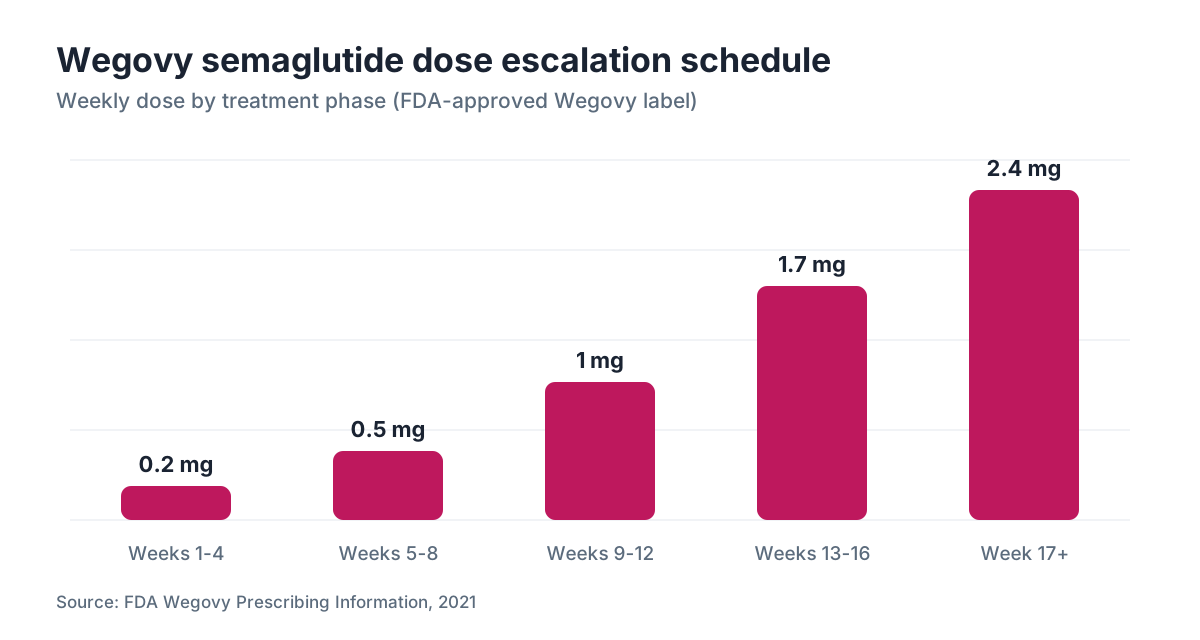
Here is the Wegovy schedule as written in the FDA label [1]:
| Weeks | Weekly dose | |---|---| | 1-4 | 0.25 mg | | 5-8 | 0.5 mg | | 9-12 | 1.0 mg | | 13-16 | 1.7 mg | | 17 onward | 2.4 mg (maintenance) |
The Ozempic schedule is shorter because the maintenance dose is lower [2]:
| Weeks | Weekly dose | |---|---| | 1-4 | 0.25 mg | | 5-8 | 0.5 mg | | 9+ (if needed) | 1.0 mg | | After 4+ weeks at 1 mg (if needed) | 2.0 mg |
The label is blunt about one thing: 0.25 mg "is not a therapeutic dose." It is purely a tolerability step [1]. Some people, and some prescribers, are tempted to camp at a low dose because side effects feel manageable and the scale is still moving. That is a fair conversation to have with your provider. Just know that the weight and glucose benefits measured in trials like STEP 1 came at or near 2.4 mg [3].
Semaglutide goes in under the skin once a week, on the same day each week. You inject the abdomen, thigh, or upper arm. Rotate the spot each week. You just cannot keep hitting the exact same patch of skin.
Why does the dose increase so slowly?
Semaglutide is a GLP-1 receptor agonist. It slows how fast your stomach empties, quiets appetite, and pokes at nausea signaling in the brainstem. All three effects rise with the dose. Start too high and you spend your first month too nauseated to eat, which helps nobody and drives people to quit early.
The STEP 1 trial, published in the New England Journal of Medicine in 2021, reported that among people on semaglutide 2.4 mg, 44.2% had nausea, 31.5% had vomiting, and 29.7% had diarrhea at some point across the 68-week study. Most of those events were mild to moderate and passed, and they clustered during the escalation phase [3]. The slow ramp is the manufacturer's answer to that problem.
Here is the practical part. Gastric emptying slows before appetite suppression fully kicks in. So during the first weeks at a new dose you may feel full and queasy at the same time. That usually eases within 7 to 14 days at each step. Smaller meals, staying upright after you eat, and skipping high-fat or very spicy food during escalation all cut symptoms in a real way. I will not promise it erases the nausea for everyone.
Some clinicians stretch the schedule, holding a dose for eight weeks instead of four when a patient is struggling with GI effects. That is off-label but common, and it is not unsafe. The label gives providers that room.
What is the semaglutide maintenance dose for weight loss?
For weight loss under the Wegovy label, the target maintenance dose is 2.4 mg once weekly [1]. That is the dose behind the headline STEP 1 result: a mean body weight drop of 14.9% at 68 weeks versus 2.4% with placebo [3].
Not everyone gets to 2.4 mg. A real minority of patients settle at 1.7 mg because the jump to 2.4 mg brings back nausea they cannot live with. In STEP 1, participants who could not tolerate 2.4 mg were allowed to drop to 1.7 mg and stay in the trial, so there is precedent for parking there.
For type 2 diabetes on Ozempic, the lowest therapeutic dose is 0.5 mg. Most patients move to 1.0 mg for more glucose control, and 2.0 mg is available if 1.0 mg is not enough after at least four weeks [2]. The diabetes label does not force you to 2.0 mg. Your glucose response drives that call, not a fixed protocol.
If you are using semaglutide for weight loss and your prescriber has you on Ozempic (because Wegovy is out of stock or insurance covers only Ozempic), the practice of dosing to 2.4 mg on an Ozempic pen is off-label but widespread. The molecule is the same. The pen device and the concentrations are not.
Can you speed up the dose escalation?
Technically, yes. Some providers will compress the schedule for a patient who is sailing through each step. A few people genuinely feel almost no GI trouble at low doses and want to move faster. There is no solid evidence that faster escalation produces better results, and there is some signal it produces more side effects.
The FDA label says each dose step should last at least four weeks. Going faster is off-label and, in most settings, not advised. Going slower is fine and often smarter for people who are sensitive to nausea.
A workable rule from the clinical literature: if you still have moderate-to-severe nausea in week four at a given dose, hold there another four weeks before you climb. Forcing the escalation while you feel awful is exactly when people quit the drug entirely.
Compounded semaglutide deserves its own flag here. Compounded vials may come in different concentrations than brand pens, so the volume you inject changes even when the milligram dose is identical. If you are using compounded semaglutide, confirm with your prescriber exactly how many units or milliliters match each dose step. Misdosing from concentration confusion is a real and documented risk.
What happens if you miss a dose?
The Wegovy prescribing information is specific. If you miss a dose and your next scheduled dose is more than five days away, take the missed dose as soon as you remember. If your next dose is within five days, skip the missed one and go back to your regular schedule [1].
Do not take two doses in the same week to make up for one.
Missing the occasional dose does not wreck your long-term results. Missing several in a row can partly reset your GI tolerance. If you go more than two weeks without semaglutide, some providers restart you one level lower to dodge a harsh return of nausea. The label does not spell this out, but it is standard clinical advice.
If you stop entirely and restart weeks or months later, going back to 0.25 mg is the usual approach no matter where you left off.
Does the dosing schedule change for women in perimenopause or menopause?
No. The FDA-approved Wegovy schedule does not formally change with menopausal status. The Wegovy trials never pre-specified results by menopause, so there is no label guidance to lean on.
The clinical picture is messier than the label, though. Weight gain during the menopausal transition comes partly from falling estrogen, which pushes fat toward the belly and slows resting metabolic rate. GLP-1 drugs work on appetite and how much you eat. They do nothing about the hormonal driver behind the shift.
Many clinicians who treat women through perimenopause and menopause notice that appetite suppression can be strong at lower doses in some postmenopausal women, so the full 2.4 mg is not always needed or tolerated. That is anecdotal, and I want to be plain about it. The closest data are subgroup analyses from the STEP trials showing broadly similar efficacy across age groups, and those were not powered to detect a menopause difference.
Here is what is better supported. GLP-1s paired with hormone replacement therapy may give better body-composition results than either alone, because HRT helps hold onto lean mass during a caloric deficit. A 2023 study in Menopause, the journal of the North American Menopause Society, reported that postmenopausal women lost proportionally more lean mass during significant weight loss than premenopausal women, which tells you muscle protection is a real issue in this group [4][10]. Resistance training and enough protein (commonly cited at 1.2 to 1.6 g per kg of body weight per day) matter more, not less, when a GLP-1 has you in a deficit.
If your telehealth provider handles both GLP-1s and hormone therapy (WomenRx does both), have the conversation about how they interact before you start, not after you have dropped 15 pounds and noticed your muscle tone slip.
How long do you stay on semaglutide?
The STEP 4 trial is the cleanest answer we have. People who lost weight on semaglutide 2.4 mg and then switched to placebo regained about two-thirds of it within a year [5]. The paper's own conclusion: "maintaining treatment with semaglutide, 2.4 mg/wk, compared with switching to placebo resulted in continued weight loss over the following 48 weeks."
Semaglutide is not a course of antibiotics. It behaves more like a blood pressure drug: the benefit largely holds only while you keep taking it. The FDA approved Wegovy for chronic weight management, which points toward long-term use.
That does not lock you in forever. Some people steady their weight, build new eating habits, and taper down or off. Others stay at maintenance dose indefinitely. Both are real outcomes. Both are legitimate goals.
One practical note: most commercial and government plans that cover Wegovy require ongoing proof of benefit (often at least 5% weight loss from baseline) to keep paying. Know what your plan asks for before you are surprised by a denial.
What is the semaglutide dosing schedule for once-weekly Ozempic pens vs. Wegovy pens?
Same molecule. Different pens, different concentrations, different dose options.
Ozempic pens come in a few versions [2]:
- The 0.25 mg / 0.5 mg pen delivers up to 0.5 mg per injection (used for the first eight weeks of escalation).
- The 1 mg pen delivers up to 1 mg per injection.
- A separate 2 mg pen covers the highest Ozempic dose.
Wegovy pens are single-dose auto-injectors at fixed strengths: 0.25 mg, 0.5 mg, 1.0 mg, 1.7 mg, and 2.4 mg. Each pen is pre-set. You cannot dial a Wegovy pen [1].
This matters the moment you or your pharmacist swaps one brand for the other. The injection technique is similar (subcutaneous, same sites), but the pen mechanics and dose delivery differ enough that a quick orientation to the specific device is worth your time, especially when switching.
The oral form, Rybelsus, runs a completely different schedule and is milligram-for-milligram far less bioavailable than the injectable. Rybelsus starts at 3 mg daily for 30 days, then 7 mg daily, then 14 mg daily if you need more glucose control. It is approved for type 2 diabetes only, not weight loss [6]. Do not treat the oral and injectable schedules as interchangeable. They are not.
What side effects are most common during dose escalation?
Gut symptoms lead the list. In STEP 1, nausea hit 44.2% on semaglutide vs 15.9% on placebo, vomiting 31.5% vs 8.9%, diarrhea 29.7% vs 16.1%, and constipation 24.2% vs 11.0% [3]. Most events were mild or moderate. Severe events landed in a small minority.
These symptoms cluster during escalation, mostly in the first one to two weeks after each dose bump. They tend to fade as your body settles at the new level.
Management strategies with real evidence or strong clinical consensus behind them:
- Eat smaller portions. Your stomach is already emptying slowly. A big meal on top of that means bloating and nausea.
- Skip very fatty food, especially in the first two weeks at a new dose.
- Drink enough water, particularly if you have diarrhea or vomiting.
- Anti-nausea meds like ondansetron can help short-term if nausea is significant. Talk to your prescriber before you take anything.
The rare but serious side effects include pancreatitis and gallbladder disease (cholelithiasis). In people with a personal or family history of medullary thyroid cancer or MEN2 syndrome, there is a theoretical risk of thyroid C-cell tumors. That is a boxed warning built on rodent data. No confirmed human cases were reported as of the STEP trial publications [1][9].
Bone density comes up less often but matters for perimenopausal and postmenopausal women in particular. Fast weight loss cuts the mechanical load on bone. If you are losing a lot on semaglutide, a bone density test is worth raising with your provider, especially if your fracture risk is already high.
How does semaglutide dosing compare to tirzepatide?
Tirzepatide (Zepbound for weight loss, Mounjaro for diabetes) is a dual GIP and GLP-1 receptor agonist, and it is a different drug. The dosing structure rhymes, though: once-weekly injection, slow four-week escalation steps, under the skin.
Tirzepatide for weight loss starts at 2.5 mg weekly for four weeks, then climbs 2.5 mg every four weeks to a ceiling of 15 mg weekly [7]. In SURMOUNT-1, mean weight loss at 15 mg was 20.9% at 72 weeks, next to 14.9% for semaglutide 2.4 mg in STEP 1 (different trials, different populations, not a head-to-head) [7][3].
The two are not directly dose-comparable because they hit partly different receptors. If you are choosing between them, the semaglutide vs tirzepatide comparison digs into efficacy, side effects, and cost.
On scheduling, both are once-weekly. Both demand the same discipline: pick a day, keep it, and store the pens right (refrigerated, never frozen; a Wegovy pen kept at room temperature should be used within 28 days per the label).
How do you store semaglutide and keep your injection schedule on track?
Keep Wegovy pens in the refrigerator (36°F to 46°F / 2°C to 8°C) until first use. Once in use, or once stored at room temperature (up to 77°F / 25°C), each pen lasts up to 28 days [1]. Never freeze semaglutide. Never leave it in a hot car. Toss damaged pens. The drug degrades.
For consistency, pick a weekday you can reliably remember, ideally one without travel or a chaotic work block. Plenty of people tie the shot to a weekend morning. A recurring phone reminder does the rest.
You can move your injection day if life demands it, as long as at least two days (48 hours) have passed since your last shot and your next one is at least two days out [1]. That is more flexible than most people expect.
WomenRx builds injection tracking and dose escalation reminders into its GLP-1 program, which helps if the logistics feel hard to hold in your head. If not, a simple recurring phone calendar reminder handles it for most people.
What should you do if you cannot tolerate the full 2.4 mg dose?
You have options. This is not all-or-nothing.
First, your prescriber can keep you at 1.7 mg long-term if 2.4 mg brings persistent nausea, vomiting, or other GI effects you cannot live with. The STEP 5 trial, a 104-week study, showed continued weight maintenance at doses in the 1.0 to 2.4 mg range, with dose adjustments for some participants [8]. Dose flexibility inside the label is normal, not a failure.
Second, some patients do better climbing slower than the label schedule. If you are at 1.7 mg and struggling, holding there eight weeks instead of four before trying 2.4 mg is reasonable.
Third, if side effects at any dose turn severe, stop the medication and call your provider. Vomiting that blocks hydration, severe abdominal pain that could signal pancreatitis, or any sign of an allergic reaction (rash, trouble breathing) needs prompt evaluation.
And if you truly cannot reach an effective dose on semaglutide, tirzepatide sometimes sits differently in an individual patient's gut. That is not guaranteed and not universal, but it is a real pattern: some people who struggled on semaglutide do fine on tirzepatide, and the reverse happens too. Nobody has strong prospective data on who responds which way. It stays trial and observation for now.
Frequently asked questions
How long does it take to reach the full semaglutide dose of 2.4 mg?
Following the Wegovy schedule exactly, you reach 2.4 mg at week 17: four weeks each at 0.25 mg, 0.5 mg, 1.0 mg, and 1.7 mg, then the step up. If your provider holds you at any step longer for side effects, which is common, it can stretch to 20 to 28 weeks or more.
Can I inject semaglutide on different days each week?
You can shift your injection day occasionally, but at least 48 hours must separate any two injections. The goal is one shot per week on a consistent day. If you want to change your day permanently, confirm with your provider and make sure the new day falls at least two days after your previous dose.
Does semaglutide work at 0.25 mg or is that dose just for starting out?
The FDA label states plainly that 0.25 mg is not a therapeutic dose. It exists to help your body adjust and cut early side effects. Most people see little or no meaningful weight loss or glucose change at 0.25 mg. Do not stay there past four weeks without a specific clinical reason.
What happens if I accidentally inject too much semaglutide?
Call your prescriber or poison control (1-800-222-1222 in the US) right away. Signs of too high a dose include severe nausea, vomiting, low blood sugar (especially if you take other diabetes drugs), and severe drops in blood pressure. Do not try to manage a significant overdose at home without guidance.
Can I take semaglutide every two weeks instead of weekly to reduce side effects?
No. Semaglutide is formulated and dosed for once-weekly injection. Its half-life runs about one week, which is why weekly dosing holds steady plasma levels. Stretching to every two weeks would drop levels below therapeutic for part of the cycle and has no trial evidence behind it.
Is the semaglutide dose the same for weight loss and diabetes?
The starting steps match (0.25 mg for four weeks, then 0.5 mg), but the target maintenance doses split. For weight loss (Wegovy), maintenance is 2.4 mg weekly. For diabetes (Ozempic), maintenance is 0.5 mg, 1.0 mg, or 2.0 mg weekly depending on glucose response.
Do perimenopausal or menopausal women need a different semaglutide dose?
The FDA label sets no different dose by menopausal status, and no large randomized trial has tested this directly. In practice, some providers find postmenopausal women respond at lower doses, but there is no controlled evidence to confirm it. The standard escalation schedule applies unless your provider has a specific reason to change it.
Can I stay on a lower dose of semaglutide permanently if I am losing weight at 1.0 mg?
Yes. If you are hitting your weight or glucose goals at a lower dose and tolerating it well, nothing forces you to escalate. The 2.4 mg maintenance dose has the best documented average efficacy, but responses vary. Base the decision on your actual results with your prescriber.
What is the difference between the Wegovy and Ozempic injection pens for dosing?
Wegovy comes as five pre-set single-dose pens: 0.25 mg, 0.5 mg, 1.0 mg, 1.7 mg, and 2.4 mg. You use one pen per week and discard it. Ozempic pens are multi-dose and come in concentrations that deliver 0.25 mg, 0.5 mg, 1.0 mg, or 2.0 mg per injection. The technique is similar, but the pens work differently.
How should I store semaglutide pens?
Store unused pens in the refrigerator between 36°F and 46°F (2°C to 8°C). Once you start a pen, or if you keep it at room temperature (up to 77°F / 25°C), use it within 28 days. Never freeze it. Inspect the liquid before each shot; if it looks cloudy, discolored, or has particles, do not use it.
Does missing a semaglutide dose reset my tolerance to side effects?
One missed dose rarely resets GI tolerance. Missing two or more weeks in a row can partly reset it, and returning to your old dose after a longer gap can bring back nausea more sharply. If you have been off for two or more weeks, most providers restart you at a lower dose rather than resuming where you left off.
Will I regain weight when I stop semaglutide?
The STEP 4 trial found that people who stopped semaglutide regained about two-thirds of their lost weight within a year. Semaglutide manages a chronic condition rather than curing it. Long-term maintenance, either by staying on the drug or sustaining major lifestyle changes, is what preserves most of the loss.
Can semaglutide be taken with hormone replacement therapy?
There are no known pharmacokinetic interactions between semaglutide and standard HRT formulations, and the two are used together in practice. HRT may help protect lean mass during weight loss, which is a real concern on GLP-1 therapy. Disclose every medication to your prescriber before starting either one.
What injection sites can I use for semaglutide?
The abdomen (at least two inches from the navel), the front of the thigh, and the upper arm are all approved sites. Rotate them to avoid lumps or skin irritation from repeated injections in one spot. Do not inject into skin that is bruised, scarred, or irritated.
Sources
- FDA, Wegovy (semaglutide) Prescribing Information
- FDA, Ozempic (semaglutide) Prescribing Information
- Wilding JPH et al., New England Journal of Medicine, 2021 (STEP 1 trial)
- Menopause (journal of NAMS), 2023
- Rubino DM et al., JAMA, 2021 (STEP 4 trial)
- FDA, Rybelsus (oral semaglutide) Prescribing Information
- Jastreboff AM et al., New England Journal of Medicine, 2022 (SURMOUNT-1 trial)
- Garvey WT et al., Nature Medicine, 2022 (STEP 5 trial)
- FDA, Drug Safety and Availability
- The Menopause Society (formerly NAMS), resources for women