Semaglutide dosing: the complete schedule, charts, and what to expect
TL;DR: Semaglutide starts at 0.25 mg once weekly for 4 weeks, then steps up every 4 weeks toward a maintenance dose of 1 mg (Ozempic for diabetes) or 2.4 mg (Wegovy for weight loss). Most women reach their effective dose in 16 to 20 weeks. Side effects peak right after each dose bump and usually ease as your body adjusts.
What is the standard semaglutide dosing schedule?
Semaglutide climbs one step at a time. The whole point is to let your gut adjust before the drug reaches its full appetite-suppressing and blood-sugar-lowering effect. The FDA-approved label for Wegovy (semaglutide 2.4 mg for chronic weight management) lays out a 16-week titration. Ozempic (semaglutide for type 2 diabetes) tops out at 2 mg [1][2].
Here is the Wegovy titration schedule as approved:
| Week | Dose | |------|------| | 1 to 4 | 0.25 mg subcutaneous injection once weekly | | 5 to 8 | 0.5 mg once weekly | | 9 to 12 | 1.0 mg once weekly | | 13 to 16 | 1.7 mg once weekly | | 17+ (maintenance) | 2.4 mg once weekly |
If side effects are intolerable at any step, the prescribing guidance lets you stay at a lower dose for an additional 4 weeks before trying to advance again. The goal is not to rush to 2.4 mg. It's to land on the dose that controls appetite and blood sugar with the least GI disruption.
For Ozempic, the approved schedule is 0.25 mg for 4 weeks, then 0.5 mg as the first maintenance dose. If glycemic control needs more, the dose can go to 1 mg and then 2 mg [2]. Ozempic is not FDA-approved for weight loss, though some providers prescribe it off-label for that.
Here's the part people miss: the 0.25 mg starting dose is a tolerability dose, not a therapeutic one. You are unlikely to feel much appetite change those first four weeks. That is by design.
How is semaglutide given, and where do you inject it?
Both Wegovy and Ozempic go under the skin, into fat, never into muscle. The approved injection sites are the abdomen (at least 2 inches from the navel), the front of the thigh, or the upper arm [1][2]. Most people find the abdomen easiest for self-injection.
You rotate sites each week to lower the chance of lipohypertrophy, the lumpy scar tissue that can form if you keep hitting the same spot. The rotation sounds fussy but isn't: just move a few inches from wherever you injected last week.
Semaglutide can go in any day of the week, with or without food. Consistency is the only real rule. Pick a day and stick to it. If you miss a dose, take it as soon as you remember, as long as your next scheduled dose is at least 2 days away. If it's closer than that, skip the missed dose and resume your normal schedule. Never double up [1].
Oral semaglutide (Rybelsus) exists for type 2 diabetes at 3 mg, 7 mg, and 14 mg, but the oral form has much lower bioavailability and is not approved for weight management [11]. This article sticks to the injectable forms, which are what most women use for weight loss and metabolic health.
What does a semaglutide dosing chart look like for weight loss vs. diabetes?
The difference between the Wegovy and Ozempic charts comes down to two things: the ceiling dose and the intended outcome. The chart below puts them side by side.
| | Wegovy (weight management) | Ozempic (type 2 diabetes) | |--|--|--| | Brand name | Wegovy | Ozempic | | Active drug | Semaglutide | Semaglutide | | Starting dose | 0.25 mg/week | 0.25 mg/week | | Dose steps | 0.25 → 0.5 → 1.0 → 1.7 → 2.4 mg | 0.25 → 0.5 → 1.0 → 2.0 mg | | Maintenance dose | 2.4 mg/week | 0.5 to 2.0 mg/week | | FDA indication | Chronic weight management (BMI ≥30, or ≥27 with comorbidity) | Type 2 diabetes | | Titration period | 16 weeks | 8+ weeks depending on glycemic response |
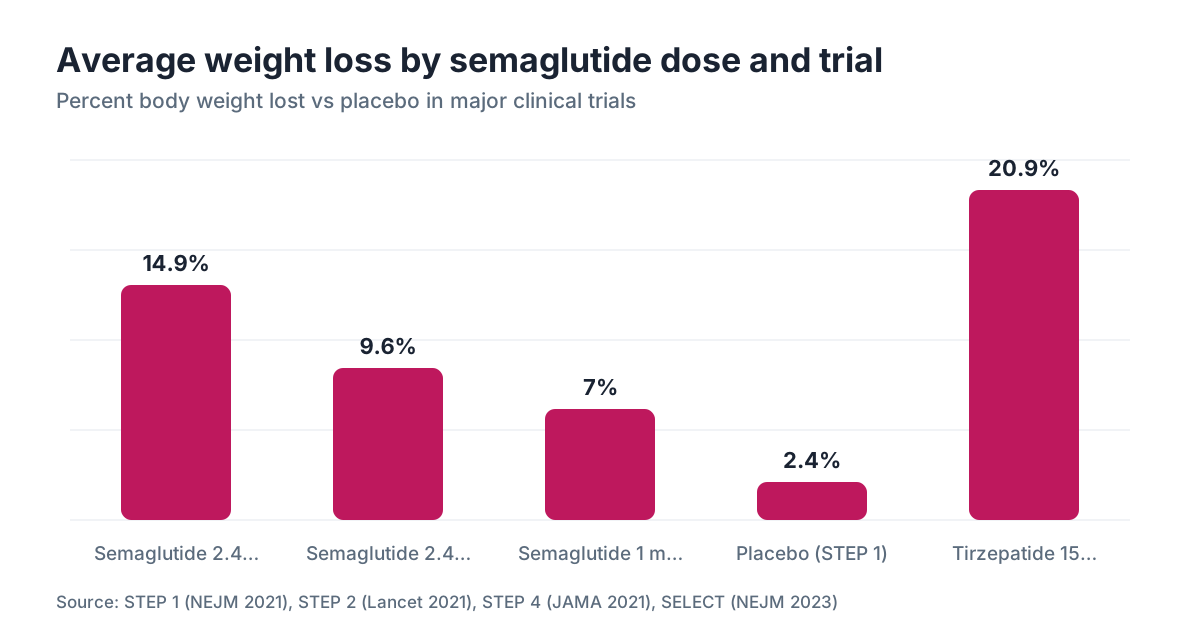
The STEP 1 trial tested Wegovy 2.4 mg in adults without diabetes. Participants lost an average of 14.9% of body weight over 68 weeks, versus 2.4% with placebo [3]. Women in the trial who were postmenopausal or in perimenopause lost weight too, though the trial was not powered to compare outcomes by menopausal status.
For semaglutide for weight loss, reaching 2.4 mg matters. In sensitivity analyses, participants who stayed at 1 mg lost less than those who reached the full dose. Slow titration is fine for tolerance, but the target is still 2.4 mg if your body allows it.
What side effects happen at each dose, and when do they peak?
GI trouble is the main event with semaglutide: nausea, vomiting, diarrhea, constipation, and a general queasiness after eating. The good news is these symptoms track the dosing schedule in a predictable way.
Side effects are worst in the first one to two weeks after each dose increase, then usually ease before the next step up. The STEP trials reported nausea in about 44% of people on semaglutide 2.4 mg versus 16% on placebo, but most cases were mild to moderate and resolved within a few months [3]. Vomiting and diarrhea each hit roughly 24 to 25% of participants.
A few things that actually help:
Eat smaller portions. The drug slows gastric emptying, so a meal that felt fine before can now trigger real nausea at the same size. Fatty, greasy, or very spicy food makes it worse. Eating slowly matters more than what you eat.
Drink water. Nausea and a smaller appetite quietly cut your fluid intake, which then drives constipation and headaches. A lot of the secondary complaints women report, fatigue and brain fog in the first weeks, trace back to plain dehydration.
Hold the dose if you need to. There is no shame in spending 8 weeks at 0.5 mg before moving to 1 mg. Providers see better long-term adherence in women who titrate slowly than in those who rush and quit because of side effects.
Rare but serious risks include pancreatitis, gallbladder disease, and a theoretical risk of thyroid C-cell tumors (seen in rodents; the human risk is unknown, but semaglutide carries a black-box warning about it) [1]. Anyone with a personal or family history of medullary thyroid carcinoma or MEN2 should not use semaglutide.
How does semaglutide dosing work differently for women, especially in perimenopause or menopause?
The honest answer is that we have less data than we should. The large STEP trials enrolled women, and women made up roughly 73% of the STEP 1 population, but outcomes were not consistently split by menopausal status [3]. What we do know, from general physiology and a growing pile of smaller studies, is that hormonal shifts around menopause change how women respond to GLP-1 receptor agonists.
Estrogen influences GLP-1 receptor expression and insulin sensitivity. As estrogen drops in perimenopause, insulin resistance often rises, visceral fat piles on around the abdomen, and appetite regulation shifts. Some clinicians report that perimenopausal and postmenopausal women need extra patience through the early titration weeks because they seem to have more GI sensitivity, partly tied to estrogen's role in gut motility.
One concern specific to women: semaglutide-related weight loss can speed up bone density loss, which is already a risk after menopause. A bone density test (DEXA scan) before starting is worth raising with your provider, especially if you are postmenopausal or carry other osteoporosis risk factors. The STEP trials did not show significant bone loss at the population level, but individual risk varies.
Then there's hormone replacement therapy. There is no known pharmacokinetic interaction between semaglutide and estrogen or progesterone. But HRT can improve insulin sensitivity on its own, so some women on both HRT and semaglutide may need a lower maintenance dose, or find weight loss comes a bit more readily. Nobody has good head-to-head data on this combination; the closest evidence comes from observational studies and clinical experience, not randomized trials.
If you are weighing semaglutide alongside hormone replacement therapy or an estrogen patch, a provider who understands both is genuinely valuable. WomenRx is one telehealth option that prescribes and manages both, which can matter for women trying to untangle overlapping metabolic and hormonal changes at midlife.
Can you stay at a lower dose permanently, or do you have to reach 2.4 mg?
You do not have to reach 2.4 mg. The approved label says the dose should be individualized, and that if 2.4 mg isn't tolerated, it can be reduced to 1.7 mg [1]. Plenty of providers will keep a patient at 1 mg or 1.7 mg indefinitely if she's losing weight, has good glycemic control, and tolerates the lower dose well.
The tradeoff is real: lower doses generally produce less weight loss. In the STEP 2 trial, which tested semaglutide in people with type 2 diabetes, 2.4 mg beat 1 mg on weight reduction (9.6% versus 7.0%) [4]. So if weight loss is the main goal and side effects are manageable, advancing to the full dose is usually the better metabolic call.
That said, some women find a dose near 1 mg is their sweet spot: enough appetite reduction to lose weight meaningfully, without the severe nausea that shows up higher. That's a legitimate clinical decision, not a failure.
The mistake is parking at 0.5 mg forever because titration felt rough and you never tried going higher. At 0.5 mg, most people see minimal weight loss and modest glycemic benefit. If you've plateaued at a low dose and tolerated it for months, it may be time to try moving up again.
What happens if you miss a dose or take too much?
Missing one dose is no big deal if you handle it right. The Wegovy label says that if the missed dose was more than 5 days ago, skip it and take your next dose on schedule [1]. For Ozempic, the window is the same [2]. Do not inject two doses to make up for one.
Missing several weeks in a row is a different story. Some people find that jumping straight back to a full maintenance dose after a break brings the GI side effects roaring back, almost like starting over. A cautious move, and one many providers recommend, is to drop back one dose level after a break longer than 2 weeks and re-titrate over 4 to 8 weeks. The label doesn't require this, but in practice it cuts dropouts from GI intolerance.
Overdose with semaglutide usually means more nausea and vomiting, not a dangerous cardiac or neurological event. There is no specific antidote. Supportive care (fluids, rest) is the treatment. If you accidentally inject twice in one week, call your provider or a poison control center, but the outcome is almost always self-limited GI misery rather than an emergency.
How does compounded semaglutide dosing compare to brand-name dosing?
Compounded semaglutide spread widely during the Wegovy and Ozempic shortage. The FDA allowed compounding pharmacies to produce semaglutide while the brand-name drugs sat on the FDA shortage list. As of early 2025, the FDA removed semaglutide from that list and began enforcement action against many compounders, though the regulatory picture keeps shifting [5].
On dosing, compounded semaglutide is sometimes formulated differently, often as semaglutide base rather than the sodium salt used in approved products. Some compounders add B12, L-carnitine, or other ingredients. The FDA has stated that these combinations have not been shown to be safe or effective, and that compounded products with added ingredients are not equivalent to Wegovy or Ozempic [5].
The titration principles hold no matter the source: start low, increase slowly, stay at each step for at least 4 weeks. But concentration varies by pharmacy, and dosing errors are more common because you're drawing from a multi-dose vial with a syringe instead of clicking a pre-filled pen. If you use compounded semaglutide, confirm the concentration (usually written as mg/mL), calculate your volume in mL for each dose, and verify it with your provider or pharmacist before you inject.
How does semaglutide dosing compare to tirzepatide dosing?
Semaglutide vs tirzepatide is one of the most common questions in GLP-1 prescribing right now, largely because tirzepatide (Mounjaro for diabetes, Zepbound for weight loss) produces greater average weight loss in the trial data.
The SURMOUNT-1 trial for tirzepatide (Zepbound) found mean weight loss of 20.9% at the 15 mg dose over 72 weeks [6], compared to 14.9% for semaglutide 2.4 mg in STEP 1 [3]. Different trials, different populations, so it isn't a perfectly clean comparison, but the direction holds up across other analyses.
Timeline comparison:
| | Semaglutide (Wegovy) | Tirzepatide (Zepbound) | |--|--|--| | Starting dose | 0.25 mg/week | 2.5 mg/week | | Steps | 5 steps over 16 weeks | 5 steps over 20 weeks | | Max dose | 2.4 mg/week | 15 mg/week | | Average weight loss (trial) | ~15% (STEP 1) | ~21% (SURMOUNT-1) | | GI side effects | Common during titration | Similar frequency, possibly slightly less nausea |
Semaglutide acts on GLP-1 receptors only. Tirzepatide acts on both GLP-1 and GIP receptors, which may partly explain the bigger effect. For women who don't respond well to semaglutide or plateau early, tirzepatide is a reasonable next step to discuss with your provider. The two drugs are not currently approved to be used together.
How long do you stay on semaglutide, and what happens if you stop?
Semaglutide is a long-term treatment, not a short course. The STEP 4 trial tested exactly what happens when people stop: participants who discontinued after 20 weeks regained two-thirds of their lost weight within one year [7]. The trial's stated conclusion: "Continued treatment with semaglutide was necessary for maintenance of improved weight loss and cardiometabolic risk factors" [7].
That's the single most important thing to understand about long-term dosing. Semaglutide isn't fixing an underlying cause. It's managing an ongoing physiological condition. Stop, and appetite and calorie intake drift back toward where they started.
For women in midlife this cuts deep, because weight regain after menopause carries real metabolic consequences. Talking through an exit strategy or maintenance plan with your provider before you start is worthwhile, not an afterthought.
Some providers are testing dose reduction to a lower maintenance level (dropping from 2.4 mg to 1 mg after reaching goal weight, say) instead of full discontinuation. There isn't strong randomized evidence for that specific approach yet, but it's clinically logical and may cut cost and side effects while keeping some of the drug's effect. The SELECT trial, which studied semaglutide 2.4 mg for cardiovascular outcomes in people with overweight or obesity, followed participants for a median of 34 months and found a 20% reduction in major cardiovascular events, so long-term use has benefits beyond the scale [8].
What does semaglutide cost at each dose, and does insurance cover it?
Cost is a real barrier. Wegovy's list price in the US is roughly $1,350 per month, though manufacturer savings programs can cut that a lot for commercially insured patients. Ozempic's list price runs around $900 per month [9].
Insurance coverage for Wegovy is patchy. Medicare Part D was barred from covering obesity drugs until the Inflation Reduction Act opened a path for some Medicare plans starting in 2026 (still being phased in as of mid-2025). Many commercial plans cover Wegovy only with prior authorization and documentation of qualifying BMI and comorbidities. Ozempic has better coverage because it's approved for diabetes, which more plans cover reliably.
The Novo Nordisk savings card for Wegovy can bring the cost as low as $0 to $225 per month for eligible commercially insured patients [9], but it can't be used with Medicare, Medicaid, or TRICARE.
Cost drives adherence, which is why it belongs in any dosing conversation. A woman who affords 3 months, stops, and regains the weight has not gotten a good outcome. If long-term affordability is uncertain, that is a genuine reason to think hard before starting, or to plan from day one for how you'll carry the cost over the years this drug tends to help most.
WomenRx connects women with licensed providers who can walk through both brand-name and, where legally available, other options, and help you read your insurance situation before you commit.
Are there any drug interactions that affect semaglutide dosing?
Semaglutide slows gastric emptying, and that matters for medications where absorption rate and peak concentration count. Oral drugs that lean on fast absorption, including some oral contraceptives and thyroid medications, may be absorbed more slowly with semaglutide on board [1][2]. The clinical significance is generally low, but keep it on your radar.
For women taking levothyroxine for hypothyroidism, common in perimenopause, dosing the thyroid medication at the same time of day as semaglutide is less ideal. Take levothyroxine first thing in the morning on an empty stomach (as usually recommended) and time semaglutide for later in the week, and any issue mostly disappears.
Semaglutide is barely touched by the cytochrome P450 enzyme system, so it has fewer drug interactions than many medications [1]. It doesn't significantly interact with statins, blood pressure medications, antidepressants, or progesterone and estrogen-based hormone therapies. That is genuinely reassuring for women juggling several medications at midlife.
Insulin and sulfonylureas need a flag. Combining semaglutide with insulin or insulin secretagogues raises the risk of hypoglycemia, and the doses of those drugs often need to come down when semaglutide starts [2]. This mainly applies to women with type 2 diabetes who are already on insulin.
Frequently asked questions
What is the starting dose of semaglutide for weight loss?
The starting dose is 0.25 mg injected subcutaneously once weekly for the first 4 weeks. This dose is for tolerability only; most people feel minimal appetite suppression at this level. The dose then increases every 4 weeks through four more steps, reaching the 2.4 mg maintenance dose at week 17 for Wegovy.
How long does it take for semaglutide to start working?
Most people notice some appetite reduction within the first 2 to 4 weeks, even at the 0.25 mg starting dose. Meaningful weight loss, usually defined as 5% or more of body weight, tends to show by weeks 8 to 12. Peak weight loss in clinical trials landed around week 60 to 68 at the 2.4 mg dose, so this is a gradual process that rewards patience.
Can the semaglutide dose be split into two injections per week?
No. Semaglutide is approved only as a once-weekly injection. The drug's half-life is about one week, which is exactly why the once-weekly schedule works. Splitting a weekly dose into two injections would not improve efficacy and is not supported by any approved labeling or published trial data.
What happens if semaglutide side effects are too bad to increase the dose?
Stay at your current dose for an additional 4 weeks before trying to advance. The FDA label explicitly supports this. Many people who struggle at one dose find that 8 weeks at that level tames side effects enough to move up. If 2.4 mg is never tolerated, 1.7 mg is an acceptable long-term maintenance dose, and some providers will keep patients at 1 mg where tolerability and efficacy balance.
Is semaglutide dosing different for people with type 2 diabetes versus obesity?
The starting dose and titration steps match, but the ceiling differs. Ozempic (for diabetes) is approved up to 2 mg weekly. Wegovy (for weight management) goes to 2.4 mg weekly. That extra 0.4 mg on Wegovy reflects the higher dose needed for full weight loss effect, a separate regulatory and clinical question from glycemic control alone.
Does semaglutide dosing need to be adjusted for kidney or liver disease?
The FDA label states that no dose adjustment is required for mild, moderate, or severe renal impairment, or for any degree of hepatic impairment, based on pharmacokinetic studies [1][2]. But people with kidney disease who get significant vomiting or diarrhea from semaglutide are at higher risk of dehydration and acute kidney injury, so careful monitoring matters regardless of the formal dose guidance.
Can you take semaglutide if you are postmenopausal and already on HRT?
Yes, and there is no known pharmacokinetic interaction between semaglutide and estrogen or progesterone-based hormone therapies. Some providers find postmenopausal women on HRT who start semaglutide see good metabolic results, possibly because HRT independently improves insulin sensitivity. Both treatments can run at once, though a provider comfortable with both is useful given the overlapping metabolic effects.
What is the maximum dose of semaglutide approved by the FDA?
The maximum approved dose is 2.4 mg once weekly (Wegovy) for chronic weight management, and 2 mg once weekly (Ozempic) for type 2 diabetes. Higher doses have been studied experimentally but are not approved. Going above the approved dose is not supported by safety data and is not recommended.
How do you know if your semaglutide dose is working?
The clearest sign is real appetite reduction: eating less without feeling deprived, feeling full sooner, thinking about food less. On the scale, a 5% drop in body weight by week 12 is a common benchmark. If you've been at the maintenance dose for 12 to 16 weeks and lost less than 5% of body weight, your provider may consider whether a different medication fits better.
What is the difference between semaglutide 1 mg and 2 mg pens?
Ozempic comes in pens that deliver 0.5 mg and 1 mg doses (from a 2 mg/1.5 mL pen) and a separate pen that delivers 1 mg and 2 mg doses (from a 4 mg/3 mL pen). Each pen is pre-set and delivers the dose at a click; you don't adjust the volume yourself. Wegovy pens are single-use, pre-filled, and dose-specific: separate pens for 0.25, 0.5, 1.0, 1.7, and 2.4 mg.
Can you restart semaglutide after stopping, and do you have to re-titrate?
You can restart, and re-titration is generally recommended if you've been off the drug for more than a few weeks. GI side effects often return after a break, similar to starting fresh. A cautious restart usually begins at 0.25 mg or one dose level below where you stopped, then re-advances over 4 to 8 weeks. Your provider should guide the plan based on how long you were off and why.
Does body weight affect how much semaglutide you need?
Semaglutide dosing is fixed by the titration schedule, not adjusted by body weight. A woman at 180 lbs uses the same 2.4 mg dose as one at 280 lbs. That said, people with higher body mass may find the appetite-suppressing effect proportionally less noticeable, one reason weight loss percentages in trials vary across individuals even at the same dose.
Is oral semaglutide (Rybelsus) dosed the same way as injectable semaglutide?
No. Rybelsus doses are 3 mg, 7 mg, and 14 mg taken orally once daily, not weekly. The oral bioavailability of semaglutide is only about 1%, so the mg numbers don't compare to the injectable form. Rybelsus is approved for type 2 diabetes only, not weight management, and needs strict fasting (empty stomach, small amount of water, wait 30 minutes before eating) for adequate absorption [11].
How do you store semaglutide pens correctly?
Unopened Wegovy and Ozempic pens should be refrigerated between 36°F and 46°F (2°C to 8°C) until first use. After first use, Ozempic can sit at room temperature (up to 77°F) or in the refrigerator for up to 56 days. Wegovy single-dose pens are used once and discarded, so post-opening storage isn't a concern. Never freeze semaglutide pens, and keep them out of direct sunlight.
Sources
- FDA, Wegovy (semaglutide) prescribing information
- FDA, Ozempic (semaglutide) prescribing information
- Wilding JPH et al., STEP 1 trial, NEJM 2021
- Davies M et al., STEP 2 trial, Lancet 2021
- FDA, compounded semaglutide information
- Jastreboff AM et al., SURMOUNT-1 trial, NEJM 2022
- Rubino D et al., STEP 4 trial, JAMA 2021
- Lincoff AM et al., SELECT trial, NEJM 2023
- Novo Nordisk, Wegovy savings and coverage information
- Endocrine Society, Pharmacological Management of Obesity Clinical Practice Guideline 2015
- FDA, Rybelsus (oral semaglutide) prescribing information