Semaglutide doses: the complete guide from 0.25 mg to 2.4 mg
TL;DR: Semaglutide for weight loss (Wegovy) starts at 0.25 mg weekly and steps up every four weeks to a maintenance dose of 2.4 mg. The diabetes version (Ozempic) tops out at 2 mg. The slow escalation exists specifically to reduce nausea. Most meaningful weight loss happens at doses of 1 mg and above, with the STEP 1 trial showing 14.9% average body weight reduction at 2.4 mg.
What are the approved semaglutide doses?
Semaglutide comes in two FDA-approved injectable brands with different dose ceilings, plus a separate oral form. The specific numbers matter because they determine what you can legally be prescribed and what outcomes the clinical evidence actually supports.
Wegovy (semaglutide 2.4 mg) is approved for chronic weight management in adults with a BMI of 30 or higher, or 27 or higher with at least one weight-related condition. Its dose schedule is fixed by the FDA label: 0.25 mg weekly for four weeks, then 0.5 mg for four weeks, 1 mg for four weeks, 1.7 mg for four weeks, and finally 2.4 mg weekly as the maintenance dose [1].
Ozempic (semaglutide for type 2 diabetes) has a lower ceiling. You start at 0.25 mg weekly for four weeks, move to 0.5 mg, and the maximum approved dose is 2 mg weekly. A 1 mg dose is the most commonly used maintenance level for diabetes management, and the 2 mg option was added by the FDA in 2022 for patients who need more glycemic control [2].
Rybelsus is the oral semaglutide tablet, approved only for type 2 diabetes. Doses are 3 mg, 7 mg, and 14 mg daily. Because oral bioavailability of semaglutide is dramatically lower than subcutaneous injection (roughly 1% absorption), these pill doses are not equivalent to injectable doses in any straightforward way [3].
For a broader look at how the drug works before getting into the numbers, see our overview of semaglutide.
What is the standard semaglutide dose escalation schedule?
The escalation schedule is not optional or patient-driven. It is written into the FDA prescribing information and exists because the GLP-1 receptor agonist mechanism causes nausea, vomiting, and sometimes diarrhea that are dose-dependent. Ramping up slowly gives your gut time to adapt.
Here is the Wegovy schedule as written in the prescribing information [1]:
| Week | Dose | |------|------| | 1-4 | 0.25 mg once weekly | | 5-8 | 0.5 mg once weekly | | 9-12 | 1.0 mg once weekly | | 13-16 | 1.7 mg once weekly | | 17+ | 2.4 mg once weekly (maintenance) |
The 0.25 mg starting dose is explicitly described in the label as a "treatment initiation dose to reduce gastrointestinal side effects" and is not intended to have significant therapeutic effect on weight. You are doing four weeks of GI training before you reach a dose that does meaningful metabolic work.
If you cannot tolerate the step-up to 2.4 mg, the label allows staying at 1.7 mg as an ongoing maintenance dose. Some patients and prescribers choose this on purpose, more than as a fallback. The side effect burden at 2.4 mg is meaningfully higher than at 1.7 mg for a subset of people, and the extra weight loss is real but small.
For Ozempic, the escalation is simpler: 0.25 mg for four weeks, then 0.5 mg, with 1 mg or 2 mg as the maintenance range [2]. Diabetes prescribers typically use the lowest dose that hits glycemic targets.
One practical note. If you miss doses for more than two consecutive weeks, most prescribers will restart you at a lower dose before going back to your prior level. This is not spelled out in the label, but it is standard clinical practice to avoid hitting your GI system with a large dose after a gap.
How much weight do people lose at each dose?
The dose-response relationship for weight loss is real. More semaglutide generally produces more weight loss, up to the 2.4 mg ceiling. But the effect is not linear, and the returns shrink at the top.
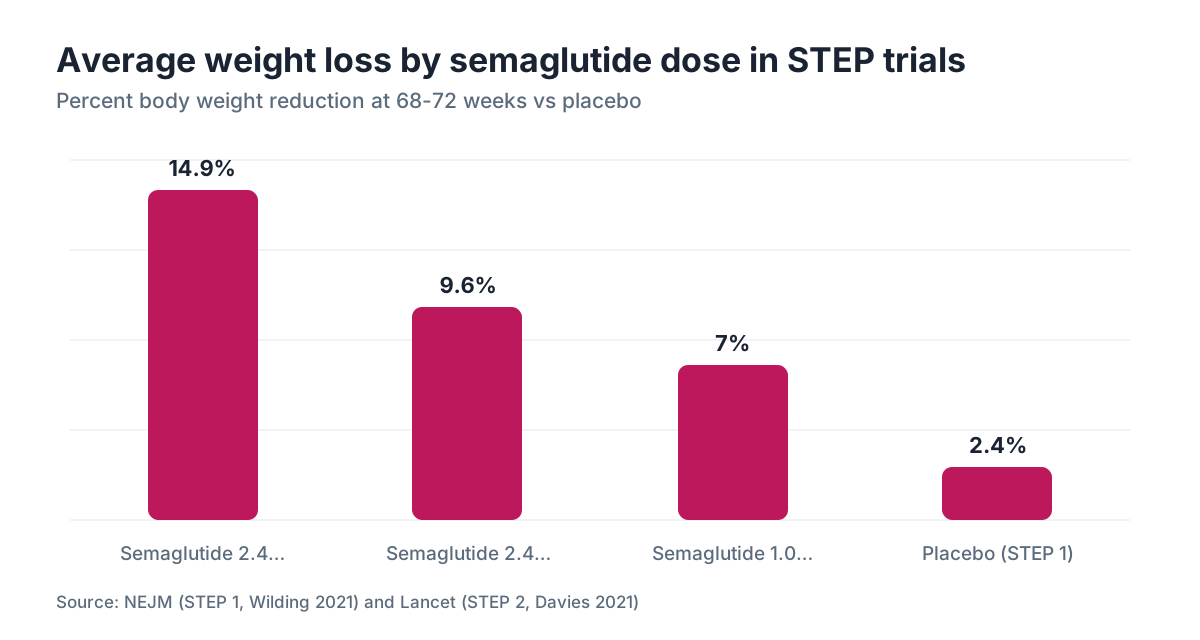
The STEP 1 trial (n=1,961, 68 weeks) is the primary efficacy evidence for Wegovy. Participants on 2.4 mg lost an average of 14.9% of body weight versus 2.4% on placebo [4]. That is the number the FDA approved the drug on, and it is the most cited figure in the literature.
The STEP 2 trial, which enrolled patients with type 2 diabetes (a population that typically loses less weight on GLP-1 agonists), found 9.6% weight loss at 2.4 mg and 7.0% at 1 mg, both over 68 weeks [5]. The gap between 1 mg and 2.4 mg in that trial was meaningful but not dramatic.
Dose-finding data from earlier semaglutide trials showed the 0.25 mg and 0.5 mg doses produced modest weight loss, typically in the 4-6% range at 12-16 weeks, mostly reflecting the appetite suppression that rides along with early GI effects. Sustained fat mass reduction becomes much clearer at 1 mg and above.
A few things affect your personal response regardless of dose. Women in perimenopause or menopause often find weight loss harder because of hormonal shifts affecting insulin sensitivity, fat distribution, and appetite regulation. If you are in that window, you can read more about how these issues connect in our article on menopause. Some clinicians believe addressing hormonal status alongside GLP-1 therapy produces better outcomes, though head-to-head trial data on that combination is still thin.
For a detailed comparison of what happens when you combine or switch to tirzepatide (which targets both GLP-1 and GIP receptors), see semaglutide vs tirzepatide.
What dose of semaglutide is used for weight loss vs. diabetes?
Weight loss requires higher doses than diabetes management, and the two indications use different branded products with different dose architectures.
For type 2 diabetes (Ozempic), the therapeutic range is 0.5 mg to 2 mg weekly. The primary endpoint is HbA1c reduction, and many patients hit that at 0.5 mg or 1 mg. The 2 mg dose added in 2022 is for patients whose A1c stays above target on 1 mg.
For chronic weight management (Wegovy), the target dose is 2.4 mg weekly. This is not a preference. It is the dose the Phase 3 trials were powered on. Prescribing Ozempic off-label for weight loss at its 2 mg ceiling will likely produce meaningful weight loss, but you will be below the dose shown to produce the 15% body weight reduction figure that gets cited in most coverage.
That distinction has real-world consequences. During the semaglutide shortage period (2022-2024), many patients on Wegovy were shifted to Ozempic doses or to compounded semaglutide products. Outcomes at sub-2.4 mg doses were generally lower than the registration trial data, which is exactly what the pharmacology predicts.
Oral semaglutide (Rybelsus 14 mg daily) produces weight loss as a secondary effect in diabetes patients but has not been approved for weight management, and the evidence base for it as a weight loss tool is much weaker than for the injectable forms [3].
What are the most common side effects at each dose level?
GI side effects are the defining tolerability issue with semaglutide. They are dose-dependent, most intense during dose escalation, and usually improve after a few weeks at a stable dose.
In the STEP trials, rates of nausea, vomiting, diarrhea, and constipation ran substantially higher in the semaglutide arm than placebo. In STEP 1, nausea occurred in 44% of the semaglutide group versus 16% in placebo, and vomiting in 24% versus 6% [4]. These rates were highest during the escalation phase.
At 0.25 mg and 0.5 mg, most patients get mild to moderate nausea, particularly in the 24-72 hours after injection. At 1 mg, nausea is still common but often manageable. At 1.7 mg and 2.4 mg, nausea and vomiting climb again with each dose increase, then usually settle down after 2-4 weeks at the new dose.
Beyond GI symptoms, the side effect profile at higher doses includes:
- Decreased appetite (this is the mechanism, not a side effect per se, but it can become excessive)
- Fatigue, especially in the first few weeks after a dose increase
- Headache
- Injection site reactions (mild in most patients)
- Rare but serious: pancreatitis, gallbladder disease, and the FDA black-box warning for thyroid C-cell tumors (based on rodent data; human risk is uncertain but the contraindication in patients with personal or family history of medullary thyroid carcinoma is firm) [1]
Muscle loss is an underappreciated concern at higher doses. Rapid weight loss from any cause includes lean mass loss, and GLP-1 agonists are no exception. Women over 40 are already losing muscle at roughly 1-2% per year (age-related sarcopenia), and aggressive caloric restriction on top of semaglutide can speed that up. Adequate protein intake and resistance training are not optional extras at 2.4 mg. Bone density is a related concern, particularly for perimenopausal women. If you have not had a baseline measurement, our article on bone density testing explains when to get one.
Can you stay at a lower dose, or do you have to reach 2.4 mg?
You do not have to reach 2.4 mg. The FDA label explicitly permits staying at 1.7 mg if 2.4 mg is not tolerated [1]. Some prescribers also use 1 mg as a long-term maintenance dose in patients who have reached their weight goal and are focused on holding it rather than losing more.
The clinical reality is that a meaningful minority of patients, somewhere between 10-20% in real-world prescribing data, do not tolerate 2.4 mg long-term and maintain on 1.7 mg. Their outcomes are somewhat lower than the trial average but still clinically significant.
There is also a legitimate conversation about whether the marginal benefit of 2.4 mg over 1 mg justifies the side effect burden for a given person. In STEP 2 (the diabetes population), the difference was about 2.6 percentage points of body weight. For someone who weighs 200 pounds, that is roughly 5 pounds. For some patients that is worth tolerating more nausea. For others it is not.
What the evidence does not support is staying at 0.25 mg or 0.5 mg for months and expecting significant weight loss. Those are initiation doses, not therapeutic maintenance doses. If you are several months into treatment and have not escalated past 0.5 mg because of side effects, talk to your prescriber about dose timing, injection technique, meal composition around injection day, and anti-nausea strategies before you conclude the medication is not working.
How does semaglutide dosing work for women specifically, including during perimenopause and menopause?
The STEP trials enrolled predominantly women (about 73% in STEP 1), so the primary efficacy data is reasonably representative of female biology [4]. That said, there are specific considerations for women in the perimenopausal or postmenopausal window that the trials did not directly address.
Estrogen decline during perimenopause drives visceral fat accumulation, insulin resistance, and appetite dysregulation through pathways that overlap with the GLP-1 system. Some endocrinologists hypothesize that declining estrogen reduces the sensitivity of GLP-1 receptors in the hypothalamus, which could partly explain why weight gain in perimenopause resists standard interventions. No published randomized trial has directly tested semaglutide efficacy stratified by menopausal status, so this stays mechanistically plausible but unproven.
Women on hormone replacement therapy (HRT) who also start semaglutide sometimes report faster weight loss than they expected. This may reflect the complementary effects of estrogen on insulin sensitivity and fat distribution alongside GLP-1 receptor agonism. Clinicians at platforms like WomenRx who prescribe both HRT and GLP-1s have noted this anecdotally, but again, the controlled data is not there yet.
Practical dosing considerations for perimenopausal and postmenopausal women include:
- Muscle preservation is more urgent. Women over 45 losing weight fast are at higher risk of losing lean mass. Higher protein targets (1.2-1.6 g per kg of body weight) and resistance training matter more at this life stage.
- Bone density needs monitoring. Rapid weight loss reduces bone mineral density, and postmenopausal women already have higher fracture risk. A baseline DEXA scan before starting is reasonable if you have other risk factors.
- Sleep disruption common in perimenopause can worsen GI side effects and reduce medication tolerance. Addressing sleep on its own may improve semaglutide tolerability.
For context on the hormonal picture underlying these concerns, see our articles on perimenopause age and hormone replacement therapy.
What happens if you miss a dose or need to pause?
The Wegovy prescribing information gives specific guidance here. If you miss a dose and the next scheduled dose is more than two days away, take the missed dose as soon as possible. If the next scheduled dose is within two days, skip the missed dose and resume your regular schedule. Do not take two doses in the same week [1].
For longer interruptions, the standard clinical approach is conservative. If you have been off semaglutide for two weeks or less, most prescribers will have you resume at your prior dose. More than two weeks off generally warrants stepping back one dose level. More than four to six weeks off often means restarting the full escalation schedule, though individual prescriber judgment and the reason for the pause both factor in.
Weight regain after stopping semaglutide is real and well-documented. The STEP 4 trial found that participants who reached 2.4 mg and then switched to placebo regained about two-thirds of their prior weight loss within a year [6]. This is not a moral failing. It reflects that GLP-1 receptor agonism is treating an underlying physiological dysregulation, not permanently resetting it. Stop the medication and you remove the treatment effect.
Understand this before you start: for most people, semaglutide is a long-term medication if the weight loss is going to stick. That is a different conversation than the one many patients expect going in.
How is semaglutide dosed differently in compounded versions?
Compounded semaglutide became widespread during the FDA-declared shortage period (2022-2024) and remains available through some telehealth providers and compounding pharmacies, though the regulatory landscape shifted in 2025 when the FDA removed Wegovy from its shortage list [10].
Compounded semaglutide is typically supplied as a multi-dose vial with concentration expressed in mg/mL, and the patient draws and injects the dose themselves with an insulin-type syringe. Common concentrations are 2.5 mg/mL, 5 mg/mL, or 10 mg/mL, so the volume injected varies based on the dose and the vial's concentration.
The dose escalation schedule used in compounding is generally the same as the branded product: start at 0.25 mg and step up every four weeks. There is no standardization, though. Different compounding pharmacies and prescribers use different protocols. Some use weekly microdosing ramps (adding 0.1-0.25 mg per week rather than every four weeks) with the idea of minimizing side effects, though that approach lacks specific clinical trial support.
The active ingredient in compounded versions should be semaglutide base or semaglutide acetate (not semaglutide sodium), though quality and purity vary by pharmacy. The FDA has raised concerns about some compounded versions containing incorrect salt forms or inaccurate concentrations [10]. This is not a reason to panic if you are already on compounded semaglutide from a reputable pharmacy, but it is a reason to understand that compounded is not pharmacologically identical to branded, even at the same labeled dose.
For more detail on the sourcing and regulatory picture, see compounded semaglutide.
How does semaglutide dosing compare to tirzepatide dosing?
Both drugs are weekly subcutaneous injections with similar slow-ramp protocols, but the dose numbers are completely different because they are different molecules.
Tirzepatide (Mounjaro for diabetes, Zepbound for weight loss) starts at 2.5 mg weekly and steps up in 2.5 mg increments every four weeks, with a maximum dose of 15 mg weekly for weight management. The SURMOUNT-1 trial found 20.9% mean body weight reduction at 15 mg over 72 weeks, higher than the 14.9% seen in STEP 1 with semaglutide 2.4 mg [8].
| Drug | Starting Dose | Max Approved Dose | Avg Weight Loss (registration trial) | |------|--------------|-------------------|--------------------------------| | Semaglutide (Wegovy) | 0.25 mg/week | 2.4 mg/week | 14.9% (STEP 1, 68 wks) [4] | | Tirzepatide (Zepbound) | 2.5 mg/week | 15 mg/week | 20.9% (SURMOUNT-1, 72 wks) [8] | | Ozempic (semaglutide) | 0.25 mg/week | 2.0 mg/week | Not primary indication | | Rybelsus (oral sema) | 3 mg/day | 14 mg/day | Not approved for weight loss |
The side effect profiles are broadly similar (GI dominant). Tirzepatide's added GIP receptor activity may produce less nausea for some patients at equivalent efficacy levels, though head-to-head tolerability data is limited. The dose numbers cannot be cross-referenced: 2.4 mg semaglutide is not comparable to 2.4 mg tirzepatide in any useful way.
See semaglutide vs tirzepatide for a full comparison if you are deciding between them.
What should you do if semaglutide stops working at your current dose?
Plateaus are normal and do not always mean the dose needs to go up. The typical weight loss curve on semaglutide shows fast initial loss (partly GI-mediated), a slower middle phase, and a plateau usually reached around 60-68 weeks even at 2.4 mg, as the STEP trials demonstrated. If you are at 2.4 mg and have plateaued after 12-18 months, you have likely reached the drug's maximum effect for your biology.
If you plateau before reaching 2.4 mg and can tolerate a dose increase, that is the obvious first conversation with your prescriber. The dose-response relationship is real, and you may not have hit your therapeutic ceiling.
If you are already at 2.4 mg and plateau early (before 60 weeks), it is worth examining: caloric adaptation (your resting metabolic rate may have dropped), muscle mass changes (less muscle burns fewer calories), hormonal factors (thyroid, estrogen, cortisol), and sleep. Some patients and prescribers consider switching to tirzepatide at this point, as the dual GIP/GLP-1 mechanism may produce additional effect in patients who have maxed out on semaglutide.
There is no approved dose above 2.4 mg for semaglutide. Off-label use above that ceiling is not supported by safety or efficacy data and carries increased risk. A prescriber offering doses above 2.4 mg for weight loss is operating outside the evidence base.
How do you inject semaglutide and where on the body?
Branded Wegovy comes in a pre-filled auto-injector pen with the dose pre-set. You do not draw it up or adjust the volume. Each pen is a single dose, designed to inject into subcutaneous fat, not muscle.
Approved injection sites are the abdomen (at least two inches from the navel), the upper thigh, or the upper arm. Rotating sites each week reduces local irritation and keeps absorption consistent. Many users find the abdomen easiest for self-injection.
Storage matters. Semaglutide pens should be refrigerated (36-46°F / 2-8°C) until first use, after which they can be kept at room temperature below 77°F for up to 28 days [1]. Heat or light degrades the peptide.
For compounded vials, the process is more involved: you draw the correct volume with a syringe, expel air bubbles, and inject subcutaneously. The risk of a dosing error is higher than with a pre-filled pen, which is one of the real safety arguments for branded products when they are available and affordable.
Injection is typically done the same day each week. There is no evidence that time of day matters for efficacy, though some patients prefer morning injections before a smaller meal if nausea is an issue.
Frequently asked questions
What is the starting dose for semaglutide?
Both Wegovy (weight loss) and Ozempic (diabetes) start at 0.25 mg once weekly for the first four weeks. This dose is an initiation dose only, meant to minimize nausea, and does not produce significant weight loss or blood sugar reduction on its own. After four weeks, you move to 0.5 mg, and the escalation continues from there based on which indication you are treating.
How long does it take to reach the full 2.4 mg dose of Wegovy?
The standard schedule takes 16 weeks to reach 2.4 mg: four weeks each at 0.25 mg, 0.5 mg, 1.0 mg, and 1.7 mg before stepping up to the 2.4 mg maintenance dose. If you need to slow down due to side effects, the timeline extends, and staying at 1.7 mg permanently is an approved alternative to 2.4 mg.
Is 1 mg of semaglutide effective for weight loss?
Yes, 1 mg produces meaningful weight loss, typically in the 7-10% range over 68 weeks based on dose-comparison data from the STEP trials. It is less effective than 2.4 mg (which averaged 14.9% in STEP 1), but it is not a threshold dose below which nothing happens. Some patients maintain on 1 mg long-term, particularly those who have reached a satisfactory weight and are focused on maintenance.
Can I use Ozempic for weight loss instead of Wegovy?
Ozempic is sometimes prescribed off-label for weight loss, and it does produce weight loss, but its approved ceiling of 2 mg is below the 2.4 mg dose studied in the Wegovy weight management trials. Ozempic is also in shorter supply for its approved use in diabetes, and using it off-label for weight loss diverts supply from people who need it for blood sugar management. Wegovy is the appropriate on-label choice when available.
What happens to semaglutide dosing if you stop and restart?
If the gap is two weeks or less, most prescribers resume at the prior dose. Two to four weeks off typically means stepping back one dose level. More than four to six weeks usually means restarting the full escalation schedule from 0.25 mg. The goal is to avoid giving your GI system a large dose after an extended break. Your prescriber will give you specific guidance based on why you paused and for how long.
Does semaglutide work less well in menopause?
There are no published trials directly comparing semaglutide efficacy by menopausal status. The STEP trials were about 73% female but did not report outcomes stratified by menopause. The concern is mechanistically grounded: declining estrogen impairs insulin sensitivity and affects hypothalamic appetite regulation, which could reduce GLP-1 responsiveness. Clinically, some prescribers find combining HRT with GLP-1 therapy improves results in this group, but controlled evidence is not yet available.
What is the difference between semaglutide 0.5 mg and 1 mg for diabetes?
For Ozempic, 0.5 mg is the first therapeutic maintenance dose and typically reduces HbA1c by roughly 1.0-1.4 percentage points. The 1 mg dose produces modestly greater HbA1c reduction (around 1.4-1.8 percentage points) and more weight loss. The 2 mg dose, added in 2022, is for patients who do not reach glycemic targets on 1 mg. Side effects are more common at higher doses. Prescribers generally use the lowest dose that achieves the glycemic goal.
Can semaglutide dose be adjusted based on weight?
No. The semaglutide dose schedule is fixed by the FDA label and does not scale with body weight, unlike some other medications. A 300-pound person and a 180-pound person both follow the same escalation to 2.4 mg. Some researchers have noted that fixed dosing may produce proportionally lower drug exposure in higher-weight patients, but no alternative weight-based dosing has been approved or shown to be superior in trials.
How do compounded semaglutide doses compare to branded doses?
Compounded semaglutide uses the same dose numbers (0.25 mg to 2.4 mg range) and typically the same escalation schedule, but the drug is supplied as a multi-dose vial requiring you to draw and measure each dose yourself. Dosing errors are a genuine risk with vials compared to pre-filled pens. The FDA has also flagged concerns about some compounded versions using incorrect salt forms that may affect potency. Branded Wegovy is the better-controlled option when accessible.
Does semaglutide have a maximum safe dose above 2.4 mg?
There is no FDA-approved dose above 2.4 mg for weight loss or 2 mg for diabetes. Higher-dose semaglutide has not completed the clinical trial program needed to establish safety and efficacy above these thresholds. Off-label prescribing above the approved ceiling is not supported by published evidence, carries higher side effect risk, and is outside standard of care. Any prescriber offering more than 2.4 mg for weight loss is working without a safety or efficacy foundation.
How long do you stay on semaglutide once you reach your goal weight?
The STEP 4 trial showed that people who stopped semaglutide after reaching their goal regained about two-thirds of lost weight within a year. Most evidence-based guidelines now treat semaglutide as a long-term maintenance medication, not a finite course. Some patients taper to a lower maintenance dose (1 mg or 1.7 mg) once they reach their goal, though data on this strategy is limited. The decision should be individualized with your prescriber.
Is oral semaglutide (Rybelsus) as effective as injectable for weight loss?
No. Rybelsus at 14 mg daily produces meaningful HbA1c reduction in type 2 diabetes but has not been approved for weight management. Its oral bioavailability is approximately 1%, making the effective systemic exposure much lower than injectable semaglutide at equivalent labeled doses. Weight loss in Rybelsus trials has been considerably smaller than in the Wegovy injectable trials. If weight loss is the goal, injectable semaglutide has a much stronger evidence base.
Can semaglutide doses be split into smaller more frequent injections?
No. Semaglutide has a half-life of approximately seven days, which is specifically why it is designed as a once-weekly injection. Splitting a weekly dose into multiple smaller injections would not produce the same pharmacokinetic profile and is not supported by any clinical evidence. The once-weekly dosing is central to how the drug maintains consistent receptor activation. Do not modify the injection frequency from what your prescriber and the label specify.
Sources
- FDA, Wegovy (semaglutide) prescribing information
- FDA, Ozempic (semaglutide) prescribing information
- FDA, Rybelsus (oral semaglutide) prescribing information
- Wilding JPH et al., STEP 1 trial, New England Journal of Medicine 2021
- Davies M et al., STEP 2 trial, Lancet 2021
- Rubino DM et al., STEP 4 trial, JAMA 2021
- Jastreboff AM et al., SURMOUNT-1 trial, New England Journal of Medicine 2022
- Endocrine Society, Pharmacological Management of Obesity Clinical Practice Guideline
- FDA, MedWatch Safety Alert on compounded semaglutide products