Semaglutide dose chart: every approved and titration dose explained
TL;DR: Semaglutide starts at 0.25 mg weekly for four weeks, then increases in steps up to 2.4 mg weekly for weight loss (Wegovy) or 1 mg, 2 mg weekly for type 2 diabetes (Ozempic). Each dose step takes four weeks minimum. Most people reach a maintenance dose of 1 mg to 2.4 mg depending on tolerability and the condition being treated.
What is the standard semaglutide dose chart for weight loss?
Wegovy (semaglutide 2.4 mg) climbs through five doses over about 16 weeks before you hit the full maintenance level [1]. Each step lasts four weeks. So the fastest you get to maintenance is roughly five months once you count the maintenance month itself.
Here is the complete Wegovy dose chart by week:
| Week | Dose | Notes | |------|------|-------| | 1 to 4 | 0.25 mg weekly | Starter dose only; not a therapeutic dose | | 5 to 8 | 0.5 mg weekly | First therapeutic step | | 9 to 12 | 1.0 mg weekly | Mid-titration | | 13 to 16 | 1.7 mg weekly | Near-maintenance | | 17+ | 2.4 mg weekly | Approved maintenance dose |
The 0.25 mg dose is a tolerability dose, nothing more. The Wegovy prescribing information states: "The 0.25 mg dose is a starting dose intended to reduce gastrointestinal side effects and is not intended for glycemic control or weight management." [1] Your gut is just meeting the drug during those first four weeks.
If a patient cannot tolerate 2.4 mg, the label lets you stay at 1.7 mg indefinitely. Miss a dose by more than five days and you skip it, then resume on the next scheduled day instead of doubling up.
Women in perimenopause and menopause ask this constantly: does the dose change with hormonal status? No. The FDA label does not differentiate by menopausal status. The clinical picture gets murkier, though, because estrogen loss and insulin resistance often travel together. More on that in the section on semaglutide for weight loss.
What is the semaglutide dose chart for type 2 diabetes (Ozempic)?
Ozempic is the same molecule, semaglutide, approved at lower doses for type 2 diabetes and cardiovascular risk reduction. The titration is shorter. The ceiling is lower [2].
| Week | Dose | Notes | |------|------|-------| | 1 to 4 | 0.25 mg weekly | Initiation only | | 5 to 8 | 0.5 mg weekly | Minimum effective dose for A1c lowering | | 9+ (if needed) | 1.0 mg weekly | Can increase after 4 weeks at 0.5 mg | | Optional escalation | 2.0 mg weekly | Added to label in 2022; for patients needing additional glycemic control |
Ozempic pens come in two configurations: a 0.5 mg/dose pen and a 1 mg/dose pen. A separate 2 mg/dose pen was approved in 2022 [2]. You cannot titrate to 2.4 mg on Ozempic. That dose lives only in the Wegovy delivery system.
If you're on Ozempic for blood sugar and wondering about weight loss, the STEP 2 trial found semaglutide 2.4 mg produced 9.6% mean body weight reduction in people with type 2 diabetes over 68 weeks, against 3.4% for placebo [3]. The gap between the diabetes-approved and weight-loss-approved doses is real and it matters.
If your prescriber switches you from Ozempic to Wegovy for weight management, there's no restart titration required. Many clinicians still hold you at your current dose for a short stabilization period before moving to the higher delivery system.
How does the semaglutide titration schedule actually work, and why does it matter?
Slow titration exists for one reason: to manage GI side effects. Nausea, vomiting, diarrhea, constipation. Semaglutide slows gastric emptying, which is a big part of how it kills appetite, and that same mechanism irritates the gut when you introduce it too fast.
In the STEP 1 trial, which enrolled 1,961 adults without diabetes, nausea hit 44% of the semaglutide group versus 16% on placebo. Most of it was mild to moderate and passed, peaking during titration and dropping off by week 20 [4]. Rushing the schedule does not make nausea resolve faster. It usually makes it worse and drives more people to quit.
Some prescribers stretch the titration for sensitive patients. Instead of four weeks per step, they hold each dose for eight. Nothing in the FDA guidance forbids this. The label says "at least 4 weeks" at each step, not exactly four. Staying longer at a lower dose is always on the table.
Missed doses matter here too. Miss a Wegovy dose and if the next scheduled one is more than two days away, take the missed dose. If it's within two days, skip it and continue on schedule [1]. Miss several in a row and your prescriber will often restart you lower to head off a GI flare when you resume.
What dose of semaglutide do most people actually end up on?
Trial data and real-world data tell slightly different stories, and the difference is worth knowing.
Under controlled STEP 1 conditions, 83.4% of participants reached and held the 2.4 mg dose at week 68 [4]. Registries and pharmacy claims run lower. A 2023 analysis in Obesity found roughly 30% to 40% of patients starting Wegovy never reach the 2.4 mg maintenance dose within a year, usually because of GI intolerance or cost-driven gaps in supply [5].
For women over 45, the scale lies a little. The muscle loss that comes with menopause can make your weight response look smaller than it is even when fat loss is real. Track body composition, more than the number under your feet.
Dose tracks with outcome: STEP 1 showed 14.9% mean body weight reduction at 2.4 mg versus about half that at 1 mg. Most clinicians push toward 2.4 mg for weight loss when patients tolerate it. But 1.7 mg is a legitimate landing spot, and stopping there is not a failure.
For semaglutide vs tirzepatide, the ceiling comparison matters: tirzepatide goes to 15 mg weekly, and SURMOUNT-1 showed 20.9% mean body weight reduction at the top dose against 14.9% for semaglutide 2.4 mg in STEP 1, though these are different trial populations [6].
What happens if you need to restart semaglutide after stopping?
Stop semaglutide for more than a few weeks and most prescribers restart you from 0.25 mg, no matter where you left off. Your gut loses its adaptation to the drug during a long break.
The FDA label sets no hard restart rule based on days off-drug. The clinical convention is loose: any gap longer than four to six weeks usually warrants restarting titration. Shorter gaps (two to three weeks from supply issues, which were common during the 2022 to 2024 shortage) usually let you resume at your last tolerated dose.
Restarting at 0.25 mg is maddening when you were comfortable at 2.4 mg. But jumping straight back to maintenance commonly causes enough nausea and vomiting that patients quit outright. The slow restart buys you the drug.
For women managing menopause symptoms alongside weight loss, treatment gaps from shortages compound the problem, because weight regain after stopping GLP-1s is well documented. The STEP 4 withdrawal trial found participants who stopped semaglutide after 20 weeks regained about two-thirds of their prior weight loss within 48 weeks [7]. That's not a character flaw. It reflects the chronic disease model of obesity and the plain fact that semaglutide works while you take it.
Does the dose change based on body weight or BMI?
No. Semaglutide dosing is not weight-based. Wegovy and Ozempic both use the same flat titration whether someone weighs 180 pounds or 300. This is different from drugs where you calculate milligrams per kilogram.
The reason is pharmacokinetic. Semaglutide's half-life runs about seven days and its receptor engagement is saturable across a fairly consistent dose range. Body weight affects how many total pounds a person loses (heavier people tend to lose more pounds but similar percentages), but the drug concentration that produces appetite suppression does not scale with BMI.
What the label does differentiate is indication. Wegovy is approved for adults with a BMI of 30 or higher, or 27 or higher with at least one weight-related condition (high blood pressure, type 2 diabetes, or high cholesterol) [1]. Ozempic is approved for type 2 diabetes regardless of BMI. A prescriber writing Ozempic off-label for weight loss at BMI 27 is not unusual, especially before Wegovy existed, but you need to know which drug you're on and its approved dose range.
What about compounded semaglutide doses, and are they different?
Compounded semaglutide went wide during the 2022 to 2024 FDA shortage, and compounding pharmacies sometimes use dosing conventions that stray from the FDA label. Worth understanding before you assume the chart above applies to your compound.
The FDA declared the Wegovy shortage over in May 2024 and put compounders on notice that they could no longer legally produce copies of approved semaglutide products [8]. Litigation and enforcement timelines have been messy, so compounded versions kept circulating in some markets into 2025.
Compounded semaglutide usually comes as a multi-dose vial you draw into an insulin syringe, not the prefilled auto-injector pen Ozempic and Wegovy use. Common compounded starting doses mirror the FDA schedule (0.25 mg weekly), but some providers start higher or titrate differently. There is no standardized USP monograph for compounded semaglutide the way there is for, say, compounded testosterone.
For the legal and formulation differences, see our article on compounded semaglutide.
If you're using a compounded product, ask for the concentration (units per mL) and the exact volume to inject at each step. Math errors here are the most common source of accidental overdose or underdose with vials.
How does semaglutide dosing interact with menopause and hormonal changes?
This is the question most women in their 40s and 50s actually need answered, and the honest answer is: the research here is thin. No large trial has studied semaglutide dose-response stratified by menopausal status.
Here's what we do know. Estrogen loss speeds up visceral fat accumulation and insulin resistance, which is part of why many women gain weight in perimenopause and after menopause without changing diet or exercise [9]. GLP-1 receptor agonists like semaglutide act on appetite and glucose metabolism, which crosses paths with that mechanism.
Some practitioners notice that perimenopausal and postmenopausal women see a slower or smaller initial response at lower titration doses, maybe from different baseline insulin sensitivity. But no validated evidence says these women need higher doses than the label specifies. Escalation should still follow tolerability and response, not menopausal status alone.
One thing to watch: rapid weight loss on semaglutide can speed up bone loss, already a risk in menopause. The FDA label for Wegovy includes a note about bone mineral density monitoring in at-risk patients [1]. If you're in menopause and losing weight on semaglutide, a bone density test is worth raising with your prescriber.
When GLP-1 therapy is paired with hormone replacement therapy, some clinicians report better muscle preservation and more favorable body composition, though prospective controlled data on the combination is still sparse. If you're managing both weight and menopause symptoms, WomenRx takes a combined approach to GLP-1 and hormone care, which is one reason women in perimenopause seek out telehealth practices that handle both at once.
For more on the hormonal side, the articles on perimenopause age and progesterone cover how hormonal shifts set up the metabolic changes GLP-1 drugs are often used to address.
What do the major weight-loss trials show about semaglutide doses and outcomes?
The STEP program (Semaglutide Treatment Effect in People with Obesity) is the main evidence base here, built on four core trials.
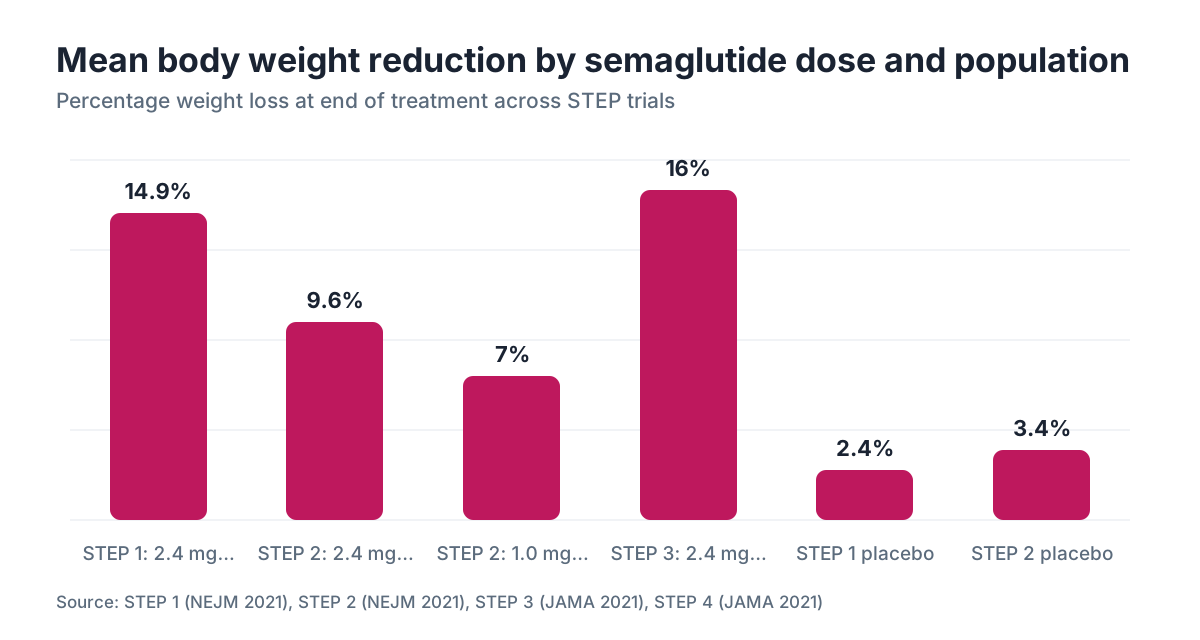
STEP 1 (no diabetes, n=1,961): 2.4 mg weekly for 68 weeks produced 14.9% mean body weight reduction versus 2.4% placebo. Published in the New England Journal of Medicine in 2021 [4].
STEP 2 (type 2 diabetes, n=1,210): 2.4 mg produced 9.6% weight reduction versus 7.0% at 1.0 mg and 3.4% placebo over 68 weeks [3]. This is the clearest proof that 2.4 mg outperforms 1.0 mg even within one population.
STEP 3 (intensive behavioral therapy added, n=611): 2.4 mg plus behavioral support produced 16.0% weight reduction [10].
STEP 4 (withdrawal design, n=803): patients who completed a 20-week run-in at 2.4 mg were randomized to continue or switch to placebo. Continuers lost another 7.9% through week 68; those switched to placebo regained 6.9% [7].
| Trial | Population | Dose | Mean Weight Reduction | |-------|-----------|------|----------------------| | STEP 1 | No diabetes | 2.4 mg | 14.9% | | STEP 2 | Type 2 diabetes | 2.4 mg | 9.6% | | STEP 2 | Type 2 diabetes | 1.0 mg | 7.0% | | STEP 3 | No diabetes + behavioral Rx | 2.4 mg | 16.0% | | STEP 4 (continued) | No diabetes | 2.4 mg | Additional 7.9% | | STEP 4 (withdrew) | No diabetes | Placebo | Regained 6.9% |
These are means. Individual variation is wide. About 35% of STEP 1 participants lost 20% or more of body weight; about 14% lost less than 5%. The dose chart and the outcomes describe a population. Your result depends on genetics, diet, activity, hormonal status, and a dozen other things.
What side effects are dose-dependent, and how do they change as you escalate?
Most GI side effects peak at the highest dose you've recently added, then fade as your body adapts. Nausea leads the pack: in STEP 1, 44% of semaglutide patients reported it at some point, but by week 20 the rate fell close to placebo [4].
Vomiting, diarrhea, and constipation follow the same curve. Constipation tends to hang around longer than nausea in some patients, because the effect on gastric motility is ongoing. At 2.4 mg, constipation showed up in about 24% of Wegovy users in trials versus 11% of placebo [1].
A rarer but important effect is gastroparesis-like delayed gastric emptying. Case reports piled up starting in 2022, and the FDA added a warning in 2023. Risk seems to rise with higher doses and longer treatment, though absolute numbers stay small [8].
Pancreatitis is a rare concern flagged in the label. Absolute risk is very low, and the SCALE and STEP trials showed no statistically significant increase versus placebo. Still, any severe, persistent abdominal pain means stopping the drug and getting checked.
Heart rate ticks up slightly on semaglutide, usually 1 to 4 beats per minute above baseline. That's a class effect of GLP-1 receptor agonists. At 2.4 mg it only matters clinically if you have a preexisting arrhythmia or take rate-controlling medications.
The Endocrine Society's 2023 obesity pharmacotherapy guidelines note that "dose escalation should be guided by tolerability, and dose reduction should be used before discontinuation when side effects occur." [9] Practical advice a lot of patients never hear clearly: you can go back down.
How does the semaglutide dose chart compare to oral semaglutide (Rybelsus)?
Rybelsus is oral semaglutide, approved for type 2 diabetes, not weight loss. Its doses and absorption work differently from the injectable forms [12].
Oral semaglutide titration:
| Weeks | Dose | Notes | |-------|------|-------| | 1 to 30 | 3 mg daily | Initiation; not for glycemic effect | | 31 to 60 | 7 mg daily | First effective dose | | 61+ | 14 mg daily | Maximum approved oral dose |
Oral semaglutide's bioavailability is only about 1% (compared with subcutaneous injection), which is why the milligram numbers look so different. The 14 mg oral dose delivers roughly the systemic exposure of 0.5 mg subcutaneous by area under the curve, though the comparison is pharmacokinetically complex.
Rybelsus has to be taken with no more than 4 ounces of plain water, at least 30 minutes before any food or other medications. That strict fasting requirement is a real compliance problem for women who take morning thyroid medications or other timing-sensitive drugs.
There is no oral equivalent of the 2.4 mg Wegovy dose for weight loss as of mid-2025. Novo Nordisk has an oral semaglutide weight-loss program running (the OASIS trials), and early data look promising, but no oral weight-loss approval exists in the US as of this writing.
What does semaglutide cost at each dose, and does insurance cover it?
Cost is where the dose chart smacks into reality, and it's complicated.
Wegovy's list price is about $1,349 per month (four auto-injector pens) as of early 2025, regardless of dose. The pen is dose-specific, so your starter pen (0.25 mg) costs the same as your maintenance pen (2.4 mg) at list price, and you use one pen per four-week supply.
Ozempic's list price is about $935 to $1,000 per month for the 1 mg pen.
With commercial insurance that covers Wegovy, copays can drop to $0 to $25 a month through manufacturer savings cards for eligible patients. But Medicare Part D does not cover Wegovy for obesity alone. Coverage is limited to a cardiac indication, following the 2024 coverage expansion driven by the SELECT trial [13].
The SELECT trial, published in 2023, showed semaglutide 2.4 mg cut major cardiovascular events by 20% in people with preexisting cardiovascular disease but without diabetes, which drove the Medicare coverage expansion for that specific indication [11].
For people paying out of pocket, compounded semaglutide has run $200 to $400 a month on some telehealth platforms, though the compounding legal picture is shifting (see the section above).
If cost is the thing keeping you from reaching and holding 2.4 mg, tell your prescriber. Staying at a lower dose indefinitely is medically reasonable if it keeps you on the drug.
Frequently asked questions
Can I skip the 0.25 mg starting dose and begin at a higher semaglutide dose?
The FDA label recommends starting at 0.25 mg regardless of your weight or urgency. Skipping it sharply raises the risk of nausea bad enough to make you quit. Some clinicians extend time at 0.25 mg rather than shorten it. There is no evidence that starting higher produces faster or better long-term weight loss.
How long does it take to reach the full 2.4 mg dose of Wegovy?
The minimum is 16 weeks (four weeks at each of the four escalating doses before 2.4 mg in week 17). Many patients take longer because a prescriber extends a step for side effects. Reaching maintenance in 20 to 24 weeks is common and appropriate. Don't rush it; the schedule exists to keep you on the medication, not to slow results.
What is the difference between Ozempic and Wegovy doses?
Both drugs are semaglutide. Ozempic is approved for type 2 diabetes at up to 2.0 mg weekly. Wegovy is approved for weight loss at up to 2.4 mg weekly. The pens differ and are not interchangeable. Ozempic at 1.0 mg produces meaningful weight loss but about half the reduction seen with Wegovy at 2.4 mg in trial comparisons.
What should I do if I miss a semaglutide dose?
For Wegovy: if you remember within five days, take it as soon as possible and resume your regular weekly schedule. If more than five days passed, skip it and continue on your regular day. Never take two doses in one week. If you miss multiple weeks, contact your prescriber before resuming, since they may restart your titration lower to avoid GI side effects.
Is the semaglutide dose different for women versus men?
No. The FDA label uses the same dose chart for all adults regardless of sex. STEP 1 and STEP 2 data showed similar percentage weight loss between women and men, with women showing slightly higher proportional responses in some subgroup analyses. Menopausal status, which affects insulin resistance and body composition, is not a dosing variable in the current label, though it matters clinically.
Can I stay at 1.7 mg semaglutide instead of going to 2.4 mg?
Yes. The Wegovy label explicitly permits maintenance at 1.7 mg for patients who cannot tolerate 2.4 mg. STEP 2 data shows meaningful weight loss at both 1.0 mg and 2.4 mg, and 1.7 mg likely lands in between. Staying at a dose you tolerate consistently beats pushing to 2.4 mg and quitting. This is not a clinical failure; it's appropriate individualization.
How does semaglutide dosing work if I have type 2 diabetes and want to lose weight?
If you have type 2 diabetes and take Ozempic, the maximum approved dose is 2.0 mg weekly, not 2.4 mg. The extra weight loss from 2.4 mg versus 2.0 mg in a diabetic population is not established by label. Some prescribers switch patients to Wegovy for the 2.4 mg dose if weight loss is the main goal. Worth a conversation with your endocrinologist or obesity medicine specialist.
Does semaglutide work less well in menopause?
No published trial has studied semaglutide efficacy stratified by menopausal status. Mechanistically, estrogen loss raises visceral fat and insulin resistance, the same targets GLP-1 drugs act on. Some clinicians report a slower initial response in postmenopausal women at lower titration doses, but nobody has quantified this in controlled data. Combining semaglutide with hormone therapy may improve body composition, though prospective evidence is limited.
Can semaglutide dose be reduced if side effects are too severe?
Yes, and it's underused. The Endocrine Society's obesity guidelines specifically recommend dose reduction before discontinuation when side effects occur. You can drop back one step (say, from 1.0 mg to 0.5 mg) and spend more time there before escalating again. Most GI side effects are transient and manageable with a slower titration rather than stopping the drug entirely.
What is the semaglutide dose for cardiovascular risk reduction?
The SELECT trial used the weight-loss dose of 2.4 mg weekly and found a 20% reduction in major adverse cardiovascular events in people with preexisting cardiovascular disease and obesity but without diabetes. Based on that, the FDA approved Wegovy in 2024 for reducing cardiovascular risk in that population. The dose matches weight loss: 2.4 mg weekly on the standard titration schedule.
How do I know if my semaglutide dose is working?
The first signal is reduced appetite, then body weight reduction over time. Most prescribers look for at least 5% body weight reduction by week 16 to 20 as an early check. If you tolerate the current dose but aren't losing weight and you're still below the maintenance ceiling, escalating to the next step is appropriate. No appetite suppression at a given dose is a sign to move up the chart, not to stop.
Is oral semaglutide (Rybelsus) dosed the same as Wegovy?
No. Rybelsus starts at 3 mg daily, then 7 mg, then 14 mg, all oral. Those milligram numbers dwarf injectable doses, but systemic absorption is only about 1%, so the drug reaching your bloodstream is lower. Rybelsus is approved only for type 2 diabetes, not weight loss. The 14 mg oral dose roughly approximates the exposure of a 0.5 mg subcutaneous injection.
Will I need to be on semaglutide forever?
The STEP 4 withdrawal trial showed stopping semaglutide after 20 weeks led to regaining about two-thirds of lost weight within 48 weeks. Most obesity medicine specialists now treat GLP-1 therapy as a chronic medication, like antihypertensives, because the disease it addresses is chronic. Whether you stay on it long-term depends on your goals, side effects, cost, and what else you have in place.
What happens to my semaglutide dose if I need surgery?
Many anesthesiologists now recommend stopping semaglutide one week before elective surgery if you're on a weekly dose, because of the risk of retained gastric contents even after standard fasting. The American Society of Anesthesiologists issued guidance on this in 2023. Your prescriber and surgical team should coordinate your dose schedule well ahead of any planned procedure.
Sources
- FDA, Wegovy (semaglutide) prescribing information
- FDA, Ozempic (semaglutide) prescribing information
- Davies M et al., STEP 2 trial, New England Journal of Medicine, 2021
- Wilding JPH et al., STEP 1 trial, New England Journal of Medicine, 2021
- Rubino DM et al., Obesity (journal), 2023 real-world adherence analysis
- Jastreboff AM et al., SURMOUNT-1 trial, New England Journal of Medicine, 2022
- Rubino D et al., STEP 4 withdrawal trial, JAMA, 2021
- FDA Drug Shortage and Compounding Notice, semaglutide, 2024
- Endocrine Society, Clinical Practice Guideline: Pharmacological Management of Obesity, 2023
- Wadden TA et al., STEP 3 trial, JAMA, 2021
- Lincoff AM et al., SELECT cardiovascular outcomes trial, New England Journal of Medicine, 2023
- FDA, Rybelsus (oral semaglutide) prescribing information
- CMS Medicare Part D coverage guidance, Wegovy cardiovascular indication, 2024