Semaglutide dosage: the complete guide for women
TL;DR: Semaglutide starts at 0.25 mg injected once weekly for four weeks, then steps up every four weeks. The top weight-loss dose (Wegovy) is 2.4 mg weekly. For type 2 diabetes (Ozempic), maintenance runs 0.5 to 2 mg weekly. Most women take 16 to 20 weeks to reach their target dose.
What is the standard semaglutide dosage schedule?
Semaglutide uses the same slow ramp-up whether you take it for weight loss or blood sugar, though the final maintenance dose differs by indication. The reason for the crawl is simple. Your gut needs time to adjust to the drug's effect on gastric emptying and appetite signaling, and rushing that reliably produces nausea, vomiting, and early dropout.
For Wegovy (semaglutide 2.4 mg, approved for chronic weight management), the FDA schedule is [1]:
| Weeks | Dose | |---|---| | Weeks 1-4 | 0.25 mg once weekly | | Weeks 5-8 | 0.5 mg once weekly | | Weeks 9-12 | 1.0 mg once weekly | | Weeks 13-16 | 1.7 mg once weekly | | Week 17 onward | 2.4 mg once weekly (maintenance) |
For Ozempic (semaglutide approved for type 2 diabetes and cardiovascular risk reduction), the escalation is similar but the ceiling is lower [2]:
| Weeks | Dose | |---|---| | Weeks 1-4 | 0.25 mg once weekly | | Weeks 5+ | 0.5 mg once weekly (minimum effective dose) | | After 4+ weeks at 0.5 mg, if more control needed | 1.0 mg once weekly | | After 4+ weeks at 1.0 mg, if further control needed | 2.0 mg once weekly (max for diabetes) |
Rybelsus is the oral form, dosed at 3 mg daily for 30 days, then 7 mg daily, with an optional increase to 14 mg daily. Oral bioavailability sits at only 0.4 to 1 percent compared to the injection, which is why the oral numbers look so much bigger [3].
Here is what the tidy table hides. You and your prescriber can park at any dose level as long as you need to. Struggling with nausea at 1.0 mg? Staying there for eight weeks instead of four is a sound clinical call. The escalation schedule is a floor, not a deadline.
How do semaglutide doses differ for weight loss versus diabetes?
Same molecule, three differences: the approved indication, the pen device, and the maximum dose. Wegovy tops out at 2.4 mg weekly. Ozempic tops out at 2.0 mg weekly.
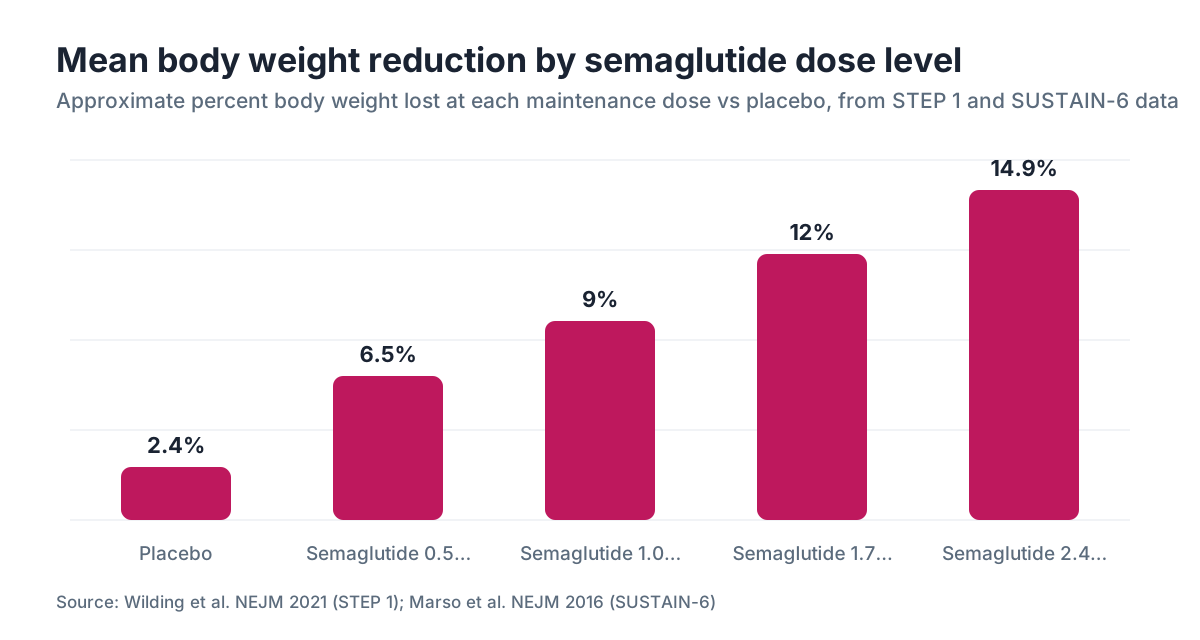
That 2.4 mg weight-loss ceiling came from the STEP 1 trial, which enrolled 1,961 adults with obesity or overweight plus a weight-related condition. At 2.4 mg over 68 weeks, participants lost a mean of 14.9 percent of body weight versus 2.4 percent on placebo [4]. That trial built the regulatory case for the higher dose.
Ozempic caps at 2.0 mg weekly for diabetes, though many prescribers use it off-label at 2.4 mg for weight when Wegovy is out of stock. The FDA cleared the 2.0 mg Ozempic dose in March 2022. Before that, 1.0 mg was the ceiling.
For women, there is a wrinkle worth knowing. Menopausal status, estrogen levels, and visceral fat all shape how the body answers a GLP-1 drug. As estrogen drops in perimenopause and after, women tend to store more visceral fat, which is exactly the depot semaglutide shrinks. Do women need higher doses to match men's results? Nobody has good data on that. The STEP trials were not powered to answer it. If you are also managing hormone replacement therapy, bring that whole picture to your prescriber.
Compounded semaglutide is its own category. FDA shortage declarations in 2023 and 2024 opened a legal lane for compounding pharmacies, but compounded versions carry no standardized dosing device and no FDA-reviewed safety data for the formulation. Read our full breakdown on compounded semaglutide before you go that way.
How does the semaglutide syringe dosage work in practice?
Wegovy and Ozempic both come as prefilled auto-injector pens, not vials with syringes. You dial the dose, press the button, hold for six seconds, and the pen delivers a measured amount under the skin. You never draw up the drug yourself. Each pen holds one or several doses depending on the pack.
The phrase "semaglutide syringe dosage" shows up mostly with compounded semaglutide and research peptides. Compounded semaglutide usually arrives as a multi-dose vial. The dispensing pharmacy should include a conversion chart translating the concentration (often 5 mg/mL or 10 mg/mL) into units on an insulin syringe. At 5 mg/mL, a 0.25 mg dose draws to 0.05 mL, which is 5 units on a 100-unit insulin syringe. Get this math wrong and the consequences are real. Confirm the numbers with the pharmacist before your first injection. Do not assume the printed chart is right.
For pens and vials alike, inject into the abdomen (at least two inches from the navel), thigh, or upper arm. Rotate sites weekly. Same day each week. Miss a dose and your next injection is more than two days out? Inject as soon as you remember. Within two days of the next dose? Skip it and resume your normal day [2].
Store the pen or vial in the fridge, 36 to 46 degrees F. Once in use, Wegovy pens hold at room temperature (up to 77 degrees F) for 28 days. Ozempic pens hold at room temperature for 56 days in use. Check the current prescribing information for your exact product, because these numbers get updated.
What is the maximum semaglutide dose, and does going higher help?
The FDA maximum for weight management is 2.4 mg weekly (Wegovy). For type 2 diabetes it is 2.0 mg weekly (Ozempic). No approved injectable dose goes above these.
Researchers tested higher. A phase 2 dose-ranging study in The Lancet found that doses above 2.4 mg added only marginal weight loss while piling on GI side effects [5]. The investigators landed on 2.4 mg as the point where efficacy is real and most people can still tolerate the drug. That ceiling is a benefit-risk calculation, not a random cutoff.
Some compounding prescribers push past 2.4 mg. No peer-reviewed human data supports that, and the FDA has not reviewed those formulations. The risk-benefit math up there is genuinely unknown.
When a woman stalls short of her goal at 2.4 mg, the real question usually is not "go higher." It is "is semaglutide the right drug, or is it time for tirzepatide?" Tirzepatide (Zepbound) hits both GLP-1 and GIP receptors and produced mean weight loss of 20.9 percent at the 15 mg dose in SURMOUNT-1, against Wegovy's 14.9 percent in STEP 1 [4][6]. If you feel stuck, the semaglutide vs tirzepatide comparison is worth a full read.
Can the dose be reduced, and when should you stay at a lower dose?
Yes, and more often than the escalation schedule suggests.
GI side effects are the usual trigger: nausea, vomiting, constipation, diarrhea. In STEP 1, 44 percent of Wegovy participants reported nausea and 24 percent reported vomiting [4]. Most of it clustered around dose increases, especially the jumps to 1.0 mg and 1.7 mg. Holding a lower dose for an extra four to eight weeks usually settles it without ditching the drug.
The second reason is maintenance versus active loss. Once you hit your target weight, some prescribers drop the maintenance dose from 2.4 mg to 1.7 mg or even 1.0 mg to cut cost and side effects. Long-term data on the minimum dose needed to hold weight loss is thin. The STEP 4 trial showed that switching to placebo after 20 weeks of semaglutide led participants to regain two-thirds of their lost weight within a year, but that was full discontinuation, not dose reduction [7].
For women managing perimenopause or asking questions about menopause, the tie between dose and hormonal swings matters. Estrogen affects gastric motility, and semaglutide's GI symptoms can hit harder in the luteal phase or during a hormonal drop. The literature barely touches this, but it is a common clinical observation worth flagging to your prescriber.
A starting dose below 0.25 mg gets used off-label for very sensitive patients or those with low body weight, mostly with compounded formulations. No FDA-reviewed data backs sub-0.25 mg starting doses.
How do semaglutide dosages compare across all the products?
Here is every approved semaglutide formulation side by side.
| Product | Route | Approved for | Dose range | Starting dose | Max dose | |---|---|---|---|---|---| | Wegovy | Subcutaneous injection | Chronic weight management (BMI ≥30, or ≥27 with comorbidity) | 0.25 mg to 2.4 mg weekly | 0.25 mg weekly | 2.4 mg weekly | | Ozempic | Subcutaneous injection | Type 2 diabetes; CV risk reduction in T2D | 0.25 mg to 2.0 mg weekly | 0.25 mg weekly | 2.0 mg weekly | | Rybelsus | Oral tablet | Type 2 diabetes | 3 mg to 14 mg daily | 3 mg daily | 14 mg daily |
All three contain semaglutide. They split on formulation, device, and approved indication. Using Ozempic for weight loss is off-label. So is using Wegovy for diabetes. Prescribers do both when access or cost forces the issue, but insurance coverage usually follows the approved indication.
The oral version earns a caution. Rybelsus 14 mg daily does not reach the blood level of 2.4 mg injectable, because oral bioavailability is so low. Rybelsus 14 mg roughly matches Ozempic 0.5 to 1.0 mg weekly for glycemic effect [3]. If you are eyeing Rybelsus for weight loss, the efficacy data is far thinner than for the injectables.
WomenRx prescribers work through injectable semaglutide for weight management. The oral form is not part of the protocol, because the weight loss evidence simply does not compare.
What dose adjustments might women in perimenopause or menopause need?
This is one of the least-studied corners of GLP-1 pharmacology, and honesty means saying that first. There is no perimenopause-specific dosing recommendation. The standard schedule applies.
What we know: estrogen has receptors in the gut, and losing estrogen during perimenopause slows gastric motility and shifts the gut microbiome. Semaglutide also slows gastric emptying. Whether those effects stack in any clinically meaningful way is not answered by any large trial. The STEP trials enrolled women across menopausal status, but the published subgroup analyses never broke dose-response out by that status.
What the physiology suggests: lower estrogen means more visceral fat, more insulin resistance, and more appetite dysregulation, especially in the evening as declining estrogen changes hypothalamic appetite signaling. Semaglutide targets all of these. Women in perimenopause and early postmenopause often see strong early responses.
Two practical takeaways. First, women also using hormone replacement therapy may find estrogen replacement partly handles the appetite and metabolic shifts, which can change the effective semaglutide dose they need. No published pharmacokinetic interaction exists between semaglutide and standard HRT (transdermal estradiol, oral progesterone), but the pharmacodynamic overlap (both improving insulin sensitivity and body composition) is clinically real.
Second, muscle loss during weight loss is a concern for postmenopausal women who already lose lean mass faster. Roughly 40 percent of the weight lost on semaglutide in the STEP trials was lean mass, not fat [4]. Resistance training and protein intake matter more, not less, when you are postmenopausal and dropping weight on a GLP-1. This also ties into bone density monitoring, since weight loss itself raises bone-loss risk in this age group.
If you are wondering when menopause starts and how that shapes your options, the short version is that GLP-1 therapy and hormone therapy can coexist, and often should.
What happens if you take too much semaglutide?
Semaglutide overdose is a real clinical event, especially with compounded vials where you do the unit conversion by hand.
Too much shows up as severe nausea, vomiting, diarrhea, hypoglycemia (a bigger risk if you also take sulfonylureas or insulin), and a racing heart. In the STEP trials, serious adverse events from semaglutide itself were rare at approved doses. Pancreatitis appeared in fewer than 0.3 percent of participants, though the background rate in people with obesity already runs higher [4].
If you inject the wrong dose from a compounded vial and catch it within a few hours, call Poison Control (1-800-222-1222 in the US). If you are vomiting and cannot keep fluids down, go to urgent care.
The FDA prescribing information for Wegovy states: "If a dose is missed and the next scheduled dose is more than 2 days away, administer Wegovy as soon as possible. If a dose is missed and the next scheduled dose is 1 to 2 days away, skip the missed dose and administer the next dose on the regularly scheduled day." [1] Doubling up to "catch up" is a common route to overdose-level side effects.
For women on compounded semaglutide, do the math check every time: write down the vial concentration, the dose in milligrams your prescriber ordered, and the matching milliliter volume and insulin syringe unit number. Verify all three with the pharmacist before you touch a needle.
How long does it take to see results at each dose level?
Most people feel appetite suppression within the first week at 0.25 mg, though the effect is modest. Meaningful weight loss usually starts in the 0.5 to 1.0 mg range, around weeks 5 to 12.
The STEP 1 trial ran 68 weeks. The weight loss curve dropped steeply through the first 28 weeks, then flattened toward a plateau around week 48 to 60 [4]. Read that pattern before you judge yourself. If you are at week 10 and down four pounds, you have not failed. You have not reached the full dose yet.
For semaglutide for weight loss, the average time to reach the 2.4 mg maintenance dose is 16 weeks, with the full weight loss effect landing between 44 and 68 weeks depending on your starting weight and how well you tolerate the titration.
For blood sugar in type 2 diabetes, meaningful A1C drops show up by 12 weeks. SUSTAIN-6 showed a 1.1 percentage point A1C reduction at 0.5 mg and 1.4 points at 1.0 mg over 104 weeks [8].
The honest answer about your specific result: nobody can predict it. Body weight, insulin sensitivity, gut microbiome, hormonal status, and sleep all bend the response. The STEP number is a population mean. Individual variation around that mean is wide.
Does semaglutide dosage need to change if you are on other medications?
Semaglutide slows gastric emptying, which can slow the absorption rate (usually not the total amount absorbed) of oral drugs taken at the same time. This matters most for oral contraceptives and levothyroxine.
For oral contraceptives, the FDA label for Rybelsus recommends switching to a non-oral contraceptive or adding a barrier method during dose escalation and for four weeks after each increase, because the pill's peak blood concentration (Cmax) can drop [3]. Injectable contraceptives and IUDs are unaffected. The Wegovy and Ozempic labels note the general gastric emptying interaction but do not give that same categorical instruction, since injectable semaglutide has a slower, steadier effect on gastric motility than a daily pill.
For levothyroxine, the guidance is to take it on an empty stomach 30 to 60 minutes before any food or other medication, which is already standard. Semaglutide does not pharmacokinetically interact with levothyroxine [2], but if your TSH is drifting after you start semaglutide, recheck the timing of your levothyroxine dose.
For women on progesterone as part of hormone therapy, specifically oral micronized progesterone (Prometrium), no interaction study with semaglutide has been published. Keep the dosing time consistent. Transdermal and vaginal progesterone bypass the gut entirely, so no interaction is expected.
Metformin is often paired with Ozempic. Neither drug needs a dose change. But metformin's GI side effects stack with semaglutide's, so starting both at once is generally avoided.
What does the research actually say about semaglutide dosage and safety in women?
The STEP program (STEP 1 through STEP 5) and the SUSTAIN program are the core evidence base. Across STEP 1 and STEP 2, the pooled population was about 73 percent female [4]. That is better female representation than most drug trials, so the headline efficacy and safety numbers apply reasonably well to women.
The Endocrine Society's 2023 clinical practice guideline on obesity pharmacotherapy lists semaglutide among its recommended agents. The guideline states that "long-term pharmacotherapy with proven efficacy and safety should be offered as an adjunct to lifestyle therapy," and names semaglutide 2.4 mg weekly as meeting that standard [9].
Safety signals worth knowing. The FDA label carries a boxed warning for thyroid C-cell tumors, based on rodent data. No human case has been definitively pinned on semaglutide, but the drug is contraindicated for anyone with a personal or family history of medullary thyroid carcinoma or Multiple Endocrine Neoplasia syndrome type 2 [1]. Pancreatitis is a labelled risk; the absolute rate in trials was low, and people with a pancreatitis history were excluded from the STEP trials.
For women, there are emerging signals about semaglutide and bone density through weight-loss-related bone resorption. A 2023 analysis in the Journal of Bone and Mineral Research noted that GLP-1 agonists may have a modest direct bone-protective effect that partly offsets weight-loss bone loss, but this has not been studied specifically in postmenopausal women on concurrent HRT [10]. A baseline bone density test before starting is a reasonable ask if you are postmenopausal.
For the drug beyond dosing, the full semaglutide overview covers mechanism, history, and the wider evidence base.
How do you get semaglutide prescribed and at what dose?
In the United States, semaglutide needs a prescription from a licensed prescriber. The Wegovy weight-loss indication requires a BMI of 30 or above, or a BMI of 27 or above plus at least one weight-related condition such as hypertension, type 2 diabetes, or dyslipidemia [1].
Telehealth has made access much easier. In most states you can finish an intake, share labs, and get a prescription without an in-person visit. WomenRx prescribers set semaglutide inside a broader hormonal and metabolic picture, which matters because a 48-year-old in perimenopause with insulin resistance and new weight gain is a different case than a 35-year-old with straightforward obesity.
Cost swings widely. Wegovy without insurance ran about $1,350 per month in 2024 at list price. Ozempic's list price was similar. Manufacturer savings programs can cut out-of-pocket costs a lot for commercially insured patients. Compounded semaglutide from a 503A or 503B pharmacy ran $150 to $400 per month during the shortage, but those compounding permissions were tied to an active FDA shortage declaration, which has faced legal challenge.
On insurance, a growing number of commercial plans now cover Wegovy. Medicare Part D excluded weight-loss drugs specifically until the 2025 policy changes under Inflation Reduction Act provisions. Coverage for the cardiac indication (semaglutide 2.4 mg was approved for cardiovascular risk reduction in high-risk overweight and obese patients in March 2024) has opened new coverage paths [11].
Frequently asked questions
What is the starting dose of semaglutide for weight loss?
The starting dose is 0.25 mg injected once weekly for the first four weeks. This dose is not meant to produce weight loss; it is a tolerance-building step. The first dose with real appetite-suppressing effect is 0.5 mg, reached at week five. Most people reach the 2.4 mg Wegovy maintenance dose at week 17, or later if they need slower titration.
Can you stay at 0.5 mg semaglutide and still lose weight?
Yes, though weight loss at 0.5 mg is meaningfully less than at 2.4 mg. In dose-ranging studies, 0.5 mg produced roughly 6 to 8 percent body weight reduction over 68 weeks, versus about 15 percent at 2.4 mg. If GI side effects are severe at higher doses, staying at 0.5 mg is a legitimate choice. Some weight loss beats stopping the drug entirely.
How long does it take for semaglutide to work at each dose?
Appetite suppression often starts within the first week at 0.25 mg, but noticeable scale change usually appears at weeks 8 to 12 when you reach 0.5 to 1.0 mg. Peak weight loss at the 2.4 mg maintenance dose takes 44 to 68 weeks from the start, based on STEP 1 data. Do not judge the drug by your first six weeks.
What is the difference between 0.5 mg and 1 mg semaglutide?
In the SUSTAIN-7 trial comparing 0.5 mg versus 1.0 mg Ozempic in type 2 diabetes, the 1.0 mg dose produced greater A1C reduction (1.8 vs 1.4 percentage points) and greater body weight reduction (6.5 kg vs 4.6 kg) over 40 weeks. For weight management, 1.0 mg is a real step up in efficacy. Most people notice a difference in appetite between the two levels.
Is semaglutide 2.4 mg safe for long-term use?
The longest published clinical data runs to 104 weeks (the STEP 5 trial), showing sustained weight loss and acceptable safety at 2.4 mg. No new long-term safety signals emerged beyond those seen at 68 weeks. The FDA label sets no cap on duration of use. The Endocrine Society 2023 guideline classifies semaglutide as appropriate for long-term maintenance therapy.
Can you skip a dose of semaglutide?
Yes. If you miss a dose and your next scheduled injection is more than two days away, inject as soon as you remember. If it is within two days of your next dose, skip the missed dose entirely and resume on your regular day. Never double dose. A single missed injection has minimal impact; consistent weekly dosing matters more for stable blood levels over time.
What is the semaglutide dose for type 2 diabetes compared to weight loss?
For type 2 diabetes, the maximum approved dose of Ozempic is 2.0 mg weekly. For chronic weight management, Wegovy goes to 2.4 mg weekly. Both start at 0.25 mg for four weeks. The higher weight-loss ceiling exists because the weight trials showed a dose-response up to 2.4 mg; the diabetes indication was studied before that dose was characterized.
How do you measure semaglutide dosage with a syringe?
Branded Wegovy and Ozempic pens are prefilled and need no syringe measurement. Compounded semaglutide vials do. Convert your prescribed milligram dose to milliliters using the vial's stated concentration (commonly 5 mg/mL), then convert to insulin syringe units (1 mL = 100 units on a standard U-100 syringe). Confirm the calculation with your dispensing pharmacist before injecting. A dosing error with a compounded vial is a real safety risk.
Does semaglutide dose need to be higher for women than men?
No sex-specific dosing adjustment appears in the FDA label. The STEP trials enrolled mostly women and used the same 0.25 to 2.4 mg schedule for both sexes. Women in those trials achieved similar or slightly greater mean weight loss than men, likely due to baseline metabolic differences rather than any pharmacokinetic sex effect. Your prescriber uses the same schedule regardless of sex.
What semaglutide dose is best for women in perimenopause?
There is no perimenopause-specific dosing recommendation in the literature. The standard escalation applies. That said, perimenopausal women may get worse GI side effects from estrogen-related changes in gut motility, so a slower-than-standard titration is reasonable. Hormonal context matters when reading your response; discussing concurrent HRT with your prescriber can shape how aggressively to titrate.
Can you reduce semaglutide dose for maintenance after reaching goal weight?
Yes, many prescribers drop to 1.7 mg or 1.0 mg once the goal is met. No published randomized trial specifically tests maintenance on a reduced dose versus full dose, so the evidence here is observational. The STEP 4 trial showed full discontinuation caused significant weight regain; dose reduction rather than stopping is the more conservative and likely safer approach.
Is compounded semaglutide the same dose as brand-name Wegovy?
The same milligram amount gets used, but the formulation, excipients, and device differ. Compounded vials require manual syringe measurement, which raises the chance of dosing error. There is no FDA review of a compounded product's potency or sterility. During active FDA shortage declarations, compounding from licensed 503A and 503B pharmacies is legal; the status of that legal pathway has been contested and changes over time.
What happens when you reach the 2.4 mg semaglutide dose and stop losing weight?
A plateau at 2.4 mg after 44 to 52 weeks is expected; the STEP 1 curve flattens near week 48. If you have not reached your goal, the options are optimizing diet and resistance training, adding or adjusting concurrent hormone therapy if applicable, or switching to tirzepatide, which showed greater mean weight loss in head-to-head modeling. Going beyond 2.4 mg is neither approved nor well-evidenced.
Does semaglutide interact with estrogen or progesterone doses?
No pharmacokinetic interaction has been published between injectable semaglutide and transdermal estradiol or oral micronized progesterone. Oral semaglutide (Rybelsus) can reduce peak absorption of oral drugs due to slowed gastric emptying, which is why oral contraceptives need extra attention during titration. Transdermal hormone preparations bypass this issue entirely.
Sources
- FDA, Wegovy (semaglutide) prescribing information
- FDA, Ozempic (semaglutide) prescribing information
- FDA, Rybelsus (oral semaglutide) prescribing information
- Wilding JPH et al., STEP 1 Trial, New England Journal of Medicine, 2021
- O'Neil PM et al., Dose-ranging study, The Lancet, 2018
- Jastreboff AM et al., SURMOUNT-1 Trial, New England Journal of Medicine, 2022
- Rubino DM et al., STEP 4 Trial, JAMA, 2021
- Marso SP et al., SUSTAIN-6 Trial, New England Journal of Medicine, 2016
- Endocrine Society, Clinical Practice Guideline on Pharmacological Management of Obesity, 2023
- Lundgren JR et al., Journal of Bone and Mineral Research, 2023
- FDA, semaglutide 2.4 mg cardiovascular risk reduction approval, March 2024