Semaglutide constipation: why it happens and how to fix it
TL;DR: Constipation affects roughly 11 to 24% of people on semaglutide, making it one of the drug's most common GI side effects. It happens because GLP-1 receptors slow gut motility, and it tends to peak during dose escalation. Most cases improve within a few weeks using targeted fiber, hydration, osmotic laxatives, and dose timing strategies.
How common is constipation on semaglutide?
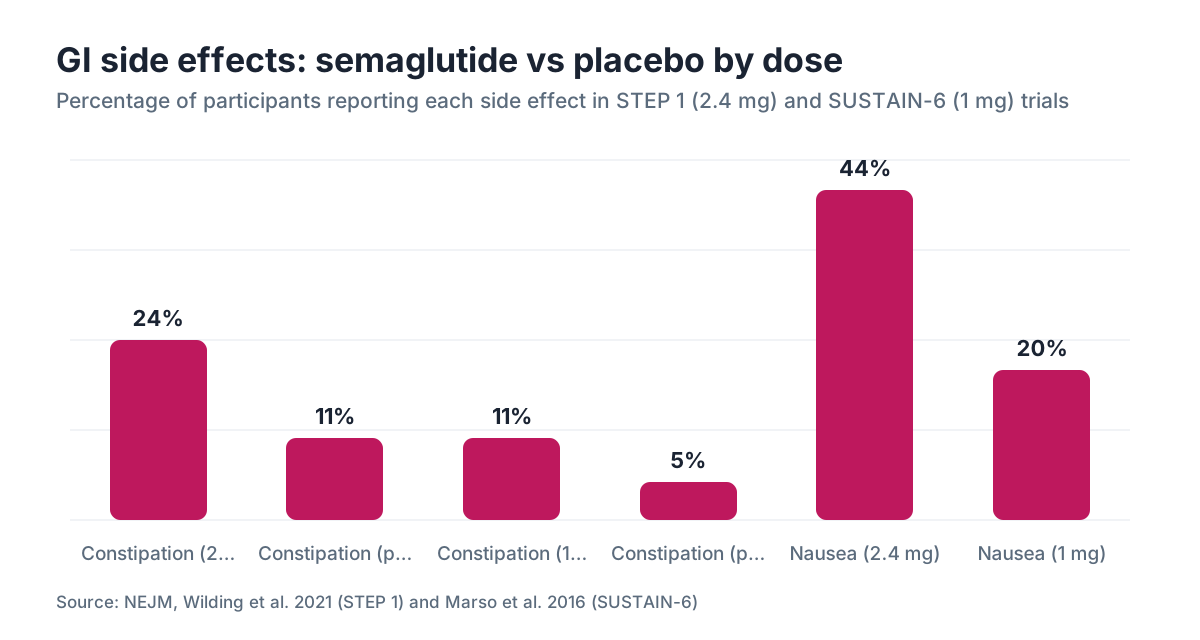
Pretty common. In the STEP 1 trial, the phase 3 study of 2.4 mg weekly semaglutide (Wegovy) in adults with obesity, constipation was reported in 24.2% of participants on semaglutide versus 11.1% on placebo [1]. That gap is real. Roughly one in four people starting Wegovy will deal with constipation at some point during treatment.
The numbers run lower for the 1 mg and 2 mg doses used for type 2 diabetes (Ozempic). In the SUSTAIN trial program, constipation rates hovered around 5 to 11% depending on the dose and comparison arm [2]. Higher doses, higher risk. That pattern holds consistently across trials.
What's less often said: constipation clusters during dose escalation. The jump from 0.25 mg to 0.5 mg, and again from 1 mg to 2 mg or 2.4 mg, is when most people notice it most. Once the body settles on a stable dose, symptoms often ease on their own. But 'often' is not 'always', and for some women the constipation persists and becomes genuinely disruptive.
Why does semaglutide slow down your bowels?
Semaglutide is a GLP-1 receptor agonist. GLP-1 (glucagon-like peptide-1) receptors sit throughout the gut, more than the pancreas. When you activate them pharmacologically at the doses used for weight loss, several things happen at once.
First, gastric emptying slows dramatically. Food stays in your stomach longer, which is partly how semaglutide reduces appetite. But that slowdown doesn't stop at the stomach. The entire gut transit time lengthens. One study measuring whole-gut transit found semaglutide roughly doubled transit time compared to placebo [3]. Slower transit means more water gets reabsorbed from stool in the colon, producing the hard, infrequent bowel movements that define constipation.
Second, GLP-1 receptors in the enteric nervous system (the gut's own nerve network) change how forcefully the colon contracts. High circulating GLP-1 activity dampens those contractions. Less propulsive force, less frequent and less complete evacuation.
Third, reduced food intake matters more than most people realize. When you eat dramatically less on semaglutide, there's simply less bulk moving through your colon. Less volume in means fewer and smaller bowel movements out. This is most pronounced in the first 8 to 12 weeks when appetite suppression tends to be strongest.
Hormone context is relevant for women specifically. Progesterone already slows gut motility, which is why constipation is common in the luteal phase and in pregnancy [4]. Women in perimenopause or on progesterone-based hormone therapy who start semaglutide may be starting from a gut that already runs slow. See more on progesterone and its systemic effects.
What does semaglutide constipation actually feel like?
The classic picture is fewer bowel movements, harder stools, and a sense of incomplete emptying. Many women describe going from a daily habit to every 3 to 4 days. Some describe straining that's new for them, or stools that are pellet-like and require real effort.
A smaller subset develops what feels like abdominal pressure or bloating that doesn't resolve with a bowel movement. This can be mistaken for nausea, a separate (and more common) semaglutide side effect. The two can coexist and compound each other.
Rarely, constipation on semaglutide can become severe enough to cause fecal impaction or, in extreme cases, contribute to bowel obstruction. The FDA label for Wegovy lists ileus (intestinal blockage) as a serious adverse event to watch for [5]. This is uncommon, but it's real, and it's why persistent constipation shouldn't be managed passively forever.
If you have no bowel movement for more than 5 to 7 days, significant abdominal pain, vomiting, or a distended abdomen, those are reasons to contact a provider that day, not to try more fiber.
How long does constipation last on semaglutide?
For most people: weeks, not months. The gut adapts. In clinical trial data, GI side effects including constipation peaked during the dose escalation phase and then declined as participants reached and stabilized on their maintenance dose [1]. The escalation schedule for Wegovy takes about 16 to 20 weeks to reach the 2.4 mg maintenance dose, and that entire window is the highest-risk period.
That said, a meaningful minority have persistent constipation throughout treatment. Nobody has great data on exactly what percentage that is, because most trials don't track individual GI symptom trajectories in detail. The closest signal in the STEP 1 data is that constipation remained one of the top-reported adverse events throughout the 68-week trial [1].
Practically: if constipation hasn't improved much within 4 to 6 weeks of reaching a stable dose, that's a sign to address it actively rather than wait it out.
What actually helps? Evidence-based fixes for semaglutide constipation
Most cases respond well to a few targeted changes. Here's what has real evidence behind it, versus what sounds good but probably doesn't move the needle much.
Fiber, but the right kind. Soluble fiber (psyllium husk, oat bran, ground flaxseed) absorbs water and softens stool without dramatically increasing bulk. This matters because adding large amounts of insoluble fiber (bran, raw vegetables) when gut transit is already very slow can actually worsen bloating and discomfort. Aim for 25 to 30 grams of total fiber daily, with a meaningful portion from soluble sources [6]. One randomized trial found psyllium supplementation reduced whole-gut transit time and improved stool consistency in people with slow-transit constipation. Start low (1 teaspoon per day) and increase gradually over 2 to 3 weeks.
Hydration, more than you think you need. Fiber without water makes things worse. Because semaglutide reduces thirst as well as appetite in some users, active tracking (at least 64 ounces of water daily, more if you exercise or live in a hot climate) is genuinely useful here.
Osmotic laxatives. Polyethylene glycol (MiraLax, generic PEG 3350) is the first-line pick from most gastroenterologists for medication-induced constipation. It draws water into the stool osmotically and is not absorbed systemically. There's no physical dependency risk with regular osmotic laxative use, unlike stimulant laxatives. A dose every 2 to 3 days is reasonable during high-risk escalation periods.
Magnesium citrate or magnesium oxide at lower doses (200 to 400 mg at bedtime) also works osmotically and has the bonus of supporting sleep. Data on magnesium specifically for GLP-1-induced constipation don't exist, but its mechanism fits well and it's widely used.
Stimulant laxatives short-term. Senna or bisacodyl work faster and more forcefully. Fine for occasional use. The concern about long-term dependency has been somewhat overstated in recent gastroenterology literature, but using stimulants as a daily habit for months is still not ideal. Reserve them for rescue situations.
Movement matters. Physical activity increases gut motility. This isn't a platitude. A systematic review of exercise interventions for constipation found that moderate aerobic activity meaningfully improved bowel movement frequency [10]. Even 20 to 30 minutes of walking most days makes a difference, and it supports the broader goals of a semaglutide for weight loss regimen.
Dose timing and meal composition. Some clinicians note anecdotally that injecting semaglutide on a day when you have more fiber and fluid planned helps. There's no RCT behind this, but it makes mechanistic sense. Higher-fat, lower-fiber meals slow transit further on top of the drug's effect.
Should you lower your semaglutide dose for constipation?
Sometimes, yes. The escalation schedule exists partly to reduce GI side effects. If constipation (or any GI symptom) during an escalation step is severe or persistent, most prescribing guidelines and the FDA label itself support staying at the current dose longer before escalating, or returning to the prior dose temporarily [5].
This isn't failing treatment. Semaglutide's weight loss effect is dose-dependent but not all-or-nothing. A patient who tolerates 1 mg well and struggles with 2 mg is likely to still get meaningful benefit at 1 mg, just somewhat less than at the full dose. Forcing escalation through intolerable side effects leads to discontinuation, which produces zero benefit.
Women managing semaglutide through a telehealth provider should describe GI symptoms clearly and specifically: frequency, severity, duration, and what you've tried. Dose decisions should be collaborative. At WomenRx, GLP-1 consultations include this exact conversation as part of the prescribing process.
If severe constipation persists at even the lowest doses, that's a reason to consider whether a different GLP-1 option (like tirzepatide) might be better tolerated. See the comparison at semaglutide vs tirzepatide. Tirzepatide also slows gut transit but through a slightly different receptor profile; individual response varies.
Are women more vulnerable to semaglutide constipation than men?
There's biological reason to think so. Women have longer whole-gut transit times than men at baseline. One large population study found mean whole-gut transit in healthy women is roughly 47 hours versus 33 hours in men [3]. That's a real starting disadvantage when you add a drug that slows transit further.
Hormone fluctuation compounds this. Constipation is well-documented in the luteal phase of the menstrual cycle when progesterone peaks. Women in perimenopause often experience worsening GI motility as hormone levels become erratic. Women on natural micronized progesterone as part of hormone replacement therapy may have even slower baseline transit.
The STEP trials enrolled a majority-female population (about 74% in STEP 1), so the constipation rates cited earlier do largely reflect women's experience [1]. But the trials don't break out results by menopausal status or hormone therapy use, which is a real gap in the data.
Practically: women who already notice constipation in their luteal phase, or who take oral or vaginal progesterone, should expect a higher constipation risk and start fiber and hydration strategies from day one of semaglutide, not after the problem appears.
Can constipation be a sign of something more serious?
Usually it's just the drug doing what GLP-1 agonists do. But there are warning signs that warrant prompt medical evaluation.
Contact a provider if you experience no bowel movement for more than 7 days, severe abdominal cramping or pain (more than discomfort), vomiting, fever, blood in the stool, or a visibly distended abdomen. These could point to ileus, bowel obstruction, or an unrelated GI issue that's being masked. The FDA label for semaglutide specifically warns about the risk of ileus and recommends patients report severe abdominal symptoms promptly [5].
Pancreatitis is a separate, rarer serious adverse event tied to GLP-1 agonists. It presents with severe upper abdominal pain radiating to the back, often with nausea and vomiting, and has a different profile from constipation. Both are reasons to take abdominal pain on semaglutide seriously rather than assume it's routine GI adjustment.
Women with a history of diverticulitis, irritable bowel syndrome with constipation predominance, or prior bowel surgeries should discuss their GI history with their prescriber before starting semaglutide.
What about compounded semaglutide, does it cause the same constipation?
Mechanistically, yes. The constipation from semaglutide comes from its GLP-1 receptor agonism, which is the same whether you're injecting branded Wegovy, Ozempic, or a compounded semaglutide preparation. The active peptide is the same.
What varies with compounded versions is dose precision and formulation consistency. If a compound is dosed differently, or if the escalation schedule strays from the FDA-approved protocol, the GI side effect profile could differ in timing or severity. There's no head-to-head trial comparing constipation rates between branded and compounded semaglutide because such a trial hasn't been done.
The FDA has raised concerns about the quality and consistency of compounded semaglutide preparations from certain 503A and 503B facilities [9]. This matters for side effect prediction: if the bioavailability of a compounded product differs from the labeled product, the gut effects could be more or less pronounced than expected. Anyone using compounded semaglutide should monitor GI symptoms closely and report them to their provider.
Practical daily habits that reduce constipation risk from day one
Starting semaglutide with gut-protective habits already in place is much easier than trying to reverse established constipation. Here's what to do before the first injection.
Build up to 25 to 30 grams of fiber per day in the 2 weeks before starting. Introduce psyllium or ground flaxseed as a daily supplement. Get your water intake to a consistent 64 to 80 ounces daily. Add a 20 to 30 minute walk to your daily routine if you don't have one.
Once you start: track bowel movement frequency. Once every 3 days is the outer edge of 'normal'. If you cross that, intervene with an osmotic agent rather than waiting to see what happens. Passive waiting usually means the stool gets harder and more difficult to pass, starting a worse cycle.
Avoid the most constipating foods: highly processed white-flour foods, large amounts of dairy, red meat without a fiber counterbalance. This overlaps naturally with the dietary pattern that supports weight loss on semaglutide anyway.
One underused strategy: a warm beverage first thing in the morning. Warm water, coffee, or herbal tea stimulates the gastrocolic reflex. On a drug that's already dampening propulsive contractions, any natural stimulation of that reflex is worth using.
For women managing both menopause and GLP-1 therapy, the mix of gut symptoms, hormonal changes, and medication effects can feel complicated. Menopause affects GI motility on its own, so the combined picture warrants a provider who understands both.
Comparing GI side effects across semaglutide doses
The table below draws from the STEP 1 trial (Wegovy 2.4 mg) and SUSTAIN-6 trial (Ozempic 1 mg) to show how constipation and other GI side effects scale with dose and compare to placebo [1][2].
| Side effect | Wegovy 2.4 mg (STEP 1) | Placebo (STEP 1) | Ozempic 1 mg (SUSTAIN-6) | Placebo (SUSTAIN-6) | |---|---|---|---|---| | Constipation | 24.2% | 11.1% | ~11% | ~5% | | Nausea | 44.2% | 16.1% | 20.0% | 8.1% | | Diarrhea | 29.7% | 15.9% | 21.0% | 13.3% | | Vomiting | 24.5% | 6.8% | 8.5% | 3.1% | | Abdominal pain | 20.0% | 13.1% | ~12% | ~8% |
Constipation stands out because it's the one GI side effect that gets worse at higher doses while nausea and vomiting often improve with time and dose stability. The nausea-to-constipation shift is a pattern many clinicians observe: early in treatment nausea dominates, and later constipation takes center stage as the main GI complaint.
Frequently asked questions
How long does constipation from semaglutide last?
For most people, constipation peaks during the dose escalation phase, roughly the first 4 to 20 weeks depending on how quickly doses increase. After reaching a stable maintenance dose, symptoms usually improve over several weeks. A minority of users have persistent constipation throughout treatment. If constipation hasn't meaningfully improved 4 to 6 weeks after reaching your maintenance dose, talk to your prescriber about adding osmotic laxatives or adjusting your dose.
What is the best laxative to take with semaglutide?
Osmotic laxatives are the first choice. Polyethylene glycol (MiraLax or generic PEG 3350) is not absorbed systemically, has no dependency risk, and works by drawing water into the stool. Magnesium citrate or magnesium oxide at 200 to 400 mg daily is a reasonable alternative. Stimulant laxatives (senna, bisacodyl) work faster but are better reserved for occasional rescue use rather than daily management.
Can I take Miralax every day while on semaglutide?
Yes, daily or every-other-day osmotic laxative use is generally considered safe during semaglutide treatment. Polyethylene glycol is not absorbed, does not irritate the bowel, and does not cause the electrolyte losses that stimulant laxatives can. Many gastroenterologists consider PEG 3350 appropriate for ongoing use in medication-induced constipation. Staying well hydrated when using it is important.
Should I stop semaglutide if I can't have a bowel movement?
Not necessarily, but you should contact your provider. If you've gone 7 or more days without a bowel movement, have significant abdominal pain, vomiting, or a distended abdomen, seek care promptly. These could indicate a serious GI event. For milder constipation (3 to 5 days, no pain), a dose pause or step-down combined with active laxative use is usually the right move, not full discontinuation.
Does semaglutide constipation get better over time?
Usually yes. Clinical trial data from STEP 1 show GI adverse events including constipation declining after the escalation phase ends. The body adapts to altered gut motility over weeks to months. However, some women have persistent constipation throughout treatment, particularly at higher doses or when baseline gut transit is already slow. Active management rather than passive waiting gives the best chance of improvement.
How much water should I drink to prevent constipation on semaglutide?
At least 64 ounces (8 cups) of water daily is a reasonable minimum. If you're exercising or in a warm climate, aim for 80 to 96 ounces. Semaglutide reduces appetite and can blunt thirst, so active tracking rather than drinking to thirst is useful. Fiber supplements without adequate hydration make constipation worse, so water intake becomes especially important when adding psyllium or other fiber to your routine.
Is constipation worse on Wegovy than Ozempic?
Yes, at standard doses. Wegovy's maximum dose of 2.4 mg weekly produces constipation in about 24% of users per STEP 1 trial data. Ozempic at 1 mg causes constipation in roughly 11% of users in SUSTAIN trial data. Both drugs contain semaglutide, so the difference is primarily dose-dependent. If constipation is severe on Wegovy's higher doses, a conversation about stepping back to a lower dose is reasonable.
Can eating more fiber make constipation worse on semaglutide?
It can, if you add insoluble fiber too quickly or without enough hydration. When gut transit is very slow, large amounts of insoluble fiber (wheat bran, raw vegetables) can accumulate and worsen bloating and discomfort. Soluble fiber like psyllium husk or oat bran is a gentler choice. Increase fiber gradually over 2 to 3 weeks and always pair it with increased water intake.
Does compounded semaglutide cause as much constipation as branded versions?
Mechanistically yes, because the constipation comes from GLP-1 receptor agonism, which is the same regardless of formulation. Compounded preparations haven't been studied head-to-head with branded semaglutide for GI side effects. Differences in dose accuracy or bioavailability in some compounded products could affect symptom severity, so close monitoring of GI symptoms is especially important when using compounded versions.
Do women in menopause have more constipation on semaglutide?
There's no trial that directly tests this, but biology suggests yes. Women already have longer baseline gut transit times than men, and the hormonal changes of perimenopause and menopause can further slow motility. Women taking oral progesterone as part of hormone therapy also have additional motility-slowing effects. Starting semaglutide with proactive fiber, hydration, and osmotic laxative strategies makes sense for this group.
When should constipation on semaglutide be treated as an emergency?
Seek same-day care if you have no bowel movement for more than 7 days, severe abdominal pain, vomiting, fever, blood in the stool, or a visibly bloated abdomen. These symptoms could signal ileus or bowel obstruction, both listed as serious adverse events in the semaglutide FDA label. Mild constipation (infrequent but passing stool, no pain) is manageable at home, but the above symptoms are not.
Is tirzepatide better than semaglutide for people who get constipated?
The data don't cleanly answer this. Tirzepatide (Mounjaro, Zepbound) also slows gut transit and causes constipation in roughly 11 to 17% of users in SURMOUNT trial data. Individual GI tolerability varies between the two drugs and can only really be determined by trial. Some people who struggle with one GLP-1 receptor agonist tolerate another better. A prescriber familiar with both is the right person to guide that decision.
What foods should I avoid while taking semaglutide to prevent constipation?
Limit foods that slow transit further: white bread, white rice, processed snacks, large amounts of cheese or red meat eaten without fiber-rich foods alongside them. These are naturally lower-fiber choices that compound semaglutide's motility-slowing effects. Focusing meals on vegetables, legumes, and whole grains serves both constipation prevention and the weight management goals of semaglutide treatment, so the dietary adjustments overlap cleanly.
Sources
- New England Journal of Medicine, Wilding et al. 2021, STEP 1 trial (semaglutide 2.4 mg for obesity)
- New England Journal of Medicine, Marso et al. 2016, SUSTAIN-6 trial (semaglutide 1 mg cardiovascular outcomes)
- American Journal of Physiology, Gastrointestinal and Liver Physiology, Camilleri et al., GLP-1 effects on gut transit
- American Journal of Gastroenterology, Wald et al., sex differences in gut transit and constipation
- FDA, Wegovy (semaglutide) prescribing information, full label
- American Journal of Gastroenterology, Bharucha et al. 2013, ACG clinical guideline on chronic constipation
- FDA, Ozempic (semaglutide 1 mg) prescribing information, full label
- New England Journal of Medicine, Jastreboff et al. 2022, SURMOUNT-1 trial (tirzepatide for obesity)
- FDA, MedWatch Safety Alert and statements on compounded semaglutide quality concerns
- Scandinavian Journal of Gastroenterology, Christoffersen et al., systematic review of exercise and constipation