Semaglutide brand names: Ozempic, Wegovy, and Rybelsus explained
TL;DR: Semaglutide is sold under three brand names in the United States: Ozempic (injectable, approved for type 2 diabetes), Wegovy (injectable, approved for chronic weight management), and Rybelsus (oral tablet, approved for type 2 diabetes). All three contain the same active molecule. The brand you get depends entirely on what your doctor is treating and how your insurance is structured.
What are the brand names for semaglutide?
Semaglutide has three FDA-approved brand names in the United States: Ozempic, Wegovy, and Rybelsus. All three are made by Novo Nordisk and contain the same GLP-1 receptor agonist molecule. The differences come down to indication, dose, and delivery method, not the underlying drug.
Ozempic is a once-weekly subcutaneous injection approved in December 2017 for blood sugar control in adults with type 2 diabetes, and later for reducing the risk of major cardiovascular events in adults with type 2 diabetes and known heart disease. [1]
Wegovy is also a once-weekly subcutaneous injection, but it was approved in June 2021 specifically for chronic weight management in adults with a BMI of 30 or higher, or 27 or higher with at least one weight-related condition. In March 2024, the FDA expanded Wegovy's label to include reducing the risk of cardiovascular death, heart attack, and stroke in adults with obesity or overweight who have cardiovascular disease, based on the SELECT trial. [2]
Rybelsus is an oral tablet taken once daily, approved in September 2019 for type 2 diabetes. It is the first oral GLP-1 receptor agonist approved in the United States. [3]
Here is the clearest way to think about it. The molecule is semaglutide. The brands are its commercial packaging, each with a different dose and a different FDA-cleared purpose.
What is the difference between Ozempic and Wegovy?
The active ingredient is identical. The difference is dose and official indication.
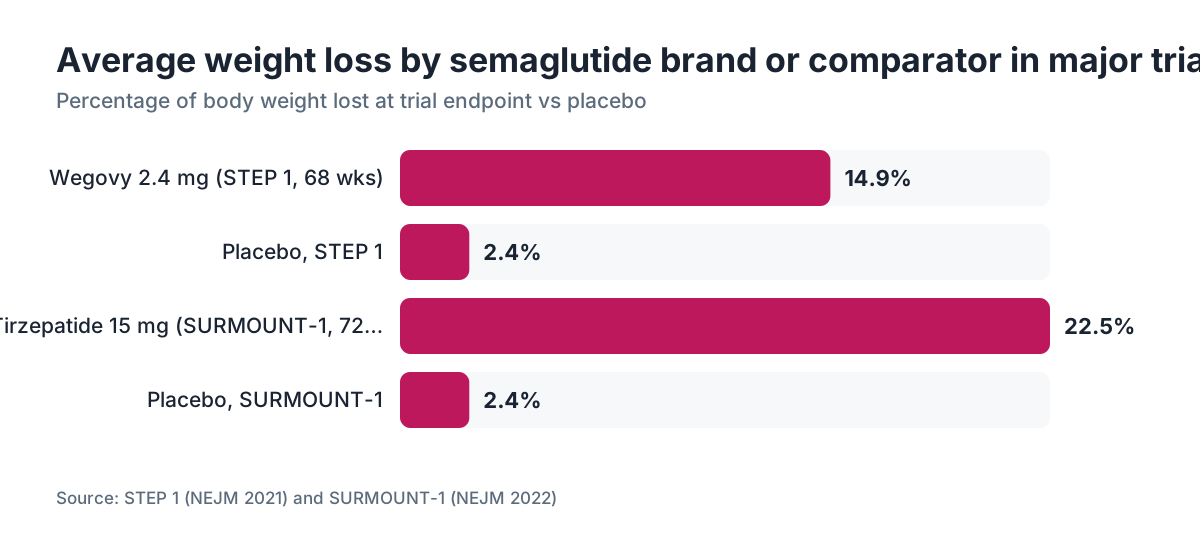
Ozempic comes in pens that deliver 0.5 mg, 1 mg, or 2 mg per week. Wegovy's maintenance dose reaches 2.4 mg per week, the highest approved semaglutide dose for any indication. That higher dose is what drove the weight-loss results in the STEP trials, where participants lost an average of about 14.9% of body weight over 68 weeks compared to 2.4% for placebo. [4]
Because Ozempic is approved for diabetes and Wegovy for weight management, insurers treat them differently. Many commercial plans cover Ozempic for type 2 diabetes but specifically exclude Wegovy or any drug prescribed primarily for weight loss. Medicare Part D, under current law, does not cover weight-loss drugs, so Wegovy is almost never covered for Medicare patients, though that policy is shifting. [5]
Some prescribers write Ozempic off-label for weight loss. That is legal, but it often means higher out-of-pocket costs, and the dose ceiling is lower than the Wegovy regimen. If weight loss is the goal and you do not have a diabetes diagnosis, Wegovy is the on-label choice.
One practical point. Wegovy and Ozempic use different auto-injector pens and different needle gauges, so they are not interchangeable even at the same milligram dose. Do not substitute one pen for the other without talking to your prescriber.
How is Rybelsus different from the injectable semaglutide brands?
Rybelsus is a once-daily oral tablet approved only for type 2 diabetes. The approved doses are 3 mg, 7 mg, and 14 mg, taken on an empty stomach with no more than 4 ounces of plain water, at least 30 minutes before any food, drink, or other medications. [3] That strict absorption window exists because semaglutide is a peptide and stomach acid degrades it. Rybelsus uses a permeation enhancer (sodium N-(8-[2-hydroxybenzoyl] amino) caprylate, or SNAC) to get the drug across the gastric mucosa.
The oral bioavailability is much lower than the injection, which is why the milligram doses look so different. A 14 mg Rybelsus tablet delivers systemic exposure roughly comparable to a 0.5 mg Ozempic injection, not to a 14 mg injection (which does not exist). [3]
Rybelsus has not been studied or approved for weight loss. The STEP and SELECT results that drove the weight-loss and cardiovascular headlines all used injectable semaglutide. If someone is prescribed Rybelsus and hoping for significant weight loss, they should ask their prescriber directly whether the injectable formulation fits their goals better.
For women who hate injections, Rybelsus sounds appealing. But the clinical weight-loss data simply does not transfer. The oral pill is a diabetes drug. Full stop.
Which semaglutide brand is approved for weight loss?
Wegovy is the only semaglutide brand with an FDA approval specifically for chronic weight management. [2]
The approval is for adults with a BMI of 30 or higher (obesity), or a BMI of 27 or higher (overweight) with at least one weight-related comorbidity such as hypertension, type 2 diabetes, or high cholesterol. In December 2022, the FDA also approved Wegovy for adolescents aged 12 and older with obesity. [6]
Ozempic is prescribed off-label for weight loss in adults who do not have diabetes. This is common, but it comes with the coverage and dose limits described above. If your prescriber writes Ozempic and the goal is weight management, ask directly: are we using this off-label, and can you help me manage the cost?
Rybelsus has no weight-loss approval and no major completed trials supporting it for that purpose in a population comparable to the STEP program.
For women in perimenopause or menopause, where hormonal shifts can make weight management much harder, the choice of brand is worth discussing carefully alongside any hormone replacement therapy plan. The two are not mutually exclusive, and some clinicians prescribe them together. Learn more about the specifics of semaglutide for weight loss and how it compares to other options.
What are the approved doses for each semaglutide brand?
Doses differ meaningfully across brands. Here is a comparison based on current FDA labeling:
| Brand | Route | Approved doses | Primary indication | |---|---|---|---| | Ozempic | Subcutaneous injection, once weekly | 0.25 mg (start), 0.5 mg, 1 mg, 2 mg | Type 2 diabetes; cardiovascular risk reduction | | Wegovy | Subcutaneous injection, once weekly | 0.25 mg (start), 0.5 mg, 1 mg, 1.7 mg, 2.4 mg | Chronic weight management; cardiovascular risk reduction | | Rybelsus | Oral tablet, once daily | 3 mg (start), 7 mg, 14 mg | Type 2 diabetes |
With Wegovy, the 0.25 mg starting dose is used for the first four weeks only as a tolerability step. It is not a therapeutic dose. The escalation schedule takes about 16 to 20 weeks to reach the 2.4 mg maintenance dose. Rushing that schedule is the most common reason people quit because of nausea. [4]
With Ozempic, some prescribers stay at 0.5 mg or 1 mg long term for diabetes control and only escalate to 2 mg if glycemic targets are not met. The 2 mg dose was approved in 2022. [1]
Rybelsus starts at 3 mg for 30 days as a tolerability dose, then 7 mg, with an option to increase to 14 mg for additional glycemic control.
Is compounded semaglutide the same as the brand-name versions?
No. Compounded semaglutide is not FDA-approved and is not made by Novo Nordisk. During the Ozempic and Wegovy shortage years (2022 through early 2025), the FDA placed semaglutide on its drug shortage list, which temporarily allowed 503A and 503B compounding pharmacies to legally produce it. [7]
In early 2025, the FDA removed injectable semaglutide from the shortage list, meaning most 503A and 503B compounders can no longer legally produce it. Some compounders pivoted to semaglutide salts (semaglutide acetate, semaglutide sodium), which have not been evaluated for safety and efficacy and are not considered the same active ingredient under FDA policy. The agency has warned that these salt forms are not a permissible basis for compounding. [7]
The risks of compounded semaglutide are real. Several cases of dosing errors and adverse events led to FDA safety communications. Compounded products are not tested for potency, sterility, or stability the way branded products are.
If cost is the barrier, Novo Nordisk's patient assistance programs and Wegovy's manufacturer savings card can cut out-of-pocket costs a lot for eligible patients. Get the full picture at our guide to compounded semaglutide before making a decision.
The short version: brand-name semaglutide from a licensed pharmacy dispensing Ozempic or Wegovy is the version with safety and efficacy data behind it. Compounded versions carry regulatory and quality uncertainty that is not trivial.
How does semaglutide compare to tirzepatide brands (Mounjaro and Zepbound)?
Tirzepatide is not semaglutide. It is a dual GIP and GLP-1 receptor agonist made by Eli Lilly, sold as Mounjaro (type 2 diabetes) and Zepbound (weight management). [8]
The SURMOUNT-1 trial of tirzepatide showed mean weight loss of up to 22.5% at the highest dose (15 mg) over 72 weeks, compared to about 14.9% with Wegovy in STEP 1. [4][8] Head-to-head data comparing the two drugs in a weight-loss population is still limited, though SURMOUNT-5 results published in 2025 showed tirzepatide producing significantly greater weight loss than semaglutide over 72 weeks in adults with obesity who did not have diabetes. [8]
Neither is universally better for every woman. Tirzepatide may produce more weight loss on average. Semaglutide has a longer safety record and more cardiovascular outcome data from larger populations. Some women tolerate one better than the other. Insurance coverage also varies by plan.
For a side-by-side look at both drugs, the mechanisms, the data, and the practical trade-offs, see semaglutide vs tirzepatide.
What do semaglutide brands cost without insurance?
List prices are high. Without insurance or manufacturer assistance, Ozempic runs about $935 to $1,000 per month and Wegovy runs about $1,350 to $1,450 per month, based on GoodRx and Novo Nordisk's stated list price as of mid-2025. Rybelsus is about $900 to $1,000 per month. [9]
These are list prices, not what most patients actually pay. Novo Nordisk offers a Wegovy savings card that brings the cost to $0 per month for eligible commercially insured patients and $499 per month for patients without insurance coverage, subject to eligibility rules. [9] The Ozempic savings offer works similarly for commercially insured patients.
Medicare patients face a harder situation. As noted, Medicare Part D historically has not covered weight-loss drugs. The Inflation Reduction Act and later regulatory actions are changing this gradually, but as of this writing, Wegovy coverage under Medicare is limited to its cardiovascular indication for patients who already have established cardiovascular disease.
If you are uninsured or underinsured, start with the manufacturer assistance programs, not the compounding pharmacy. They are legitimate and meaningfully lower cost for many patients.
The chart below shows published average weight-loss outcomes by brand for context.
Are semaglutide brands safe for women during perimenopause and menopause?
The major semaglutide trials enrolled a mix of men and women, and the STEP trials included women across a wide age range. STEP 1 participants were on average 46 years old, with about 75% being women. [4] That makes the trial population reasonably relevant to perimenopausal women, though the trials did not analyze outcomes by menopausal status or concurrent hormone therapy use.
What we know: semaglutide produces significant weight loss in women, and the degree of loss does not appear to differ substantially from men in the trials. What we do not yet have is large-scale data on semaglutide interactions with estrogen or progesterone therapies, or on how it performs in women on hormone therapy versus not.
The Endocrine Society has noted that GLP-1 receptor agonists may affect gastric motility in ways that could theoretically alter oral medication absorption, including oral estrogens or oral progesterone. [10] If you take oral progesterone or oral hormones and you are starting a GLP-1, flag this with your prescriber. Transdermal options like an estrogen patch sidestep this theoretical absorption issue entirely, since they bypass the gut.
Weight loss from semaglutide can also affect bone density, already a concern for women in menopause. A bone density test before and after significant weight loss is worth discussing with your doctor. The combination of weight loss and estrogen decline is the period of highest fracture risk.
Telehealth platforms that specialize in women's hormones, including WomenRx, can coordinate GLP-1 treatment alongside hormone therapy for women who need both, so the prescribing clinician sees the full picture.
For more on how menopause intersects with weight and metabolism, and what that means for GLP-1 candidacy, that context matters before choosing a treatment path.
How do I know which semaglutide brand my doctor will prescribe?
Your diagnosis, your insurance, and your prescriber's clinical judgment all decide which brand you receive.
If you have type 2 diabetes and need glycemic control, expect Ozempic or Rybelsus. If you have type 2 diabetes and also want weight loss, many prescribers choose Ozempic because it is on-label and better covered, knowing the dose ceiling is lower than Wegovy. If weight management is the primary goal and you do not have diabetes, Wegovy is the on-label choice and the one with the most weight-loss data behind it.
Insurance prior authorization is a real obstacle. Many plans require documented diabetes for Ozempic coverage, and require documented obesity with comorbidities, plus sometimes a prior failed trial of a behavioral or other weight-loss program, for Wegovy coverage. Your prescriber's office handles prior authorizations, but knowing the criteria in advance helps you prepare your case.
If you are exploring GLP-1 treatment and want a clinician who understands the specific hormonal context of midlife women, semaglutide gives a thorough overview of how the drug works and who is a candidate. The choice of brand then follows from that conversation.
What are the most common side effects across semaglutide brands?
Side effects are class-wide and consistent across Ozempic, Wegovy, and Rybelsus. Nausea is the most common, affecting roughly 44% of Wegovy patients versus 16% of placebo patients in STEP 1. [4] Diarrhea, vomiting, constipation, and abdominal pain round out the top five gastrointestinal complaints. Most peak during dose escalation and improve over time for most patients.
Serious but less common risks include pancreatitis, gallbladder disease (semaglutide increases the rate of cholelithiasis, or gallstones), heart rate increase, and acute kidney injury usually secondary to dehydration from GI symptoms. [1][2]
All semaglutide products carry a boxed warning about thyroid C-cell tumors observed in rodent studies. The clinical relevance in humans is uncertain, but all three brands are contraindicated in patients with a personal or family history of medullary thyroid carcinoma or Multiple Endocrine Neoplasia syndrome type 2. [1][2][3]
Muscle loss is a real concern with rapid weight loss. STEP 1 found that roughly 39% of weight lost on semaglutide was lean mass. [4] For women already losing muscle with hormonal aging, preserving muscle through resistance training and adequate protein intake matters alongside any GLP-1 treatment. This is not a minor footnote. Losing muscle while losing fat can worsen the very metabolic problems you are trying to fix.
Women should also know that Rybelsus and injectable semaglutide carry the same thyroid warning and the same GI profile, so switching from one brand to another does not change the core risk landscape.
Frequently asked questions
Is Ozempic the same drug as Wegovy?
Yes and no. Both contain semaglutide, the same active molecule. Ozempic is FDA-approved for type 2 diabetes with a maximum dose of 2 mg per week. Wegovy is approved for chronic weight management with a maximum dose of 2.4 mg per week. They use different auto-injector pens and have different insurance coverage profiles. You cannot swap one pen for the other.
Can I ask my doctor to prescribe Wegovy instead of Ozempic for weight loss?
Yes. If weight management is your primary goal and you meet the BMI criteria (30 or higher, or 27 or higher with a weight-related condition), Wegovy is the on-label choice and you can ask for it specifically. Insurance coverage differs between the two. Your doctor can prescribe Ozempic off-label for weight loss, but Wegovy has both higher approved doses and dedicated weight-loss trial data behind it.
What is the generic name for Ozempic, Wegovy, and Rybelsus?
The generic name for all three is semaglutide. There is currently no FDA-approved generic version of any semaglutide brand available in the United States. Novo Nordisk holds the patents. The compounded versions some pharmacies sell are not FDA-approved generics; they are compounded copies that carry different regulatory status and quality assurance standards.
Does Rybelsus work for weight loss?
Rybelsus is not approved for weight loss and has not been tested in the same large weight-management trials as Wegovy. It is a lower effective-dose formulation designed for glycemic control in type 2 diabetes. Some patients see modest weight reduction as a side benefit, but expecting Wegovy-level results from Rybelsus is not supported by the available evidence.
Which semaglutide brand does insurance usually cover?
Ozempic has broader insurance coverage because it is indicated for type 2 diabetes, which most commercial plans cover. Wegovy coverage is more variable: many plans exclude weight-loss drugs explicitly. Medicare Part D historically excludes weight-loss drugs, though Wegovy may be covered under its cardiovascular indication for qualifying patients with established heart disease. Always verify with your specific plan before starting.
What is the highest dose of semaglutide available?
The highest FDA-approved semaglutide dose is 2.4 mg per week, available only through Wegovy. Ozempic tops out at 2 mg per week. Rybelsus tops out at 14 mg per day orally, which delivers far lower systemic exposure than the injections. The 2.4 mg Wegovy dose is the dose used in the STEP 1 trial, where mean weight loss reached approximately 14.9% over 68 weeks.
Can women on hormone therapy take semaglutide at the same time?
There is no absolute contraindication. The practical concern is that GLP-1 receptor agonists slow gastric emptying, which could theoretically alter absorption of oral medications including oral estrogen or oral progesterone. The Endocrine Society flags this as a theoretical interaction worth discussing with your prescriber. Transdermal hormone therapy (patches, gels, creams) avoids the gut entirely and sidesteps the concern.
How do semaglutide brand names differ outside the United States?
Outside the US, Ozempic and Wegovy are sold under the same brand names in most markets including Canada, the EU, and Australia. Rybelsus is also available internationally under the same name in most countries. The dosing and approved indications are generally consistent with US labeling, though market availability and insurance coverage rules differ significantly by country.
Is there a biosimilar or generic semaglutide available in the US?
No FDA-approved biosimilar or generic semaglutide exists in the United States as of mid-2025. Semaglutide is a small protein synthesized by recombinant DNA technology, so any future generic equivalent would be approved as a biosimilar under the Biologics Price Competition and Innovation Act. Novo Nordisk patents are expected to provide market exclusivity for several more years.
What is the difference in how Ozempic and Wegovy pens work?
Both are prefilled subcutaneous auto-injectors used once weekly in the abdomen, thigh, or upper arm. The pens are different devices with different cartridge volumes and dose delivery mechanisms. Ozempic pens come in 2 mg/1.5 mL and 4 mg/3 mL and 8 mg/3 mL versions. Wegovy pens are single-dose, each containing one weekly injection at a specific dose level. They are not interchangeable.
Can Wegovy be used by women in menopause who do not have diabetes?
Yes. Wegovy is approved for adults with obesity (BMI 30 or higher) or overweight (BMI 27 or higher) with a weight-related condition regardless of diabetes status. Menopause itself is not a contraindication or a required condition. Women in menopause who meet the BMI criteria and want to address weight gain driven by hormonal and metabolic changes are within the approved indication.
Why did semaglutide go on shortage and what does that mean for my prescription?
Demand for Ozempic and Wegovy surged dramatically between 2022 and 2024, outpacing Novo Nordisk's manufacturing capacity. The FDA placed both on its drug shortage list. In early 2025, the FDA declared the shortage resolved for injectable semaglutide, which means most compounding pharmacies can no longer legally produce semaglutide copies. Brand-name supply from Novo Nordisk is substantially improved, though pharmacy-level availability can still vary week to week.
Does semaglutide cause muscle loss in women?
All significant caloric restriction causes some lean mass loss, and semaglutide is no exception. STEP 1 data showed approximately 39% of total weight lost was lean mass. For women already dealing with muscle loss from aging and declining estrogen, this matters. Resistance training two to three times per week and protein intake of at least 1.2 grams per kilogram of body weight are the most evidence-supported strategies to minimize lean mass loss during GLP-1 treatment.
Is Ozempic approved for weight loss or only diabetes?
Ozempic is FDA-approved for type 2 diabetes and cardiovascular risk reduction in adults with type 2 diabetes and heart disease. It is not approved for weight loss. Prescribers can and do prescribe it off-label for weight management, but off-label use means different insurance coverage and a lower dose ceiling (2 mg per week) than the on-label Wegovy regimen (2.4 mg per week).
Sources
- FDA, Ozempic (semaglutide) prescribing information
- FDA, Wegovy (semaglutide) prescribing information
- FDA, Rybelsus (semaglutide) prescribing information
- Wilding JPH et al., STEP 1 trial, New England Journal of Medicine, 2021
- CMS, Medicare coverage of anti-obesity medications
- FDA news release, Wegovy approval for adolescents aged 12 and older, December 2022
- FDA, Drug Shortage Database and compounding guidance for semaglutide
- Jastreboff AM et al., SURMOUNT-1 trial, New England Journal of Medicine, 2022; and SURMOUNT-5 results 2025
- Novo Nordisk, Wegovy savings and patient assistance program
- Endocrine Society, clinical practice guidance on obesity pharmacotherapy
- FDA, drug shortage database current status