Semaglutide before and after: what real results look like for women
TL;DR: In the STEP 1 trial, adults on 2.4 mg semaglutide lost an average of 14.9% of body weight over 68 weeks versus 2.4% on placebo. For women, results also include changes in waist size, blood pressure, and menstrual patterns. Most visible changes start by week 12. Results reverse if you stop without a maintenance plan.
What does semaglutide actually do inside your body before you lose a pound?
Semaglutide is a GLP-1 receptor agonist. It mimics glucagon-like peptide-1, a gut hormone that your body releases after eating. That hormone tells your pancreas to release insulin, tells your liver to slow glucose output, and, most relevant for weight, slows how fast your stomach empties and sends "full" signals to your hypothalamus [1].
Before the scale moves, your brain is already changing how it processes food cues. Early fMRI studies in humans on GLP-1 agonists show reduced activity in reward-related brain regions in response to high-calorie food images. You're not white-knuckling a diet. The food is genuinely less interesting.
Gastric emptying slows by roughly 25 to 30 percent. That's why nausea is common in the first weeks and also why you feel satisfied on smaller portions. The drug is doing its job. Your discomfort early on is actually a mechanism signal, not a side effect to push through recklessly.
Insulin sensitivity improves even before meaningful weight loss. In people with type 2 diabetes, glycemic markers shift within the first four weeks. For women with insulin-resistant PCOS or perimenopausal insulin changes, this early metabolic shift can show up as better fasting glucose and less afternoon energy crash before the number on the scale budges.
Learn more about the pharmacology in our full semaglutide overview.
What does the timeline of results look like week by week?
This is what the STEP 1 trial data, published in the New England Journal of Medicine in 2021, actually shows across 68 weeks of 2.4 mg subcutaneous semaglutide once weekly [1].
| Time point | Mean weight loss (semaglutide) | Mean weight loss (placebo) | |---|---|---| | Week 4 | ~1-2% | ~0.5% | | Week 12 | ~5-6% | ~1% | | Week 28 | ~10-11% | ~2% | | Week 52 | ~13-14% | ~2.3% | | Week 68 | 14.9% | 2.4% |
A few things that table doesn't capture: the rate of loss slows after week 28 for most people. This is not a plateau in the failure sense. It's your body reaching a new defended weight. The drug suppresses appetite, but your metabolism also adapts. Most people reach their lowest weight between weeks 52 and 68.
Weeks 1 to 4 are the titration phase. The starting dose is 0.25 mg weekly for four weeks, then 0.5 mg for four weeks, stepping up every four weeks until reaching the 2.4 mg target dose (for weight management) at week 16. Some people stay at a lower dose long-term if they're losing weight steadily and tolerating it well [2].
By week 12, most women report that food noise, the constant mental chatter about what to eat next, has quieted noticeably. That's often the first subjective "before and after" moment, before the physical changes are obvious to others.
For women managing menopause weight gain, the timeline can feel slower because estrogen decline affects fat distribution and metabolic rate. That's real, and it's worth knowing in advance.
How much weight do women lose on semaglutide on average?
The headline number is 14.9% of body weight over 68 weeks in STEP 1 [1]. For a 200-pound woman, that's roughly 30 pounds. For a 170-pound woman, about 25 pounds. Those are averages, which means half of participants did better and half did worse.
The STEP 1 trial reported that 86.4% of participants on semaglutide achieved at least 5% weight loss, 69.1% achieved at least 10%, and 50.5% achieved at least 15% [1]. So one in two people lost 15% or more. That's meaningful context when you're wondering if you're a "responder."
Women-specific data from STEP trials is harder to extract because the trials reported aggregate results. STEP 5, which ran for 104 weeks, showed sustained weight loss of 15.2% at two years, which tells you the drug keeps working beyond the 68-week mark for most people who stay on it [3].
Age matters. Perimenopausal and postmenopausal women tend to lose weight more slowly due to lower estrogen, which affects fat oxidation and resting metabolic rate. One analysis of GLP-1 agonist trials found that older women (over 50) had comparable total weight loss percentages but achieved them over a longer timeframe.
For a side-by-side look at what to expect from semaglutide versus tirzepatide, see our semaglutide vs tirzepatide breakdown.
What physical changes do women notice first, and what comes later?
The first changes most women report aren't on the scale. They're appetite and portion size. By week 2 to 4, many people find they can't finish meals they used to eat easily. Alcohol tolerance often drops too. The drug doesn't target alcohol specifically, but GLP-1 receptors in the brain's reward circuits respond to alcohol the same way they respond to food, dampening the reward signal.
By weeks 8 to 16, clothing fits differently. Waist circumference typically drops before overall scale weight reflects the full change, because visceral fat (the internal abdominal fat that wraps around organs) responds early to caloric reduction and improved insulin sensitivity.
Face changes are common by month 3 to 4. This is where "semaglutide face" enters the conversation. Fat loss in the face is real, and it can look older on some women, particularly those over 50 who already have lower facial fat volume. This isn't a medical risk, but it's worth knowing if it matters to you aesthetically. Staying well hydrated and doing resistance training can preserve some facial fullness.
Blood pressure and lipid improvements tend to show up in labs by weeks 12 to 20. In STEP 1, systolic blood pressure fell by an average of 6.2 mmHg in the semaglutide group [1]. Triglycerides dropped substantially too, which is especially relevant for perimenopausal women whose lipid profiles often worsen with hormonal shifts.
For women with PCOS, menstrual regularity sometimes improves with weight loss on semaglutide, because body weight and insulin resistance directly affect ovarian function. This is not guaranteed and the evidence is still early, but it's one of the more clinically interesting before-and-after changes in younger women.
Muscle loss is the real risk nobody talks about enough. GLP-1 drugs reduce appetite without discriminating between fat and lean mass loss. Studies suggest 25 to 39% of weight lost on semaglutide can be lean mass [4]. For women over 40, who are already fighting age-related sarcopenia, this is significant. Resistance training and adequate protein (1.2 to 1.6 g per kg of body weight daily) are not optional if you care about what your body composition looks like after, more than what you weigh.
What do before and after results look like for women with obesity and type 2 diabetes?
Semaglutide 1.0 mg (Ozempic) was the first dose FDA-approved for type 2 diabetes management. The weight loss in diabetic populations is real but modestly smaller than in people without diabetes. STEP 2, which enrolled adults with type 2 diabetes, showed 9.6% weight loss at 68 weeks on 2.4 mg semaglutide versus 3.4% on placebo [5].
The FDA approved semaglutide 2.4 mg (Wegovy) specifically for chronic weight management in adults with a BMI of 30 or above, or 27 and above with at least one weight-related condition [2]. The distinction matters for insurance coverage and for understanding what the clinical trials actually measured.
For women with type 2 diabetes, the before-and-after picture includes real glycemic improvements. HbA1c dropped by an average of 1.6 percentage points in STEP 2 [5]. That's a reduction many oral medications struggle to match.
Cardiovascular risk reduction is now part of the FDA label. The SELECT trial, results published in 2023, found semaglutide 2.4 mg reduced major adverse cardiovascular events by 20% in adults with overweight or obesity and established cardiovascular disease but without diabetes [6]. The FDA approved this cardiovascular risk reduction indication in March 2024. That's a before-and-after story that goes beyond the mirror.
How does menopause affect semaglutide results?
This is an underexplored area with real clinical relevance. Estrogen decline during perimenopause and menopause shifts fat storage from the hips and thighs toward the abdomen, reduces resting metabolic rate, and worsens insulin sensitivity [11]. All three of these make weight harder to lose and easier to regain.
Semaglutide works on appetite and gastric emptying regardless of estrogen status. But the rate of fat loss and the composition of that loss can differ in postmenopausal women. Estrogen normally protects lean mass. Without it, women in menopause are more vulnerable to the muscle loss that semaglutide-driven caloric restriction can cause.
There's also the bone density question. Rapid weight loss is a known risk factor for bone loss, and postmenopausal women are already at elevated risk for osteoporosis. A 2024 analysis of GLP-1 agonist trials noted that weight loss drugs in general produced small but measurable reductions in bone mineral density, particularly at the hip [4]. This is worth monitoring. Getting a baseline bone density test before or shortly after starting semaglutide is a reasonable precaution for women over 50.
Combining semaglutide with hormone replacement therapy is an active area of clinical interest. HRT, particularly estrogen, may help preserve lean mass and bone density during semaglutide-driven weight loss. There's no large randomized trial on this combination yet, but mechanistically it makes sense and several endocrinologists now recommend considering it for postmenopausal women on GLP-1 drugs.
WomenRx offers both GLP-1 and hormone treatment programs for women managing the overlap of menopause and weight, a clinical situation that general practices often handle separately to their patients' disadvantage.
For more on where menopause typically starts and how hormones shift, see when does menopause start and perimenopause age.
What happens after you stop taking semaglutide?
This is the part of the before-and-after story that doesn't make the Instagram posts. Weight regain after stopping semaglutide is common and well-documented.
STEP 4 is the key trial here. Participants who had lost weight on semaglutide were randomized to either continue or switch to placebo at week 20. By week 68 (48 weeks after the switch), the placebo group had regained an average of two-thirds of their prior weight loss [7]. The semaglutide group kept theirs off.
The study authors concluded that "individuals who discontinued semaglutide regained most of their lost weight within 1 year" [7].
This isn't a personal failure. GLP-1 receptor agonists work by externally supplementing a hormone signal. When you remove that signal, hunger and gastric emptying return to baseline. The body's defended weight set point pulls you back unless you've made durable changes to your environment, food patterns, and activity level during the treatment period.
What does a reasonable off-ramp look like? There's no single answer, but options include tapering to a lower maintenance dose, cycling off with close monitoring, or transitioning to lifestyle strategies that were built during treatment. Some people do stay off successfully, particularly if they've lost a significant amount of weight and made structural changes to their eating patterns. Those people tend to have also built a real exercise habit, especially resistance training, during treatment.
For women considering compounded semaglutide as a cost strategy for longer-term use, understanding the discontinuation data matters even more.
What are realistic before and after expectations for someone just starting?
Honest answer: plan for a 12 to 16 week window before you see meaningful physical changes that others notice. Plan for months 4 through 12 to be where most of your weight loss happens. Plan for the second year to be about maintenance, not additional loss.
Women who do best on semaglutide treat the reduced appetite window as a tool to build new patterns, more than a license to eat less of the same foods. The drug makes behavior change easier; it doesn't do the behavior change for you. That's not moralizing. It's mechanistic. If you use the reduced food noise to establish a protein-forward eating pattern and a consistent strength training routine, your body composition after 12 months will look fundamentally different from someone who just eats less pizza.
Expect lab improvements to outpace what you see in the mirror early on. Better fasting glucose, lower triglycerides, and lower blood pressure often show up before your clothes size changes. Those are meaningful outcomes worth tracking.
Expect nausea. It usually peaks during dose escalations and settles down. Eating smaller meals, avoiding high-fat foods during dose increases, and not eating until full all help. Most people tolerate the 1.0 mg dose reasonably well; the 2.4 mg dose has higher dropout rates from GI side effects.
Read the full semaglutide for weight loss guide for dosing details and how to talk to your prescriber about side effect management.
Does semaglutide change mental health and mood, and is that a before-and-after risk?
The FDA added a requirement in April 2024 for GLP-1 manufacturers to monitor for suicidal ideation and behavior, following postmarket reports. The agency then reviewed data from over 150 clinical trials and found no causal link between GLP-1 agonists and suicidality or depression [8].
That said, the relationship between body image, weight loss, and mood is complicated. Some women report improved mood, better energy, and reduced anxiety after meaningful weight loss on semaglutide. Others, particularly those who expected dramatic transformation, report disappointment if results are slower or if body image concerns persist despite physical changes.
There's also a real physiological connection: GLP-1 receptors exist in the brain, including regions involved in anxiety and stress response. Early research in animals and small human studies suggests GLP-1 agonists may have some anxiety-reducing effect, but this is preliminary. The clinical weight loss trials weren't designed to measure mood outcomes rigorously.
If you have a history of disordered eating, discuss it with your prescriber before starting. The appetite suppression can be extreme in some people, and for someone with restrictive eating patterns, the reduced hunger signal can make it too easy to undereat to the point of nutritional deficiency.
How does semaglutide before and after compare to other weight loss approaches?
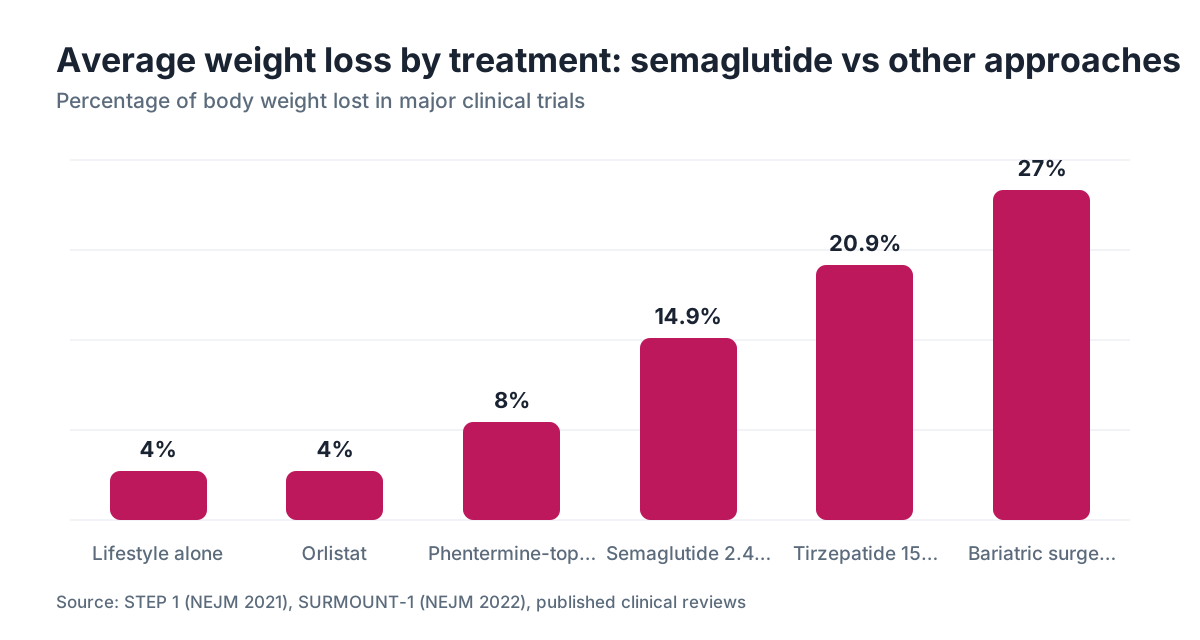
For context on where semaglutide sits relative to other options:
| Approach | Average weight loss | Duration measured | |---|---|---| | Lifestyle intervention alone | 3-5% | 12 months | | Orlistat (Alli/Xenical) | 3-5% | 12 months | | Phentermine-topiramate | 7-9% | 12 months | | Semaglutide 2.4 mg (Wegovy) | 14.9% | 68 weeks | | Tirzepatide 15 mg (Zepbound) | 20.9% | 72 weeks | | Bariatric surgery (sleeve) | 25-30% | 12 months |
Sources: STEP 1 [1], SURMOUNT-1 [9], clinical review data for other modalities.
Semaglutide is currently the best-evidence non-surgical option for most women below the bariatric surgery threshold. Tirzepatide (which targets both GLP-1 and GIP receptors) shows larger average weight loss in trial data, though direct comparison trials are limited. The choice between them comes down to tolerability, cost, and individual response, which no trial can fully predict.
Surgery produces larger and faster results but carries procedural risk, requires major lifestyle change immediately post-op, and has its own long-term nutritional management demands. For most women who are not in the severe obesity range, semaglutide's risk-benefit profile compares favorably.
What labs and metrics should you track before, during, and after treatment?
Before starting, your prescriber should check fasting glucose and HbA1c, a lipid panel, a metabolic panel (kidney and liver function), thyroid function (TSH), and ideally a baseline body weight with waist circumference measurement. If you're over 50 or have risk factors, a baseline DEXA scan for bone density and body composition is worth asking about.
Semaglutide is contraindicated in people with a personal or family history of medullary thyroid carcinoma or Multiple Endocrine Neoplasia syndrome type 2 (MEN 2), per the FDA prescribing information [2]. Screen for this before starting.
During treatment, tracking metrics every 12 weeks makes the pattern visible. Weight alone is misleading. Track waist circumference, and if you have access to body composition testing, lean mass versus fat mass. Progress photos taken under consistent lighting and clothing tell you more than daily scale readings, which swing by 2 to 4 pounds based on hydration, sodium intake, and menstrual cycle phase.
Labs worth repeating at 3 and 6 months: HbA1c if diabetic or prediabetic, lipid panel, and basic metabolic panel. Blood pressure at every visit.
Women on progesterone or using an estrogen patch as part of HRT should know that GLP-1 drugs don't have significant drug interactions with sex hormones, but altered gastric emptying can theoretically affect absorption of oral medications. Transdermal hormone delivery avoids that concern entirely.
Frequently asked questions
How long does it take to see results on semaglutide?
Most women notice appetite changes within the first two to four weeks. Visible weight changes typically appear by weeks 8 to 12. Meaningful loss, in the 5% range, usually shows up by week 12 to 16 on the full titrated dose. The biggest changes happen between weeks 16 and 52. Don't judge the drug's effectiveness at week 4. The titration period is still dose-building, not full-dose treatment.
What is the average weight loss on semaglutide for women specifically?
The STEP 1 trial reported 14.9% average body weight loss at 68 weeks. Women-specific subgroup data isn't cleanly separated in published STEP results, but the trial populations were majority female (about 74% in STEP 1). Postmenopausal women tend to lose at the same total percentage but over a longer timeframe due to lower estrogen and metabolic rate changes.
Do you gain the weight back after stopping semaglutide?
Yes, most people regain most of their lost weight within a year of stopping. STEP 4 trial data showed participants who switched from semaglutide to placebo regained approximately two-thirds of their prior weight loss within 48 weeks. This is a documented pharmacological effect, not a failure of willpower. Maintenance requires either continued treatment, a strong lifestyle framework built during treatment, or both.
What does semaglutide do to your face?
Significant weight loss on semaglutide often reduces facial fat volume, which can make the face look more drawn or aged, particularly in women over 45 who already have lower facial fat. This is sometimes called "Ozempic face." It's not a medical complication, but it's cosmetically noticeable. Resistance training and adequate protein intake may modestly limit overall fat-versus-muscle loss patterns, though facial fat specifically is hard to target.
Can you take semaglutide during perimenopause?
Yes. There's no contraindication. Perimenopausal women are among the most common users, given the overlap of hormonal weight gain and insulin resistance changes during that transition. Results may be somewhat slower due to declining estrogen, which lowers metabolic rate and shifts fat to the abdomen. Some clinicians recommend combining semaglutide with hormone therapy during perimenopause to preserve lean mass and support bone density, though large trials on this combination don't yet exist.
How much weight can you realistically expect to lose in 3 months on semaglutide?
Based on STEP 1 data, roughly 5 to 6% of starting body weight by week 12 to 16. For a 180-pound woman, that's about 9 to 11 pounds in three months. The first month involves dose titration at lower doses, so weeks 5 to 12 tend to show faster loss than weeks 1 to 4. Individual variation is real. Some people lose more, some less, based on dose response and adherence.
Does semaglutide cause muscle loss?
It can. Studies suggest 25 to 39% of total weight lost on semaglutide may come from lean mass rather than fat. For women over 40 who are already losing muscle to age-related sarcopenia, this is a significant concern. Resistance training at least two to three times per week and eating 1.2 to 1.6 grams of protein per kilogram of body weight daily are the most evidence-backed strategies to minimize lean mass loss during treatment.
What are the most common side effects women report on semaglutide?
Nausea is the most common, reported by 44% of participants in STEP 1 versus 16% on placebo. Diarrhea, vomiting, and constipation are also frequent, especially during dose escalations. Most GI side effects improve after staying at a stable dose for several weeks. Less common but reported: fatigue, hair loss (usually temporary, likely from rapid caloric restriction), and gallstone risk with rapid weight loss. Pancreatitis is rare but a serious concern.
Is semaglutide or tirzepatide better for women?
Tirzepatide (Zepbound) showed larger average weight loss in the SURMOUNT-1 trial, 20.9% at 72 weeks versus semaglutide's 14.9% at 68 weeks, but these aren't head-to-head trials in the same population. Tolerability differs individually. Cost and insurance coverage differ too. There's no woman-specific trial data definitively favoring one over the other. See our full comparison at semaglutide vs tirzepatide for a detailed breakdown.
What is a realistic before and after at 6 months on semaglutide?
At six months (approximately week 24 to 28), STEP 1 data shows average weight loss of around 10 to 11% of starting body weight on 2.4 mg semaglutide. Waist circumference typically drops meaningfully. Blood pressure, fasting glucose, and triglycerides often show measurable improvement in labs. Clothing size change is usually one to two sizes for most women in this range. Results vary significantly based on dose reached, diet quality, and exercise.
Does semaglutide affect hormones or menstrual cycles?
Semaglutide doesn't directly alter sex hormone levels. But weight loss of 5% or more can improve estrogen metabolism and insulin sensitivity enough to affect menstrual regularity, particularly in women with PCOS or anovulatory cycles related to obesity. This means fertility could change, which is relevant for women who assumed weight-related cycle irregularity meant they couldn't conceive. Contraception is worth discussing with your prescriber when starting semaglutide.
How does body composition change on semaglutide, more than weight?
Without intervention, weight loss on semaglutide is a mix of fat and lean mass. In STEP 1, waist circumference dropped by an average of 13.54 cm in the semaglutide group. DEXA body composition studies in GLP-1 trials confirm fat mass loss is the primary driver, but lean mass losses of 25 to 39% of total weight lost have been measured. This is why body composition tracking, more than scale weight, gives you a fuller picture of the before-and-after change.
Is the weight loss on semaglutide permanent?
Not automatically. The drug works while you're taking it. STEP 4 showed most weight returns within a year of stopping. However, the behavioral patterns, dietary habits, and fitness practices built during treatment can sustain some of the loss. People who maintain a high-protein diet and consistent resistance training after stopping tend to regain less. Long-term, many clinicians now frame semaglutide as a chronic condition treatment, similar to a blood pressure medication, rather than a finite course.
Sources
- New England Journal of Medicine, Wilding et al. 2021 (STEP 1 trial)
- FDA, Wegovy (semaglutide) Prescribing Information
- Obesity (journal), Garvey et al. 2022 (STEP 5 trial, 104 weeks)
- Journal of Cachexia, Sarcopenia and Muscle, Wharton et al. 2024 review
- New England Journal of Medicine, Davies et al. 2021 (STEP 2 trial, type 2 diabetes)
- New England Journal of Medicine, Lincoff et al. 2023 (SELECT trial)
- Diabetes Care, Rubino et al. 2022 (STEP 4 trial)
- FDA Drug Safety Communication, 2024: GLP-1 agonists and suicidal ideation review
- New England Journal of Medicine, Jastreboff et al. 2022 (SURMOUNT-1 trial, tirzepatide)
- Endocrine Society Clinical Practice Guideline: Obesity Pharmacotherapy
- The Menopause Society (formerly NAMS), Menopause and Weight position statement