Semaglutide + B12 dosage chart: what the numbers actually mean
TL;DR: Semaglutide is dosed by weekly injection starting at 0.25 mg and stepping up to a maintenance dose of 1 to 2.4 mg depending on indication. B12 (usually 1,000 mcg as methylcobalamin) is often added to compounded formulas or given separately because GLP-1 receptor agonists can suppress appetite enough to cause B12 depletion over months. The pairing has clinical logic but limited dedicated trial data.
What is the standard semaglutide dosing schedule?
Semaglutide is a GLP-1 receptor agonist approved by the FDA for type 2 diabetes (Ozempic, up to 2 mg/week) and chronic weight management (Wegovy, up to 2.4 mg/week) [1][2]. Both use the same slow titration ladder, because rushing the dose is the fastest way to guarantee nausea, vomiting, and an early exit from treatment.
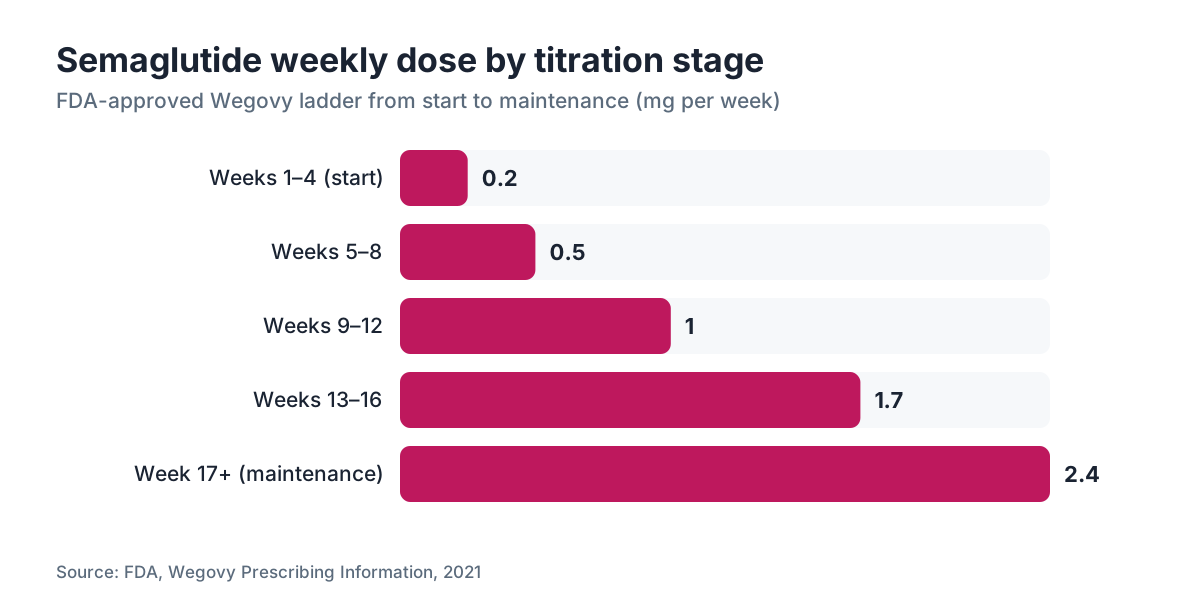
The FDA-approved titration for Wegovy looks like this: four weeks at 0.25 mg, four weeks at 0.5 mg, four weeks at 1.0 mg, four weeks at 1.7 mg, then maintenance at 2.4 mg [2]. Ozempic for diabetes starts identically at 0.25 mg for four weeks, moves to 0.5 mg, and can go to 1 mg or 2 mg depending on glycemic response [1]. Compounded semaglutide products often follow similar ladders but the exact steps vary by prescribing clinician, so your chart may look slightly different from a neighbor's.
The slow start matters because the GI side effects, nausea especially, tend to peak at the first one or two dose increases and then ease. Women who skip steps or pressure their provider to escalate faster almost always pay for it in quality of life. If nausea is still severe at any rung, most clinicians hold the dose for an extra four weeks rather than keep climbing.
Note: doses below 1 mg are considered sub-therapeutic for weight loss. The STEP 1 trial, which enrolled 1,961 adults and is the largest semaglutide weight-loss trial to date, used the full 2.4 mg maintenance dose and found a mean weight reduction of 14.9% over 68 weeks [3]. Lower doses produced lower weight loss in dose-finding analyses.
Why do clinicians add B12 to semaglutide prescriptions?
The short answer: GLP-1 agonists work by slowing gastric emptying and cutting appetite so effectively that many women eating much less food gradually eat less B12 too. B12 absorption also depends on intrinsic factor and stomach acid, and because semaglutide slows the entire upper GI tract, there is theoretical concern about reduced absorption even from the food you do eat [4].
Metformin, which is sometimes co-prescribed for insulin resistance alongside a GLP-1, is well-documented to reduce B12 absorption by 22 to 29% over two years according to data from the Diabetes Prevention Program Outcomes Study [5]. That evidence is solid. The direct evidence that semaglutide alone causes clinically meaningful B12 deficiency is thinner. No large dedicated trial has been published specifically on semaglutide-induced B12 depletion. The closest data comes from general GLP-1 class surveillance and case-level clinical reports.
Despite the limited data, the logic is sound enough that many compounding pharmacies and telehealth practices include B12 in the same vial or as a separate add-on injection. The risk of supplementing is essentially zero at typical doses, the cost is low, and the downside of undiagnosed B12 deficiency (fatigue, peripheral neuropathy, cognitive fog) is high enough that most clinicians do not wait for a documented deficiency to act.
For women in perimenopause or menopause, this matters more than average. Fatigue and cognitive fog are already common symptoms of estrogen decline, and a concurrent B12 deficiency can make both dramatically worse while making them harder to attribute correctly. If you are also on hormone replacement therapy, your clinician needs the full picture of every symptom to manage it well.
Semaglutide + B12 dosage chart: what doses are actually used?
Below is a summary table of the titration schedule most commonly used in clinical practice, alongside the B12 doses seen in compounded formulations and as stand-alone supplementation. These are real ranges drawn from FDA labeling, published compounding pharmacy formularies, and standard injectable B12 prescribing practice. Individual prescriptions differ.
| Week Range | Semaglutide Dose (weekly, subcutaneous) | Common Compounded B12 Add-on | Stand-alone B12 Option | |---|---|---|---| | Weeks 1 to 4 | 0.25 mg | 1,000 mcg methylcobalamin | 1,000 mcg oral or sublingual daily | | Weeks 5 to 8 | 0.5 mg | 1,000 mcg methylcobalamin | 1,000 mcg oral or sublingual daily | | Weeks 9 to 12 | 1.0 mg | 1,000 mcg methylcobalamin | 1,000 mcg oral or sublingual daily | | Weeks 13 to 16 | 1.7 mg (Wegovy ladder) | 1,000 mcg methylcobalamin | 1,000 to 2,000 mcg oral or sublingual daily | | Week 17+ (maintenance) | 2.4 mg (Wegovy) / 1 to 2 mg (Ozempic) | 1,000 to 1,500 mcg methylcobalamin | 1,000 to 2,000 mcg oral or sublingual daily |
A few notes on this table. The semaglutide doses are straight from FDA labeling [1][2]. The B12 doses shown for compounded formulas come from compounding pharmacy practice standards, not from FDA-approved drug labeling, because there is no FDA-approved semaglutide-B12 combination product [6]. And oral B12 at 1,000 mcg/day is absorbed at roughly 1 to 2% by passive diffusion even without functional intrinsic factor, which is why high oral doses work despite absorption variability [4].
Methylcobalamin is the preferred form in most injectable compounded preparations because it is the biologically active form and does not require hepatic conversion the way cyanocobalamin does. High-dose cyanocobalamin is also effective, and it is the form used in the original deficiency treatment trials.
How does the semaglutide titration compare for weight loss vs. diabetes?
The titration path starts identically for both indications, then diverges at the top.
For type 2 diabetes (Ozempic), the maximum approved dose is 2 mg per week. Most people reach 0.5 mg or 1 mg and stay there based on blood sugar control; not everyone needs the ceiling [1]. For chronic weight management (Wegovy), the maintenance dose is 2.4 mg, which is the dose that produced the headline results in the STEP trials [3].
The practical implication: if you are using a compounded version of semaglutide for weight loss and your provider is only taking you to 1 mg, you may not reach the dose where the clinical trials saw their strongest weight effects. That is a conversation worth having, not an automatic reason to push higher, because some people see meaningful results at lower doses and others genuinely cannot tolerate the upper rungs.
Women in perimenopause and menopause often have more complex metabolic starting points. Estrogen decline reduces insulin sensitivity and shifts fat distribution toward the abdomen, which means the baseline metabolic resistance to weight loss can be higher [7]. Some data suggest women in hormonal transition may need to stay at maintenance dose longer before seeing plateau-breaking results, though this is not yet formalized in dosing guidelines.
What form of B12 works best alongside semaglutide?
There are four main forms of B12: cyanocobalamin, methylcobalamin, adenosylcobalamin, and hydroxocobalamin. For injectable supplementation alongside semaglutide, methylcobalamin and cyanocobalamin are by far the most used.
Methylcobalamin is the form most common in compounded semaglutide-B12 vials. It is already in the active coenzyme form the body uses for methylation reactions, including homocysteine conversion and neurological function. Cyanocobalamin is the form in most mass-market supplements and in the standard intramuscular shots given for diagnosed deficiency in clinical settings. Both work. Neither is magic.
For most women on semaglutide without a documented deficiency, a daily sublingual methylcobalamin at 1,000 mcg is cheap and low-friction. If your compounded semaglutide already contains B12 in the vial, check the dose on the prescription label before doubling up. Getting 2,000 to 3,000 mcg per day total is not dangerous (B12 has no established upper tolerable intake level because excess is excreted in urine [4]), but it is also not clearly better than 1,000 mcg.
If you have a known MTHFR gene variant that affects methylation, methylcobalamin is the better choice because it bypasses one conversion step. Talk to your prescriber.
Should you test B12 levels before starting semaglutide?
Baseline B12 testing is not required by any FDA guidance or major society protocol before starting semaglutide. But it is a reasonable thing to ask for.
Here is why. A meaningful percentage of women over 40 are already walking around with low-normal or borderline B12 due to dietary patterns (especially low red meat intake), use of proton pump inhibitors, or genetic variants affecting absorption. The reference range in most labs is roughly 200 to 900 pg/mL, but symptoms of deficiency can appear below 400 pg/mL in some people [4]. If you start semaglutide and your B12 drops further over six to twelve months of reduced food intake, you may pin the fatigue and brain fog on menopause or on the drug's GI effects when the real driver is B12.
A baseline serum B12 (and ideally methylmalonic acid, a more sensitive functional marker of B12 status) before starting costs under $50 in most lab settings and gives you a real comparison point six months later. Homocysteine is another indirect marker; elevated homocysteine can signal functional B12 deficiency even when serum B12 looks normal [4].
Clinics like WomenRx that specialize in GLP-1 prescribing for women often include lab panels as part of intake, which is worth asking about before you start rather than after symptoms appear.
Are there risks to combining B12 with semaglutide?
B12 is water-soluble. There is no established tolerable upper limit because the kidneys clear excess effectively [4]. The risk of adding B12 to a semaglutide regimen is essentially zero at standard doses. The theoretical concerns are not about toxicity but about formulation.
In compounded vials that contain both semaglutide and B12, the stability and compatibility of the combination matters. The FDA has flagged concerns about compounded semaglutide products generally, noting that compounded drugs are not FDA-approved and their safety and efficacy have not been reviewed by the agency [6]. That is a real and legitimate concern. It does not mean compounded products are automatically unsafe, but it does mean you should know your pharmacy's beyond-use dating, storage requirements, and testing practices.
If you are using a reputable compounding pharmacy (one registered as a 503B outsourcing facility), the formulation standards are closer to pharmaceutical grade. 503A pharmacies make individual patient-specific compounds and have less rigorous oversight [6]. Know which type your pharmacy is.
One more thing: if you are also taking metformin, your B12 monitoring schedule should be more frequent. The combination of metformin-induced absorption reduction plus semaglutide-induced appetite and intake reduction is a one-two punch on B12 status that is better monitored than assumed.
How does semaglutide affect nutrient absorption more broadly?
B12 gets most of the attention, but slowed gastric emptying and much lower food intake affect a range of micronutrients. Iron, folate, zinc, and vitamin D are all worth watching in women on long-term semaglutide, particularly those eating under 1,400 calories per day.
Folate matters especially in premenopausal women and those who might become pregnant, though semaglutide itself is contraindicated in pregnancy [2]. Iron deficiency is common in women of reproductive age to begin with, and cutting meat and vegetable intake makes it more likely. Zinc deficiency can impair immune function, wound healing, and hair integrity, and hair loss (telogen effluvium) is a known side effect reported in GLP-1 users, often worsened by zinc and protein inadequacy [3].
Vitamin D sits at the intersection of several concerns for women in the 40-65 range. It affects bone density, mood, immune function, and may modulate insulin sensitivity. If you are also asking about bone density test timing around menopause, vitamin D status belongs in that same workup.
The practical upshot: a full micronutrient panel at baseline and at six-month intervals on semaglutide is not excessive. It is the same monitoring approach used in bariatric surgery patients, who face analogous but more acute nutrient challenges from rapid intake reduction.
Does semaglutide dosing need to change during perimenopause or menopause?
There is no FDA-approved dose adjustment for menopause or perimenopause. The STEP trials included women across a broad age range but did not pre-specify menopausal status as a primary variable, so extrapolating from subgroup data is imprecise [3].
What we do know clinically is that estrogen decline changes body composition, fat distribution, and metabolic rate in ways that make weight loss harder and slower. Some clinicians report that perimenopausal women need longer at maintenance dose before weight plateaus resolve. Others note that when hormone therapy is added concurrently, the fat distribution shifts improve in ways that seem to work with semaglutide's effects, though no adequately powered trial has tested this directly.
If you are in perimenopause and starting semaglutide, ask your provider about estrogen levels, thyroid function, and cortisol patterns before assuming dose escalation is the answer to slow progress. Weight loss resistance during this window often has hormonal drivers that semaglutide alone does not address.
For context on how perimenopause and menopause overlap with metabolic change, see our article on when does menopause start.
What does compounded semaglutide with B12 actually cost, and is it worth it?
Brand-name Wegovy has a list price of approximately $1,349 per month before insurance [8]. Most commercially insured patients without a specific obesity benefit pay this out of pocket or close to it. Novo Nordisk's savings card can reduce cost for eligible patients.
Compounded semaglutide, including versions with B12 added, generally runs $200 to $500 per month depending on dose, pharmacy, and geography [9]. That price gap is the main reason compounded versions became so popular during the Wegovy shortage. After the FDA lifted the shortage declaration for semaglutide in early 2025, some compounding pharmacies began moving away from standard semaglutide compounds, though 503A pharmacies can still make patient-specific formulations [6].
Is adding B12 to the compounded vial worth it versus buying a sublingual B12 supplement separately? Do the math. A 90-day supply of 1,000 mcg sublingual methylcobalamin costs roughly $10 to $15 at retail. If your compounding pharmacy charges $30 to $50 more per vial for the B12 addition, you are paying a real markup for the convenience of a single injection. For many women, separating the two and taking a daily sublingual B12 is the financially sensible move.
For more background on the compounded semaglutide landscape, including what to look for in a pharmacy, that article covers the regulatory and safety questions in full.
How does semaglutide compare to tirzepatide for weight loss, and does B12 work the same way with tirzepatide?
Tirzepatide (Zepbound for weight loss, Mounjaro for diabetes) is a dual GIP/GLP-1 receptor agonist. It follows a similar slow-titration approach: starting at 2.5 mg weekly, stepping up every four weeks through 5 mg, 7.5 mg, 10 mg, 12.5 mg, to a maximum of 15 mg [10]. In the SURMOUNT-1 trial, the 15 mg dose produced a mean weight reduction of 20.9% over 72 weeks, which is higher than the 14.9% seen with semaglutide 2.4 mg in STEP 1 [3][10].
For B12, tirzepatide has the same general mechanism of appetite suppression and gastric slowing, so the nutritional depletion concerns are analogous. No large trial has specifically quantified tirzepatide-induced B12 change either. The same logic applies: if you are eating much less food for an extended period, track B12.
For a full head-to-head comparison of these two medications including cost, efficacy data, and side effect profiles, the semaglutide vs tirzepatide article is the better reference.
One thing the chart above does not capture: tirzepatide's maintenance dose is weight-based in practice (many clinicians use the lowest dose that maintains results rather than always targeting 15 mg), whereas semaglutide's maintenance is more standardized at 2.4 mg for Wegovy. This makes dosage conversations with tirzepatide slightly more individualized.
Frequently asked questions
What is the starting dose of semaglutide for weight loss?
The FDA-approved starting dose for semaglutide used for weight management (Wegovy) is 0.25 mg injected subcutaneously once weekly for the first four weeks. This low starting dose is intentional: it reduces nausea and GI side effects while your body adjusts. You then move up through a structured titration ladder over about 16 weeks before reaching the 2.4 mg maintenance dose.
How much B12 should you take with semaglutide?
Most clinical practice uses 1,000 mcg of methylcobalamin daily, either orally, sublingually, or injected alongside semaglutide. There is no published randomized trial setting an exact therapeutic dose for this specific context. B12 has no established upper tolerable intake limit because excess is excreted in urine, so 1,000 to 2,000 mcg per day is considered safe and covers both dietary shortfalls and absorption variability.
Why is methylcobalamin preferred over cyanocobalamin in compounded semaglutide formulas?
Methylcobalamin is already in the biologically active coenzyme form. Cyanocobalamin requires conversion in the liver before use. For injectable formulas where the goal is immediate bioavailability, methylcobalamin is the logical choice. Both forms correct deficiency. If you have a confirmed MTHFR variant affecting methylation, methylcobalamin is preferred because it bypasses one enzymatic conversion step.
Can semaglutide cause B12 deficiency?
There is no large randomized trial proving semaglutide alone causes clinical B12 deficiency. The concern is indirect: semaglutide sharply reduces appetite and food intake, which reduces dietary B12 over months. It also slows gastric emptying, which may affect absorption. Women on long-term semaglutide who eat less than 1,400 calories daily are at the most meaningful risk. Testing baseline and follow-up serum B12 is reasonable and cheap.
Is there an FDA-approved semaglutide and B12 combination product?
No. The FDA has not approved any fixed-combination product containing semaglutide and B12. Wegovy and Ozempic contain only semaglutide. Compounded semaglutide-B12 formulas are made by compounding pharmacies and have not undergone FDA safety and efficacy review. The FDA has flagged concerns about the quality and safety of some compounded semaglutide products, so choosing a pharmacy registered as a 503B outsourcing facility matters.
How long does semaglutide titration take to reach maintenance dose?
Following the standard Wegovy label, titration takes 16 weeks: four weeks each at 0.25 mg, 0.5 mg, 1.0 mg, and 1.7 mg before reaching 2.4 mg maintenance at week 17. Some clinicians extend any step by four weeks if side effects are significant. Rushing the titration is the most common reason for early discontinuation due to nausea. Plan for at minimum four months before you are at full therapeutic dose.
Do you need B12 injections or can you take oral B12 supplements with semaglutide?
Oral or sublingual B12 at 1,000 mcg daily is effective even in people with impaired intrinsic factor because roughly 1 to 2% of a large oral dose is absorbed by passive diffusion, which adds up to adequate intake. You do not need injections unless you have a confirmed malabsorption condition or documented severe deficiency. Injectable B12 is not superior to high-dose oral B12 for prevention. It is only meaningfully faster for treating acute severe deficiency.
Does semaglutide affect other vitamins and minerals besides B12?
Yes. Much lower food intake can affect iron, folate, zinc, vitamin D, and protein over time. Hair loss reported by some semaglutide users is partly attributed to zinc and protein deficiency on top of the telogen effluvium triggered by rapid weight loss itself. A full micronutrient panel at baseline and every six months is a reasonable standard of care, similar to monitoring used in bariatric surgery patients.
Should menopausal women on semaglutide take higher B12 doses?
There is no specific guideline recommending higher B12 doses in menopausal women on semaglutide. However, menopausal women already have higher baseline rates of low-normal B12 due to age-related changes in stomach acid and absorption. Combined with reduced food intake from semaglutide, the argument for proactive supplementation at 1,000 to 2,000 mcg daily is stronger than in a 30-year-old. Test at baseline and retest at six months.
What happens if you stop semaglutide and you are on B12?
When you stop semaglutide, appetite returns and food intake typically increases, so dietary B12 intake will likely recover if your diet includes animal products. You can taper or stop the B12 supplement unless a test shows a documented deficiency that needs treatment. If you were taking compounded semaglutide-B12 in the same vial, stopping the injection stops both simultaneously, so transition to oral B12 until your next lab check.
How does metformin change B12 needs when taken with semaglutide?
Metformin reduces B12 absorption by an estimated 22 to 29% over two years, documented in the Diabetes Prevention Program Outcomes Study. If you take both metformin and semaglutide, your B12 depletion risk is meaningfully higher than with either drug alone. In this combination, routine serum B12 monitoring annually and proactive supplementation at 1,000 mcg daily is sensible rather than optional. Tell your prescriber if you are on both.
Can semaglutide and B12 be mixed in the same syringe at home?
If your compounding pharmacy dispenses a pre-mixed vial, then yes, it is already combined and you draw from one vial. You should not mix separately purchased semaglutide and B12 ampules at home. Compatibility, sterility, and beyond-use dating depend on controlled compounding conditions. Mixing incompatible substances at home risks contamination and chemical instability. Use only what the pharmacy has already prepared and tested together.
Is the B12 in compounded semaglutide vials enough, or do you still need extra?
Most compounded semaglutide-B12 vials contain 1,000 mcg of B12 per weekly injection. Given that the recommended dietary allowance for adults is 2.4 mcg per day and therapeutic supplementation is typically 1,000 mcg daily, a weekly injection of 1,000 mcg provides roughly equivalent coverage. It is likely sufficient for prevention, not for treating an established deficiency. If labs show deficiency, daily oral or more frequent injectable dosing is needed.
What labs should you get before starting semaglutide?
At minimum: a complete metabolic panel, HbA1c, fasting lipids, thyroid function (TSH), and a complete blood count. Adding serum B12, 25-OH vitamin D, iron studies, and ferritin is reasonable and inexpensive. Methylmalonic acid and homocysteine give a more accurate picture of functional B12 status than serum B12 alone. These baseline labs give you a real comparison point six to twelve months into treatment.
Sources
- FDA, Ozempic (semaglutide) Prescribing Information
- FDA, Wegovy (semaglutide) Prescribing Information
- Wilding JPH et al., NEJM 2021 (STEP 1 trial)
- NIH Office of Dietary Supplements, Vitamin B12 Fact Sheet for Health Professionals
- Diabetes Prevention Program Outcomes Study, long-term metformin and B12
- Endocrine Society, Menopause and Metabolic Health Clinical Practice Guideline
- Novo Nordisk, Wegovy list price data
- Jastreboff AM et al., NEJM 2022 (SURMOUNT-1 trial)