The role of progesterone in women's health across every life stage
TL;DR: Progesterone rises sharply after ovulation, holds early pregnancy, and calms the nervous system through a brain metabolite called allopregnanolone. It starts falling years before your last period, which is why sleep and mood often wobble first. In menopause it is prescribed with estrogen to protect the uterine lining. Oral micronized progesterone has the strongest safety data and is the form most prescribers reach for first.
What does progesterone actually do in the body?
Progesterone comes mainly from the ovaries after ovulation, from the adrenal glands in smaller amounts, and from the placenta during pregnancy. The corpus luteum, the temporary gland that forms on the ovary after an egg releases, pumps out a surge of progesterone in the second half of every menstrual cycle. That surge does several jobs at once.
First, it thickens the uterine lining so a fertilized egg can implant. No implantation, and progesterone drops, the lining sheds, the period starts. If implantation happens, the corpus luteum keeps making progesterone until the placenta takes over around eight to ten weeks.
Then there is the brain. Progesterone converts to a neurosteroid called allopregnanolone, which acts on GABA receptors, the same receptors that anti-anxiety drugs and sleep aids target [1]. That is why progesterone tends to calm you and help you sleep when levels are healthy, and why its decline in perimenopause often shows up first as insomnia and irritability rather than hot flashes.
Progesterone also counters estrogen's growth-stimulating effect on the uterine lining. Without enough progesterone, estrogen drives that lining to thicken unchecked, which raises the risk of endometrial hyperplasia and eventually cancer [2]. That single fact is why any woman with a uterus who takes estrogen must also take a progestogen.
Other real effects get less airtime: progesterone nudges basal body temperature up slightly (clinicians use this to confirm ovulation), it promotes fluid excretion (low progesterone contributes to bloating), and it influences thyroid hormone binding. The reach is wider than most women are ever told.
How does progesterone change across the menstrual cycle?
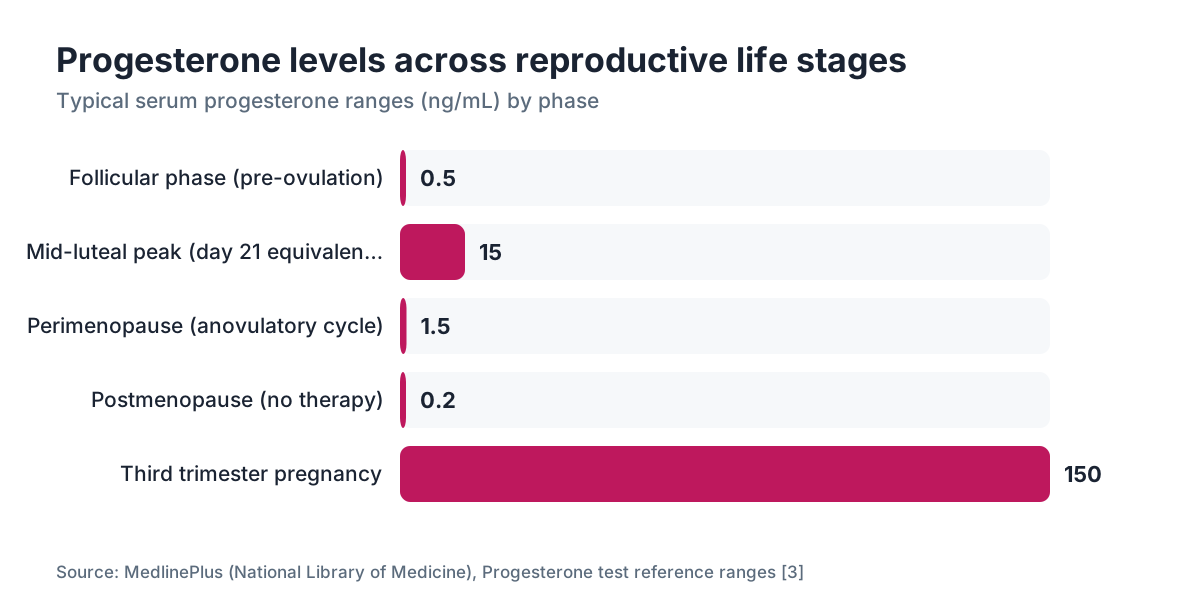
In the first half of the cycle, progesterone is barely there. During the follicular phase it usually sits below 1 ng/mL [3]. After ovulation it climbs fast and peaks somewhere between 5 and 20 ng/mL in the mid-luteal phase, around day 21 of a textbook 28-day cycle. That peak window is when clinicians draw a serum progesterone to confirm you ovulated.
If your cycle is irregular, a single lab draw on day 21 can miss the peak completely and hand you a falsely low reading. Good clinicians time the draw to seven days before your expected period, not to a fixed calendar day.
After the mid-luteal peak, progesterone falls across the final week. That fall, together with estrogen's drop, is what triggers the period. Women with heavy premenstrual symptoms (PMS or PMDD) are often reacting to this progesterone withdrawal rather than to any absolute shortage. Allopregnanolone rises and falls with progesterone, and that swing appears to throw off GABA signaling in women who are sensitive to it [1].
One more thing worth knowing. Synthetic progestins, the kind in most hormonal contraceptives, behave very differently from your own progesterone. They bind progesterone receptors, but many also bind androgen receptors, which can cause the acne, mood changes, and libido shifts women blame on "the pill" rather than on progesterone itself.
What is the difference between progesterone and progestin?
This is one of the most consequential distinctions in women's hormone care, and one of the most consistently muddled.
Progesterone is the bioidentical hormone, chemically identical to what the ovaries make. The most studied and most prescribed pharmaceutical form is oral micronized progesterone (brand name Prometrium in the US), made from plant precursors processed to match the human molecule exactly [4].
Progestin is the umbrella term for synthetic compounds that mimic progesterone's action on the uterus but behave differently elsewhere. Medroxyprogesterone acetate (MPA), norethindrone, levonorgestrel, and drospirenone are all progestins. They protect the uterine lining well, but their side-effect profiles, especially for cardiovascular risk and mood, differ meaningfully from micronized progesterone.
The 2002 Women's Health Initiative (WHI) trial that spooked a generation of clinicians and patients used conjugated equine estrogen plus MPA, not micronized progesterone [12]. A large French observational study published in the BMJ, the E3N cohort of over 80,000 women followed for more than a decade, found that transdermal estradiol combined with micronized progesterone did not raise breast cancer risk in the first five years of use, while oral estrogens plus synthetic progestins did show elevated risk [5]. That study has real limits (it is observational, not randomized), but it is the main evidence driving today's preference for micronized progesterone.
The practical upshot is simple. If you have a uterus and want hormone therapy, the type of progestogen matters. Micronized progesterone is what the Menopause Society (formerly NAMS) calls a preferred option when prescribing a progestogen alongside estrogen [6].
When does progesterone start declining, and what does that feel like?
Progesterone starts falling before estrogen does. That order matters. In perimenopause, which can begin in the late 30s or early 40s (the average age at the final period in the US is 51, and perimenopause usually starts 4 to 10 years earlier [7]), ovulation gets patchy. Fewer ovulations mean fewer corpus lutea, which means less progesterone, even while estrogen is still normal or running high.
Researchers call the result estrogen dominance. It is not always too much estrogen in absolute terms. It is the loss of progesterone's counterbalance. Women describe this stretch as wired but tired, gaining weight around the middle with no change in eating, waking at 3 a.m. and not falling back asleep, and bleeding heavier or on no predictable schedule.
Hot flashes are mostly an estrogen story. Sleep disruption and anxiety in early perimenopause are often a progesterone story. Plenty of clinicians now use low-dose oral micronized progesterone (100 mg at bedtime) as an early move for perimenopausal insomnia, even when estrogen has not dropped far enough to warrant estrogen therapy.
See perimenopause age for a full breakdown of what the transition timeline usually looks like.
By the time menopause is confirmed (twelve straight months without a period), ovarian progesterone is essentially gone. After that, the only progesterone in your body is what you take.
What happens to progesterone levels during pregnancy?
Pregnancy is the one stretch of life when progesterone climbs dramatically instead of falling. By the third trimester it can reach 100 to 200 ng/mL, against the 10 to 20 ng/mL peak of a normal luteal phase in a non-pregnant cycle [3].
That surge does a lot. It holds the uterine lining in place, quiets uterine contractions to keep the pregnancy going, tunes the immune system so the body does not reject the fetus, and readies breast tissue for milk.
Progesterone supplementation, vaginal or injectable, is sometimes prescribed in early pregnancy for women with recurrent loss or those who conceive through IVF. The evidence is more careful than the marketing. A large UK randomized trial, PRISM, published in the New England Journal of Medicine in 2019, found that vaginal progesterone improved live birth rates in women with early pregnancy bleeding who also had a history of miscarriage [8]. For women with no prior loss and no bleeding, routine supplementation has not shown benefit in randomized trials.
After delivery, progesterone falls off a cliff, and that drop is one driver of postpartum mood changes. Brexanolone (marketed as Zulresso), a synthetic analog of allopregnanolone given by IV for postpartum depression, is essentially a pharmacological stand-in for the neurosteroid that progesterone would normally supply [1].
What are the signs and symptoms of low progesterone?
Low progesterone does not wave a flag. Its symptoms overlap with thyroid trouble, iron deficiency, anxiety disorders, and plain old sleep deprivation, which is part of why it gets missed and sometimes brushed off.
The pattern that should prompt a progesterone check usually pulls from this list:
- Irregular cycles or cycles shorter than 25 days (a short luteal phase)
- Heavier periods or spotting before the period starts
- Trouble staying asleep, especially in the second half of the night
- More anxiety or a low-grade on-edge feeling that tracks with the luteal phase
- PMS that has gotten worse over the last few years
- Recurrent early miscarriage
- Bloating and fluid retention in the luteal phase
A serum progesterone drawn at the right point in the cycle (day 21 for a 28-day cycle, or seven days before your expected period) gives a direct measurement. Levels below 3 ng/mL in the mid-luteal phase generally read as inadequate ovulation or a deficient luteal phase, though lab cutoffs vary a little [3].
Saliva and urine hormone tests are marketed hard. Their correlation with serum levels is inconsistent, and they are not what clinical guidelines base treatment thresholds on [10]. Serum is still the standard.
How is progesterone used in menopause hormone therapy?
In hormone replacement therapy for women who still have a uterus, progesterone has one non-negotiable job: stopping the endometrial hyperplasia that estrogen would otherwise drive. The FDA-approved label for oral micronized progesterone (Prometrium 200 mg) says it is indicated to reduce the risk of endometrial hyperplasia in postmenopausal women receiving conjugated estrogens [4].
The standard regimens split into two patterns. Continuous combined therapy means taking progesterone every day, which over time produces a thin, often atrophic lining and usually stops any withdrawal bleeding. Sequential therapy means taking progesterone 10 to 14 days a month, which allows predictable withdrawal bleeding and is sometimes preferred during the perimenopausal transition. The Menopause Society treats 200 mg oral micronized progesterone for 12 days per cycle, or 100 mg daily continuously, as adequate uterine protection [6].
For women who want to skip systemic progesterone or do not tolerate it well, a levonorgestrel intrauterine system (the Mirena IUD) delivers progestin locally to the uterus with minimal systemic absorption, and it is used off-label as the progestogen part of menopause therapy in many countries. European menopause guidelines describe this well, though the FDA has not approved that specific use in the US.
Women without a uterus do not need a progestogen at all. They can take estrogen alone, which carries a better safety profile on several outcomes than estrogen-plus-progestogen.
To understand how menopause reshapes the full hormonal picture beyond progesterone, that article covers the broader transition. And for how estrogen itself gets delivered, including the estrogen patch, the route matters too.
Is progesterone safe? What does the research actually show?
The safety picture for progesterone is genuinely more favorable than the synthetic progestin data that ran the headlines after 2002. The honest caveat: the evidence base is uneven.
Breast cancer first. The E3N cohort (France, 80,000+ women) found no statistically significant increase in risk with transdermal estradiol plus micronized progesterone at under five years of use [5]. The Million Women Study, UK observational data, showed elevated breast cancer risk across all progestogen types, progesterone included, though critics point to real methodological problems with that study.
The WHI, the largest randomized controlled trial, used MPA, not micronized progesterone, so its breast cancer finding does not map cleanly onto the bioidentical hormone [12]. A definitive randomized trial comparing micronized progesterone to placebo for breast cancer over ten-plus years does not exist. That is the gap, stated plainly.
Cardiovascular risk: oral micronized progesterone looks neutral to mildly favorable on blood pressure and lipids, unlike some synthetic progestins that can lower HDL and worsen insulin sensitivity [6].
Sleep and mood: a small but reasonably designed randomized study in Menopause journal found that oral micronized progesterone at bedtime improved sleep quality in menopausal women compared to placebo, which fits its allopregnanolone mechanism [9].
Clot risk: oral progesterone raises clot risk somewhat because of first-pass liver metabolism, though less than oral synthetic progestins. Vaginal and transdermal routes skip that first pass and look safer for women with elevated clot risk.
The Menopause Society's 2022 hormone therapy statement sums up the evidence as supporting menopausal hormone therapy for appropriate candidates at the lowest effective dose for as long as it is needed, while noting that bioidentical progesterone outperforms most synthetic progestins on safety markers [6].
What is the difference between oral, vaginal, and topical progesterone?
The delivery route changes how progesterone behaves, sometimes dramatically.
Oral micronized progesterone (Prometrium) absorbs through the gut and passes through the liver before it reaches the bloodstream. That first-pass metabolism turns a big chunk of it into allopregnanolone and other metabolites, which is exactly why oral progesterone is sedating and works well at bedtime. It also means the serum level after an oral dose looks lower than the drug's real functional effect, because those metabolites are active and do not show up on a progesterone assay.
Vaginal progesterone (Endometrin, Crinone gel, or compounded suppositories) absorbs straight into the uterus through what is called the first uterine pass effect. It produces high uterine tissue levels with relatively low blood levels. That is why vaginal progesterone is preferred in IVF and early pregnancy support, where the uterus is the target, and why it causes less sedation and fewer systemic side effects. It also means serum levels after vaginal dosing look misleadingly low if a clinician does not account for the route.
Topical progesterone creams sell widely over the counter, often with menopause-relief claims. The evidence is weak. Absorption through skin is poor and inconsistent, and most studies show OTC creams do not produce serum levels high enough to protect the endometrium [10]. Do not treat them as equal to prescription progesterone if you take systemic estrogen and need uterine protection.
Compounded progesterone in various forms is an option for women who cannot use commercial products, but compounding quality varies and compounded bioidenticals are not FDA-approved.
See the progesterone article for a fuller breakdown of each formulation and dose.
Does progesterone affect bone density, brain health, or heart health?
Across all three the answer is: probably yes, with honest caveats about how strong the data is.
Bone. Estrogen gets most of the credit for protecting bone before menopause, and rightly so. But progesterone receptors sit on osteoblasts, the cells that build bone, and some research suggests progesterone may stimulate bone formation independently of estrogen. Work from Jerilynn Prior's group found that anovulatory cycles, meaning low-progesterone cycles, tracked with lower bone density even when estrogen was normal [11]. The implication is that years of irregular, low-progesterone perimenopausal cycles may speed bone loss before estrogen even drops much. If your cycles are irregular in perimenopause, a bone density test is worth raising with your clinician.
Brain. This is an active and genuinely interesting research area. Allopregnanolone, the neurosteroid made from progesterone, is neuroprotective in animal models and is being studied in Alzheimer's prevention research. The Women's Health Initiative Memory Study (WHIMS) showed no cognitive benefit from the combined estrogen-MPA regimen and hinted at possible harm in older women, but again that was MPA, not progesterone [12]. Whether micronized progesterone acts differently on dementia risk is not settled by human randomized trials.
Heart. Progesterone's cardiovascular effects run neutral to mildly favorable next to many synthetic progestins. It does not meaningfully worsen lipids and appears to leave estrogen's favorable cardiovascular effects intact. Whether it protects the heart on its own is not established.
Progesterone is not a miracle hormone. The benefits are real, but pinning them down precisely is hard, because the big randomized trials used synthetic progestins, not micronized progesterone.
Can you test progesterone at home, and when should you see a doctor?
At-home finger-stick blood spot and saliva progesterone tests exist from several companies. The honest read: they are not reliable enough to guide treatment. Saliva levels correlate poorly with serum, and blood spot testing has not been standardized across labs the way serum assays have [10].
A standard serum progesterone test ordered by a clinician is covered by most insurance plans when there is a clinical reason (irregular cycles, recurrent miscarriage, fertility workup, perimenopausal symptom evaluation). Out of pocket, it runs roughly $30 to $80 at a direct-pay lab.
See a clinician if:
- Your cycles have gotten shorter, heavier, or much more irregular and you are under 45
- You have had more than one first-trimester miscarriage
- You have classic low-progesterone symptoms (waking in the second half of the night, worsening PMS, premenstrual spotting) that are hitting daily life
- You are already on hormone therapy and wondering whether your progesterone component is right for you
A telehealth hormone practice like WomenRx can order the right labs, review your cycle history, and talk through whether progesterone therapy fits your picture without an in-person visit. Getting labs and a thoughtful interpretation has gotten a lot easier in the last few years.
Because progesterone symptoms overlap so heavily with thyroid disease, a full panel including TSH and free T4 alongside sex hormones is reasonable at the same visit.
What do women often get wrong about progesterone?
A handful of misconceptions come up over and over, and they are worth naming outright.
First: "I don't need progesterone because I'm not trying to get pregnant." Progesterone has real functions in the brain, sleep, and metabolism that have nothing to do with pregnancy. The narrowly reproductive framing pushes women to dismiss symptoms that are actually progesterone-related.
Second: "My progesterone cream is protecting my uterus." Almost certainly not, if you take systemic estrogen. OTC progesterone creams do not produce tissue levels high enough for endometrial protection [10]. That is a safety problem, not a preference.
Third: "Bioidentical means natural, so it's safe at any dose." Bioidentical describes molecular structure, not origin or safety. Micronized progesterone has a more favorable profile than many synthetic progestins on current evidence, but it is still a hormone with real physiological effects. Taking it with no clear indication and no monitoring is not risk-free.
Fourth: "The WHI proved hormone therapy is dangerous." The WHI tested specific formulations in older women (average age 63) with no current symptoms [12]. Its findings do not map cleanly onto a 48-year-old with perimenopausal insomnia on micronized progesterone and a low-dose estradiol patch. Context and formulation matter enormously.
Fifth: treating progesterone and progestin as the same word. They are not the same thing, as covered above. The clinical literature sometimes uses "progesterone" loosely to mean any progestogen, which feeds the confusion. When a study says "progesterone," check whether it actually used micronized progesterone or a synthetic progestin.
Frequently asked questions
What is the normal progesterone level in the mid-luteal phase?
A mid-luteal progesterone level, drawn about seven days before your expected period, should sit above 3 ng/mL to confirm ovulation happened. Levels between 10 and 20 ng/mL are typical for a well-functioning luteal phase. Below 3 ng/mL generally points to an anovulatory cycle or a deficient luteal phase, though reference ranges vary slightly between labs.
Does progesterone cause weight gain?
Progesterone itself is generally weight-neutral, or mildly appetite-stimulating at pharmacological doses. The water retention in the luteal phase is real but temporary. Synthetic progestins, especially medroxyprogesterone acetate, show up more often in weight-gain reports than micronized progesterone does. Most women on oral micronized progesterone do not report significant weight changes they can pin on it.
Can low progesterone cause anxiety?
Yes, through a well-established mechanism. Progesterone converts to allopregnanolone, which activates GABA receptors in the brain to produce a calming effect. When progesterone drops in the late luteal phase or during perimenopause, allopregnanolone drops with it, and GABA signaling weakens. Women sensitive to that shift feel it as anxiety, irritability, or a wired feeling. This is the neurobiological basis for PMS and perimenopausal mood changes.
Can I take progesterone without estrogen?
Yes, and clinicians do this in a few situations: low-dose oral micronized progesterone (100 mg at bedtime) for perimenopausal insomnia when estrogen is still adequate, or for women who have had a hysterectomy and are not on estrogen but want progesterone's sleep or mood benefits. It is not first-line for hot flashes, which respond better to estrogen.
How long does it take for progesterone therapy to work?
Sleep improvements from oral micronized progesterone often show up within one to two weeks. Endometrial protection is established after one complete dosing cycle. Mood and anxiety changes can take four to eight weeks to fully appear. If a targeted symptom has not budged after two to three months at an appropriate dose, the dose or formulation probably needs adjusting.
Is Prometrium the same as bioidentical progesterone?
Yes. Prometrium is the brand-name oral micronized progesterone approved by the FDA. Its active ingredient is bioidentical progesterone, chemically identical to what the ovaries make. It is derived from plant precursors (typically soy or yam) and processed to match the human molecule. Prometrium capsules contain peanut oil, which matters for women with peanut allergies.
Does progesterone protect against breast cancer?
The evidence is mixed and genuinely uncertain. The E3N observational cohort found no significant increase in breast cancer risk with micronized progesterone plus transdermal estradiol at under five years of use. The Million Women Study showed elevated risk across all progestogen types. No large randomized trial has tested micronized progesterone against breast cancer specifically. Current guidance does not claim progesterone protects against breast cancer; it suggests a more favorable profile than synthetic progestins.
What is the role of progesterone in perimenopause specifically?
In perimenopause, progesterone falls before estrogen does, because ovulation gets patchy and the corpus luteum forms less reliably. That produces a progesterone-low state while estrogen may still be normal or fluctuating high. The symptoms it drives include insomnia, worsening PMS, heavier periods, and anxiety. Low-dose oral micronized progesterone is sometimes prescribed for this perimenopausal window, even before estrogen therapy is needed.
Can progesterone therapy help with sleep during menopause?
Yes, and this is one of its better-documented effects. Oral micronized progesterone taken at bedtime produces sedating allopregnanolone metabolites. Randomized research published in Menopause journal found that progesterone at bedtime improved sleep quality in menopausal women compared to placebo. Many clinicians now prescribe 100 mg nightly specifically for sleep, often before adding estrogen to the regimen.
Do I need progesterone if I have had a hysterectomy?
Generally no, for uterine protection. Women without a uterus do not need a progestogen to balance estrogen, because there is no endometrium at risk of hyperplasia. They can take estrogen alone, which has a somewhat cleaner safety profile than estrogen-plus-progestogen on some outcomes. Some women without a uterus still choose micronized progesterone for sleep or mood, which is a reasonable individual decision made with a clinician.
What are the side effects of progesterone?
Oral micronized progesterone's most common side effect is sedation, which is why it belongs at bedtime. Others include dizziness, bloating, breast tenderness, and mood changes, generally milder than with synthetic progestins. Prometrium contains peanut oil and is contraindicated in peanut-allergic women. Progesterone can worsen depression in some women, possibly because high allopregnanolone can paradoxically produce excitatory rather than calming GABA responses in certain individuals.
Can progesterone cream bought over the counter replace prescription progesterone?
No, not for endometrial protection. Studies show OTC progesterone creams do not produce blood levels high enough to protect the uterine lining in women taking systemic estrogen. They may raise measurable serum progesterone a little, but not to a level that acts on the endometrium. For women on systemic estrogen, using a cream instead of prescription progesterone creates a real risk of unprotected endometrial stimulation.
How does progesterone interact with thyroid function?
Progesterone can lower thyroid binding globulin (TBG), the protein that carries thyroid hormone in the blood. Less TBG means more free thyroid hormone available, which can occasionally shift thyroid labs in women already on thyroid medication. Women on levothyroxine who start progesterone should recheck TSH after a few months to see if a dose change is needed. The interaction is clinically minor for most women but worth knowing.
Is progesterone tested as part of a standard menopause hormone panel?
A postmenopausal hormone panel usually includes estradiol, FSH, and sometimes LH. Progesterone is often left out for postmenopausal women because levels are expected to be near zero. For perimenopausal women with irregular cycles, a mid-luteal progesterone level is a useful addition to check ovulatory function and luteal phase adequacy. Ask specifically for the progesterone draw if your clinician does not include it.
Sources
- National Institute of Mental Health, Brexanolone mechanism and GABA receptor background
- American Cancer Society, Endometrial Cancer Risk Factors
- MedlinePlus (National Library of Medicine), Progesterone blood test reference ranges
- FDA, Prometrium (micronized progesterone) prescribing information
- BMJ, E3N cohort study: Fournier A et al., Unequal risks for breast cancer associated with different hormone replacement therapies, 2008
- The Menopause Society (NAMS), 2022 Hormone Therapy Position Statement
- Office on Women's Health, U.S. Department of Health and Human Services, Menopause basics
- New England Journal of Medicine, PRISM trial: Coomarasamy A et al., Progesterone to prevent miscarriage in women with early pregnancy bleeding, 2019
- Menopause journal, Caufriez A et al., Progesterone prevents sleep disturbances and modulates GH, TSH, and melatonin secretion in postmenopausal women, 2011
- Endocrine Society, Position Statement on Bioidentical Hormones
- Prior JC, Endocrine Reviews: Progesterone as a bone-trophic hormone, 1990
- Women's Health Initiative, National Heart, Lung, and Blood Institute, WHI study overview