Ro semaglutide: what women should actually know before signing up
TL;DR: Ro (formerly Roman) prescribes compounded semaglutide through a telehealth visit, typically starting at $99 to $199 per month depending on dose and formulation. It's the same active molecule as Ozempic and Wegovy but made by a compounding pharmacy. The FDA has warned about safety and dosing risks with compounded versions. Whether Ro is right for you depends on your health history, budget, and how much clinical oversight you want.
What is Ro semaglutide, and how is it different from Ozempic or Wegovy?
Ro is a direct-to-consumer telehealth company that prescribes semaglutide for weight loss through its "Body" program. The semaglutide Ro dispenses is compounded semaglutide, meaning it's made by a state-licensed 503A or 503B compounding pharmacy rather than manufactured by Novo Nordisk. The active molecule is the same GLP-1 receptor agonist that powers Ozempic (approved for type 2 diabetes) and Wegovy (approved for chronic weight management) [1].
Here is the part that matters. Ozempic and Wegovy go through Novo Nordisk's manufacturing, FDA approval, and tight quality controls. Compounded semaglutide does not. Compounders can legally make copies when the branded drug is on the FDA shortage list, and semaglutide sat on that list from 2022 until the FDA declared the shortage resolved in early 2025 [2]. Once the shortage ended, the legal window for most compounders to keep making routine copies closed significantly. That has downstream effects for programs like Ro.
For a full picture of how semaglutide works as a drug class, see our guide to semaglutide.
The practical difference for a patient: branded Wegovy comes in a prefilled pen with verified doses and Novo Nordisk's quality stamp. Ro compounded semaglutide arrives as a vial you draw up yourself, sometimes combined with other ingredients like B12 or L-carnitine that Novo Nordisk's version does not contain. That variability is exactly what prompted the FDA's 2025 warnings.
How does Ro's semaglutide program actually work?
You complete an online intake form covering your weight, medical history, and any medications. A Ro-affiliated clinician (physician, NP, or PA licensed in your state) reviews your answers asynchronously and, if you qualify, sends a prescription to a partner compounding pharmacy. The whole process can take anywhere from a few hours to a couple of days.
Ro mails the medication to your door. You self-inject subcutaneously once a week, typically in your abdomen, thigh, or upper arm, using a small insulin-type needle. The starting dose is usually 0.25 mg per week for four weeks, then titrated up toward a maintenance dose, mirroring the Wegovy titration schedule.
Clinical check-ins vary. Some telehealth GLP-1 programs do synchronous video visits; others are largely asynchronous messaging. Understanding how much real-time access you have to a clinician matters, especially for managing side effects like nausea, vomiting, or rare but serious events like pancreatitis.
Ro also sells a "metabolic" lab panel and offers coaching add-ons. Those are optional and cost extra. The base program is just the prescription plus medication delivery.
If you are comparing your options more broadly, our piece on compounded semaglutide covers what to look for in any compounding program, more than Ro.
How much does Ro semaglutide cost per month?
Pricing has shifted as the regulatory environment changed. As of mid-2025, Ro advertises compounded semaglutide starting around $99 to $199 per month for lower doses, with higher maintenance doses running $200 to $299 per month in many markets. These prices are not covered by insurance; compounded drugs are generally not eligible for insurance reimbursement or manufacturer copay cards.
For context, branded Wegovy lists at roughly $1,350 per month before insurance [3]. Patients with commercial insurance and a qualifying obesity or weight-related diagnosis pay far less out of pocket, but coverage is still inconsistent across employers and plans. That price gap is the entire reason compounded telehealth programs grew so fast.
The table below compares the main cost and access differences between Ro compounded semaglutide and the branded options.
| | Ro compounded semaglutide | Branded Wegovy | Branded Ozempic | |---|---|---|---| | Approx. monthly cost (cash pay) | $99-$299 | ~$1,350 list; varies with insurance | ~$900 list; varies with insurance | | FDA-approved for weight loss | No (compounded) | Yes | No (diabetes only) | | Self-injection | Yes, from vial | Yes, prefilled pen | Yes, prefilled pen | | Insurance coverage | Generally no | Inconsistent | Inconsistent | | Requires prescription | Yes | Yes | Yes | | Telehealth prescribing available | Yes | Yes (some platforms) | Yes (some platforms) |
One honest caveat: Ro's pricing changes frequently and varies by state. Always check the current rate on Ro's site rather than trusting a third-party blog post from six months ago.
Is Ro semaglutide safe, and what does the FDA actually say?
The FDA has been direct and pointed about compounded semaglutide. In a 2024 safety communication, the agency warned that it had received reports of adverse events, including hospitalizations, tied to compounded semaglutide products, often due to dosing errors when patients drew up medication from multi-dose vials [2]. The FDA's statement noted that "patients may not know the differences in quality and potency between FDA-approved drugs and compounded drugs."
A separate concern is that some compounders added semaglutide salt forms (specifically semaglutide sodium and semaglutide acetate) rather than the base semaglutide used in Ozempic and Wegovy. The FDA stated these salt forms have not been shown to be safe or effective and are not FDA-approved [2].
With Novo Nordisk's branded shortage declared resolved in early 2025, the FDA moved to restrict most 503A compounders from continuing to make routine copies of semaglutide. The enforcement situation as of this writing is still evolving, and some compounders are challenging the FDA in court. That legal uncertainty is worth knowing before you commit to a compounded program: the supply could shift.
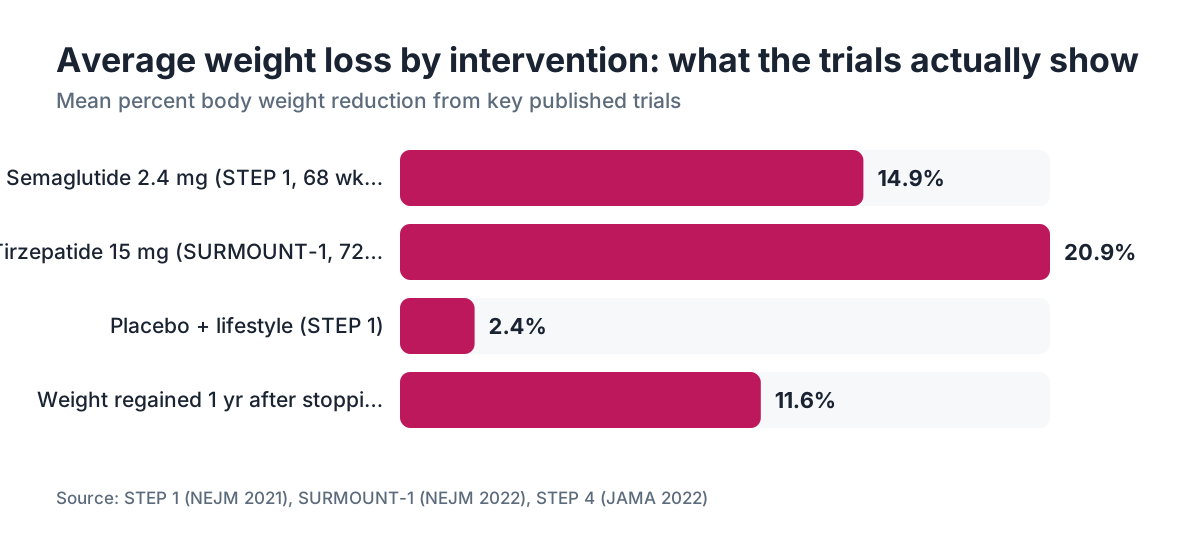
None of this means compounded semaglutide has hurt most people who take it. The semaglutide molecule itself has a well-established safety profile. The STEP 1 trial, published in the New England Journal of Medicine in 2021, showed that once-weekly 2.4 mg semaglutide produced an average 14.9% body weight reduction over 68 weeks, with a known side effect profile dominated by gastrointestinal symptoms [4]. The safety question with compounded versions is more about consistency of dose and formulation than about the molecule itself.
For women specifically, gastrointestinal side effects (nausea, constipation, reflux) tend to be more pronounced in early titration. That's consistent across both branded and compounded versions.
Who qualifies for Ro semaglutide, and who should not use it?
Ro's eligibility mirrors the clinical criteria for Wegovy: a BMI of 30 or higher, or a BMI of 27 or higher with at least one weight-related condition such as hypertension, type 2 diabetes, or high cholesterol [1]. You complete a health history questionnaire and the clinician reviewing it will disqualify you if you have contraindications.
Contraindications include a personal or family history of medullary thyroid carcinoma or Multiple Endocrine Neoplasia syndrome type 2, as semaglutide carries an FDA boxed warning for thyroid C-cell tumors based on rodent studies [1]. Pancreatitis history is also a contraindication. Active gallbladder disease, severe gastrointestinal conditions, and certain kidney problems may also make you a poor candidate.
Pregnancy and breastfeeding are absolute contraindications. Women in perimenopause and menopause are often ideal candidates by BMI criteria since the hormonal shift at menopause makes abdominal fat accumulation much more common, but that does not override any of the above contraindications.
One thing telehealth intake forms cannot always catch is the full picture of your medication interactions, bone health status, or cardiovascular risk. If you have a complex medical history, a synchronous visit with a clinician who has your full chart is genuinely worth the extra step. See our guide on perimenopause age if you are trying to understand whether your weight changes are hormonally driven.
How does semaglutide affect perimenopausal and menopausal women specifically?
This is where the clinical picture gets more nuanced and where most generic GLP-1 articles fall short.
Estrogen decline drives a shift in fat distribution toward visceral (abdominal) fat and slows metabolic rate. A 2023 analysis found that women gain an average of 1.5 pounds per year during the menopausal transition, partly hormonal, partly lifestyle, often both [5]. GLP-1 agonists like semaglutide work by slowing gastric emptying, increasing satiety signals, and reducing appetite through central nervous system pathways, which addresses the caloric side of that equation but not the hormonal root.
That matters because semaglutide does not raise estrogen or progesterone. Women on GLP-1s who are also dealing with hot flashes, sleep disruption, brain fog, and vaginal dryness still need those issues addressed separately. Some women find that losing weight improves hot flash frequency (adipose tissue converts androgens to estrogen, so weight loss can reduce that conversion), while others find symptom relief only after starting hormone replacement therapy.
The bigger concern for women in this age group is lean mass and bone density. The STEP trials showed that roughly one third of weight lost on semaglutide comes from lean mass, more than fat [4]. For a 55-year-old woman who is already at risk for osteoporosis, losing muscle and bone density matters. Resistance training and adequate protein intake (most clinicians recommend 1.2 to 1.6 g per kg of body weight per day) are genuinely necessary additions to any GLP-1 program, not optional.
If you have not had a recent bone density check, consider a bone density test before or during GLP-1 therapy. Estrogen loss already accelerates bone resorption; aggressive caloric restriction amplifies it.
For a direct comparison of weight loss options for women in this age range, our article on semaglutide for weight loss goes deeper into the trial data.
How does Ro semaglutide compare to tirzepatide programs?
Tirzepatide (branded as Mounjaro for diabetes, Zepbound for obesity) is a dual GIP/GLP-1 receptor agonist. The SURMOUNT-1 trial showed an average 20.9% body weight reduction at 72 weeks for the 15 mg dose, which is meaningfully higher than semaglutide's 14.9% in STEP 1 [6]. That difference is real, not marketing.
Ro currently offers both semaglutide and tirzepatide programs. Compounded tirzepatide pricing runs in a similar range to compounded semaglutide, though this varies. The same shortage and compounding regulatory issues apply: tirzepatide was on the FDA shortage list and also had its shortage declared resolved in 2025, triggering similar enforcement questions.
The side effect profiles are broadly similar: nausea, vomiting, diarrhea, constipation. Some patients tolerate one better than the other, and there is no reliable way to predict which in advance.
Our full breakdown of semaglutide vs tirzepatide walks through the trial data head-to-head if you want to read the actual numbers before deciding.
What happens when you stop Ro semaglutide?
This is the question the telehealth ads never volunteer.
The STEP 4 trial, a withdrawal study, found that patients who stopped semaglutide after 20 weeks of treatment regained two thirds of their lost weight within one year [7]. The drug suppresses appetite and slows gastric emptying as long as you take it. When you stop, those effects reverse. Your baseline appetite returns, often in full.
That does not mean semaglutide is not worth taking. It means it is a long-term intervention, not a reset. If you start a $150-per-month compounded program expecting to take it for six months and then maintain your results, the data does not support that expectation for most people.
For perimenopausal and menopausal women, this is especially relevant. If you are considering GLP-1 therapy alongside hormone therapy, both are likely to be long-term commitments. Understanding that going in is different from being surprised by it a year later.
The practical question to ask before starting: can you afford this medication, financially and logistically, for two to five or more years? If not, the weight loss may be temporary. That is not a knock on the drug; it is the honest biology.
Is Ro a reputable platform, and what should you watch for?
Ro has been operating since 2017 and is one of the larger direct-to-consumer telehealth platforms in the US. It is a legitimate company, not a scam. Its clinicians are licensed, and its prescriptions go to licensed pharmacies.
That said, "legitimate" is not the same as "the best option for every patient." A few things worth watching:
First, the asynchronous model. Many Ro interactions happen through a questionnaire, not a live video call. For otherwise healthy people with straightforward weight loss goals and no complex history, that may be fine. For women managing perimenopause, multiple medications, or a history of eating disorders or gastrointestinal disease, a live clinical relationship matters more.
Second, the regulatory environment for compounded semaglutide is genuinely in flux as of 2025. Some compounders have been sent warning letters by the FDA. If Ro's compounding partner receives enforcement action, supply could be disrupted. Ask specifically where your medication is compounded and whether the pharmacy is a 503A or 503B facility.
Third, add-ons. Ro will offer you labs, coaching, and other services. Some of these have real value; some are margin-builders. Metabolic labs that track glucose, insulin, and lipids are genuinely useful on a GLP-1. Generic wellness coaching is harder to evaluate.
WomenRx is a telehealth platform that prescribes GLP-1s alongside hormone therapy for women, which is a different model than Ro's standalone weight-loss focus. If you want a program that considers your hormone status and metabolic health together, that integrated approach may be worth comparing.
What does the actual evidence say about semaglutide for weight loss in women?
The STEP clinical trial program enrolled thousands of adults. STEP 1 was the trial that set the benchmark for weight management: 1,961 adults with obesity or overweight plus a weight-related condition, 68 weeks, once-weekly 2.4 mg semaglutide vs placebo. The result was 14.9% mean weight reduction in the semaglutide group vs 2.4% in placebo [4].
Women made up roughly 75% of STEP 1's participants, which is unusually representative and makes the data more directly applicable than many drug trials. Subgroup analyses showed women lost slightly less weight than men on average, which is consistent with general weight loss patterns rather than a drug-specific phenomenon.
HbA1c, blood pressure, and lipid markers also improved significantly in the semaglutide group. Those cardiometabolic benefits are real and documented.
A 2022 Novo Nordisk-funded analysis of STEP data found that weight loss with semaglutide was durable over the trial period but, as STEP 4 showed, not after discontinuation [7]. The Endocrine Society's 2023 clinical practice guideline on obesity pharmacotherapy includes GLP-1 receptor agonists as a recommended class for adults with a BMI of 30 or above, or 27 with comorbidities [8].
The North American Menopause Society (NAMS) has not issued a specific guideline on GLP-1 use in menopause as of this writing, but NAMS acknowledges that weight management is a significant factor in menopause symptom burden and cardiovascular risk [9].
Can you combine Ro semaglutide with hormone replacement therapy?
Yes, and for many perimenopausal and menopausal women, combining GLP-1 therapy with HRT makes clinical sense as a strategy, though it requires coordinating two prescribers if one is through Ro and the other through a separate provider.
HRT (specifically estrogen, with progesterone for women with a uterus) addresses the hormonal drivers of menopausal weight gain, hot flashes, sleep disruption, and bone loss. Semaglutide addresses caloric intake and appetite. They work through entirely different mechanisms and have no known pharmacokinetic interaction.
In practice, women on both often report that HRT makes it easier to sleep and exercise, which supports the lifestyle components that GLP-1 programs ask for. The estrogen patch specifically is associated with lower VTE risk than oral estrogen, which matters if your BMI is elevated.
What Ro does not currently offer is integrated hormone management alongside its GLP-1 program. If you need both, you are managing two separate clinical relationships. Some women find that cumbersome; others prefer it. The integrated model, where one telehealth provider handles hormones and GLP-1s together, is increasingly available and worth considering if simplicity and coordinated care matter to you.
How do you get started with Ro semaglutide, and what questions should you ask?
Starting is straightforward: go to ro.co, select the Body program, complete the health intake, and wait for clinician review. If approved, your prescription ships to your address.
Before you start, here are the questions worth having answered, either from Ro's clinician or your own doctor:
Which compounding pharmacy will fill my prescription, and is it a 503A or 503B facility? 503B outsourcing facilities are subject to more stringent FDA oversight than 503A pharmacies, which are regulated primarily by state boards.
What salt form of semaglutide does this compounding pharmacy use? It should be semaglutide base, not semaglutide sodium or semaglutide acetate.
How do I reach a clinician if I have a side effect over the weekend? Know whether you get a phone number, a message queue, or a 24-hour nurse line.
What is the cancellation and refund policy if the medication is not right for me?
Do you offer a titration schedule that matches Wegovy's labeled dose escalation?
If your BMI is at the lower end of qualifying range and you have menopausal symptoms, also ask whether a hormone workup is worth doing first. Treating insulin resistance and hormone deficiency together, rather than sequentially, is becoming the preferred model for women in this life stage.
Frequently asked questions
Is Ro's semaglutide the same as Ozempic?
The active molecule is semaglutide in both cases, but Ro dispenses a compounded version made by a third-party pharmacy, while Ozempic is manufactured by Novo Nordisk under FDA approval. The formulations, quality controls, and delivery devices differ. Ro's version comes in a multi-dose vial you inject yourself; Ozempic is a prefilled pen with verified dosing from a regulated manufacturer.
Does Ro semaglutide require insurance?
No. Ro's compounded semaglutide program is cash-pay only, typically $99 to $299 per month depending on dose. Compounded drugs are generally not reimbursable through insurance or eligible for Novo Nordisk's branded copay savings programs. That lower upfront cost is Ro's main advantage over branded Wegovy, which lists near $1,350 per month before insurance.
How much weight can I expect to lose on Ro semaglutide?
The STEP 1 trial showed an average 14.9% body weight reduction over 68 weeks with once-weekly 2.4 mg semaglutide. Individual results vary significantly based on starting weight, adherence, diet, and activity. Women tend to lose slightly less than men on average. Most people see meaningful loss in the first 12 weeks, with results continuing to accrue through the maintenance dose period.
Is compounded semaglutide still legal in 2025?
This is genuinely complicated. The FDA declared the semaglutide shortage resolved in early 2025, which ended the legal basis for most routine compounding of semaglutide copies. Some compounders and telehealth companies are challenging this in court. The situation is actively evolving. Before starting, ask your Ro clinician specifically about current legal status and supply stability for your program.
What are the side effects of semaglutide from Ro?
The side effect profile mirrors branded semaglutide: nausea is the most common (affecting up to 44% of patients in STEP 1), followed by vomiting, diarrhea, and constipation. These are usually worst during dose escalation and tend to improve over weeks. Rare but serious risks include pancreatitis, gallbladder disease, and a boxed warning for thyroid C-cell tumors based on animal studies.
Can I use Ro semaglutide if I am in menopause or perimenopause?
Yes, if you meet the BMI eligibility criteria (30 or above, or 27 with a comorbidity) and have no contraindications. Menopausal women are often good candidates because estrogen decline drives visceral fat gain. That said, semaglutide does not address hormonal symptoms. If you have hot flashes, sleep problems, or vaginal dryness, those need separate management, ideally with hormone therapy alongside your GLP-1 program.
Will I gain weight back when I stop Ro semaglutide?
Most people do. The STEP 4 withdrawal trial found that patients regained roughly two thirds of their lost weight within one year of stopping semaglutide. The drug suppresses appetite while you take it; when you stop, appetite returns. Semaglutide is a long-term medication for most people, not a short course. Planning your financial and logistical ability to stay on it matters before you start.
How does Ro semaglutide compare to WeightWatchers or other diet programs?
Semaglutide produces substantially more weight loss than behavioral programs alone. A head-to-head comparison is not available in trials, but STEP 1 showed 14.9% loss on semaglutide vs 2.4% on placebo plus lifestyle counseling. WeightWatchers and similar programs typically produce 3 to 5% weight loss on average. The tradeoff is cost, medical oversight, and long-term dependence on the drug versus building sustainable habits.
Does Ro semaglutide include a doctor visit or just a questionnaire?
Ro's standard intake is primarily asynchronous: you fill out a health questionnaire and a clinician reviews it without a live call. Some cases may trigger a follow-up message or call. This is less clinical oversight than a traditional in-person visit or a synchronous telehealth appointment. If your medical history is complex, this level of review may not be sufficient for safe prescribing.
What is the starting dose of Ro semaglutide?
Most programs, including Ro's, start at 0.25 mg subcutaneously once weekly for four weeks, then advance to 0.5 mg. The titration continues upward, typically in monthly steps, toward a maintenance dose of 1 mg or 2.4 mg depending on the program goal and tolerability. This mirrors Wegovy's labeled titration schedule. Going faster increases nausea; going slower is generally safer.
Can Ro semaglutide affect my thyroid?
Semaglutide carries an FDA boxed warning for thyroid C-cell tumors, based on studies in rodents. Human relevance has not been established, but the warning exists. If you have a personal or family history of medullary thyroid carcinoma or Multiple Endocrine Neoplasia type 2, semaglutide is contraindicated. Routine thyroid monitoring is not currently required for people without these risk factors, but tell your clinician about any thyroid history.
How long does it take for Ro semaglutide to work?
Most people notice reduced appetite within the first one to two weeks. Measurable weight loss usually begins within the first month. Significant results, 10% or more of body weight, typically take three to six months at or near the maintenance dose. The full effect seen in trials (about 15%) required 68 weeks. Faster titration does not produce faster weight loss; it primarily increases side effects.
Is Ro semaglutide safe to take with blood pressure or cholesterol medications?
Generally yes, but your prescribing clinician needs your full medication list. Semaglutide slows gastric emptying, which can affect the absorption timing of oral medications taken around the same time. There are no major drug-drug interactions with most antihypertensives or statins, but dose adjustments to those medications may be needed as you lose weight and your blood pressure or lipid levels change.
What should I eat while taking Ro semaglutide?
No diet is required, but high-protein, lower-calorie eating supports better outcomes. Most clinical guidance recommends 1.2 to 1.6 grams of protein per kilogram of body weight daily to minimize the lean mass loss that occurs with GLP-1-driven weight loss. High-fat meals worsen nausea early in treatment. Alcohol can worsen gastrointestinal side effects and is generally worth limiting. Resistance training alongside nutrition preserves muscle.
Sources
- FDA, Wegovy (semaglutide) prescribing information and label
- FDA, Drug Safety Communication on compounded semaglutide products (2024)
- GoodRx, Wegovy price reference
- Wilding et al., New England Journal of Medicine, STEP 1 trial, 2021
- Thurston et al., Journal of the American Heart Association, 2023, menopausal weight gain analysis
- Jastreboff et al., New England Journal of Medicine, SURMOUNT-1 trial, 2022
- Rubino et al., JAMA, STEP 4 semaglutide withdrawal trial, 2022
- Endocrine Society, Clinical Practice Guideline on Pharmacological Management of Obesity, 2023
- North American Menopause Society (NAMS), Menopause Practice: A Clinician's Guide
- FDA, Drug Shortages database, semaglutide shortage history