Retatrutide vs semaglutide: how do they compare for women?
TL;DR: Retatrutide is a triple hormone agonist (GIP, GLP-1, glucagon) still in Phase 3 trials as of mid-2025, not yet FDA-approved. Semaglutide (Ozempic, Wegovy) is approved and widely available. Trial data shows retatrutide averaging 24% body weight loss at 48 weeks versus roughly 15% for semaglutide at 68 weeks. Availability, not efficacy, is the deciding factor right now.
What are retatrutide and semaglutide, and how do they work?
Semaglutide is a glucagon-like peptide-1 (GLP-1) receptor agonist. It mimics GLP-1, a gut hormone that slows gastric emptying, suppresses appetite, and tells the pancreas to release insulin in response to meals. It was first approved by the FDA in 2017 as Ozempic for type 2 diabetes and in 2021 as Wegovy specifically for chronic weight management [1]. You inject it once a week.
Retatrutide is newer and more complicated. It targets three receptors at once: GLP-1, GIP (glucose-dependent insulinotropic polypeptide), and the glucagon receptor. That triple mechanism is why researchers and patients are paying close attention. GLP-1 and GIP together appear in tirzepatide (Mounjaro, Zepbound), and that combination already outperforms semaglutide on weight loss. Adding glucagon receptor agonism on top theoretically increases energy expenditure further, which is part of why early retatrutide numbers look so striking [2].
The plain-English version: semaglutide quiets hunger. Retatrutide quiets hunger and may also push the body to burn more calories at rest. Whether that extra mechanism translates into meaningfully better real-world outcomes for most women is still being worked out in ongoing Phase 3 trials.
For a side-by-side look at semaglutide's full profile, see our article on semaglutide. If you're already comparing incretin drugs and want to understand where tirzepatide fits, the semaglutide vs tirzepatide piece covers that match-up directly.
What does the weight loss data actually show?
Retatrutide's trial numbers beat semaglutide's by a wide margin, but the comparison comes with real caveats about matching trials that were never designed to be matched.
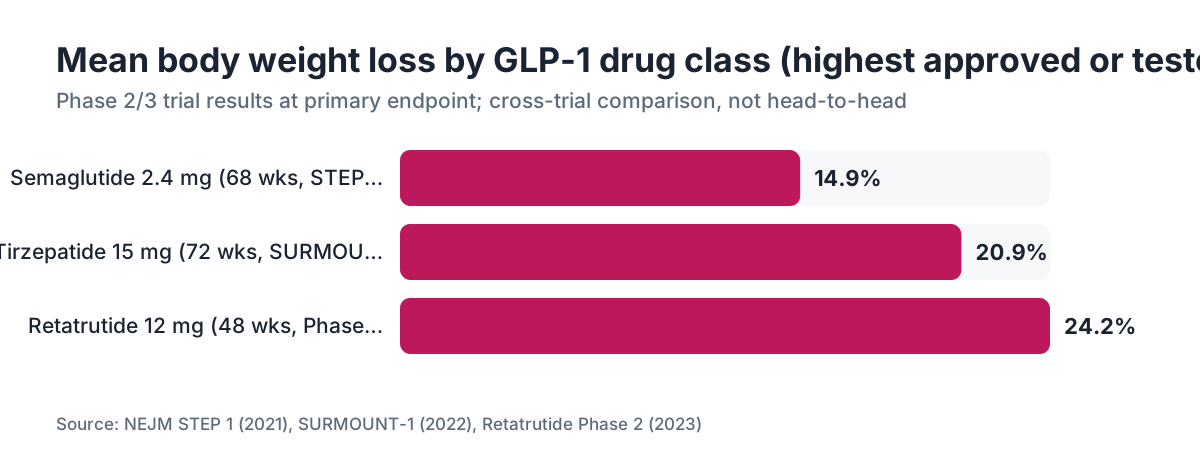
The semaglutide weight data comes from the STEP 1 trial published in the New England Journal of Medicine in 2021. Adults without diabetes who took 2.4 mg semaglutide weekly lost a mean of 14.9% of body weight over 68 weeks compared to 2.4% with placebo [3]. That is the number cited on Wegovy's FDA label.
Retatrutide's Phase 2 data, published in the New England Journal of Medicine in 2023, is what generated the headlines. At the highest dose tested (12 mg weekly), participants lost a mean of 24.2% of body weight at 48 weeks [2]. The 8 mg dose produced about 17.3% loss. Both outpaced semaglutide, even accounting for the different trial lengths.
But cross-trial comparisons are tricky. The populations weren't identical, the trial durations differed, and Phase 2 studies are smaller and earlier than the Phase 3 trials that support FDA approval. The STEP 1 trial enrolled 1,961 participants; the retatrutide Phase 2 enrolled 338. Numbers matter when you're trying to understand rare side effects or variation across subgroups.
For women specifically, body composition matters as much as scale weight. GLP-1 drugs, including semaglutide, carry a real risk of lean muscle loss alongside fat loss. Early retatrutide data suggested favorable fat-to-lean loss ratios, potentially tied to the glucagon component increasing metabolic rate, but peer-reviewed body composition analysis in women is not yet published in the Phase 3 data [2].
The honest summary: retatrutide's numbers are bigger. Whether they're durably bigger, safer, and clinically better for women in menopause or perimenopause is something Phase 3 will tell us, probably in 2025 or 2026.
How do the side effects compare?
Both drugs share a core side effect profile driven by the GLP-1 mechanism: nausea, vomiting, diarrhea, constipation, and reduced appetite. These are dose-dependent and typically peak during dose escalation before fading for most people.
Semaglutide's side effect profile is well-documented across tens of thousands of trial participants and now millions of real-world patients. The FDA label for Wegovy lists nausea (44%), diarrhea (30%), vomiting (24%), and constipation (24%) as the most common adverse events [1]. Serious but rare risks include pancreatitis, gallbladder disease, acute kidney injury from dehydration, and a theoretical concern about thyroid C-cell tumors seen in rodent studies (the human relevance is still uncertain, and the FDA label carries a boxed warning for thyroid cancer risk in people with a personal or family history of medullary thyroid carcinoma or MEN2).
Retatrutide's Phase 2 data showed a broadly similar GI side effect profile, with nausea reported in roughly 40-50% of participants at higher doses. Because glucagon receptor agonism can raise blood glucose in isolation, there was theoretical concern about hyperglycemia, but that effect appears to be counterbalanced by the GLP-1 and GIP components in practice. Heart rate increases were also observed, similar to what's seen with semaglutide [2].
Muscle loss deserves its own mention because it matters a lot for women approaching or in menopause. Estrogen decline already accelerates sarcopenia (muscle loss), and any rapid weight loss medication that doesn't preserve lean mass can worsen that trajectory. Neither drug has been studied long enough or specifically enough in perimenopausal or postmenopausal women to give definitive lean-mass data. The standard recommendation across GLP-1 drugs is adequate protein intake (at least 1.2 g per kg of body weight daily) and resistance training. See the menopause section for more on body composition during hormonal transition.
Is retatrutide FDA-approved, and when could it be available?
No. As of mid-2025, retatrutide is not FDA-approved for any indication.
Eli Lilly is running Phase 3 trials under the program name TRIUMPH. The trials are studying retatrutide for obesity, type 2 diabetes, and non-alcoholic fatty liver disease. Based on typical timelines for Phase 3 completion and FDA review (usually 12-24 months after Phase 3 data submission), an optimistic estimate for FDA approval would be late 2026 to 2027. That timeline could shift in either direction.
Until approval, retatrutide is not legally available outside of clinical trials. It cannot be compounded, prescribed off-label, or obtained through telehealth. Anything marketed as "retatrutide" online right now is unverified and likely a research peptide not manufactured for human use.
Semaglutide is a different story. Wegovy (2.4 mg weekly) is FDA-approved for chronic weight management in adults with a BMI of 30 or higher, or 27 or higher with at least one weight-related condition. Ozempic is approved for type 2 diabetes management. For more detail on how semaglutide works as a weight loss treatment, see semaglutide for weight loss.
Head-to-head comparison: retatrutide vs semaglutide at a glance
The table below summarizes key facts from published trial data and FDA labeling. Cross-trial comparisons have limits, but this gives a structured starting point.
| Feature | Semaglutide (Wegovy) | Retatrutide | |---|---|---| | Mechanism | GLP-1 agonist | GLP-1 + GIP + glucagon agonist | | FDA approval (obesity) | Yes (2021) | No (Phase 3 as of 2025) | | Mean weight loss (highest dose, trial) | ~14.9% at 68 weeks [3] | ~24.2% at 48 weeks [2] | | Dosing | Once weekly injection | Once weekly injection (in trials) | | Trial size (weight data) | 1,961 (STEP 1) | 338 (Phase 2) | | Most common side effects | Nausea, diarrhea, vomiting | Nausea, diarrhea, vomiting | | Compounded availability | Yes (was available during shortage; FDA oversight ongoing) | No | | Approximate monthly cost (brand) | ~$1,350 (Wegovy, US retail) [4] | Not yet priced | | Insurance coverage | Expanding; varies by plan | None yet |
The 24% versus 15% gap is real in the data. Whether that gap survives Phase 3 retatrutide trials with thousands of participants, diverse populations, and longer follow-up remains to be seen.
Which one is better for women in perimenopause or menopause?
Neither drug has been studied specifically in perimenopausal or postmenopausal women as a defined subgroup with published results as of mid-2025. That is a genuine gap in the literature and a fair criticism of both development programs.
What we do know is that weight gain during perimenopause is largely driven by hormonal changes, specifically falling estrogen and progesterone, more than aging or behavior. That hormonal shift also changes where fat is deposited, moving it toward visceral (abdominal) fat, which carries higher cardiovascular and metabolic risk. GLP-1 receptor agonists like semaglutide do reduce visceral fat, and preliminary data suggests this holds in older women, but the trials weren't powered to test that specifically [3].
Hormone therapy itself affects metabolic rate, insulin sensitivity, and body composition. The Endocrine Society's 2023 clinical practice guideline on obesity pharmacotherapy notes that underlying hormonal conditions should be treated before or alongside weight loss medications, because unaddressed hypothyroidism, insulin resistance, or estrogen deficiency can blunt medication response [5]. That guideline doesn't mention retatrutide by name (it predates the Phase 2 publication) but the principle applies.
The practical answer for most women right now: if you need a GLP-1 drug and you're in your 40s or 50s, semaglutide (or tirzepatide) is the available, studied, prescribable option. Retatrutide may be a better option in two to three years. If you're also dealing with hot flashes, bone loss, or mood changes from perimenopause, a conversation about hormone replacement therapy alongside a GLP-1 is worth having with your prescriber. The two approaches aren't mutually exclusive, and estrogen preserves lean mass in ways that a GLP-1 alone doesn't.
WomenRx clinicians routinely review both hormonal status and metabolic health together, because treating one without the other often produces incomplete results.
What does retatrutide cost, and will insurance cover it?
Retatrutide has no price yet because it's not approved. Once approved, pricing will likely follow the pattern set by semaglutide and tirzepatide.
Wegovy (semaglutide 2.4 mg for obesity) has a list price of approximately $1,349 per month without insurance in the United States [4]. With manufacturer savings cards, commercially insured patients sometimes pay $0-$25 per month, but that requires commercial insurance that covers the drug, which many plans still don't. Medicare Part D was prohibited from covering obesity medications until the Treat and Reduce Obesity Act passed in 2024, and formulary implementation is still rolling out [6].
For context, tirzepatide (Zepbound), which has two of the three mechanisms retatrutide uses, costs about $1,060 per month list price. If retatrutide prices higher than tirzepatide, payers will need to see meaningful clinical differentiation to cover it.
If brand pricing is prohibitive right now, compounded semaglutide has been legally available during FDA shortage periods, though the FDA has been actively tightening those rules. Check current FDA shortage status before assuming a compounded option is available.
How does each drug affect bone density, which matters a lot for women?
This is underappreciated and genuinely important for women in midlife. Rapid weight loss from any cause, including GLP-1 medications, can reduce bone mineral density.
The STEP trials showed that semaglutide users lost about 0.5-1% more bone density than placebo over 68 weeks in some measurements, which is clinically modest but not zero [3]. The concern is greater in women who are already losing estrogen, since estrogen is the primary hormone protecting bone in women.
Retatrutide's glucagon receptor component is theoretically bone-neutral to positive (glucagon has some anabolic signaling in bone), but actual bone density data from Phase 2 was not a primary endpoint and wasn't prominently reported. We simply don't have good data yet.
For any woman on a GLP-1 drug who is also perimenopausal or postmenopausal, getting a baseline bone density test (DEXA scan) before starting and monitoring periodically is reasonable. The Bone Health and Osteoporosis Foundation recommends DEXA for all women 65 and older, and earlier for those with risk factors, which rapid-weight-loss medication now likely adds to [10].
Estrogen therapy, including an estrogen patch, is one of the most effective bone-preserving interventions available to women in this age range. If you're on a GLP-1 and declining estrogen, the combination of GLP-1-related weight loss and estrogen deficiency can create compounding bone risk that deserves attention.
Can you take retatrutide and semaglutide together?
No, and you shouldn't try.
Combining two GLP-1-based drugs overlaps mechanisms and multiplies side effect risk, especially nausea, vomiting, dehydration, and potential hypoglycemia in people on insulin or sulfonylureas. There is no published data supporting dual GLP-1 use, and it isn't done in clinical trials.
The question is mostly moot because retatrutide isn't prescribable outside trials. But once retatrutide is approved, the expectation is that patients will be on one drug or the other, not both. Some people do switch from semaglutide to a newer drug as options expand, and that's typically done with a washout period guided by a prescriber.
What should women ask their doctor about retatrutide vs semaglutide?
Good questions to bring to an appointment right now:
- Am I a candidate for semaglutide or tirzepatide now, given my BMI, metabolic labs, and hormonal status?
- Should I start one of the available drugs now, or wait for retatrutide data, and what does waiting cost me in terms of metabolic health?
- How will you monitor my lean muscle mass and bone density while I'm on a GLP-1 drug?
- Does my hormonal profile (estrogen, thyroid, insulin resistance) need to be addressed before or alongside starting a GLP-1?
- If I start semaglutide and retatrutide gets approved, how would we approach transitioning?
A provider who has read the Phase 2 retatrutide paper and can discuss it without dismissing or overselling it is worth finding. The trial data is public, peer-reviewed, and in the New England Journal of Medicine, not fringe literature [2].
If your current doctor isn't fluent in the GLP-1 space, a telehealth practice focused on women's metabolic and hormonal health, like WomenRx, may be a more efficient path to a prescriber who can weigh all of this in context.
What are the chances retatrutide outperforms semaglutide in Phase 3?
Honest answer: probably good on weight loss, less certain on everything else.
Phase 2 to Phase 3 dropout rates for drugs overall run about 50% in terms of meeting endpoints, but that's skewed by early-stage drugs with poorly validated mechanisms. Retatrutide's mechanism is not speculative. GLP-1, GIP, and glucagon receptors are all well-characterized, and dual GIP/GLP-1 agonism (tirzepatide) already proved better than GLP-1 alone in the SURMOUNT-1 trial, where tirzepatide produced 20.9% mean weight loss at the highest dose at 72 weeks [7]. Retatrutide adds glucagon on top of that.
The risks for Phase 3 aren't about mechanism failure. They're about whether the side effect burden at doses producing 24% weight loss is tolerable enough for broad use, whether cardiovascular outcomes data will be favorable (that trial is ongoing), and whether the drug shows durability after discontinuation. Semaglutide regain data is sobering. The STEP 4 extension showed that most weight was regained within a year of stopping [8]. If retatrutide follows the same pattern, the question becomes: is a higher peak worth similar long-term dynamics?
For women in their 40s and 50s managing perimenopause alongside metabolic goals, this long-term durability question matters more than the headline number. A drug that produces 24% loss but requires indefinite use to maintain is a different calculation than one that produces 15% loss with better maintenance tolerability, and we don't yet have that comparison.
Frequently asked questions
Is retatrutide available now in the US?
No. Retatrutide is not FDA-approved and cannot be prescribed, dispensed, or compounded in the US as of mid-2025. It is available only inside registered clinical trials. Anything sold online as retatrutide is an unregulated research peptide, not a pharmaceutical-grade drug, and carries unknown safety risks. FDA approval is estimated at 2026-2027 at the earliest based on current Phase 3 timelines.
How much weight can you lose on retatrutide vs semaglutide?
The best available data: semaglutide 2.4 mg produced a mean 14.9% body weight loss at 68 weeks in the STEP 1 trial (1,961 participants). Retatrutide 12 mg produced a mean 24.2% loss at 48 weeks in its Phase 2 trial (338 participants). The gap is real but comes from different trials with different designs and populations. Phase 3 retatrutide data will be more definitive.
Does retatrutide cause more side effects than semaglutide?
Based on Phase 2 data, the side effect profile is broadly similar: mostly nausea, diarrhea, vomiting, and constipation concentrated during dose escalation. Retatrutide's added glucagon receptor activity raised theoretical concerns about heart rate increases and blood glucose fluctuation, both were observed modestly in trials. Full Phase 3 safety data, especially for rare events, isn't yet available.
Can women in menopause use semaglutide for weight loss?
Yes, semaglutide is approved for adults meeting BMI criteria regardless of menopausal status. But menopause-related estrogen decline affects where fat is stored, muscle mass, and bone density, all of which interact with GLP-1 drug effects. Most clinicians recommend addressing hormonal status alongside GLP-1 therapy, not treating weight in isolation. There are no menopause-specific semaglutide contraindications.
What is the difference between retatrutide and tirzepatide?
Tirzepatide (Mounjaro, Zepbound) is a dual GIP and GLP-1 receptor agonist, already FDA-approved. Retatrutide adds a third mechanism, glucagon receptor agonism, on top of those two. That glucagon component may increase resting energy expenditure. In head-to-head data, retatrutide's Phase 2 weight loss numbers exceeded tirzepatide's SURMOUNT-1 results, but the comparison is cross-trial and the drugs haven't been tested head-to-head directly.
Will retatrutide eventually replace semaglutide?
Unlikely to fully replace it. More efficacious drugs tend to capture new patients and drive prescribing shifts, but semaglutide has a large, established patient base, decades of safety follow-up, and a lower price point in some markets. What usually happens is that higher-efficacy drugs become preferred first-line options for patients with greater metabolic burden while older drugs remain available for patients who respond well or tolerate them better.
Does semaglutide affect hormones in women?
Semaglutide doesn't directly alter estrogen, progesterone, or testosterone levels. Significant weight loss from any source can affect hormone levels by reducing the adipose tissue that aromatizes androgens to estrogen. In premenopausal women, this could theoretically affect cycle regularity. GLP-1 receptors exist in ovarian tissue, but whether semaglutide meaningfully changes ovarian function isn't established in peer-reviewed literature.
How long do you have to take semaglutide to see results?
Most people see meaningful weight loss by 12-16 weeks, but the STEP 1 trial ran 68 weeks to capture the full effect. The dose escalation schedule (starting at 0.25 mg weekly and stepping up over 16-20 weeks to the full 2.4 mg dose) means results build gradually. Stopping the drug typically leads to substantial weight regain within 12 months, as shown in the STEP 4 withdrawal extension.
Is semaglutide or retatrutide better for insulin resistance in women?
Both target GLP-1 receptors, which improve insulin secretion and sensitivity. Retatrutide's additional GIP agonism may provide extra benefit for insulin sensitivity, following the pattern seen with tirzepatide, which outperforms semaglutide on glucose control markers. For women with PCOS or prediabetes alongside overweight, the incremental benefit of a GIP-containing drug may be meaningful, though direct comparative data specific to women with insulin resistance isn't yet published.
Can you switch from semaglutide to retatrutide when it's approved?
Almost certainly yes, in the same way people now switch from semaglutide to tirzepatide. The typical protocol involves a washout period to clear the prior drug before starting the new one, since both act on overlapping receptors and dose titration needs to restart. No published switching protocol exists yet for retatrutide specifically because it isn't approved. Your prescriber will guide that transition based on guidelines available at the time.
Does rapid weight loss from GLP-1 drugs hurt bone density?
It can. The STEP trials showed modest reductions in bone mineral density with semaglutide use, approximately 0.5-1% beyond placebo in some measurements. This matters more for women in perimenopause or postmenopause who are already losing bone from estrogen decline. Adequate calcium, vitamin D, resistance training, and possibly hormone therapy all help offset this. A baseline DEXA scan before starting any GLP-1 drug is reasonable for women over 45.
What is the TRIUMPH trial for retatrutide?
TRIUMPH is Eli Lilly's Phase 3 clinical trial program for retatrutide, studying it for obesity and related metabolic conditions. It is the main study required for FDA approval. The trial is larger than Phase 2 (thousands of participants) and includes longer follow-up and cardiovascular safety components. Results are expected to inform an FDA submission, with potential approval estimated in 2026-2027 if data are favorable.
How does perimenopause affect weight loss on GLP-1 drugs?
Falling estrogen in perimenopause shifts metabolism toward fat storage, especially visceral fat, and reduces insulin sensitivity. These changes can make weight loss harder by any method. GLP-1 drugs work through appetite suppression and insulin signaling, which doesn't directly counteract estrogen decline. Women in perimenopause may see slower responses or more pronounced lean mass loss. Addressing estrogen deficiency alongside GLP-1 therapy may improve both metabolic outcomes and tolerability.
Sources
- FDA, Wegovy (semaglutide) prescribing information
- Jastreboff AM et al., New England Journal of Medicine, 2023. Retatrutide Phase 2 obesity trial.
- Wilding JPH et al., New England Journal of Medicine, 2021. STEP 1 trial, semaglutide 2.4 mg.
- GoodRx, Wegovy price reference
- Endocrine Society, Clinical Practice Guideline: Pharmacological Management of Obesity, 2023
- CMS, Medicare Part D coverage of anti-obesity medications
- Jastreboff AM et al., New England Journal of Medicine, 2022. SURMOUNT-1 trial, tirzepatide.
- Wadden TA et al., New England Journal of Medicine, 2021. STEP 4 trial, semaglutide withdrawal extension.
- FDA, Drug Shortage database, semaglutide
- Bone Health and Osteoporosis Foundation, DEXA screening recommendations
- The Menopause Society, position statement on menopause and body composition
- ClinicalTrials.gov, Eli Lilly TRIUMPH Phase 3 retatrutide trials