Putting on weight during menopause: why it happens and what actually works
TL;DR: Most women gain 5 to 8 pounds during the menopause transition, concentrated in the belly, even when diet and exercise stay the same. Falling estrogen shifts fat storage from hips to abdomen, slows metabolic rate, disrupts sleep, and raises cortisol. Hormone therapy, GLP-1 medications, and targeted resistance training all have real evidence behind them. No single fix works for everyone.
Why do women gain weight during menopause?
Menopause weight gain is not a discipline problem. It is a physiology problem.
Estrogen is the short answer. Estrogen receptors sit on fat cells, muscle cells, and in the hypothalamus (the brain region that governs appetite and energy use). When estrogen drops during perimenopause and menopause, those receptors go quiet and a cascade of changes follows. Fat cells in the belly enlarge and multiply. Muscle mass declines because estrogen supports protein synthesis. The hypothalamus raises the body's defended fat set-point, meaning your brain actually defends a higher body weight the way a thermostat defends a temperature [1].
The result is that a woman eating and exercising exactly as she did at 38 will often gain weight at 48 anyway. The SWAN study (Study of Women's Health Across the Nation), which followed over 3,000 women across the menopause transition, found that women gained an average of about 5 lbs during the 3-year period around the final menstrual period, even after controlling for age and lifestyle factors [2].
There is also a parallel aging effect. Muscle mass drops roughly 3 to 8 percent per decade after age 30 in women, and resting metabolic rate falls with it. Menopause and aging hit simultaneously in most women's 40s and 50s, so untangling which is to blame is genuinely difficult. The honest answer is: both.
What is the difference between menopause belly fat and regular weight gain?
Where the new fat goes matters more than the number on the scale.
Before menopause, estrogen pushes fat preferentially to hips, thighs, and buttocks. Subcutaneous fat in those areas is metabolically quieter and carries less cardiovascular risk. After menopause, fat storage shifts sharply toward visceral adipose tissue: the deep abdominal fat that wraps around the liver, pancreas, and intestines [1].
Visceral fat is metabolically active in a bad way. It secretes inflammatory cytokines, raises fasting insulin, drives up LDL cholesterol, and is closely linked to type 2 diabetes and cardiovascular disease. The North American Menopause Society (NAMS) notes that the menopause-related shift toward abdominal fat is associated with increased cardiometabolic risk independent of total body weight [3].
A waist circumference above 35 inches is the clinical flag most providers use. Some women notice their clothing size changes even when the scale barely moves, because visceral fat sits inside the abdominal cavity rather than under the skin.
This is also why standard BMI can mislead in postmenopausal women. A woman can sit at a "normal" BMI and still carry dangerous levels of visceral fat. Measuring waist circumference and, ideally, getting a DEXA scan to measure body composition directly gives a more accurate picture. See our guide to bone density test to understand what a DEXA can show you.
How much weight gain is typical during menopause?
The numbers matter here because the range is wide and the averages get misquoted constantly.
The SWAN study found median weight gain of approximately 1.5 lbs per year during the late perimenopause to early postmenopause window [2]. Over a full menopause transition spanning 4 to 8 years, that adds up to roughly 6 to 12 lbs for the median woman. But the distribution has a long tail. A meaningful minority of women gain 20 or more pounds. Some gain very little.
Factors that predict larger gains include [2][3]:
- Starting perimenopause with a higher BMI
- Sedentary lifestyle
- Poor sleep quality (more on that below)
- Surgical menopause (abrupt estrogen loss is harder on metabolism than gradual decline)
- Higher baseline cortisol or psychological stress
- Certain medications, especially antidepressants started for menopause symptoms
Race matters too, and not in a simple way. Black women in SWAN tended to gain more weight than white women, while Japanese and Chinese American women tended to gain less, even after adjusting for calorie intake. The mechanisms are not fully understood [2].
To see where you are in the transition, our article on perimenopause age lays out the timeline in detail.
How does estrogen loss directly cause belly fat to accumulate?
The mechanism runs through at least three pathways, and they all operate at once.
First, estrogen normally suppresses lipoprotein lipase (LPL) activity in visceral fat depots. LPL is the enzyme that pulls circulating fats into fat cells for storage. When estrogen drops, LPL in belly fat becomes more active, so more dietary fat and circulating triglycerides get deposited there [1].
Second, estrogen loss raises cortisol sensitivity. Cortisol, the stress hormone, tells the body to store fat centrally. Lower estrogen means the hypothalamus-pituitary-adrenal axis runs hotter. Women in menopause often report feeling more stressed and sleeping worse, which keeps cortisol elevated chronically. Chronic high cortisol is one of the most reliable drivers of visceral fat known to medicine.
Third, estrogen is an insulin sensitizer. With less of it, muscle and liver cells become modestly more insulin-resistant, meaning insulin has to work harder to move glucose out of the bloodstream. Persistently higher insulin levels signal fat cells to store more and release less.
Put those three together and you have a system biologically tilted toward storing fat, especially in the abdomen, even when a woman is doing everything right. This matters because it means calorie restriction alone is often not enough. You have to address the underlying hormonal environment.
For a broader look at menopause biology, including symptoms beyond weight, that resource covers the full picture.
Does hormone replacement therapy help with menopause weight gain?
This is one of the most contested questions in women's medicine, and the honest answer is: HRT probably does not cause meaningful weight loss, but it does reduce the tendency to gain fat in the belly specifically, and it changes where fat is stored.
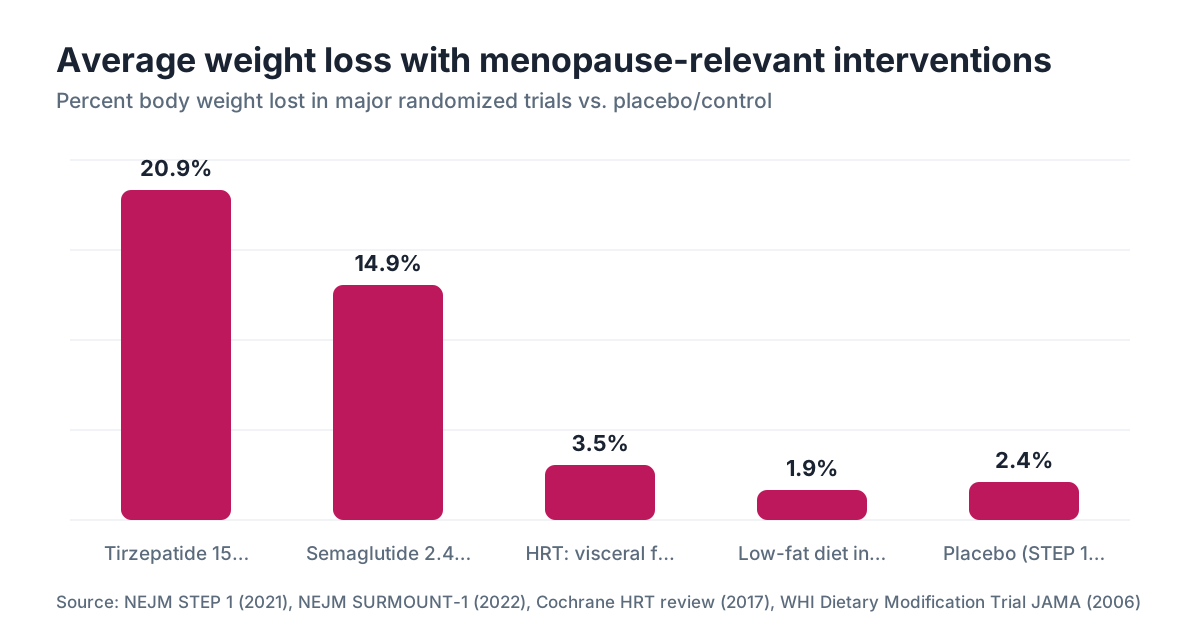
A 2017 Cochrane review of randomized trials found that postmenopausal women on estrogen-based HRT had significantly less central fat gain than controls, with a weighted mean difference of about 0.5 to 1.3 kg less visceral fat over the trial period [4]. That is modest on a number scale. But the body composition difference is more meaningful: HRT-treated women held more lean mass and less visceral fat at the same scale weight.
The NAMS 2022 position statement states that hormone therapy "has a favorable effect on body composition, with a reduction in visceral fat and preservation of lean body mass" [3]. That is a direct quote from the official guidance.
What HRT does not do is override a caloric surplus. It will not make weight melt off. It works by restoring the estrogen environment that tells your body to store fat in a less dangerous pattern. Women who use HRT still need to manage diet and exercise. But starting HRT in early menopause (within 10 years of the final period or before age 60) appears to offer the most metabolic benefit alongside cardiovascular protection.
Progesterone is typically added to protect the uterine lining when estrogen is used. The type matters: micronized bioidentical progesterone (like Prometrium) is weight-neutral in most studies, while older synthetic progestins (medroxyprogesterone acetate) may slightly worsen insulin resistance. If weight is a concern, ask specifically about progesterone form. See our guides on progesterone, hormone replacement therapy, and the estrogen patch for the delivery-method details that affect how well HRT works.
Do GLP-1 medications work for menopause weight gain?
Yes, and the data are striking, though almost none of the major GLP-1 trials specifically enrolled perimenopausal or postmenopausal women as a defined subgroup, so there are real gaps to acknowledge.
Semaglutide (Ozempic/Wegovy) and tirzepatide (Mounjaro/Zepbound) are GLP-1 receptor agonists that reduce appetite, slow gastric emptying, and appear to reset the hypothalamic set-point downward. That last mechanism is directly relevant to menopause, because the set-point elevation driven by estrogen loss may be at least partially reversible via the hypothalamus regardless of the hormone route.
The STEP 1 trial of semaglutide 2.4 mg (Wegovy) found average weight loss of 14.9% of body weight versus 2.4% with placebo at 68 weeks [5]. The SURMOUNT-1 trial of tirzepatide found average weight loss of 20.9% of body weight at the highest dose (15 mg) versus 3.1% with placebo at 72 weeks [6]. These are large effects. For a 180-pound woman, that is 27 to 38 pounds.
One practical note for menopausal women: GLP-1s cause loss of both fat mass and lean mass. Postmenopausal women are already at risk for muscle loss and osteoporosis. Anyone using a GLP-1 without resistance training is almost certainly losing more muscle than they need to. Adequate protein intake (most researchers suggest 1.2 to 1.6 grams per kg of body weight daily) and progressive resistance training are not optional add-ons with GLP-1 therapy. They are what determines whether the weight you lose stays off and whether you keep your bone density.
For a deeper comparison, see semaglutide for weight loss and our head-to-head on semaglutide vs tirzepatide. WomenRx offers telehealth access to both, prescribed by clinicians who understand the menopause-specific context.
One more thing: GLP-1s cost real money. Branded Wegovy lists at roughly $1,300 per month before insurance. Compounded semaglutide is cheaper but comes with regulatory caveats worth understanding. See that article for the full breakdown.
What diet changes actually work for menopausal weight gain?
The research on diet for menopausal weight is less impressive than most articles let on. No single dietary pattern has been shown to reliably prevent menopause-associated weight gain in long-term randomized trials.
That said, some patterns have better evidence than others.
Protein first. Protein has the highest thermic effect of any macronutrient (meaning you burn more calories digesting it), it preserves muscle mass during calorie restriction, and it blunts appetite more than carbohydrates or fat. Most perimenopausal and postmenopausal women eat far less protein than optimal. A target of 25 to 30 grams of protein per meal, more than per day, is supported by muscle protein synthesis research in aging women [7].
Blood sugar rhythm matters more after menopause. Estrogen's insulin-sensitizing effect is gone. That does not mean you need a ketogenic diet, but it does mean that large boluses of refined carbohydrates produce bigger blood sugar swings than they used to, which drives hunger cycles. Spreading carbohydrate intake across meals and pairing carbs with protein and fat blunts those spikes.
Calorie restriction alone has a poor track record at this life stage. Studies consistently find that perimenopausal and postmenopausal women who restrict calories without resistance training lose significant lean mass and often regain fat faster afterward. The Women's Health Initiative dietary modification trial, which followed nearly 49,000 postmenopausal women, found that a low-fat dietary intervention produced only modest and temporary weight loss compared to controls [8].
Alcohol is underrated as a contributor. It is calorie-dense, disrupts sleep architecture, raises cortisol, and loosens dietary restraint. Postmenopausal women metabolize alcohol less efficiently than younger women. Cutting back or out is one of the most impactful single changes many women can make.
What type of exercise is best for weight gain during menopause?
Resistance training. Full stop.
Cardiovascular exercise burns calories during the session. Resistance training builds muscle, which raises resting metabolic rate around the clock. Since the core problem in menopause is a lower resting metabolic rate (from both estrogen loss and age-related muscle loss), building muscle addresses the root cause in a way that daily walking alone does not.
A 2022 meta-analysis in Menopause journal found that resistance training in postmenopausal women significantly reduced body fat percentage, improved insulin sensitivity, and preserved or increased lean mass [9]. The effect was larger with higher training frequency (3 or more sessions per week) and progressive overload (gradually increasing weight over time).
Cardio is still worth doing for cardiovascular health, mood, and sleep, all of which affect weight indirectly. But the woman who spends 5 hours a week on the treadmill and skips weights is leaving the most metabolically important tool on the table.
One specific note: heavy resistance training (compound lifts like squats, deadlifts, rows) is more than safe in postmenopausal women. It is protective. It is the single most evidence-backed way to prevent osteoporosis alongside adequate calcium and vitamin D. The fear of "bulking up" is not realistic in a low-estrogen hormonal environment. What actually happens is that women get leaner and stronger without becoming visibly muscular.
How does poor sleep make menopause weight gain worse?
Sleep disruption is one of the most underappreciated drivers of menopause weight gain, partly because hot flashes and night sweats make quality sleep hard to get, and partly because poor sleep is easy to overlook when you're focused on diet and exercise.
Sleep deprivation raises ghrelin (the hunger hormone) and lowers leptin (the satiety hormone). After a poor night, appetite is higher, cravings skew toward high-calorie foods, and willpower to resist them is lower. This is not psychology. It is documented endocrinology. A study in the Annals of Internal Medicine found that cutting sleep from 8.5 to 5.5 hours reduced fat loss from calorie restriction by 55%, while increasing muscle loss [10].
Menopause makes sleep worse through several routes: hot flashes wake women up repeatedly, falling progesterone (which has a sedative effect) reduces sleep quality, and anxiety and mood changes common in perimenopause raise nighttime arousal.
Addressing sleep is a legitimate weight management strategy, not a lifestyle bonus. Treating hot flashes with HRT often dramatically improves sleep, which then improves body composition through the hormonal pathway above. Women who cannot or choose not to use HRT have other options: cognitive behavioral therapy for insomnia (CBT-I) is the evidence-based first-line treatment and has been shown to work in menopausal women specifically.
Can weight gain during menopause increase the risk of serious health problems?
Yes, and the risks are specific enough to be worth naming.
Visceral fat is directly linked to increased risk of type 2 diabetes, hypertension, coronary artery disease, and certain cancers, particularly endometrial and breast cancer. Postmenopausal women with abdominal obesity have roughly a 2- to 3-fold higher risk of developing metabolic syndrome compared to postmenopausal women with normal waist circumference [3].
The cardiovascular risk shift at menopause is real and significant. Before menopause, women have lower rates of cardiovascular disease than age-matched men. After menopause, that advantage narrows rapidly. Visceral fat accumulation is part of the mechanism. The American Heart Association now categorizes menopause as a sex-specific cardiovascular risk enhancer [12].
Weight gain in this window also compounds bone risk. Counterintuitively, some body fat was thought to protect bones (fat cells make small amounts of estrogen via aromatization). But visceral fat in particular is now understood to be pro-inflammatory in ways that speed up bone resorption. And women carrying extra weight often avoid impact exercise and strength training, the activities most protective for bone.
Put all of this together and gaining weight during menopause is not a cosmetic problem to manage when convenient. It is a window where the choices you make now have outsized effects on the next two to three decades of your health.
What should a woman actually do if she's gaining weight in menopause?
A practical sequence, not a generic checklist.
Start with an honest assessment of where you are. Get a fasting metabolic panel (glucose, insulin, lipids), a waist circumference measurement, and ideally a DEXA scan to know your actual lean mass and body fat percentage. A number on a scale without that context is nearly useless for making decisions.
Have a real conversation with a clinician about HRT if you are within 10 years of your final period and have no contraindications. The risks of HRT are frequently overstated and the benefits, including the metabolic ones, are frequently understated. The NAMS 2022 position statement is clear that for most healthy women under 60 who are within 10 years of menopause onset, the benefits of hormone therapy outweigh the risks [3]. That is the current expert consensus.
Prioritize resistance training over cardio. Three sessions a week of compound movements, adding weight over time. If you are new to lifting, hiring a trainer for a month to learn form is money well spent.
Raise your protein intake before you lower your calories. Hitting 100 to 130 grams of protein a day (for a woman of average weight) is harder than it sounds and more impactful than cutting calories.
If diet, exercise, and HRT are not enough (and for women with significant insulin resistance or a high visceral fat burden, they may not be), GLP-1 therapy is a reasonable next step with good evidence behind it. WomenRx prescribes both semaglutide and tirzepatide for women dealing with exactly this combination of factors, with clinicians who understand menopause physiology.
Check your sleep honestly. If you are averaging under 6 to 7 hours, fixing that may matter as much as anything else on this list.
Frequently asked questions
Why do I keep gaining weight even though I haven't changed my diet?
Your hormonal environment has changed, even if your habits have not. Lower estrogen raises the brain's defended fat set-point, reduces muscle mass, impairs insulin sensitivity, and increases visceral fat storage. The SWAN study confirmed that weight gain during menopause occurs independently of changes in calorie intake or activity level in many women. You are not doing something wrong. Your metabolism has shifted.
At what age does menopause weight gain typically start?
It often starts in perimenopause, which for most women begins between 45 and 51, sometimes earlier. The average age of the final menstrual period in the US is 51 to 52, but metabolic changes begin years before that. The SWAN study found the most rapid weight gain in the 2 to 3 years immediately surrounding the final menstrual period. See our guide on when menopause starts for the full timeline.
Will I lose the menopause weight after menopause is over?
Probably not on its own. The hormonal shift that drives fat redistribution is permanent without intervention. Women in the postmenopausal years can lose weight, but it requires active effort. The good news is that the extreme hormonal fluctuations of perimenopause stabilize, which can make consistent diet and exercise easier to maintain. Weight gained during the transition does not automatically reverse once periods stop.
Does HRT cause weight gain?
This is a common fear that the evidence does not support. Multiple randomized trials and a Cochrane review show that HRT does not cause weight gain compared to placebo and actually reduces central fat accumulation. The NAMS 2022 position statement explicitly states that hormone therapy has a favorable effect on body composition, reducing visceral fat and preserving lean mass. The belief that HRT causes weight gain likely comes from confusing correlation with causation.
Is semaglutide safe for women in menopause?
No major safety signal specific to menopausal women has emerged from the trial data. The STEP 1 trial enrolled women in their 40s and 50s and showed the same large weight loss effect without unique safety concerns in that age group. The main caveat is lean mass loss, which matters more postmenopausally. Resistance training and adequate protein intake are important co-interventions. A clinician familiar with menopause should supervise the combination of GLP-1 therapy and hormone therapy.
Why does my belly stick out more even though I weigh the same as before?
Fat is being redistributed from subcutaneous (under the skin at hips and thighs) to visceral (deep inside the abdomen). Visceral fat takes up less obvious subcutaneous space but pushes the belly outward from the inside. This can happen with little to no change in total scale weight. It is driven directly by estrogen loss increasing lipoprotein lipase activity in abdominal fat depots. This is the most metabolically dangerous form of fat gain.
What foods should I avoid to prevent weight gain during menopause?
Rather than framing it as forbidden foods, think about what drives the most visceral fat: large amounts of refined carbohydrates eaten without protein or fat, which spike insulin repeatedly; alcohol, which is calorie-dense, disrupts sleep, and raises cortisol; and ultra-processed foods engineered to override satiety signals. Removing or dramatically reducing these three categories has more impact than any specific superfood addition.
How do I lose menopause belly fat specifically?
You cannot spot-reduce fat, but you can change the hormonal environment that drives belly fat. Addressing estrogen decline (through HRT where appropriate), building muscle through resistance training, improving sleep quality, managing cortisol through sleep and stress, and reducing refined carbohydrate load all specifically reduce visceral fat over time. GLP-1 medications show particularly strong reductions in visceral fat in trial imaging data. There is no shortcut that targets the belly in isolation.
Does metformin help with menopause weight gain?
Metformin improves insulin sensitivity and is sometimes prescribed off-label for menopausal women with insulin resistance, prediabetes, or elevated fasting glucose. It produces modest weight loss on average (1 to 3 lbs in most studies) and may blunt the metabolic consequences of visceral fat without large body weight changes. It is not a primary weight loss agent for menopausal women but is a reasonable adjunct for those with metabolic risk factors.
Can stress cause weight gain during menopause?
Yes, through at least two routes. Psychological stress raises cortisol, which directly signals visceral fat cells to store more and increases glucose output from the liver, raising insulin. The menopause transition is also physiologically stressful on the HPA axis because estrogen normally buffers cortisol responses. Women in perimenopause show higher and more prolonged cortisol responses to stressors than premenopausal women. Managing chronic stress is a legitimate metabolic strategy, not a soft add-on.
Is intermittent fasting effective for menopausal weight loss?
The evidence is genuinely mixed and high-quality trials in postmenopausal women are sparse. Time-restricted eating may help some women reduce total calorie intake without counting, and there are theoretical metabolic benefits around insulin sensitivity. However, prolonged fasting windows in already-low-estrogen women can stress the HPA axis and contribute to muscle loss if protein intake is inadequate in the eating window. If you try it, keep protein high and do not extend fasts beyond 14 to 16 hours.
Will losing weight help menopause symptoms?
Yes, for several symptoms. Hot flash frequency and severity are correlated with BMI; losing 10 lbs or more has been shown to reduce hot flash frequency in some trials. Losing weight also improves sleep quality, reduces joint pain, lowers cardiovascular risk, and may reduce the risk of estrogen-sensitive cancers that increase after menopause. Weight loss does not eliminate hot flashes in most women but it reduces their severity and the overall symptom burden.
How long does it take to lose weight gained during menopause?
With consistent intervention (diet change, resistance training, and if applicable, HRT or GLP-1 therapy), most women see meaningful results within 3 to 6 months, though visceral fat responds more slowly than subcutaneous fat on the scale. GLP-1 trials show most weight loss occurring over the first 36 to 52 weeks. The more realistic framing is that this is a sustained recalibration of metabolism, not a 30-day reset. Expect the first year to require patience.
Sources
- Endocrine Reviews, Lovejoy et al. 2008, 'The menopause transition and women's health at midlife'
- American Journal of Epidemiology, SWAN study, Sternfeld et al. / Janssen et al.
- NAMS 2022 Hormone Therapy Position Statement
- Cochrane Database of Systematic Reviews, Marjoribanks et al. 2017, 'Long-term hormone therapy for perimenopausal and postmenopausal women'
- New England Journal of Medicine, STEP 1 trial, Wilding et al. 2021
- New England Journal of Medicine, SURMOUNT-1 trial, Jastreboff et al. 2022
- Journal of the Academy of Nutrition and Dietetics, Bauer et al. 2013, 'Evidence-Based Recommendations for Optimal Dietary Protein Intake in Older People'
- JAMA, WHI Dietary Modification Trial, Howard et al. 2006
- Menopause journal, Lopez et al. 2022, 'Resistance training in postmenopausal women'
- Annals of Internal Medicine, Nedeltcheva et al. 2010, 'Insufficient sleep undermines dietary efforts to reduce adiposity'
- FDA drug label, Wegovy (semaglutide injection) 2.4 mg
- American Heart Association, 2020 Cardiovascular Disease and Risk Reduction in Women statement